BenQ GP1 Joybee LED Projector Review
July 2009 - Art Feierman
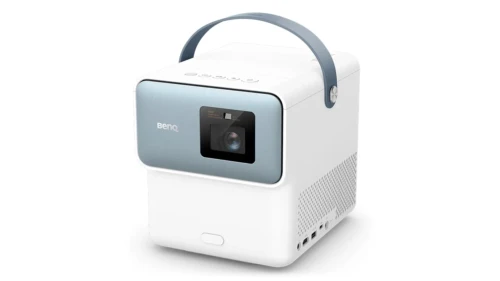
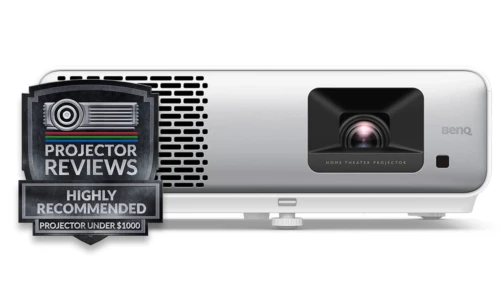
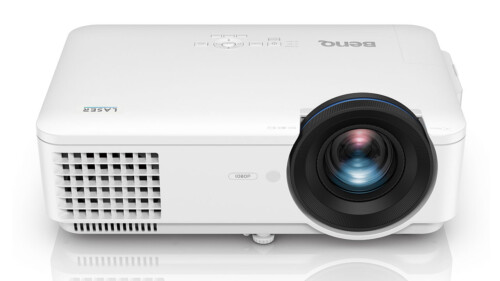
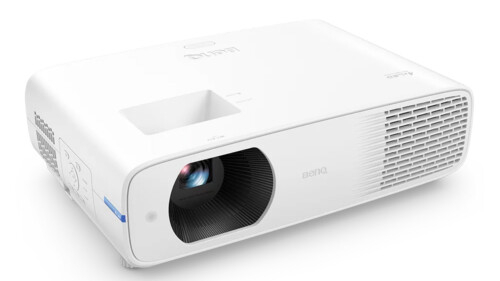
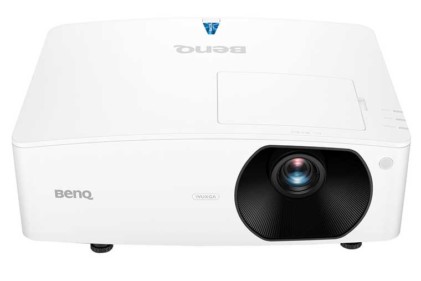
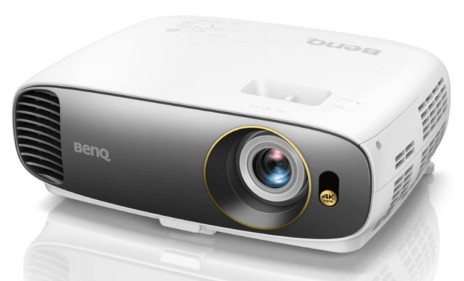
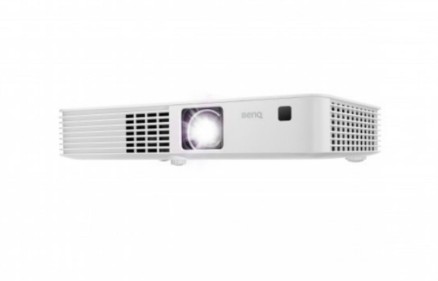
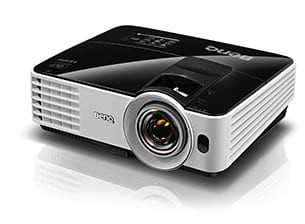
This is an in-depth review of the BenQ GP1, also known as the BenQ Joybee GP1. The BenQ GP1 is an extended SVGA (858x600) resolution DLP - LED projector.
|
|
![]() ![]() |
BenQ Joybee GP1 LED Projector - Overview
The toughest thing about this review, seems to be where to start. A little background on this class of projector - which I'll call a mini-projector (as opposed to the much smaller Pico projectors), seems to be in order.
Before anything else, here's something for those seriously interested in procuring a BenQ Joybee GP1 in the short term: Since it seems we are the first folks to publish a review of the GP1, BenQ has offered an exclusive to our readers: An extra 2 year extended warranty (on top of the standard 1 year warranty) on the GP1. The offer is only for those who purchase one directly from the BenQ site, by 7/31/09. To take advantage of it, you'll have to go to this page (it's just to register for the promo - no other info on the GP1 projector): Click here You'll need to complete the page and put in our promo code: CIN0001. -art
We've reviewed a couple of other mini projectors in the past, most notably the Mitsubishi PK20 and the Boxlight Bumblebee. Neither was very successful, and that's not overly surprising. While those older mini projectors were about the same size, they are no match for the BenQ GP1 in brightness and contrast. And while the lumen claims varied a lot between those two, neither was able to hit even 40 lumens output when we measured. As a result, this BenQ is about three times as bright!
True, the Joybee GP1 is still dim compared to even the least bright current projectors that use a conventional lamp, but it's also true that the Joybee GP1 has enough lumens (brightness) to be viable for a number of applications and presentations. And that changes everything!
One other difference between the BenQ GP1 and those older models is the lack of a battery solution for the BenQ. BenQ tells me that to get all that extra horsepower, as efficient as the BenQ is, a small onboard (or small external) battery solution just isn't viable. That's bad news for missionaries, which as a group, seem to have been one of the few significant buyers of the old Mitsubishi and Boxlight. They would take them out in the field - visiting poor villages, etc., where electricity could not be counted on.
The BenQ Joybee GP1 is rather innovative. It's using 3 separate LEDs - a red, green, and blue, instead of a conventional lamp. From what I've seen, LED light source projectors are especially good on contrast and saturation, and as a result, they tend to seem brighter than similarly bright projectors using a conventional lamp.
At Infocomm, for example, BenQ showed the Joybee, and also another small unit. Their comment was that the other unit - about the same size, but rated 300 lumens (I think), really doesn't look any brighter, because it's not using 3 LEDs. As a result, BenQ isn't planning to introduce that other unit in the US.
I should note that the first popular portable projector, the Proxima DP2800 (from 1994), was only 110 lumens. At the time it was considered bright enough to handle a large room (all lights off). Of course today, we consider 2000 lumens the minimum for a large room. The BenQ GP1 is at least as bright as that old Proxima, is currently selling for $499 (instead of about $5000+), and is tiny and light (compared to 19 pounds and about 20 times the bulk.
So, we've come a long way in minaturization in the last 15 years, but still end up with what is now a projector capable of doing a respectable job presenting to a small group, on a smallish screen, with the lights way down or out completely.
Serious presenters will still have to consider whether to save the money and size and go with the BenQ GP1, or spend a few hundred dollars more for a projector maybe 3 times the size, but at least 10 times the brightness (and higher resolution too).
On the other hand, the big market for the GP1 may well not be presenters, but general enthusiasts looking for a new toy, one that can project computer games, YouTube videos, movies and TV.
I was actually rather blown away how well it did, for example, projecting about a 50 inch diagonal image for movie viewing, in terms of brightness. I mentioned that it did over 110 lumens, but it "looks" a lot brighter - no doubt thanks to the 3LED light source design.
Let's just say this, before we get started. The BenQ is impressive enough that it may well be the very first projector in its class to be truly successful (measured by sales, and customer satisfaction). Time will tell!
Above: From Lord of the Rings - standard DVD, from an Oppo DVD player. Projected image of approximately 50 inch diagonal screen in a darkened room. Most of the light in the room is coming in from the blinds you see, below the screen that the image is projected on.
I finally "get it"! It all happened last night. Up until then, I was still primarily fixated on the whole idea of why someone would buy a projector like the BenQ GP1, when for a few hundred dollars more, they could purchase a dramatically brighter, and higher resolution projector, that, while larger and heavier, aren't drastically larger, or heavier.
Then, last night, I started using the GP1, more as an accessory for viewing images, video clips, even movies, especially from other portable devices, than as a "smaller/lighter" business or home theater projector.
It started when I plugged in a small hard drive I use to store the tens of thousands of images taken for our reviews, as well as a few thousand photos of family and friends that I also store on the drive. I had just finished taking product shot photos (on my kitchen table). I had the projector fired up, and then plugged in a USB flash drive that we sometimes use around here to transfer family photos from one computer to another. Cool! Then I thought - hmm, will the hard drive work? It did, and actually rather flawlessly, except that with over 100 Gig of photos, it took a couple of minutes before it cataloged the drive (I assume that was what it was doing), before the first images were ready to appear. Well, that worked just great.
Then, "Eureka" (I always wanted to exclaim that - thank you Mr. Archimedes). It occurred to me to just plug my dSLR into the BenQ GP1, right after I had finished the GP1 photoshoot. One camera, one cable, one projector. No downloading, no resizing, just "plug and play"! The Joybee had no problem with the images even though most were 10 megapixel files that even as jpegs, were a good 5 megabytes each.
Because I was in the kitchen, I just pointed the projector at the nearest wall, and viewed the whole GP1 photoshoot at about 40 inches diagonal. Even with low lighting in the kitchen, the GP1 worked well. With the lights all off, it looked rather impressive (some color issues discussed later, notwithstanding).
It was too easy! And poor me, I don't even own a Sony PSP, so I couldn't project a game, but now I can imagine why portable gamers would like the GP1.
That's the story, and it's also the primary reason why the BenQ Joybee GP1 receives our Hot Product Award. And that's because I have determined, that a significant number of folks would find the GP1 to be an excellent product for the type of applications I've just described. Sure, there are brighter, and sure, some are not that much heavier, or drastically larger, but all of a sudden, the GP1 - and its ilk, starts to make sense for me, and, I assume, for many others.
There must be some interest out there. BenQ confided that they had at least a couple of hundred pre-sale orders (that shipped out, when the first batch arrived a week or so ago).
BenQ Joybee GP1 LED Projector Highlights
- Able to handle presentations to small groups, as well as viewing movies, gaming, iPod/Iphone, digital cameras, etc.
- Able to view photos, video clips and more, directly from a USB memory card or thumb drive (though its USB port)
- Measured 113 lumens in brightest mode, and still pumped out 75 lumens in a quickly calibrated User mode, optimized for movie viewing.
- First reasonably bright projector in its class (still no match for traditional, larger projectors, however)
- Can operate "PC free" through its USB reader, and can be interfaced with various game machines, iPods and iPhones, require a special composite cable ($49 from the Apple store), or the $69 BenQ iPhone dock accessory
- Accepts component video, analog PC and composite video, as well devices connected through the USB reader
- Supports video sources up to 1080i, and computer sources to SXGA (1280x1024)
- Weighs 1.5 pounds
- Unlike older, less bright mini projectors, this one requires AC, no battery capabilities
- Slightly higher than SVGA resolution (858x600 - SVGA is 800x600), but typically behaves like a standard SVGA display device
- 2 watt speaker
- Has tripod screw receptacle on the bottom - a handy feature
- Eco-friendly - for a number of reasons, including: Power draw of only 60 watts, LED light source, green packaging...
Specs for BenQ Joybee GP1 LED Projector
MSRP: $499
Technology: DLP with 3LED light source
Native Resolution: VGA (640x480
Brightness: 100 lumens
Contrast: 2000:1
Lens: fixed - no zoom, manual focus
Lens shift: None
Lamp life: 20,000+ hours
Weight: 1.5 lbs. (.67 Kg) (does not count the weight "power brick" which is probably another half pound.
Warranty: 1 Year Parts and Labor
BenQ GP1 Special Features
Projector LED Light Source Life
BenQ swears they are being very conservative, in rating the LED light source at 20,000+ hours. Considering that I've seen ratings of up to 50,000 hours on other LED light sources for the smaller pico sized projectors, they are probably right. More to the point, though, 20,000 hours works out to about 40 hours a week for a decade! Somehow I have to believe that 10 years is longer than anyone plans to use a product like this, if for no other reason that it is pretty much a first generation product, and who knows what the specs will be on a "similar" projector, that hits the market, in say, just five years!
And, since we are on the subject of the 3LED lightsource, it has other advantages besides a more dynamic image. It's greener - no mercury (which is used in the traditional lamps), and there should be no significant dimming over the light sources full life. (Typical UHP lamps lose about 50% of their brightness over their claimed life.)

Wall Color
BenQ figures that a fair number of people will not have a formal screen to use with the GP1. Those using it at home, for example, might simply shine it on the wall. (The same might be true doing a 1 on 1 presentation in someone's office). With the Wall Color feature, the BenQ does its best to correct for the color of your walls. It has settings for five wall colors: light yellow, pink, light green, blue (also light), and blackboard mode. I used the light yellow setting on the wall in my testing room which happens to be a medium brown. It definitely helped more than a little, but in reality, my wall is a lot darker than what you would want to project on. Unless your wall color matches pretty closely the colors mentioned, it will only partially help. Let's just say if good color is your thing - find a white wall or use a screen.
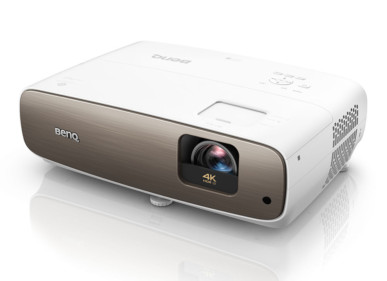
iPhone iPod adaptor
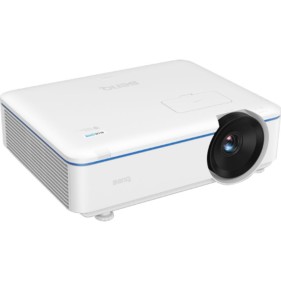
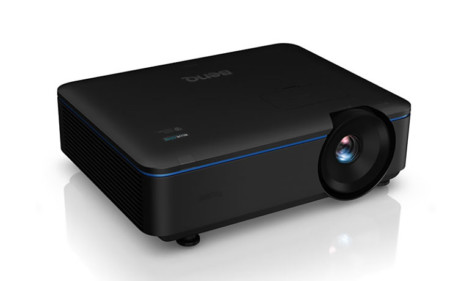
Too bad that their iPhone adapter is optional, and not included with the Joybee GP1. But, at least they offer one.
Audio Built In and Audio Out
Not bad, the BenQ has a small 2 watt speaker. That's not much different from the typical lightweight but traditional portable projectors. If you want to game, or watch a movie, though, while there's respectable volume, it's definitely very thin on bass. The good news is that there's a stereo audio output, so you can pump the sound back out to a boom box, stereo system, etc., to get some quality sound. And before you ask, "No, the BenQ Joybee GP1 does not support 5.1 surround sound audio." Which means if you are hooking it up, to say a DVD player, or a cable/satellite box, where there is a 5.1 source, you'll need to take the audio directly from those devices into your own 5.1 sound system.