JVC DLA-RS60 Projector Review

We received a JVC DLA-RS60 projector for review in early February. This is JVC's flagship projector. The JVC DLA-RS60s are essentially the best of the RS50 projectors using the best components. We found out last year, by reviewing the RS35 - the RS60's predecessor, and the RS25, the RS50's, that it does make a difference.

Unfortunately this JVC RS60 projector review (for now) must be an incomplete review.

I had hoped to complete a full review in February, but, we initially believed the DLA-RS60 have a problem. When we measured it, it measured less than half of claimed brightness. Other than the brightness issue, the projector performed beautifully. We spoke to JVC, returned the RS60 for a close look by them, and have waited.

It's been a good month, but I haven't heard anything back from JVC. I've received many emails from folks interested in the JVC RS60 and RS50, as well as competing projectors Like the Sony VPL-VW90ES.

Last year, the older JVC DLA-RS35 received our Best In Class Award, so the DLA-RS60 has to be considered as a key review. As a result I've decided to do the best review I can, based on the week I had with the projector.

Unfortunately, I hadn't done the usual photo shoot before shipping it back, but I will seed this review with some RS35 images, until we get another crack at the RS60. I did spend more than 20 hours watching the RS60, split between 2D and 3D content.

March 2010 - Art Feierman


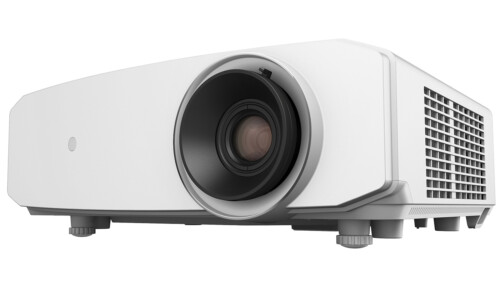
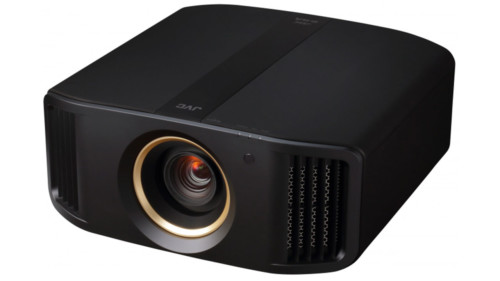
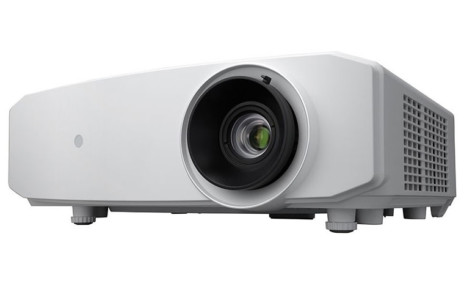
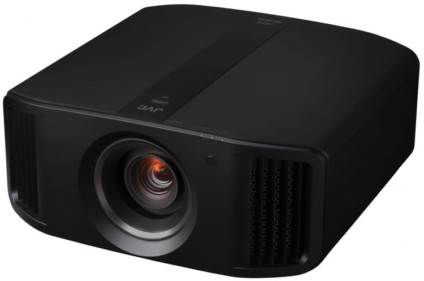
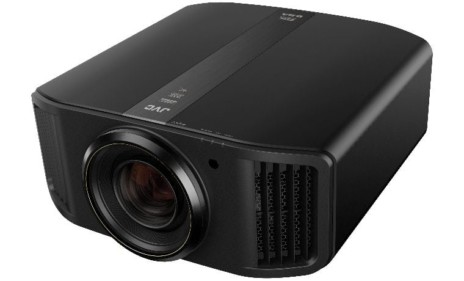
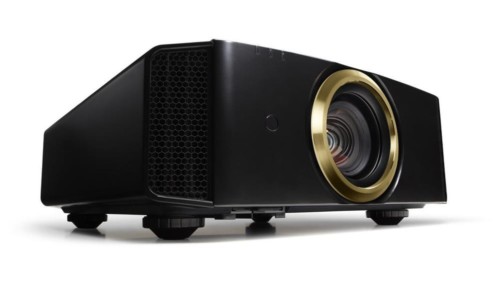
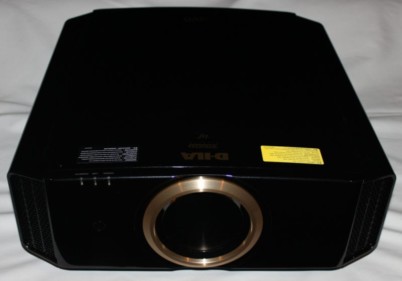
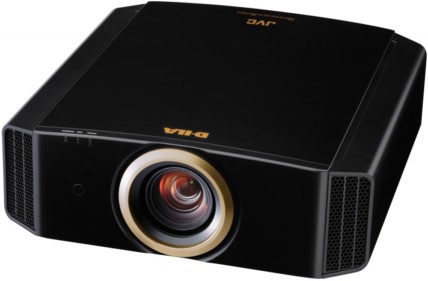
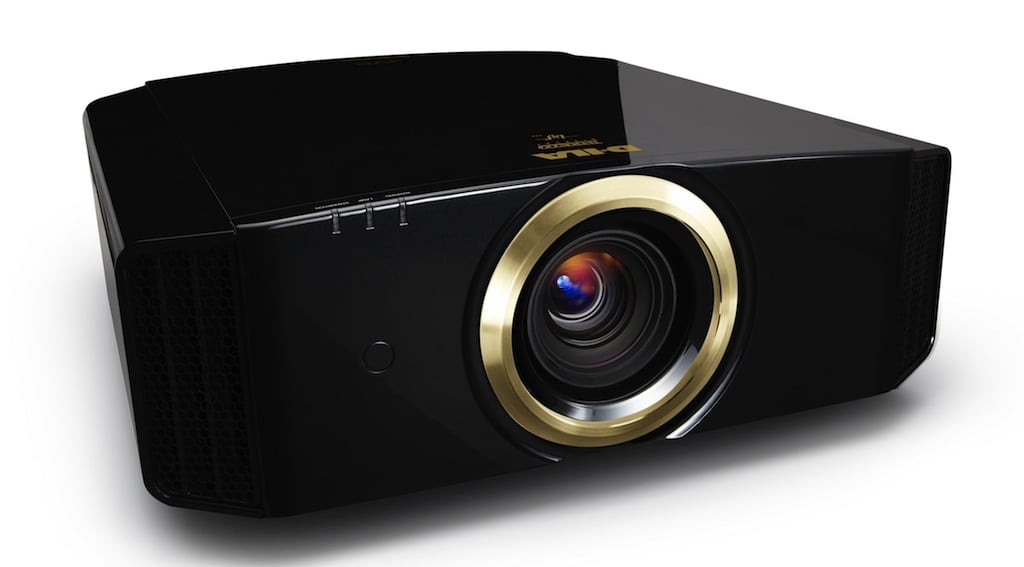
The JVC DLA-RS60 projector.

The JVC DLA-RS60 projector earns our Hot Product Award!

JVC DLA-RS60 Projector Overview

All photos of movies and sports seen in this review are from the JVC DLA-RS60 projector's predecessors, the RS35 and RS25, unless otherwise noted.

The JVC DLA-RS60 home cinema projector, is sold by JVC's Pro group. JVC's consumer group sells the virtually identical DLA-X9, to a different set of dealers.

The JVC RS60, like the other two new Reference Standard projectors, the RS40 and RS50, are 2D and 3D capable projectors. This year's RS projectors are physically larger than last year's projectors, making them rather large indeed.

As with the previous series, the RS60 is power everything - zoom, focus, and lens shift. Essentially, the DLA-RS60 is in many ways, almost identical to last year's model. The key differences, are the addition of 3D, and an increase in lumens. The HDMI ports have been upgraded to HDMI 1.4a, as the Blu-ray 3D standard calls for HDMI 1.4, not the 1.3 in almost all existing home theater projectors.

Quantum of Solace image from the JVC DLA-RS35 projector.

Experience tells us a lot about JVC, and little has changed. I expected to see a projector that looks rather excellent right out of the box, with natural skin tones, and I definitely expected a projector with sensational black level performance.

One thing about 3D projectors: Generally, the first generation of home theater 3D projectors are dealing with a brightness challenge. For this reason, no doubt, JVC has brought out a projector that specs say is more than 40% brighter than last year's JVC projectors. (That's going from 900 to 1300 lumens.)

Gandalf image from the JVC DLA-RS35 projector.

As noted at the beginning of this review, measured brightness was a huge disappointment, causing us to believe the projector to have an issue. All of this will be discussed in depth, on the Performance page of this review.

Star Trek image from the JVC DLA-RS35 projector.

The JVC RS60 projector is a 3 chip LCoS design. JVC manufactures their own LCoS chips which they call D-iLA (just like Sony calls theirs SXRD). JVC's design for the last several years have consistently produced images with the best native black levels. Their design is such, that other manufacturers use a dynamic iris to help out their blacks, but this JVC projector still bests any of them, even without having a dynamic iris. In that regard it is truly the successor to the older RS35.

Captain Pike image from the JVC DLA-RS35 projector.

Since the RS60 is built from the best of the components going into RS50's, that means the best optics, the best light engine, and so on. This year we haven't received an RS50 for review, but based on the difference between last year's standard, and "hand built" versions, the differences are real. Once again, when first firing up the RS60, I was immediately impressed with the clarity of the optics.

One question those of you seriously considering the RS60 will have to ask yourself: Is the RS60 going to be worth $4000 more than the RS50. Last year the spread was more like $2000.

^ Back to Top

DLA-RS60 Projector Highlights

  • Best black level performance of any projector we've seen
  • 3D as well as 2D - uses
  • THX, for excellent color right out of the box
  • 1300 lumens claimed @ 8500K in the past they rated at D65 - a more realistic setting.
  • Brightness in "best" mode for 2D is about average
  • Brightness is below average in "brightest" mode, when you need extra lumens for ambient light, this JVC has little to spare, at least for those of us with fairly large screens
  • Limited Brightness for 3D viewing
  • Best black level performance I have ever seen, that wasn't a CRT projector. Basically the same as the RS25, but a touch better
  • CFI - Creative frame interpolation for "smooth" sports (and for some, movies)
  • Motorized zoom lens with plenty of range - 2:1, suitable for ceiling or rear shelf mounting
  • Adjustable vertical and horizontal lens shift, very good range, but not quite as much range as some, but not bad at all!
  • Excellent black level performance achieved without having a dynamic iris, but manual iris is provided to adjust overall brightness
  • Exceptionally sharp image
  • A first class projector with a price to match

Casino Royale image from the JVC DLA-RS35 projector.

^ Back to Top

Projector Specs for JVC DLA-RS60

MSRP: $10,000.
Technology: LCoS
Native Resolution: 1080p (1920x1080)
Brightness: 1300 lumens
Contrast: 100,000:1
Zoom Lens ratio: 2:1 (motorized)
Lens shift: Vertical and Horizontal (motorized)
Lamp life: 3000 hours "longer in standard lamp mode" (low power)
Weight: 24.3 lbs. (10.8 Kg)
Warranty: 3 Years Parts and Labor

Click for more complete projector specifications of the JVC RS60 projector.

Stage image from the JVC DLA-RS25 projector.

^ Back to Top

JVC DLA-RS60 Special Features

THX and ISF Certification

The JVC DLA-RS60, like the RS50 and the older RS25 and RS35, is THX certified. That is to assure you that the projector has proper controls so that it can produce a THX "quality" performance. I consider more important still for many people, is that you get a pre-calibrated THX mode, which, historically, with previously reviewed Reference Standard JVC projectors, has been consistently very close to ideal. Most likely the deviation from "dead on", is mostly due to lamp variations.

The THX mode offers the best picture and color performance of the presets. About the only real complaint about THX mode is that you can't access all the controls. For that reason, you'll use another mode for a Best mode.

The ISF Certification indicates a number of things relating to quality, but primarily relates to the projector having two calibration modes set aside, and password protected for the use of professional ISF calibrators to create ISF Day, and ISF Night modes.

HDTV image from the JVC DLA-RS25 projector.

Individual panel adjustment

The JVC DLA RS60 projector does offer digial pixel alignment, like the other JVCs before it. And it works. It lets you shift the data for R, G, or B, both horizontally, and/or vertically

CFI - Clear Motion Drive

Creative Frame Interpolation! JVC calls theirs Clear Motion Drive, and there are two settings. We stuck to low. Good for sports. With movies, like with others, you get a little of that "live digital video" or "soap opera" look, that most enthusiasts and all purists will avoid on movies, but, hey, some folks like it. When my daughter has friends over, they mostly watch stuff like Iron Man, or Star Trek, or Across the Universe, or High School Musical 3 with CFI on low. (strange child!). To put it in further perspective, anytime I have a projector on with CFI running (always on low), Lisa can walk into the room, and in about 1 second she'll say "you've got CFI on".

Which just goes to show you that it does have a visible impact. And some may like it even though it may distort the "director's intent".

Color Management System (CMS)

JVC provides a primary and secondary color management system on the JVC DLA-RS60 and the X9. The CMS needs to be calibrated (that would be calibrating the individual primary and secondary colors), for the JVC DLA-RS60 to produce its best results. Apparently the THX mode has its own CMS settings, independent from the settings you can control.

3D Projector!

While there is no question that the RS60 is 3D capable, like most 3D systems I've seen so far, there are limitations. There are a number of 3D standards out there, for HDTV and Blu-ray. The JVC DLA-RS60 is definitely Blu-ray 3D compatible. I had no problems with any of my Blu-ray 3D discs, which now number more than a dozen.

HDTV was a bit more challenging. There are definitely compatibility issues with at least one of DirecTV's 3 (part time) 3D channels. The set-top box tells me that the JVC is not compatible with the native 720p broadcast. Seems fine with 1080 content though. So, one channel is coming 720p, and the box won't send 3D out because it is being told JVC isn't supporting that particular mode.

JVC seems to agree. They point out that DirecTV seems to be using one of the optional 3D methods, not one of the core ones, at least for that channel. Bottom line, a lot of good content that I've recorded and played on other 3D projectors (including the Sony, and the Sharp) won't play on the JVC. I'm not overly concerned, I figure over time, JVC will logically support whatever modes DirecTV insists upon using. The risk of not supporting some DirecTV 3D channels would be shooting themselves in the foot. It would be just too annoying to JVC owners. Hopefully that will get corrected in a downloadable firmware upgrade. That, at the moment, almost half of my recorded 3D content wouldn't run on the JVC.

The JVC uses active shutter glasses for 3D. If I recall correctly, their glasses were more comfortable than some of the other glasses. I say that as a glasses wearer. They didn't press my glasses into my nose like some others did. Still, everyone's brand needs to be lighter, and cross compatibility with other projectors would be a plus.

Unlike most other 3D projectors solutions using active glasses, JVC uses an external emitter to sync glasses and content. You place the small emitter box on or near the projector facing the screen, plug into the jack on the back panel, and life is good. Range definitely seemed better than the Sharp Z17000 using DLP-link. The Sony has its emitter internal I assume, since there's no add on box. They can't be using DLP-link, since it's an LCoS (or so I believe).

The discussion of the JVC's brightness relating to both 2D and 3D relative to both their claims, and practical performance will be discussed on the Performance page. The short version, is that this RS60 measured less bright, than the RS35 did when comparing the same modes, and yet its supposed to be 40% brighter (1300 vs 900). As you will see, JVC who normally uses the most conservative standard (D65) has "cheated" a bit, and specified 8500K for their measurement. That, however just makes their claim like that of most projectors with a dynamic mode. For those of us familiar with how JVC did things in the past - misleading, but for first timers, they are more like others who report their brightest, regardless of color temp.

^ Back to Top

NEXT: Take a physical tour of the JVC DLA-RS60