When I first started planning my trip to CES 2025, I was genuinely on the fence about whether it would be worth the time. Several legacy brands that traditionally anchor the show floor were not exhibiting as they had in years past, and there was a lot of chatter suggesting that CES had become less relevant to home theater and projection enthusiasts. By the time I left Las Vegas, however, it was clear that those assumptions were wrong. CES 2025 did not just deliver meaningful projector news. It revealed how dramatically the projector market is changing and how quickly expectations around performance, pricing, and flexibility are being reset.
What I saw across the show floor was a blending of categories. Lifestyle projectors are becoming brighter and more capable. Ultra short throw models are pushing into gaming and simulation. Compact projectors are delivering resolutions and brightness levels that would have been unthinkable a few years ago. CES 2025 reinforced something I have been saying for years. Projection is not a stagnant category. It is evolving rapidly, driven by competition, new use cases, and changing consumer expectations. The innovation I saw on the show floor was real and meaningful.
Below are a quick recap of some of the notable newly announced 2026 projectors that were showcased at this year show. For more details on the models listed below, check out our CES 2026 Recap Video or our Manufacturer booth tour videos.

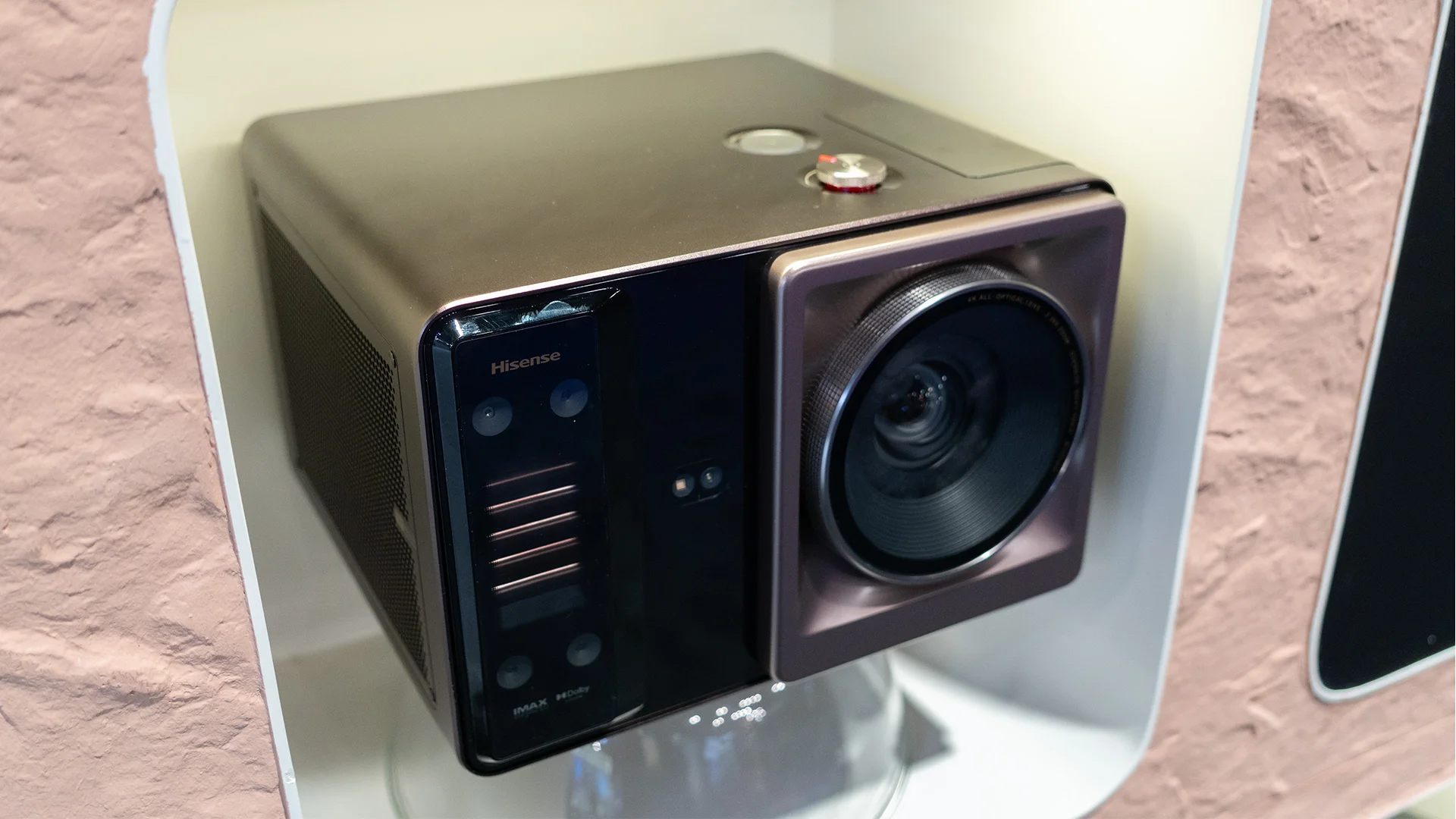
One of the most talked-about products in the Hisense booth was the XR10. This model is positioned as a premium laser projector for users who want the flexibility of a traditional long-throw installation without compromising brightness or color performance. Powered by Hisense’s new LPU 3.0 Digital Laser Engine, which is an RGB laser light source, XR10 is capable of producing up to 6,000 ANSI lumens. That level of light output places it among the brightest home entertainment projectors currently available, making it suitable for large screens and spaces that are not fully light-controlled.
Hisense pairs that high brightness RGB laser light with an upgraded optical system that includes sixteen all-glass lens elements designed to minimize light loss and prevent discoloration. To improve the projector’s visual contrast performance, the XR10 is equipped with a newly developed dynamic IRIS system that adjusts the lens aperture in response to the displayed scene. According to Hisense, the XR10 balances brightness and black-level performance more effectively than previous Hisense models. resulting in rated contrast ratios of up to 6000:1 while preserving detail in both highlights and shadows.
Installation flexibility is another area where the XR10 distinguishes itself within Hisense’s lineup. The XR10 features an optical zoom range of 0.84x to 2.0x and supports screen sizes from 65 inches to 300 inches without sacrificing image clarity. Vertical and horizontal lens shift also provides precise image positioning without moving the projector.
At the time of this writing, the unit’s list price or an availability date have not been announced, but the XR10 is expected to be available before the summer of 2026.

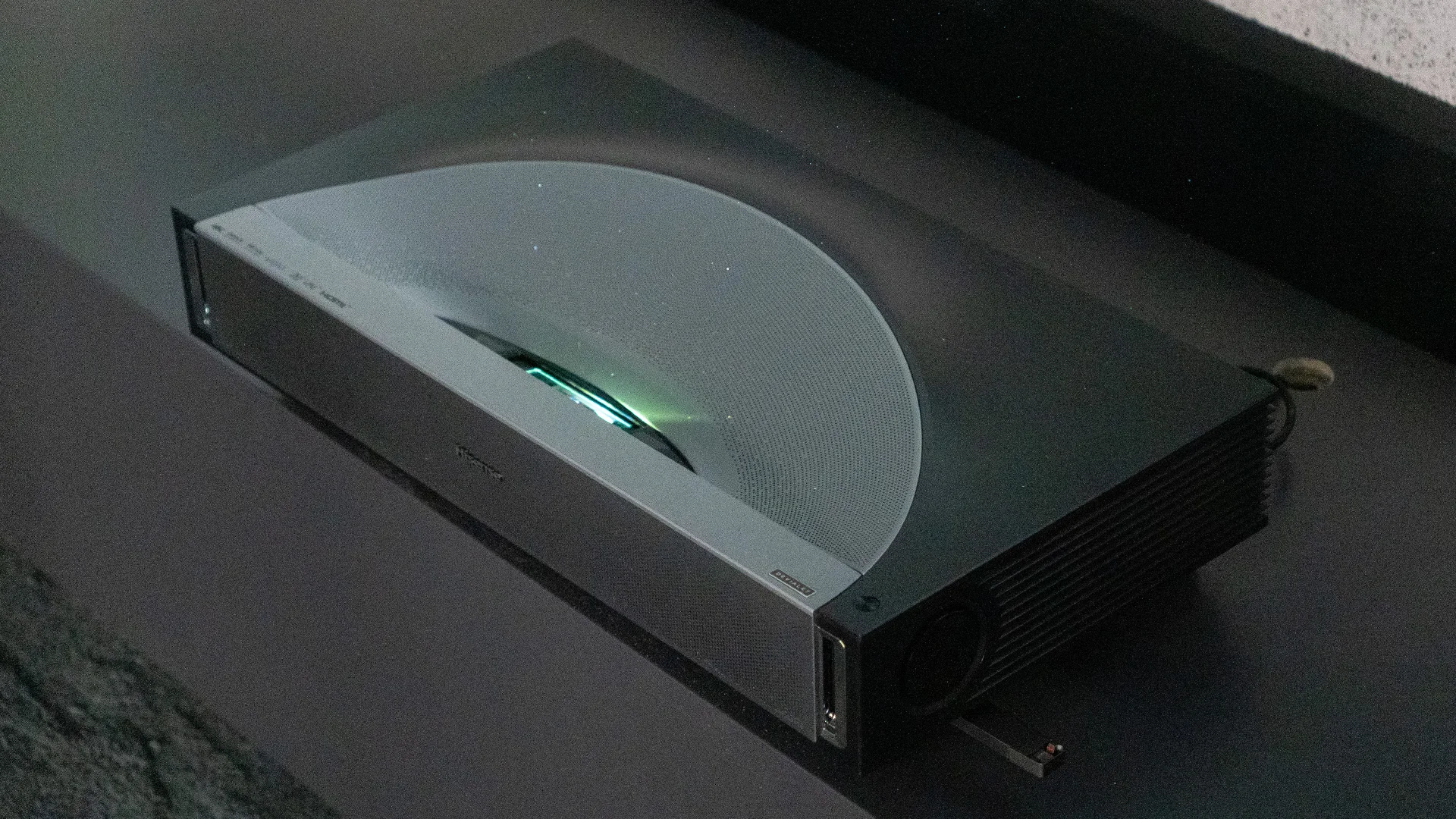
The PX4-PRO is the latest addition to Hisense’s lineup of smart ultra-short-throw projectors. The PX4-PRO delivers up to 3,500 ANSI lumens of brightness and projects images up to 200 inches from just inches away from the screen. The projector’s higher brightness should produce a vibrant image in a typical living room, where full light control is not always possible.
Hisense PX3-PRO also features a new Iris lens system that enables advanced dynamic contrast control, delivering a rated contrast ratio of 6000:1. Compared to the PX3-PRO, this new model should deliver deeper perceived blacks and improved shadow detail.
The PX4-PRO supports a wide range of HDR formats, including Dolby Vision and HDR10+, and is IMAX Enhanced certified. For gamers, the PX4-PRO also includes ultra-low-latency modes that reduce input lag and improve responsiveness.
At the time of this writing, Hisense has not shared the unit’s list price or an availability date, but the PX4-Pro is expected to be available in the Spring of 2026.

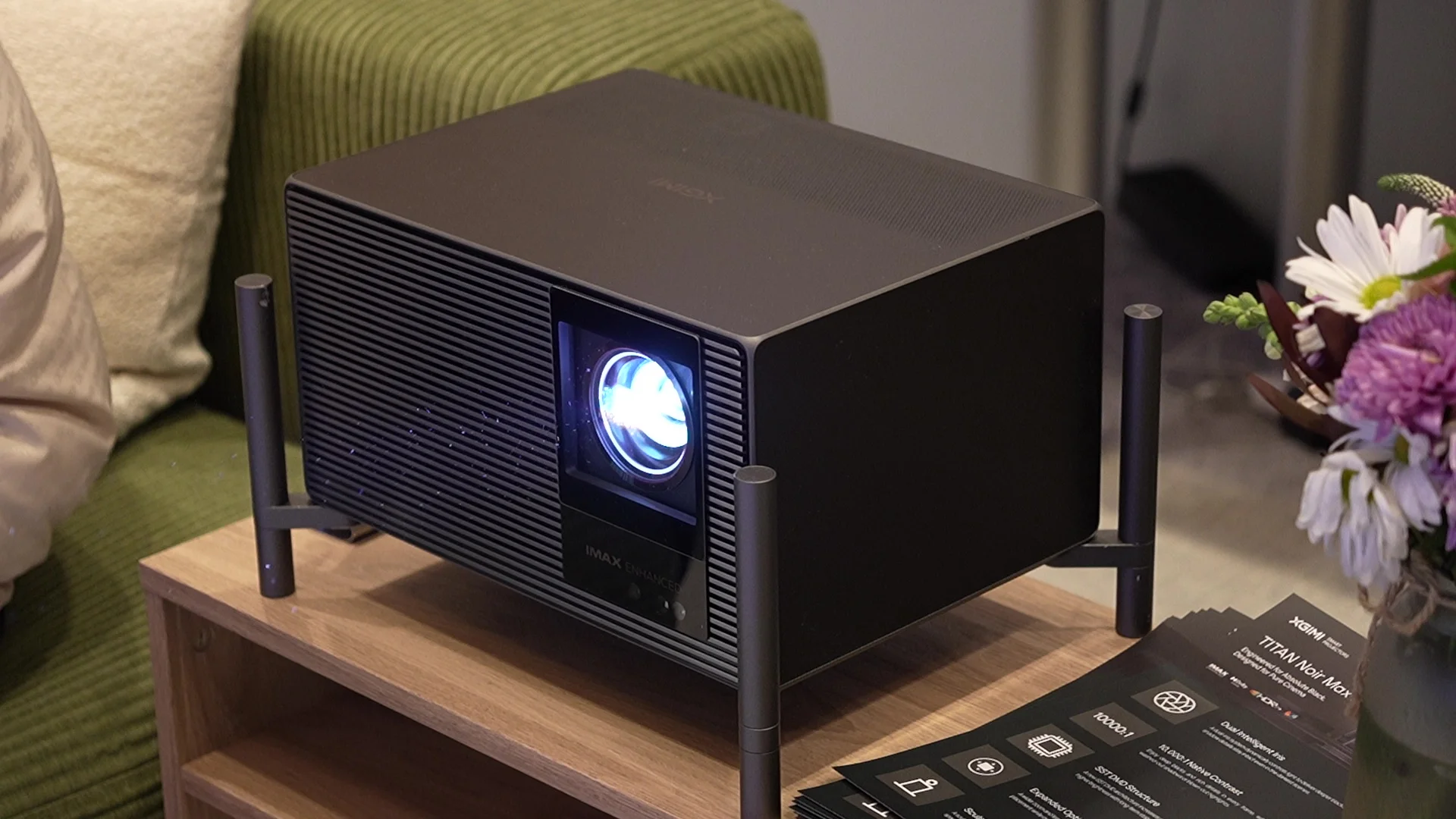
Last year, they introduced Titan for the professional market, and at CES 2026, they highlighted a new model, the Titan Noir Max. This model is designed to deliver image quality comparable to sub-$10,000 models from Epson, Sony, and JVC.
While the projector delivers 5,000 lumens of brightness, XGIMI has emphasized the unit’s ability to deliver enhanced contrast and color fidelity over raw lumens. The Titan Noir Max features a new Dynamic Iris System and updated optics designed to boost contrast and to improve image depth compared with the company’s earlier professional-oriented Titan model.
The goal is a richer grayscale response and better shadow detail without sacrificing highlight intensity. The dual-iris system is one reason the Titan Noir Max has a rated native contrast of 10,000:1 and a dynamic contrast of 100,000:1. Titan Noir Max uses a “brand new SST DMD structure,” which incorporates modifications to the digital micromirror device (DMD) assembly to improve thermal and power tolerance.
Titan Noir Max offers 2x optical zoom with a throw ratio of 1.0–2.0:1. It also provides extensive optical lens shift capability with ±130% vertical and ±50% horizontal adjustment, which increases installation flexibility without relying on digital keystone correction.
At the time of this writing, XGIMI has not shared the unit’s list price or an availability date, but the Titan Noir Max is expected to be available sometime in 2026.

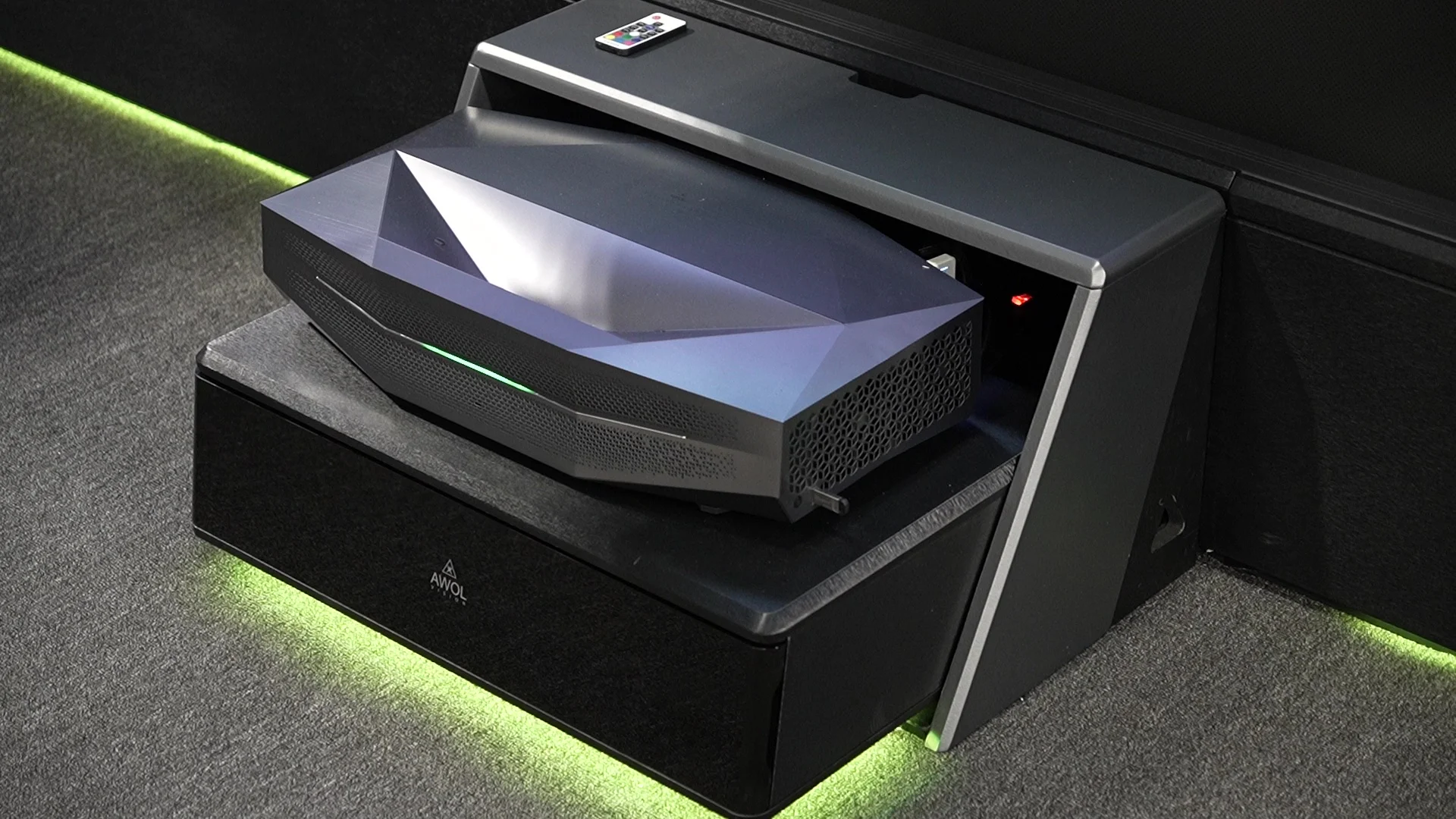
AWOL Vision introduced the new Aetherion Series, which consists of two 4K DLP ultra-short-throw models, the Aetherion Max and the Aetherion Pro.
The main difference between the two units is their rated brightness. The Aetherion Max is rated at 3,300 ISO lumens, while the Aetherion Pro is specified at 2,600 ISO lumens. Both models use a triple-laser RGB light source paired with a newly developed optical engine that minimizes light leakage along the optical path, resulting in deeper blacks and improved on-screen contrast in light-controlled environments. This results in a class-leading native contrast ratio of 6,000:1.
In addition, they include an EBL (Enhanced Black Level) feature that delivers a dynamic contrast ratio of 60,000:1. EBL™ Shadow Refinement combines laser dimming with seven-level iris and video processing to adjust brightness dynamically, improving perceived contrast in darker scenes. The new optical assembly used in the Aetherion Series incorporates a sapphire glass lens with specialized coatings intended to reduce chromatic aberration, maximize sharpness, and improve light transmission.
The new models should also appeal to gaming enthusisats. The Aetherion Series supports variable refresh rate operation, auto low-latency mode, and high-refresh-rate input, with the company citing “1-millisecond-class input latency at 240 Hz”. The Aetherion projectors also support Dolby Vision Gaming.
The units are expected to be available in April 2026.The Aetherion Max is expected to retail for $4,499, while the Aetherion Pro is priced at $3,499.

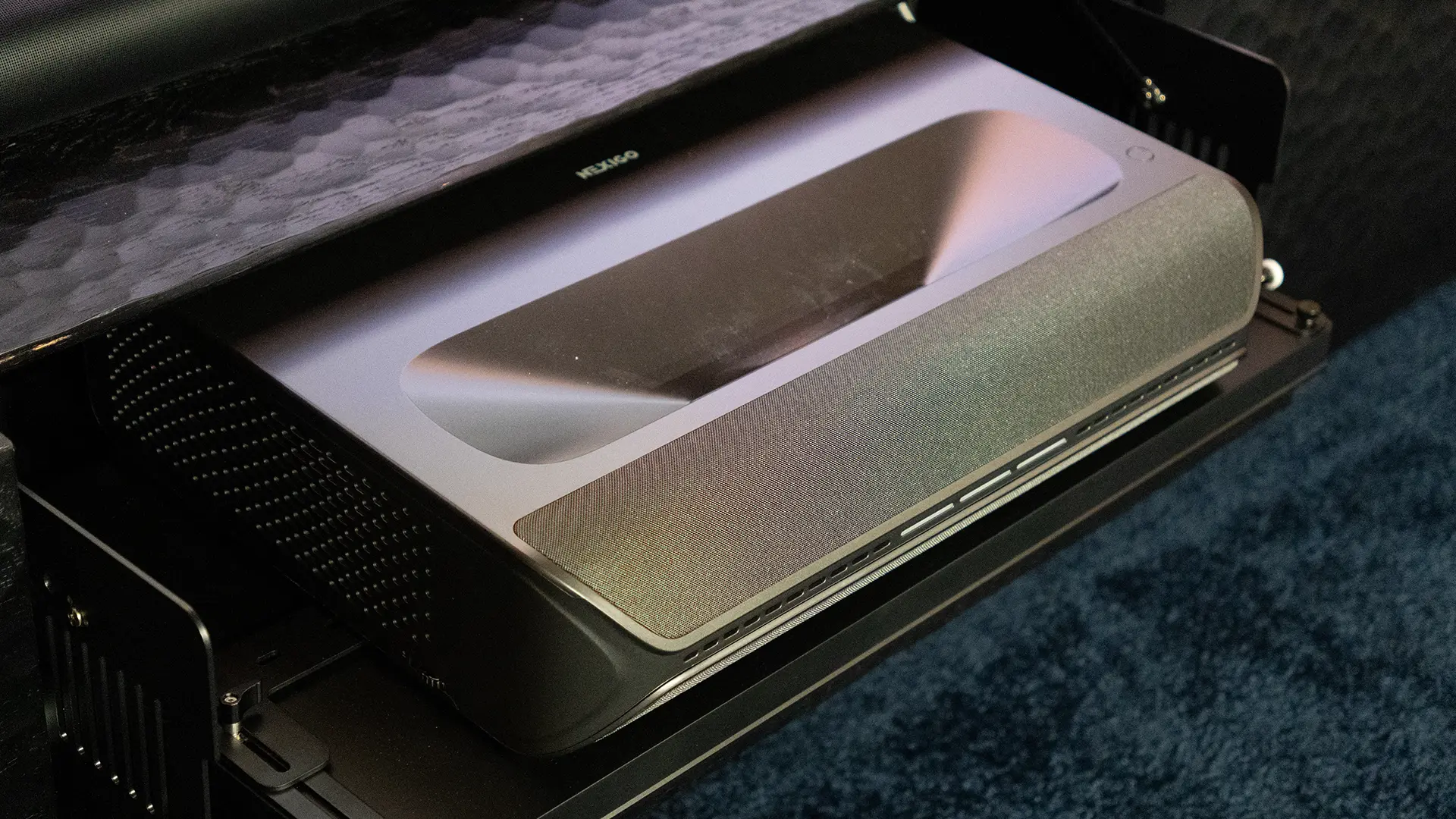
AT CES 2026, NexiGo unveiled the Aurora Pro MKIII, which builds on the Aurora Pro MKII's strong reputation by adding higher brightness, improved dynamic contrast, and a more responsive optical system. One of the most notable new features is virtual masking, designed to eliminate letterbox bars when watching CinemaScope content while still allowing quick switching back to 16:9 for television and sports.
The model utilizes NexiGo’s Scene Adapt Engine, which combines DLP imaging, laser dimming, and a dynamic iris to continuously optimize contrast. Dark scenes benefit from deeper blacks without crushed detail, while bright scenes retain highlight detail and increased light output. With a target brightness of approximately 3,000 lumens and dynamic contrast approaching 10,000:1, the Aurora Pro MKIII is designed to perform well in ambient-light rooms while preserving its cinematic strengths.
NexiGo also showcased a new Eclipse Laser TV system which an all-in-one solution that combines the Aurora Pro MKIII, a floor-rising screen, and an integrated cabinet that automatically deploys and retracts the system for a clean, living-room-friendly installation. NexiGo is targeting a Q3 release window for the Aurora Pro MK3 and the complete Eclipse system.

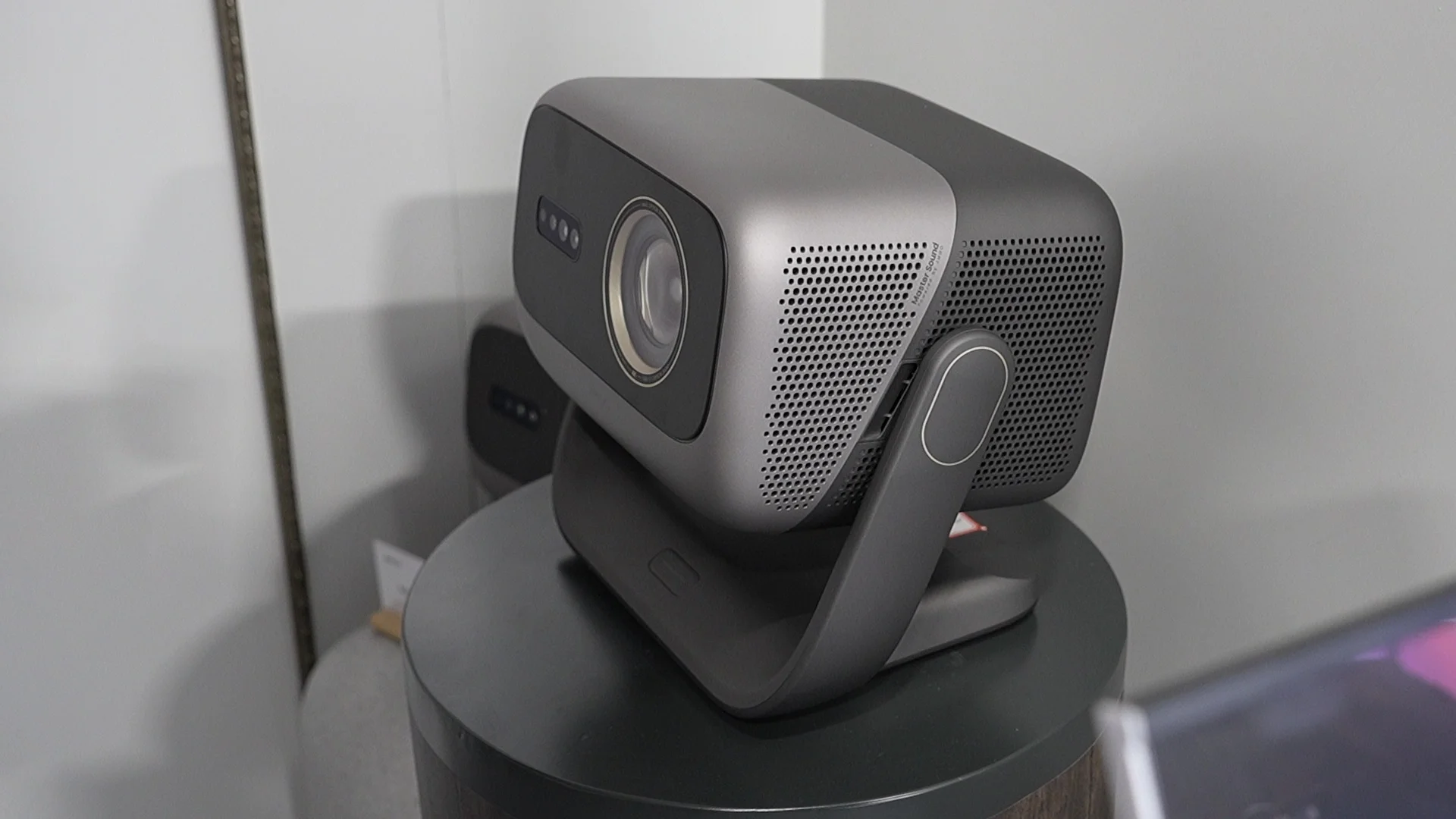
The centerpiece of JMGO’s CES 2026 lineup is its new flagship projector, the N3 Ultimate, which is scheduled to launch in Q2. The N3 Ultimate is rated at approximately 5,800 ISO lumens and represents JMGO’s most advanced design to date.
In addition to higher brightness and improved contrast performance, the projector introduces a combination of optical zoom, horizontal and vertical lens shift, and a motorized, trackable gimbal system. This allows users to adjust image position precisely without relying on digital keystone correction, preserving both brightness and resolution.
A standout feature of the N3 Ultimate is its motorized gimbal with position memory. Using the remote control, users can automatically aim the projector and save multiple wall or room configurations, enabling the projector to reposition itself with a single button press when moved between spaces.

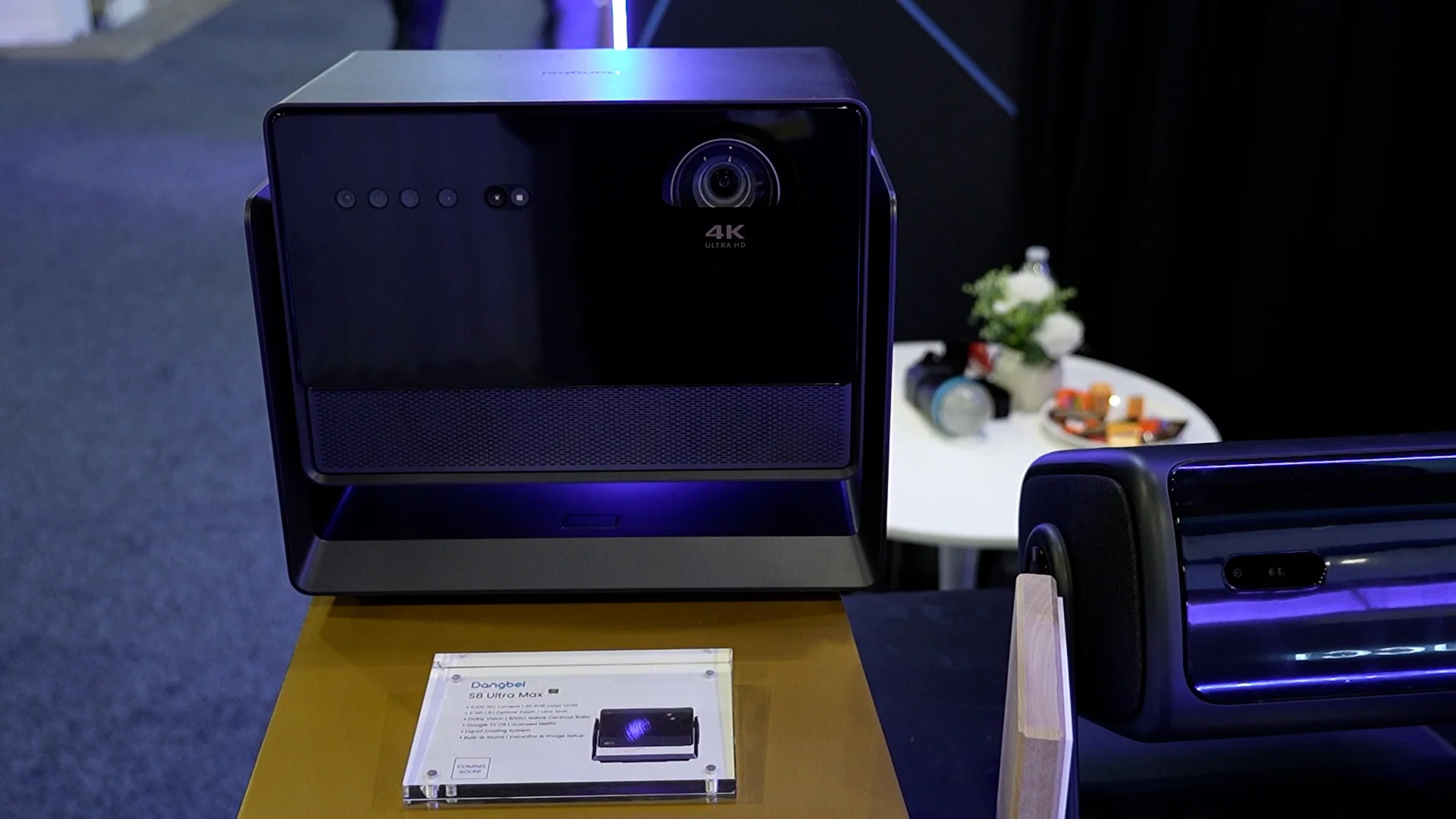
Dangbei’s most advanced projector on display was the new S8 Ultra Max. Designed as a high-performance DLP projector, the S8 Ultra Max has a rated bright of 6200 ISO lumens and features an exceptionally high native contrast ratio of up to 8,000:1 which far exceeds what is typically seen from standard single-chip DLP projectors. This is achieved through the use of dual dynamic irises, which actively adjust light output based on scene content to enhance shadow detail in dark scenes while preserving brightness for sports and daytime viewing.
Phil and Stephen discuss how the dynamic iris system expands usable dynamic range, making the projector adaptable to a wide range of content and lighting conditions. The S8 Ultra Max also leverages the latest Texas Instruments DLP chipset and offers strong gaming performance, with input lag reported at under 20 milliseconds, making it suitable for casual gaming..
While the S8 Ultra Max has launched in China, US pricing has not been announced. The model is scheduled to reach international markets before the summer.