Projector Reviews Images

Valerion VisionMaster Max Projector Review

Posted on April 2, 2026 by Philip Boyle
Valerion VisionMaster Max w Award - Projector Reviews - Images

The VisionMaster Max is Valerion's flagship projector, featuring the best the company has to offer in hardware and software. The projector is now available from a wide range of dealers and Valerion’s online store at an MSRP of $4,999, but can also be found for a suggested retail price of $3,999. The VisionMaster Max is a premium projector that competes with other DLP projectors and high-end home theater projectors from Epson, Sony, and JVC.

The Valerion VisionMaster Max is a DLP projector that achieves its onscreen resolution by pixel-shifting the 0.47-inch DMD chip with XPR technology, resulting in a 4K UHD (3,840 x 2,160p) displayed resolution. What makes the VisionMaster Max different from other DLP projectors is that the latest generation of Texas Instruments’ XPR pixel-shifting technology is controlled by a new, ultra-fast and accurate controller, designed to improve the system's speed and accuracy beyond anything TI has offered on a 0.47-inch DMD. It’s fast, and it’s accurate with none of the traditional downsides of DLP image shifting.

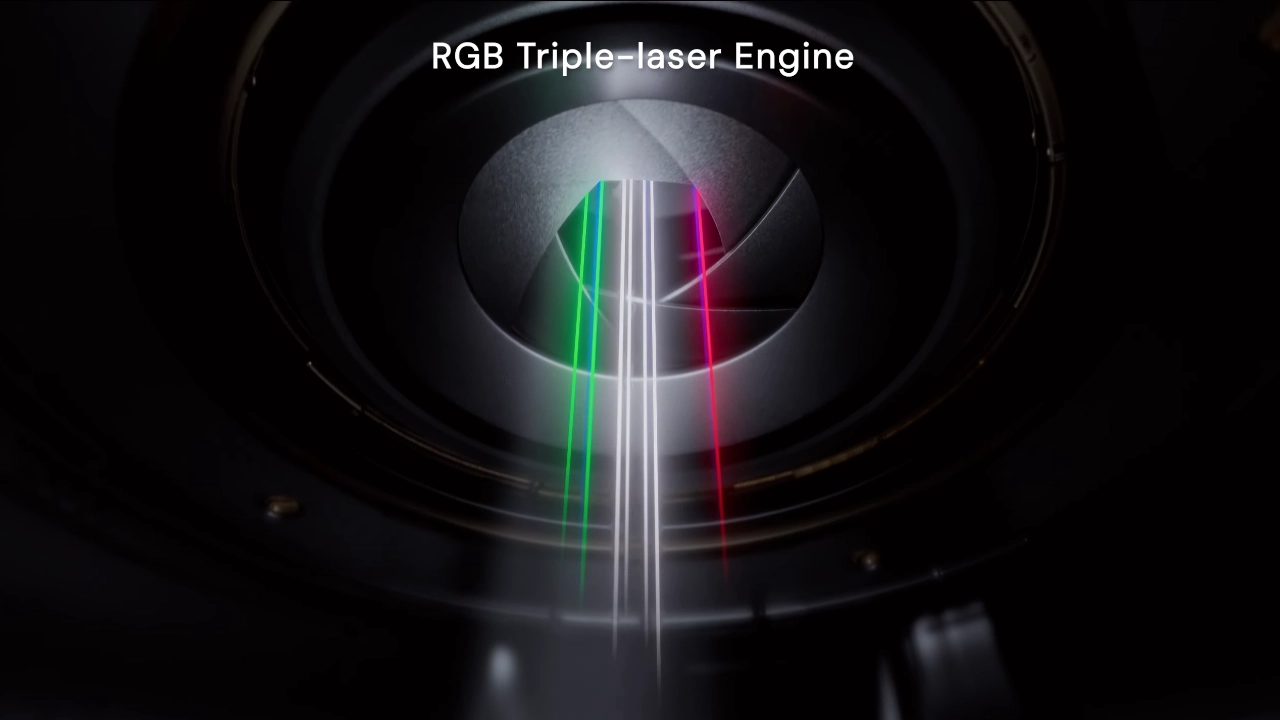
The VisionMaster Max uses a brand-new RGB triple-laser light source capable of producing a listed 3,500 lumens of on-screen brightness. 3,500 lumens deliver stunning color rated at 110% of BT.2020, and enough brightness to unlock the hidden details in HDR-encoded content.

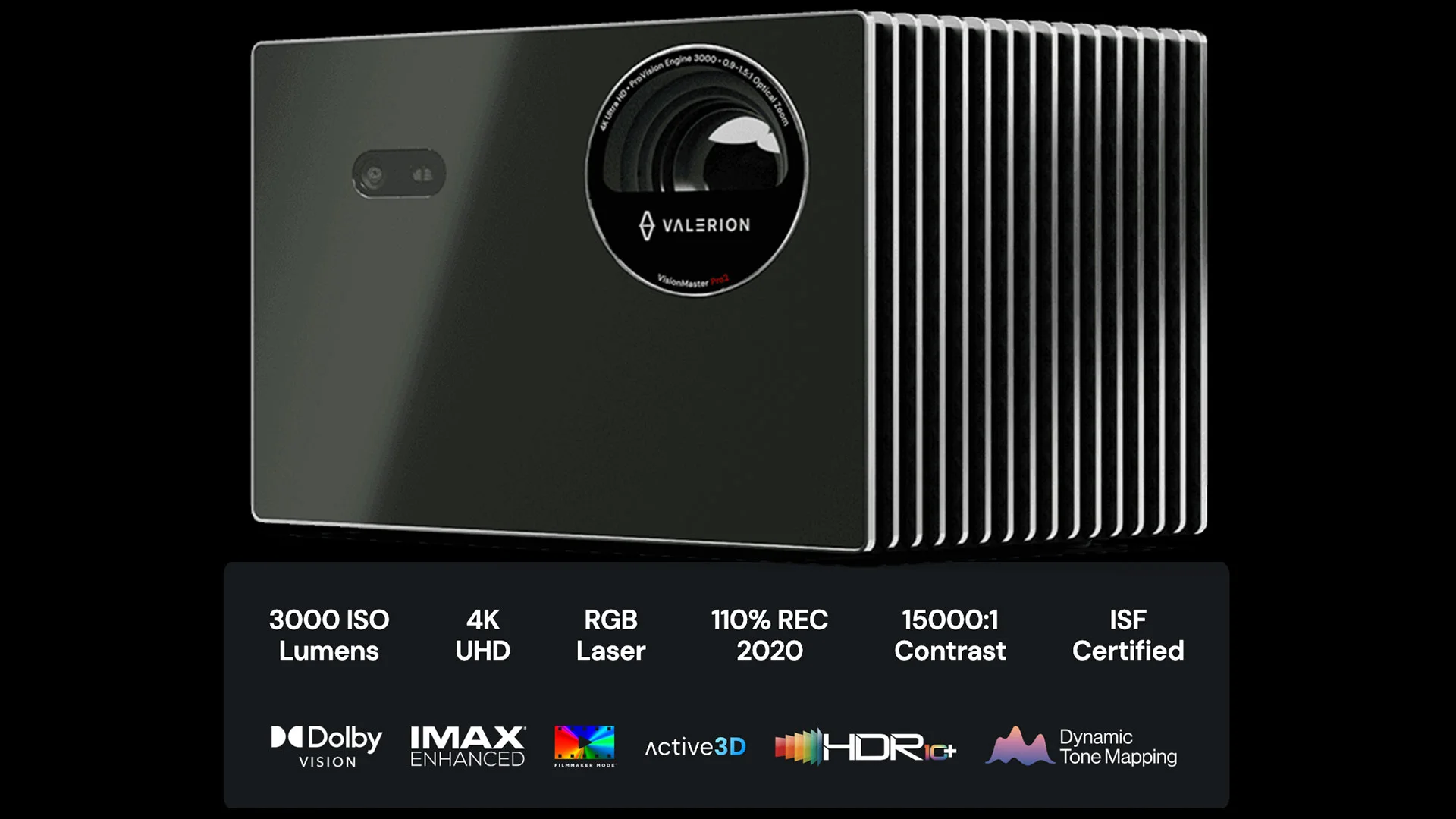
When it comes to HDR, the VisionMaster Max is truly what we’ve been calling a “kitchen sink” projector, supporting HDR10+, HLG, Dolby Vision HDR, and advanced Dynamic Tone Mapping. In addition, the VisionMaster Max is ISF-Certified and supports IMAX Enhanced mastered content.

The VisionMaster Max also features a listed native contrast of 5,000:1 and a dynamic contrast of 50,000:1. Still, when combined with the company's proprietary ENHANCED BLACK LEVEL mode, Valerion claims the projector will significantly improve “perceived” black levels. To further enhance the projector's black level performance, Valerion has included a six-bladed advanced iris to improve the displayed black level and contrast.

Valerion has also included a new state-of-the-art optical assembly that offers vertical-only lens shift.

Valerion VisionMaster Max
Valerion VisionMaster Max Settings - Projector Reviews - Images
Suggested Retail Price: $3999
Ratings Based On Comparable Models
Brightness
Color Reproduction
Contrast
Sound Quality
Pros

+RGB laser light source
+4K UHD (3,840 x 2,160p)
+4 ms input lag at 1080p/240 Hz
+±105% vertical lens shift and motorized zoom
+1st Lifestyle w optional lenses
+3,500 lumens of brightness
+5,000:1 native contrast ratio
+Best blacks for a DLP
+Anti-RBE technology effectively removes the rainbow effect
+Laser speckle‑reduction+Six-blade adjustable manual iris
+Google TV OS & Netflix app

Cons

-No auto iris control manual, not a true dynamic iris
-Aggressive iris and laser dimming displays a blue/green tint in shadows
-Soundstage is not very dynamic and clearly coming from the projector
-One of the largest and heaviest lifestyle projectors.
-The glossy black-and-chrome finish is an unnecessary source of reflections on the screen.


If you are interested in purchasing the projector mentioned in this article, we always appreciate it if you use one of the links in the article because Projector Reviews earns a small commission on the sale at no cost to you.
VisionMaster-Max-Affliate-bannerBH-buy-now-affliate-buttons- Projector Reviews Images

The high-quality glass optics keep the image sharp even at the extreme edges of the screen. The projector also supports interchangeable lenses through a specialized bayonet-style mount. These optional optics include an extended lens and an anamorphic lens.

Valerion adds an impressive array of auto-processing software, including the Valerion NOIR SCENE ENGINE, which adjusts the Enhanced Black Level (EBL) to produce deep blacks and high contrast without "washing out" the image compared to previous models without the technology. The VisionMaster Max includes anti-rainbow software and AI upscaling. Finally, for easy setup, there is Valerion's OpticFlex system that manages AUTO FOCUS, AUTO KEYSTONE, AUTO SCREEN FIT, and the projector’s MOTORIZED LENS SHIFT.

While we’re speaking about software, let's talk about the projector's operating system. The Valerion VisionMaster Max is powered by the latest Google TV OS, which enables users to enjoy the widest range of popular streaming services, including access to over 10,000 apps.

The Valerion VisionMaster Max is a 24-watt (12w x2) audio system that supports Dolby Atmos and DTS:X to deliver a more immersive sound. The projector can be paired with external sound systems via its HDMI eARC port and is the first projector I’ve reviewed to feature a gigabit Ethernet port.

Let’s take a closer look at the Valerion VisionMaster Max’s hardware and performance.

OVERVIEW

Valerion VisionMaster Pro2 Specs - Projector Reviews - Images
The VisionMaster Max is packed with performance features

Valerion has carved out its own niche since its 2024 debut. While it is a premium sub-brand of AWOL Vision, it’s not just a carbon copy of its sister company. Instead of sticking to the ultra-short-throw world for which AWOL is known, Valerion focuses on high-performance standard-throw RGB laser projectors. Both brands share Andy Zhao as their founder and CEO.

The VisionMaster Max made quite a splash on Kickstarter in late 2024 by raising over $10.9 million. With more than 4,800 backers, it holds the title of the most successful projector crowdfunding campaign to date. The VisionMaster Max packs high-end cinema hardware into a portable “lifestyle” projector design. While some might argue that "lifestyle" projectors can sometimes compromise on raw power, the Max appears to be trying to prove this wrong by including the latest DLP hardware, an adjustable iris with deep black levels, and advanced optics with interchangeable lenses to accommodate multiple environments.

VisionMaster Max DLP - Projector Reviews - Images

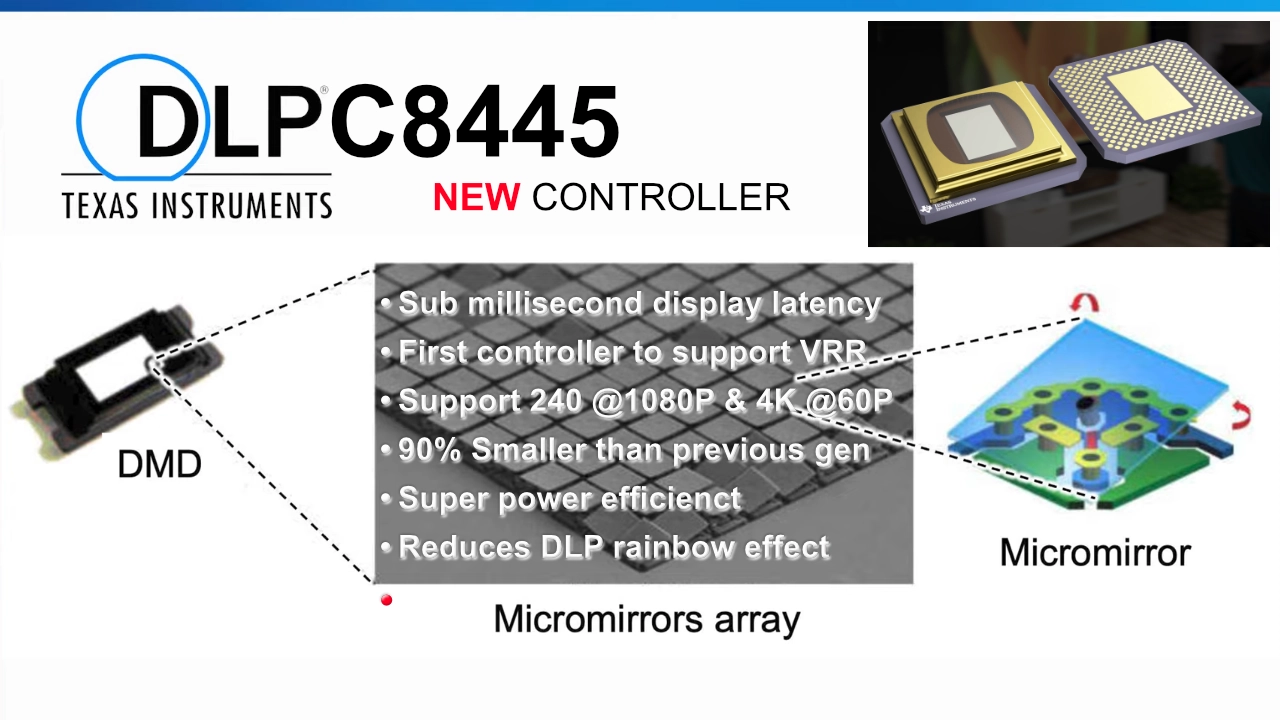
The Valerion VisionMaster Max uses the latest Texas Instruments 0.47-inch Digital Light Processing (DLP) Digital Micro-mirror Device (DMD) technology with the company’s XPR shifting technology. Like traditional DLP projectors, the Valerion VisionMaster Max starts with a native 1,920 x 1,080p DLP chip that uses TI’s XPR technology to shift each mirror 4 times, resulting in a 4K UHD (3,840 x 2,160p) displayed image. But what’s different is that this newest generation of DLP engines features a TI DLPC8445 controller, one of the most significant advances in DLP technology for projectors in almost a decade.

For one, TI has reduced the DLP control hardware by about 90%, clearing the way for smaller but more powerful 4K projectors. This change likely explains why we are seeing "lifestyle" projectors like the Valerion VisionMaster Max. In addition to a reduction in size, this new hardware gets a speed boost. This controller is the first in the DLP world to support Variable Refresh Rate (VRR), which is a massive deal if you have ever been annoyed by screen tearing or stuttering during a game. TI has upgraded this new controller to include a "rolling buffer," with sub-millisecond latency. While 4K is still capped at 60 Hz, the ability to jump to 240 Hz at 1080p makes it a great gaming solution rather than just a way to watch movies.

VisionMaster Max Laser - Projector Reviews - Images

The Valerion VisionMaster Max uses a combination of next-generation RGB laser light source, which is essentially the heart of this projector, allowing it to punch well above its weight class in terms of color and brightness. No lamp, single blue laser with a phosphor wheel, or LED-powered light source can compete with a Triple-Laser (Pure RGB) system, which offers a much wider, more accurate color palette. The VisionMaster Max covers 110% of the Rec. 2020 color space, allowing it to reproduce hyper-saturated reds and greens that simply aren't possible on lesser hardware. Most high-end TVs struggle to hit 80% of that same standard.

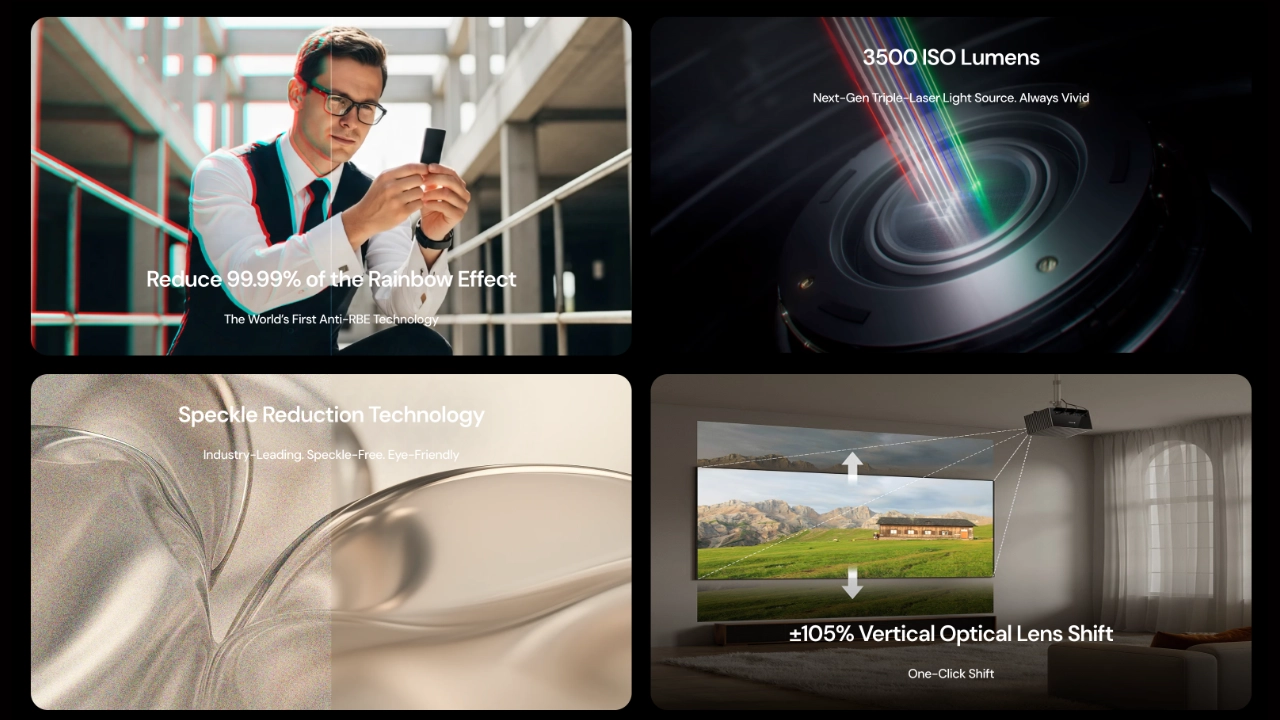
The VisionMaster Max’s RGB laser light source is incredibly bright, with a manufacturer-rated 3,500 ISO lumens of light output, providing more than enough "pop" to handle use in spaces with small to moderate amounts of uncontrolled ambient light. The RGB laser is also incredibly reliable and rated for over 25,000 hours of light-source life. To put this in perspective, 25,000+ hours means that if you watched a two-hour movie every single night, the lasers would theoretically last you more than 34 years.

VisionMaster Max Improvements - Projector Reviews - Images

Valerion has developed a suite of proprietary software for the VisionMaster Max that aims to fix the historical flaws of single-chip projectors and make projector setup easier. The Valerion NoirScene Engine is designed to address the gray, "charcoal" blacks that usually plague DLP technology. The projector’s 6-level iris features a shield that blocks unwanted light from reaching the lens. The AI-driven Enhanced Black Level (EBL) software analyzes video in real time to adjust the RGB laser diodes and the gamma curve, achieving a 50,000:1 dynamic contrast ratio while keeping dark area details visible and highlights bright.

Beyond contrast, Valerion has what they call Anti-RBE (Rainbow Effect) technology, which reportedly eliminates nearly all rainbow flashes that sensitive viewers (like me) often see, especially in high-contrast scenes. This reduction in rainbow effect is complemented by another Valerion-developed Speckle Reduction Technology that reduces the "gritty" texture sometimes seen with triple-laser sources.

If you watch a lot of classic or lower-resolution content, Valerion’s AI Super Resolution 2.0 system uses the MediaTek Pentonic 700 chipset to upscale footage. At the same time, AI-Picture Quality Object Recognition 2.5 adds a bit of depth enhancement to make subjects stand out more naturally from the background.

For gamers, Valerion includes a DLP TURBO mode to bypass the XPR pixel-shifting hardware, effectively turning it into a native 1080p machine. This Valerion software allows the projector to hit a 4 ms input lag at 1080p 240 Hz. These software-based solutions, while smart and powerful, can lead to a bit of "brightness pumping" when in their most aggressive settings, so Valerion has included manual tuning to find that sweet spot between deep blacks and image stability. I’ll talk about how this works in the PERFORMANCE section of this review.

Hisense_L5H_GoogleTV - Projector Reviews Images

The Valerion VisionMaster Max features a fully integrated Google TV OS, offering significant advantages over other smart projector operating systems. If you have used an Android device, Google TV offers a very familiar and robust smart OS experience, with access to over 10,000 applications via the Google Play Store. Also, Google TV delivers seamless access to a vast library of streaming services, apps, and more, all through an intuitive, user-friendly interface.

A key benefit of Google TV on the VisionMaster projectors is the inclusion of a native Netflix app and access to all the latest Netflix features and the best streaming quality, without the need for sideloading or complicated, unreliable workarounds. The official Netflix app lets you access your favorite movies and shows with reliable performance and easy navigation, right out of the box. The integration of Google TV into the VisionMaster series includes features such as built-in Chromecast and Google Assistant, further enhancing the smart capabilities and convenience of your Valerion projector

Valerion VisionMaster Series - Projector Reviews - Images
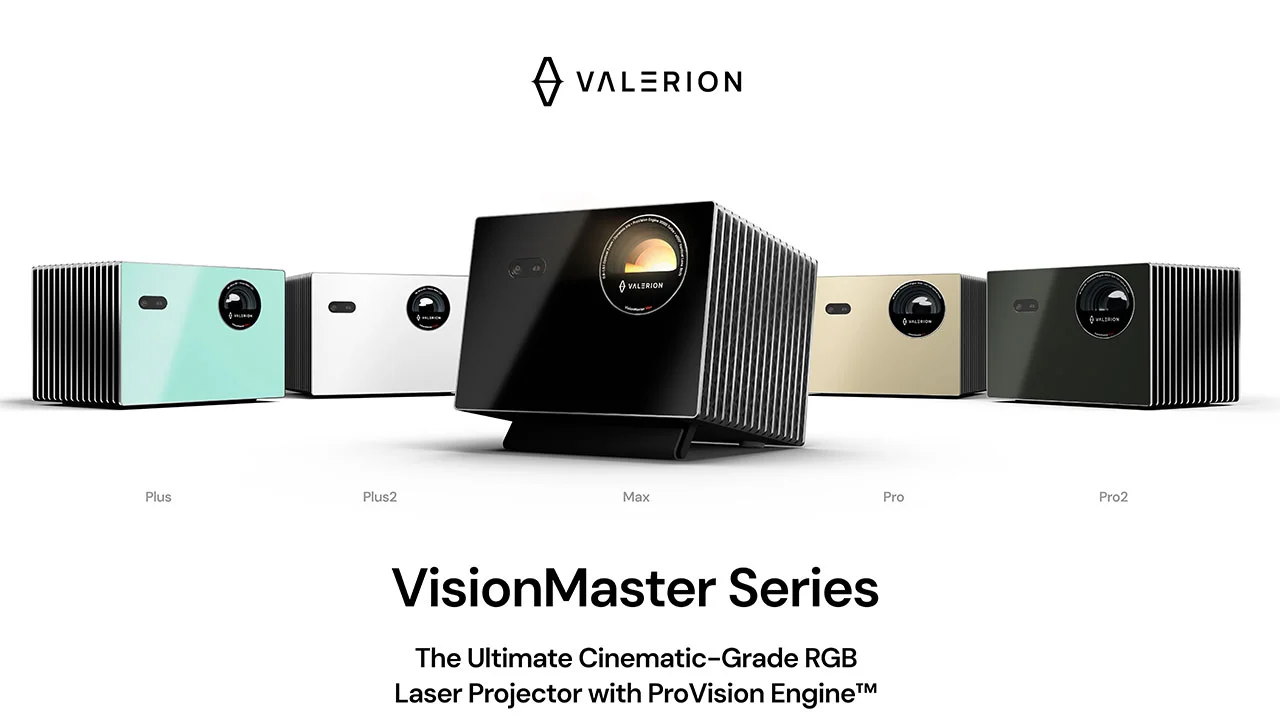
The Max is one of five projectors in the Valerion VisionMaster Series

The Valerion line of projectors offers five models: the VisionMaster Max, the Pro2, the Pro, the Plus2, and the standard Plus. With all these models, Valeron seems to have a projector for you, whether you are a hardcore cinephile, a competitive gamer, or just someone looking for a decent setup that won't break the bank. As you climb the ladder toward the VisionMaster Max, you are essentially paying for better brightness, higher contrast, and a more sophisticated lens assembly. While the VisionMaster Max is clearly the enthusiast's choice for maximum flexibility and punch, the Pro and models appear to be solid mid-range contenders for general entertainment.

Despite the different price points, there is a lot of shared DNA across the whole series. Every one of these projectors uses the 0.47-inch Texas Instruments DMD chip and XPR technology to put a 4K image on the screen. They also feature triple laser light sources capable of covering over 107% of the Rec. 2020 color space, which is impressive for maintaining color saturation across models. You are also getting a pretty standard suite of processing across the board, including Dolby Vision, IMAX Enhanced, and dynamic tone mapping, along with Google TV and a built-in 2 x 12-watt sound system.

The gaming specs are particularly consistent, which is great to see. Every model supports the DLP Turbo Mode, which drops input lag to a staggering 4 ms at 1080p and 240 fps. Even at 4K and 60 fps, you are looking at about 15 ms of lag. This 15 ms lag suggests that even the more budget-friendly models in the series could hold their own as serious gaming displays, provided you don't need the extreme brightness or the physical iris found on the higher-end units.

VisionMaster Model Comparison
ModelMaxPro2ProPlus2Plus
Price$3999$2999$2499$2000$1499
Brightness30003000250020001500
Contrast4000:1 (15000:1 Dynamic)4000:1 (15000:1 Dynamic)3000:1 (10000:1 Dynamic)3000:1 (10000:1 Dynamic)3000:1 (10000:1 Dynamic)
Lens0.9-1.5:1 Optical Zoom0.9-1.5:1 Optical Zoom0.9-1.5:1 Optical ZoomFixedFixed
Vertical Lens ShiftYesNoNoNoNo
Dynamic IrisYesNoNoNoNo

HARDWARE

CHASSIS

  • VisionMaster Max Projector - Projector Reviews - Images
  • VisionMaster Max Projector - Projector Reviews - Images
  • VisionMaster Max Projector - Projector Reviews - Images
  • VisionMaster Max Projector - Projector Reviews - Images#4
  • VisionMaster Max Projector - Projector Reviews - Images
  • VisionMaster Max Projector - Projector Reviews - Images

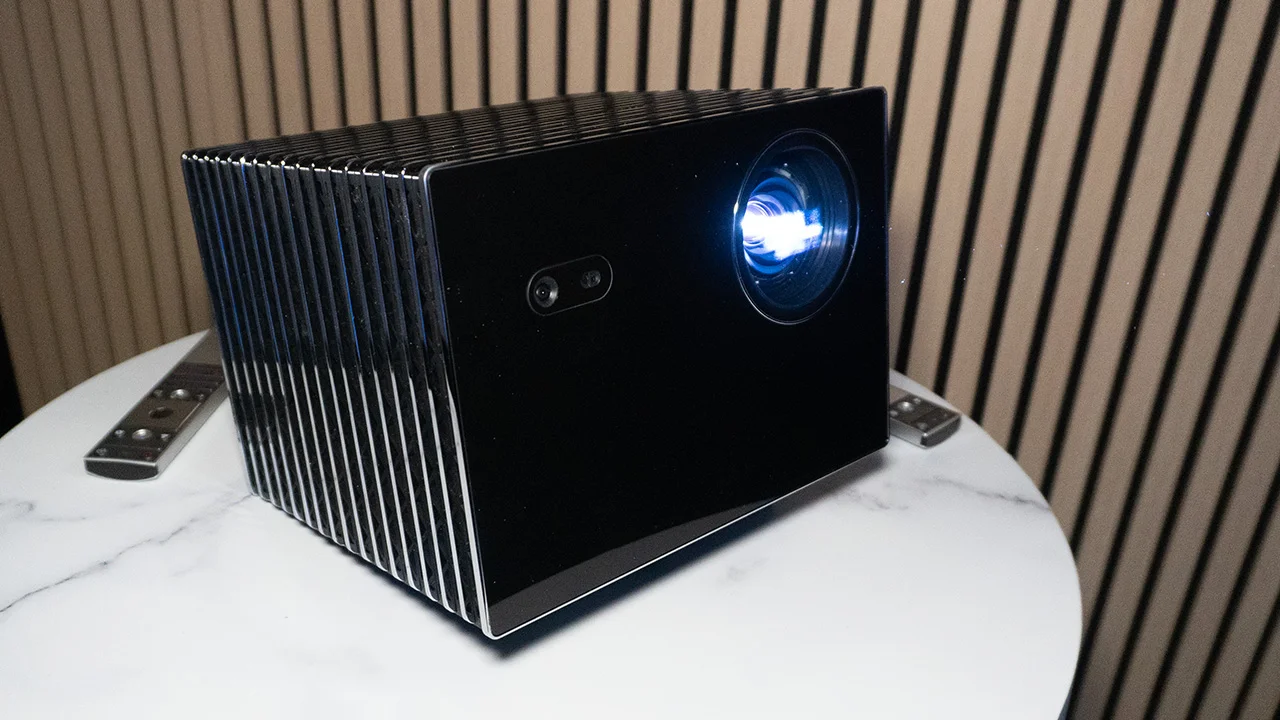
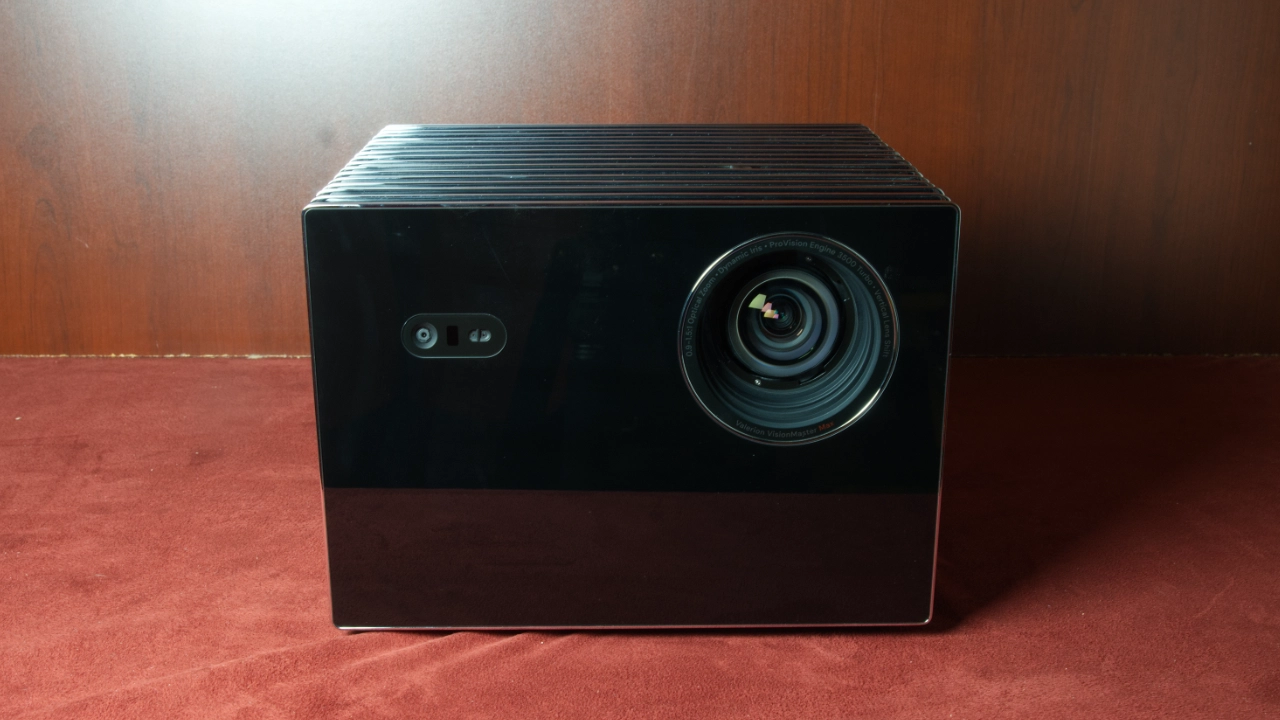
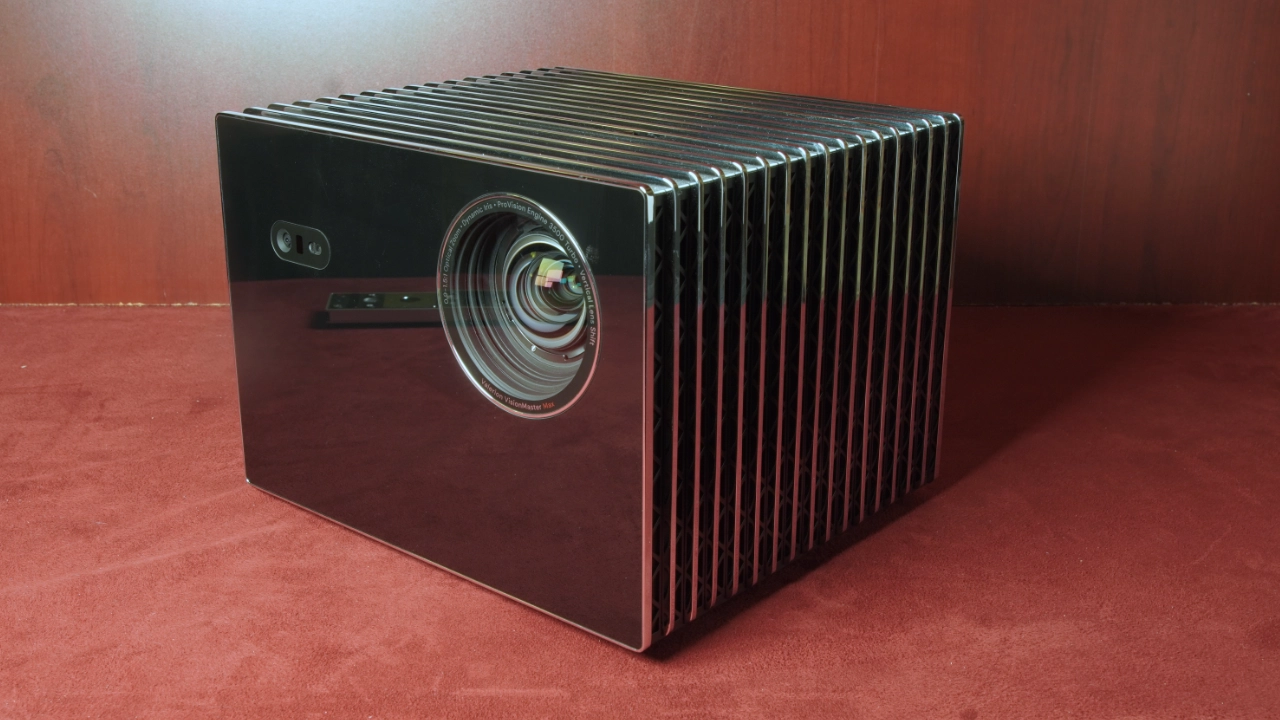
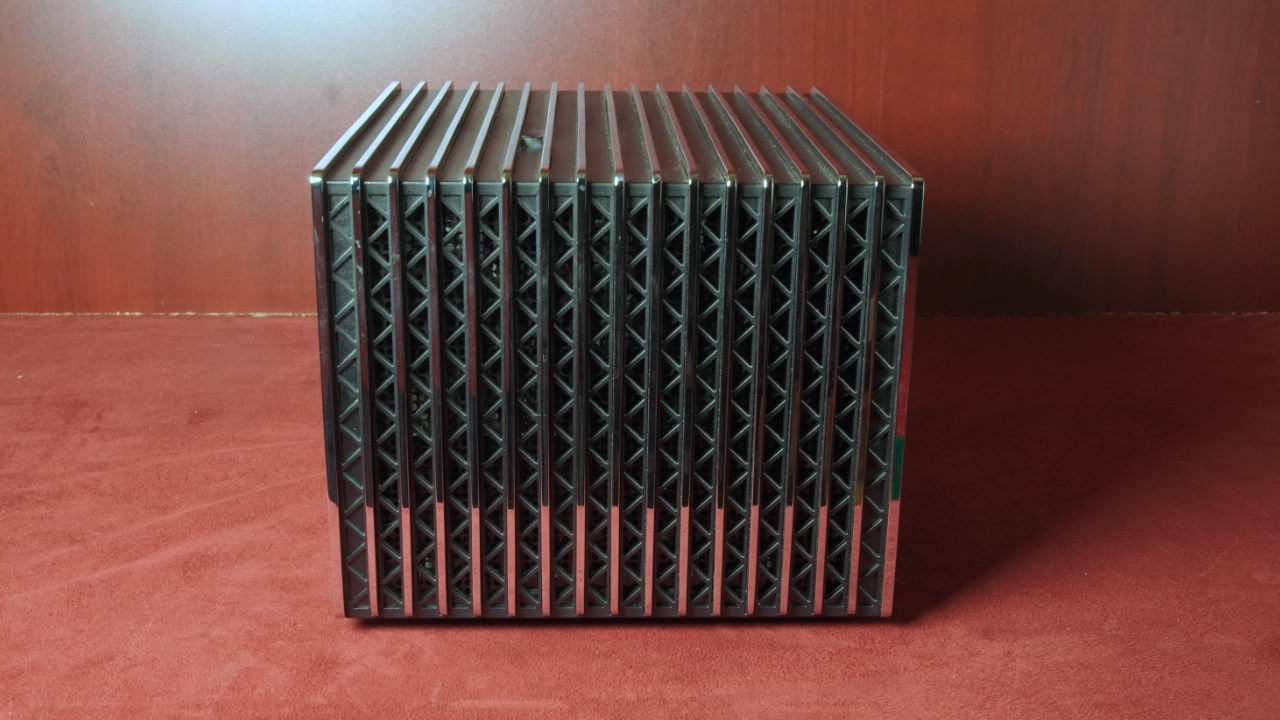
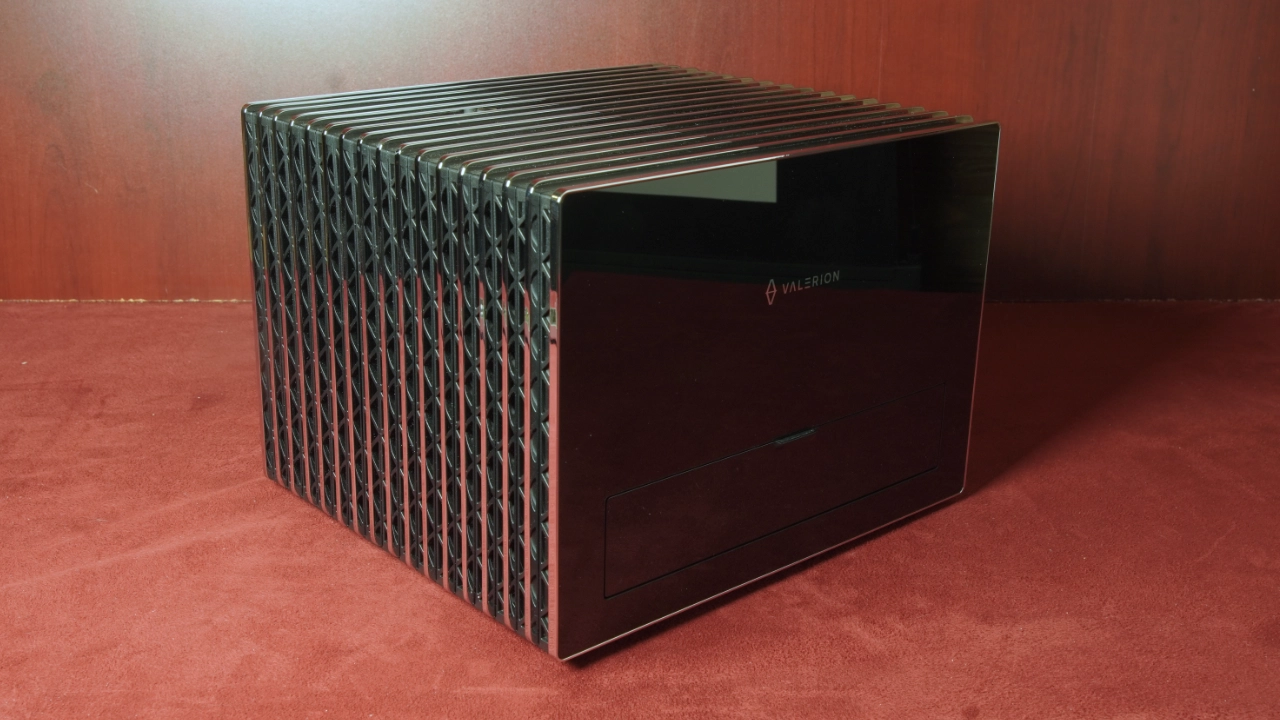
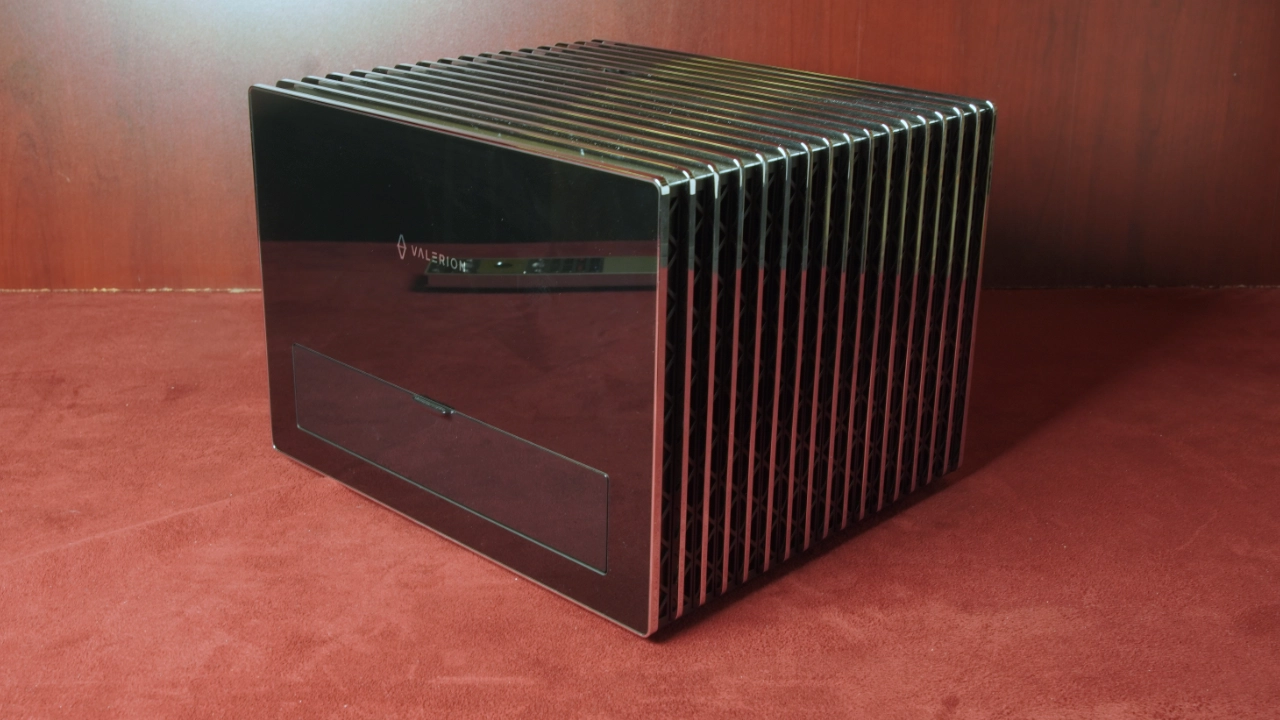
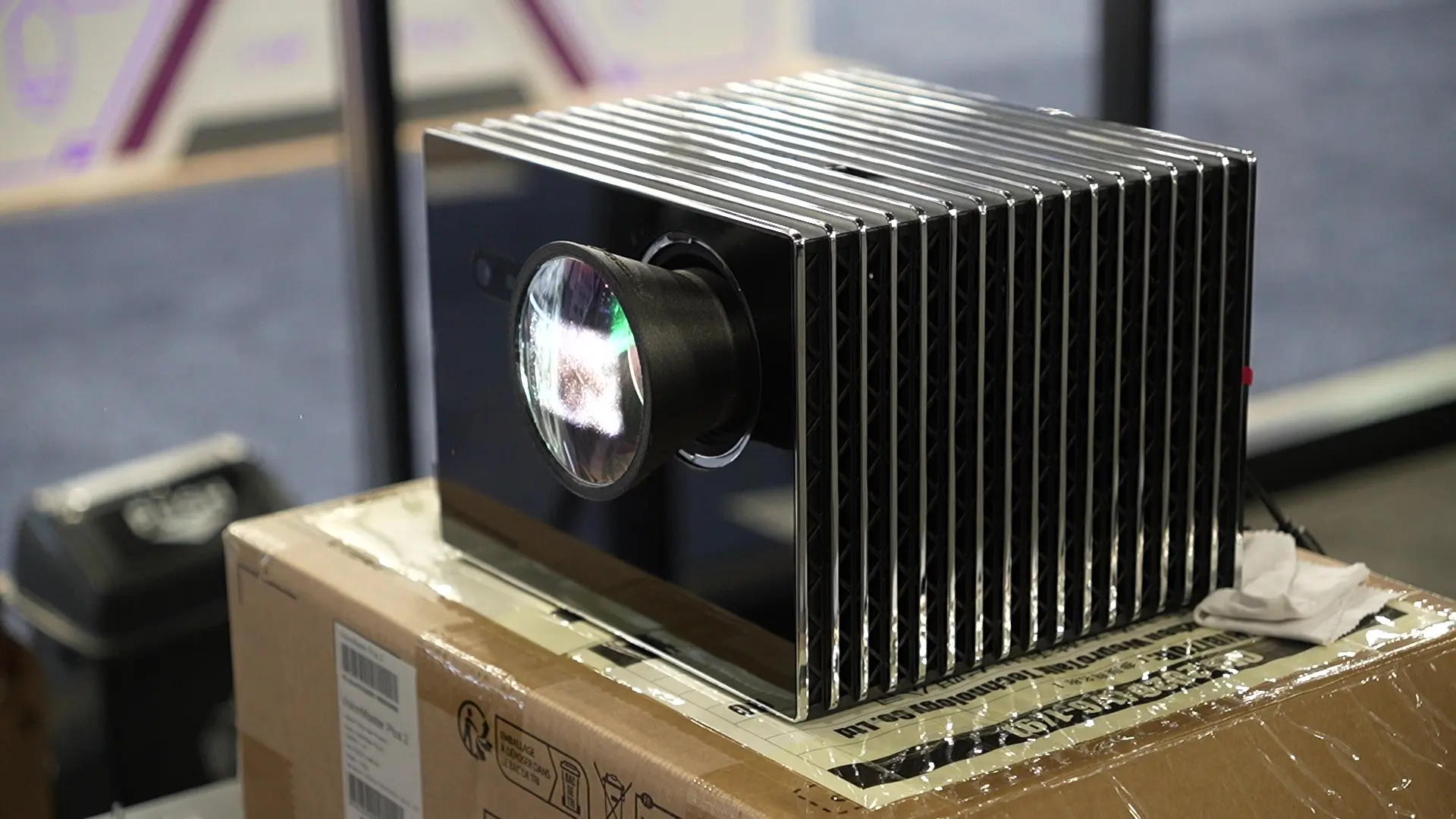
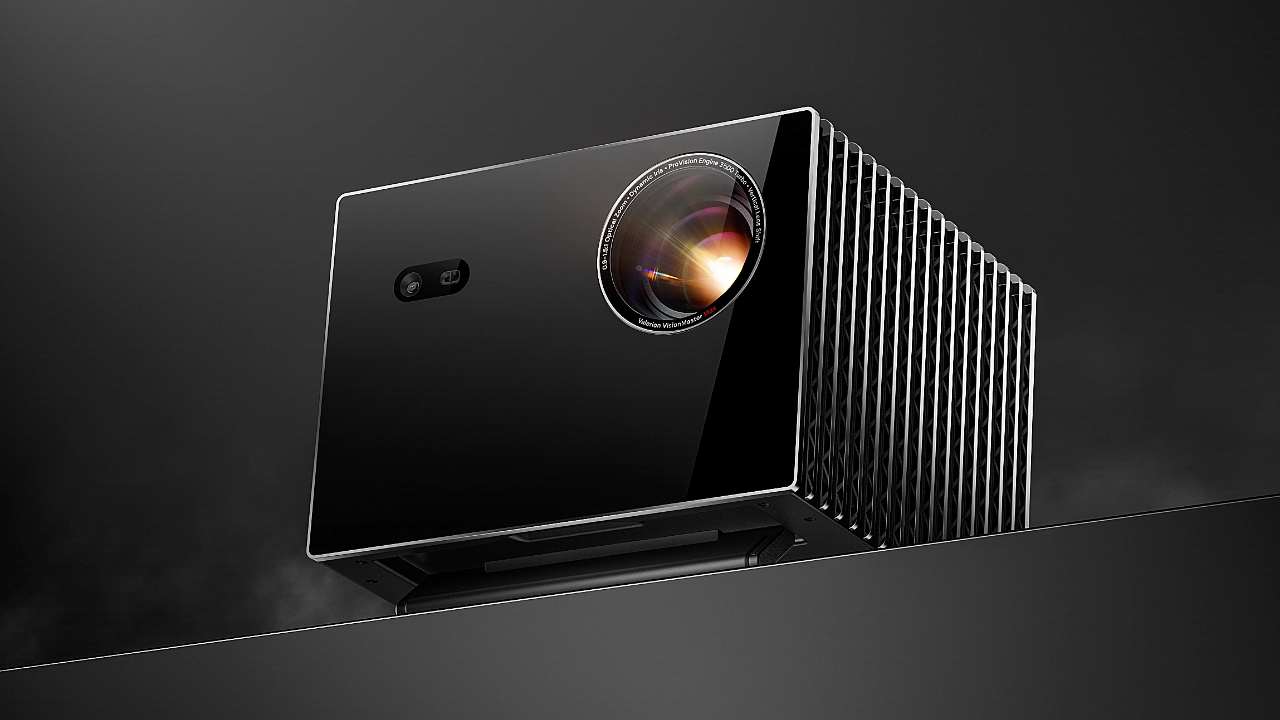
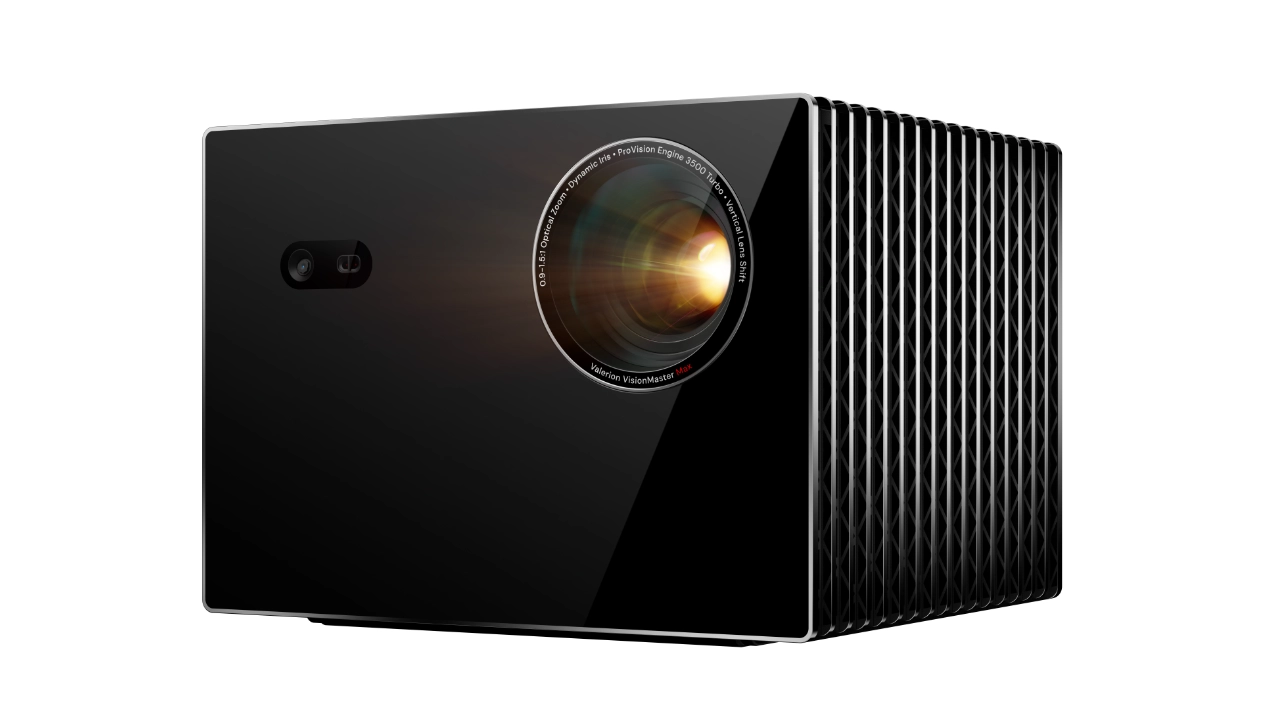
The VisionMaster Max measures (WxHxD) 10.20" x 7.30" x 9.20" (259.08 mm x 185.42 mm x 233.68 mm) and weighs 16.5 pounds (7.4 kg).  Valerion VisionMaster Max features a very modern yet minimalist design. I want to be clear: I like the way this projector looks, but from the moment I saw it, I said to myself, "This looks like another projector I’ve had in my lab." Back in 2023, I reviewed an ultra-short-throw projector from Vava called the Chroma VA-SP003. Both projectors feature a dark black chassis with chrome fins along the exterior that provide cooling. The biggest difference is that the VAVA is an ultra-short-throw projector, and the Valerion is a lifestyle projector. Valerion has also added cooling fins to the top, in addition to the sides, making it much more extensive than the Chroma by VAVA.

The Valerion VisionMaster Max is designed for customers seeking a premium lifestyle projector. From the moment you begin the unboxing process, it's evident that Valerian has put significant thought into creating an impressive experience, especially for a projector at this price point.

VisionMaster Max Remote - Projector Reviews - Images
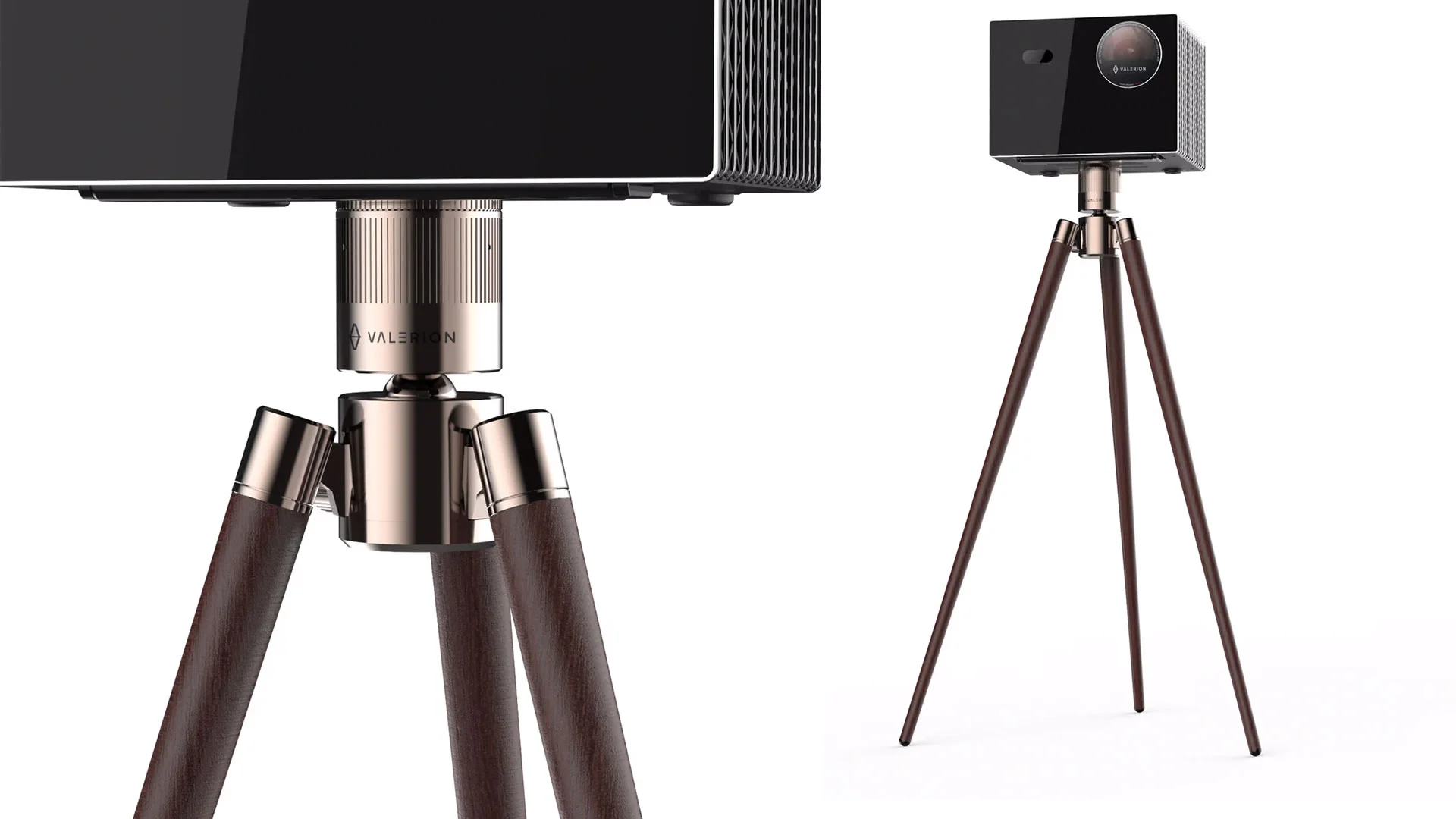
Optional Valerion VisionMaster Floorstand

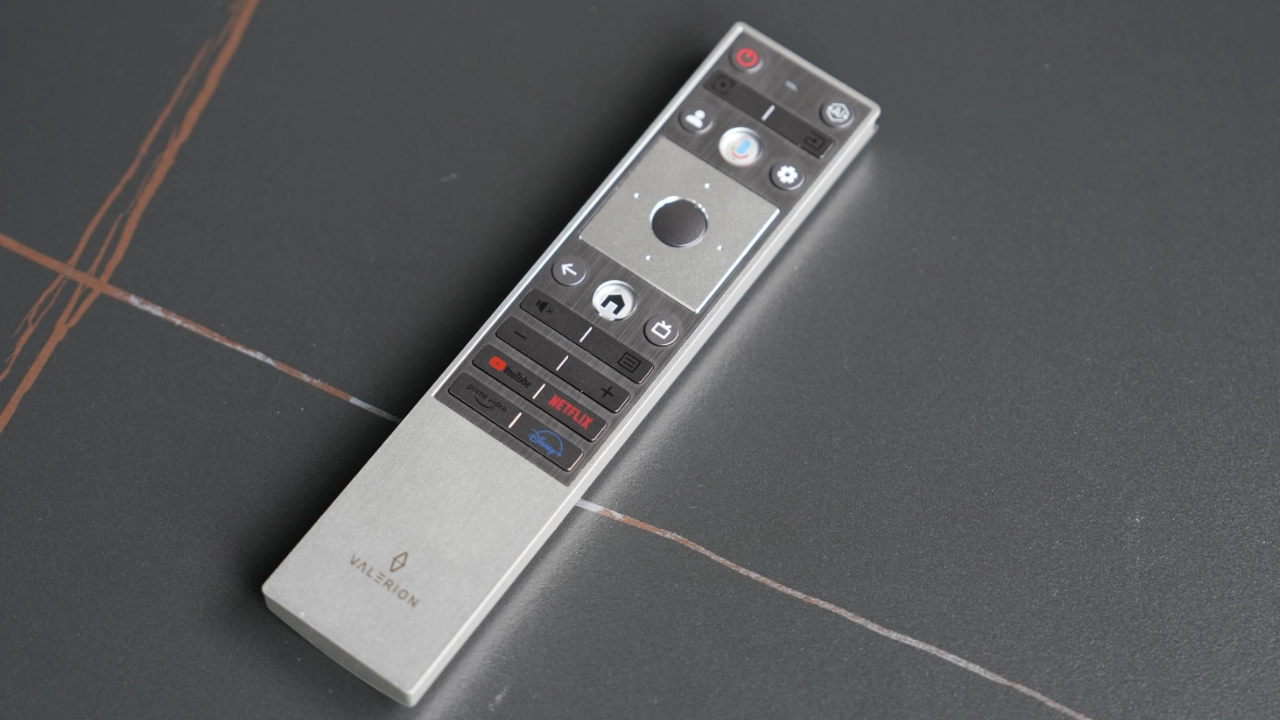
The projector includes a well-designed remote control with a backlit keypad, so it is easy to use in the dark. There is voice control via a built-in microphone that works via Google Assistant or Amazon Alexa. There are shortcut buttons for YouTube, Netflix, Amazon Prime Video, and Disney+. Additionally, the remote has buttons for adjustments, including autofocus and auto-keystone correction.

The VisionMaster series Google TV OS provides users access to popular streaming services like Netflix, Hulu, and Amazon Prime Video. The Max also supports AirPlay 2, Chromecast, and Miracast and is compatible with smart home systems like Google Home and Apple HomeKit, and offers device control via Alexa and Control4.

Valerion VisionMaster Pro2 Stand - Projector Reviews - Images

As a lifestyle projector, the VisionMaster Max is designed primarily for tabletop or shelf placement or for use with its optional stand, but it can also be ceiling-mounted. Valerion sells an optional ceiling mount, but the projector does not have the standard mounting points to attach it to a universal mount.

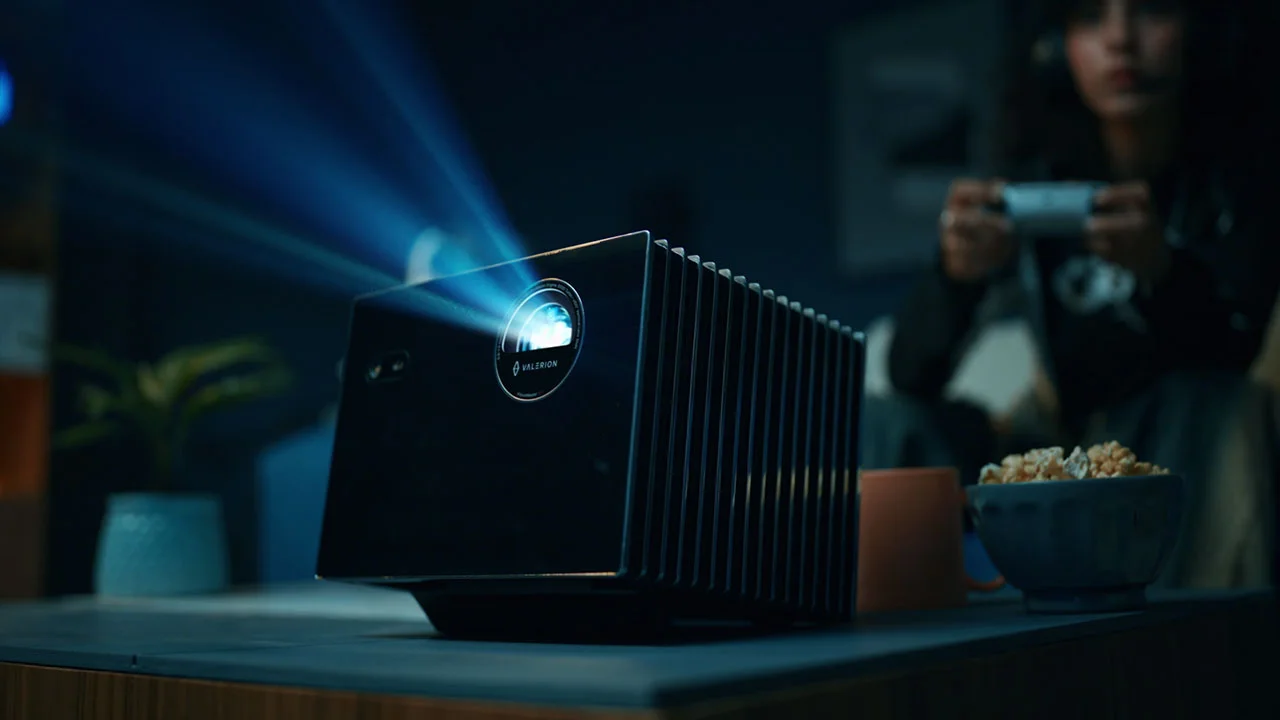
When placed in front of the viewer in a dark space, the projector’s "shiny" Electroplated Metal Strips, which wrap around the chassis, are beautiful, but they may produce some distracting reflections.

The front of the chassis houses the motorized lens, along with CMOS and TOF sensors used for features such as autofocus, object avoidance, and auto keystone correction. In addition, the Google Assistant mic built into the remote control is located on the top of the chassis, along with a far-field Google Assistant mic. The intake and exhaust vents, along with the speakers, are located on the sides.

Valerion VisionMaster Max - Projector Reviews - Images

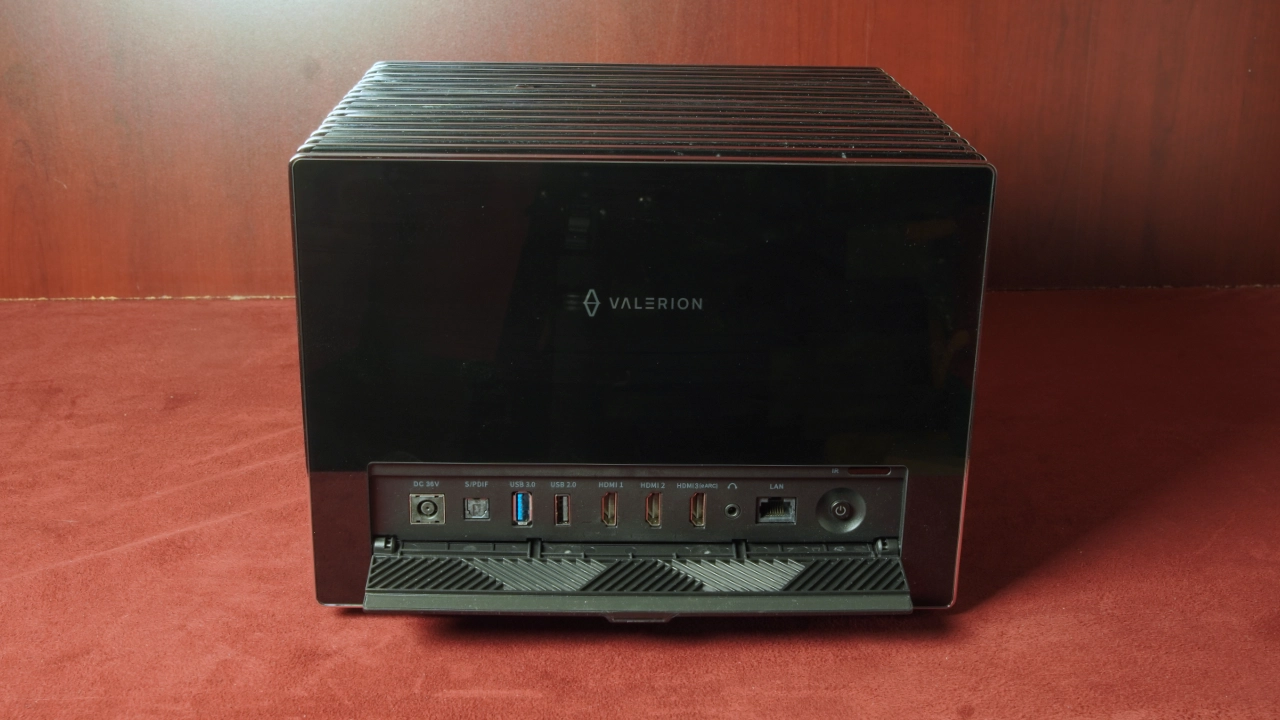
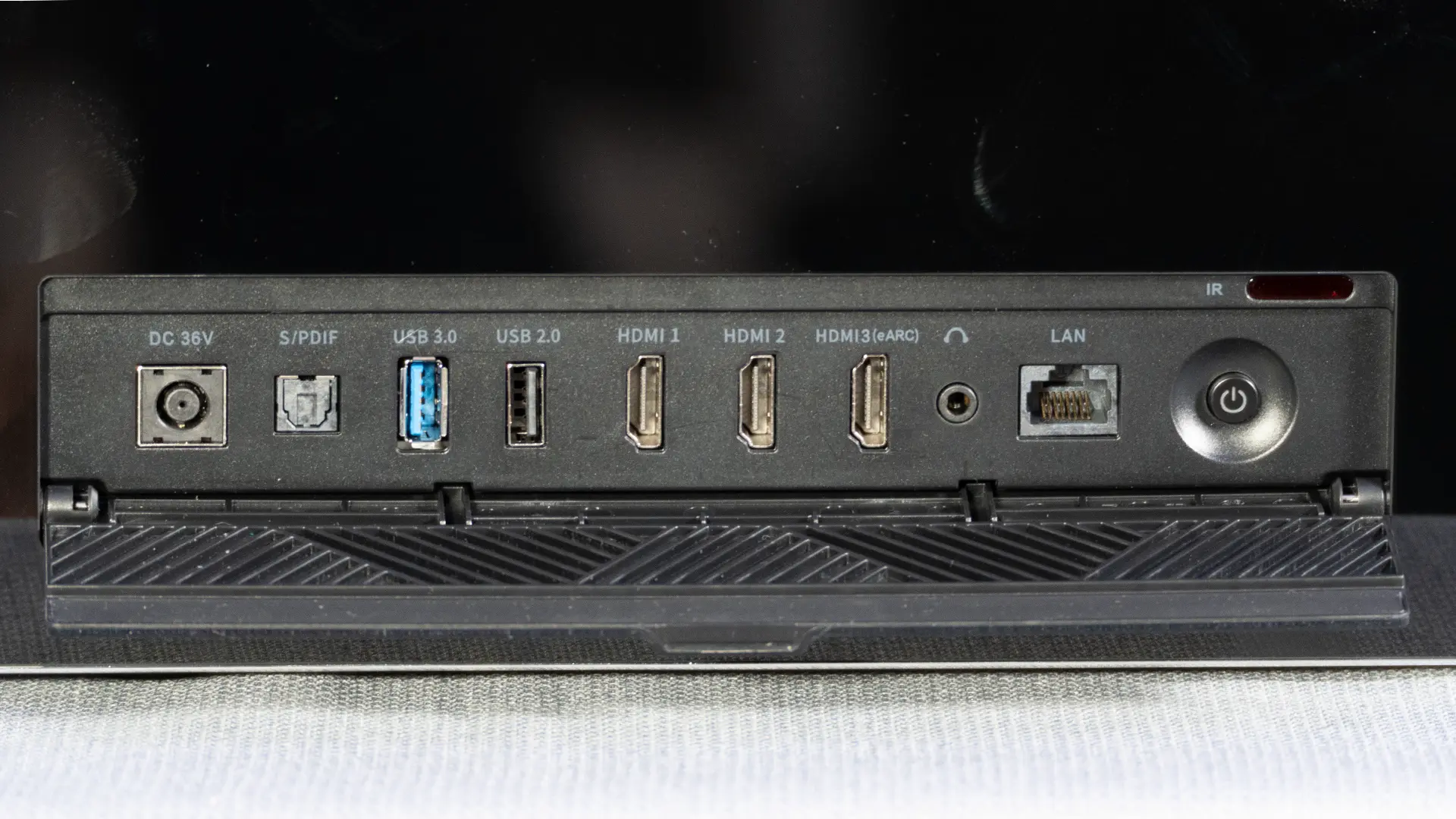
On the back of the projector, behind a door at the bottom, are all the projector’s connections. These include (from left to right): a DC power connector, a digital audio (S/PDIF) port, USB 3.0 and USB 2.0 ports, 3 HDMI 2.1 ports, a headphone jack, a Gigabit Ethernet port, and a Power button.

Valerion VisionMaster Max - Projector Reviews - Images
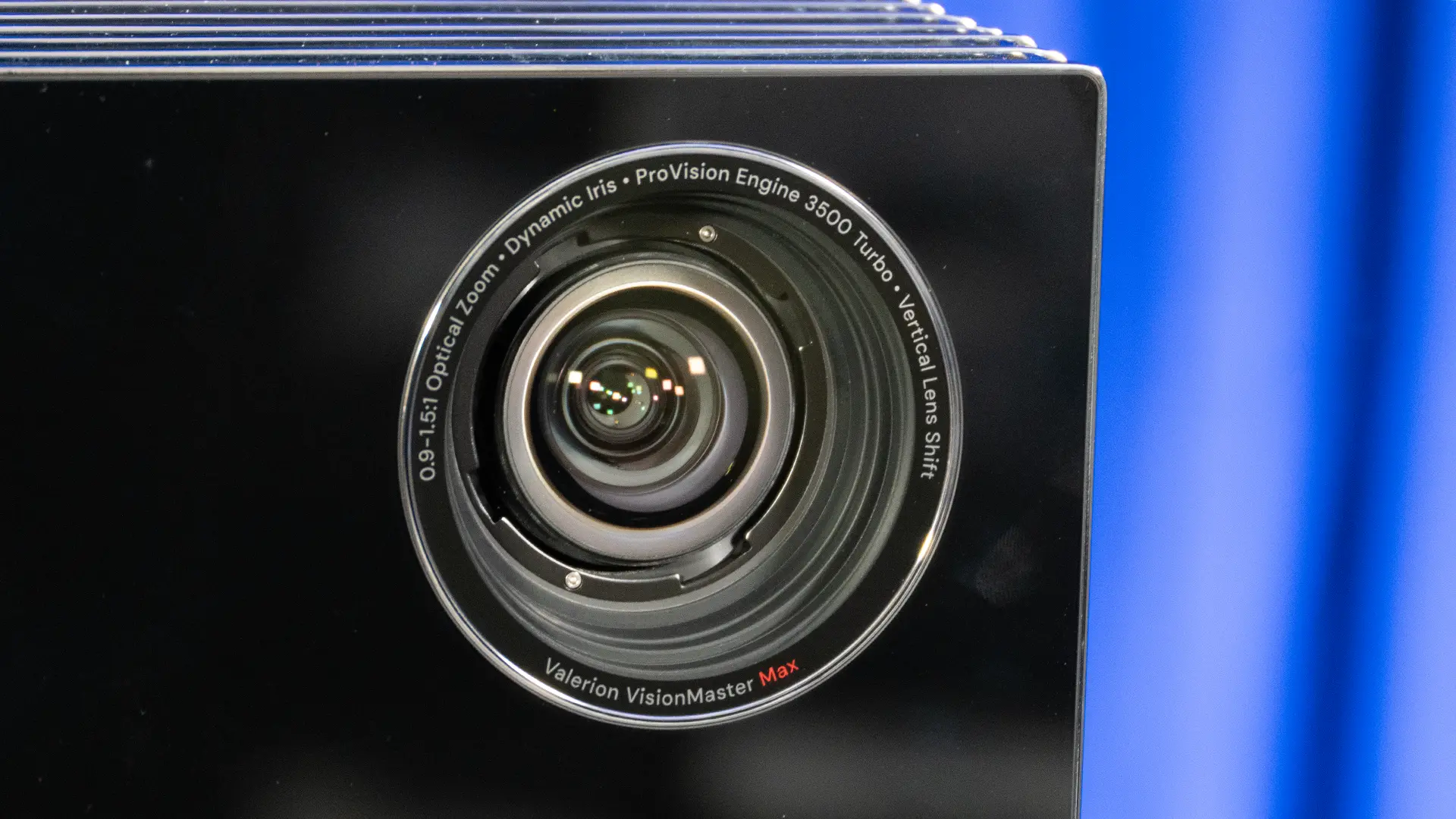
The VisionMaster Max features an adjustable focus and optical zoom via the projector's remote control.

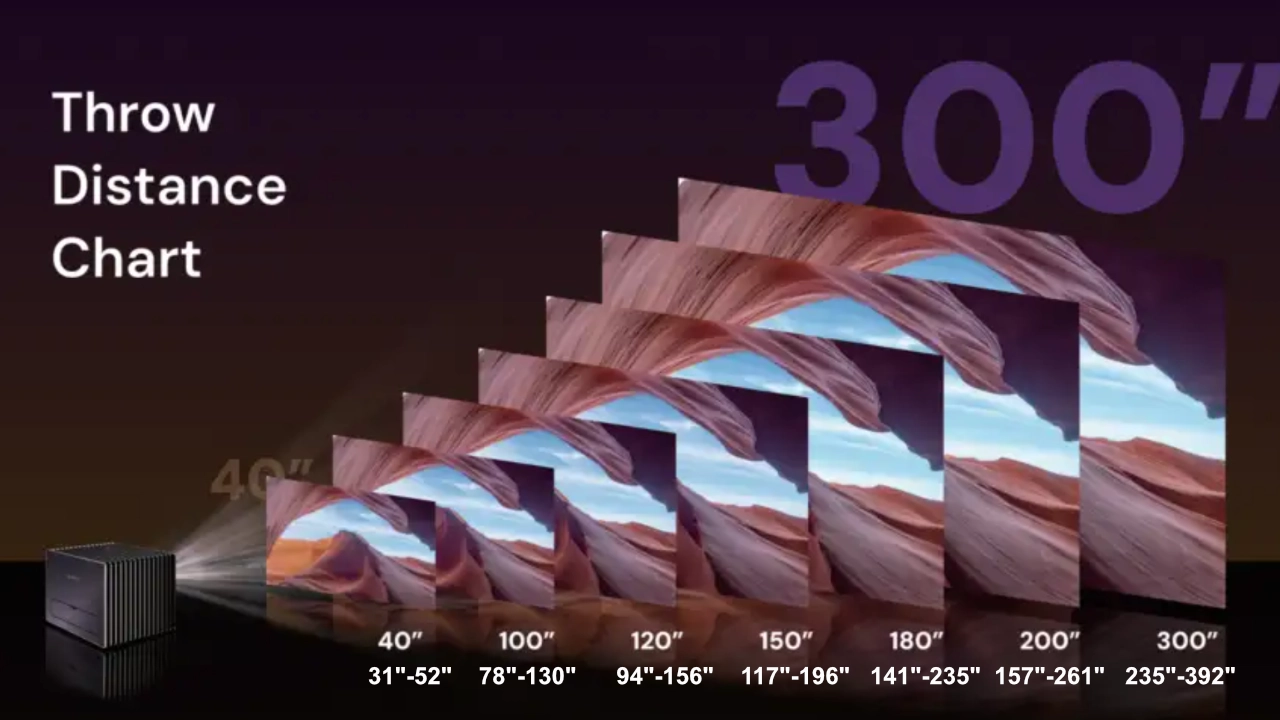
The VisionMaster Max features an OpticFlex lens system. This high-quality motorized lens ensures a sharp image from corner to corner. The lens offers 1.7x optical zoom and a throw ratio of 0.9 to 1.5:1. The Max can project a 100-inch image from 12 to 14 feet away. To simplify setup, the Max includes autofocus, object avoidance, and auto keystone correction.

The Max also features vertical lens shift with an offset of +/-105%, which makes centering the picture much easier in rooms with tricky ceiling heights. The 0.9 to 1.5:1 optical zoom is also smooth and provides enough range to skip digital zoom, which typically degrades image quality. Adjustments can be controlled via the remote. There is no horizontal lens shift, so you still need to manually center the projector. 

VisionMaster Max Throw Distance chart - Projector Reviews - Images

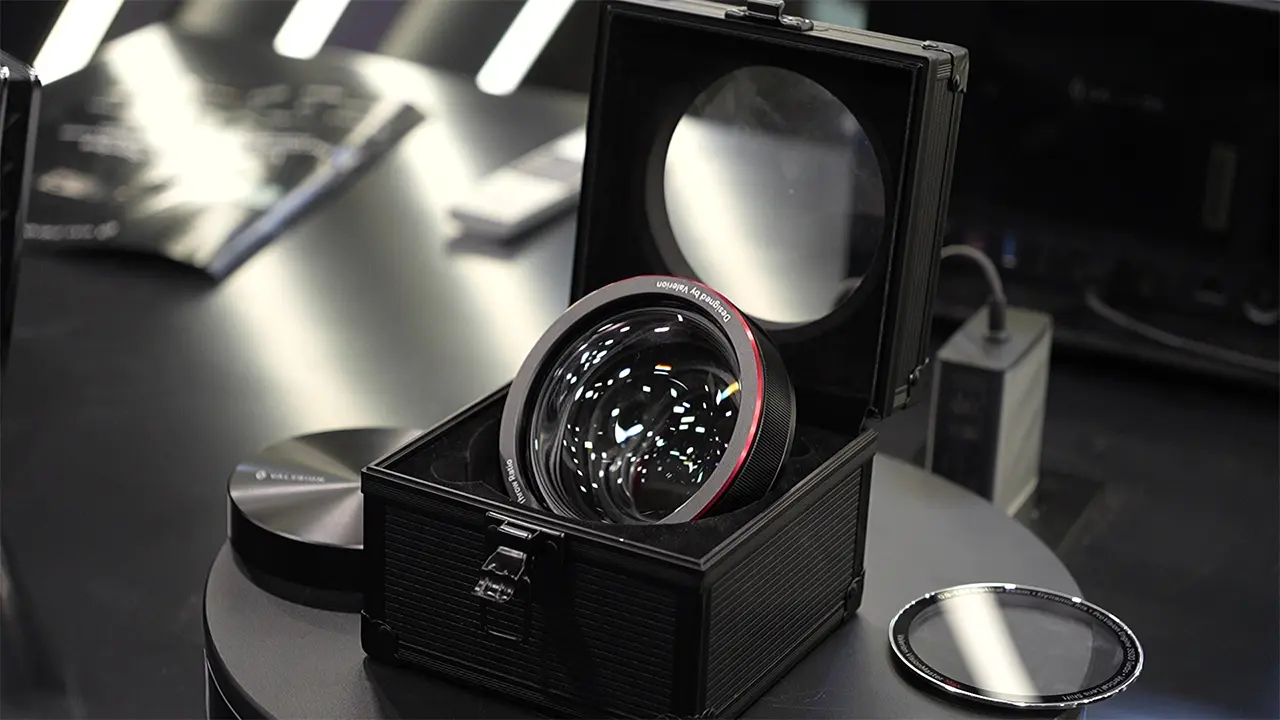
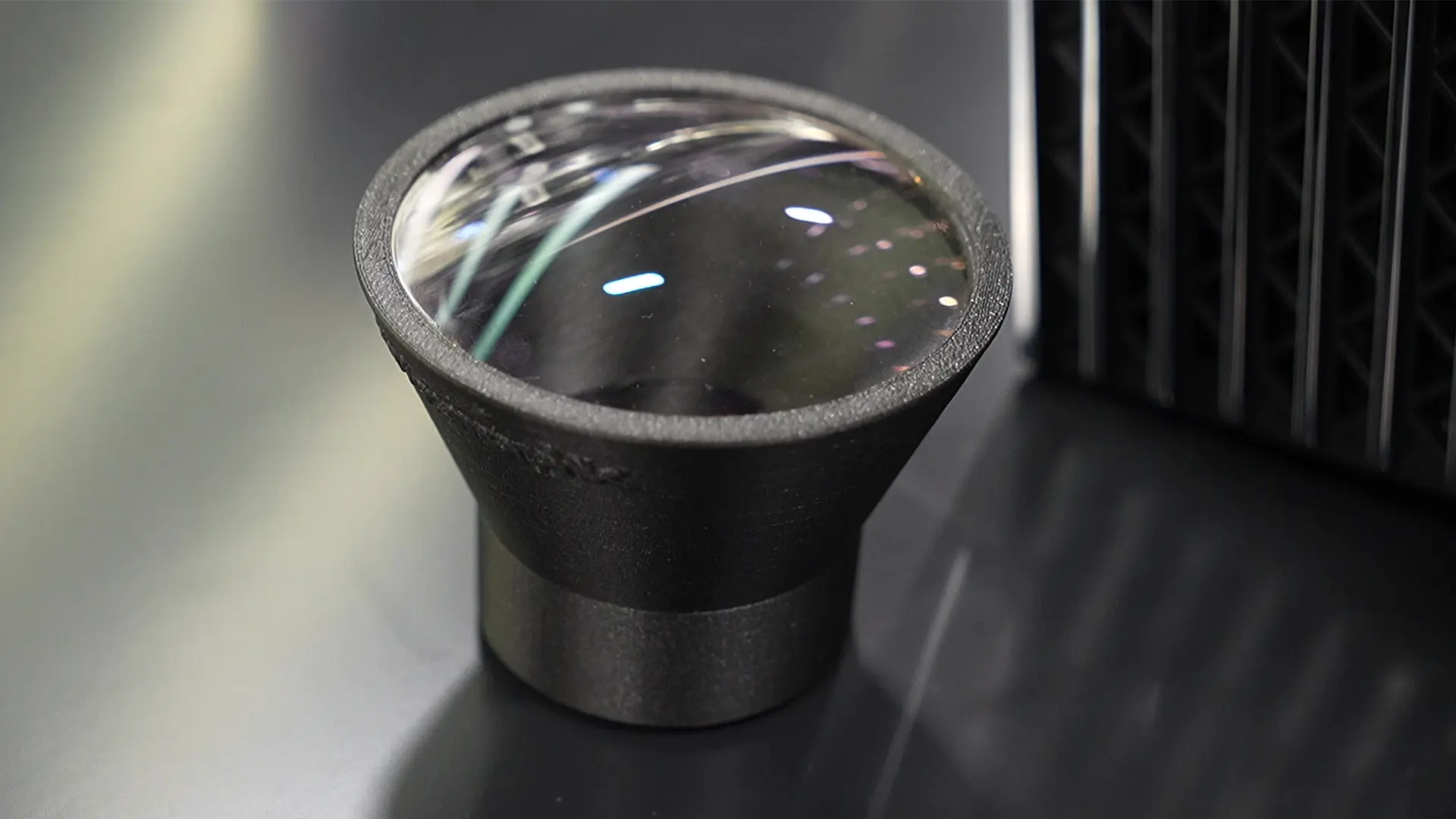
As if that’s not enough, Valerion has another trick up its sleeve, and it's an industry first for a lifestyle projector. Valerion is offering an optional long-throw lens for the VisionMaster Max. This optional lens features a professional-grade Long-Throw Lens (1.3–2.1:1). This interchangeable lens is designed for large dedicated cinemas or setups where the projector must be placed far back in the room, such as on a rear wall or in a projection booth.

This lens is expected to be available as a separate "add-on" through Valerion’s store. The pricing for the standalone interchangeable long-throw lens has not been finalized, as they are just entering production.

By using the glass lens to adjust the image size rather than digital scaling, you maintain the full 4K resolution and 3,500 ISO lumens of brightness, effectively extending the throw distance by about 40%. This gives the VisionMaster Max a level of install flexibility that no other lifestyle projector can match.

VisionMaster Long Throw Lens-1
Optional Long Throw Lens which will be available for the VisionMaster Max

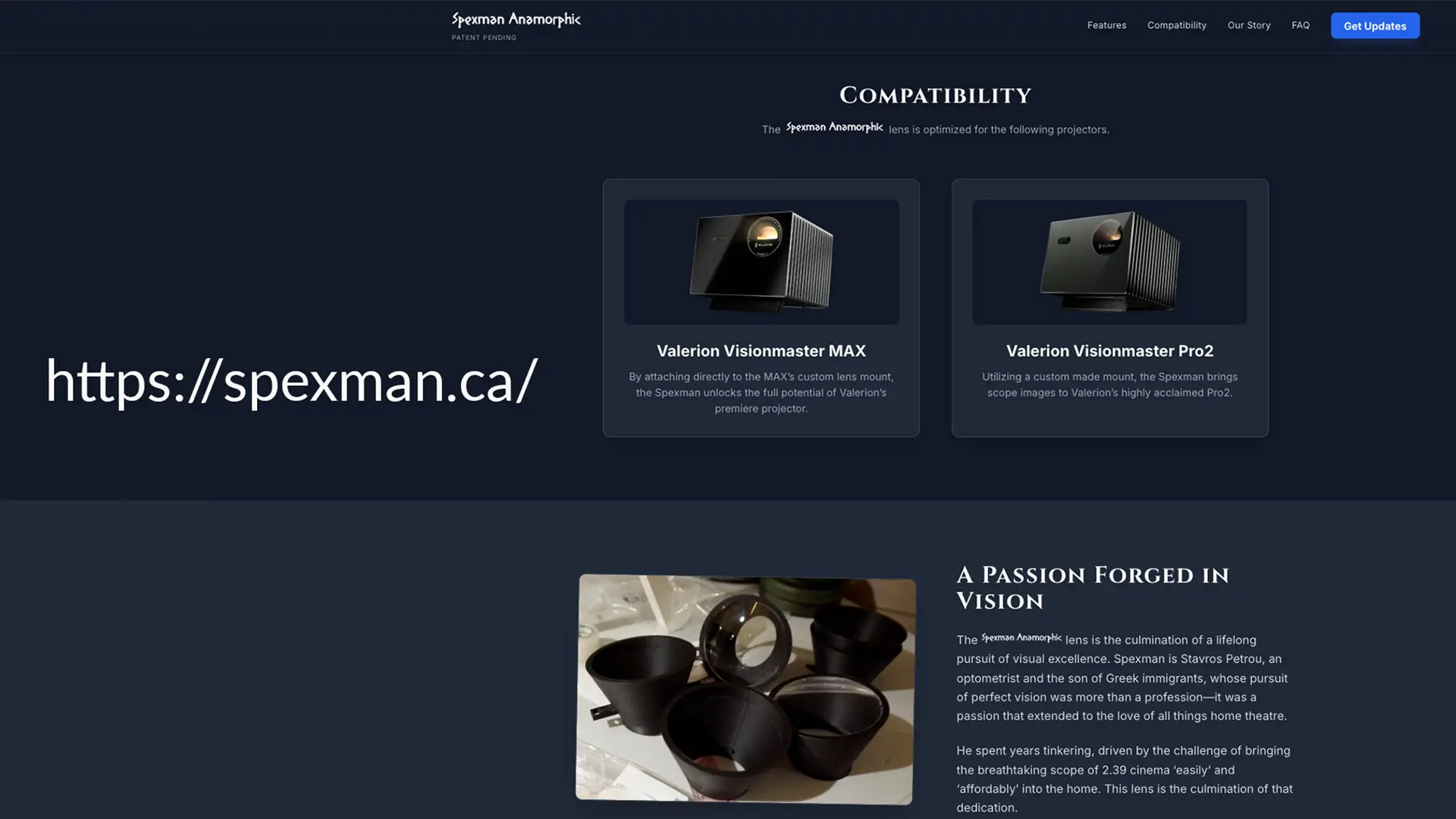
On top of that, a third-party enthusiast company called Spexman Anamorphic has designed and will be selling a custom anamorphic lens specifically for this projector. Rather than ignoring this niche idea, Valerion embraced it and added the necessary scaling and processing support to the projector itself. At CES2026 Valerion demonstrated the anamorphic lens on the VisionMaster Max. To learn more, check out our AWOL Vision/ Valerion CES 2026 video, where we interview the lens creator.

An anamorphic lens offers two primary performance advantages when viewing widescreen 2.35:1 or 2.40:1 content on a 4K projector. First, it maximizes brightness by eliminating the black bars that normally appear above and below the image on a standard 16:9 projection. In a conventional setup, a portion of the projector’s light output is effectively wasted illuminating these unused areas. By vertically stretching the image and optically restoring the correct aspect ratio with an anamorphic lens, all available light is directed onto the active picture area. This results in a noticeable increase in on-screen brightness, which is especially beneficial for HDR content and larger screen sizes.

  • Anamorphic Lens maker-2
  • VisionMaster Anamorphic Lens-1
  • VisionMaster Anamorphic Lens-3
3rd Party Anamorphic lens for the VisionMaster Max

Second, the use of an anamorphic lens allows the projector to utilize its full 3840-by-2160-pixel array. Without an anamorphic lens, a 2.40:1 movie on a 4K projector uses only about 3840 × 1600 pixels, leaving the rest wasted in black bars. With an anamorphic lens, the projector can use all 3840 × 2160 pixels to display the image. By engaging the entire panel, the image gains additional detail and improved perceived sharpness. The combination of higher brightness and full-resolution utilization delivers a more impactful, immersive viewing experience that better reflects the capabilities of a modern 4K projector.

While the VisionMaster Max supports anamorphic lenses, Valerion does not include lens memory for saving specific zoom, focus, or shift positions. I think it is a big miss on Valerion's part, particularly for users with widescreens who want use a standard lens to switch between a 16:9 aspect ratio for television and a 2.35:1 (CinemaScope) ratio for movies. If possible, Valerion should consider adding this in a future firmware update. For now, any adjustments to the aspect ratio must be done manually with the remote each time.

Before I talk about the digital AUTO adjustments on the VisionMaster Max, I have to stress that using digital adjustments while very convenient can cost you in overall picture quality. Do your best to square the projector to your screen or have it professionally installed. Obstacle Avoidance and Auto Screen Fit features are accurate but they rely on digital cropping, which effectively reduces resolution and can leave a faint "light border" around the projected image.

That said, the VisionMaster Max's automatic setup features are top-notch. They are fast and accurate. The Auto Focus and Auto Keystone use a combination of a CMOS camera and a Time-of-Flight (ToF) sensor to map the room, and in my testing, they squared and sharpened the image in just a few seconds after the projector is bumped or moved. Good job, Valerion!

PERFORMANCE

COLOR REPRODUCTION

  • VisionMaster Max Color - Projector Reviews - Images
  • VisionMaster Max Color - Projector Reviews - Images
  • VisionMaster Max Color - Projector Reviews - Images
  • VisionMaster Max Color - Projector Reviews - Images
  • VisionMaster Max Color - Projector Reviews - Images

When it comes to color reproduction, the VisionMaster MAX and VisionMaster Pro2 were nearly identical. The Vision Master Pro2 projector includes several SDR preset picture modes such as VIVID, STANDARD, SPORTS, PC GAME, ENERGY SAVING, THEATER, and FILMMAKER MODE.

While several picture modes looked good, the THEATER and FILMMAKER MODE were the most accurate picture modes right out of the box. The other picture modes were cool, which could be beneficial when watching content under warm ambient light.

Straight out of the box, the picture quality is impressive, but as with any projector, there is always room for improvement through calibration. While the average color temperature in THEATER mode was 6500 Kelvin, our grayscale measurement showed a green bias. This was noticeable when looking at a gray-scale test pattern.

The Valerion VisionMaster Max displays an impressive picture on my 110-inch matte white screen. As I backed the projector up to increase the projected screen size, the picture quality remained exceptional, though brightness decreased. Focus uniformity, which is already impressive on this projector, also remained tight.

Is there room for improvement through calibration? Of course. Valerion has included a wide range of tools and adjustments, including multi-point Grayscale adjustments and CMS for professional calibration.

We took the time to measure and adjust the VisionMaster Max. I am including the before-and-after calibration results for Phil Jones’ specific room and setup. He used Portrait Displays Calman color calibration software, a Murideo Seven Generator 8K, and a Klein K10-A colorimeter to measure the projector's color accuracy and make adjustments.

Since your room and screen material significantly impact the overall picture, I don't recommend using someone else's calibration adjustments. If your room is brighter/darker, or if your walls are a different color, copying someone else's results can degrade picture quality rather than improve it.

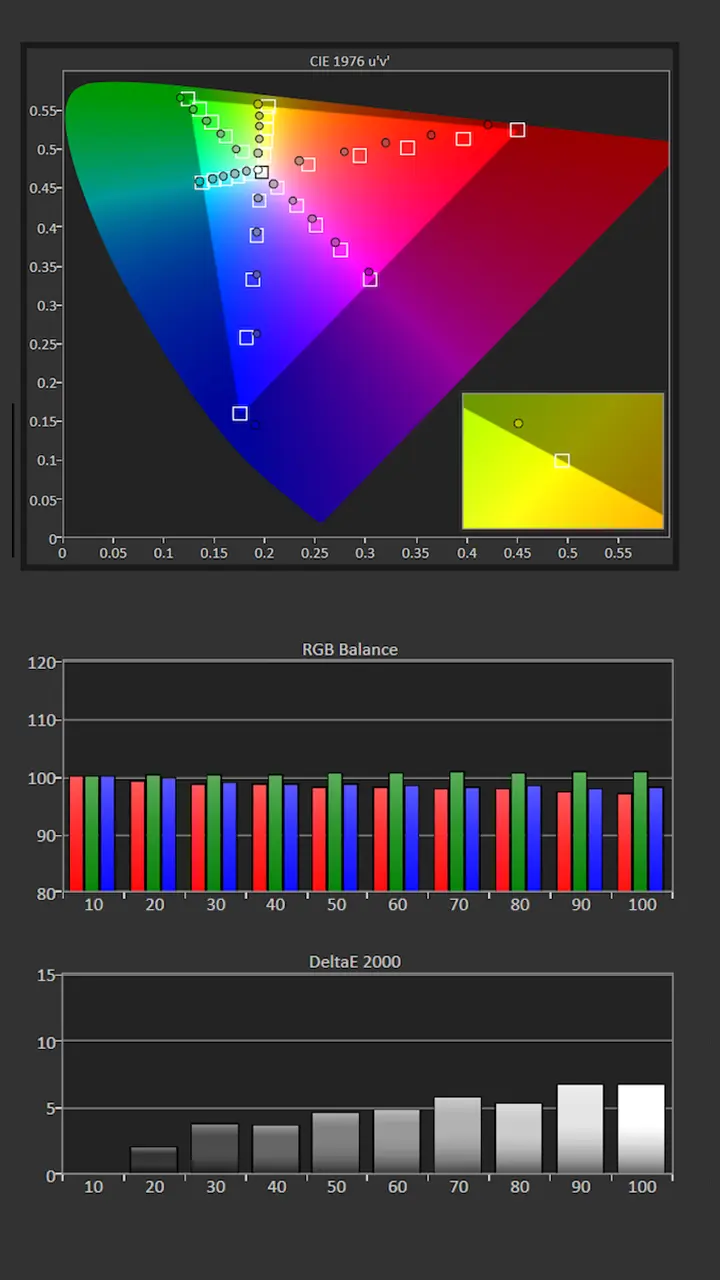
Pre-Calibration Color Tracking and Grayscale

VisionMaster Max SDR Cal Pre Results

Our measurements confirmed that THEATER and the FILMMAKER MODE were the most accurate picture modes out of the box. We choose to adjust the THEATER mode for SDR playback.

The pre-calibration color temperature for THEATER mode was 6578K, which is very close to the target of 6500K. However, the Grayscale measurements showed a slight over-emphasis toward green, resulting in an average Grayscale delta error of around 4.4. The gamma point was 2.2, which matched my target of 2.2. 

Before adjustment, the THEATER mode delivered 320 nits of brightness on my 100-inch screen, which is quite bright for viewing SDR.

  • Picture Mode: Theater
  • Color Temperature: 6578K
  • Gamma: 2.2
  • Average Grayscale dE: 4.4
  • Average Color Tracking dE: 2.8

Post-Calibration Color Tracking and Grayscale

VisionMaster Max SDR Cal Post Results

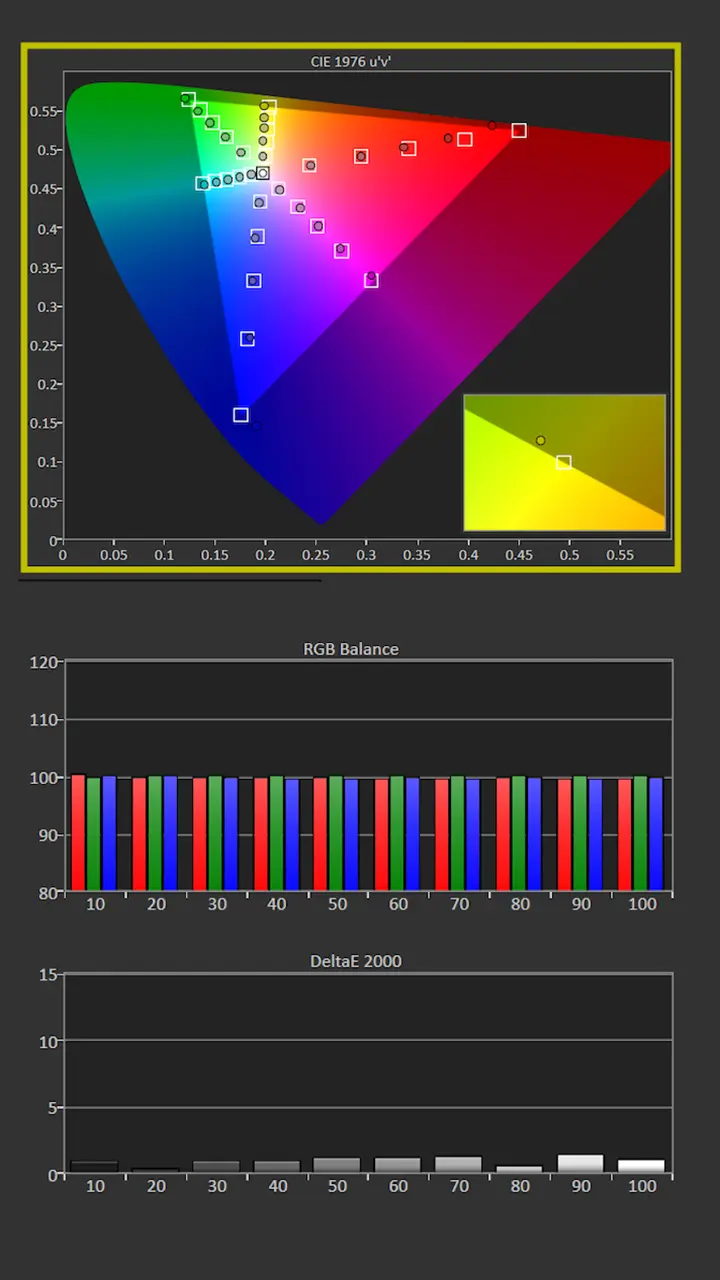
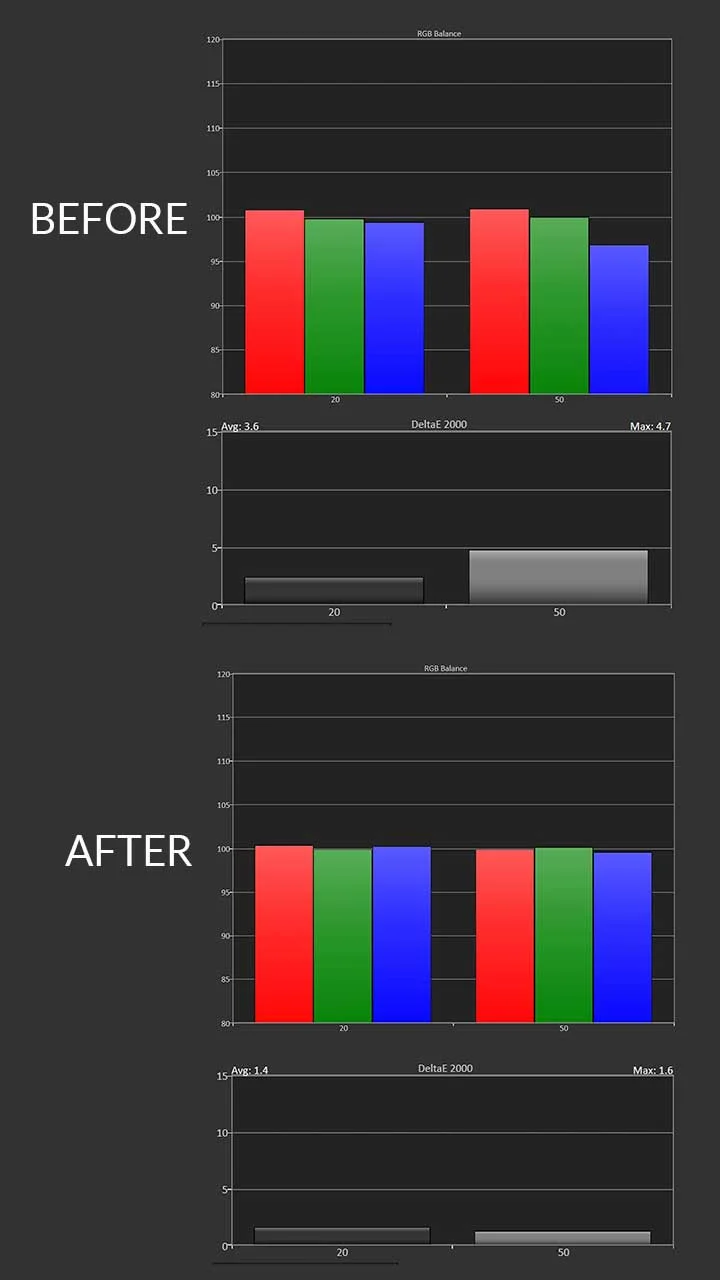
While the color temperature measured close to 6,500K, there was a slight green bias, which was quickly corrected using the projector's Two-Point White Balance. A quick adjustment to the Red and Blue Gain settings resulted in excellent grayscale.

Once the RGB balance was adjusted, the color tracking was very good. Most of the colors had delta errors below 2. I fine-tuned Red and Blue further using the projector’s CMS adjustments.

To accurately track most red shades, the brightest reds were slightly understated. After adjustment, the picture mode’s brightness was very close to its pre-calibration level.

  • Picture Mode: Theater
  • Color Temperature: 6510K
  • Gamma: 2.2
  • Average Grayscale dE: 1.0
  • Average Color Tracking dE: 1.3

After adjustment, red remained slightly under-saturated, but the average color tracking and RGB balance were great. Except for red, the VisionMaster MAX did an excellent job tracking SDR colors, which can be challenging for many RGB laser-equipped projectors. 

HDR White Balance Before and After Adjustments

Valerion VisionMaster Pro2 Calibration Results - Projector Reviews - Images

For HDR content, the projector provides several dedicated modes, such as HDR VIVID, HDR STANDARD, HDR ENERGY SAVING, HDR SPORTS, HDR GAME, HDR THEATER, FILMMAKER MODE, and HDR IMAX ENHANCED.

When viewing HDR10 material, the IMAX ENCHANCED, HDR THEATER, and FILMMAKER MODE were the best-looking picture modes. While all three modes offer similar color reproduction, they vary in which picture enhancements are engaged.

There are also three dedicated Dolby Vision picture modes. The DOLBY VISION BRIGHT and DOLBY VISION DARK modes both looked good. Both modes have the same color temperature, but DOLBY VISION BRIGHT mode has a higher (Average Picture Level) and peak highlights.

The projector features independent CMS and RGB controls for both SDR and HDR, enabling precise adjustments regardless of content type. Similar to SDR, once the RGB was adjusted, the overall HDR color tracking was very good, although reds remained slightly undersaturated. The projector covered 132% of the DCI-P3 color space, demonstrating its impressive color gamut

The VisionMaster Max's out-of-the-box performance was better than most DLP projectors. If you are a perfectionist, it will only take a few minutes to dial in the color reproduction of VisionMaster Max using the responsive adjustment tools. 

Using these adjustments, it was easy to achieve color tracking and RGB or grayscale balance delta errors below 2 for both SDR and HDR. While most people will not spend several hundred dollars to calibrate a four-thousand-dollar lifestyle projector, at a minimum, you should make BRIGHTNESS, CONTRAST, and SHARPNESS adjustments to optimize your projector for your room.

Several free test patterns are available on Murideo’s website and YouTube channel. Check out our YouTube video on using several test patterns called “Optimize The Image of a Projector or TV Using Free Murideo Test Patterns.” Murideo also has written instructions in the resource section of its website.

BRIGHTNESS

  • VisionMaster Max Brightness - Projector Reviews - Images
  • VisionMaster Max Brightness - Projector Reviews - Images
  • VisionMaster Max Brightness - Projector Reviews - Images
  • VisionMaster Max Brightness - Projector Reviews - Images
  • VisionMaster Max Brightness - Projector Reviews - Images
  • VisionMaster Max Brightness - Projector Reviews - Images

The VisionMaster Max has a rated brightness of 3,500 ISO lumens. To measure the unit’s brightness, I switched the projector to VIVID, its brightest picture mode, and ensured the laser Luminance Level was set to its maximum. I also set the projector's Brightness Enhancer Setting to High.

I nicknamed it NUCLEAR because it made the image glow green, and so bright it was hard to look at in my dark test space. It’s interesting to me that, instead of a one super-bright, USELESS-IN-MOST-CASES mode, Valerian just made it so the projector could be OFF (Good Color), 1 (Slightly Green), or 2 (Nuclear) for every picture preset.

The VisionMaster Max VIVID mode with BRIGHTNESS ENHANCER set to #2 measured 4,450 lumens in lime green, exceeding Valerion’s rated brightness by over 900 lumens. With the BRIGHTNESS ENHANCER set to OFF, VIVID mode measured at a respectable (and usable) 3,230 lumens.

Unless you are using the projector indoors in a solarium or outdoors on a bright day, I would personally leave the BRIGHTNESS ENHANCER in the OFF position. But that’s me. Yes, turning on this feature maximizes brightness, but it ruins the color performance. Also, I have to wonder what prolonged use of this does to the laser’s lifespan, so I do not recommend using it.

The remaining measurements are listed in the chart below.

Picture Modes: Brightness and Color Temperature

Picture ModeBrightness Measured (Lumens) Average Color Temperature
VIVID (BRIGHT ENHANCER - OFF)323010996K
VIVID (BRIGHT ENHANCER - Level#1)4051Not Measured
VIVID (BRIGHT ENHANCER - Level#2)4450Not Measured
STANDARD26879406K
SPORTS27049380K
ENERGY SAVING22859391K
PC/GAME27259326K
THEATER24046578K
FILMMAKER MODE23786667K

BLACK LEVEL AND SHADOW DETAIL

There is no doubt in my mind that the Valerion VisionMaster Max is a groundbreaking DLP projector, but… It’s still DLP and subject to the physical limitations of its chipset, especially when compared to high-end LCoS or 3LCD units (although I think it’s much closer to Epson than LCoS). Let me try to break it down as best as I can for you.

  • Valerion VisionMaster Pro2 Picture Quality - Projector Reviews - Images
  • Valerion VisionMaster Pro2 Picture Quality - Projector Reviews - Images
  • Valerion VisionMaster Pro2 Picture Quality - Projector Reviews - Images
  • Valerion VisionMaster Pro2 Picture Quality - Projector Reviews - Images
  • Valerion VisionMaster Pro2 Picture Quality - Projector Reviews - Images
  • Valerion VisionMaster Pro2 Picture Quality - Projector Reviews - Images

When it comes to the VisionMaster Max’s black floor and shadow detail performance, the word that keeps coming to mind is “impressive”.  In Phil Jones' room, using a sequential (full-on/full-off) test pattern, we measured a native contrast of 3419:1. When local dimming was engaged, the dynamic contrast jumped to 28586:1.

This projector’s ability to produce a black floor that feels much lower than a typical "lifestyle" or DLP projector is impressive. Certainly, the perceived black level or contrast is a real thing with this Valerion projector. I credit this perception to two things. One, the motorized 6-level iris, and two, Valerian’s Enhanced Black Level (EBL) algorithm. If I could give an award for that alone, I would.

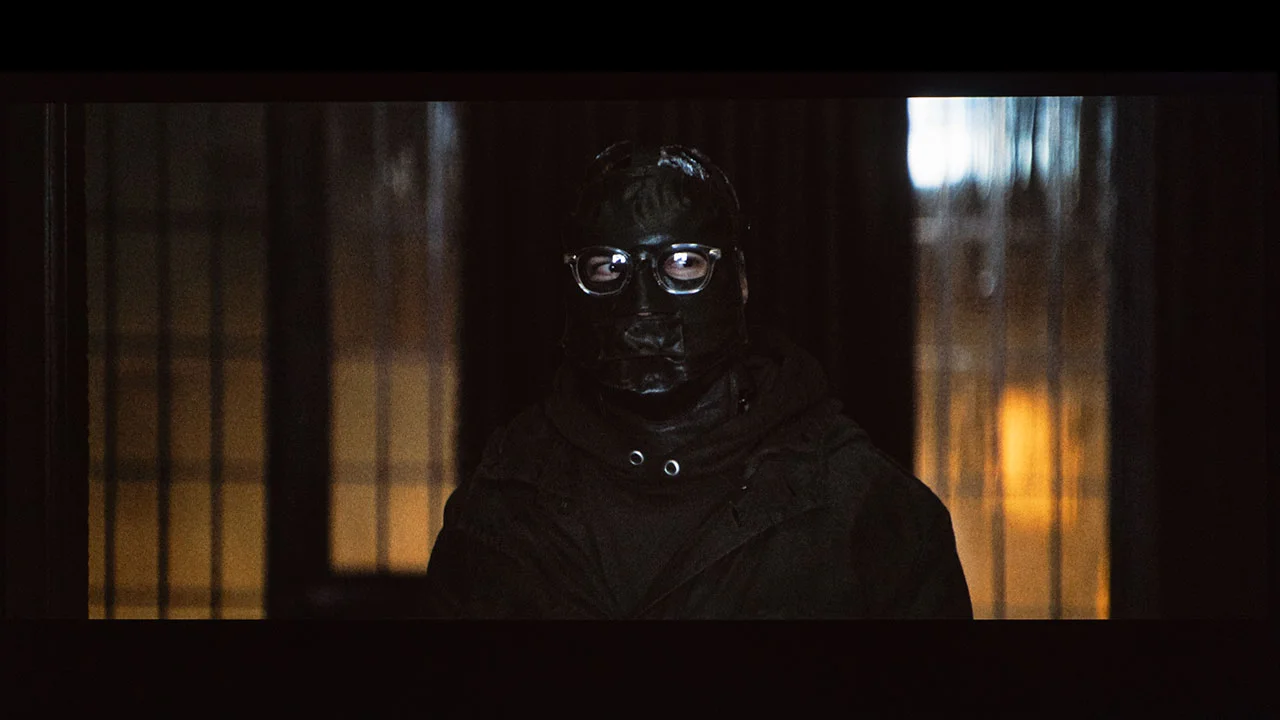
Next to the black floor is a shadow detail. The VisionMaster Max’s THEATER and FILMMAKER modes deserve a lot of praise for how they preserve detail in dark scenes, like in the slideshow above from The Batman and Harry Potter and the Deathly Hallows. Fabric textures or faint reflections remain visible without completely crushing the blacks, which often happens when digital dimming is too aggressive.

The VisionMaster Max is not a perfect projector. Like almost every projector I’ve reviewed this year, the Max displays the pumping artifacts. This is primarily the EBL, and while this feature is one of Valerion's most powerful weapons against the competition, the EBL software occasionally causes visible "brightness pumping" and slight color shifts in the blue/green spectrum during very challenging dark-to-light transitions. It’s much subtler than projectors such as the Hisense L9Q or the Epson LS9000, but it's still noticeable in scenes from Harry Potter and The Deathly Hallows: Part 1, even in the lowest setting.

I find shutting off the EBL and setting the iris to a setting between 2 and 4, depending on the content. While the black floor is at its lowest, the brightness drops significantly, and a noticeable color shift toward warmer tones can occur.

Finally, there is the big question: Is the VisionMaster Max a DLP projector that can produce black levels comparable to those of Sony, JVC, and Epson? No. but is better than I’ve seen before. A LCoS-based projector will still wipe the floor with DLP in terms of absolute native contrast, as LCoS technology physically blocks light more effectively than DLP mirrors.

Is it going to unseat the "King of Blacks" in the dedicated home theater space? Again, no. At least not for now. The Valerion simply cannot match LCoS's ability to maintain an inky black in a completely dark room. However, if I were Epson, I would be concerned because the VisionMaster Max's native contrast is very close to that of recent Epson 3LCD projectors I’ve reviewed. 

STANDARD DYNAMIC RANGE

  • VisionMaster Max SDR - Projector Reviews - Images
  • Valerion VisionMaster Pro2 Picture Quality - Projector Reviews - Images
  • VisionMaster Max SDR - Projector Reviews - Images
  • VisionMaster Max SDR - Projector Reviews - Images
  • VisionMaster Max SDR - Projector Reviews - Images
  • VisionMaster Max SDR - Projector Reviews - Images

I’ve found a projector's SDR performance to be an excellent real-world benchmark for what a quality DLP can actually do. This Valerion claims 3,500 lumens, but when I put it into FILMMAKER mode, it settled into a much more conservative 2,300 lumen range (on average). In my experience, that is still plenty of power to keep the image from looking washed out, even with a lamp on in the back of the room. The VisionMaster Max’s color saturation is probably the first thing that hit me. This projector's pure triple-laser source delivers a wide color gamut, making standard SDR content look remarkably vivid without appearing artificial.

The projector's custom NoirScene system delivers amazing black levels. With most DLP projectors, dark scenes can look a bit flat, but with the VisionMaster Max, setting the motorized iris to Level 3 or 4 pulls out a lot more depth and shadow detail than I expected.

Lawrence of Arabia is a great movie to test SDR on this projector. Overall the
THEATER and FILMMAKER modes were the most accurate. If you have a taste for cooler picture presets, as I do, the VisionMaster Max STANDARD mode splits the difference without pushing the image too far into blue overtones.

VisionMaster projectors support active 3D and 3D Blu-ray. This projector also upconverts lower-resolution content to 4K.

HIGH DYNAMIC RANGE

  • VisionMaster Max HDR - Projector Reviews - Images
  • VisionMaster Max HDR - Projector Reviews - Images
  • VisionMaster Max HDR - Projector Reviews - Images
  • VisionMaster Max HDR - Projector Reviews - Images
  • VisionMaster Max HDR - Projector Reviews - Images
  • VisionMaster Max HDR - Projector Reviews - Images

The Valerion VisionMaster Max displays some of the best HDR performance available in the consumer laser projector market. I’m not just talking about DLP, but about many similarly priced projectors. The VisionMaster Max reproduces deeply saturated colors that even most flat-panel TVs and lamp-based projectors can’t match. Overall, this projector's brightness is one of its superpowers, allowing it to display highlights without blowing out the rest of the image.

When it comes to Dolby Vision vs. HDR10+, it’s not black-and-white, but if I had to pick, I'd go with Dolby Vision on the Max. While both are dynamic metadata formats, on this projector, I found the Dolby Vision feels the most "dialed in" out of the box, balancing dark shadow detail with bright highlights.

In my experience, the IMAX ENHANCED mode is a "set it and forget it" preset. It seems to reduce grain and noise when watching IMAX ENHANCED movies on Disney+.

The HDR dynamic tone-mapping on the Valerion VisionMaster Max was very good. Colors are nice, and highlights don’t display clipping details in the darker areas.

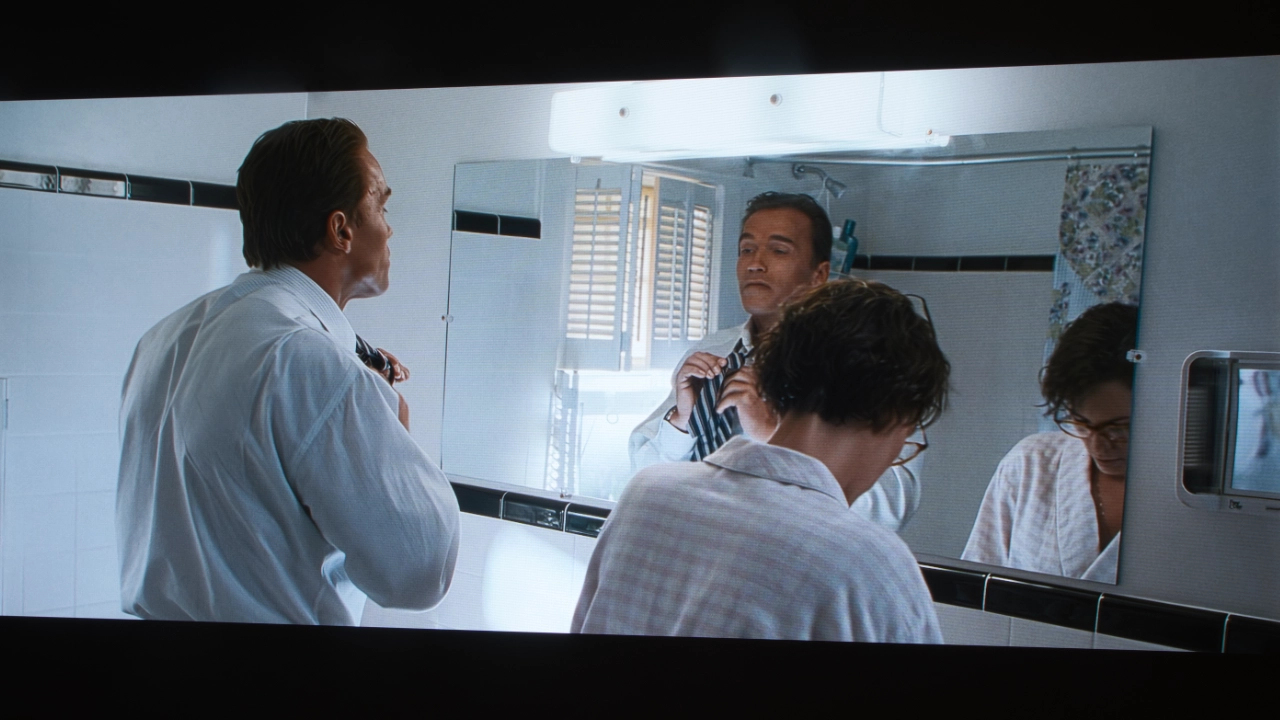
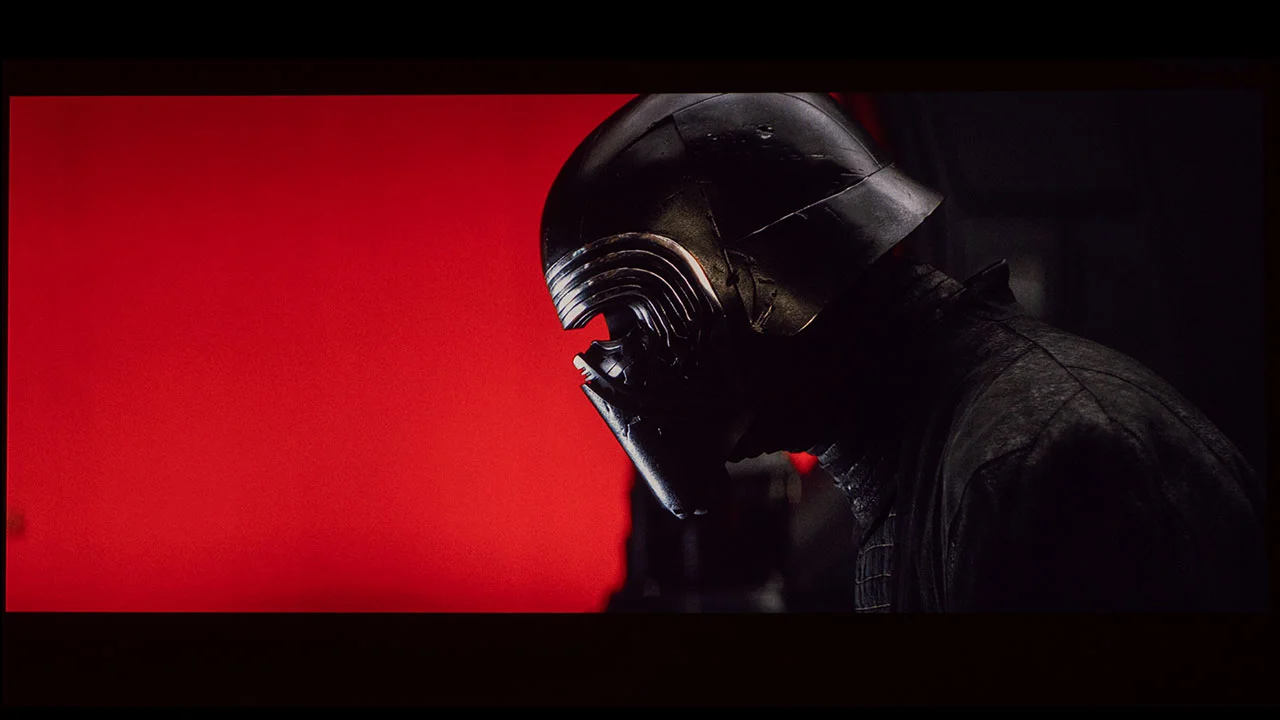
Like I often do on projectors I review, I compared both the HDR10 and Dolby Vision versions of True Lies and Star Wars: The Force Awakens. The difference was not dramatic.

GAMING

VisionMaster Max Gaming - Projector Reviews - Images

Even though the VisionMaster Max is not technically marketed as a dedicated gaming machine, it still outperforms many premium gaming-focused projectors. The VisionMaster Max is fast, boasting an ultra-low input lag of 4ms at 1080p/240Hz. The hardware's ability to handle it ensures gameplay feels incredibly responsive and snappy. It even has ALLM (Auto Low Latency Mode), which is a nice touch because it automatically toggles those low-lag settings the moment your console or PC is detected.

The VisionMaster Max, with its 3,500 ISO Lumens of brightness, delivers a vibrant image even when you are gaming with a few lights on. The real secret weapon on this projector is the motorized adjustable iris. By physically tightening the iris, you can lower the black floor in dark, atmospheric games like Resident Evil or Elden Ring, making those shadows look deep and inky instead of washed-out gray. This hardware contrast, combined with support for Dolby Vision and HDR10+, really helps you spot details in the darkest corners of a map, giving you a competitive edge.

SOUND QUALITY

Valerion VisionMaster Pro2 Projector - Projector Reviews - Images

The VisionMaster Max features a high-quality 2 x 12-watt sound system with DTS Virtual X, delivering richer, more immersive audio. The projector’s sound system has enough power to fill a medium-sized room. The EF22 includes several sound modes: STANDARD, THEATER, SPORTS, MUSIC, SPEECH, LATE NIGHT, and INTELLIGENT SOUND.

The VisionMaster Max includes an automatic ACCOUSTIC TUNING feature that plays a test tone and uses the remote's built-in mic to optimize the projector's sound quality for your seating position. The VisionMaster Max did a good job reproducing dialogue, but I have reviewed lifestyle projectors with better bass response. Also, despite the ACCOUSTIC TUNING mode, I found the sound was much more focused on the projector than on other lifestyle projectors I’ve reviewed. If you want the best sound performance, the VisionMaster Max supports Enhanced Audio Return Channel (eARC), is WiSA-ready, and can wirelessly transmit 7.1-channel high-resolution audio to a compatible WiSA-equipped speaker system.

The VisionMaster Max is very quiet, with the fan noise barely noticeable.

SUMMARY

VisionMaster Max Summary - Projector Reviews - Images

It is genuinely impressive to see how quickly Valerion has shaken up the projector market since its 2024 debut. While a brand this new usually faces a steep learning curve, their heritage as a sister company to AWOL Vision seems to have given them a significant head start in the RGB laser projector space. They have successfully leveraged AWOL’s expertise, resulting in a flagship like the VisionMaster Max that is already going toe-to-toe with established brands.

Looking at the high-level performance, the VisionMaster Max really shines, producing a level of color saturation that most projectors in this price bracket simply cannot touch.

Its gaming specs are equally disruptive; the 4 ms input lag at 240 Hz makes it one of the few projectors that can actually satisfy a competitive gamer. Furthermore, the inclusion of "pro-level" hardware, such as ±105% vertical lens shift and a 6-level motorized iris, gives it installation flexibility usually reserved for much bulkier, high-end theater units.

COMPETITIVE COMPARISON

The Valerion VisionMaster Max competes with several high-end lifestyle projectors, including the Hisense C2 Ultra and XGIMI Horizon 20 Max. Each of these projectors has unique strengths, making them suitable for different user needs, whether for gaming, home theater, or all-around entertainment.

Hisense C2 Ultra

Both the Hisense and the Valerion units lean into triple-laser engines to hit that massive 100% BT.2020 color coverage, and they are essentially neck-and-neck on raw brightness. However, there appears to be a notable divide in contrast. The Valerion claims a 5,000:1 native contrast ratio, which is effectively double what you will likely find on the Hisense C2 Ultra, potentially giving the Max a significant edge in dark room depth.

When it comes to the brains of the operation, the user experience differs quite a bit. The Valerion VisionMaster Max sticks with the familiar and more robust Google TV OS, while Hisense uses its own proprietary VIDAA system. Both support full HDR, including Dolby Vision, HDR10+, and IMAX Enhanced, and both feature motorized optical zoom to maintain your resolution during setup. The Valerion does feature vertical lens shift. For gamers, the choice is a bit of a toss-up; Valerion aims for the absolute lowest input lag, but the Hisense C2 Ultra carries the official "Designed for Xbox" badge, which may suggest a more seamless integration for console players.

Audio is another area where these two diverge in philosophy. The Hisense C2 Ultra includes a subwoofer built right into its gimbal base, which should theoretically offer much better bass right out of the box.

XGIMI Horizon 20 Max

The XGIMI Horizon 20 Max is another highly rated 4K lifestyle projector. It offers similar brightness, but the Horizon Ultra utilizes a hybrid TriLaser/LED. The Horizon Ultra and the VisionMaster Pro2 can reproduce more than 100% of the BT2020 color gamut. The Vision Master Max is much brighter at 3500 ISO lumens, but the XGIMI delivers more accurate out-of-the-box color reproduction. Like the Max, the Horizon Ultra runs on Google TV. The Horizon Ultra supports Dolby Vision IMAX Enhanced and HDR10 but lacks HDR10+, which is present in the VisionMaster Max.

When it comes to gaming, the Max supports higher refresh rates, offers lower input lag, and includes dedicated gaming modes, which makes it a better choice for serious gamers. While both projectors include features to simplify setup, such as autofocus, auto keystone correction, and object avoidance, the VisionMaster Max also includes an optical zoom lens and vertical lens shift.

The Valerion VisionMaster Max and the XGIMI Horizon 20 Max are both premium 4K laser projectors designed for home entertainment, but they cater to slightly different audiences. The VisionMaster Max prioritizes high brightness, gaming performance, and cinematic picture quality, while the Horizon Ultra focuses on compact design, portability, and color accuracy.

FINAL THOUGHTS

Valerion VisionMaster Max-w-Award-2
If you are interested in purchasing the projector mentioned in this article, we always appreciate it if you use one of the links in the article because Projector Reviews earns a small commission on the sale at no cost to you.
VisionMaster-Max-Affliate-bannerBH-buy-now-affliate-buttons- Projector Reviews Images

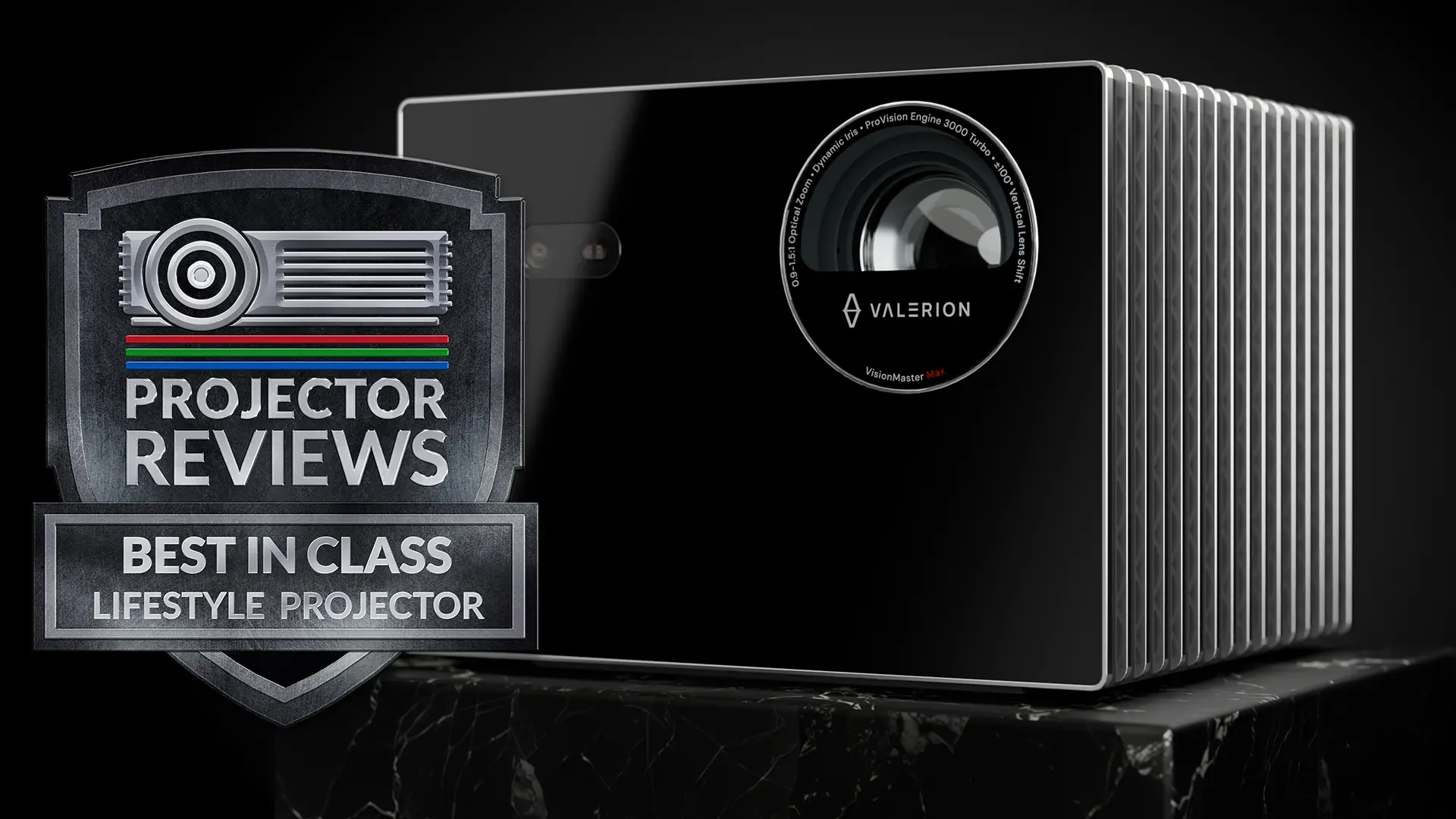
Is the Valerion VisionMaster Max the Best DLP of 2026? If not the best, it certainly is “one” of the best all-around DLP projectors so far in 2026. When you combine the VisionMaster Max’s black level performance, shadow detail, massive 3500 ISO lumens of brightness, and its status as the industry's first and only lifestyle projector with not one but two optional lenses (Valerion long-throw and Spexman Anamorphic), it should be pretty clear why we’ve decided to award the VisionMaster Max with our Editor's Choice award.

Valerion is definitely in contention for the best lifestyle projector available today. Because the VisionMaster Max offers amazing contrast and black levels, many people are rightfully considering it a home theater projector as well. When examining it through his lens, there are other projectors it could be compared to outside the dedicated lifestyle projector market, such as the XGIMI Titan Noir Max (with its dual-iris system) and the Epson LS9000 or LS11000, which are close to its price point and could pose a real challenge to the Max.

There is still some clear room for growth as this brand matures. While the EBL software and the manual iris do a commendable job of lowering the black floor to levels not seen on most DLP projectors, they don't quite reach the "inky" blacks found in Sony and JVC LCoS systems. As I also noted, Valerion’s software can sometimes cause brightness pumping in dark scenes, and the current lack of lens memory is a missed opportunity for a motorized system.

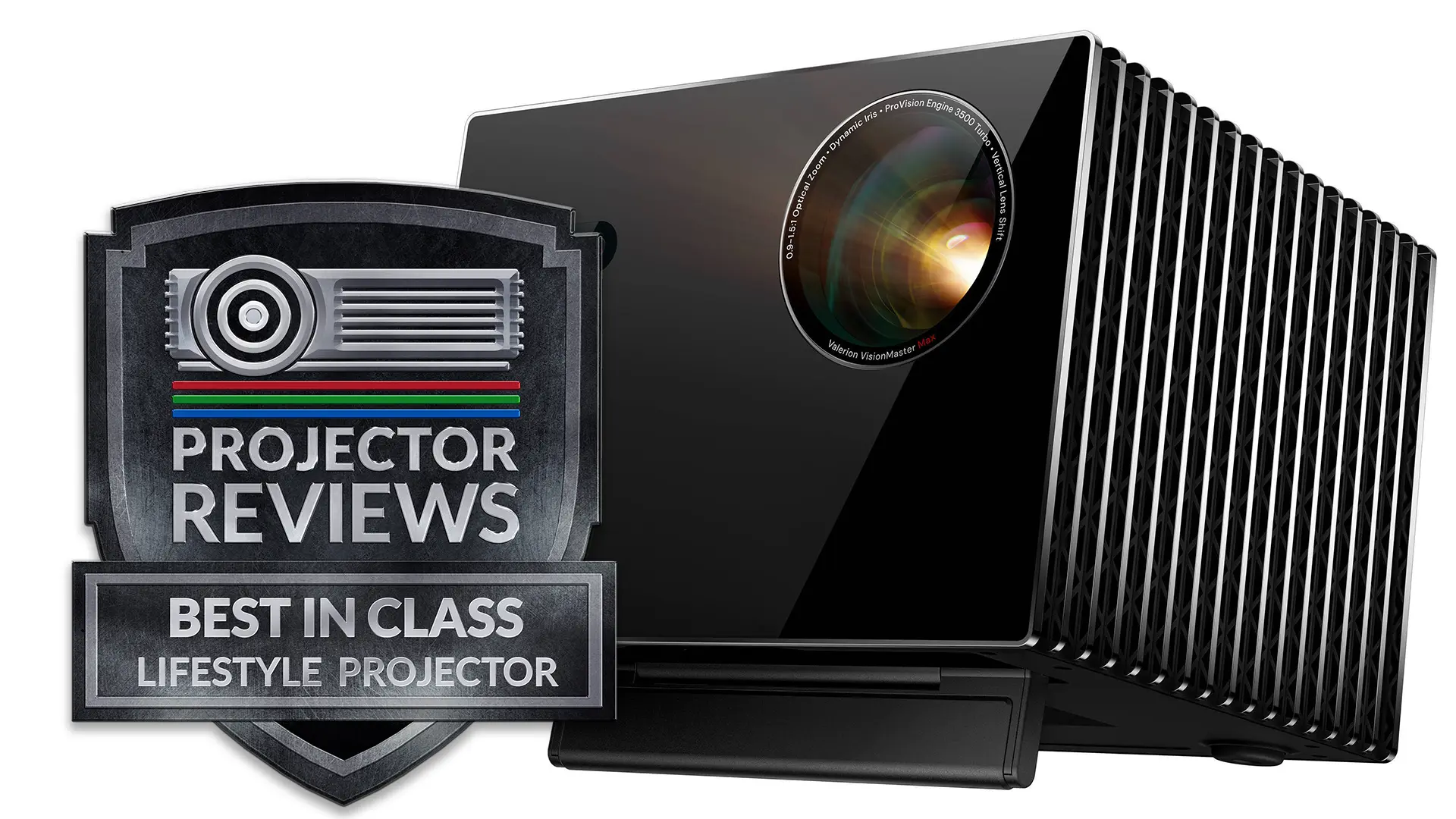
If Valerion can continue to improve their software and unlock more automated features for that physical iris through future firmware updates, they may very well become a permanent fixture in the high-end home theater conversation.

If you have a dedicated, pitch-black room, a JVC is still the superior choice for cinema. However, for a mixed-use room or for users who also value gaming (4 ms lag) and portability, the Valerion VisionMaster Max offers about 80% of the high-end performance for 40% of the price.

Valerion VisionMaster Max - SPECIFICATIONS

VisionMaster Max Projector - Projector Reviews - Images
Full Specifications
Projector ModelVisionMaster Max
Price (MSRP)$3999.00
Imager TypeDLP (0.47” DMD) w XPR
Displayed Resolution3840 x 2160 pixels
Native Resolution1920 x 1080 x 4 pixels
Brightness (Manufacturer Claim)3500 ISO lumens
Light Source TypeRGB Triple Laser
Contrast Ratio5000:1 (Native) 15,000:1 (Dynamic)
Lens Throw Ratio.09;1 to 1.5:1
Power Zoom/FocusYes
Lens ShiftYes (Vertical)
Interchangeable LensYes
Ultra Short ThrowNo
Native Aspect Ratio16:9 (Widescreen)
HDTV/4KYes
3DYes (Active)
SpeakersDual 12-watt DTS-X
Noise Level (-db)28 dB
Low Lag GamingYes (4ms at 1080@240Hz, 15ms at 4K@60Hz)
Smart FunctionalityGoogle TV
BusinessNo
ClassroomNo
PortableYes
Special FeaturesHDR10+ and Dolby Vision, IMAX Enhanced, Dynamic HDR Tonemapping
NetworkingRJ45 Gigabit Ethernet Lan, WiFi 6
Dimensions (WxDxH)(WxHxD) 10.20" x 7.30" x 9.20" (259.08 mm x 185.42 mm x 233.68 mm)
Weight16.5 pounds (7.4 kg)
Warranty1-year limited
BH-buy-now-affliate-buttons- Projector Reviews Images

© 2025 Projector Reviews

crossmenu linkedin facebook pinterest youtube rss twitter instagram facebook-blank rss-blank linkedin-blank pinterest youtube twitter instagram