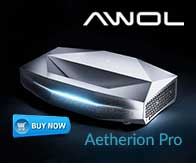
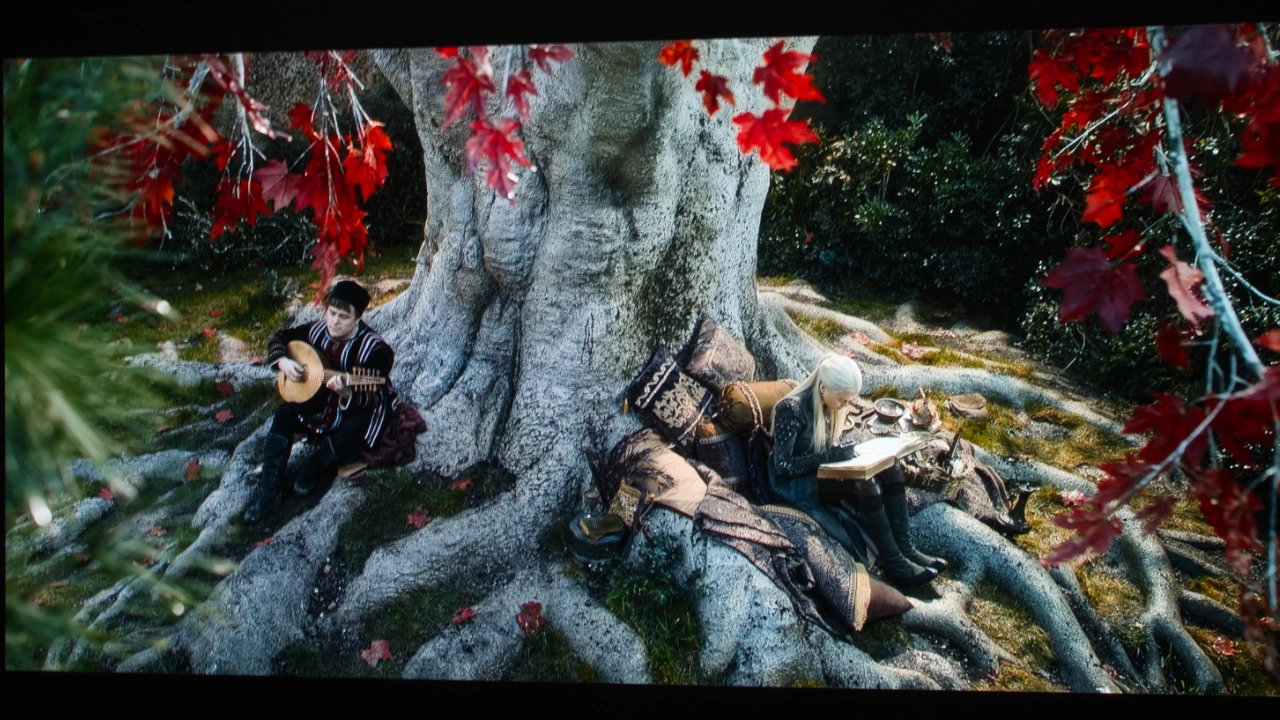
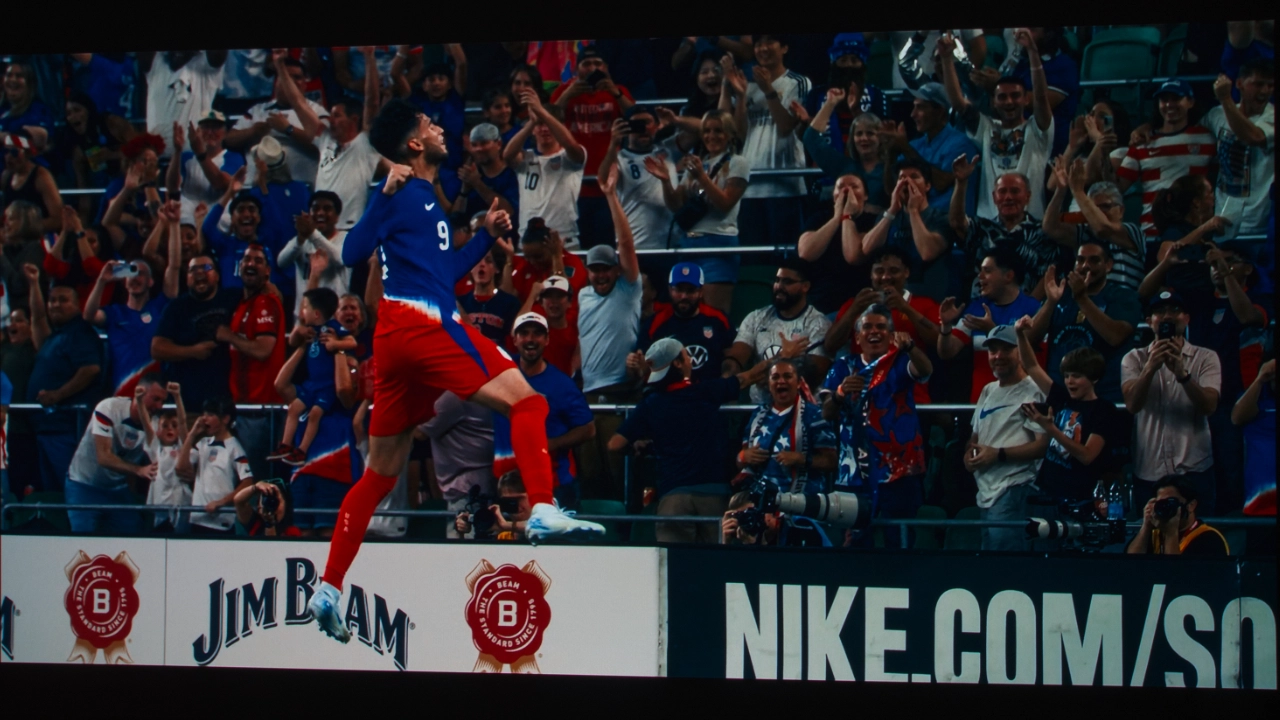
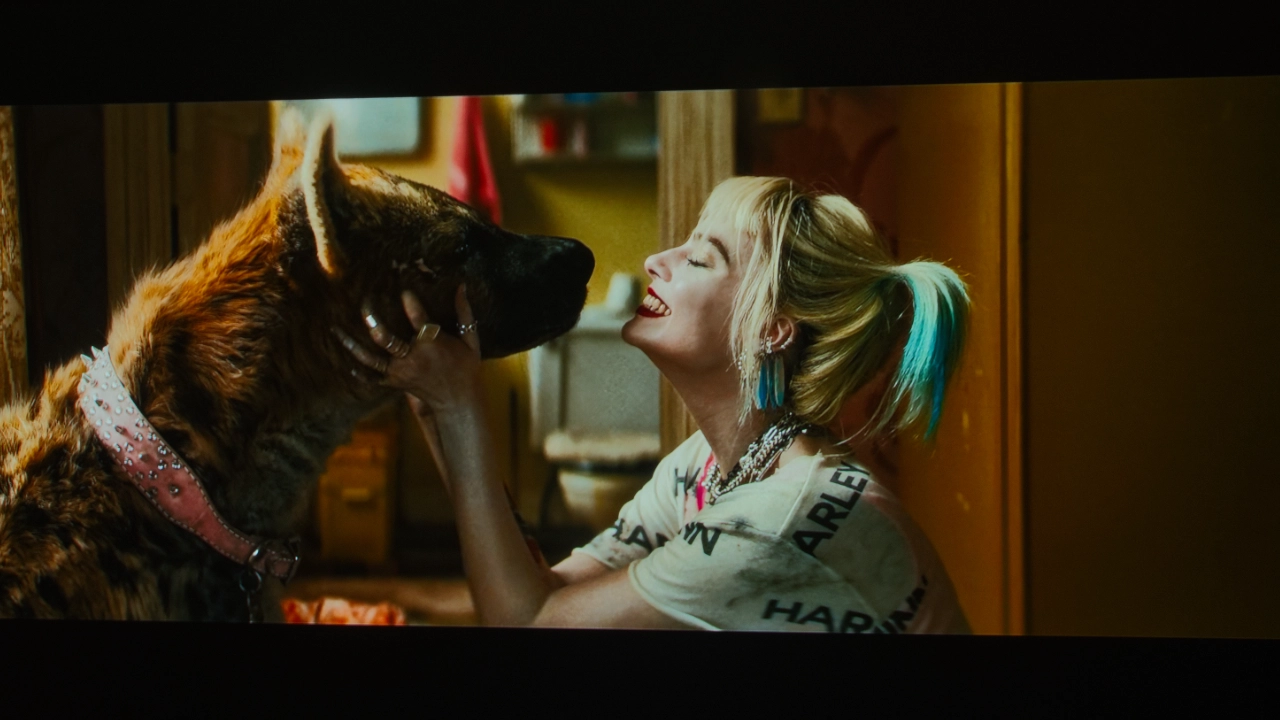
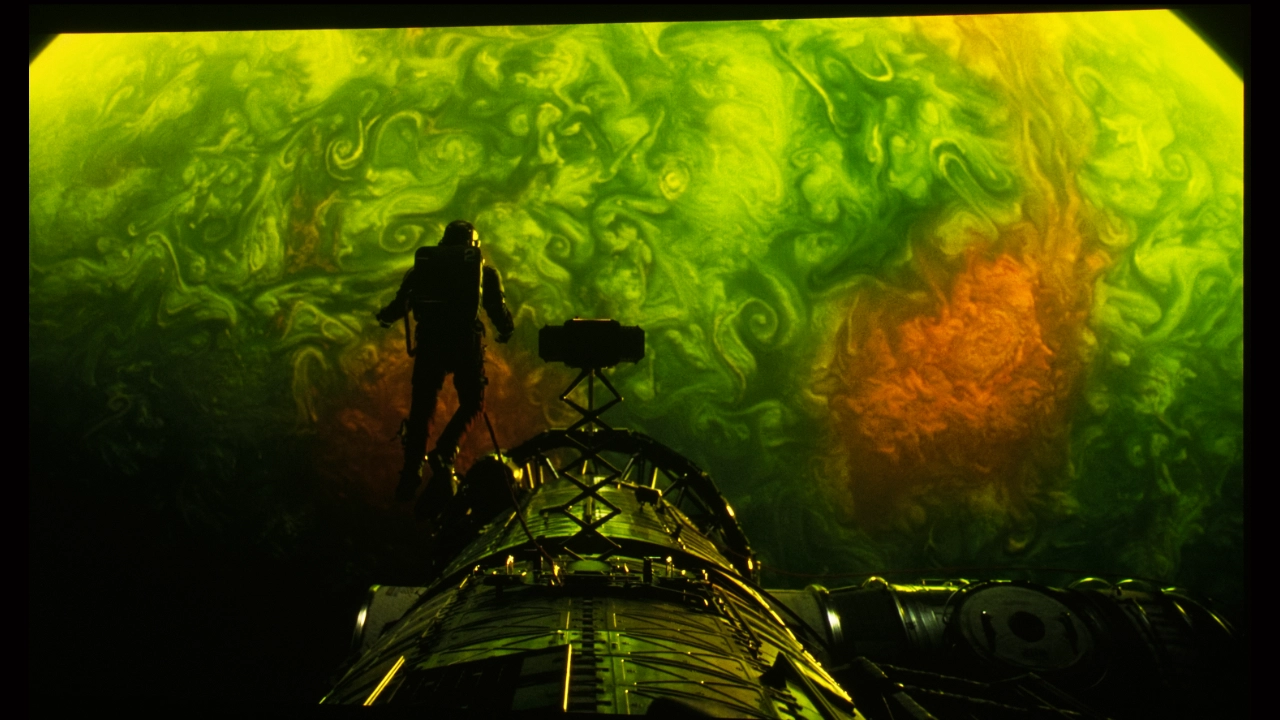
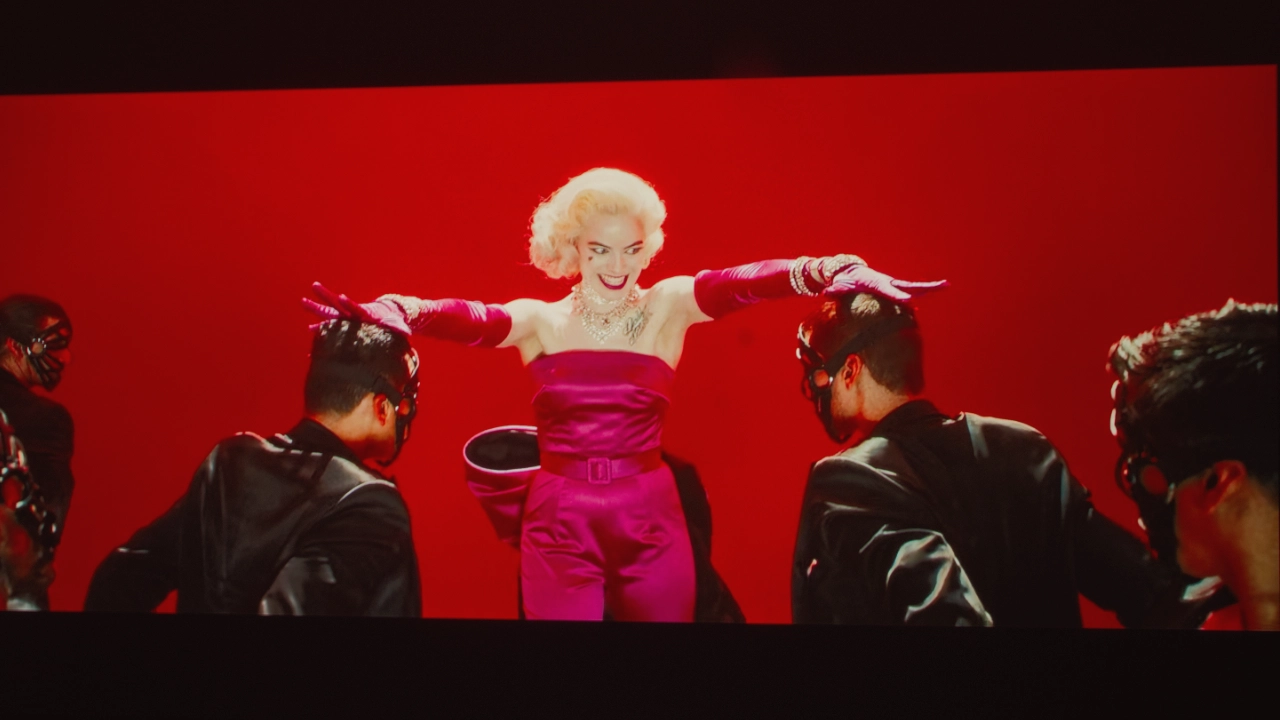
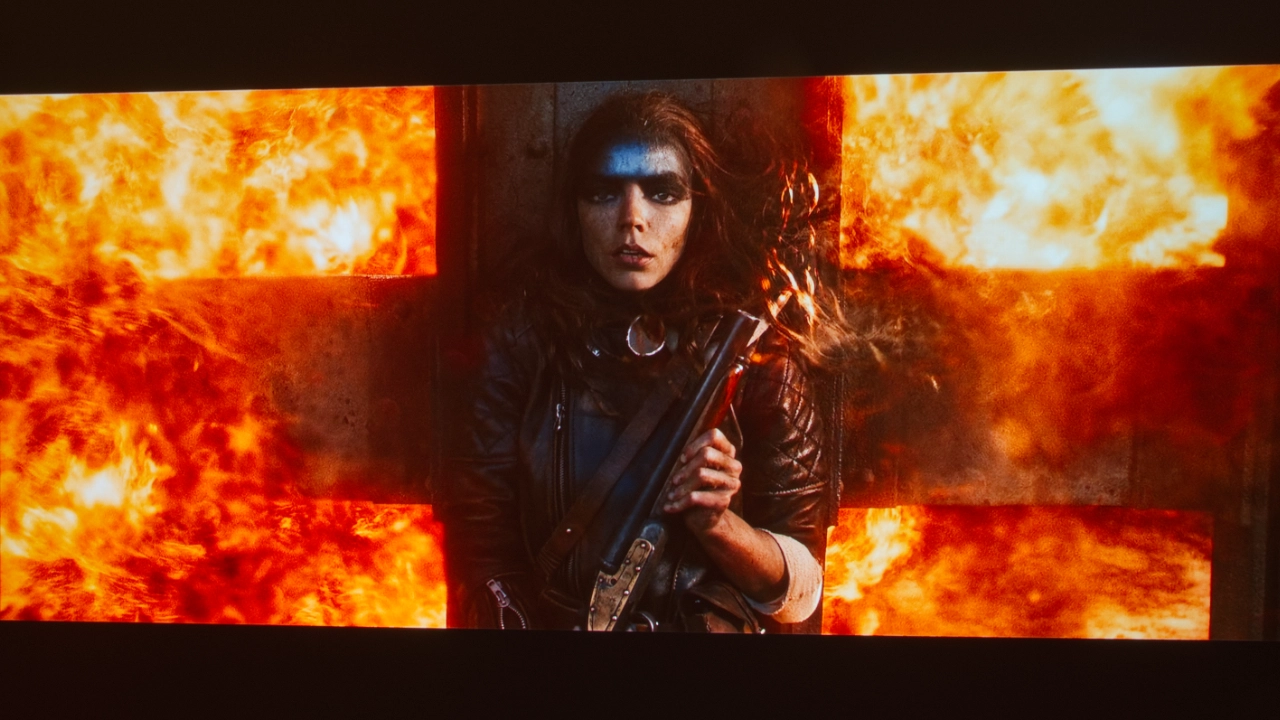
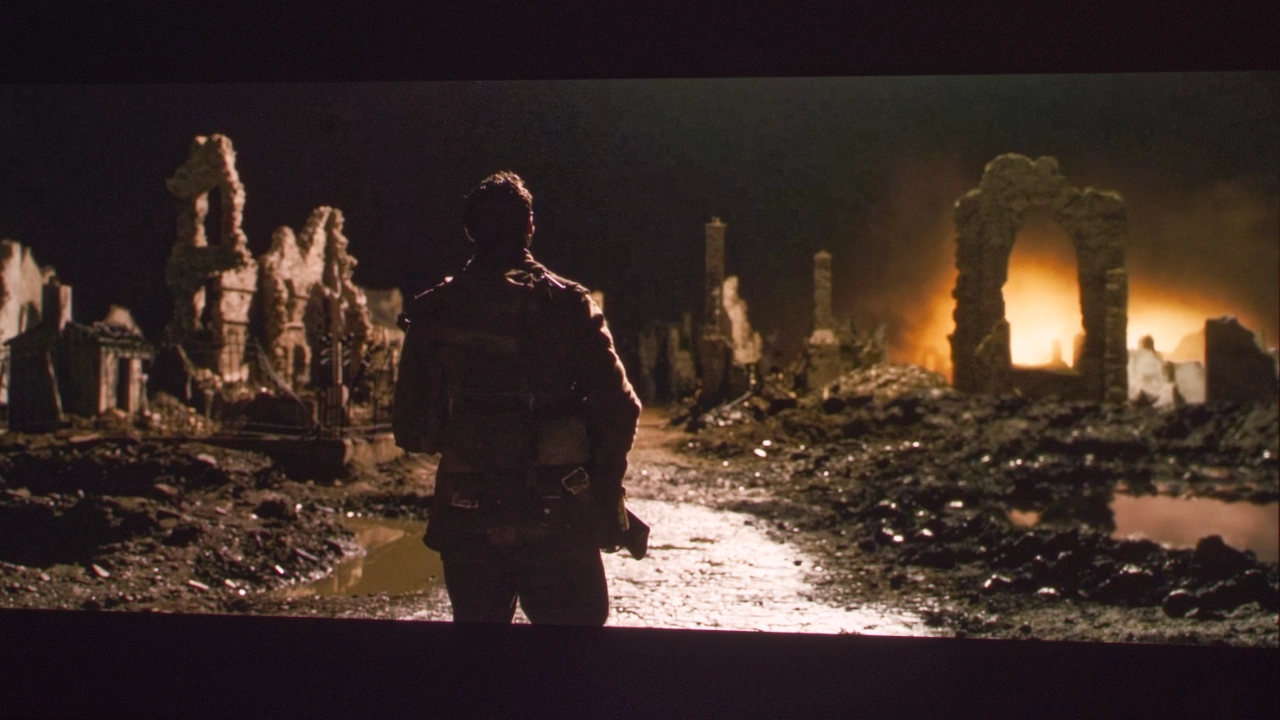
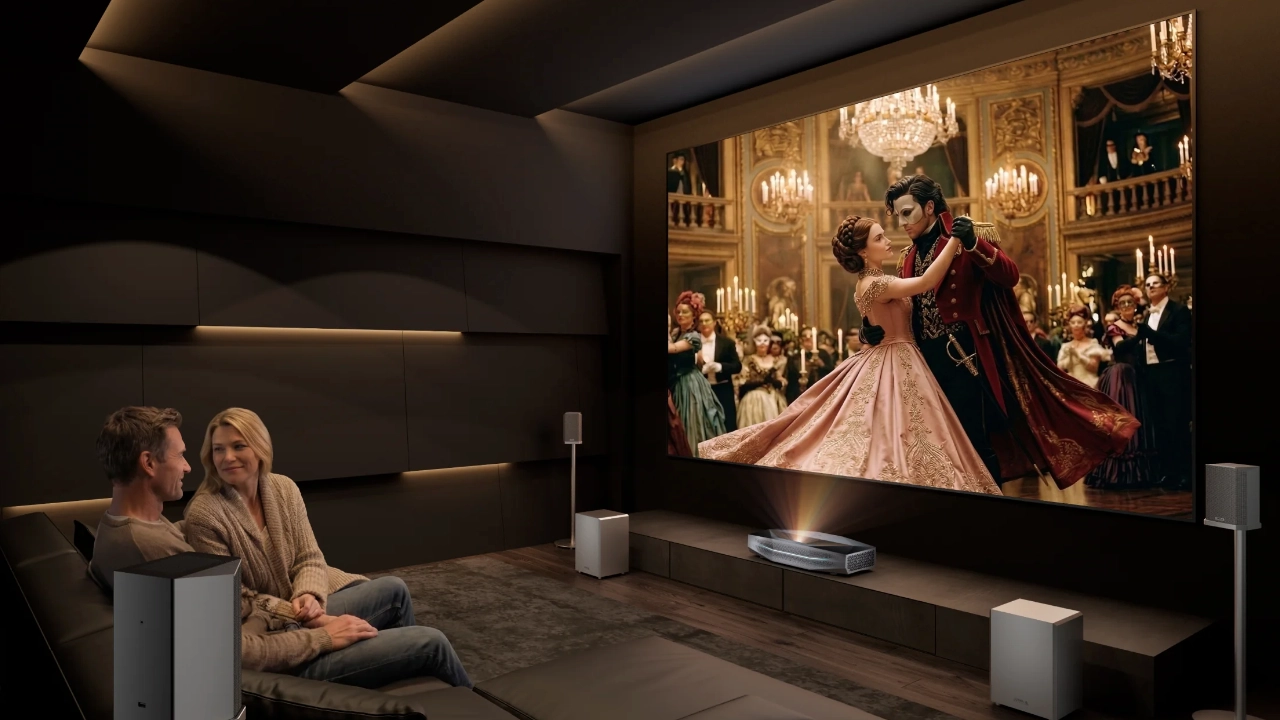
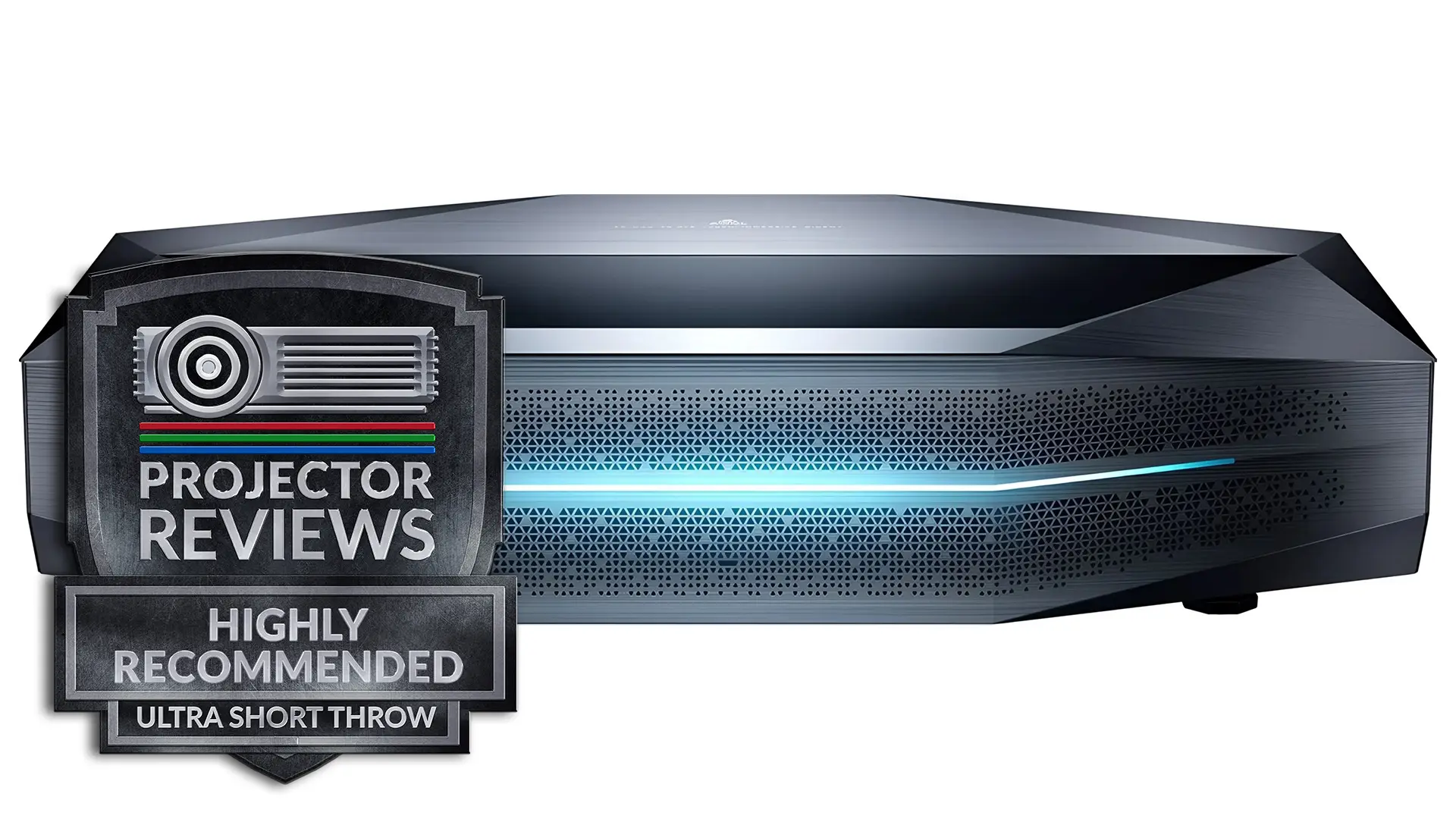
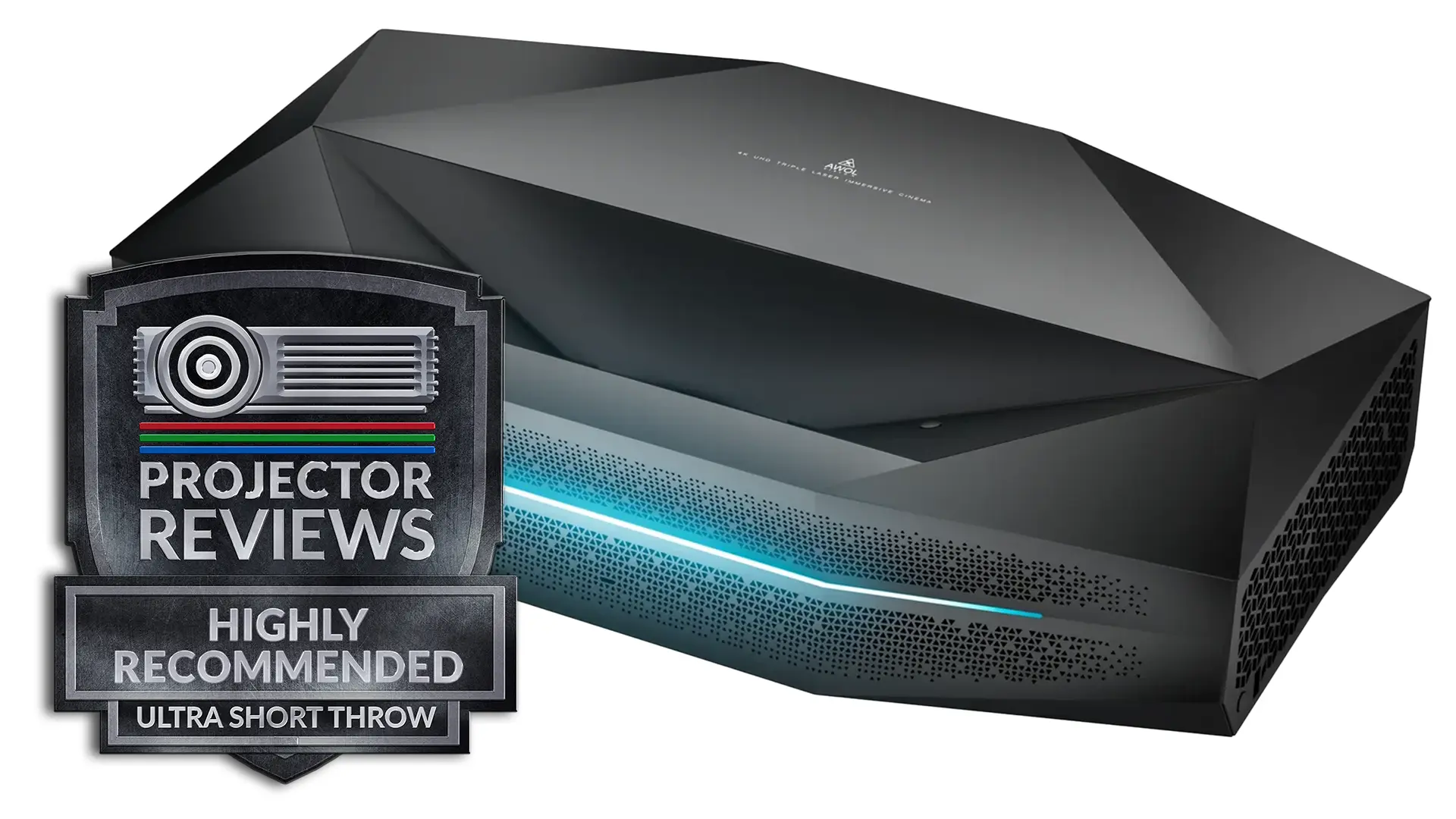
At a $3,499 MSRP, the AWOL Vision Aetherion Pro is one of two 4K (3.840 x 2,160) ultra-short throw (UST) projectors in its Aetherion UST lineup. The Aetherion Pro is powered by a state-of-the-art RGB laser light source capable of producing a manufacturer-rated 2,600 ISO lumens of brightness and covering up to 110% of the REC.2020 color gamut. The Aetherion Pro uses the latest Texas Instruments 0.47-inch DLP DMD chipset, featuring the company's newest and fastest DLP controller, super-fast, accurate pixel-shifting technology that takes a native 1080p resolution and seamlessly scales it to 4K using XPR technology.
This hyper-fast and accurate control chip, along with three (3) HDMI 2.1 ports, enables advanced features such as Variable Refresh Rate (VRR) to eliminate screen tearing and motion stutter during chaotic gameplay, and Auto Low Latency Mode (ALLM) for a high-speed gaming experience that exceeds that of some dedicated gaming projectors.
AWOL Vision’s latest version of Enhanced Black Level (EBL) technology, combined with a user-adjustable mechanical iris, provides Aetherion Pro users with a native contrast ratio of 6000:1 for a previously unattainable level of black performance on a UST projector. The Aetherion series laser light source features 99.99% rainbow reduction for 2D and 3D content, as well as Anti-Speckle technologies.
The Aetherion Pro continues AWOL Vision’s legacy of producing “kitchen sink” projectors, packed with the latest and greatest technologies, features, and performance the projector industry has to offer. AWOL Vision spared no expense to ensure the Aetherion Pro can natively decode and display all high-dynamic-range formats, including Dolby Vision, HDR-10+, HDR10, and HLG, and offers full support for IMAX Enhanced.
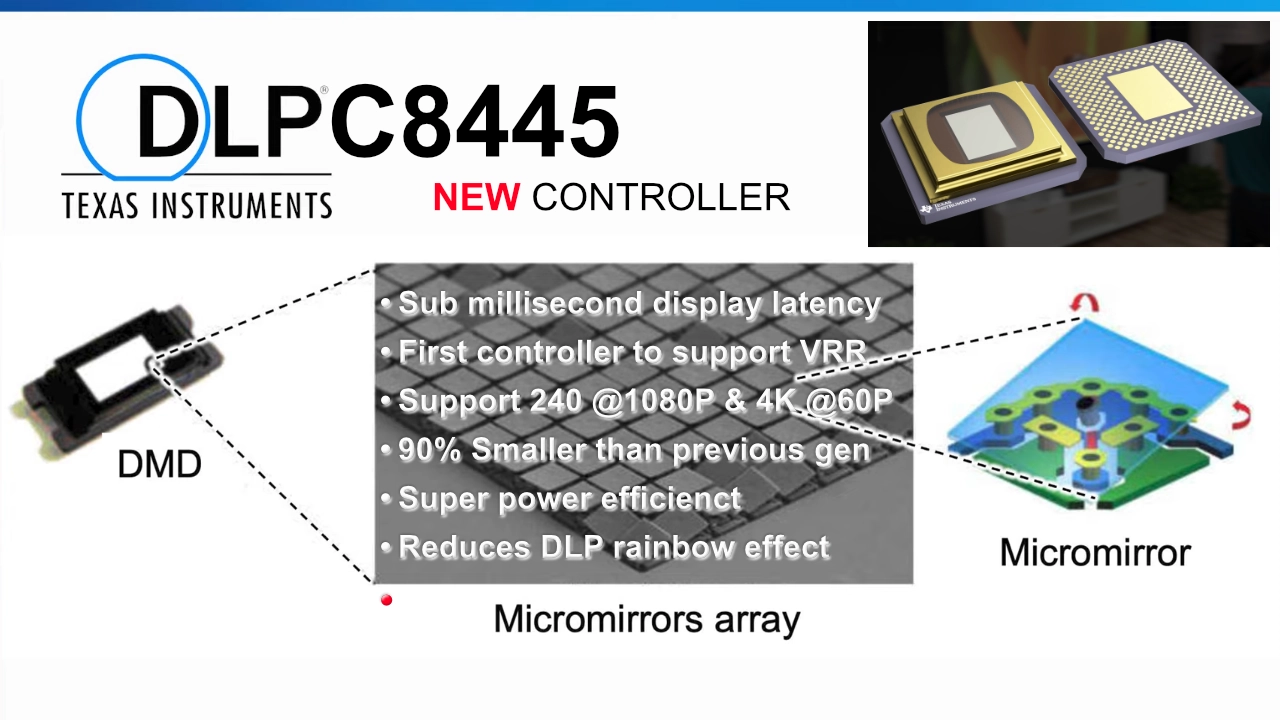
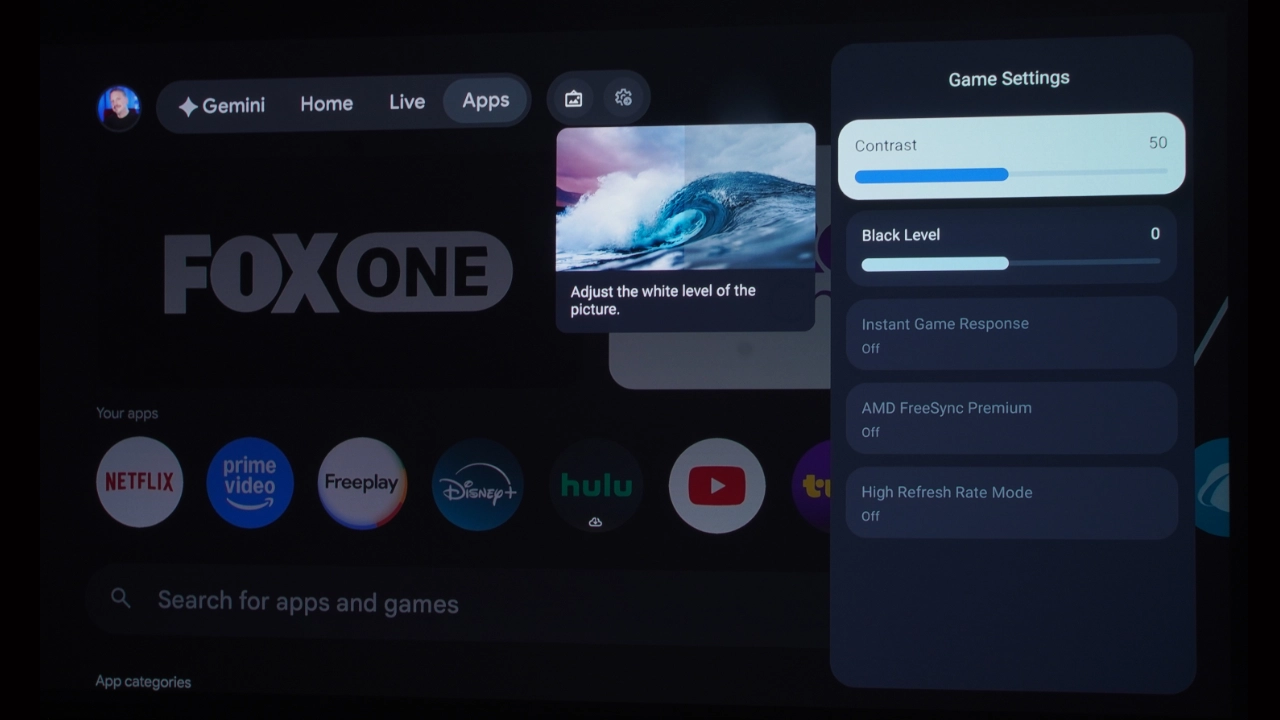
The Aetherion series features a dedicated GAME mode to prioritize speed. The combination of TI's DLPC8445 and a MediaTek MT9655 System-On-Chip (SOC) drives latency down to a near-instant 1 ms at 1080p (240Hz) and 10 ms at 4K (60Hz). What this means is gamers can take full advantage of next-gen consoles and PCs that output 4K at 120 fps (displayed 4K at 60 Hz). This projector natively supports playing games encoded in both Dolby Vision and HDR10+, utilizing dynamic metadata to eliminate color blocking or visual clipping.

+ Native contrast of 6,000:1 with class-leading black levels
+ 2,600 ISO lumens
+Sapphire glass elements for sharp, uniform focus
+110% of the Rec. 2020 gamut coverage
+Features anti-RBE Technology
+Low-latency gaming of 1 ms at 1080p 240 Hz
+Dolby Vision, HDR-10+, and IMAX Enhanced
- The anti-RBE emits an electronic whine
- Engaging Dynamic Laser Dimming results in some brightness pumping
- Auto screen fit and keystone require the use of a smartphone
- There is still some laser speckle on ALR screens
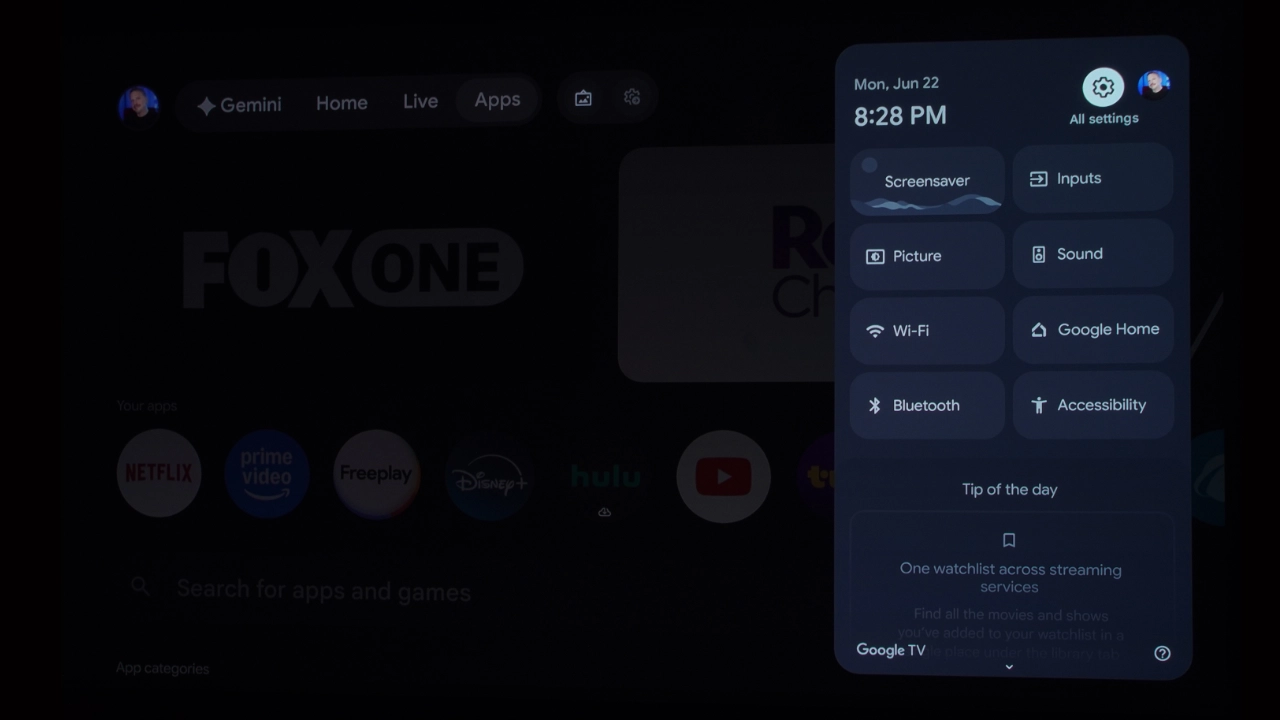
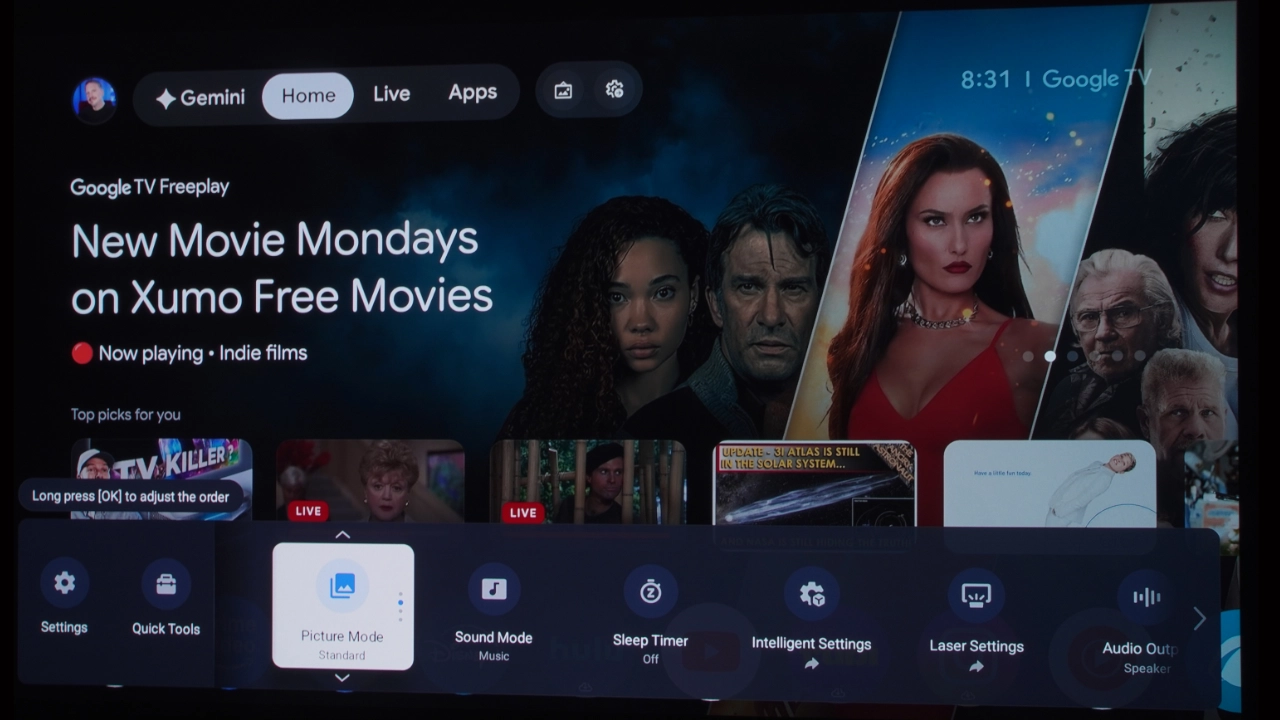
AWOL Vision includes a fully integrated version of Google TV’s smart OS, along with a “task bar”- style pop-up menu with shortcuts to the projector’s most commonly used features. In addition to smart OS features, the Aetherion Pro also includes a comprehensive suite of digital alignment adjustments. Its "auto" capabilities are far fewer than those of modern lifestyle projectors.
The AWOL Vision Aetherion projector series was introduced through a massive crowdfunding campaign, garnering substantial support from projection enthusiasts. On paper, the Aetherion Pro lives up to its promise, delivering outstanding native contrast, with a very usable brightness, and remarkably accurate color reproduction from a surprisingly compact chassis. The Aetherion Pro may be one of the best single-chip DLP projectors in its class on the market today.

AWOL Vision got its start in 2020, when co-founders Steven Shulman and Andy Zhao decided to anchor their business in the US while maintaining a specialized research team in China, diving headfirst into the ultra-short throw market without the usual corporate drag. Instead of messing around with blue-laser setups or noisy color wheels, they placed a big bet on pure RGB triple-laser engines, helping them carve out a distinct corner of the market by offering UST projectors that produce the kind of intense color and high brightness that holds up to a “lights-on” viewing environment.
By 2024, AWOL Vision launched Valerion long-throw projectors as a sister brand, and it caught on pretty quickly. AWOL Vision has now folded both names into a single ecosystem under the AWOL Valerion banner, which blends Valerion's gaming performance and black-level processing with AWOL's advanced, high-performance sapphire-glass lenses.
The new Aetherion projector lineup apparently struck a massive chord with enthusiasts, pulling in a staggering ten million dollars on Kickstarter in less than twenty-four hours.

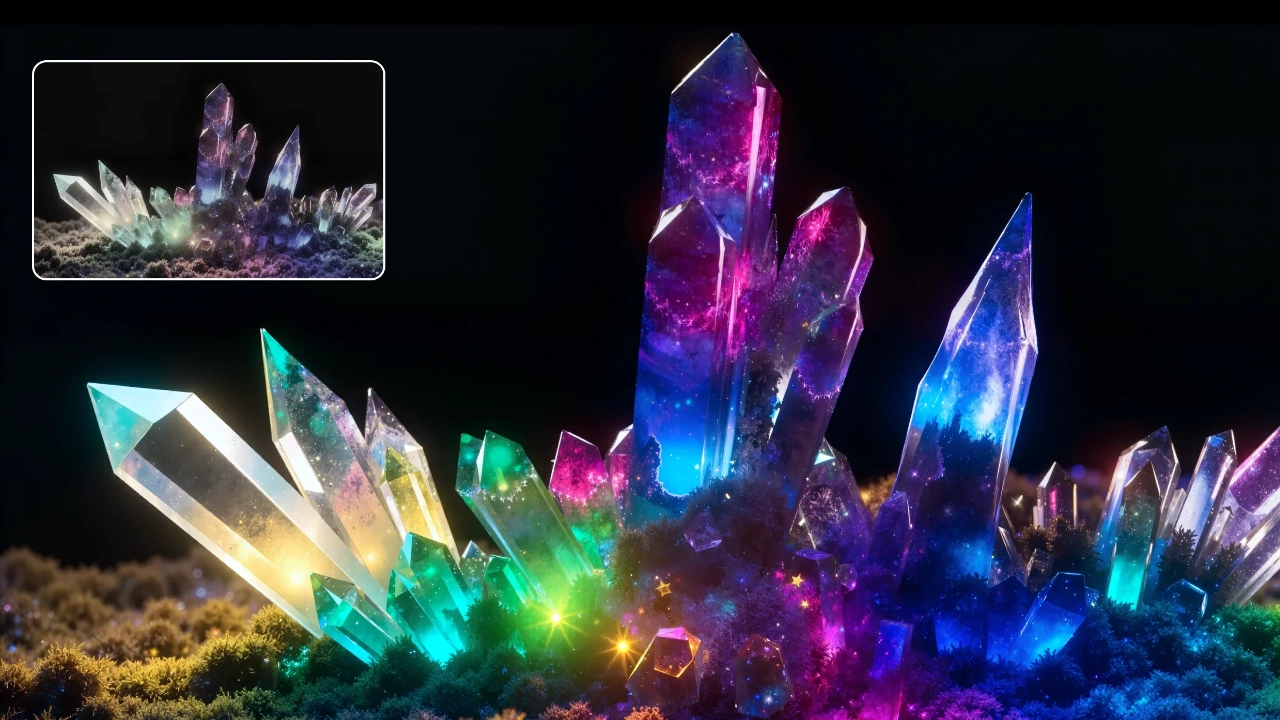
One of the biggest advantages in the Aetherion series is its RGB triple-laser light engine. Compared to a standard blue laser diode that blasts light onto a spinning yellow phosphor wheel to create its color palette, Aetherion uses three discrete laser clusters that fire pure red, green, and blue light directly at the Texas Instruments 0.47-inch DMD imaging chip. Triple laser light sources yield a massive color space that covers 110% of the REC.2020 gamut. In person, that means you get the kind of deep, punchy crimsons and intense neon greens that blue laser phosphor displays struggle to replicate.
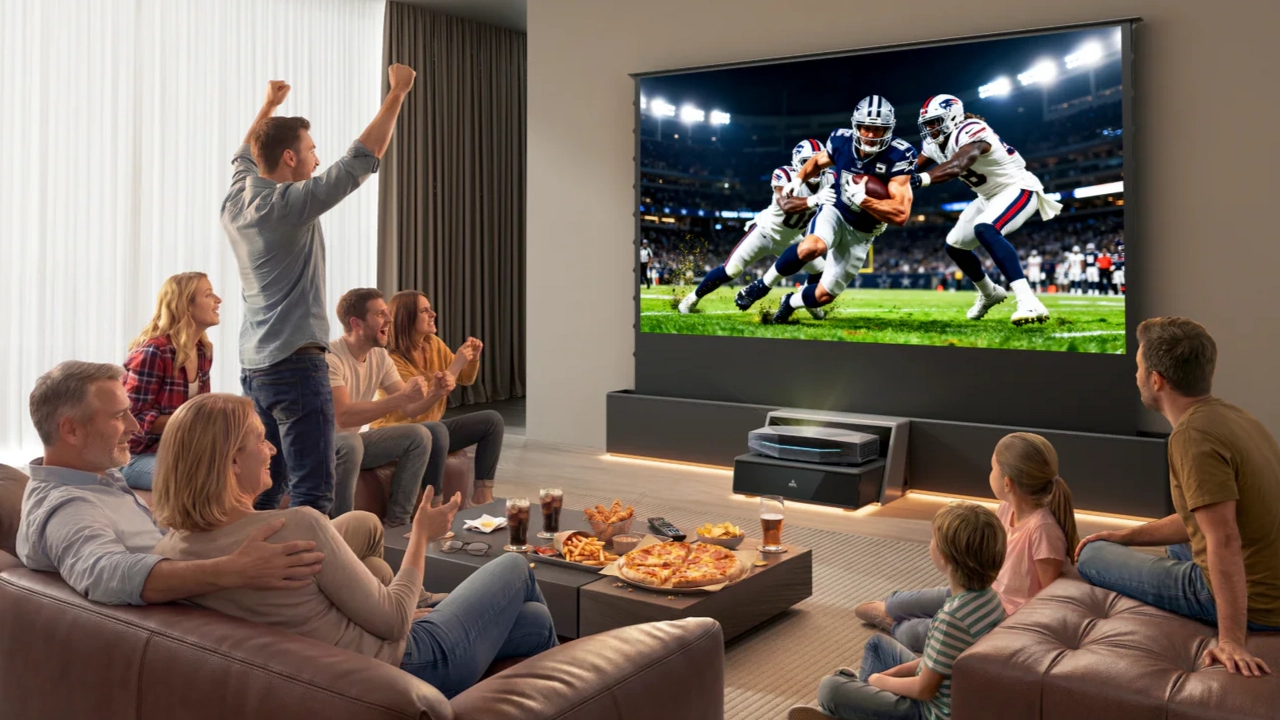
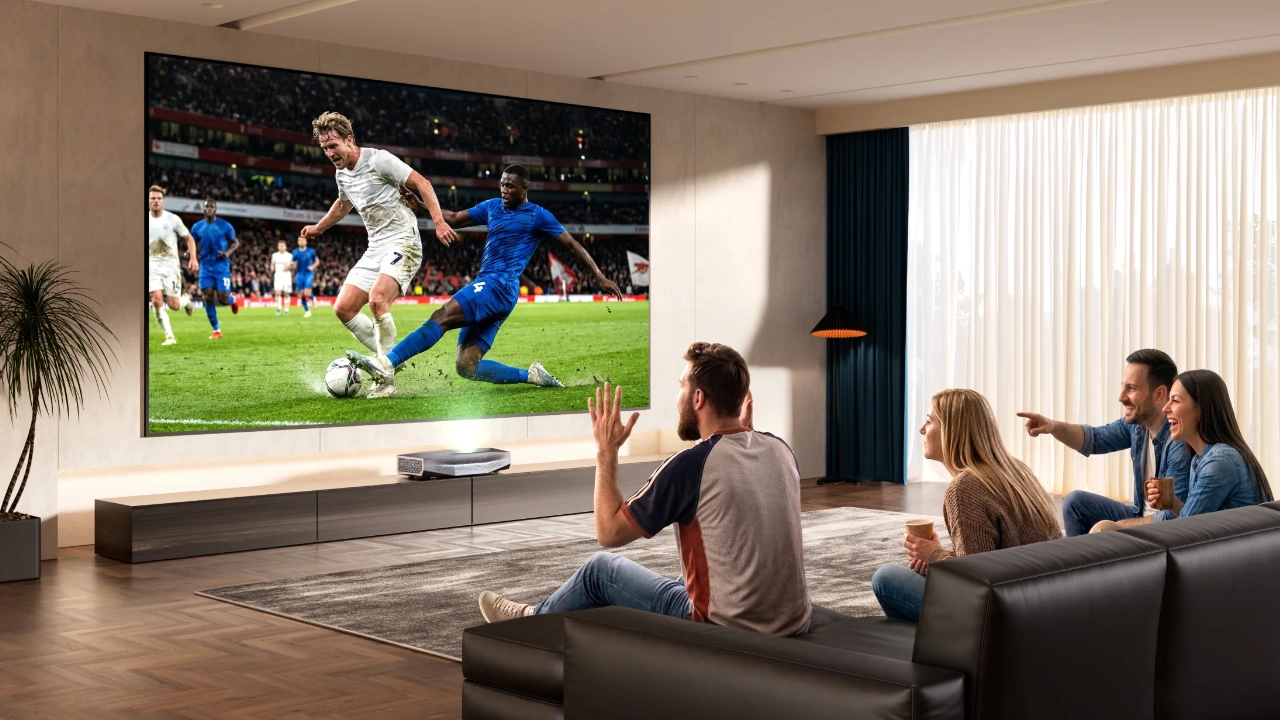
The Aetherion's RGB laser light source is bright, offering a rated 2,600 ISO lumens of on-screen brightness. With enough light, the Aetherion Pro holds its ground even when you leave a lamp on or crack the blinds during an afternoon football game. Because there is no mechanical wheel spinning inside, you also do not have to worry about the typical color-wheel degradation or the mechanical wheel breaking over time.
Pure RGB laser light sources are not perfect and have their own issues to contend with, such as the subtle, shimmering glitter effect known as laser speckle. Typically, you see it most on solid white backgrounds, such as a hockey rink or a bright sky. AWOL tries to counteract this by running a high-speed sequential switching algorithm that rapidly cycles power to individual laser diodes, breaking up the uniform light wave. In addition to cleaning up speckle artifacts, AWOL Vision does a decent job of minimizing and cleaning up the classic DLP rainbow effect.

The Aetherion series uses Texas Instruments' latest 0.47-inch SST Digital Micromirror Device (DMD), which has micromirrors with a higher tilt angle, helping direct unwanted light away from the lens. The result is higher native contrast. While the chip has a native resolution of 1920 by 1080, it utilizes XPR pixel shifting to deliver 4K on-screen resolution.
When you combine this new DLP chip with the new DLPC8445 controller, which delivers rapid-fire timing instructions, the projector has the ability to display 1080p gaming content at up to 240 frames per second. This new controller is also key to the Aetherion achieving a near-instant, single-millisecond refresh rate.

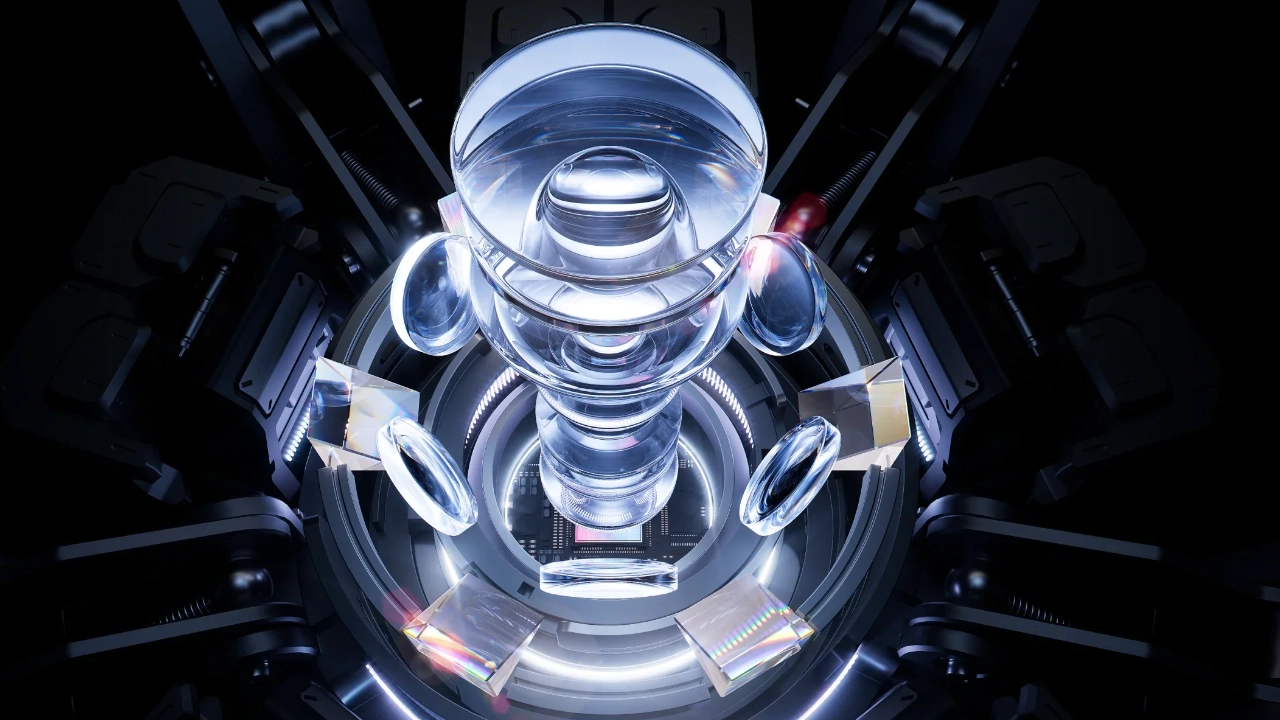
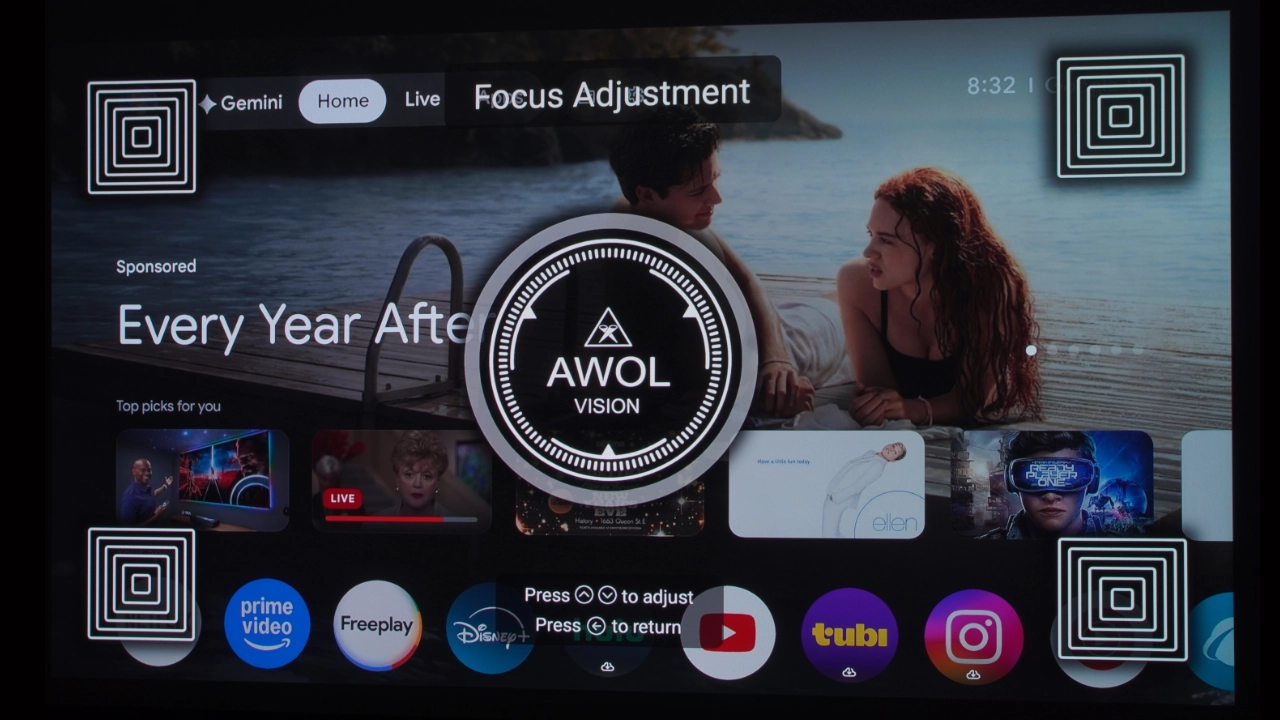
The Aetherion series is equipped with a high-quality lens assembly. Ultra-short throw projectors sit very close to the screen, so they need to project an image at an incredibly steep angle. Generic plastic lenses struggle to deliver a sharp image from edge to edge and often display weird color halos around text. To avoid this, the Aetherion system uses sapphire glass elements with minimal distortion and sharp focus. The projector is designed to deliver a razor-sharp image on screens ranging from 100 to 150 inches.
The Aetherion ultra-short throw lineup consists of the Aetherion Pro and the flagship Aetherion Max. Both models share the same physical chassis design and core technology. The primary differences between the two machines come down to light output, internal lens features, and price.
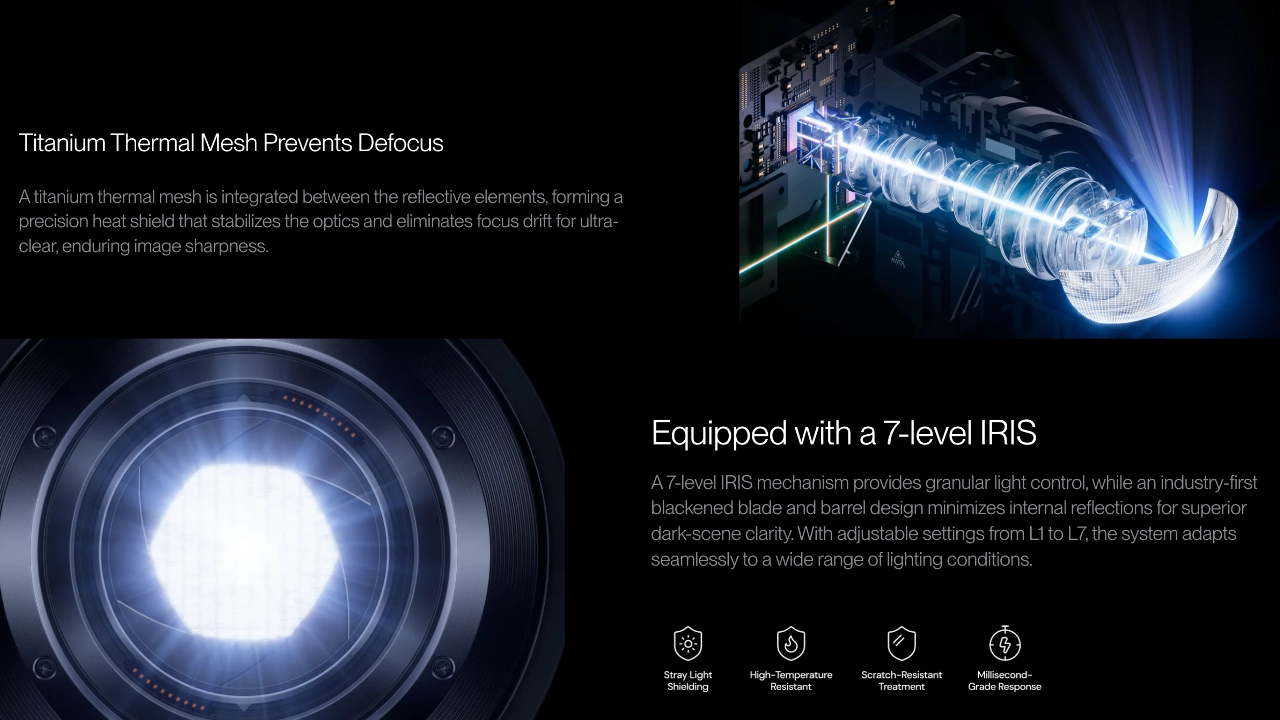
Both projectors use sapphire glass with what the brand calls Zero-Light Leakage, which absorbs stray light before it leaves the lens housing, improving native contrast. The Aetherion Pro also features a multistep motorized iris, which can be used to further improve native contrast in a dark space.
| Feature | Aetherion Pro | Aetherion Max | LTV3000 PRO |
|---|---|---|---|
| Price (MSRP) | $3,499 | $4,499 | $2,999 |
| Brightness | 2,600 lumens | 3,300 lumens | 3,000 lumens |
| Native Contrast | 6000:1 | 6000:1 | 2000:1 |
| Zero Light Leakage Lens | Yes | Yes | No |
| Lens Iris | Yes | Yes | No |
| Gaming | VRR, ALLM, 1ms | VRR, ALLM, 1ms | 8ms |
| Dynamic HDR Tone Mapping | Yes | Yes | No |
| Motorized Lens Cover | Yes | Yes | No |
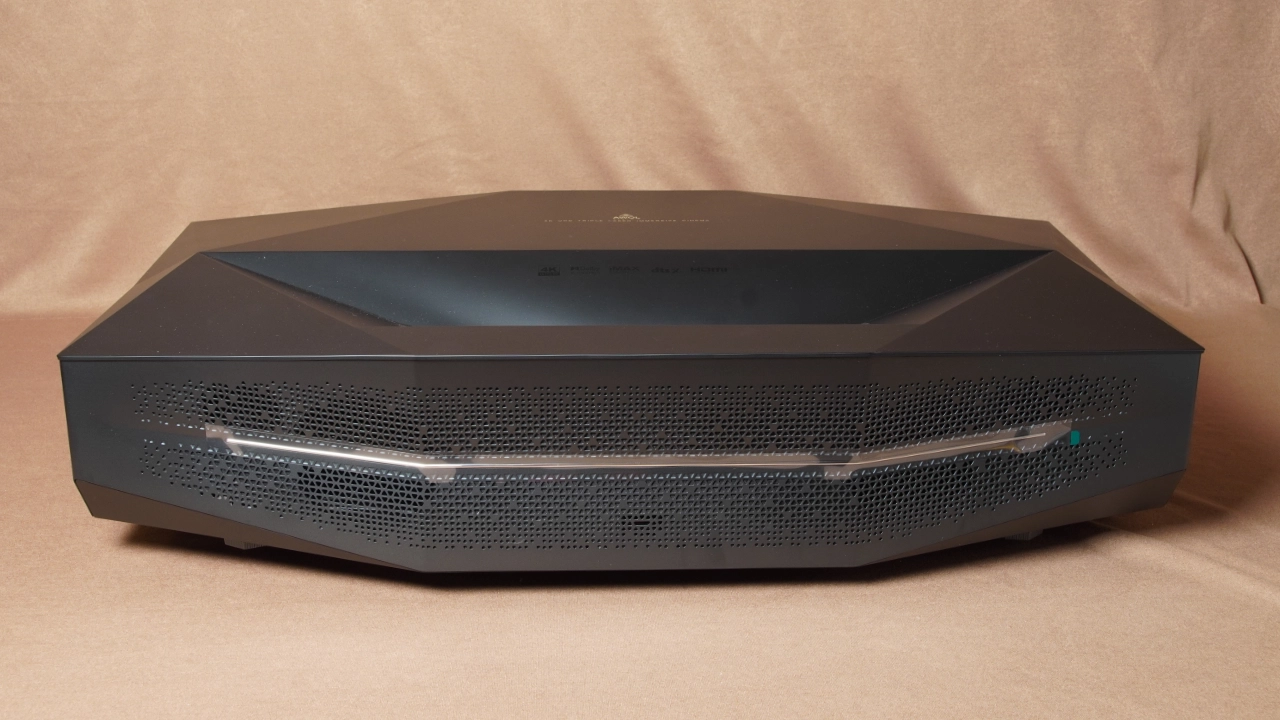
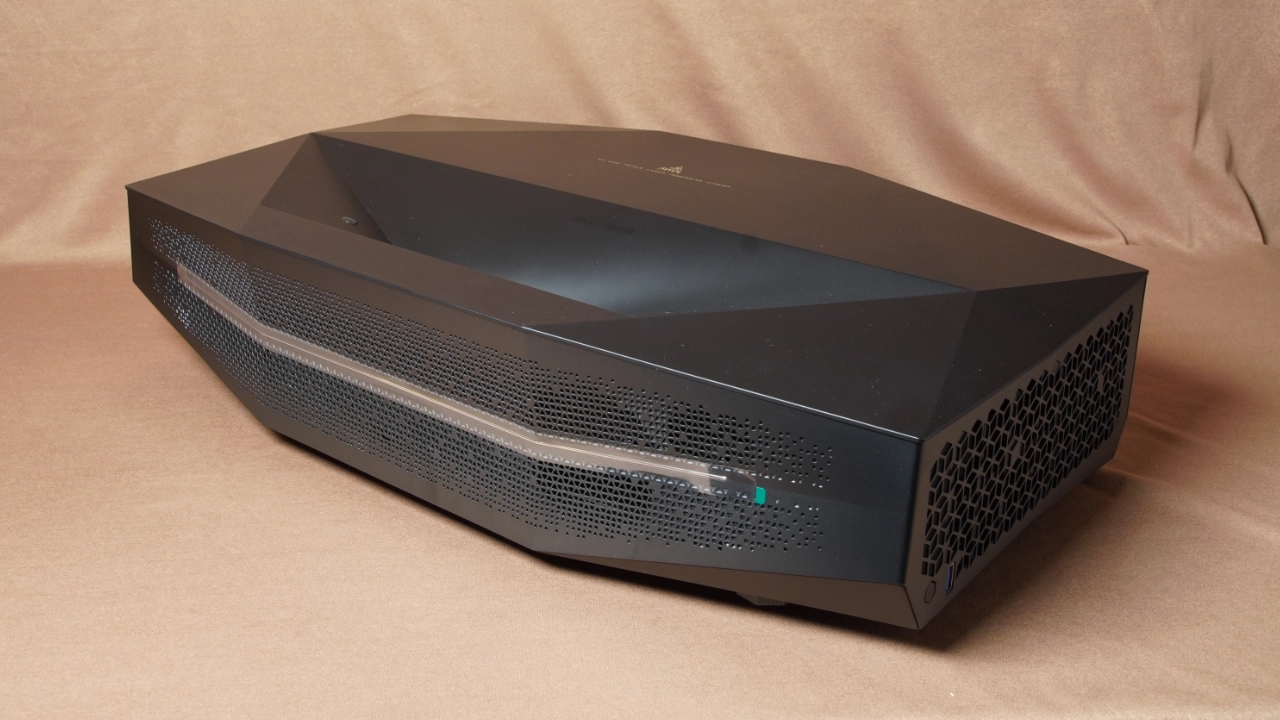
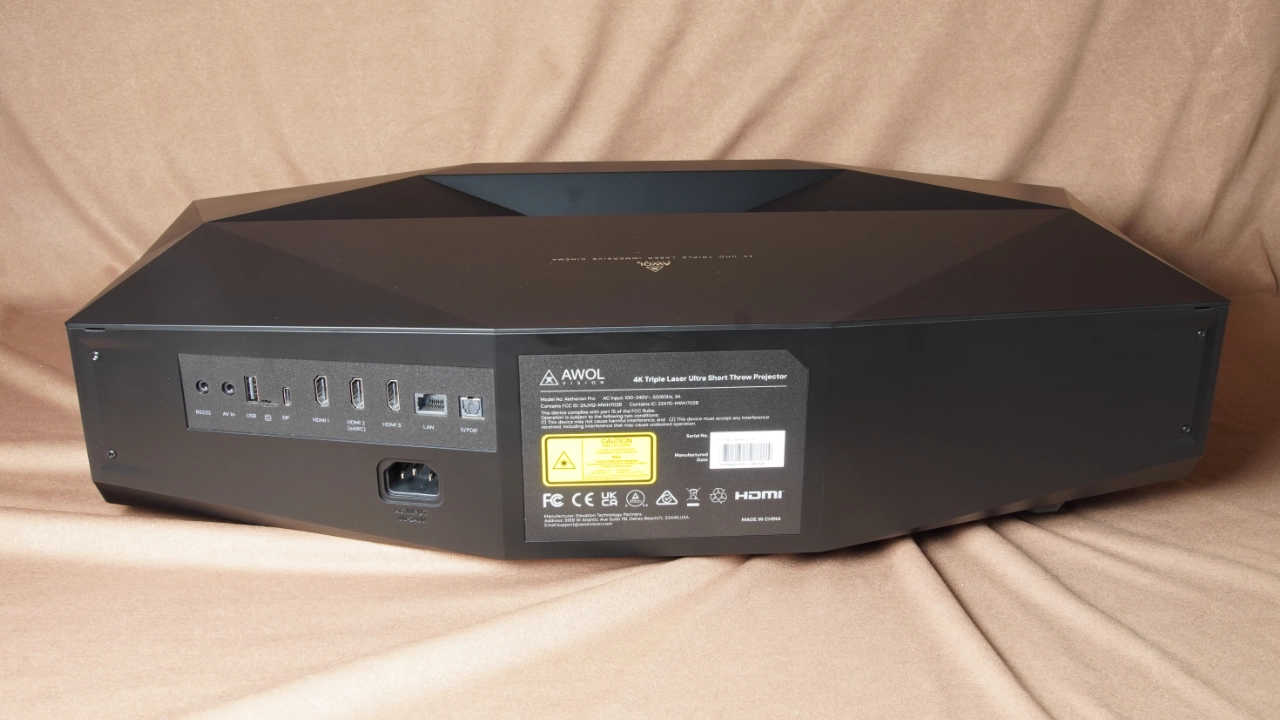
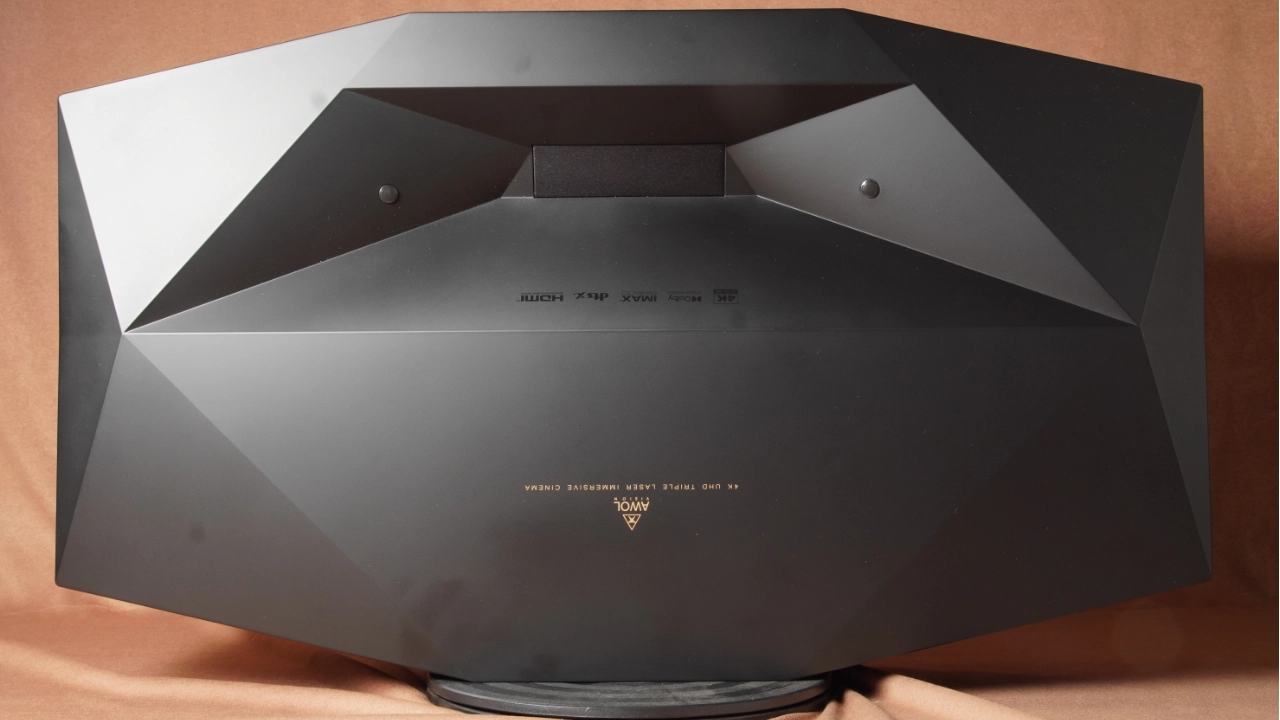
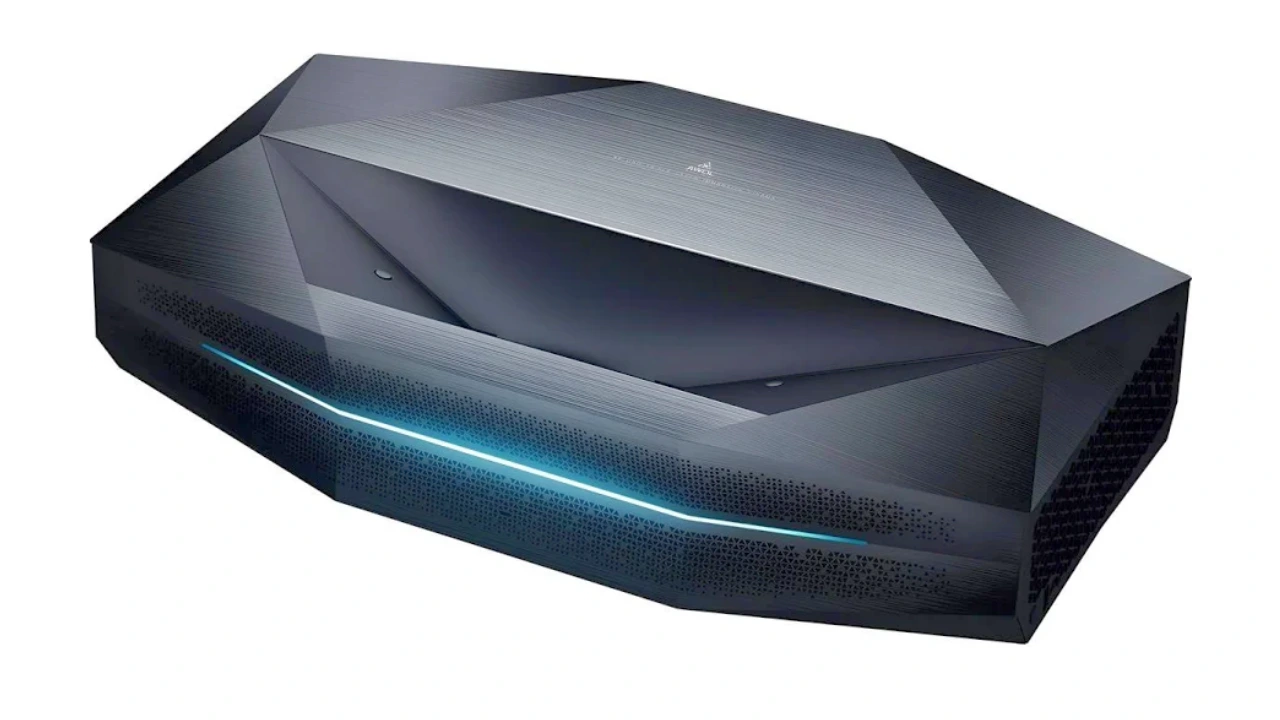
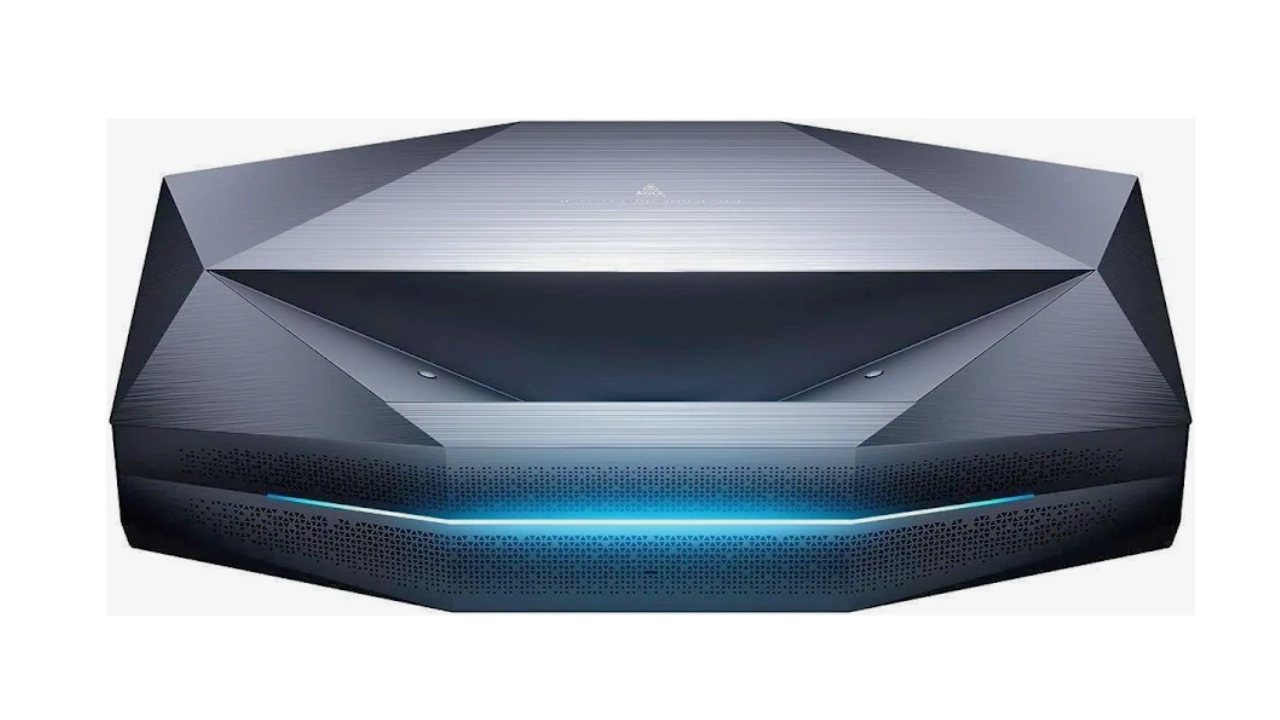
The Aetherion Pro is approximately (WxHxD) 22.13 x 5.49 x 12.72 inches (562 x 139.5 x 323 mm) and weighs 19.3 lbs (8.75 kg). The projection window is located on the top surface, along with sensors to detect obstacles and motion, which automatically reduce brightness for safety.
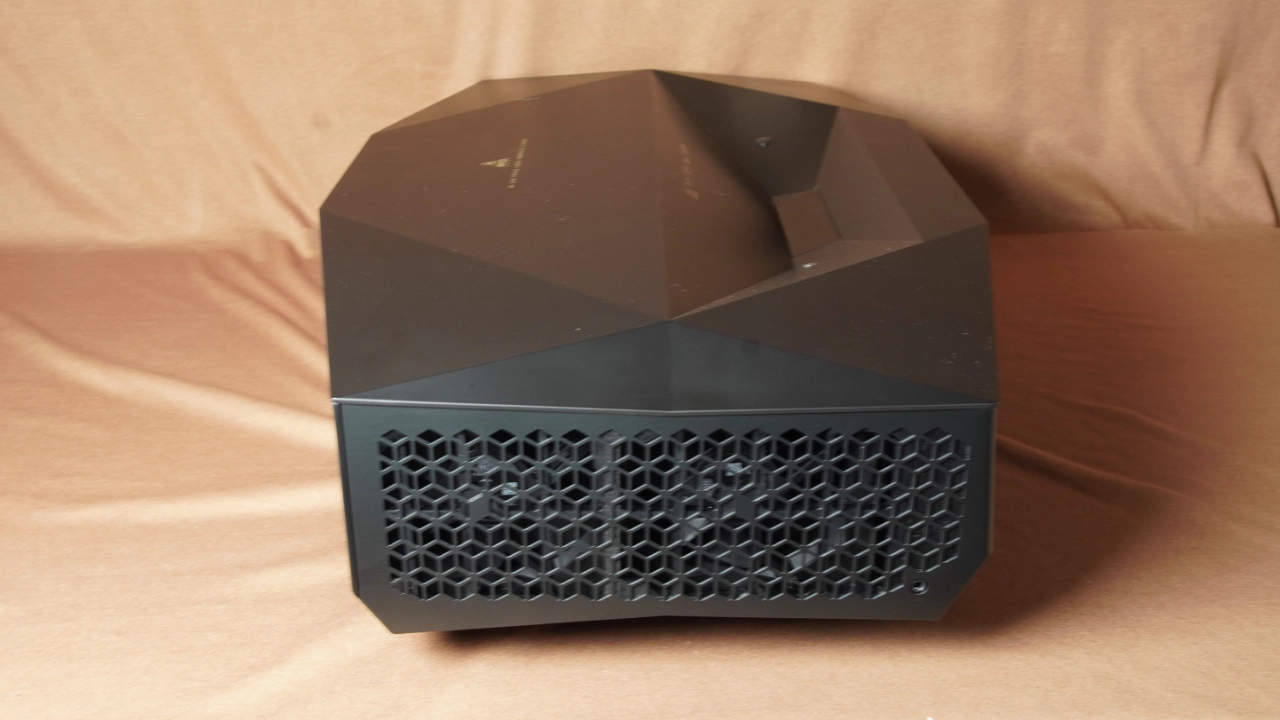
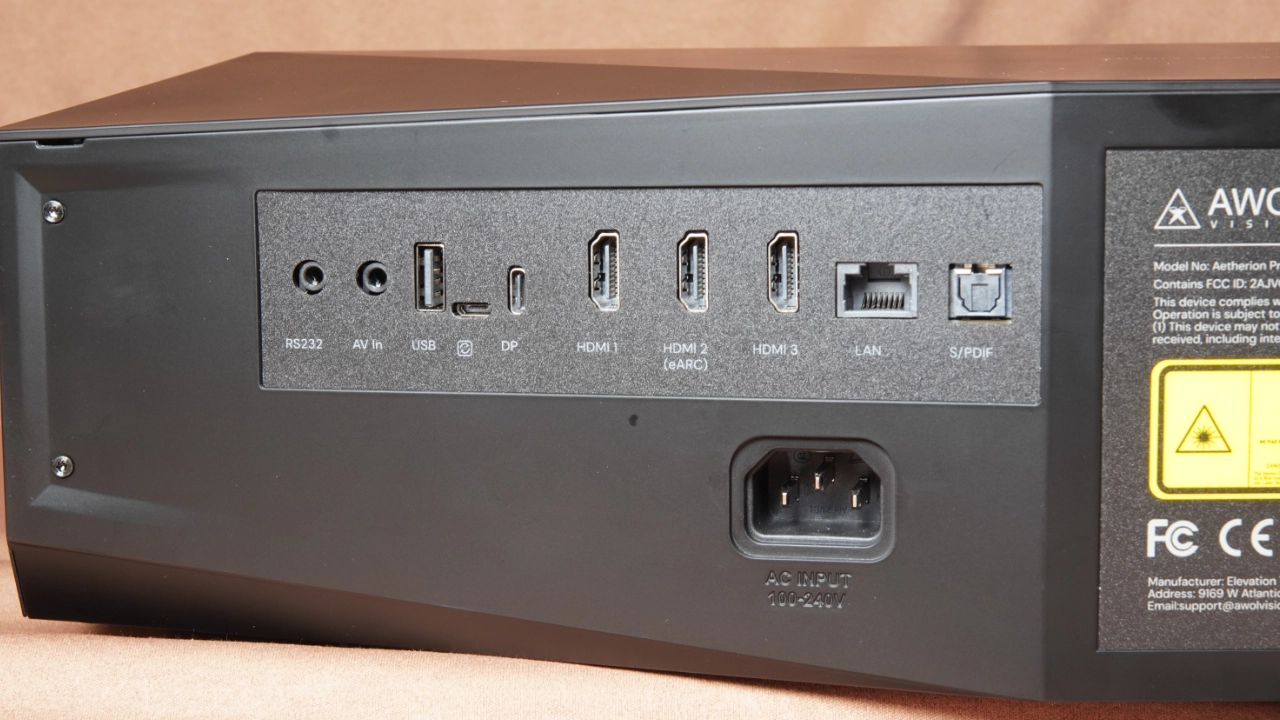
The projector’s speakers are located on the front of the unit. The air intake and exhaust filters are on the left and right sides, and connectivity is on the rear panel, except for the projector's power button and USB Type-C input, which are on its right side. Most of the connections are located on the rear, except for one USB Type-A input on the side of the projector. The Aetherion includes three HDMI 2.1 inputs, all compatible with HDCP 2.3.
Cooling intake and exhaust vents are located on the left and right sides of the projector housing. Air is drawn into the internal chassis through a grille on one side, pulled directly across the internal copper heatsinks and titanium thermal mesh protecting the optical block, and then forced out as warm air through the opposite side panel by the active cooling fans.

The main power button is on the right side panel, along with a high-speed USB 3.0 port. The opposite left side panel features a dedicated 3.5 mm analog headphone jack. The back houses three HDMI 2.1 ports, including eARC support on the second input for a direct audio passthrough to an external soundbar or AV receiver. Next are a Gigabit Ethernet RJ45 port, an optical S/PDIF audio output, a standard USB 2.0 port, and a USB-C connection. The projector also features internal Wi-Fi 7 and Bluetooth 5.4 wireless connectivity.
The Aetherion Pro features a fixed throw ratio of 0.2:1. This shorter throw ratio allows the projector to sit closer to the wall while projecting a massive image, making it much easier to fit on standard-depth media consoles without having to pull the furniture halfway into the room. To project a 100-inch diagonal image, the back of the projector sits roughly 4.3 inches away from the projection surface. To display a 150-inch diagonal image, the projector needs to be slid back to approximately 14-15 inches from the screen or wall.
The lens assembly on the Aetherion series does some of the heaviest optical lifting in the entire projector video signal chain, shooting light upward at an incredibly steep angle only inches from the screen. A generic plastic lens would fail to do a good job, producing a blurry image with weird color halos around text.

To avoid this, the Aetherion system, called PixelLock Optics, features a multi-element lens system made from high-index sapphire glass, which is harder and clearer than standard glass or polymer lens materials. PixelLock allows light to pass through the glass with minimal distortion, maintaining a razor-sharp focus across the entire image. A major benefit of this premium sapphire glass is the near-elimination of chromatic aberration, the technical term for when a lens fails to focus all colors of light onto the same point. In lower-resolution optics, this usually appears as a frustrating red or blue fringe bleeding from the edges of white text or sharp objects.
AWOL treats the glass elements with specialized rare-earth coatings using a meticulous, pharmaceutical-grade application of a premium planetary coating process. Its multi-axis synchronized rotation ensures perfectly uniform coating. Every step is performed in a pharmaceutical-grade cleanroom to ensure the best optical quality. This precision is why the Aetherion Pro can display a massive 150-inch canvas without the edges turning into a soft mess.
| Screen Size | Distance from Wall (Approx.) |
|---|---|
| 100 inches | 6.2 inches (15.7 cm) |
| 120 inches | 9.4 inches (23.9 cm) |
| 140 inches | 12.6 inches (32.0 cm) |
| 150 inches | 14.2 inches (36.1 cm) |
The Aetherion system also integrates a motorized dust cover that automatically slides over the delicate lens assembly when you power down the unit, protecting those specialized coatings from floating debris or accidental fingerprints.
The final piece of the optical puzzle is the internal 7-stage motorized iris. Rather than opening and closing rapidly during a movie, this iris is manually adjusted to match your room’s environment. If you are watching a film in a pitch-black dedicated home theater, you can clamp the iris down to a lower setting, physically restricting the light path to deepen the native black levels and maximize dark-scene contrast. Opening the iris to its maximum setting allows the full power of the triple-laser engine to push through the glass, flooding the screen with brightness to cut right through the ambient room light.

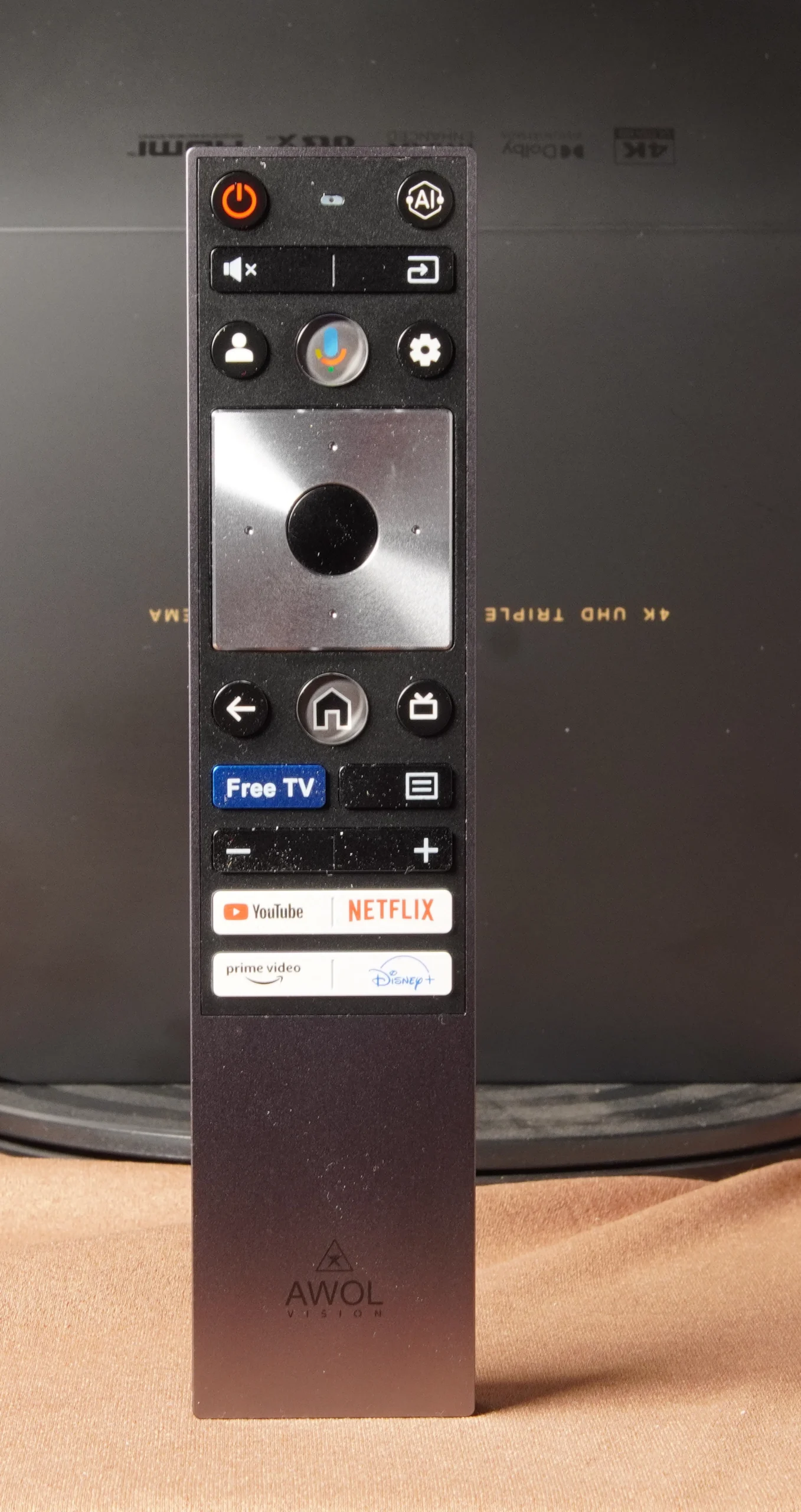
The projector includes the same heavy-duty metal remote control with a backlit keypad as the Valerion Max lifestyle projector. There is voice control via a built-in microphone that works through Google Assistant or Amazon Alexa. There are shortcut buttons for YouTube, Netflix, Amazon Prime Video, and Disney+.
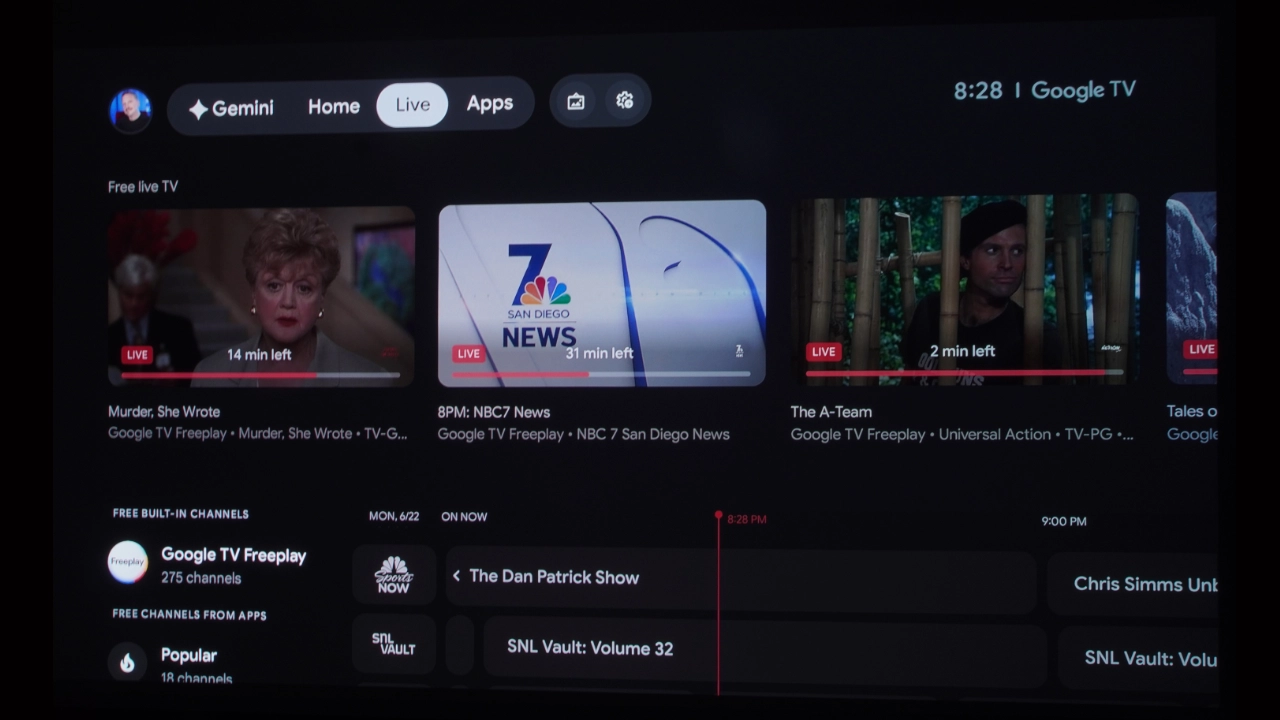
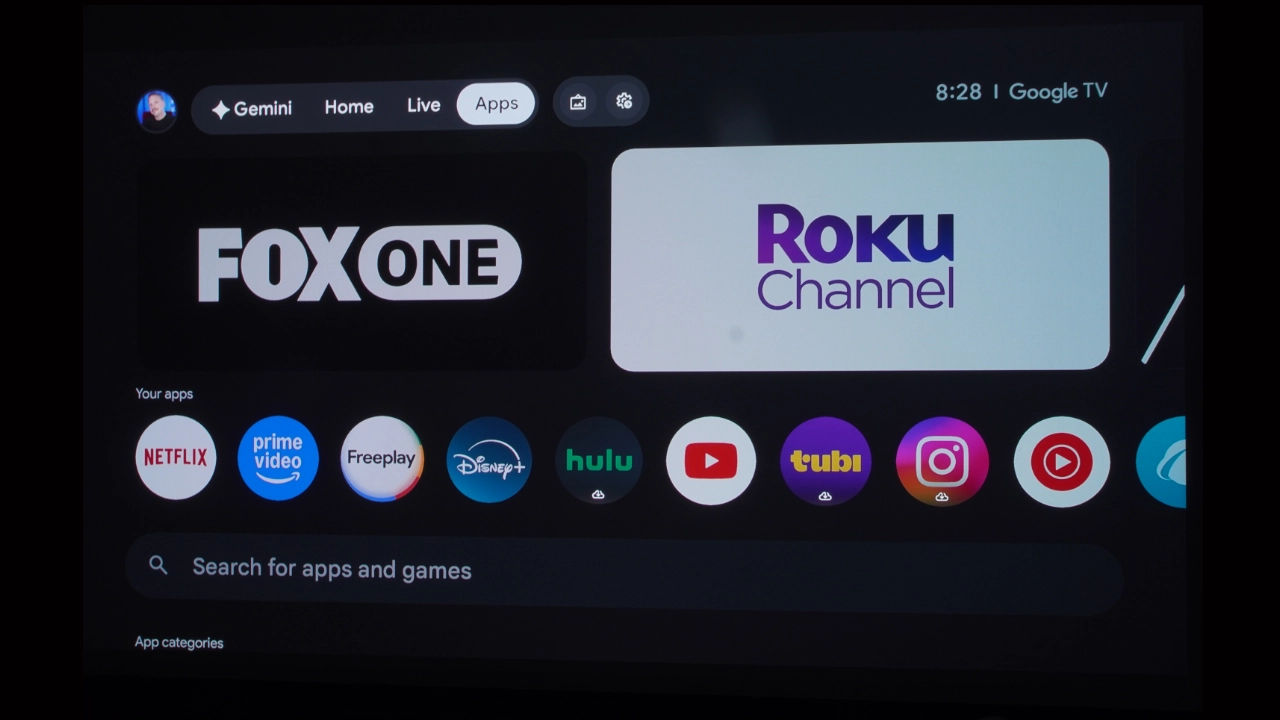
The Aetherion series features Google TV OS, which provides users access to popular streaming services like Netflix, Hulu, and Amazon Prime Video. The Max also supports AirPlay 2, Chromecast, and Miracast and is compatible with smart home systems like Google Home and Apple HomeKit, and offers device control via Alexa and Control4.
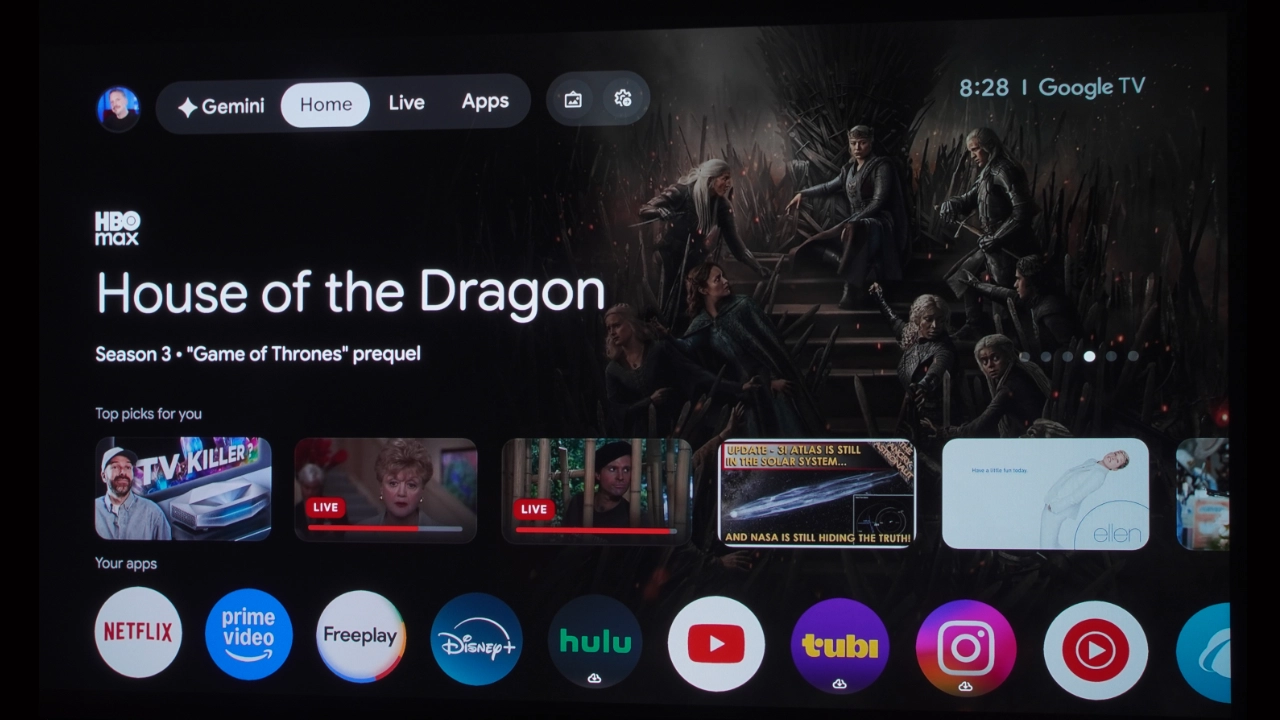
For casual viewing, the Aetherion series provides a stock Google TV smart platform that serves as the primary entertainment hub. Google TV OS is heavily curated, presenting a clean row of your favorite apps like Netflix and Disney+ alongside personalized content recommendations based on your viewing history. It’s intuitive, though it can sometimes feel a bit cluttered with all of Google’s algorithmic suggestions, especially if you are someone who just wants to jump straight into a specific app.
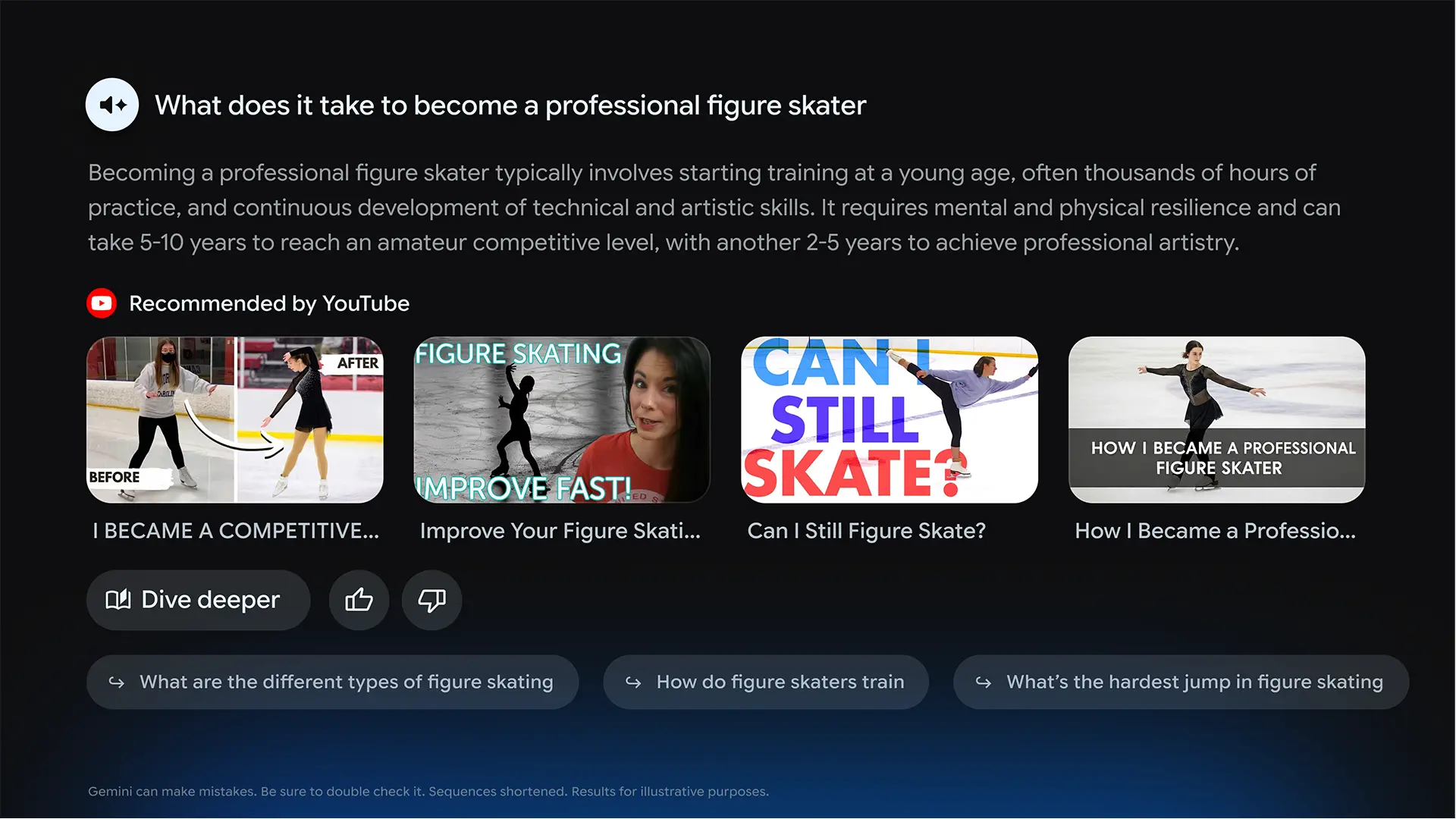
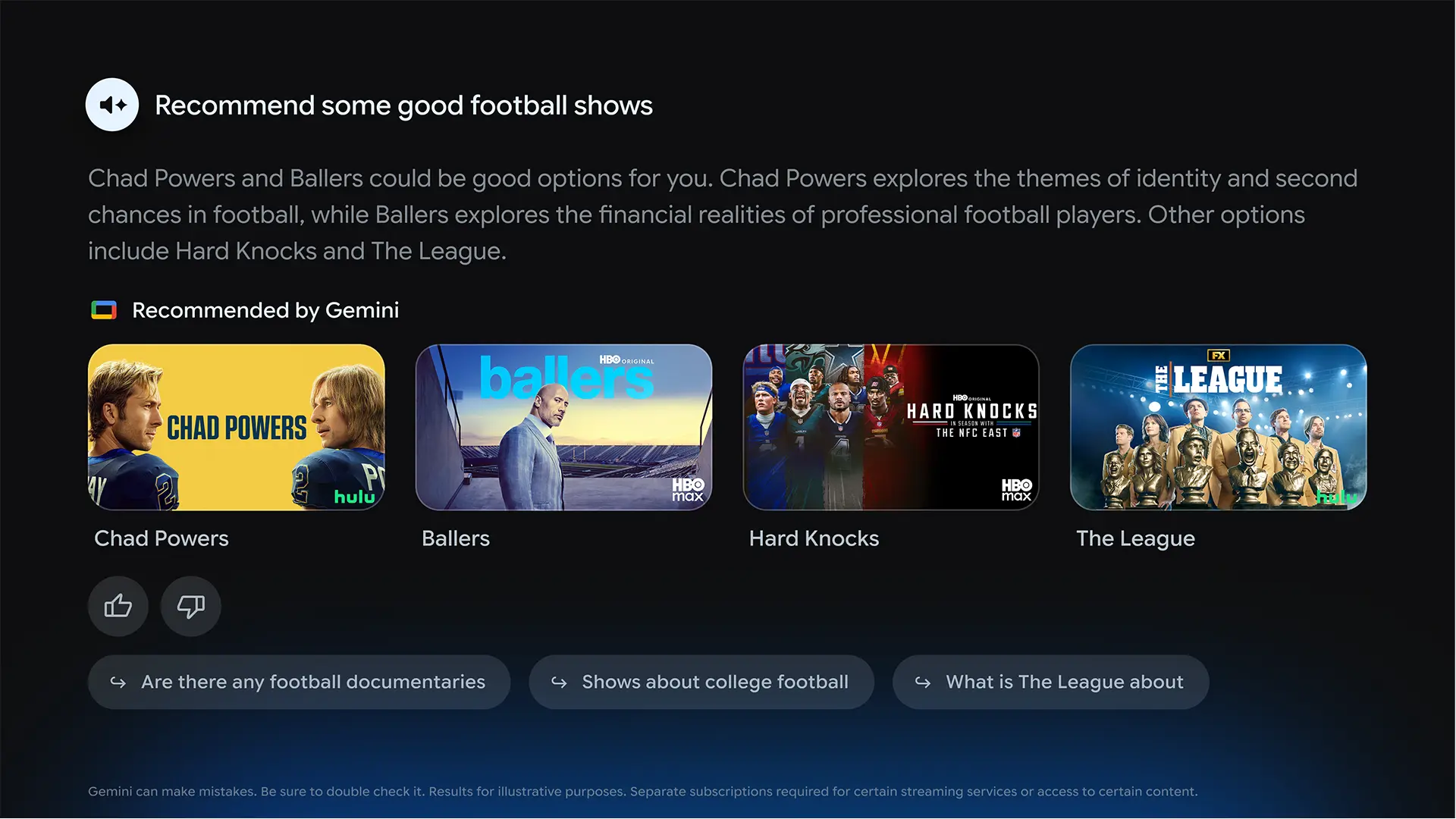
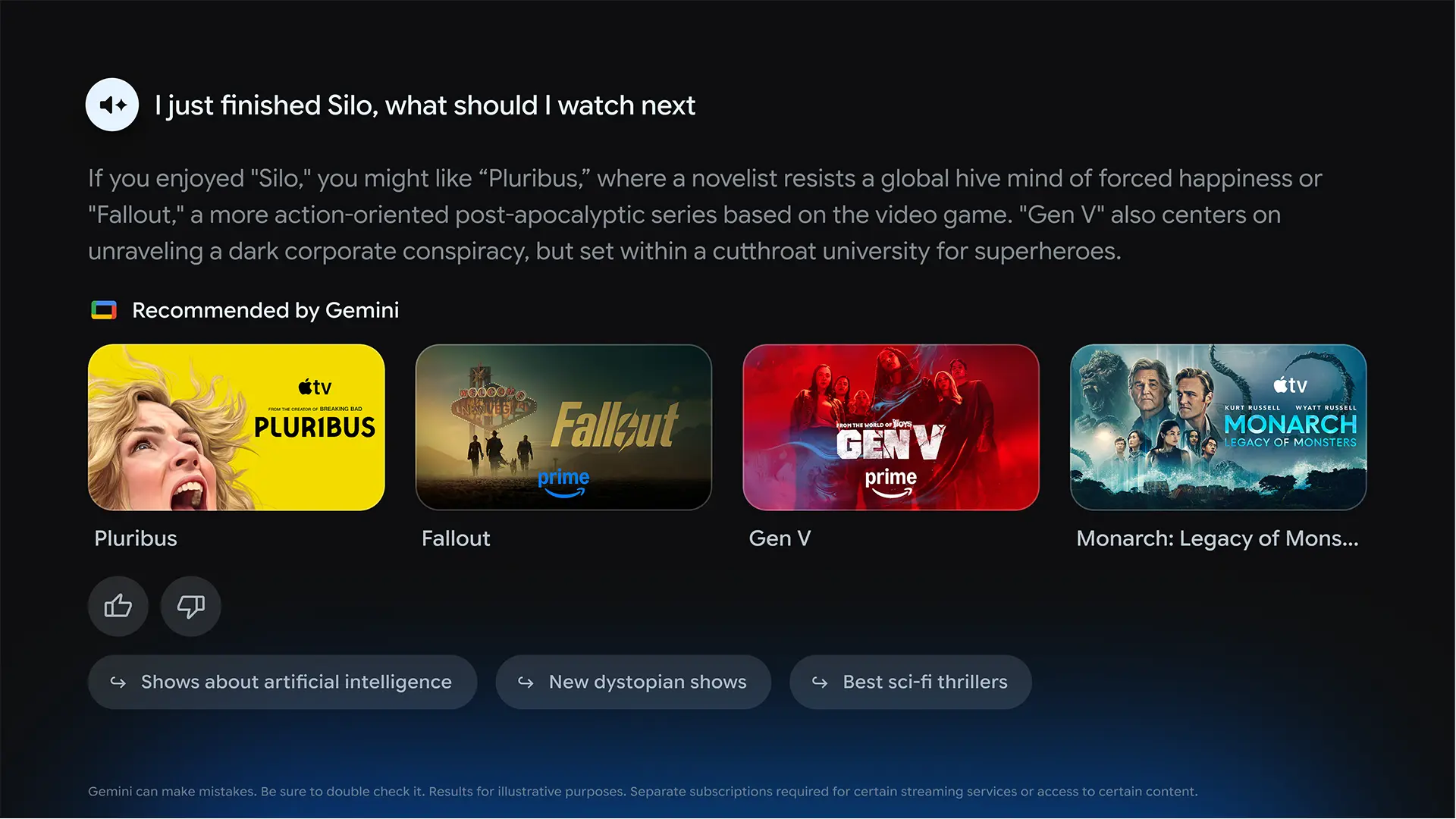
It seems impossible to escape AI integration, but if you are into that, Google has released a new GEMINI AI app that's a more scaled-down version than the others I’ve seen. Thanks to the generous amount of RAM and the new MediaTek processor, switching between the taskbar style and full menus is fast and easy with no visible speed lag or hiccupping.
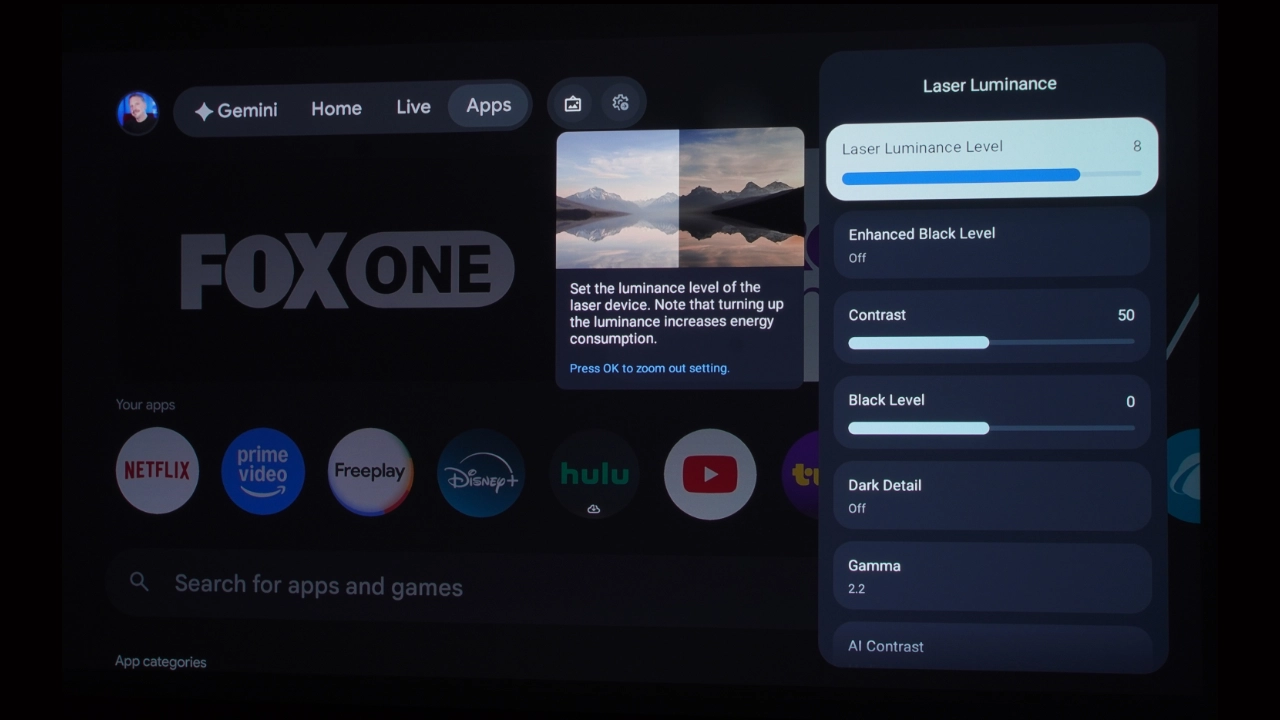
Tweaking the hardware is very easy and is done by pressing a separate menu button on the lower portion of the remote control. This section of buttons is the only one without a backlight. The shortcut menu is similar to a “taskbar” style menu found on computers. The layout is comprehensive, allowing users to access video adjustments, the projector's iris, geometry features like keystone, HDR, and audio functions, among others.
One of the first things that hit me as I started putting this projector through its paces was how pleasantly detailed and uniform the image looks without being too sharp. Typically, I do much of my out-of-the-box testing in FILMMAKER because it bypasses image processing and yields a more neutral image. Out of the box, I found that the Aetherion Pro’s FILMMAKER mode was, to my eye, unusually warm (yellow and red) compared to previous AWOL Vision models.
THEATER mode was also warm but a little brighter and sharper because the AI Super Resolution is turned on and set to LOW. While AI Super Resolution may be helpful when viewing lower-resolution or highly compressed content, I ended up turning it off for high-quality sources.
Out of the box, the color accuracy of the Aetherion Pro ranges from acceptable to genuinely great, depending heavily on the picture profile you select. For most of my testing, I found the dedicated CINEMA modes, like THEATER and FILMMAKER, to be the most accurate. Because the Aetherion relies on a pure RGB triple-laser engine, the projector behaves like most wide-gamut displays. It covers a massive 110% of the ultra-wide REC.2020 color space, which means it can deliver rich colors that many non-RGB laser projectors cannot match.
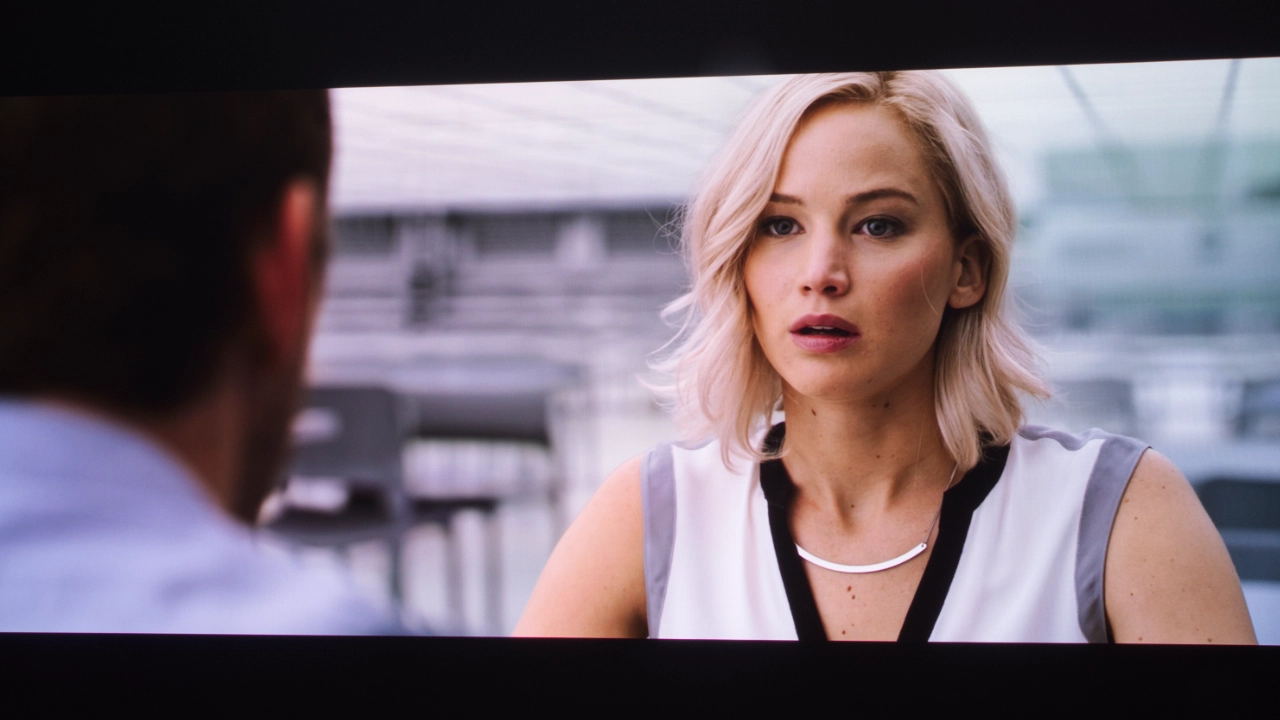
Sometimes, when using the projector in the STANDARD or VIVID picture preset modes, the picture can be oversaturated. I found that the easiest way to achieve the best overall performance, at least without doing a full-on calibration, was to set the projector to one of its “cinema-style” modes, such as THEATER or FILMMAKER. In these modes, you have more controlled warm tones, so the skin tone is not overly red.
AWOL includes a very robust color management system if you really want to tweak the picture exactly the way you prefer, but for most people, the projector's cinema presets are more than enough.
Unlike the Valerion projector series, the Aetherion projectors have no standalone Anti-RBE switch in their menus. Instead, the high-frequency laser pulsing algorithm turns on automatically when the projector's color temperature is set to Warm-1. Also, like other projectors with this technology, it tends to make a high-pitched whine when engaged, though I have to say I noticed it less on the Aetherion.
To measure and adjust the Aetherion Pro, I used my Klein K10-A colorimeter, Murideo Six-G test pattern generator, and Portrait Displays Calman color calibration software.
Since your room and screen material significantly impact the overall picture, I don't recommend using someone else's (like mine) calibration adjustments. If your room is brighter/darker, or if your walls are a different color, copying someone else's results can degrade picture quality rather than improve it.
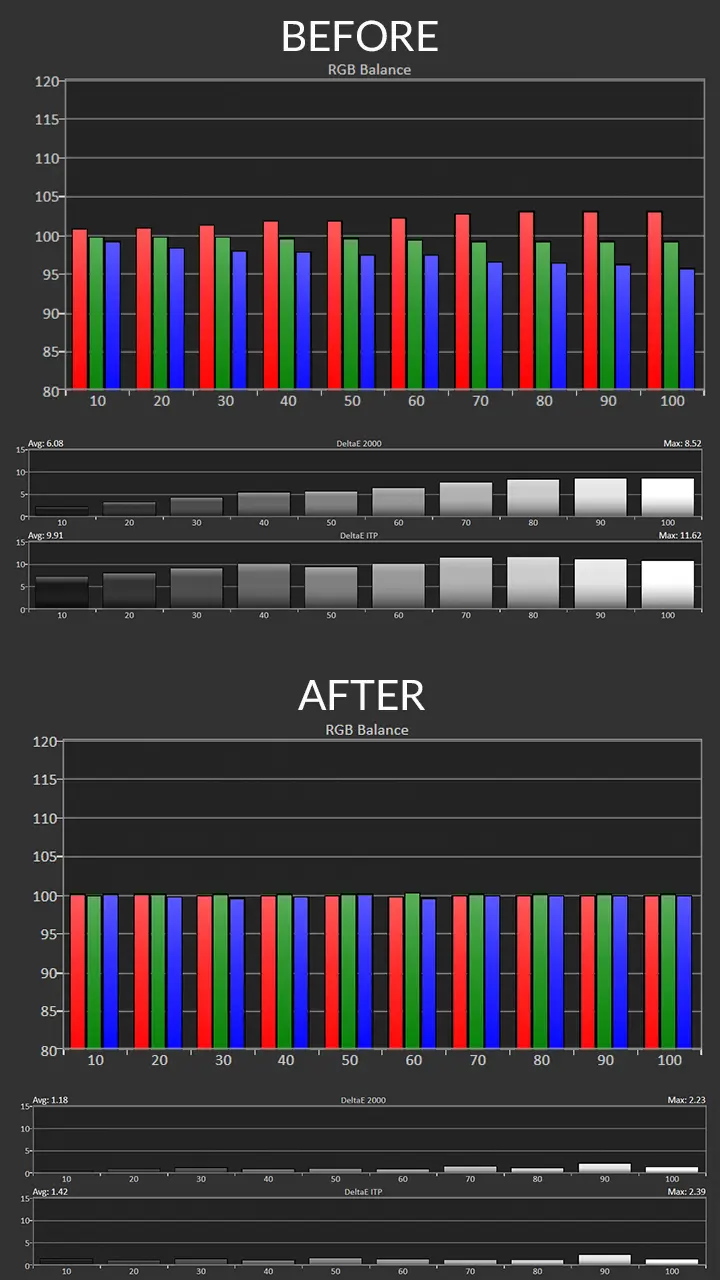
If you would like to make some quick adjustments to improve the picture quality of your projector in your room, check out our video called Optimize The Image of a Projector or TV Using Free Murideo Test Patterns. However, below are the before-and-after calibration results in my room.

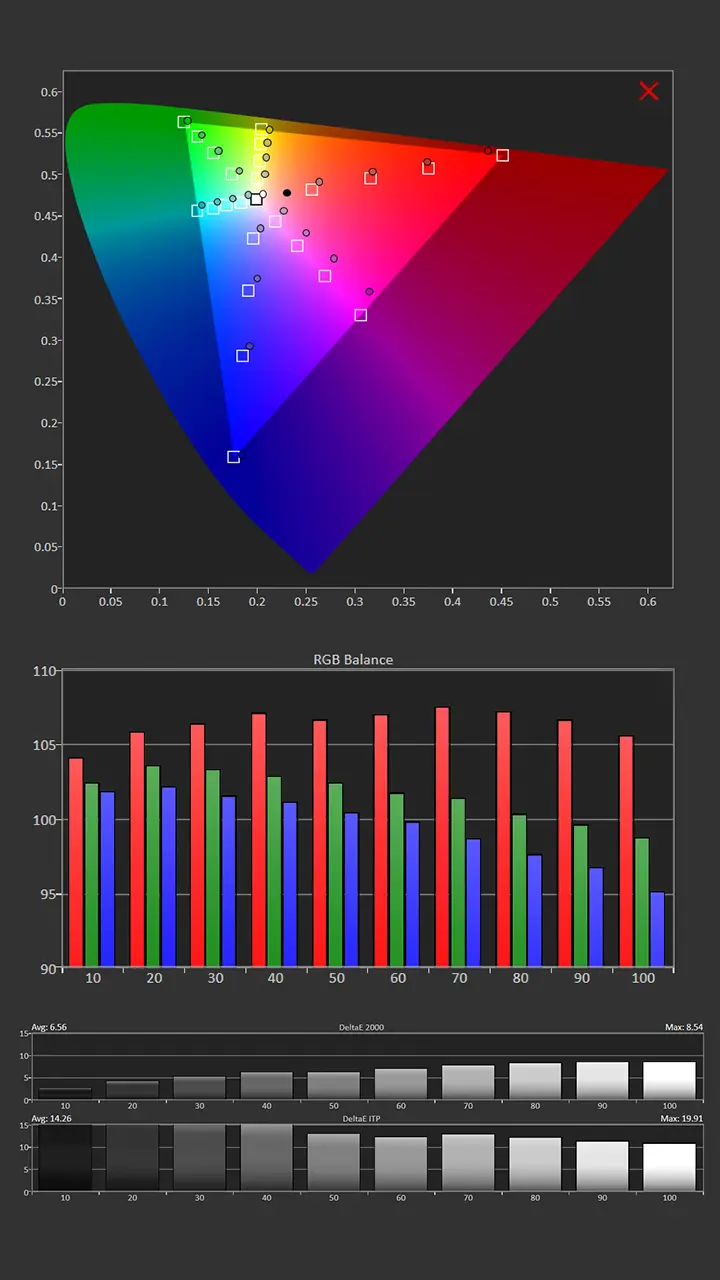
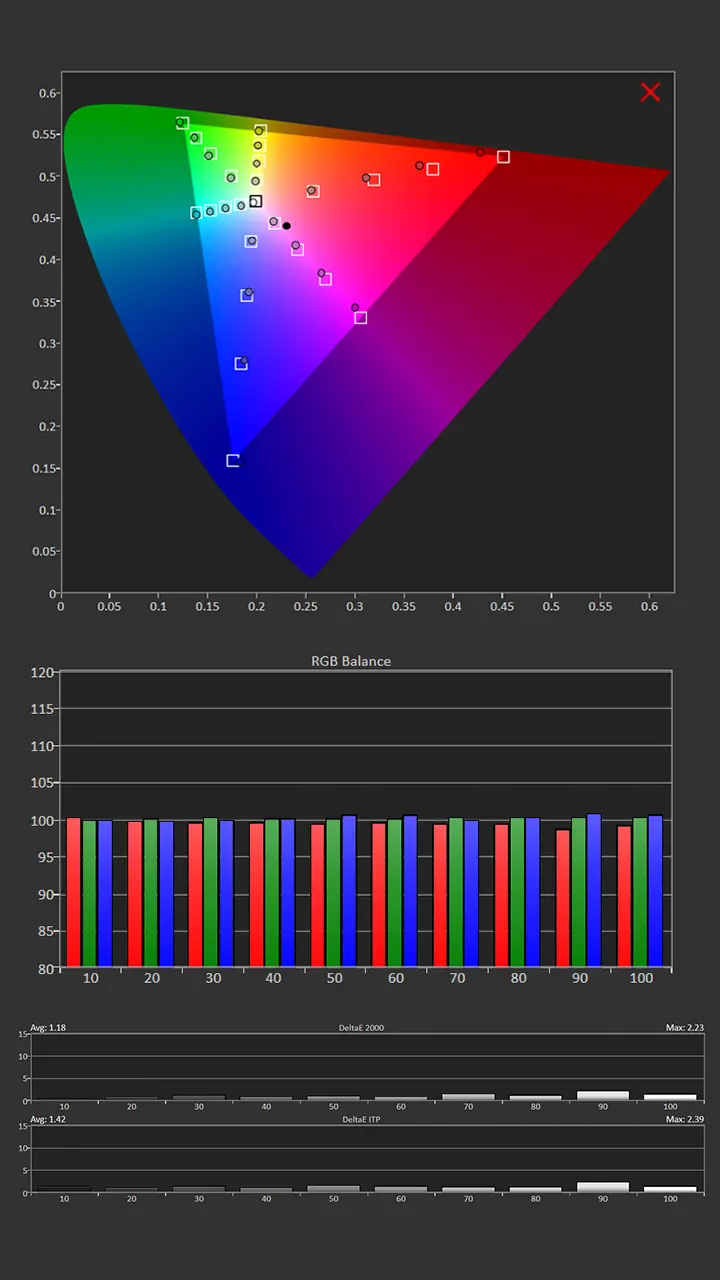
I chose to calibrate the THEATER mode. The average color temperature before adjustment was 5936K, which was warmer than my target of 6500K. Our measurements showed an overemphasis on red.
The mode’s overemphasis on red also led to a color shift, as evidenced by the saturation measurements. The Gamma was 2.17, which close to my usual target of 2.2
The Aetherion Pro has advanced image adjustments, including Two-Point /Multi-point RGB balance, and CMS adjustments, so you can fine-tune the unit’s image quality. Pre-Calibration brightness on my 100-inch matte white screen was 117 nits

The Gamma was close my target of 2.2 so I made some minor Contrast and Brightness adjustments.
To correct the projector's grayscale, I used the projector's Two Point White Balance adjust to reduce the Red Gain and increase the Blue Gain. While projector has a 10-point white balance adjustment, I didn't to utilize it to improve damage to utilize it to improve image.
Correcting the projector’s RGB balance also significantly improved the projector’s color tracking by eliminating the majority of the color shift shown in the pre-calibration saturation sweeps measurements. Some colors were slightly undersaturated, but most color points were spot-on.
The projector’s grayscale and color reproduction are good enough out of the box to satisfy the average Laser TV customer. However, many home entertainment Enthusiasts desire the best picture quality possible, so it is great that the QS100 includes a full suite of picture adjustments.

When viewing HDR, the THEATER and FILMMAKER modes were the most accurate. Like SDR, I chose to calibrate the HDR THEATER mode. Our measurements show the same issues with white balance and color tracking we found in SDR.
SDR /HDR color tuning adjustments are independent for each picture mode. To achieve better Grayscale, I made similar RGB adjustments in HDR as I did in SDR. After adjustment, the Grayscale deltaE dropped from an average of 6.3 down to below 1. Like SDR, correcting the grayscale improves the HDR color tracking.
To its RGB laser light source, the Aetherion Pr0 can reproduce 93% of the BT.2020 color gamut and over 130% of the DCI P3 color gamut, which is more than enough to deliver a colorful HDR image.
The Aetherion Pro comes with an official rating of 2,600 ISO lumens max. I wanted to see what the hardware could actually do when pushed. To test its absolute upper limit, I switched the projector to its brightest preset, SPORTS, and set its BRIGHTNESS ENHANCEMENT to HIGH. Because measuring an ultra-short throw projector can be tricky due to its extremely steep upward projection angle, I took multiple light readings about 15 to 20 percent off-center to keep the measurements accurate.
With the BRIGHTNESS ENHANCEMENT set to HIGH, I measured 2901 lumens, just over 300 lumens brighter than AWOL's published brightness.
Just like almost every other DLP projector that uses a heavy-handed brightness enhancement mode, chasing maximum lumens introduces a noticeable greenish tint to the picture. It seems like a feature designed mostly to win spec sheet wars rather than for actual movie nights. That said, even if you back off the extreme settings to get a more accurate color balance, the Aetherion Pro appears to comfortably deliver a highly usable image that sits near the top of the current ultra-short throw market.
If you are trying to watch a Saturday afternoon football game with the blinds cracked, or if you are aiming for a massive 150-inch screen. That brightness headroom is also the secret sauce for making High Dynamic Range content look right.
When I tested the unit, I paired it with both a standard matte white screen and a dedicated Ambient Light Rejecting (ALR) display. If you are dealing with a room that has a moderate amount of stray light coming through the windows, pairing this light engine with a good ALR screen creates a combination that can easily go toe-to-toe with a massive living room television.
| Picture Mode | Brightness Measured (Lumens) |
|---|---|
| VIVID | 1648 |
| STANDARD | 1719 |
| SPORTS | 1757 |
| ENERGY SAVING | 1485 |
| PC/GAME | 1503 |
| THEATER | 1289 |
| FILMMAKER | 1280 |
| SPORTS (BRIGHTNESS ENHANCEMENT ON HIGH) | 2901 |
When you talk about contrast and black levels on an ultra-short throw projector, you are getting into a traditional weak spot for consumer DLP chips. However, the Aetherion Pro makes a surprisingly aggressive push to fix this by using what AWOL calls the Noirscene System II. Noirscene claimed a native contrast ratio of 6,000:1. However, in our testing, we measured a native contrast of 3,076:1 and a dynamic contrast of around 25,000:1, which was slightly less than the Valerion Max but still a step forward for a UST projector built around a 0.47-inch Texas Instruments DMD chip. In the real world, this means the picture inherently has far more physical depth right out of the box, avoiding that flat, washed-out look that plagues a lot of competing laser TVs.
Noirscene uses the projector’s 7-stage motorized physical lens iris to physically narrow the light path, block stray internal reflections, and lower the floor of your black levels, giving you a better black floor and shadow details. The lens barrel itself even uses blackened internal blades specifically designed to absorb stray light before it leaks onto your screen and turns your blacks gray.
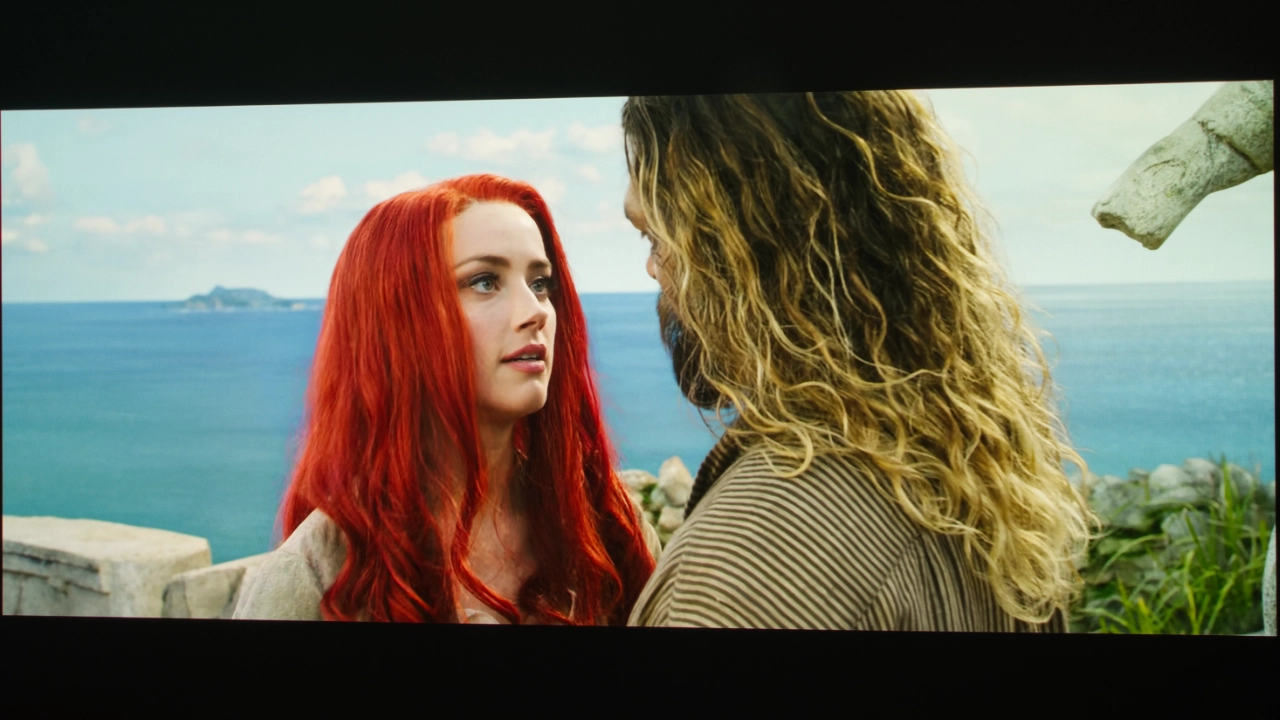
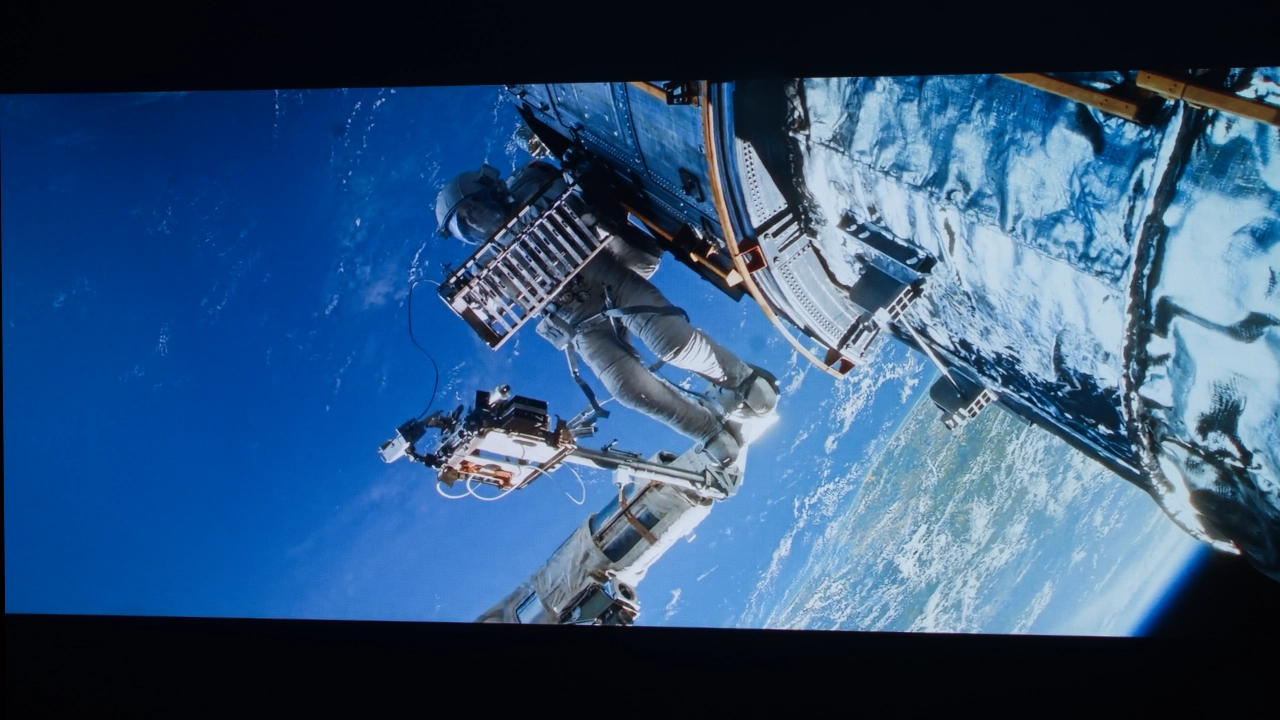
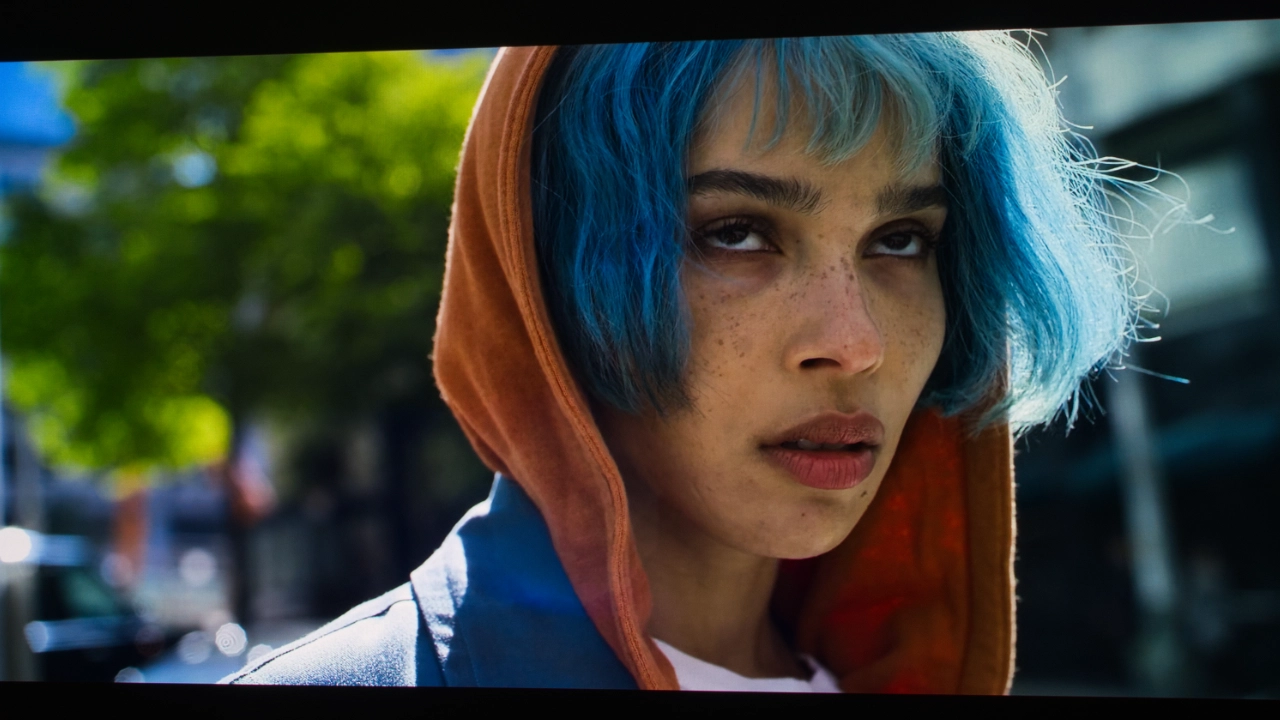
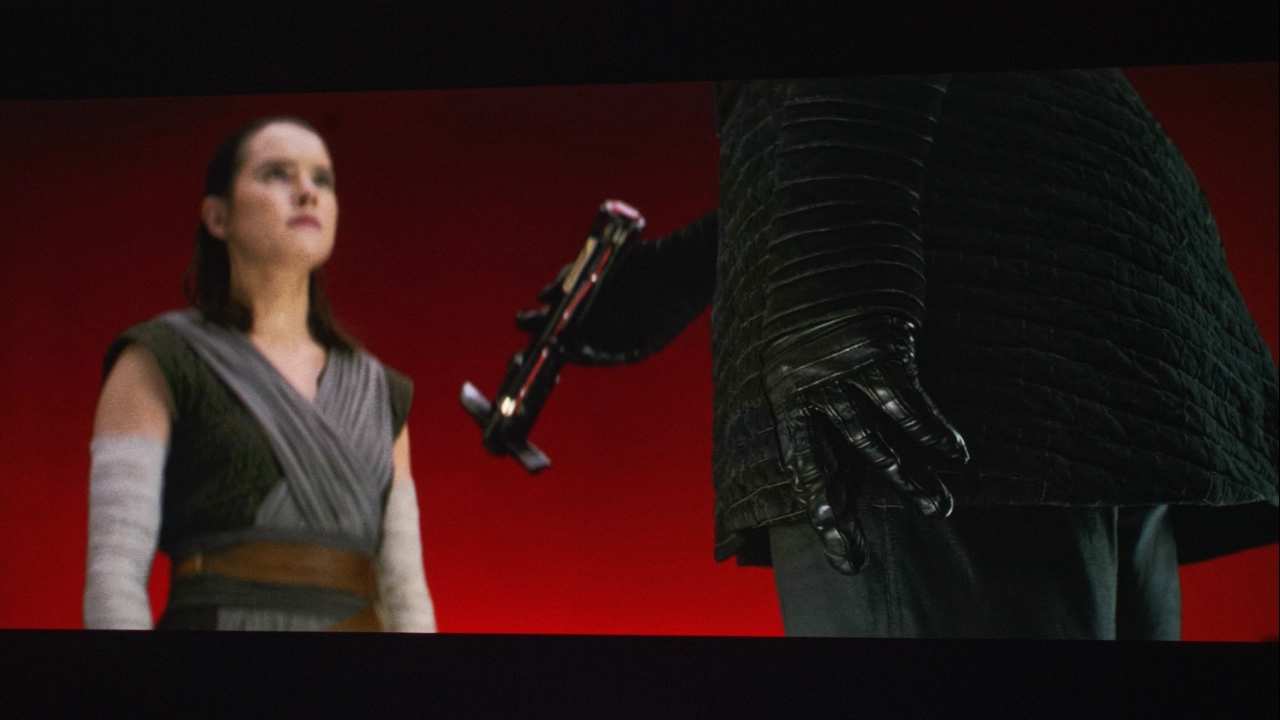
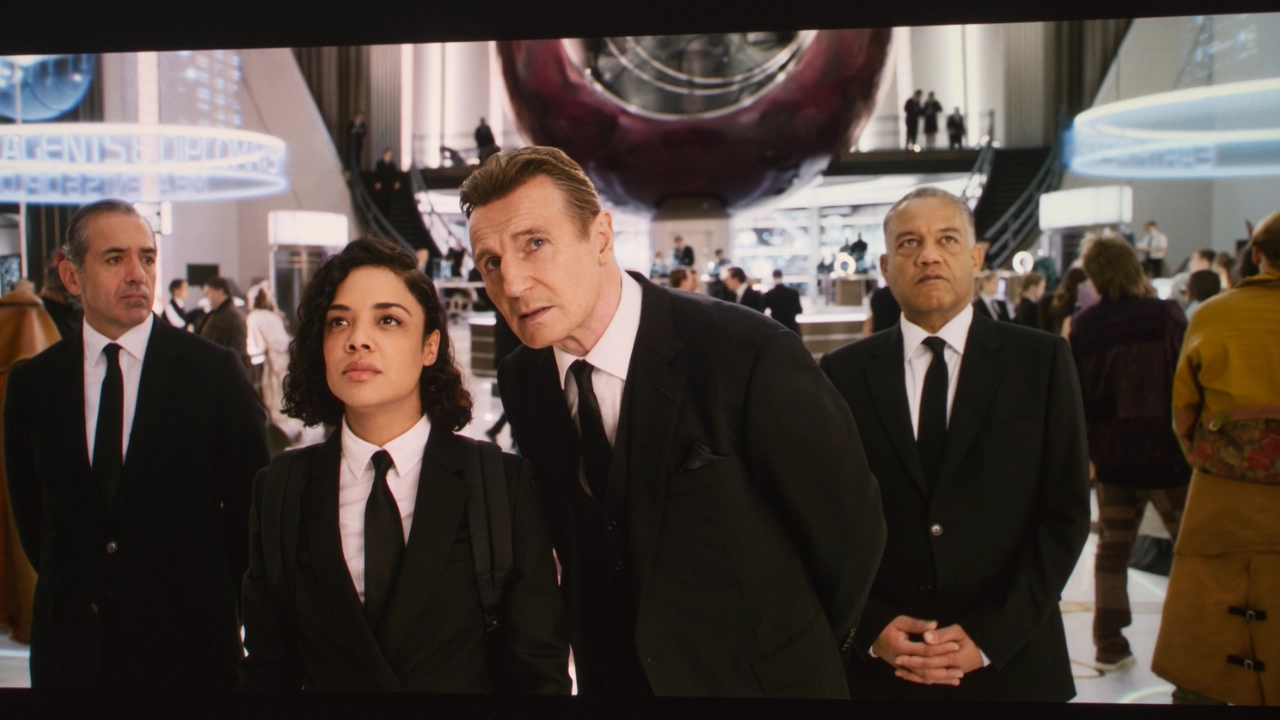
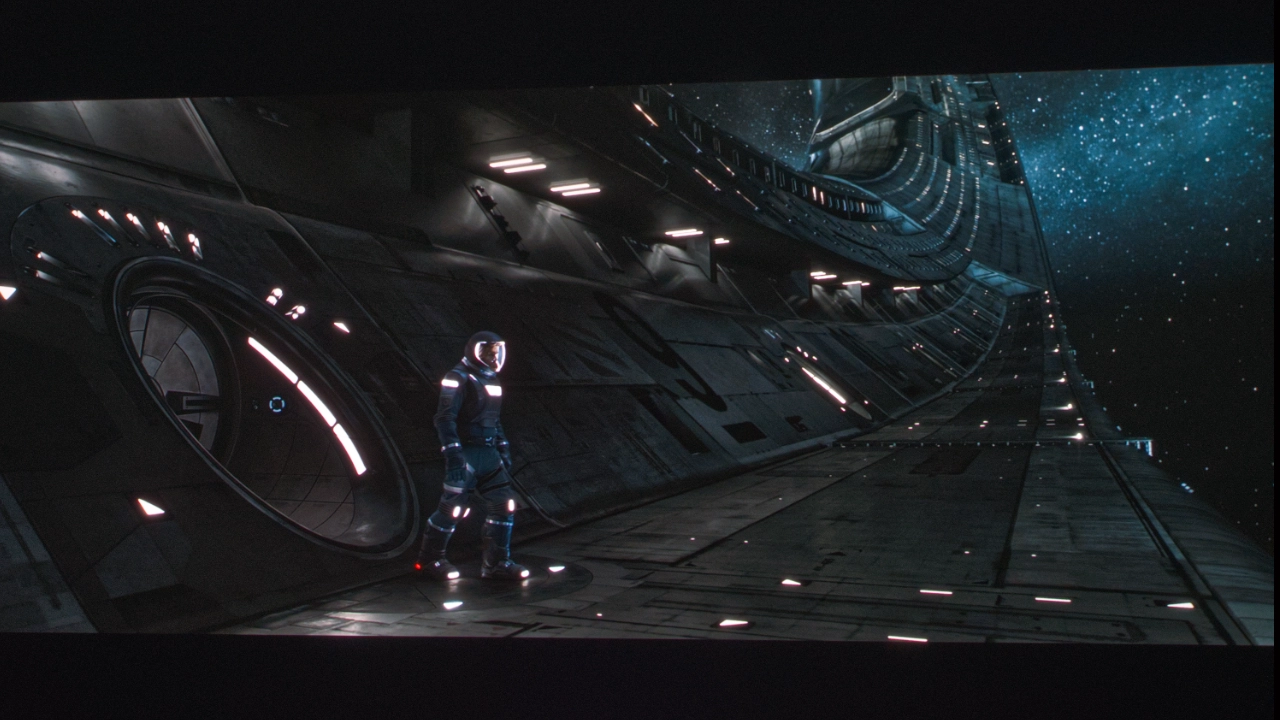
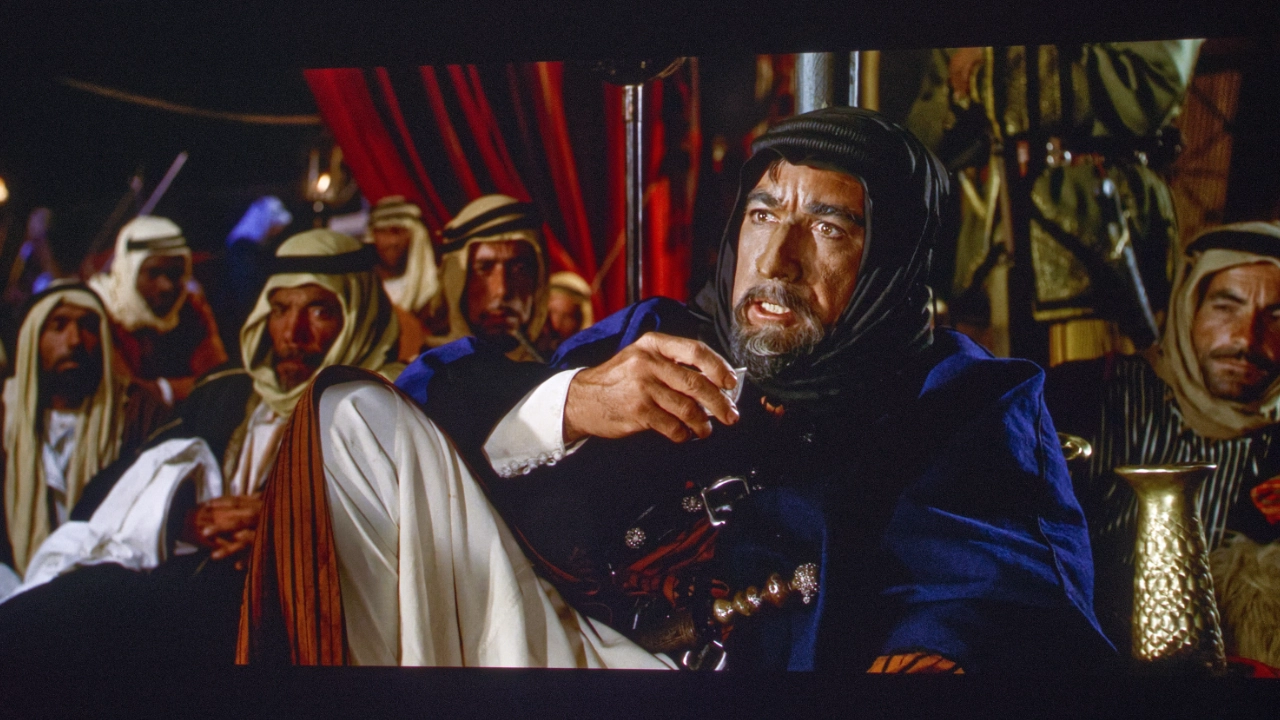
Along with the physical iris is AWOL’s Enhanced Black Level (EBL) algorithm, which dynamically analyzes incoming video and dims the laser power when a scene goes dark. AWOL Vision says EBL pushes the Aetherion Pro’s perceived contrast up to 60,000:1 (25,000:1 in our testing). EBL works quite well, especially in tough scenes from movies like Gravity and The Batman, by dropping the black floor and improving dark-area details. EBL is impressive, but I occasionally noticed clipped shadow details or subtle brightness "pumping" when the video cut rapidly between light and dark shots. The Aetherion Pro’s THEATER and FILMMAKER modes work hard to preserve detail in dark scenes, like in the slideshow above from The Batman and Gravity. Textures and minute details remain visible without crushing the blacks.
In a typical living room with a bit of ambient light, the contrast looks spectacular, especially when paired with a good ALR screen. However, in a dedicated, blacked-out theater room, it still won't completely replicate the absolute, infinite black levels of a high-end OLED television or an LCOS projector. As with its sister projector, the VisionMaster Max, and depending on the content, shutting off the EBL and setting the iris to 2-4 worked best for me. While the black floor is at its lowest, the brightness drops significantly, and a noticeable color shift toward warmer tones occurs. However, for a compact ultra-short throw system, the hardware iris and deep native contrast elevate it well above the standard DLP competition, making it one of the most capable options in its class for both moderate lights-on viewing and dark-room viewing.
When watching SDR content, I found the FILMMAKER and THEATER modes displayed the most accurate out-of-the-box quality. SDR can typically look wildly oversaturated on an RGB laser projector, but not on the Aetherion. AWOL includes a "WIDE COLOR GAMUT" toggle in the advanced settings, mapping the colors precisely so old movies look authentic rather than artificially neon.
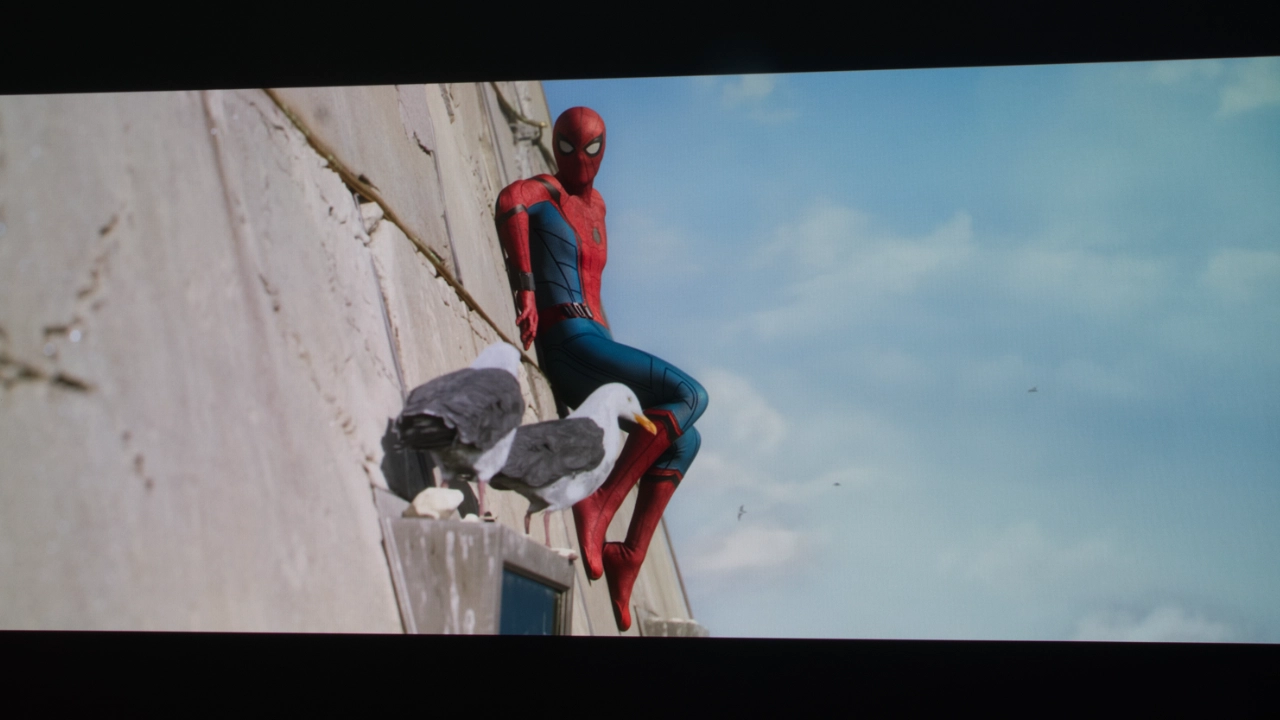
When watching HDR10+ and Dolby Vision content, the projector's dynamic tone mapping analyzes the video frame by frame, striving to preserve both dark shadow details and intense highlights. The real star of the show is the Dolby Vision implementation, which operates in a slightly different league than standard HDR10. Because Dolby Vision provides frame-by-frame instructions directly from the studio colorist, the projector doesn't have to guess how to map the highlights. Movies like Dune: Part Two look vivid without looking artificially boosted. The red sands and bright desert sky look incredibly punchy.
When it comes to upscaling, the Aetherion handles lower-resolution content quite well, largely avoiding muddy textures or artificial over-sharpening. The projector uses a MediaTek MT9655 system-on-chip, a surprisingly powerful multimedia processor that smooths out compression artifacts in low-bit-rate content.
The Aetherion Pro supports Blu-ray 3D and Full HD active-shutter 3D formats, which is good news for a specific group of home theater hobbyists like myself. If I’m being honest, the broader consumer market and physical media landscape have largely abandoned the format.
Rainbow Effect (RBE) is just a reality for single-chip DLP projectors, especially if you are using a current Ambient Light Rejecting (ALR) screen. AWOL Vision’s Anti RBE solution, while not 99.99%, is impressive. For me, AWOL’s anti-RBE technology reduced the eye strain and subtle headaches that often accompany prolonged single-chip viewing for my overly sensitive brain. As a bonus, AWOL’s anti-RBE technology works even when playing 3D content.
The Aetherion Pro adopts what I have historically referred to as a “kitchen sink” approach to HDR format compatibility, offering native out-of-the-box decoding for standard HDR10, broadcast-ready Hybrid Log-Gamma (HLG), and the more advanced dynamic metadata platforms, including HDR10+ and Dolby Vision. The projector also includes official IMAX Enhanced certification.
Content mastered in Dolby Vision demonstrates why frame-by-frame metadata is such a game-changer since the Dolby Vision encoding tells the projector exactly what to do, bypassing all the usual guesswork.
Playing a standard, static HDR10 stream like an older movie or a live HLG soccer game yields a different result, since the projector is forced to engage its own Dynamic Tone Mapping to inject some artificial life into the picture. This algorithm appears to do a decent job of boosting highlights, making things like specular reflections on car hoods look quite vibrant, but it is likely to over-brighten shadow detail in the process. It is a bit of a double-edged sword, as that extra pop occasionally comes at the expense of the director's original, moodier intent.
My testing revealed that the projector can occasionally clip highlights (think clouds or bright explosions). Also, EBL (dynamic laser dimming and Dolby Visionz) can cause subtle brightness pumping similar to what we saw on the Valerion Max projectors. AWOL Vision handles pumping the best I’ve seen in modern DLP projectors, and hopefully, they are still working on improvements to be delivered via firmware updates.

I am a fan of ultra-short-throw projectors for many reasons, and one of them is the massive improvement in onboard audio. The Aetherion Pro features a 90-watt multi-driver array split between two 25-watt full-range speakers and two 20-watt dedicated tweeters, backed by software decoding for Dolby Atmos and DTS: X. The projector has no problem getting loud enough to fill a decent-sized living room, and it does so with only moderate distortion. Dialogue sounds like it is coming straight from the actor’s mouth, and effects do seem to be coming from around the room.
The projector's low-frequency response is decent, certainly better than that of basic flat-screen TVs. However, the Aetherion Pro does lack the deep punch required for many movies. Lower frequencies can feel a bit thin or slightly muffled during action sequences. The Aetherion sounds like a decent, low-priced soundbar without a subwoofer.

The AWOL Vision Aetherion Pro sells for an MSRP of $3,499 and is the lower-priced of the two Aetherion projectors in the company’s 2026 line of ultra-short throw projectors. Aside from the chassis color, the biggest difference between the two projectors is their brightness, which is reflected in the price: the Max version has an MSRP of $4,499 and offers almost 1,000 ISO lumens more in rated brightness.
While the Aetherion Pro is not as bright as the Max, its triple RGB laser light source reproduced 98% of the BT2020 color gamut in our testing. This projector is bright enough to deliver vibrant images on screens up to 120” even under low ambient light, as you would experience in a living room. The Aetherion Pro’s brightness makes it a perfect candidate for a flat-panel replacement in a living room.
The Aetherion Pro lens system is designed with high-quality sapphire glass featuring ultra-low dispersion and a rare-earth coating. This new lens boosts light transmission while keeping optical distortion down to almost nothing. This optical assembly works hand in hand with AWOL’s motorized PixelLock technology to ensure edge-to-edge sharpness for images ranging from 100 to 150 inches, with the projector sitting extremely close to the screen. This worked remarkably well in my testing.
The Aetherion Pro supports HDR-encoded content from Dolby Vision, HDR10+, HDR10, and HLG. This projector is IMAX Enhanced certified. The Aetherion Pro also fully supports 3D playback. The Aetherion Pro delivers big sound from its 90-watt stereo system, which supports Dolby Atmos and DTS Virtual X for a more immersive audio experience.
Hisense PX3-PRO $3,499 MSRP
These two projectors share similar features, including RGB triple-laser light sources, Google TV, and Dolby Vision HDR10+ and IMAX Enhanced processing. Their pricing is even within range of each other, but each offers advantages over the other.
When it comes to brightness, the Hisense PX3-PRO is the brighter projector, offering 3,000 lumens compared to the Aetherion Pro’s 2,600 lumens. However, the Aetherion Pro has the latest DLP imager and controller, which gives it a significant advantage over the Hisense in both black floor and dark-area detail.
The Aetherion’s adjustable iris, combined with its enhanced black-level software, further improves the projector's black floor and dark-area details. If deep blacks with clear detail are critical, then the Aetherion Pro has the advantage.
When it comes to sound, the Aetherion Pro, while not as loud as the Hisense, offers a larger soundstage with sound that seems to come from around the room. If imaging is your priority, the Aetherion is a good choice, but for sheer volume without distortion, the Hisense may be the better choice. Both projectors offer ARC functionality to connect to an external audio source with HDMI.
When it comes to input lag, the Aetherion is the clear winner, with as low as 1 ms at 1080p, compared to the Hisense PX3-PRO’s 7ms. The Aetherion beats out many dedicated gaming projectors.
Nexigo Aurora Pro MKII $3,499 MSRP
When it comes to brightness, the Aetherion Pro offers a slight real-world advantage with a 2,600-lumen engine compared to Nexigo’s 2,400-lumen engine. However, the contrast battle is where things get truly interesting.
The Nexigo Aurora Pro MKII offers excellent black shadow depth, but the Aetherion Pro strikes back with its NoirScene System II physical, 7-stage motorized iris. This mechanical aperture allows the Aetherion to trap internal light reflections before they escape the lens, keeping dark areas dark with excellent shadow detail. The Aetherion also has the added benefit of the latest TI DLP imager and controller chipset, as well as its new sapphire-glass lens system.
For gaming, both the Aetherion Pro and Aetherion Max projectors deliver low input lag and support modern features like ALLM and VRR. However, the Aetherion pushes competitive responsiveness even further by supporting a blistering 1 ms @ 1080p/240 Hz. Acoustically, the Aetherion leverages a 90-watt multi-driver array that easily fills a room with crisp dialogue.

I’ve spent years watching darker content on DLP projectors, where black scenes either get crushed or are elevated to more charcoal gray tones because those DMD micromirrors simply cannot block the light completely. But not anymore. Aetherion largely bypasses these issues with its Noirscene System II, which uses a motorized iris that stops unwanted light from escaping the lens. There is still some subtle pumping of brightness, especially during quick scene transitions. Still, when combined with the company's EBL and dynamic tone mapping technology, it yields one of the best single-DLP projector black-level solutions to date. This is the same solution AWOL implemented in their award-winning line of Valerion lifestyle projectors.
The Aetherion series ranks among the most impressive UST projector lines so far in 2026. The color quality and detail, combined with the class-leading black level it delivers, make the Aetherion Pro one of the best UST projectors to land on my test bench this year.

| Specification | Details |
|---|---|
| Projector Model | Aetherion Pro |
| Price (MSRP) | $3,499 |
| Imager Type | DLP |
| Displayed Resolution | 3840 × 2160 (dual-axis pixel shifting) |
| Native Resolution | 1920 × 1080 |
| Brightness (Manufacturer Claim) | 2,600 lumens |
| Light Source Type | RGB Triple Laser |
| Contrast Ratio | 60,000:1 (Dynamic) |
| Lens Throw Ratio | 0.2:1 |
| Power Zoom/Focus | No |
| Lens Shift | No |
| Interchangeable Lens | No |
| Ultra Short Throw | Yes |
| Native Aspect Ratio | 16:9 (Widescreen) |
| 4K/120 fps | Yes (input, displays at 60 Hz) |
| 3D | Yes |
| Speakers | 90 watts (25W FR × 2, 20W tweeter × 2) |
| Noise Level | 30 dB (Normal) |
| Low-Lag Gaming | Yes |
| Smart Functionality | Yes |
| Business | No |
| Classroom | No |
| Portable | No |
| Special Features | Dolby Vision, HDR10+, IMAX Enhanced, Iris, Dynamic Tone Mapping |
| Networking | RJ45 LAN |
| Dimensions (W × H × D) | 22.13 × 5.49 × 12.72 inches (562 × 139.5 × 323 mm) |
| Weight | 19.3 lbs (8.75 kg) |
| Warranty | 2-year limited warranty |