BenQ Launches the AK900ST and AK800ST 4K Laser Golf Sim Projectors
Posted on October 25, 2026 by Phil Jones
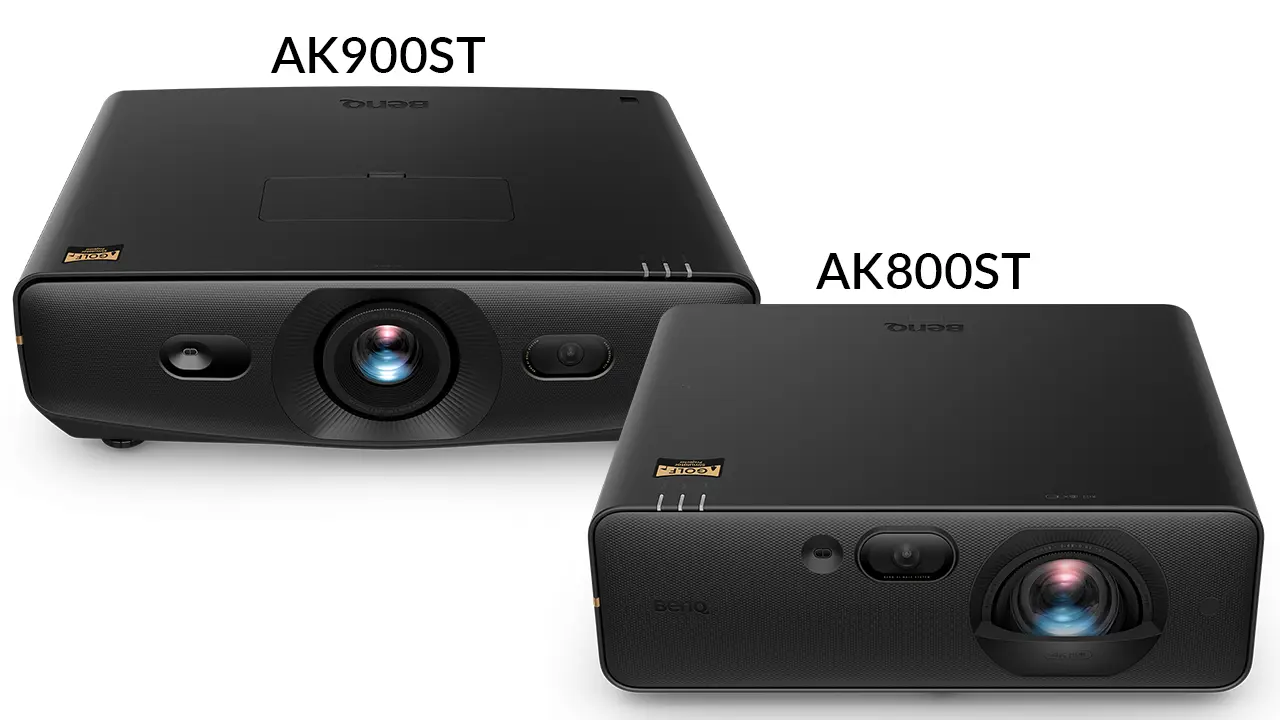
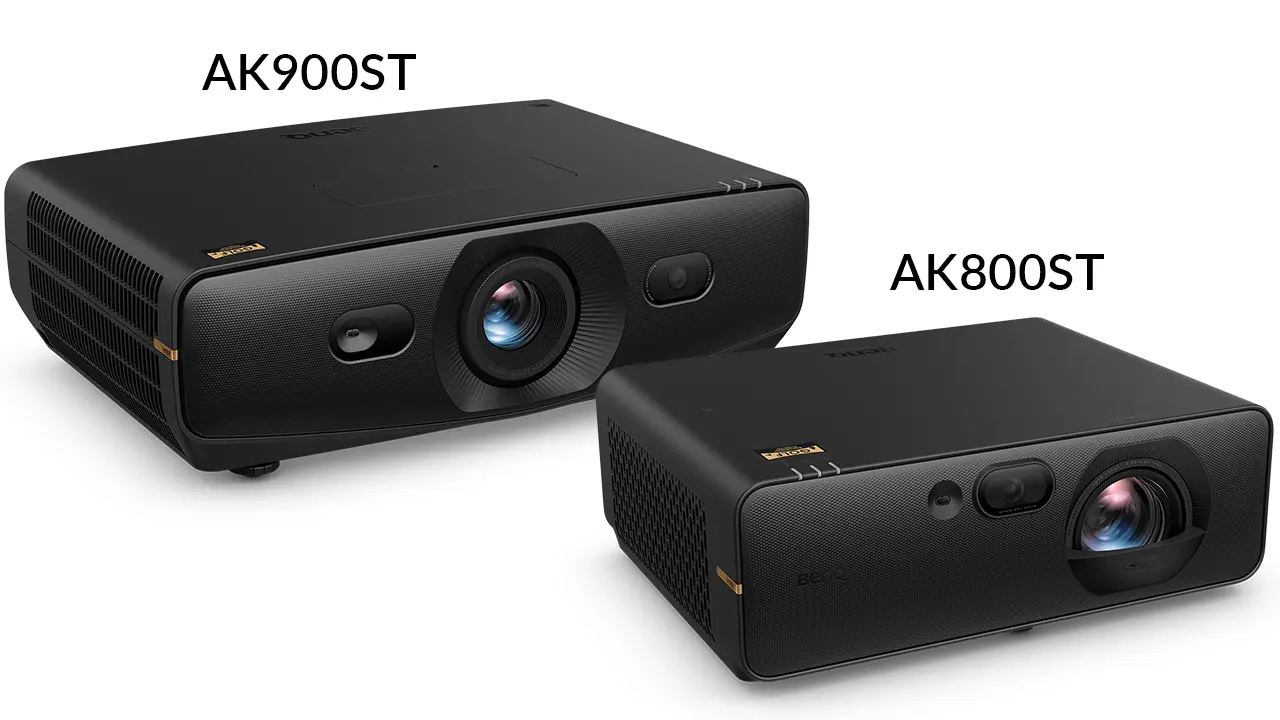
In early October, BenQ introduced two new 4K laser projectors designed specifically for indoor golf simulators. The AK900ST and AK800ST combine 4K UHD DLP imaging with a camera-driven suite of automated setup tools, a new AI-powered Golf Mode 2.0. Maximize reliability: both units utilize sealed laser light engines built to withstand the dust and long operating hours common in simulator bays.
The AK900ST ($5,999 MSRP) is rated at 6,000 ANSI lumens, while the smaller and lighter AK800ST ($3999 MSRP) is rated at 5,000 ANSI lumens.
BenQ is committed to the GolfSim market, and its LK936ST, introduced in 2021, has become a popular choice among simulator owners by bringing 4K resolution, a short-throw lens, and Rec.709 color to golf bays at a much lower price than the commercial projectors many installers previously used.
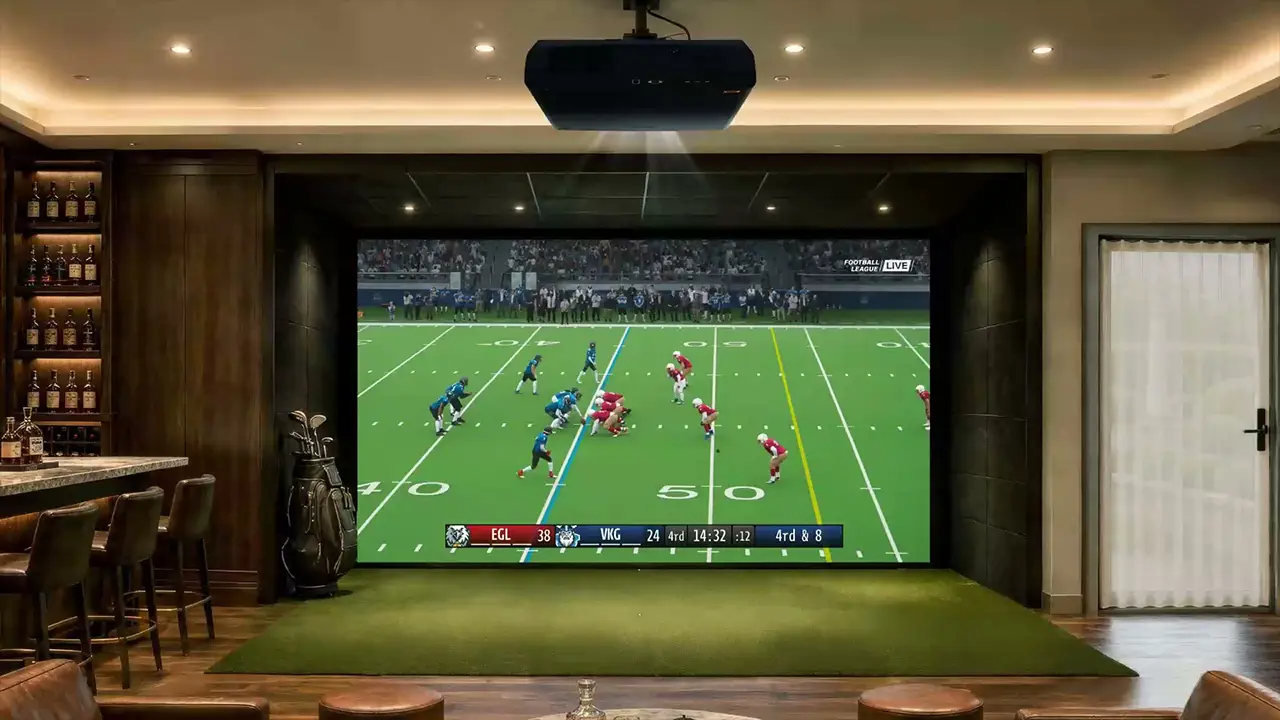
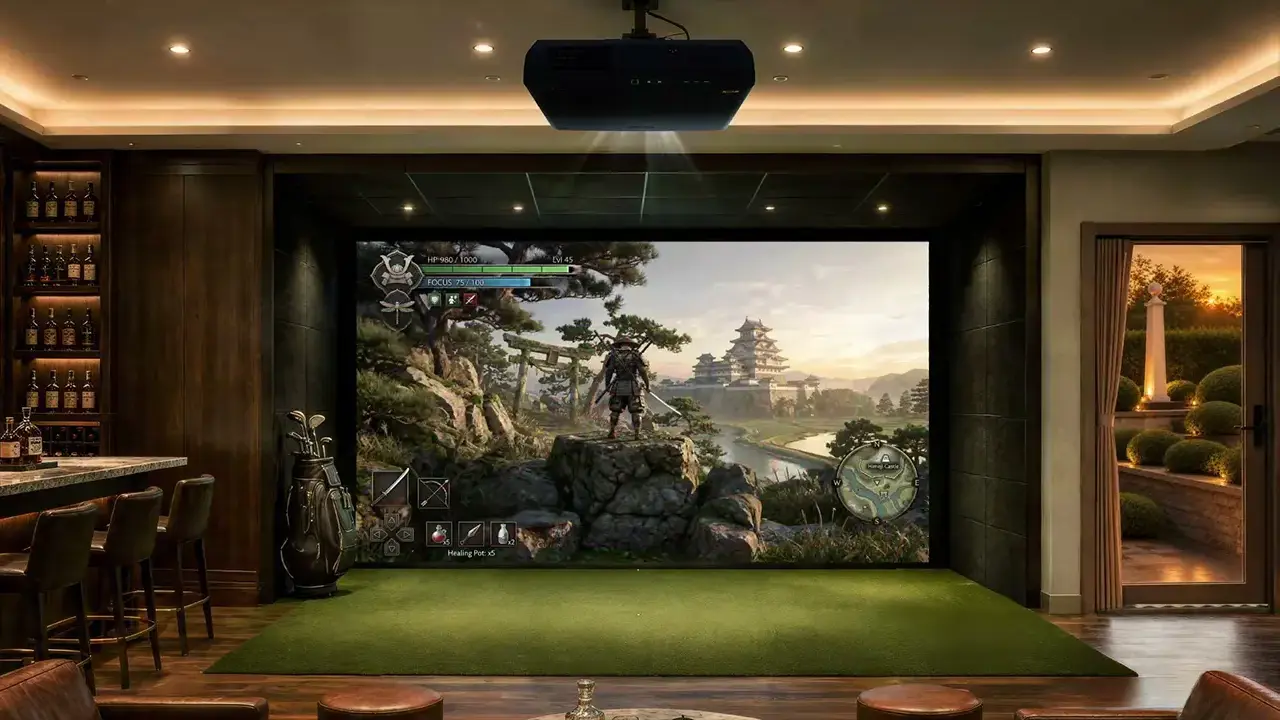
Since that model was introduced, the market has changed: impact screens are getting larger, curved screens are becoming more common, and many simulator rooms now double as home theaters and game rooms.
Modern simulator software renders courses with near-photorealistic detail, which makes good projected image quality even more important. Unlike a movie, where scenes change quickly, much of a golf simulator image is relatively static. Softness, color shifts, and uneven geometry are much easier to spot when a golfer stares at the same fairway between shots.
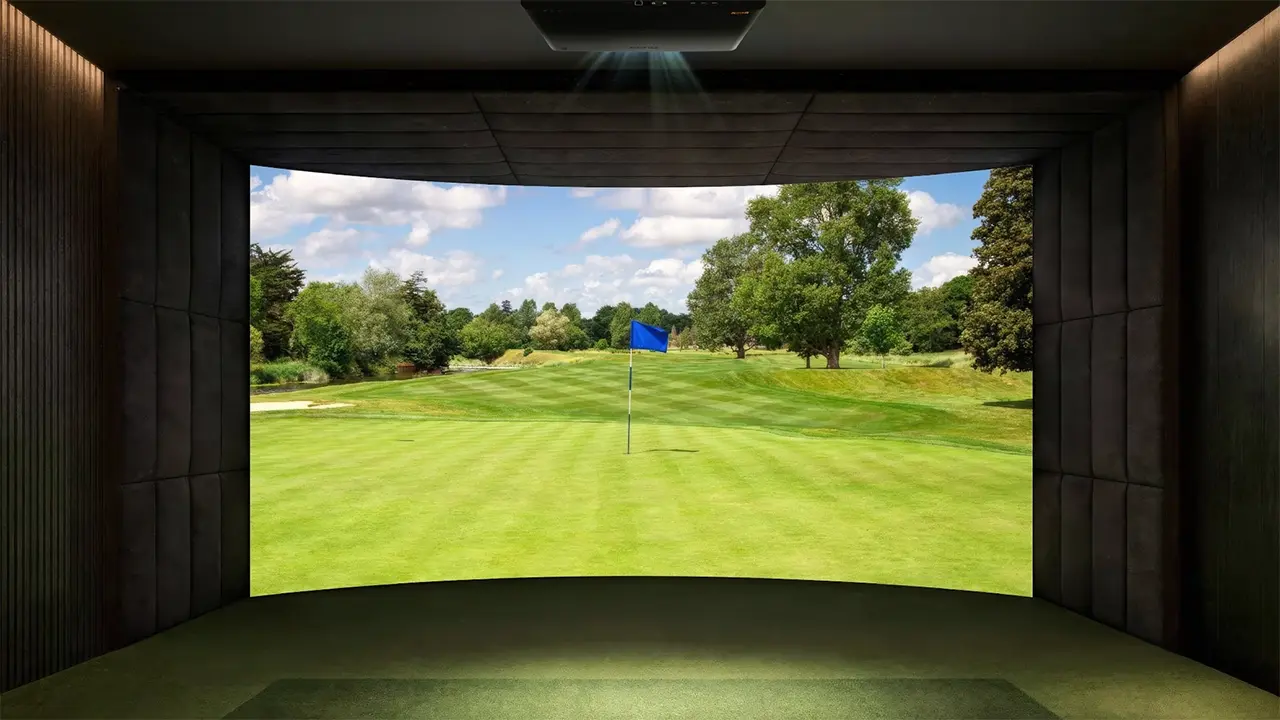
On the resolution side, both models use a 0.47-inch DLP chip with pixel shifting to display a 4K UHD (3840 x 2160) image, about 8.3 million pixels, on screen. On a large impact screen, often 200 inches or more diagonally, the extra resolution should keep fine course textures sharp.
While movie fans obsess over black levels, sports simulation prioritizes color accuracy. Different turf types, from the bentgrass greens at Oakmont to the Bermuda grass at Pinehurst, each have their own shade of green, and sand, water, and foliage all need to look natural for the course to feel real. Both projectors are rated to cover 97% of the Rec. 709 color space, still delivering a rated dynamic contrast ratio of 3,000,000:1.
A notable golf-focused feature found on these models is called Golf Mode 2.0, which is frame-based AI video processing that adjusts color, contrast, and detail on every frame specifically for golf content. This feature is designed to improve grass texture, deepen black levels in shaded areas, and produce more natural-looking reflections, shadows, and sunlight.
That processing is paired with Ambient Visual Enhancer. Using the projector's built-in camera, it reads the light level directly off the screen and then automatically tunes brightness, contrast, saturation, gamma, and HDR settings to compensate. This should be particularly useful in garage setups where the door is often left open, or in bays that receive daylight during the afternoon.
Aligning a projector to a large impact screen can be one of the most frustrating parts of building a simulator, especially with a curved screen. Most golfers have never installed a projector, and BenQ has clearly designed these models with that in mind.
Auto Screen Fit 2.0 uses the built-in camera and sensors to detect the size and shape of the screen, then automatically adjusts image geometry to fit, including on curved screens. The screen needs a black border at least 3 cm wide for detection to work, and BenQ offers an online planning tool at golfsimplanner.benq.com to help calculate placement. For installers who want more control, a manual warping grid with adjustable rows, columns, and control points lets you fine-tune the image.
Auto Golf Screen Fit 2.0 is an AI-Powered Setup that make setup easy even using a curved screen
Auto Focus uses the camera to measure throw distance and sharpen the image with a single button press. BenQ has also expanded its screen fill options to six aspect ratios: 16:9, 16:10, 4:3, and 1:1, plus new 3:2 and 5:4 modes that better match many simulator screens. The backlit remote includes dedicated buttons for Auto Screen Fit, focus, screen fill, zoom, geometry, and golf settings.
The AK900ST has a 0.81 to 0.89:1 throw ratio, 1.1x motorized zoom and focus, and generous manual lens shift of ±60 percent vertical and ±23 percent horizontal. The AK800ST has a slightly shorter 0.69 to 0.83:1 throw ratio with 1.2x motorized zoom and focus. BenQ has not yet published lens shift figures for the AK800ST.
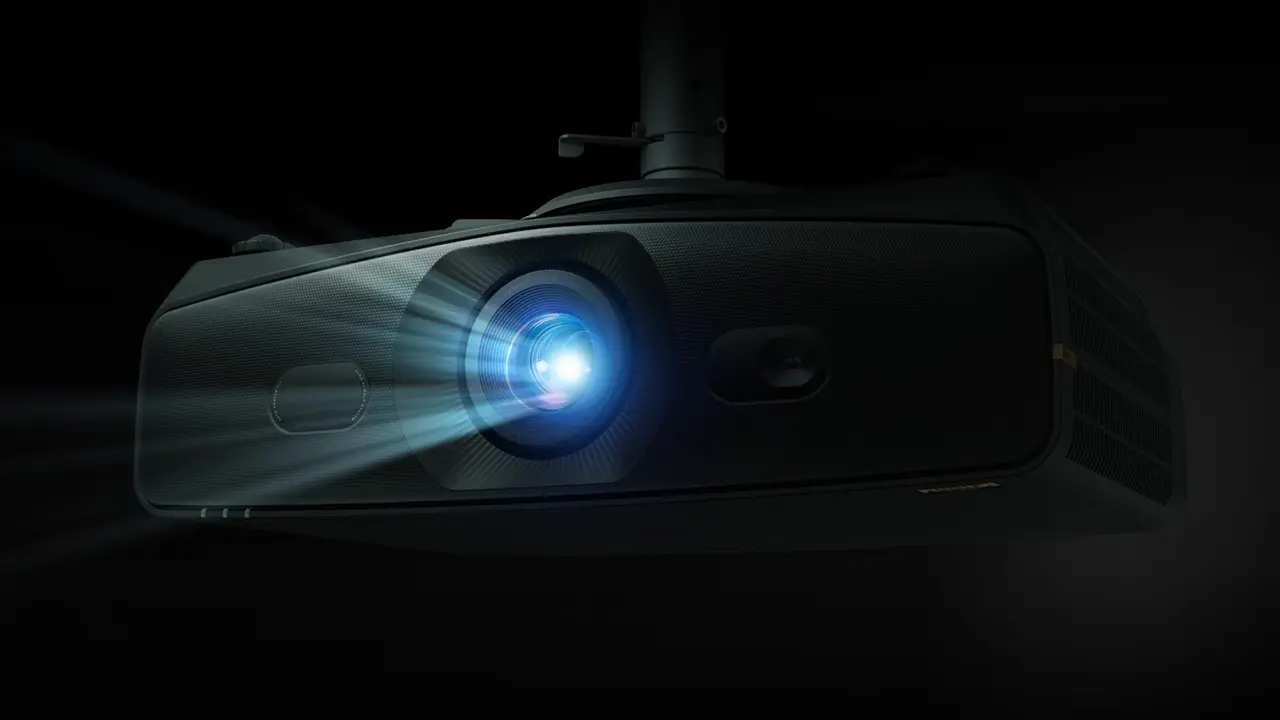
Both models use a sealed, IP5X-rated laser optical engine. There are no filters to clean or replace, which matters in garages and commercial bays where dust from turf, mats, and open doors is common. The laser is rated for 20,000 hours in Normal mode and 30,000 hours in Eco mode.
The AK900ST is positioned for larger installations, including commercial venues and franchises. BenQ rates it for 24/7 operation with no hourly limitation and says it draws about 350 watts at full output. LAN and RS-232 connections support network management in commercial facilities. At roughly 22.5 pounds, it is also the heavier of the two.
The AK800ST is more compact and weighs about 13 pounds. It is aimed at home garages, basements, and bonus rooms. It shares the same auto-setup suite as the flagship model. The chart below shows the key differences between the two new models.
Specification
AK900ST
AK800ST
MSRP
$5,999
$3,999
Brightness
6,000 ANSI lumens
5,000 ANSI lumens
Imaging
DLP 4K UHD (0.47-inch chip)
DLP 4K UHD (chip size TBC)
Claimed Contrast
3,000,000:1
3,000,000:1
Color Coverage
97% Rec. 709
97% Rec. 709
Throw Ratio
0.81–0.89:1
0.69–0.83:1
Zoom
1.1x motorized
1.2x motorized
Lens Shift
±60% V / ±23% H (manual)
TBC (manual)
Light Source
Sealed IP5X laser
Sealed IP5X laser
Laser Life (Normal/Eco)
20,000 / 30,000 hours
20,000 / 30,000 hours
Rated for 24/7 Use
Yes
Not specified
HDMI
3x HDMI 2.1 (1 eARC)
3x HDMI 2.1 (1 eARC)
Vertical Scan Rate
23–240Hz
59–60Hz
Weight
22.5 lb
13 lb
Pricing puts the AK900ST in the same range as other 6,000-lumen projectors commonly used in golf bays, which are often WUXGA models rather than 4K. Most competing models in this brightness class are designed primarily for business and education use, while BenQ has built both the AK900ST and AK800ST around simulator-specific features.
BenQ says about two-thirds of simulator owners also use their setups for movies, sports, or gaming, and both projectors include features for those uses. HDR10 and HLG are supported, the latter being useful for broadcast sports content. A Cinematic Mode provides native 24p playback for film content.
Scene Memory stores five profiles, each saving picture mode, screen fill, projector position, focus, zoom, and geometry. That should make switching from a 4:3 golf image to a 16:9 movie a one-click operation. Dual-source picture-in-picture also allows a lesson or tour broadcast to be shown while playing.
Both models have three HDMI 2.1 inputs, one with eARC, and support Auto Low Latency Mode. Beyond movies and sports simulation, the AK900ST is also a great option for someone who plans to play traditional video games. BenQ lists the AK900ST's input lag at 18.1 ms at 4K/60Hz, 9.7 ms at 1080p/120Hz, and 4.8 ms at 1080p/240Hz.
The AK900ST and AK800ST will be available in late October 2026 through BenQ.com and authorized BenQ resellers. For golfers building or upgrading a simulator, the combination of 4K resolution, automated curved-screen alignment, and a filter-free laser engine makes these two of the more compelling purpose-built options on the market. We look forward to putting both through their paces in a full review.