Projector Reviews Images

Projector Reviews CEDIA 2026 Best of Show and Hot Product Award Winners

Posted on September 15, 2026 by Phil Jones
CEDIA 2026 Award Article Cover

CEDIA Expo is one of the best opportunities each year to see where the premium home entertainment market is headed. The show brings together projector manufacturers, screen companies, audio brands, custom installation specialists, and display manufacturers demonstrating products designed for everything from dedicated home theaters to multipurpose living spaces.

For Projector Reviews, the show also provides an opportunity to recognize products that stand out from the hundreds of components and systems on display. Our Best of Show Awards are generally reserved for notable new products that introduce unique capabilities, address an important market need, or show the potential to deliver class-leading performance. Since many of these products are announced shortly before or during CEDIA, our selections can be based on demonstrations, specifications, technology, and our hands-on impressions rather than a complete review.

Our Hot Product Awards recognize products that may have been introduced before CEDIA but continue to distinguish themselves through performance, design, usability, or a combination of features that remains noteworthy. In several cases, we have already spent significant time evaluating these products, so the award reflects real-world experience in addition to what we saw at the show.

The CEDIA 2026 winners cover a wide range of categories. They include high-brightness home theater projectors, premium cinema projectors, ultra-short-throw models, masking screens, direct-view LED, high-performance movie players, and even furniture designed to make projection technology disappear completely when it is not being used. What connects all of them is that each provides something genuinely useful or exceptional for enthusiasts, integrators, or homeowners who want a better large-screen entertainment experience.

CEDIA 2026 Award Winners

Epson QL7000

Best of Show

Epson QL7000-Award

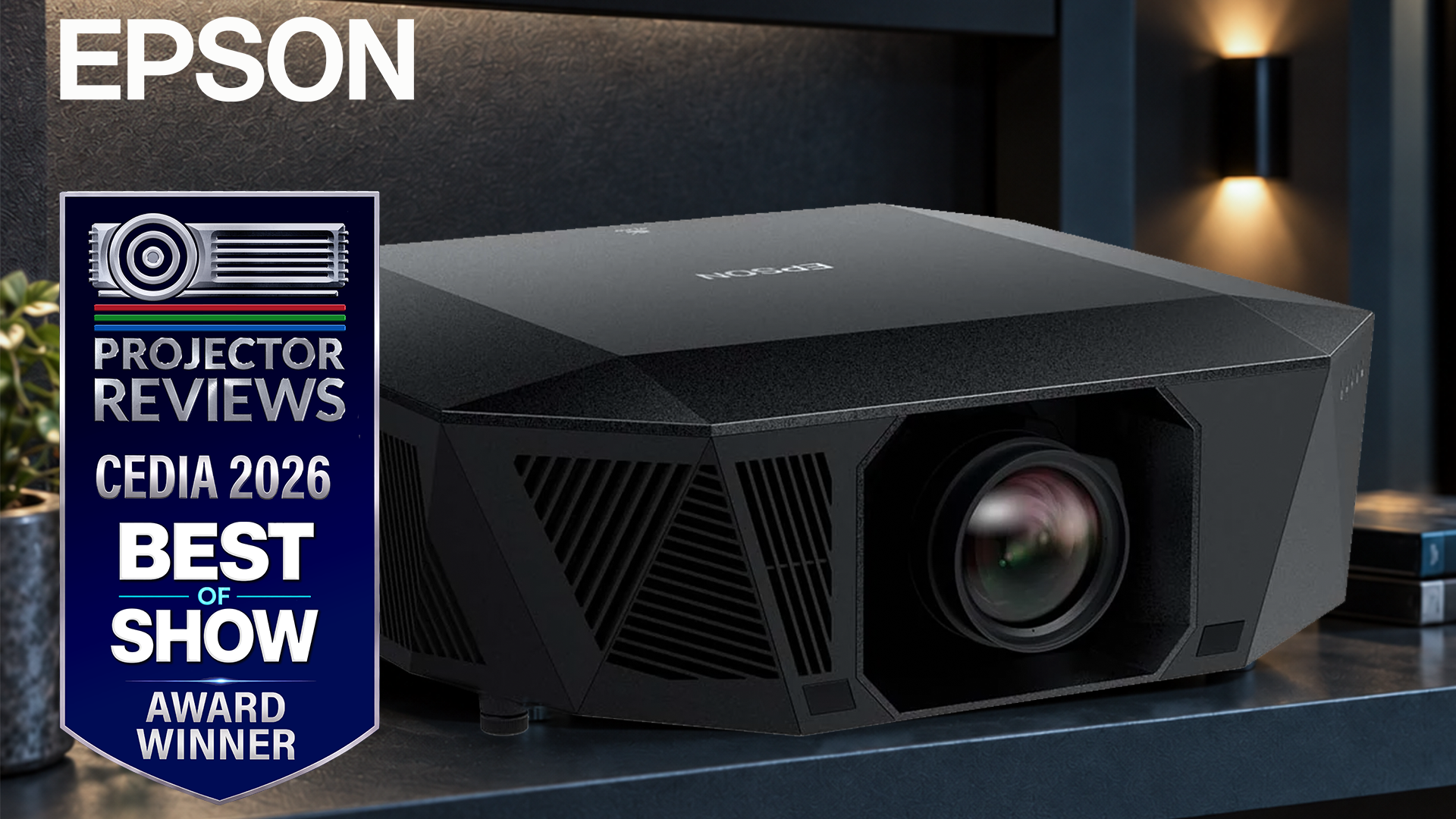
The Epson QL7000 earned a Projector Reviews Best of Show Award for demonstrating how high-brightness projection can deliver premium home theater image quality while retaining the flexibility required for demanding residential installations.

The QL7000 produces up to 10,000 lumens of equal color and white brightness using Epson’s three-chip 3LCD imaging system. Its 4K display technology places 8.29 million pixels on screen, while Epson’s QZX processor handles functions such as HDR tone mapping, color, contrast, and real-time image optimization.

At CEDIA 2026, Epson paired the QL7000 with Stewart Filmscreen’s new 215-inch Director’s Choice Generation 2 four-way masking screen. Even at that massive size, the projector had enough output to produce a bright, impactful HDR image.

Installation flexibility is another major strength. Epson offers multiple interchangeable Precision lenses, allowing integrators to select the appropriate optics for the room, screen size, and throw distance. In another demonstration, a short-throw lens allowed a QL7000 to produce a 135-inch image with the projector positioned only about three feet from the screen.

The QL7000 also supports 4K HDR signals at up to 120 Hz through HDMI 2.1, making it suitable for gaming as well as movies. Epson's sophisticated cooling system helps the projector deliver its substantial light output while maintaining surprisingly low operating noise. During our booth tour, Epson explained how its vapor-chamber cooling assembly reduces reliance on high-speed fans.

Few residential projectors combine this level of brightness, image quality, lens flexibility, quiet operation, and large-screen capability. Those qualities made the Epson QL7000 one of CEDIA 2026’s most impressive projection solutions.

Stewart Filmscreen Director's Choice Generation 2

Best of Show

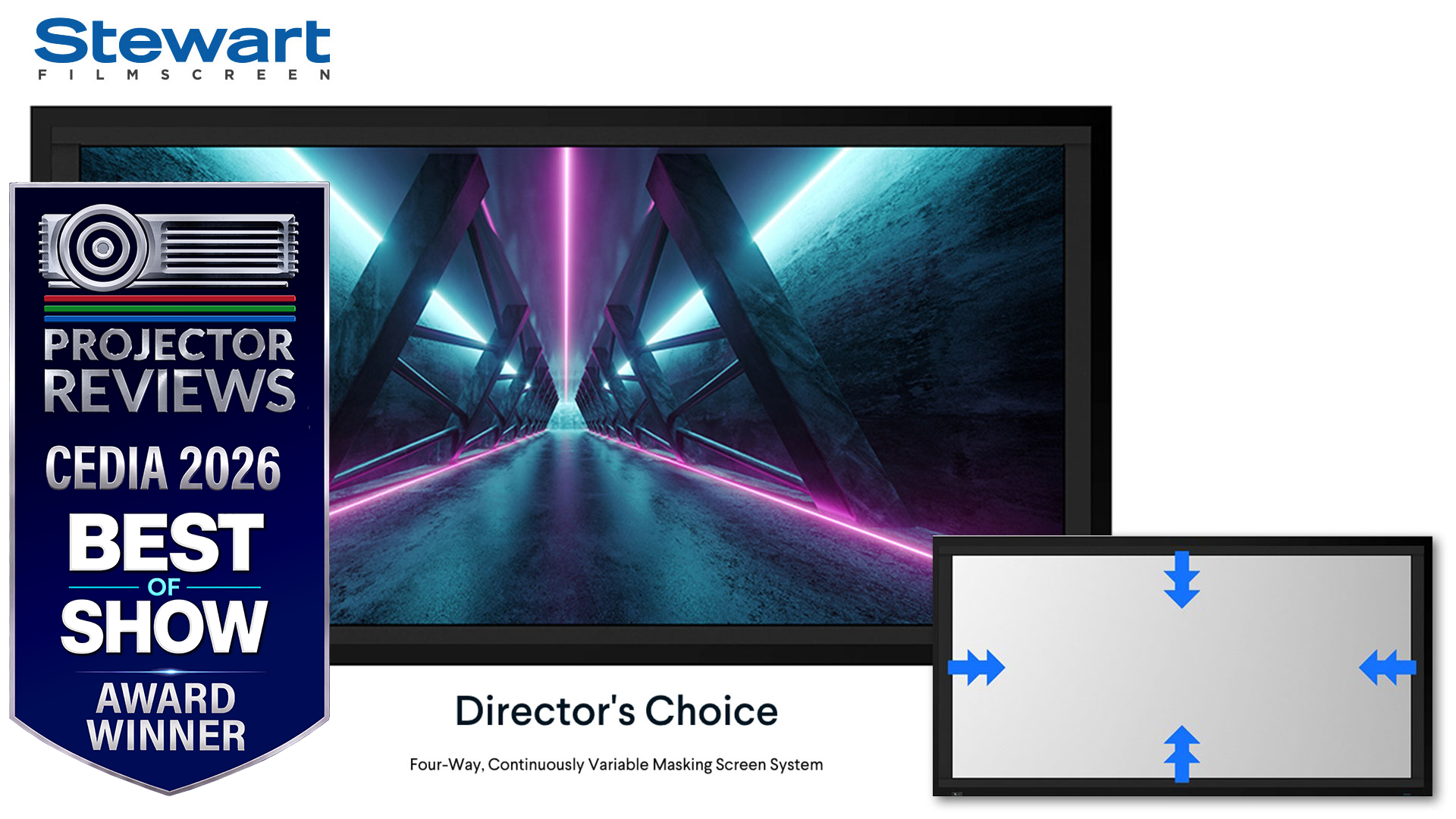
Stewart Filmscreen’s Director’s Choice Generation 2 earned a Projector Reviews Best of Show Award because it significantly improves one of the most sophisticated masking screen systems available for premium home theaters.

Four-way masking allows the visible screen area to adjust to different aspect ratios, accommodating everything from 1.43:1 IMAX to 2.39:1 CinemaScope films with proper black borders. This improves perceived contrast and gives each format a more polished, theater-like presentation.

The biggest improvement with Generation 2 is physical depth. Stewart reduced the enclosure from approximately 16.5 inches on the previous system to just 7.25 inches, a reduction of more than 56 percent. Despite the slimmer design, the system can still support image widths of up to 20 feet.

That reduction is especially important for integrators, architects, and interior designers because it makes a sophisticated four-way masking system easier to incorporate into rooms where wall depth is limited. Stewart also added wall-mount capability and its QuickSnap front-loading attachment system, making the screen surface easier to install and service.

At CEDIA 2026, Director’s Choice Generation 2 was paired with Epson’s 10,000-lumen QL7000 on a massive 215-inch screen, producing one of the most impressive projection demonstrations at the show.

Stewart also offers multiple screen surfaces, including acoustically transparent materials that allow speakers to be positioned directly behind the image.

Director’s Choice Generation 2 does not change what four-way masking is designed to accomplish. Instead, it makes an already premium solution substantially thinner, easier to install, and more architecturally friendly. Those practical improvements, combined with outstanding image presentation, made it a deserving Best of Show winner.

Barco Freya+ SST

Best of Show

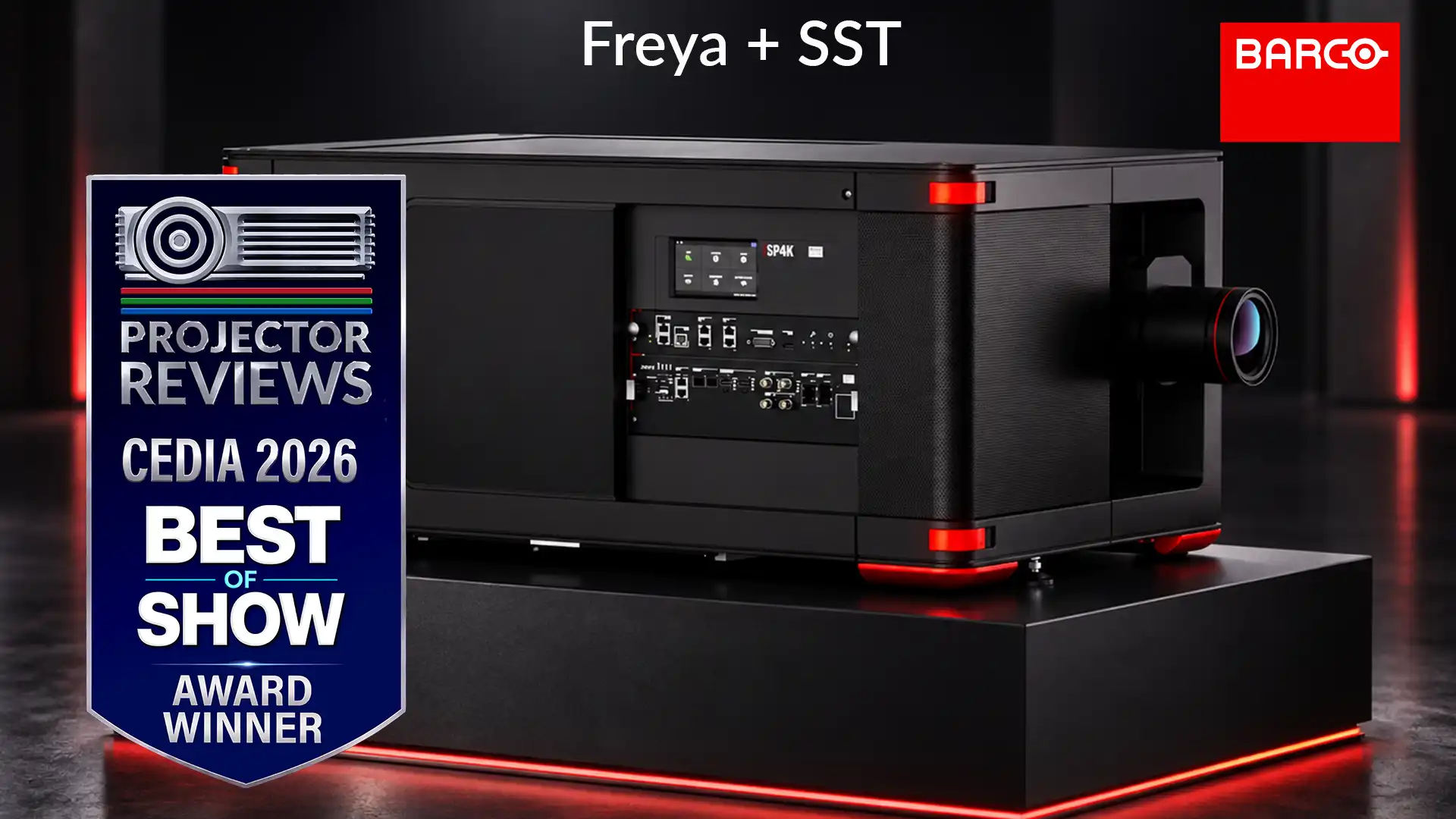
The Barco Freya+ SST earned a Projector Reviews Best of Show Award because it brings technology derived directly from commercial digital cinema into an uncompromising residential projector.

The Freya platform is based on Barco’s professional cinema architecture but optimized for the priorities of a private theater. At CEDIA 2026, Barco explained that the SST version incorporates new Texas Instruments imaging devices along with a redesigned light engine and optical path intended to improve contrast.

The Freya+ SST uses three large 0.98-inch DLP imaging devices with native 4096 x 2160 resolution. This is true native DCI 4K rather than pixel-shifted 4K. The large DMDs are also substantially bigger than the imaging chips used in many consumer projectors.

Using three DMDs eliminates the sequential-color operation required by single-chip DLP systems. Combined with an RGB laser light source, the architecture is capable of exceptional brightness, color volume, and image clarity. During our booth discussion, Barco stated that the Freya can reproduce 100 percent of the Rec.2020 color space.

Another unique capability is support for professional cinema content. When properly configured, the Freya platform can reproduce Digital Cinema Packages, allowing it to play the same type of master files distributed to commercial theaters.

Many excellent premium projectors were shown at CEDIA 2026, but the Freya+ SST operates at a different level. Its native 4K three-chip DLP architecture, RGB laser illumination, massive color gamut, high brightness, improved contrast, and commercial cinema heritage make it one of the closest things available to bringing a professional movie theater into a private residence.

Kaleidescape Strato K

Best of Show

Kaleidescape Strato K CEDIA Award

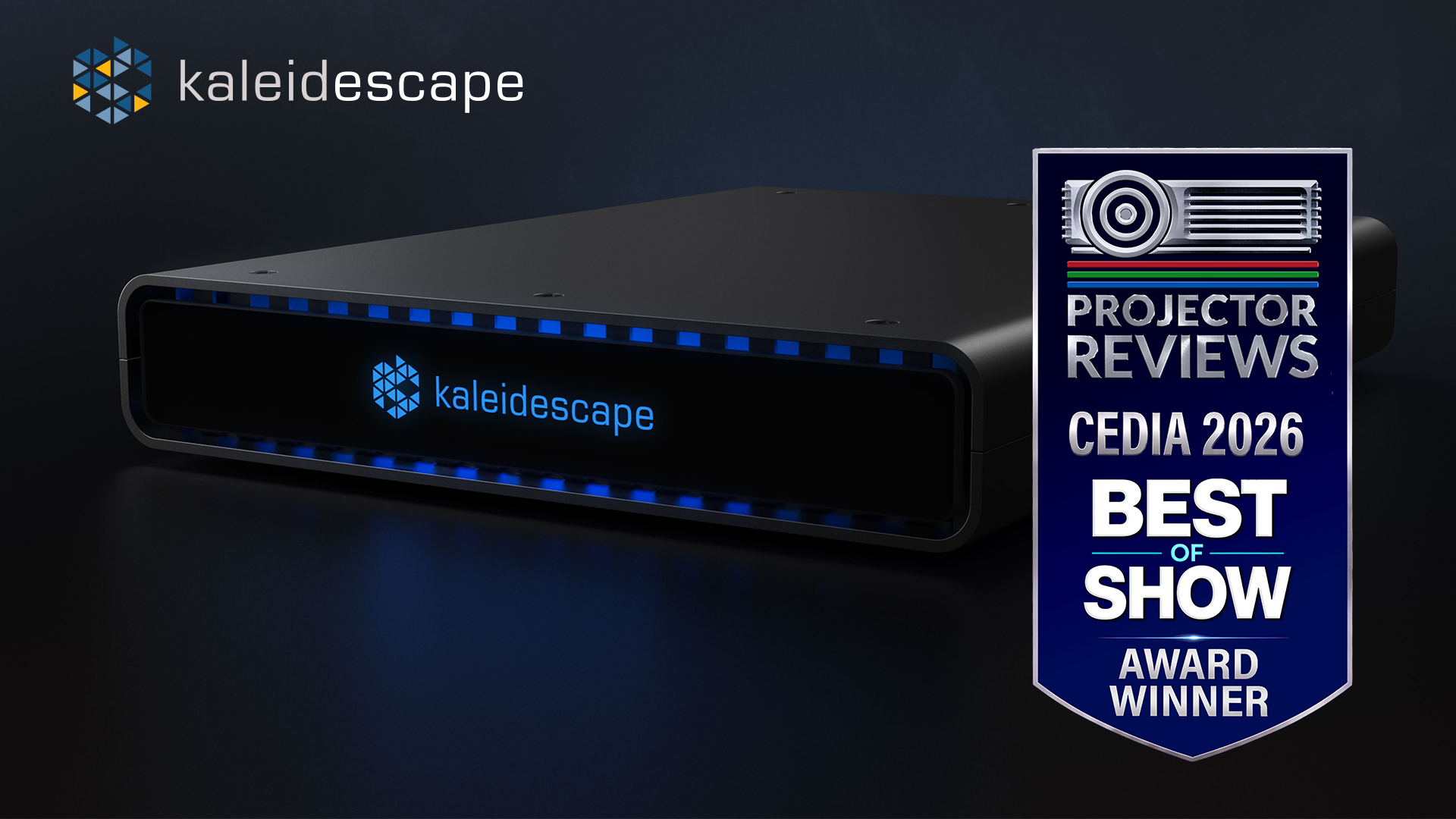
The Kaleidescape Strato K received a Projector Reviews Best of Show Award because it represents one of the most significant upgrades to the Kaleidescape platform in years. By significantly increasing processing capability and video quality while maintaining the convenience and user interface that made the platform successful, the Strato K represents an important step forward for premium movie playback. 

Kaleidescape has long been a reference-quality source for premium home theaters because movies are downloaded to local storage rather than streamed in real time. This allows considerably higher video bitrates and eliminates fluctuations caused by internet bandwidth. The Strato K pushes that concept further by introducing more powerful processing, native 8K capability, and Kaleidescape's new 4K Cinematic format.

Most consumer video distribution relies on chroma subsampling to reduce the amount of color information contained in the video signal. While this is extremely efficient and usually difficult to notice, it is still a reduction in the information contained in the original source.

The 4K Cinematic format can average approximately 110 Mbps while preserving the 4:4:4 chroma information provided by the studio, Since the content is downloaded rather than constrained by real-time streaming bandwidth or the physical storage limitations of an optical disc, the file can simply become larger when additional information is required. Strato K also adds native 8K movie playback while retaining support for high-performance 4K HDR content and lossless immersive audio.

However, image and sound quality are only part of what makes Kaleidescape attractive. Its interface remains one of the most polished methods for browsing and managing a large movie collection. Search and discovery tools make it easy to locate movies by actors, directors, genres, and other relationships without forcing users to navigate hundreds of individual titles.

The platform's status as a reference-quality source was also obvious throughout CEDIA. Kaleidescape stated that more than 40 demonstrations at the show were using its systems, representing 58 different brands. That level of adoption is significant. Projector, display, processor, and speaker manufacturers choose Kaleidescape because a consistent high-quality source helps their equipment perform at its best. 

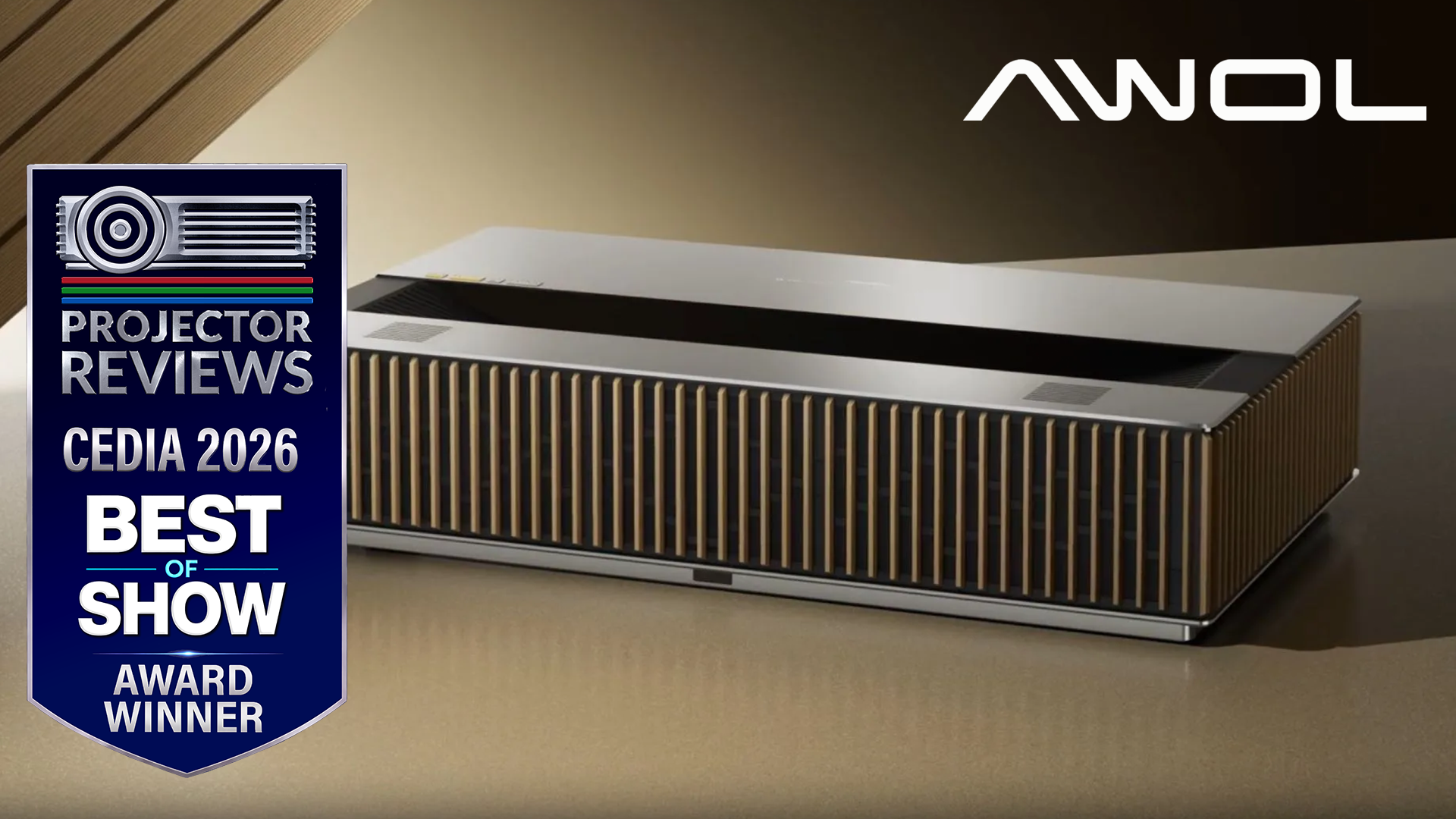
AWOL Vision LuxVision

Best of Show

AWOL LuxVision CEDIA Award

The AWOL Vision LuxVision earned a Projector Reviews Best of Show Award because its combination of brightness, contrast, gaming capabilities, design, and unique features pushes ultra-short-throw projection into territory that would have seemed unrealistic only a few years ago.

AWOL positions LuxVision as its flagship UST projector. At CEDIA 2026, the company specified output of approximately 6,000 ISO lumens along with extremely high native and dynamic contrast claims. The LuxVision also incorporates 4K 120 Hz capabilities targeted at both gaming and high-performance video applications.

The additional brightness is important because one of the primary applications for an ultra-short-throw projector is replacing a large television in a multipurpose room where some ambient light is likely to be present.

AWOL deliberately demonstrated the system under substantial room lighting rather than asking CEDIA personnel to darken the booth. Combined with an appropriate ambient-light-rejecting screen, the LuxVision produced a large, punchy image in conditions far more representative of how many owners will actually use the system.

The LuxVision also includes dynamic optical control designed to improve black-level performance and contrast. That combination of high light output and stronger dark-scene performance addresses one of the most difficult compromises in UST design.

Another standout feature is native multi-view operation. The CEDIA demonstration showed four HDMI sources simultaneously on a single large screen without requiring an external video processor. For someone with a 150-inch or larger screen, that capability effectively turns a home entertainment system into a personal sports bar where multiple games can be viewed at once. 

AWOL even addressed industrial design in an unusual way. The exterior of the LuxVision can be customized with materials and finishes including carbon fiber, marble-style surfaces, leather, aluminum, and wood. That customization makes sense for a premium UST because the projector is normally installed prominently at the front of a living room rather than hidden behind the audience.

The LuxVision earned its award because several technologies that have been developing independently have been brought together into one ambitious platform. High brightness, strong contrast, advanced optical control, 4K 120 Hz support, native multiview, and customizable styling make it much more than a routine specification update.

If the production version delivers the performance demonstrated at CEDIA 2026, LuxVision could establish a new performance benchmark for the premium ultra-short-throw category.

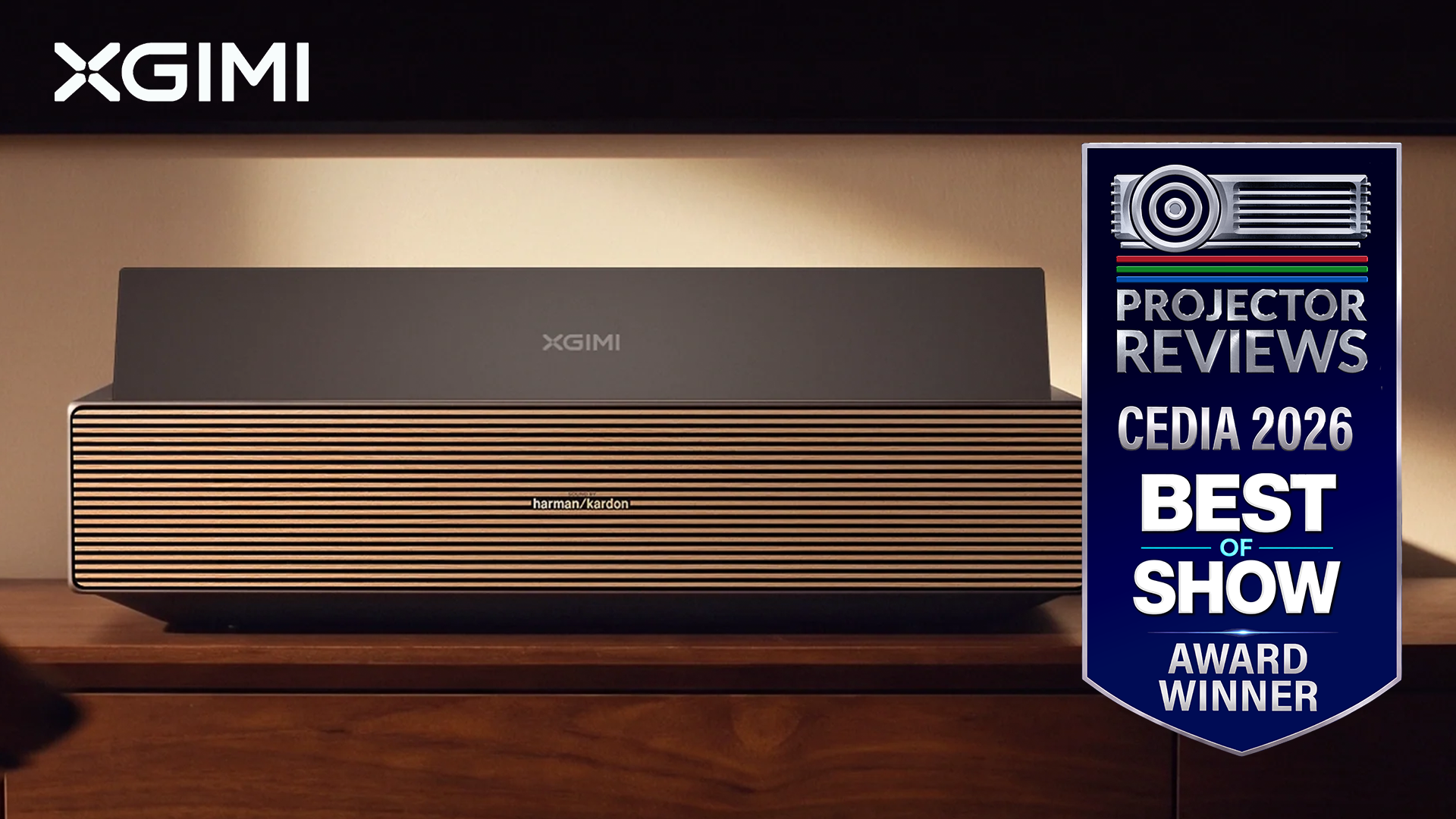
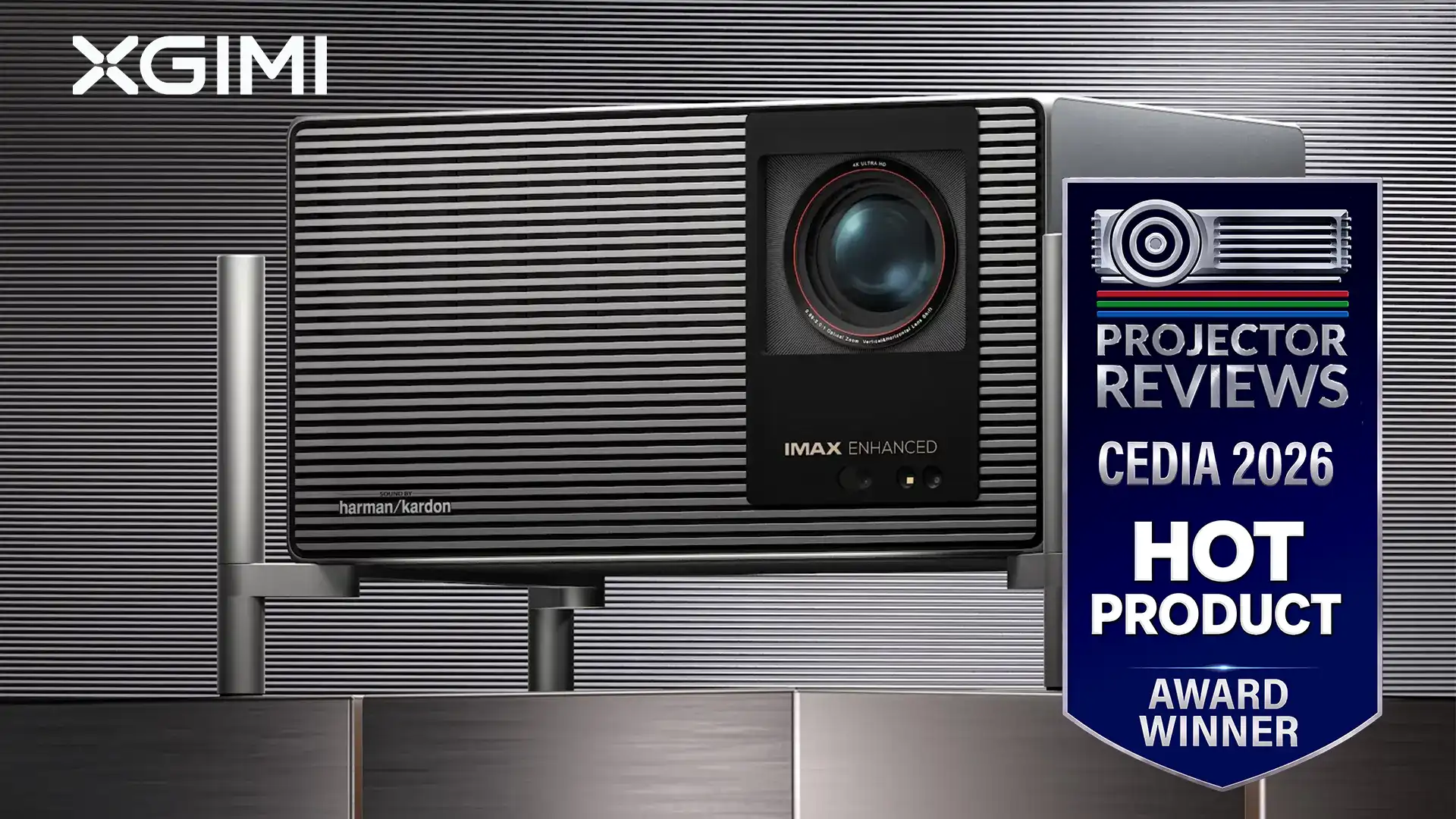
XGIMI AURA 3 Max

Best of Show

XGIMI Aura 3-CEDIA Award

The XGIMI AURA 3 Max received a Projector Reviews Best of Show Award because it applies many of the technologies that have dramatically improved the performance of XGIMI's recent long-throw projectors to an ultra-short-throw platform.

The AURA 3 Max also represents an important shift in expectations for UST projectors. Traditionally, an ultra-short-throw model was purchased primarily because it was convenient. It could sit close to the screen, eliminate ceiling mounting, and produce an enormous image in a living room. Enthusiasts seeking the highest possible black levels and image quality generally accepted that a traditional projector had an advantage. Products like the AURA 3 Max are beginning to narrow that gap.

Brightness has improved significantly across the UST category over the past few years, but native contrast remains one of the biggest obstacles separating many ultra-short-throw models from premium traditional home theater projectors. The new AURA series benefits from technologies related to those used in the award winning XGIMI Titan family so it can produce significantly better native contrast than many enthusiasts have come to expect from a UST projector.

The AURA 3 Max combines an RGB triple-laser light source with optical and dynamic black-level technologies designed to improve darker scenes while retaining the brightness necessary for impactful HDR.

XGIMI stated that the AURA 3 Max delivers approximately 5,700 ISO lumens and a native contrast ratio of approximately 8,000:1. It also supports native 4K 120 Hz operation.XGIMI's combination of high light output, RGB laser color, improved native contrast, dynamic black-level enhancement, and 4K 120 Hz capability provides the foundation for a projector that could be equally appealing to a home entertainment buyer and a serious picture-quality enthusiast.

Our Best of Show selection reflects that potential. If final production units perform close to what XGIMI demonstrated and specified at the show, the AURA 3 Max could substantially raise expectations for the premium UST category.

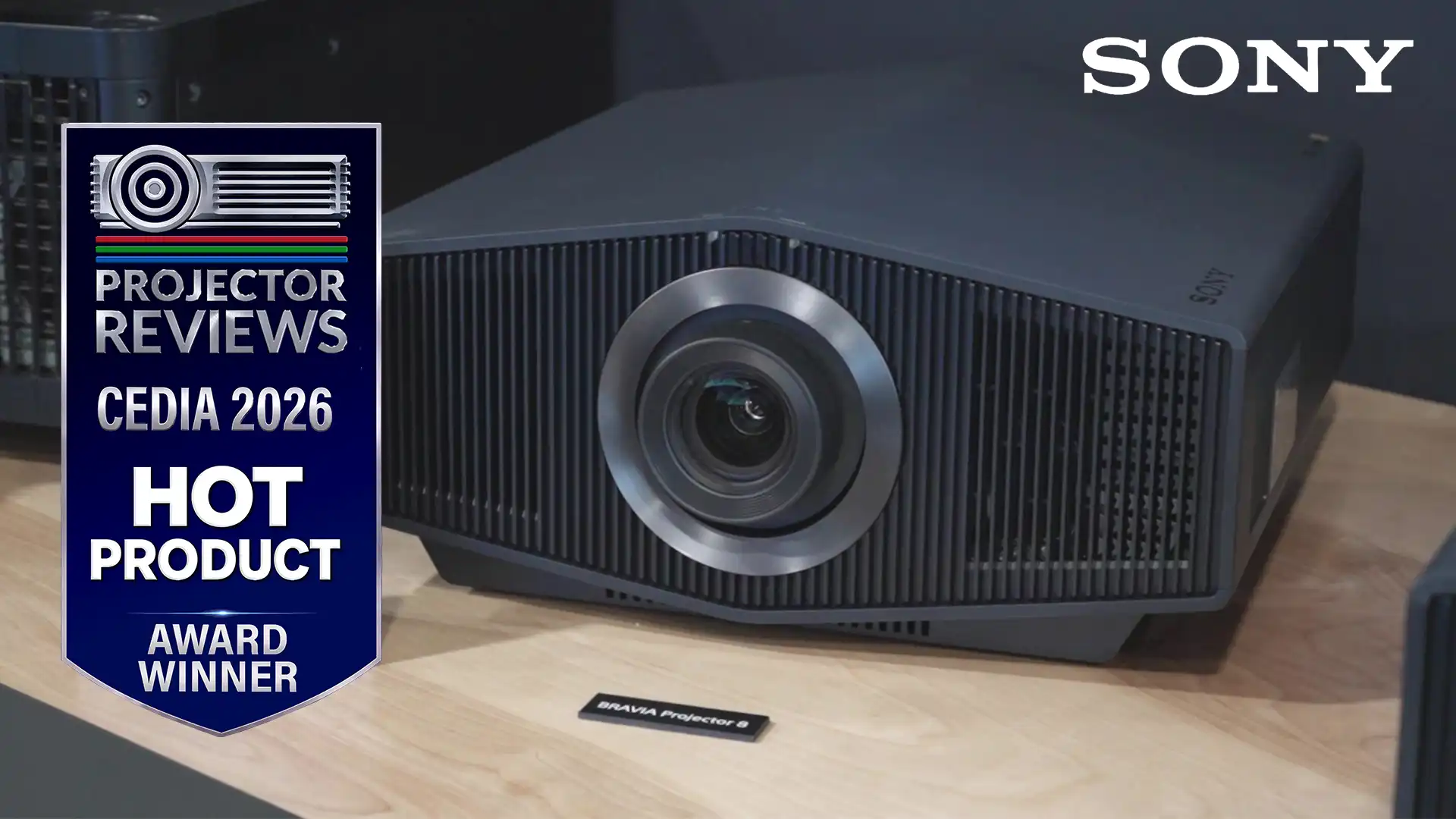
Sony BRAVIA Projector 8

Hot Product

Sony CEDIA 2026 Award-1

The Sony BRAVIA Projector 8 received a Projector Reviews Hot Product Award because, despite having been available for a couple of years, it remains one of the strongest choices for home theater enthusiasts who prioritize native contrast, accurate color reproduction, excellent video processing, and a genuinely cinematic image.

At the heart of the BRAVIA Projector 8 is Sony's native 4K SXRD imaging system. Unlike projectors that rely on pixel shifting to create a 4K image, Sony uses native-resolution 4K imaging panels. The result is excellent fine detail and image clarity without requiring the imaging devices to move pixels multiple times per frame.

However, one of the BRAVIA Projector 8's biggest strengths is native contrast. SXRD technology can produce considerably deeper blacks than most consumer single-chip DLP projectors without relying exclusively on aggressive dynamic dimming. During our CEDIA discussion, we highlighted the projector's combination of excellent native black level, three-chip color reproduction, strong calibrated brightness, installation flexibility, and quiet operation.

Sony's image processing is another important differentiator. The XR Processor for Projector draws on the company's extensive experience in cameras, professional mastering displays, television production, and consumer displays. Sony designed the processor to optimize everything from compressed streaming content to high-quality movie sources.

HDR reproduction is particularly challenging for projectors because HDR titles can be mastered for displays capable of several thousand nits, far beyond what a projection system can reproduce on screen. Sony's tone-mapping algorithms analyze the image and redistribute that information into the projector's usable brightness range while attempting to preserve highlight detail, shadow information, and the overall creative intent.

The BRAVIA Projector 8 is rated at 2,700 lumens, but real-world brightness matters more than an exaggerated specification. During the booth discussion, we noted that Sony's rated output remains unusually close to what users can achieve while maintaining accurate color.

HDMI 2.1 capability and input lag below 21 milliseconds at 4K also make the BRAVIA Projector 8 a strong option for multipurpose theaters where gaming matters.

New projectors continue to appear with increasingly impressive specifications, but specifications alone do not guarantee a better picture. The BRAVIA Projector 8 continues to deliver excellent color, natural image depth, strong native contrast, and sophisticated HDR reproduction. Its enduring performance is why it received a CEDIA 2026 Hot Product Award.

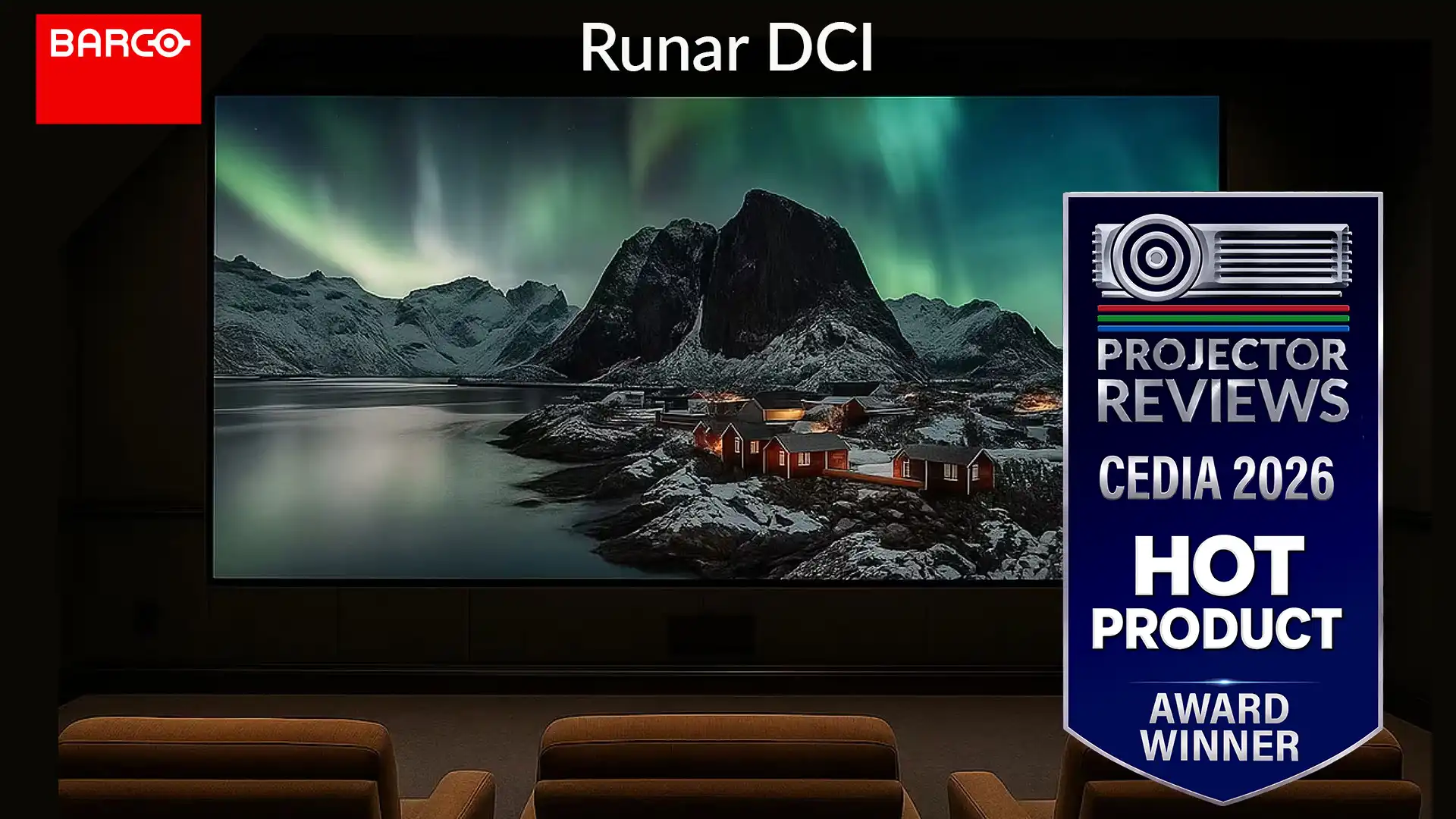
Barco Runar

Hot Product

Barco Runar CEDIA 2026 Award

The Barco Runar received a Projector Reviews Hot Product Award for a simple reason. While it is not a projector, it delivered what may have been the best image we saw at CEDIA 2026.

Direct-view LED walls are becoming increasingly common in ultra-premium residential installations. They provide enormous brightness, exceptional contrast, and the ability to produce massive images without requiring a projector or projection screen. However, many LED walls still look more like gigantic televisions than cinema displays.

The Runar was different. Barco designed Runar specifically around cinematic reproduction rather than simply maximizing peak brightness. It is a 0.9 mm pixel-pitch residential LED system available in configurations including native 4096 x 2160 and a 5120 x 2160 CinemaScope arrangement.

Runar can reproduce very bright HDR material, but what impressed us most was its performance at much lower brightness levels. The Runar can operate comfortably around traditional cinema brightness while also scaling to 100 nits, 300 nits, or as high as approximately 1,000 nits depending on the content and application.

That flexibility matters because simply producing an extremely bright image in a dark room does not necessarily create a better cinema experience. Excessive brightness over the length of a two- or three-hour movie can become tiring.

Even more impressive was Runar's near-black performance. Producing absolute black is relatively straightforward for an LED display because individual pixels can simply switch off. The difficult part is reproducing very dark shades immediately above black without visible stepping, noise, panel structure, or loss of shadow detail.

That is where Runar distinguished itself. During our demonstration, the display reproduced subtle near-black information and shadow gradations exceptionally well. I described it as the most cinematic-looking image I had ever seen from a direct-view LED wall.

Barco offers Runar in both DCI and HDR versions. The DCI system can incorporate the server and security hardware necessary for professional cinema content, while the HDR version provides the same fundamental display modules and picture quality for consumer sources.

Runar did not receive a Hot Product Award simply because it is large or technically impressive. It received the award because it demonstrated that direct-view LED can deliver the subtlety, tonal control, and image depth required for a truly cinematic experience.

XGIMI Titan Noir Max

Hot Product

XGIMI TITAN CEDIA Award

The XGIMI Titan Noir Max earned a Projector Reviews Hot Product Award because our experience with the projector has already demonstrated that its impressive specifications translate into outstanding real-world performance.

While the Titan Noir Max was introduced before CEDIA 2026, it remains one of the most compelling single-chip DLP projectors we have evaluated, particularly when it comes to native contrast and black-level performance. The Titan Noir Max uses an RGB triple-laser light source and is designed to combine high brightness with significantly better native contrast than is typical from a high-output single-chip DLP projector.

Contrast is the feature that really separates it from many competitors. During in our review, we noted that the Titan Noir Max produced some of the best black levels and native contrast we have encountered from a consumer single-chip DLP projector. That is significant because contrast has traditionally been one of DLP's biggest weaknesses compared with premium LCOS-based projectors.

XGIMI supplements the projector's native performance with Dynamic Black Level Enhancement and optical control designed to reduce stray light and dynamically optimize brightness depending on scene content.

What makes the Titan Noir Max particularly interesting is that XGIMI achieved this level of performance without turning the projector into an enormous commercial-style chassis.

The company has historically specialized in compact lifestyle projectors, but the Titan Noir Max is substantially more theater-focused than something like a HORIZON-series product. The unit is still relatively compact and visually refined for the amount of performance it delivers.

At CEDIA, we discussed how the Noir Max sits between lifestyle projection and traditional professional-style home theater hardware. Its chassis remains manageable for residential applications, while its image performance exceeds the original Titan in several important areas.

Unlike a Best of Show product we may have had limited time to evaluate, the Titan Noir Max earned its Hot Product Award based on real-world experience. We have reviewed and compared the projector and have already seen what its technology can do outside a trade-show demonstration.

Its combination of high brightness, RGB laser color, installation flexibility, and unusually strong single-chip DLP contrast makes the Titan Noir Max one of the most impressive home theater projectors in its class and a deserving CEDIA 2026 Hot Product.

Vanish Designs Custom Cabinets

Hot Product

Vanish Designs CEDIA Award-1

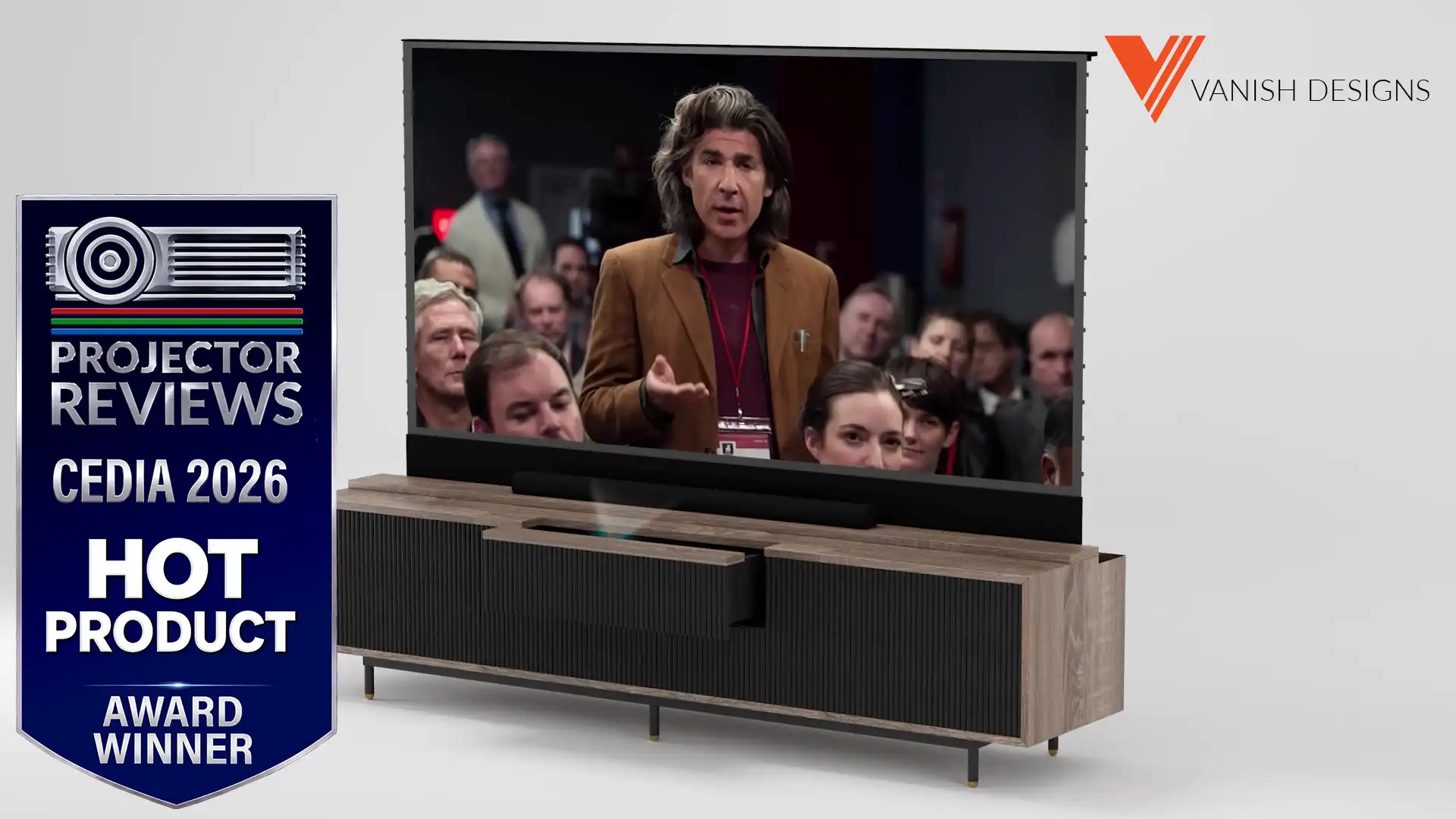
The Vanish Designs Hudson Table received a Projector Reviews Hot Product Award because it solves one of the most important challenges facing large-screen entertainment in premium living spaces: how to enjoy a truly immersive image without allowing the technology to dominate the room when it is not being used.

Large televisions continue to become less expensive, but even a beautiful 100-inch television becomes a massive black rectangle when it is switched off. In rooms with artwork, fireplaces, architectural details, or spectacular views, that can be a significant disadvantage. Projection offers another option because the image can disappear completely.

Vanish Designs takes that idea further by integrating an ultra-short-throw projector, retractable screen, audio system, and related electronics into furniture that looks like furniture rather than AV equipment. The goal is to hide all traces of technology while still delivering a genuinely immersive entertainment experience in the rooms where homeowners actually want to spend their time. 

When entertainment is desired, the screen rises behind the furniture and the cabinet opens to expose the sound system and provide the necessary optical path for the UST projector. When everything is closed, there is virtually no indication that an entertainment system is inside. This makes their cabinets an especially interesting solution for rooms with ocean views, city views, fireplaces, or artwork homeowners don't want permanently obscured.

Customization is another important advantage. Vanish works with homeowners, interior designers, architects, and custom integrators to select furniture styles, woods, finishes, projectors, screens, and audio components that match the application. Integrators can even supply their preferred AV equipment, as long as they maintain the required optical clearances.

The Hudson received a Hot Product Award because it highlights a projector advantage that's easily overlooked when comparing it to a flat panel. A well-designed projection system can display a massive image that disappears when not in use. Vanish Designs has turned that advantage into an elegant, practical solution that allows high-performance AV and interior design to coexist.

© 2026 Projector Reviews

crossmenu linkedin facebook pinterest youtube rss twitter instagram facebook-blank rss-blank linkedin-blank pinterest youtube twitter instagram