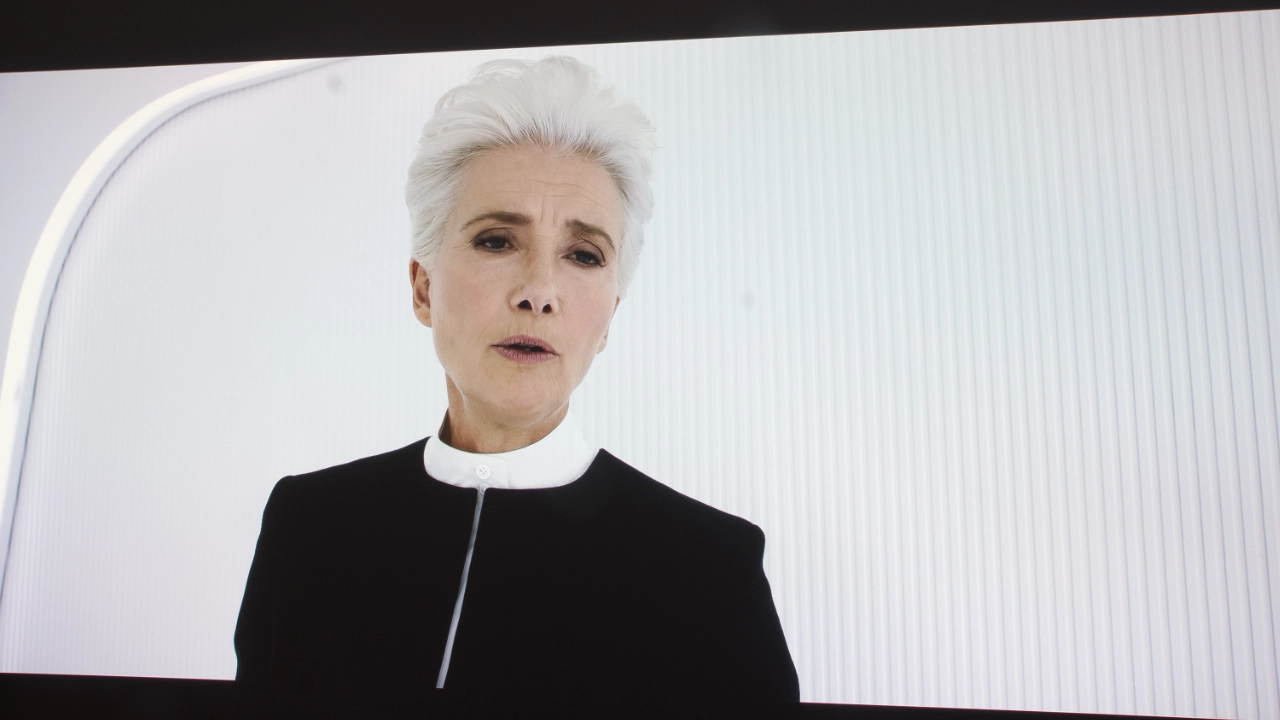
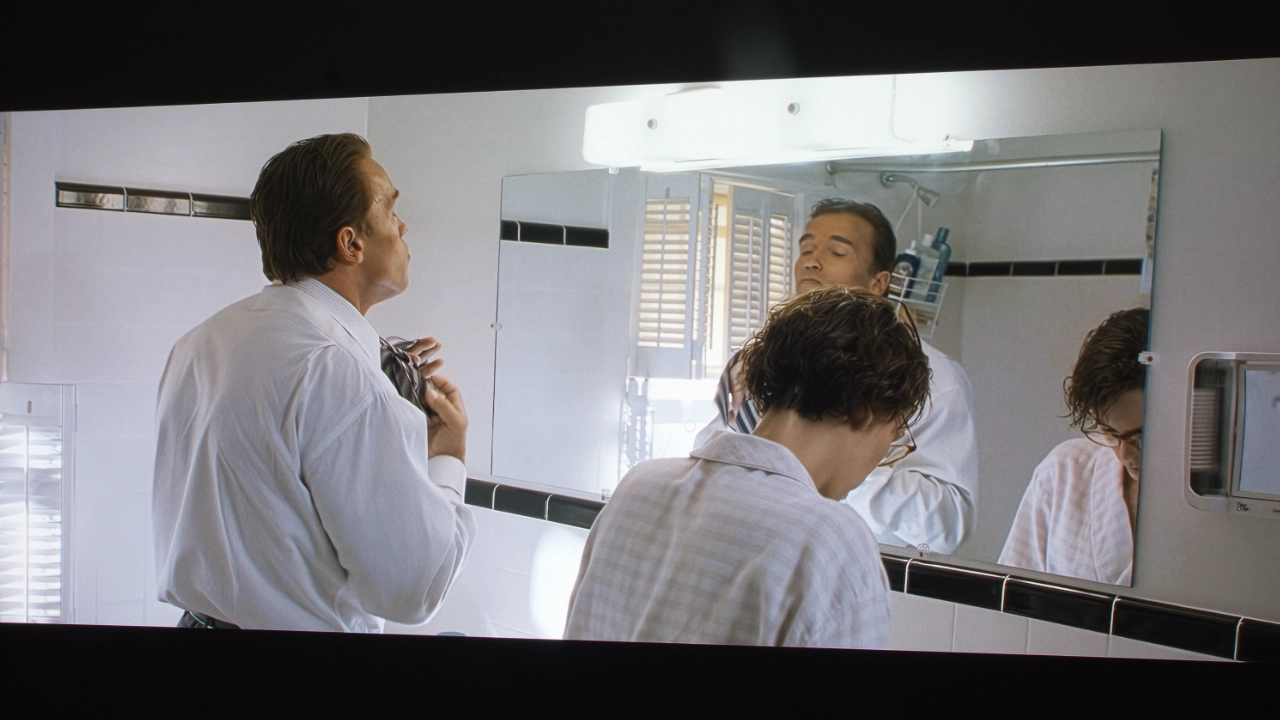
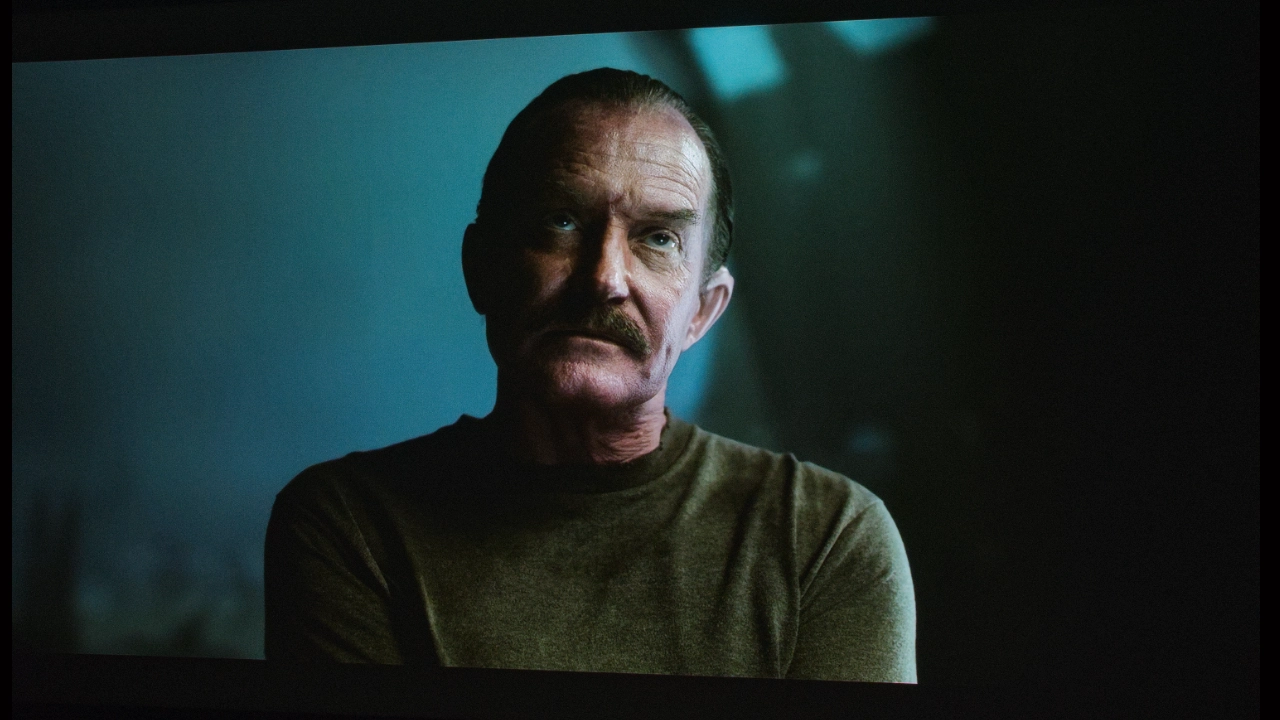
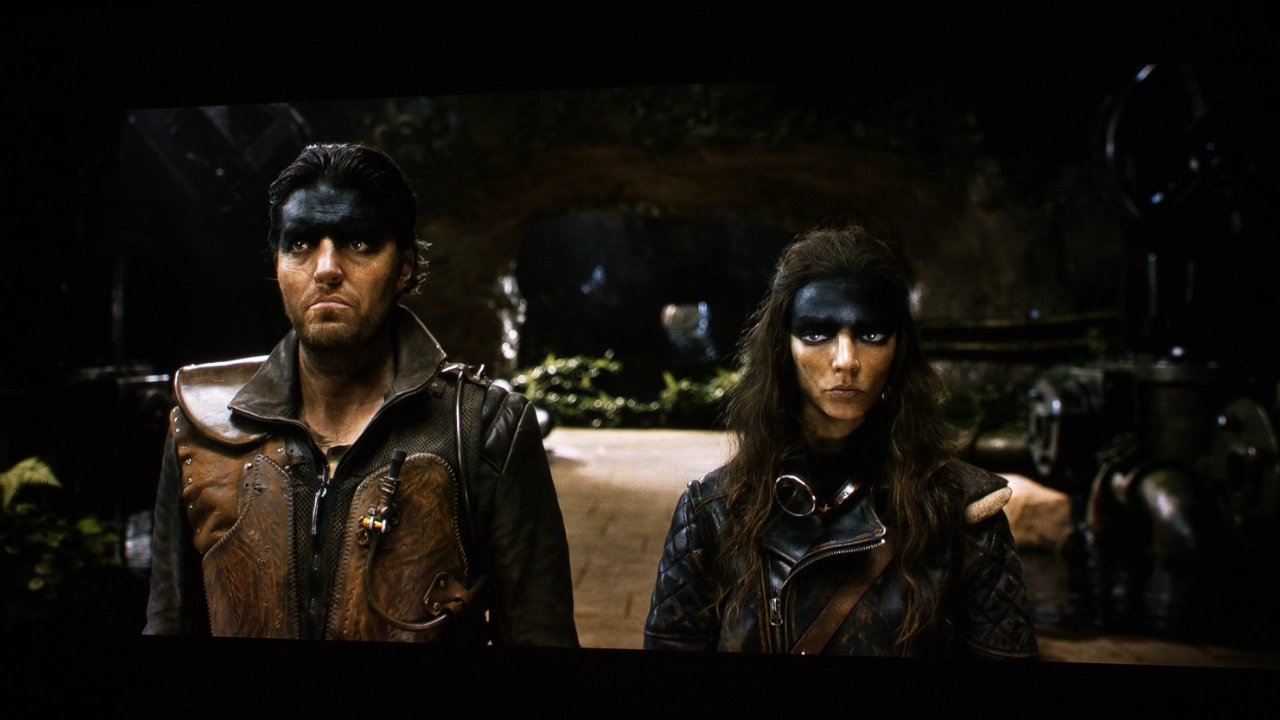
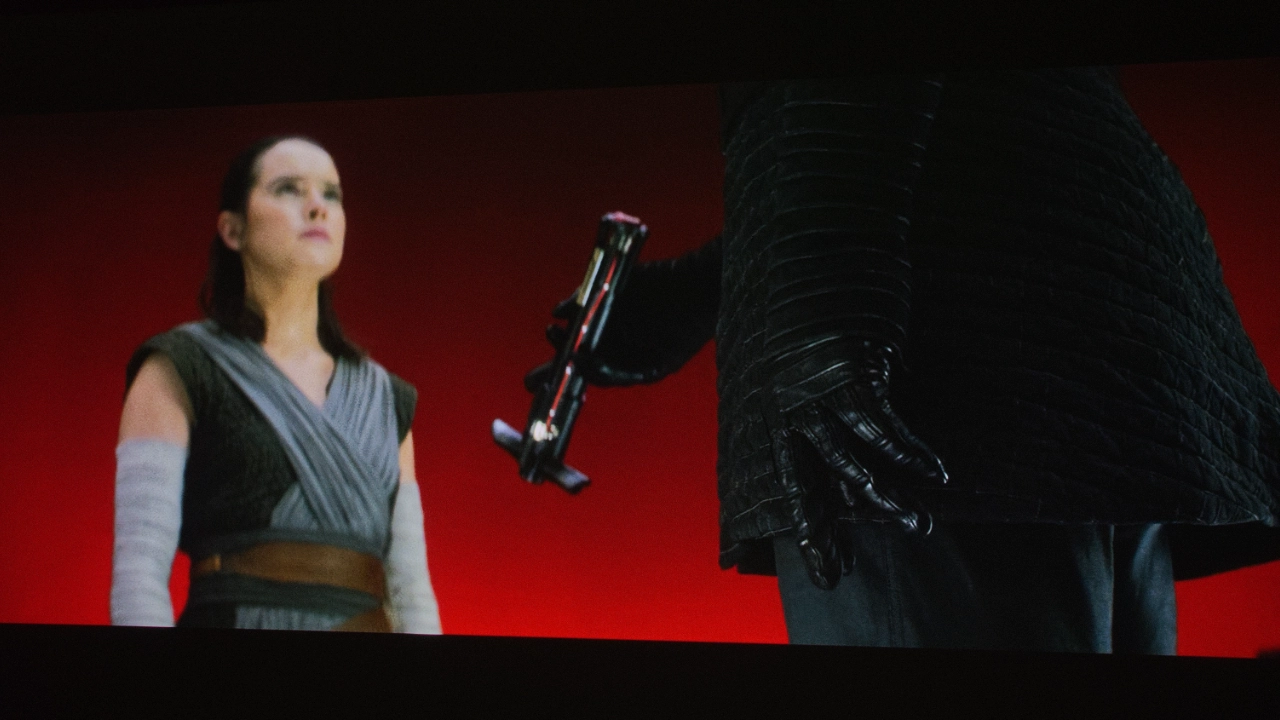
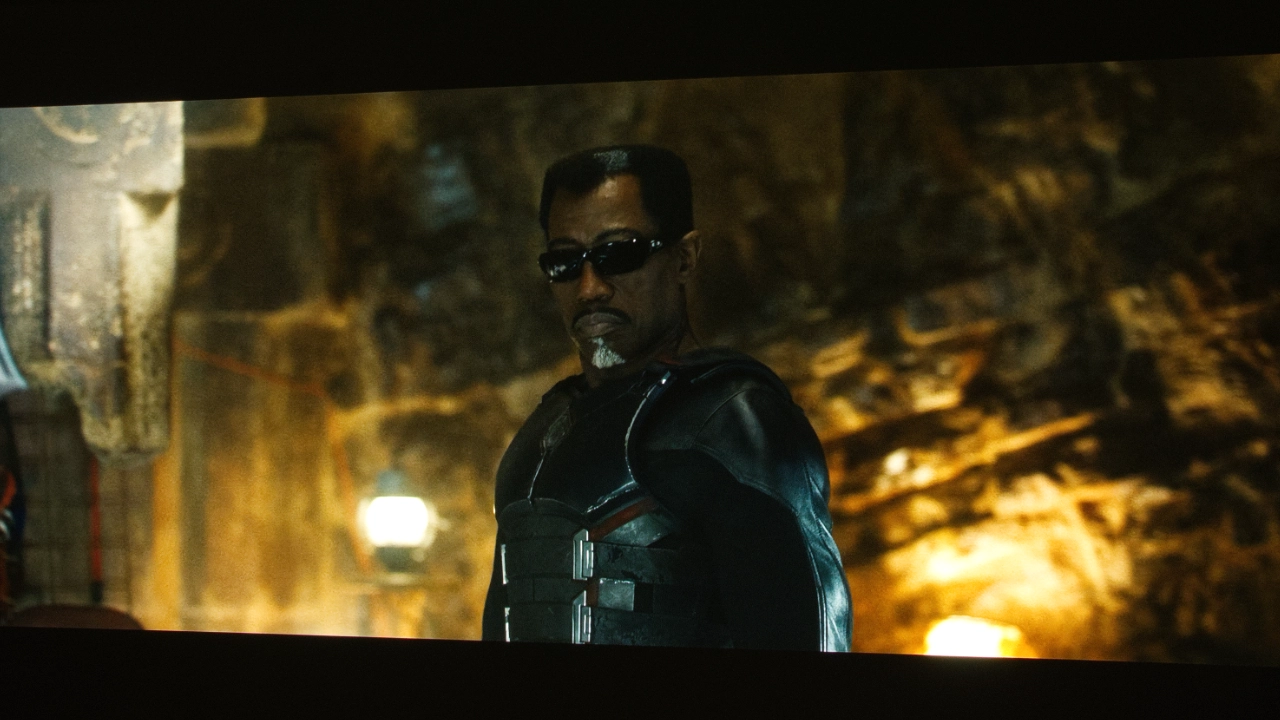
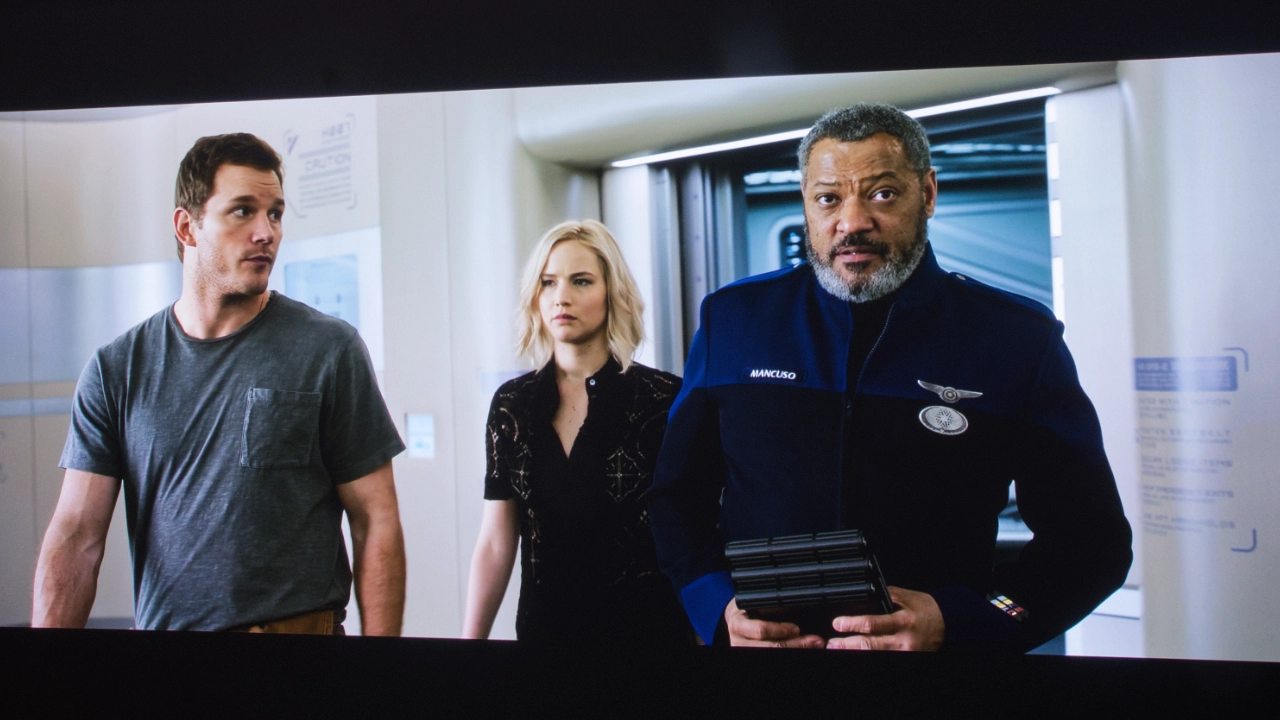
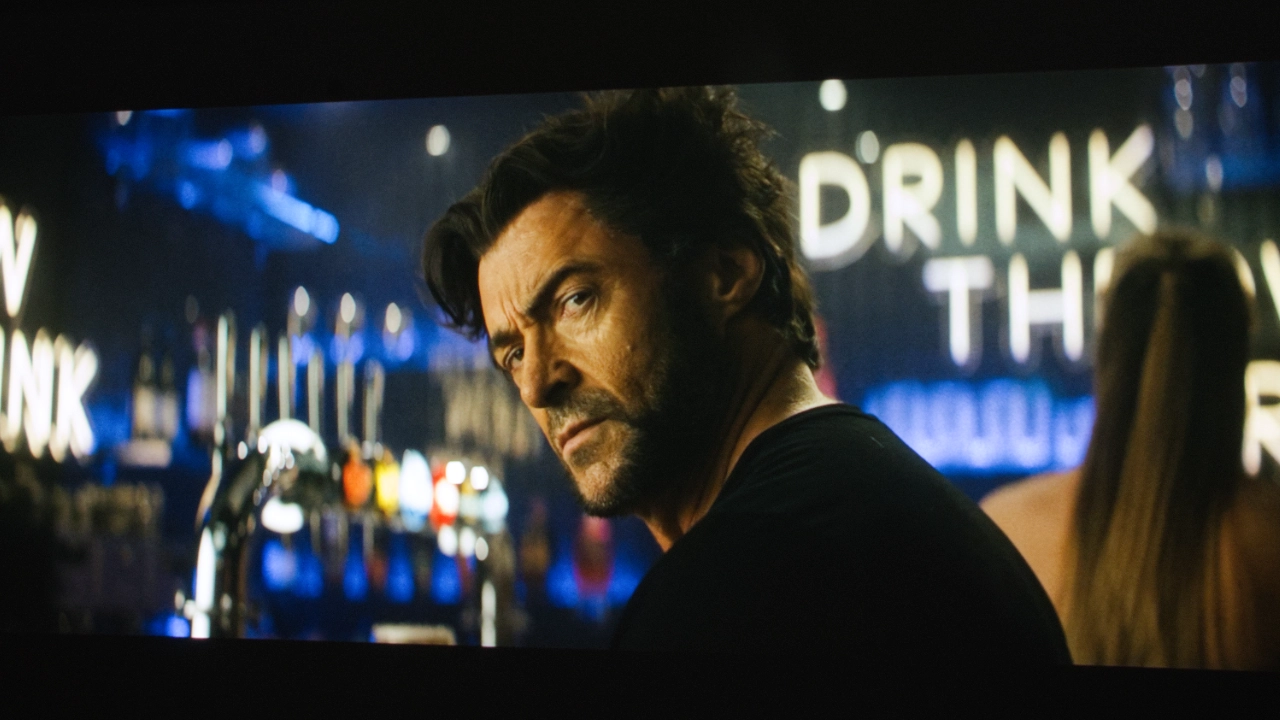
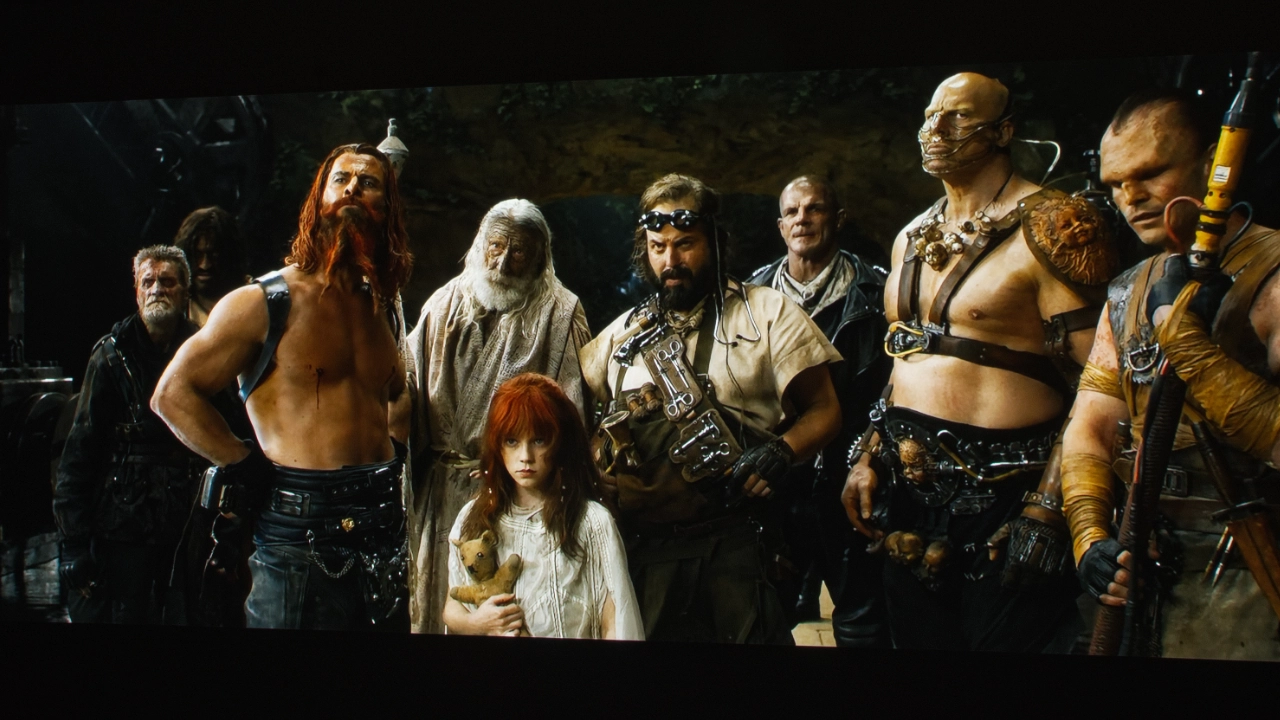
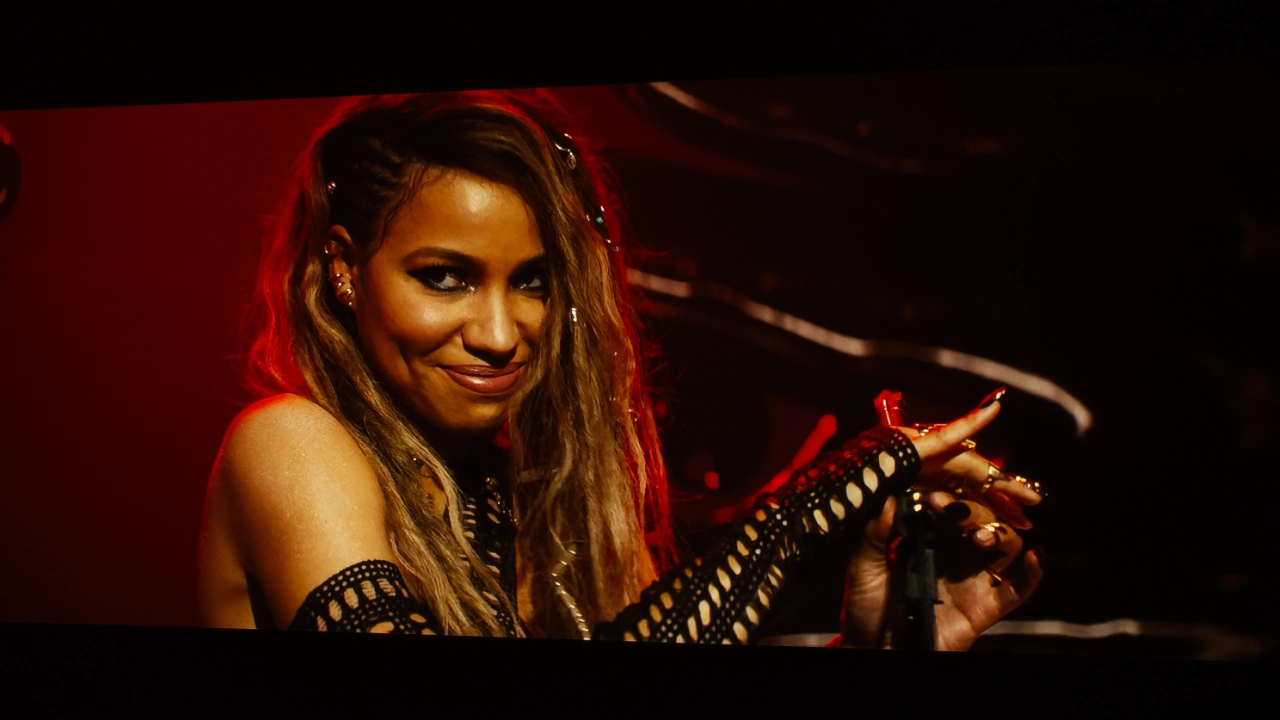
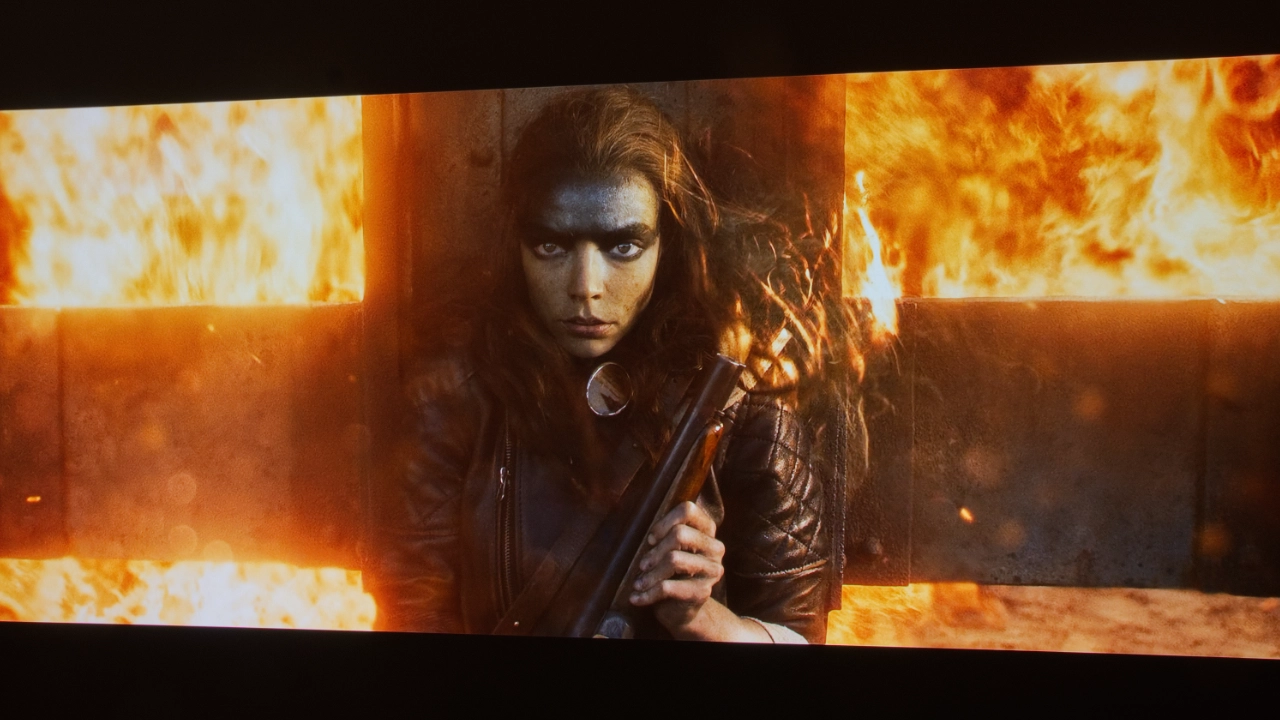
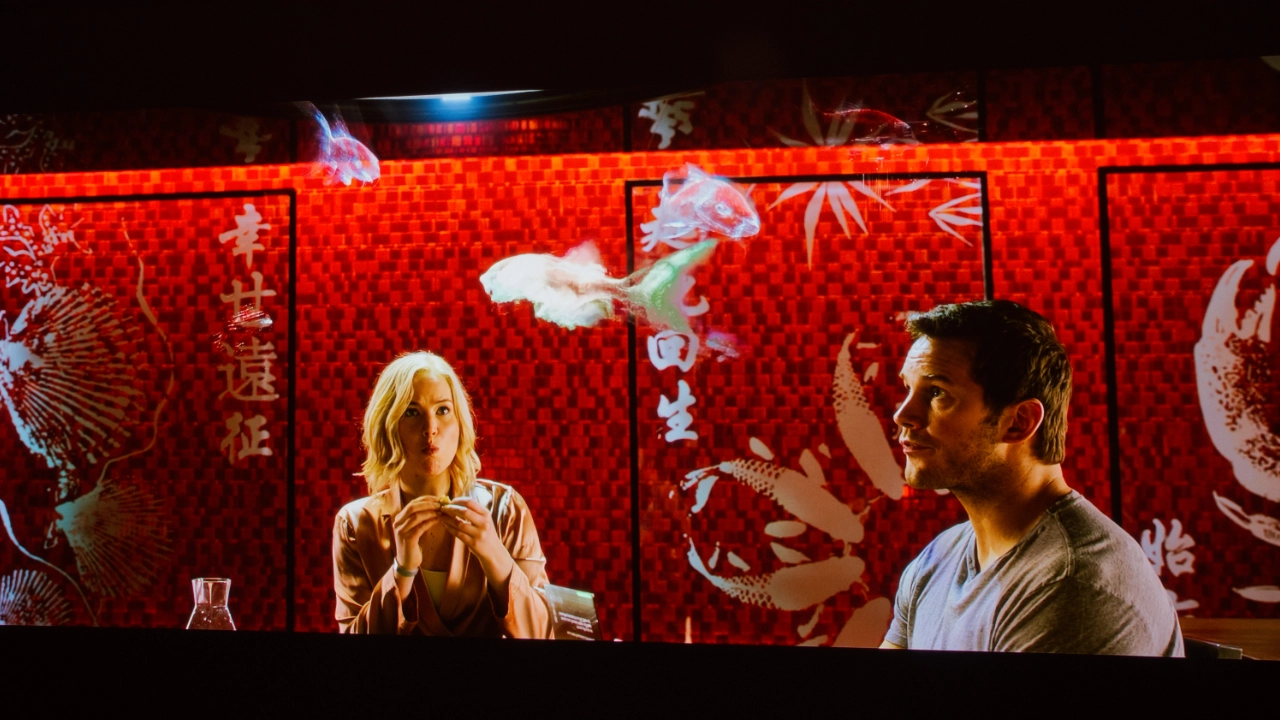
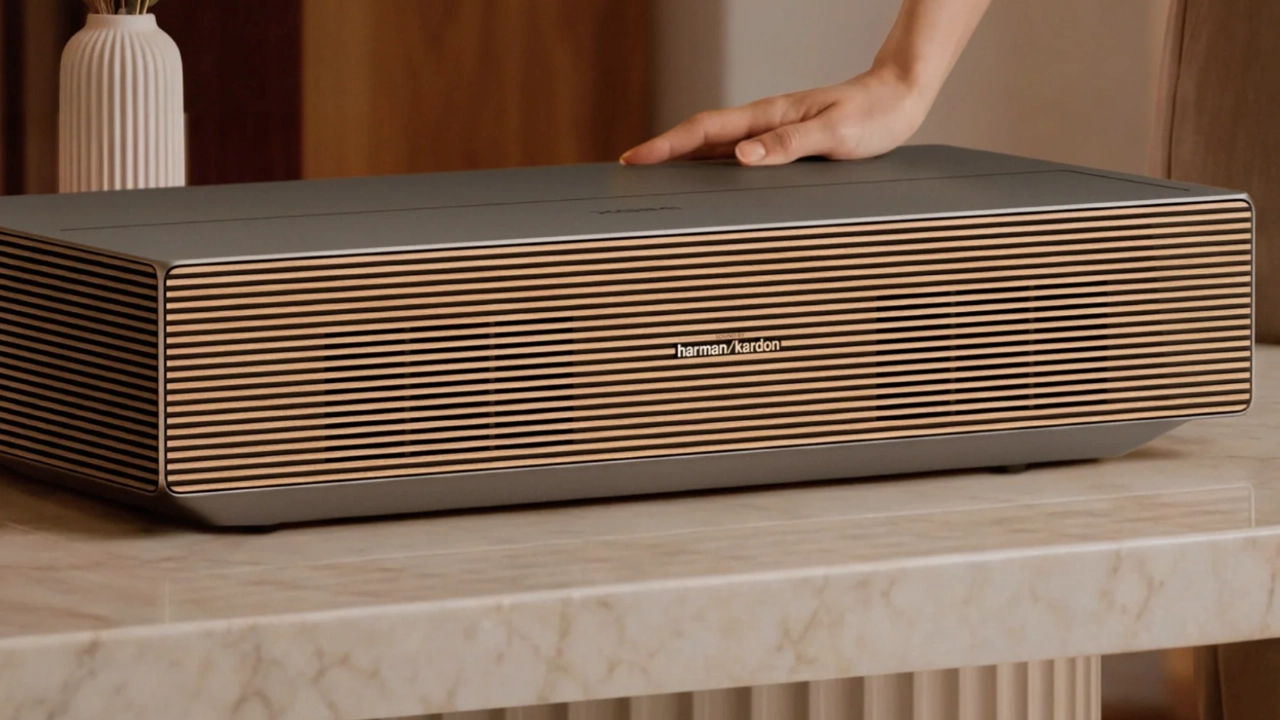
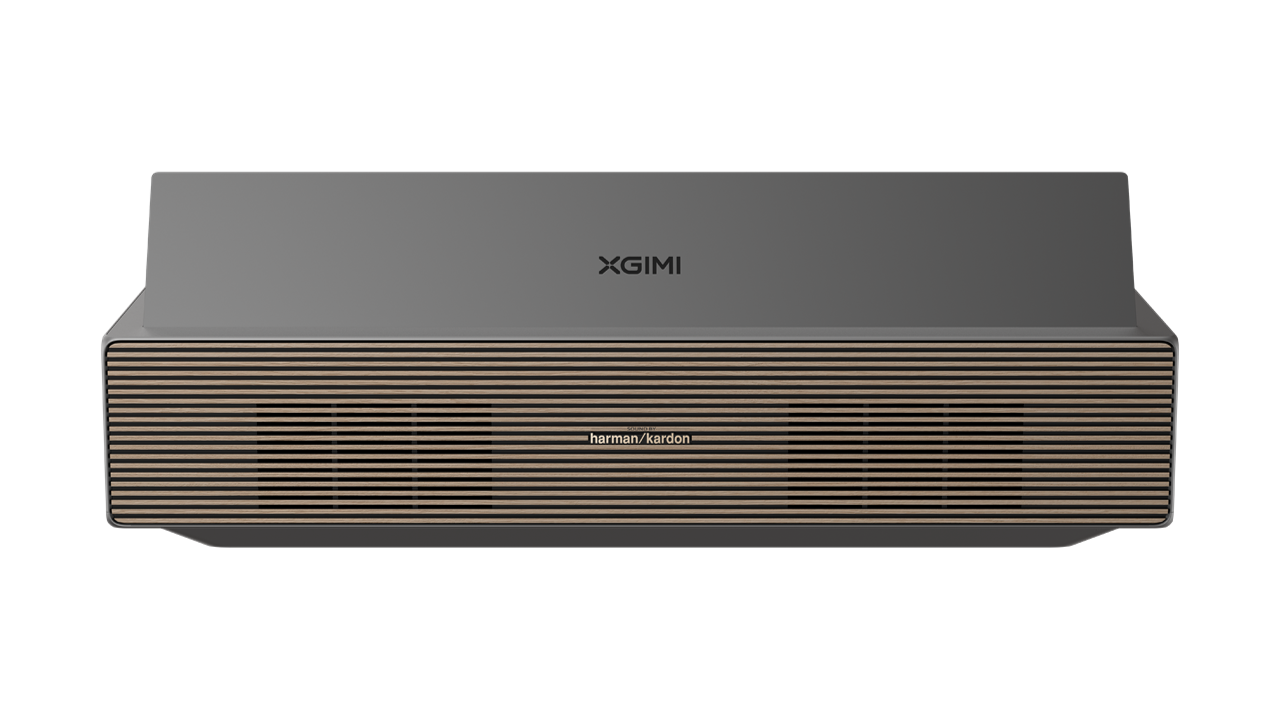
The XGIMI AURA 3 Max may be the most advanced laser TV-style display to date, and it is XGIMI's 2026 flagship ultra-short-throw (UST) projector. The AURA 3 Max is more than a next-generation projector. It is the evolution of the ultra-short-throw form factor, offering a 4K UHD (3,840 x 2,160p) RGB triple-laser projector built for home theater enthusiasts and bright living rooms. With a $4,999 MSRP and an aggressive $2,399 Kickstarter launch price, it is XGIMI's most capable consumer UST model to date.
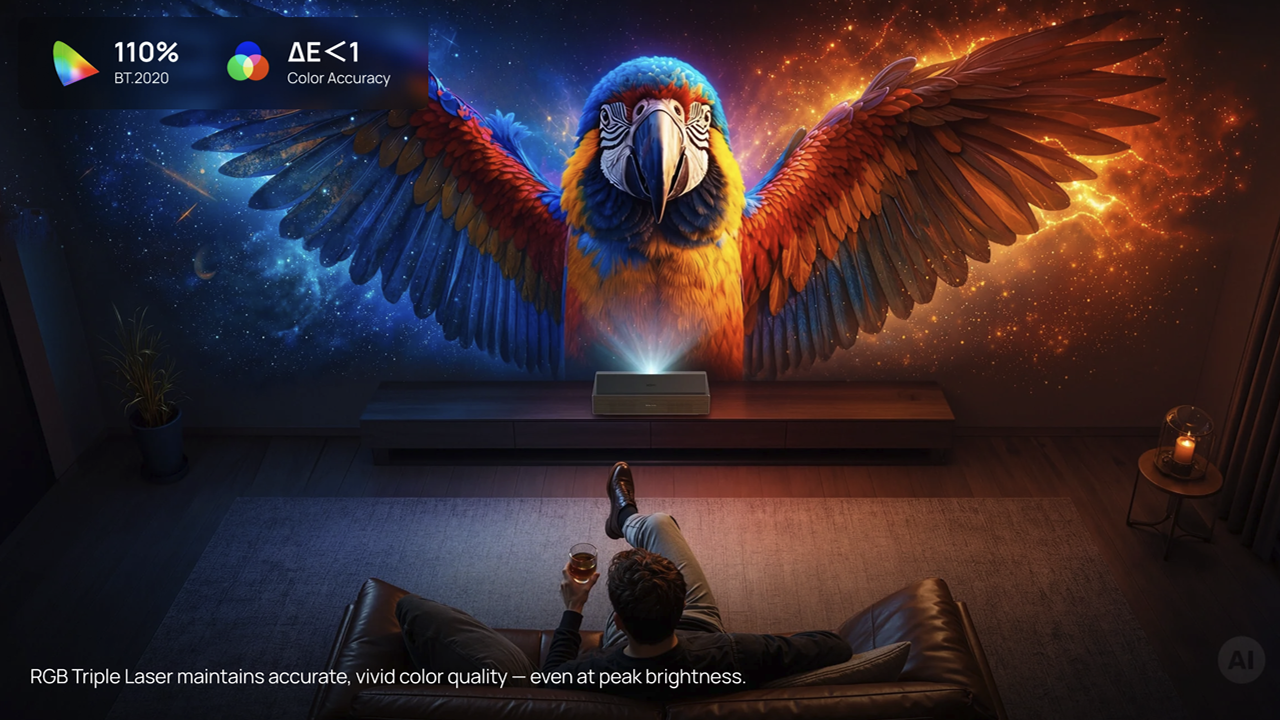
The AURA 3 Max features an upgraded RGB triple-laser light source powered by XGIMI’s X-VISION AI Image Processor. This optical engine delivers a manufacturer-rated brightness of up to 5,700 ISO lumens while covering 110% of the BT.2020 color space and 99% of DCI-P3 colors. Thanks to that brightness and an ultra-tight 0.163:1 throw ratio, the AURA 3 Max can project a 120-inch image just 8 inches from the wall or screen and scale up to 200 inches while maintaining tight edge-to-edge focus, even at the displayed image’s extreme edges. The Aura 3 Max also features advanced active anti-RBE processing to minimize the Rainbow Effect artifacts most often associated with DLP projectors. This technology is so advanced it works when displaying both 2D and 3D content.
If you are concerned that pumping 5,700 lumens out of a compact chassis means distracting fan noise, XGIMI engineered the thermal layout to stay under 28 dB at one meter, keeping it quiet during dialogue-heavy scenes. You can be sure I'll be testing those acoustic and lumen claims on the bench. XGIMI also supports full active 3Dplayback and includes two pairs of 3D glasses.
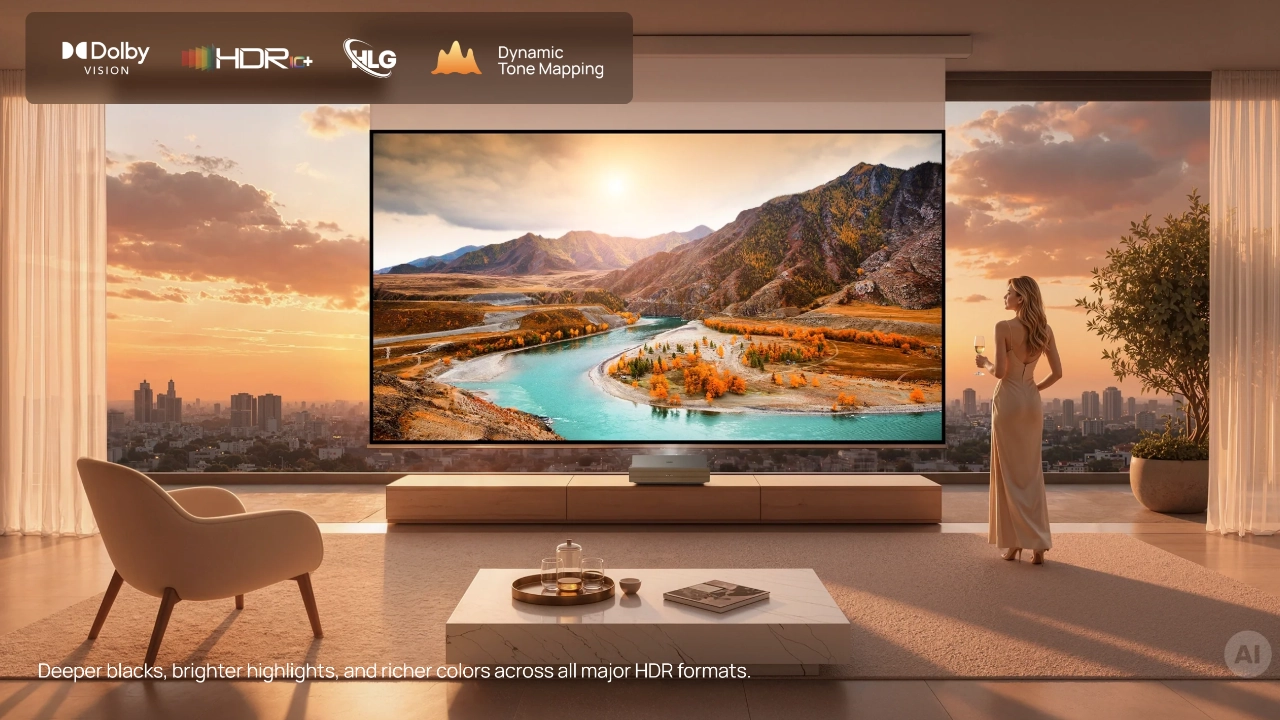
The AURA 3 Max pairs a 0.47-inch Texas Instruments Digital Light Processing (DLP) Digital Micromirror Device (DMD) chip with new dual DLPC 8545 controllers running in parallel. That hardware combination makes the Aura 3 Max the first DLP ultra-short-throw projector to deliver true 4K at 120 Hz over HDMI 2.1, alongside 1080p at 240 Hz, Variable Refresh Rate (VRR), Auto Low Latency Mode (ALLM), and AMD FreeSync Premium. A true 4K 120 Hz display means 24 fps movies play back incredibly smoothly without pulldown judder. The projector also supports every major high-dynamic-range format, including Dolby Vision, Dolby Vision Gaming, HDR10+, HDR10, and HLG, complete with IMAX Enhanced and Filmmaker Mode certifications.

+5,700 lumens of brightness
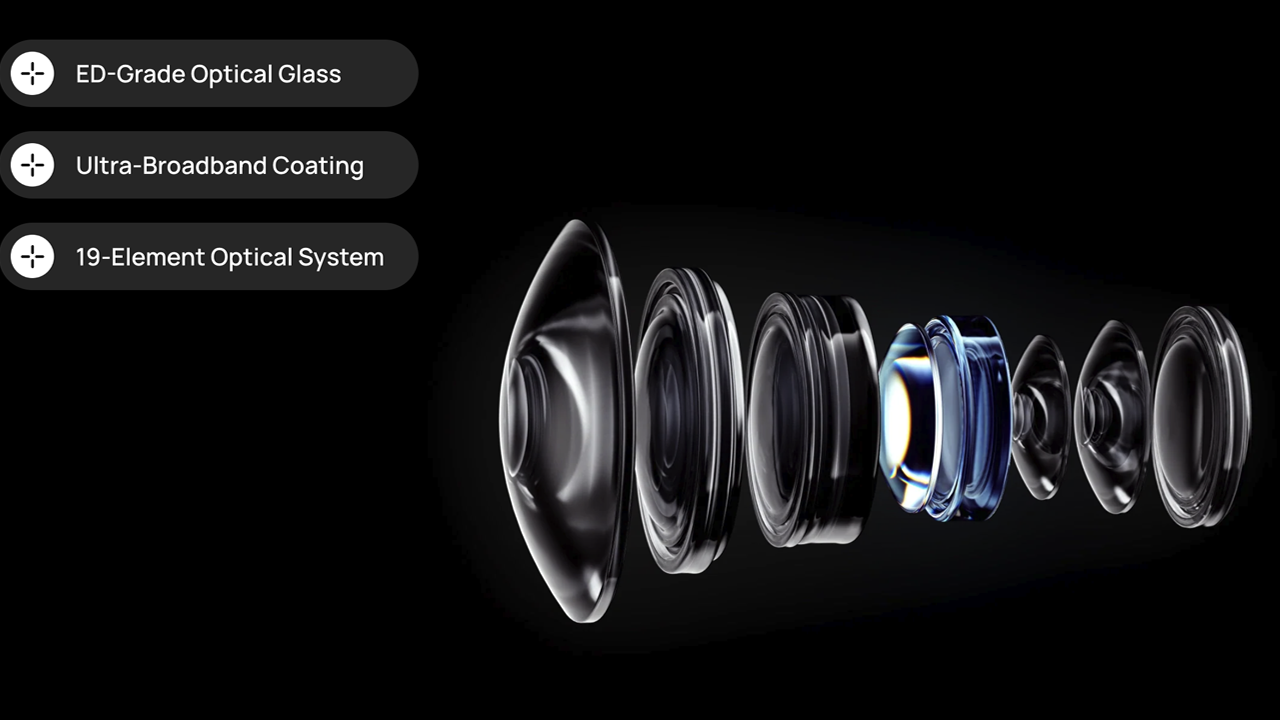
+ All-glass 19-element lens elements deliver sharp, uniform focus
+Next-generation SST DLP with dual DLPC8545 controllers
+110% of the Rec. 2020 gamut coverage
+World's first 4K 120Hz UST projector
+Low Latency 1 ms @ 1080p/240 Hz and 4ms @4k/120Hz
+AMD FreeSync, VRR, and ALLM
+Features anti-RBE Technology
+Dolby Vision, HDR10+, and IMAX Enhanced encoded content
-Iris setting is universal and carries over to all picture modes.
-Engaging DBLE can introduce color shift
-Anti-RBE slightly increases visible electronic picture noise.
-The remote is only partially backlit and lacks a dedicated Input button.
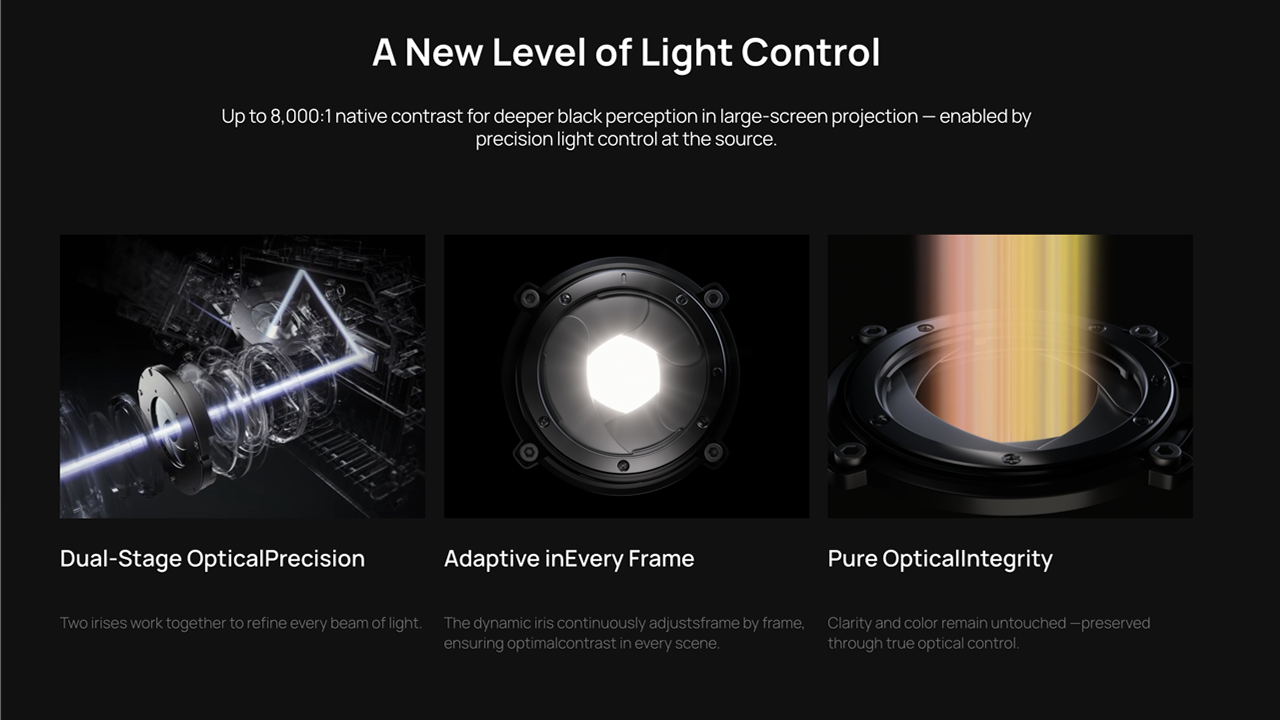
The biggest leap in picture quality comes down to black-level performance, where XGIMI claims up to 8,000:1 native contrast. Rather than relying on a single aperture, the AURA 3 Max uses a Dual Dynamic Iris system with five manual stops from f/2.0 to f/7.0 plus an automated dynamic mode that adjusts frame by frame. Working alongside XGIMI's Dynamic Black Enhancement (DBLE) algorithm, this dual-iris design reins in stray light for deeper blacks and cleaner shadow gradation without crushing bright highlights.
XGIMI pairs the visuals with an integrated 80-watt Harman Kardon sound system that supports Dolby Atmos and DTS Virtual:X processing, delivering room-filling volume right out of the box if you aren't connecting an external surround receiver.
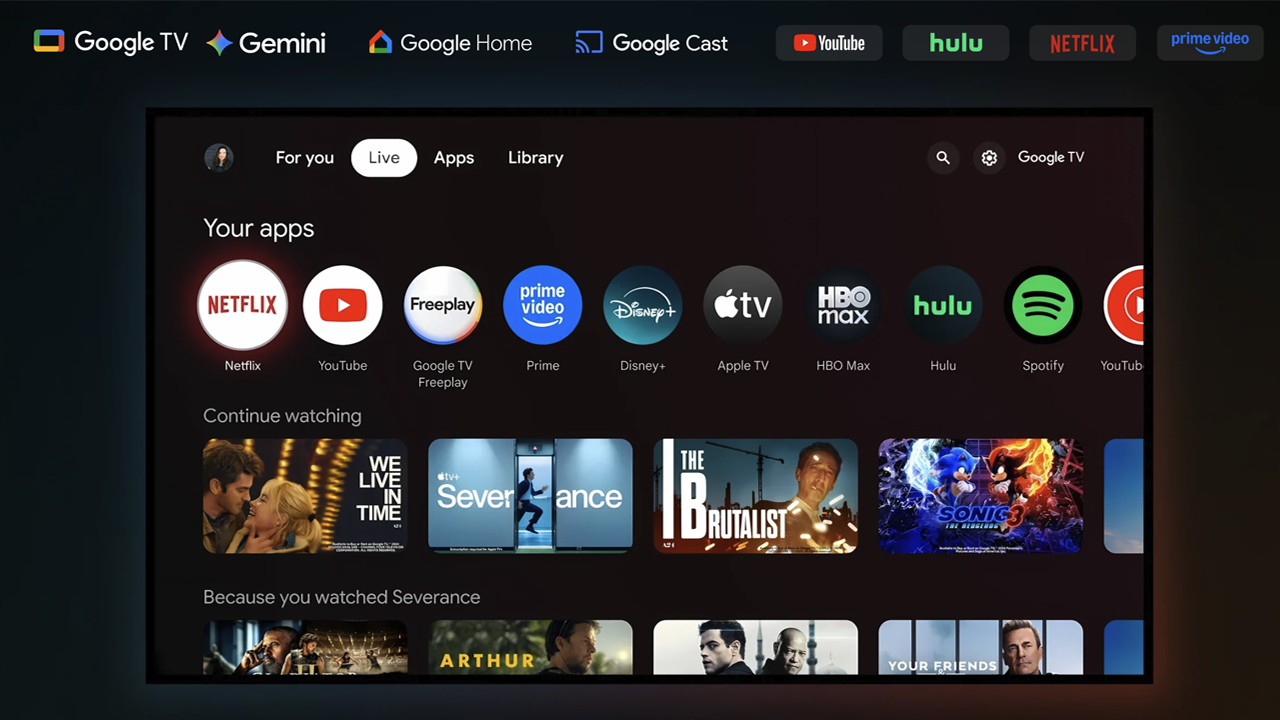
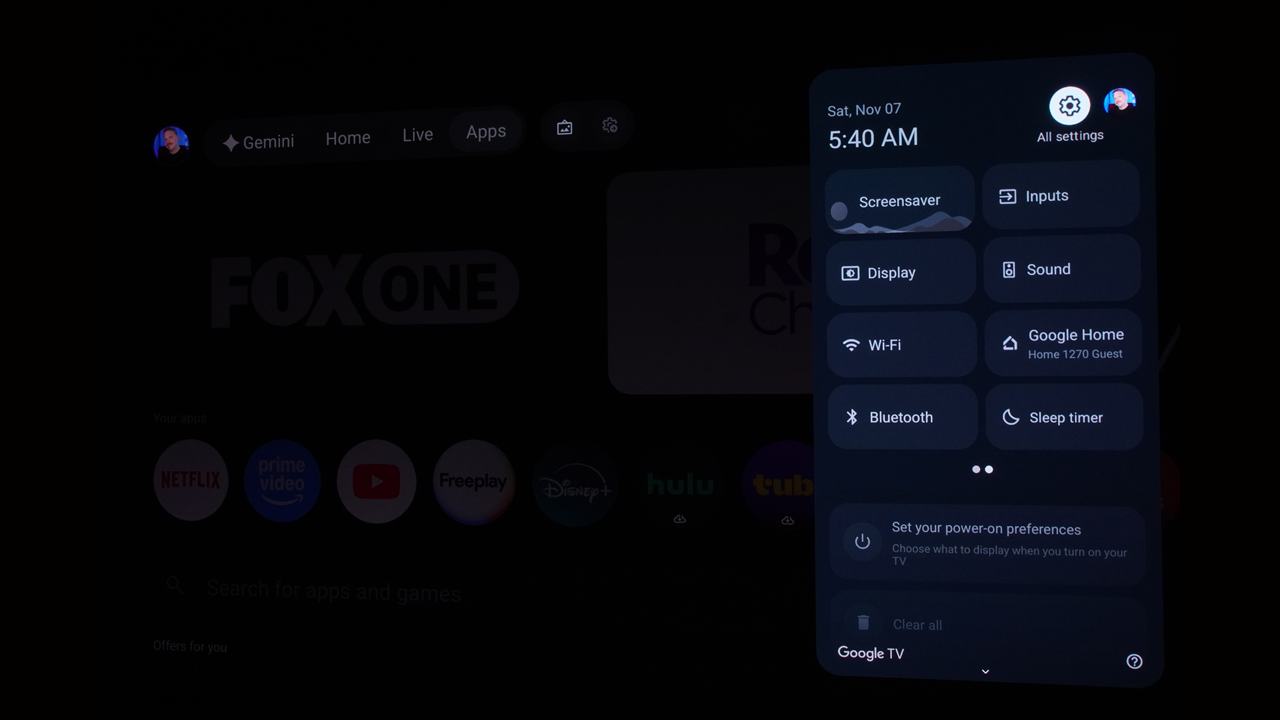
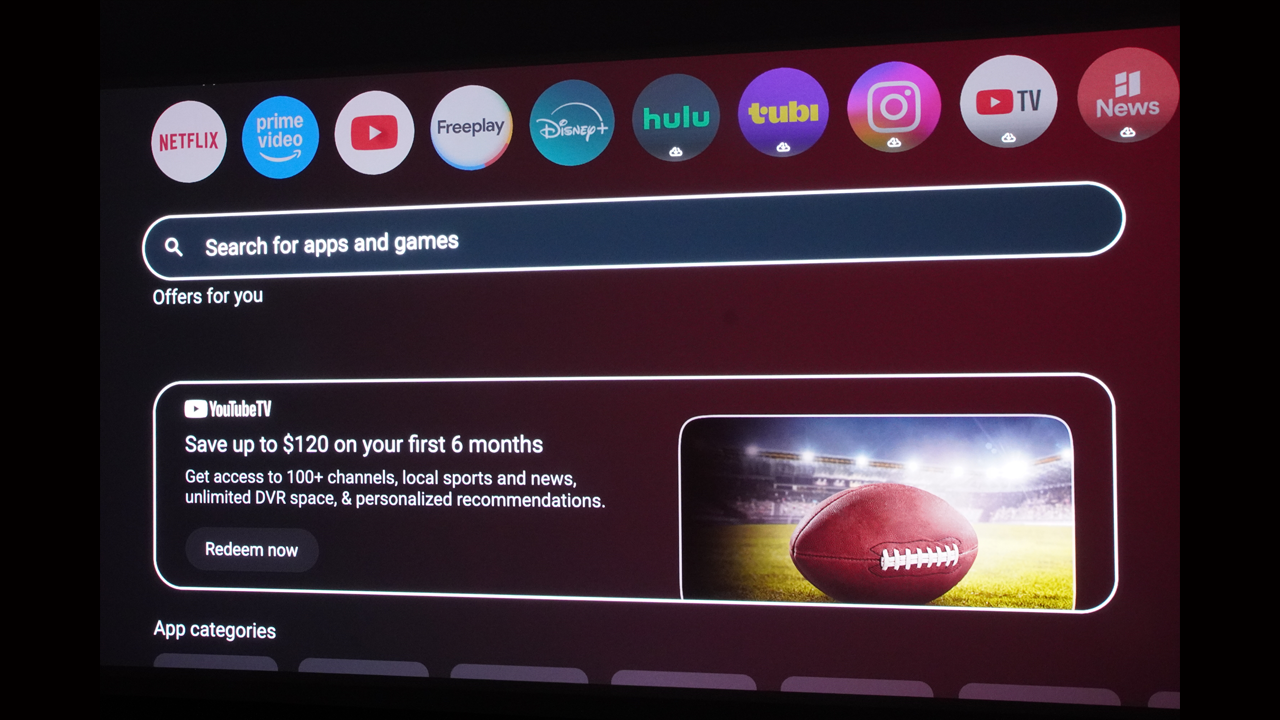
The AURA 3 Max features a fully integrated Google TV operating system that comes with a certified Netflix app. Google TV offers many benefits, including a curated experience that pulls movies, live sports, and show recommendations from all your subscriptions into a single interface by combining personalized recommendations. Google TV also features core Google technology like the Google Assistant for voice search, and automated setup tools that handle basic setup like focus, keystone, screen alignment, and wall color adaptation.

XGIMI Technology was founded in November 2013 by a former semiconductor engineer who set out to build "all-in-one" smart home projectors, partnering with Android and, in 2015, Harman Kardon. Both partnerships continue today.
XGIMI ranked as the No. 1 brand globally in the home projector category by shipment volume from 2023 through 2025 (according to RUNTO and IDC data) and has led China's domestic projector market for eight years in a row, which accounts for roughly 6% to 7% of global projector shipments (strictly to home/consumer shipments; not total projector revenue or overall market share. Traditional giants like Epson still command larger total shares.)
XGIMI is primarily a branded consumer electronics manufacturer, but unlike most projector companies, it designs its own optical engines, light sources, and auto-configuration (ISA) software in-house.

At the heart of the AURA 3 Max is the projector's laser light source. This upgraded RGB laser light source is powered by XGIMI's X-VISION AI image processor. This laser offers significant advantages over traditional single-laser and phosphor-wheel designs historically found on DLP projectors. XGIMI X-VISION boosts brightness to a manufacturer-rated 5,700 ISO lumens. This new light source also covers 110% of the wide BT.2020 color gamut and 99% of DCI-P3. It also features a special XGIMI multi-layer optical diffuser and active anti-RBE (Rainbow Effect) directly in the light path. The projector's increased brightness, combined with a dual mechanical iris, lets you achieve deeper blacks without starving HDR highlights of punch, even on massive screens up to 150 or 200 inches.

DLP has come a long way since Texas Instruments put a DMD into a rear-projection television set. After more than a decade of slow, incremental advancement, DLP has surged in performance and features in recent years, finally matching recent advances in supporting hardware like light sources. DLP continues to reinvent itself.
Last year, TI started rolling out a new generation of 0.47-inch DLP chips called SST with improved range alongside updated high-speed display controllers, and the combination is groundbreaking. While most competing 2026 SST-based projectors rely on a single DLPC8445 controller that tops out at 4K 60 Hz, XGIMI goes a step further on the AURA 3 Max, offering dual DLPC8545 controllers running in parallel. Here is what all that technical headroom actually does for you when you sit down to watch or play.
Gamers used to be forced to choose between sharp 4K resolution and fast motion, but here you get both at the same time. Fast-paced games stay crisp, your controls respond instantly with virtually zero lag, and the screen will not tear or stutter when the action gets heavy.
Even if you never touch a game controller, that higher refresh rate directly improves how standard movies look. Even today, most films and many TV shows are shot at 24 fps. This is a look generations of viewers have become accustomed to, but 24p doesn't divide evenly into a standard 60 Hz display and causes a slight, distracting stutter whenever the camera pans slowly across a scene. Because 24 fps divides cleanly into 120, every movie frame stays on screen for the exact same amount of time, giving you smooth, natural cinema motion without needing fake motion-smoothing filters.
Faster mirror switching inside the chip also fixes one of the oldest complaints about DLP projectors: noisy or blotchy shadows. Instead of dark scenes breaking up into muddy blocks or crushed black blobs, the projector can draw much finer shades of dark gray, letting you actually see subtle details in dimly lit rooms.
Finally, tighter timing keeps the dynamic laser dimming locked step-for-step with the picture. You will not notice the annoying flash or dimming dip that happens with slower projectors trying to catch up when a movie cuts abruptly from a dark cave to a bright outdoor scene. With the Aura 3 Max, deeper blacks stay completely seamless as you watch.

Less than a year ago, it was almost a given that 0.47-inch single-chip DLP projectors typically struggled with black floors that were mostly charcoal gray at best. What a difference a year makes! And the AURA 3 Max proves this, delivering some of the deepest blacks and cleanest shadow detail I have seen on an ultra-short-throw in 2026. XGIMI achieves this by combining physical optical hardware, brightness, and real-time laser modulation. It also adds XGIMI’s Dual Dynamic Iris system, developed for the company's higher-end Titan Noir series. The Aura 3 Max does feature an extensive software dimming solution, but the projector's two physical aperture modules inside the light path mechanically block stray light before it reaches the screen, which makes a huge difference in the projector's black floor and dark-area detail. Unlike many of its ultra-short-throw competitors, XGIMI includes a DYNAMIC IRIS mode, or you can lock the iris into five manual stops ranging from f/2.0 to f/7.0, pushing claimed native contrast up toward 8,000:1. Stopping down a physical iris naturally cuts light output, which is why the RGB triple-laser engine's massive 5,700-lumen ceiling is so important here.
The XGIMI Aura 3 Max honestly has plenty of brightness to spare, even without turning on the BRIGHTNESS ENHANCEMENT mode. I found setting the projector's dual iris to f/3.0 or f/4.0 added a lot of punch to the highlights rather than dimming them. The projector's DBLE software did an acceptable job of analyzing video content and adjusting the Aura 3 Max RGB laser light engine to reveal detail in darker scenes with some, but minimal, brightness pumping. The best settings for me were a combination of intelligent laser dimming and DBLE. Together, they let the Aura 3 Max preserve subtle shadow detail while keeping a decent black floor.

The AURA 3 Max r runs the latest Google TV OS natively out of the box, which is a huge plus if you want access to the industry's largest application library made up of over 10,000 TV-ready apps compatible with Google TV’s ecosystem. This includes an officially certified, native Netflix app with content that offers 4K Dolby Vision and HDR10. All these natively compatible applications mean you are saved from the clunky process of sideloading, buggy workarounds, and resolution caps that plagued earlier smart projectors. Google TV also pulls movies, live sports, and shows across all your active subscriptions into a single home screen, making it much easier to find something to watch without bouncing from app to app.
XGIMI has also integrated a new Google Gemini app with advanced voice control into the projector's operating system and made it accessible via the remote. Gemini replaces basic keyword searches and lets you ask conversational questions to find specific titles, control smart home gear, or even tweak projector settings hands-free. With built-in Google Cast and Apple AirPlay, the AURA 3 Max's smart platform feels responsive, intuitive, and genuinely complete right out of the box.
| Feature | Aura 3 Max | Aura 3 Pro | Aura 2 |
|---|---|---|---|
| Price (MSRP) | $4,999 | $3,999 | $2,499 |
| Brightness | 5,700 lumens | 4,100 lumens | 2,300 lumens |
| Native Contrast | 8000:1 | 7000:1 | 3000:1 Estimated |
| Next Gen DLP & Controller | 0.47 SST & Dual 8555 | 0.47 SST & Dual 8555 | No |
| IRIS | Yes - Dual Iris | Yes - Dual Iris | No |
| VRR & ALLM | Yes | Yes | No |
| 4K 120 Hz Display | Yes | Yes | No (Displays 4K 60 Max) |
| 1080p 240 Hz Display | Yes | Yes | No (1080p 60 Hz) |
| Dolby Vision & HDR10+ | Yes | Yes | No (Dolby Vision Only) |
| Dynamic HDR Tone Mapping | Yes | Yes | Yes |
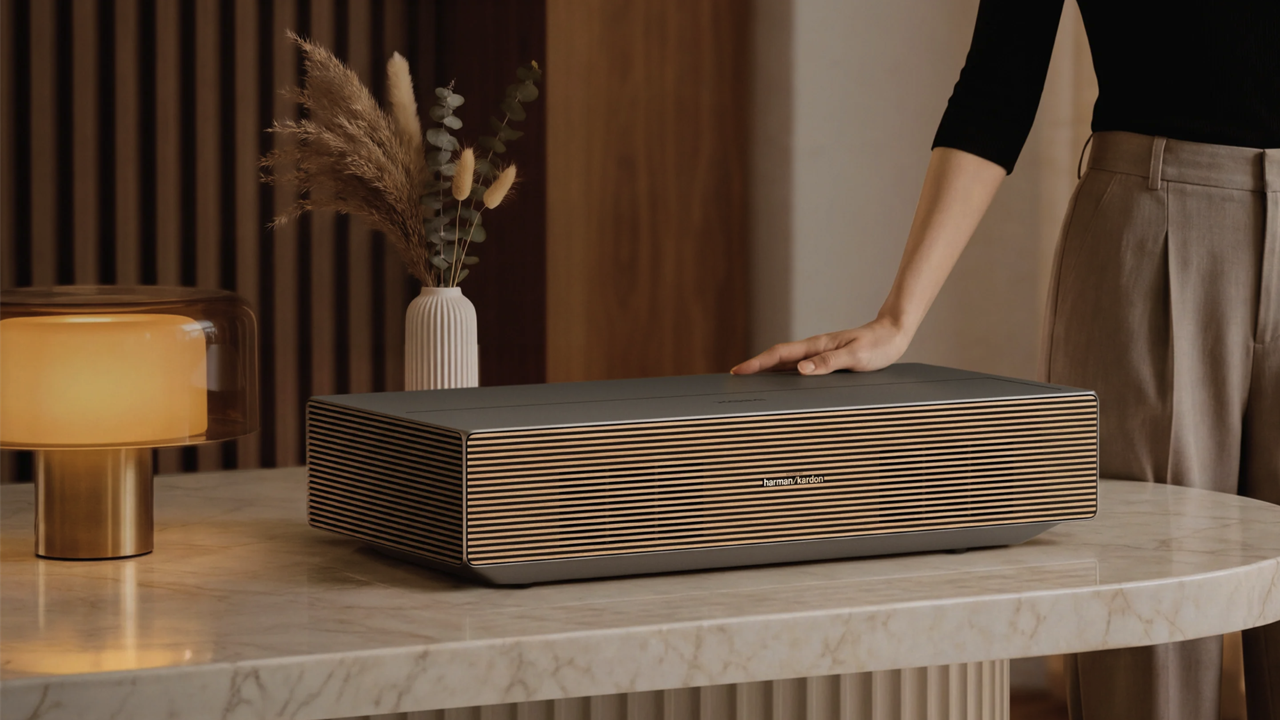
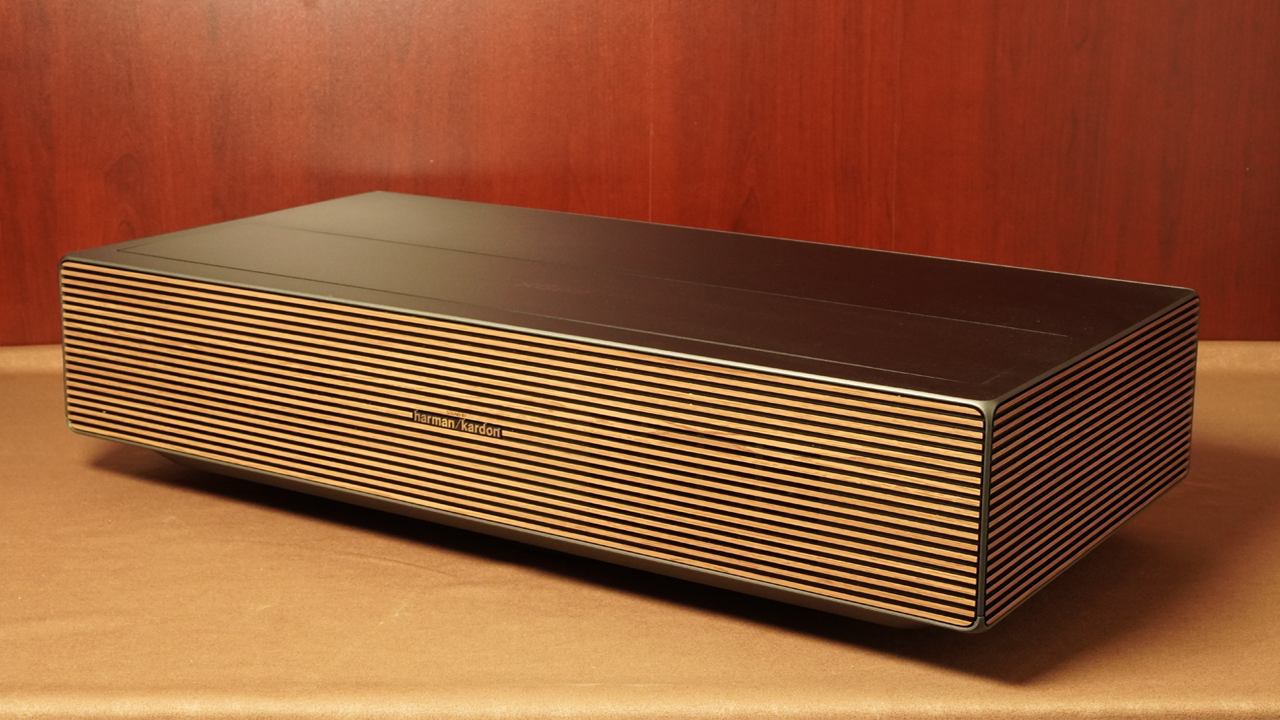
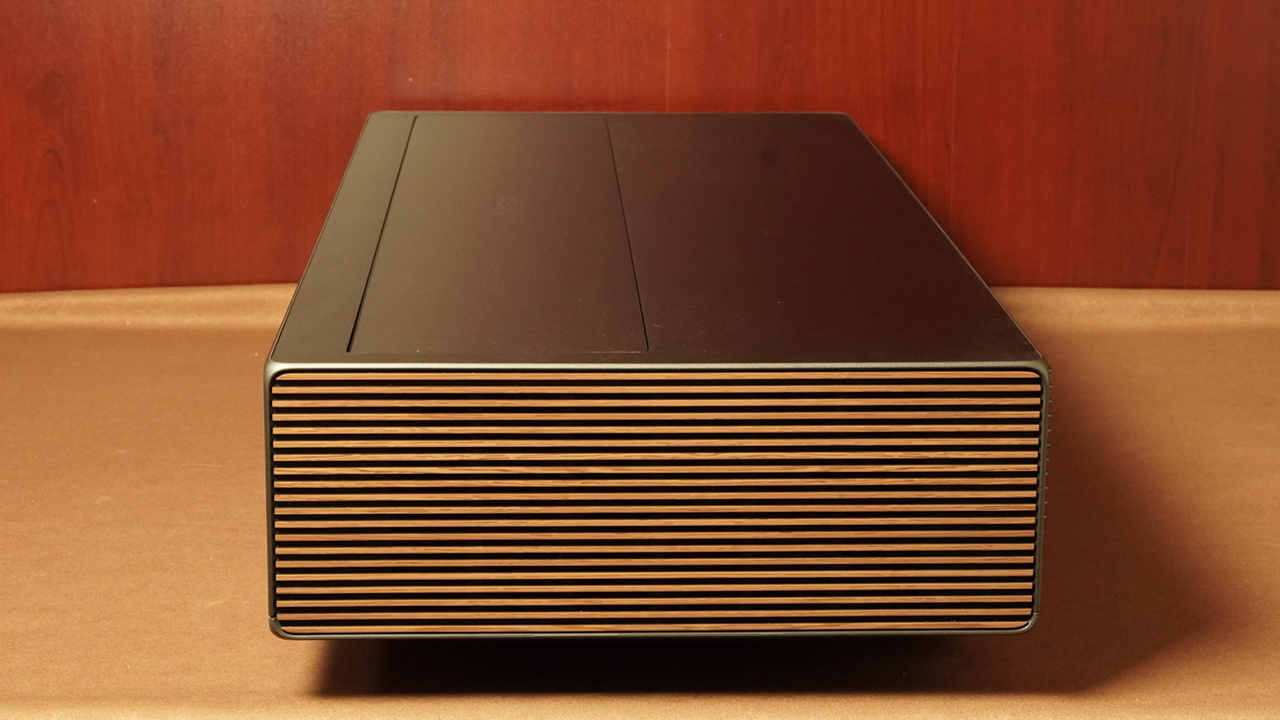
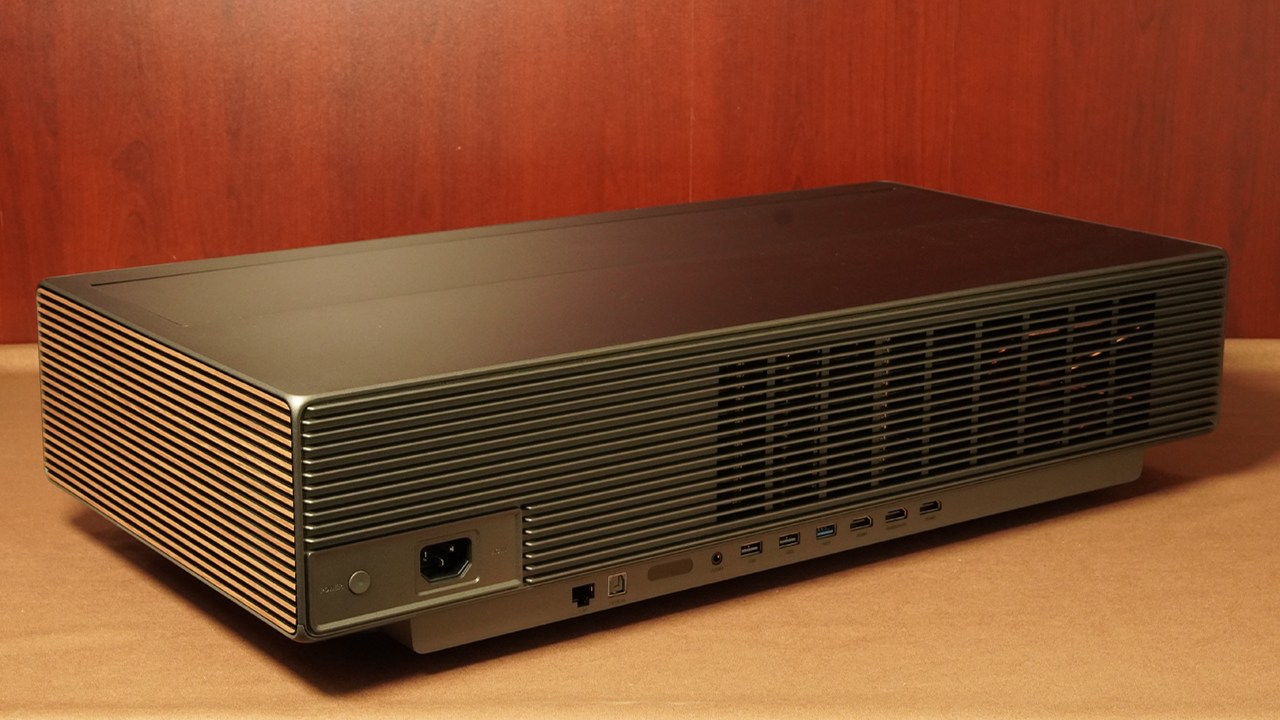
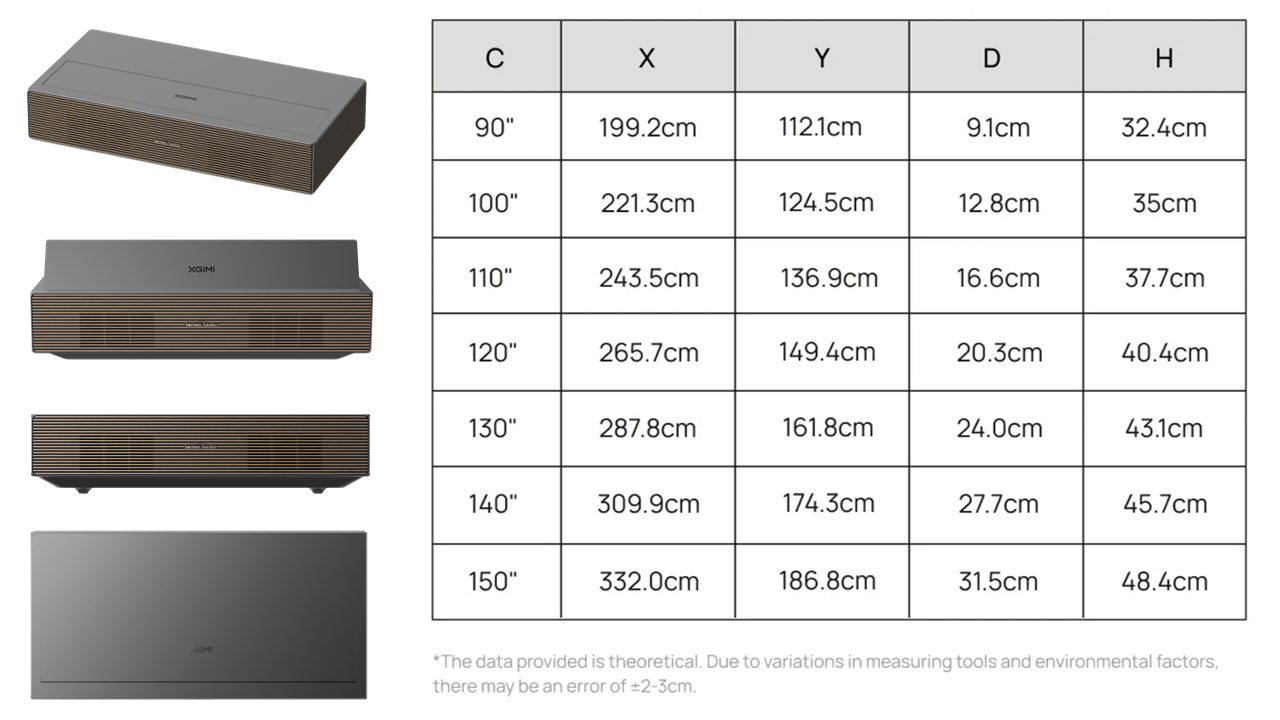
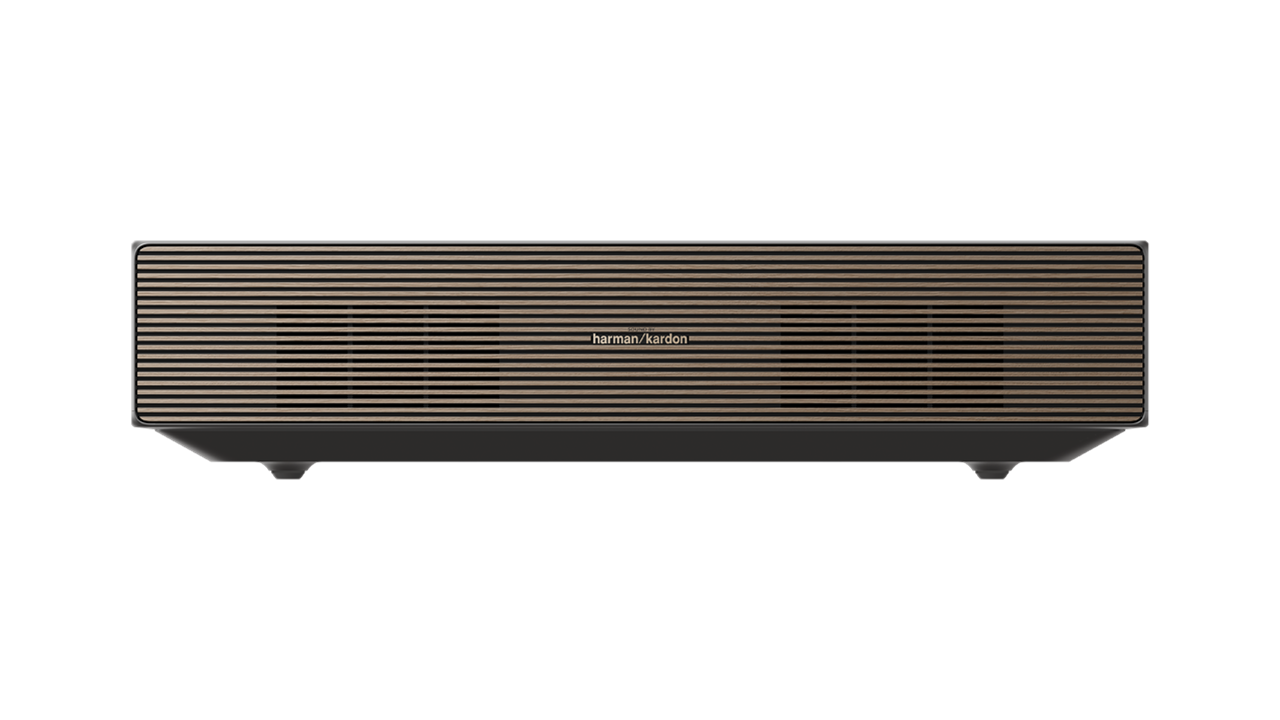
The XGIMI AURA 3 Max measures (WxHxD) 23.1” x 5.4” x 11.6” (588 mm x 138 mm x 295 mm) and weighs approximately 20.7 lbs (9.4 kg), making the chassis smaller and slightly lighter than the 24.3 lb AURA 2.
The Power button and motorized lens cover are integrated cleanly into the top panel. Aside from the recessed AC power inlet on the right side, all AURA 3 Max connectivity is located along the rear panel facing the screen.
Cooling intake and exhaust vents are positioned along the left and right sides of the housing, drawing cool air across the RGB laser light engine and optical block before venting warm air out the opposite side.
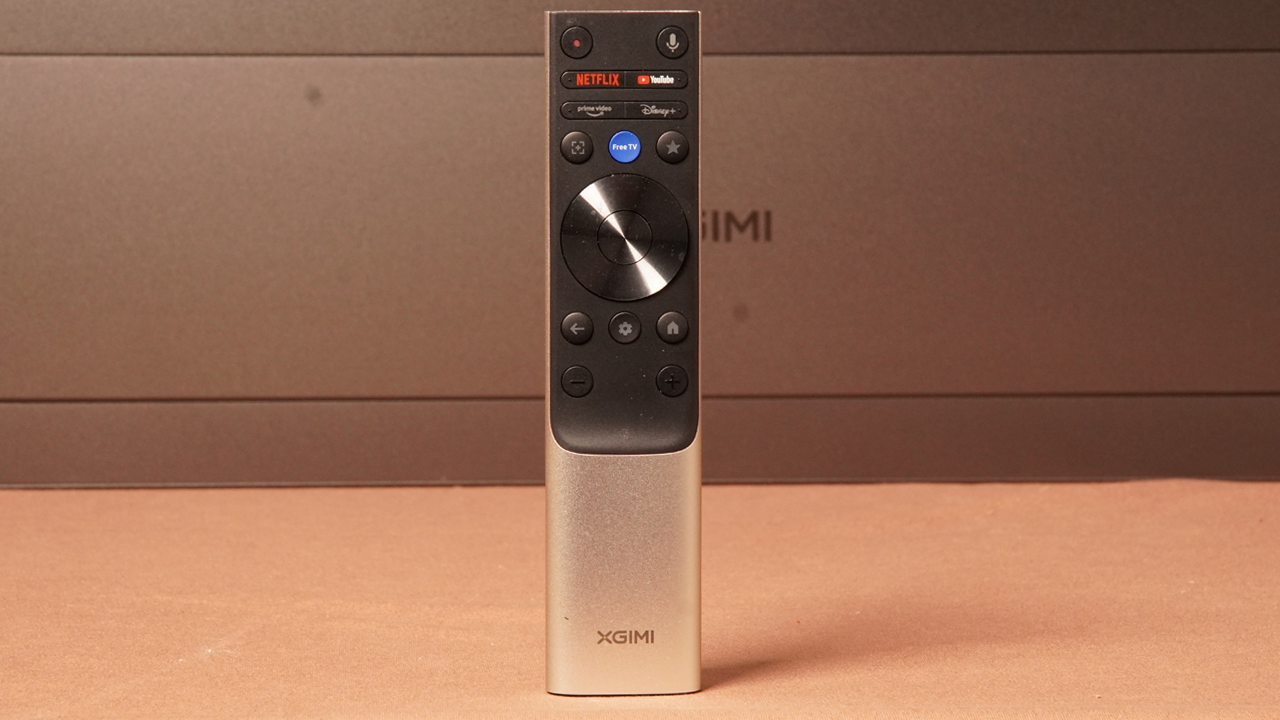
The XGIMI AURA 3 Max comes with a slim, Bluetooth-connected remote built around Google TV navigation, though it has a few quirks in its button layout and lighting. XGIMI's marketing calls it a backlit remote, but only a small group of buttons lights up, not the entire keypad. Irritatingly, it has no dedicated HDMI input selector button or Mute button. Also, switching between your HDMI 2.1 gaming consoles and other sources has to be done using the projector's menu system. That is a miss, XGIMI.

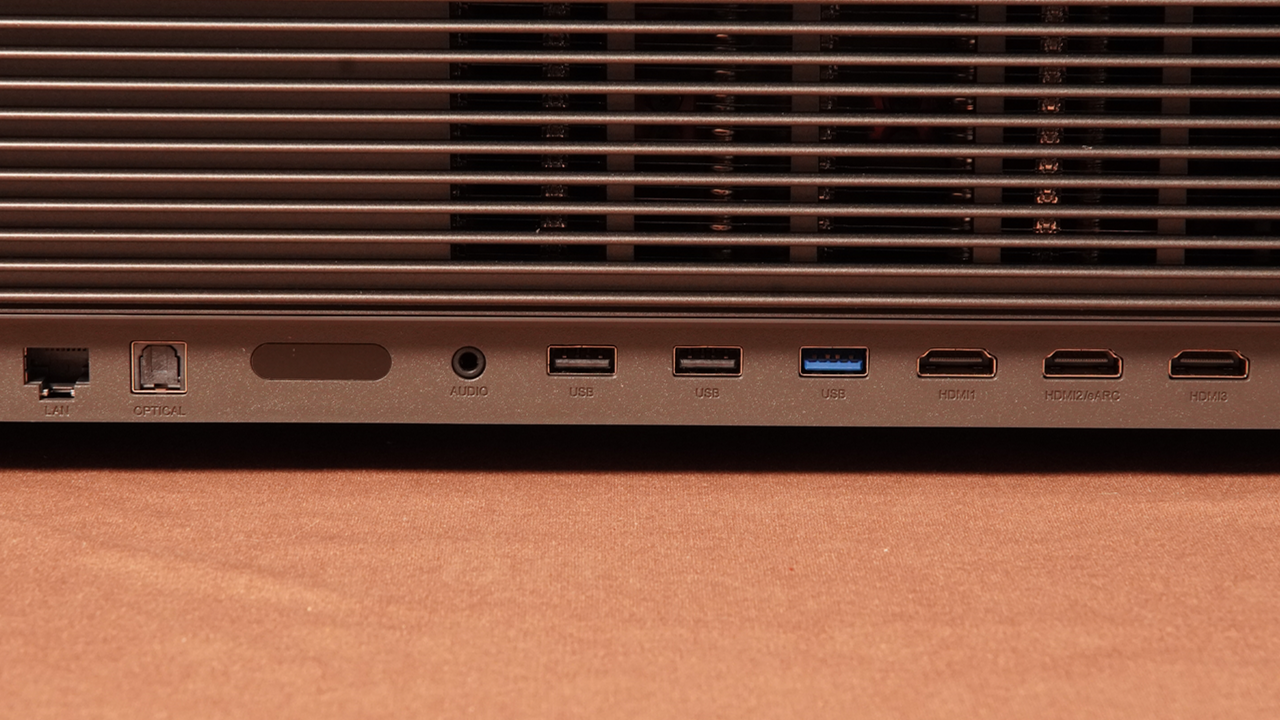
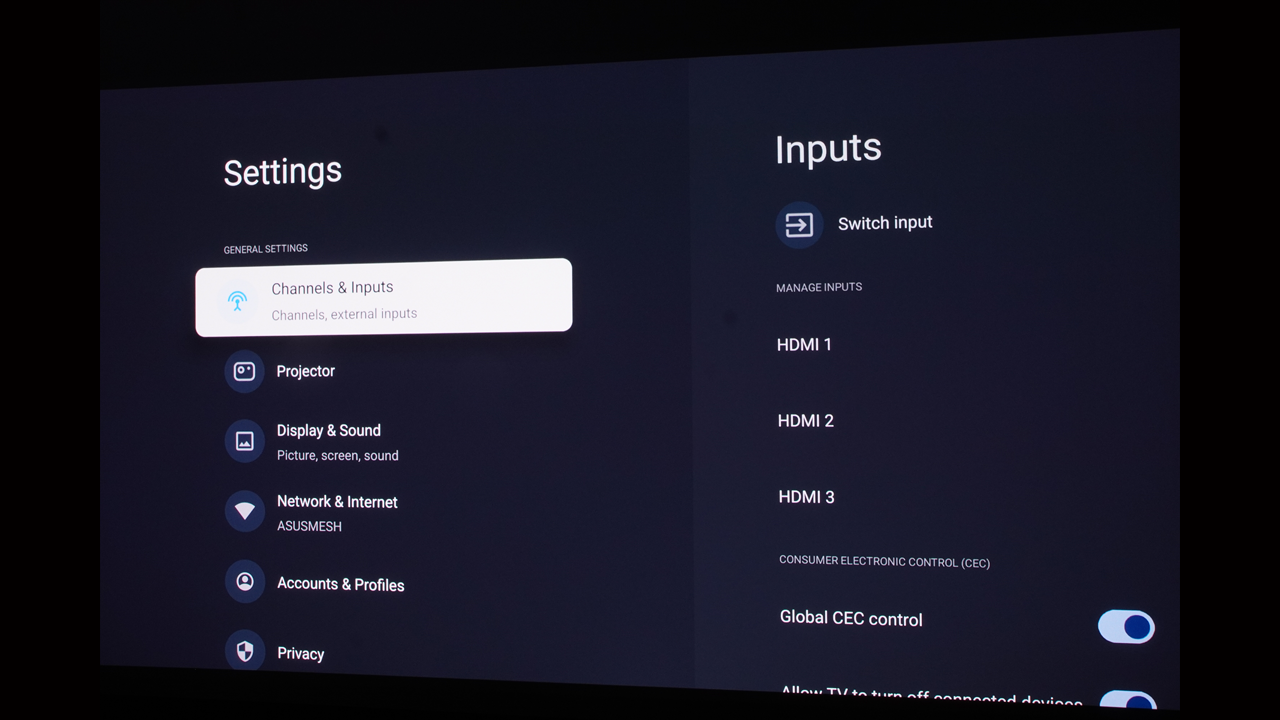
All physical connectivity on the XGIMI AURA 3 Max is grouped cleanly along the back panel facing the screen, keeping side cable clutter out of sight. You get a Gigabit Ethernet RJ45 port, an optical S/PDIF digital audio output, a dedicated 3.5 mm analog headphone jack, and three USB Type-A ports: one high-speed USB 3.0 port and two standard USB 2.0 ports. Next to the USB cluster sit three HDMI inputs. HDMI 1 supports standard 4K at 60 Hz, while HDMI 2 and HDMI 3 are full-bandwidth HDMI 2.1 inputs supporting up to 4K at 120 Hz; HDMI 2 also supports eARC for direct audio passthrough to an external soundbar or AV receiver. Rounding out the hardware connections are internal Wi-Fi 7 and Bluetooth 5.4 wireless radios for fast streaming and wireless audio pairing.

Like most of the core hardware inside the AURA 3 Max, the optical assembly received a thorough overhaul compared to previous generations of XGIMI ultra-short-throw projectors. The 19-element glass lens block projects an image up to 200 inches diagonally while maintaining tight pixel geometry and crisp focus to the screen's extreme corners.
The AURA 3 Max features an ultra-tight 0.163:1 throw ratio that, even compared to other recently reviewed competing flagship UST projectors, lets it sit even closer to the screen. In my setup, that steeper projection angle shaved several inches off the required stand-off distance, letting the chassis throw a 100-inch picture from roughly 7 inches back. That extra clearance is a genuine installation advantage. XGIMI pairs that short-throw glass with motorized focus and its X-VISION AI processing to keep the picture locked in and distortion-free across the entire 80-to-200-inch range.
When evaluating raw edge-to-edge resolving power alongside dark-room contrast, the optical gap between top UST models has never been narrower. With its multi-element glass assembly, dual mechanical aperture blades, and aggressive 0.163:1 throw geometry, the AURA 3 Max leads current UST DLP optics.

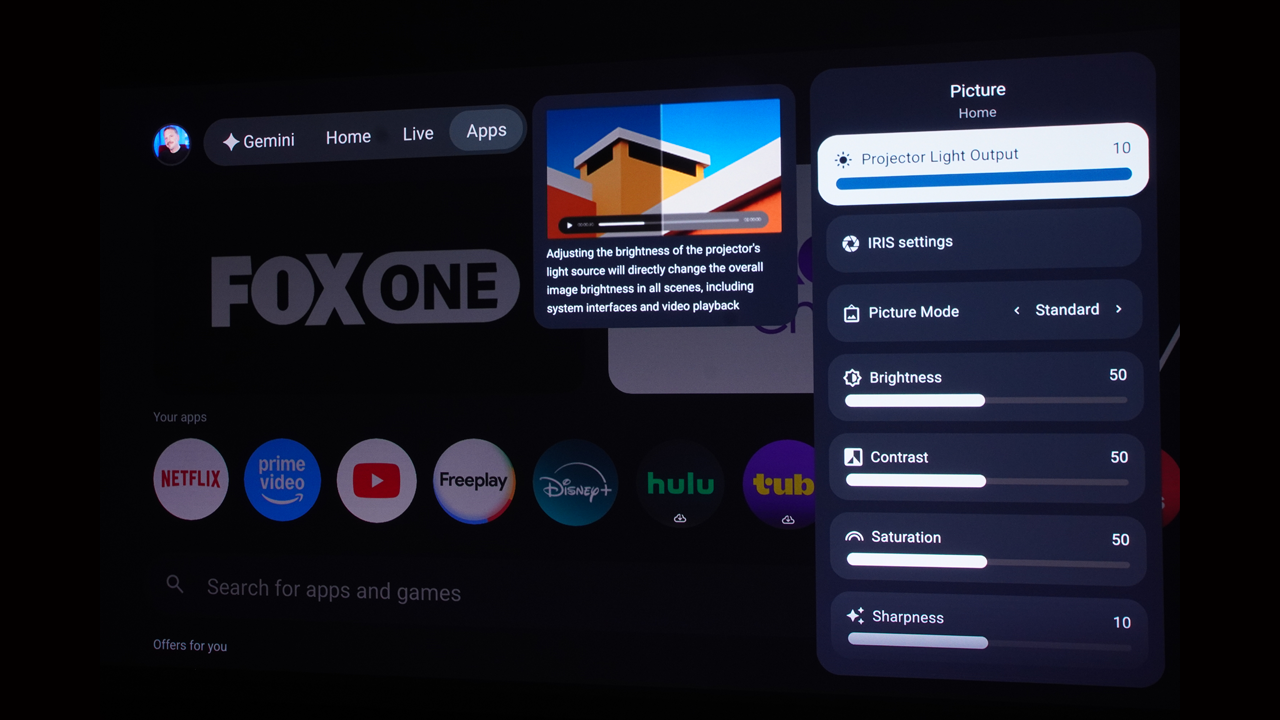
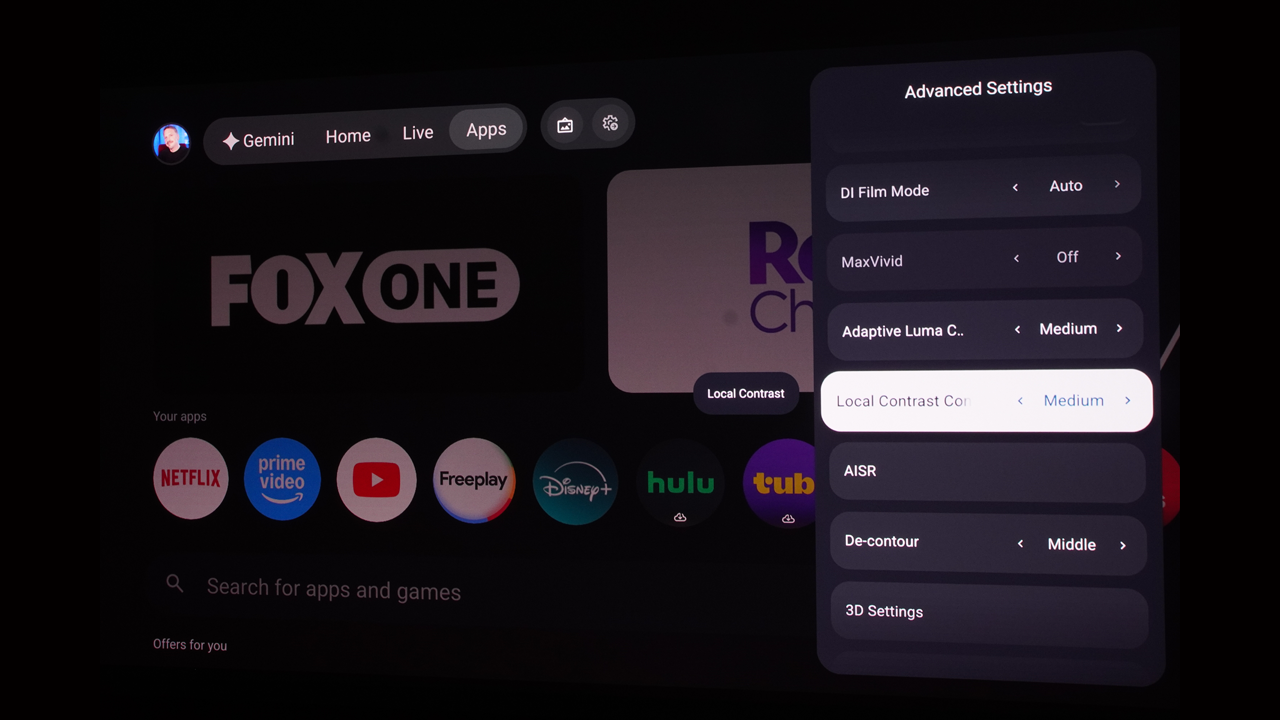
The XGIMI AURA 3 Max includes extensive picture adjustments, including 2-point and 11-point white balance, gamma, and full CMS controls, along with iris aperture stops and Dynamic Black Enhancement.
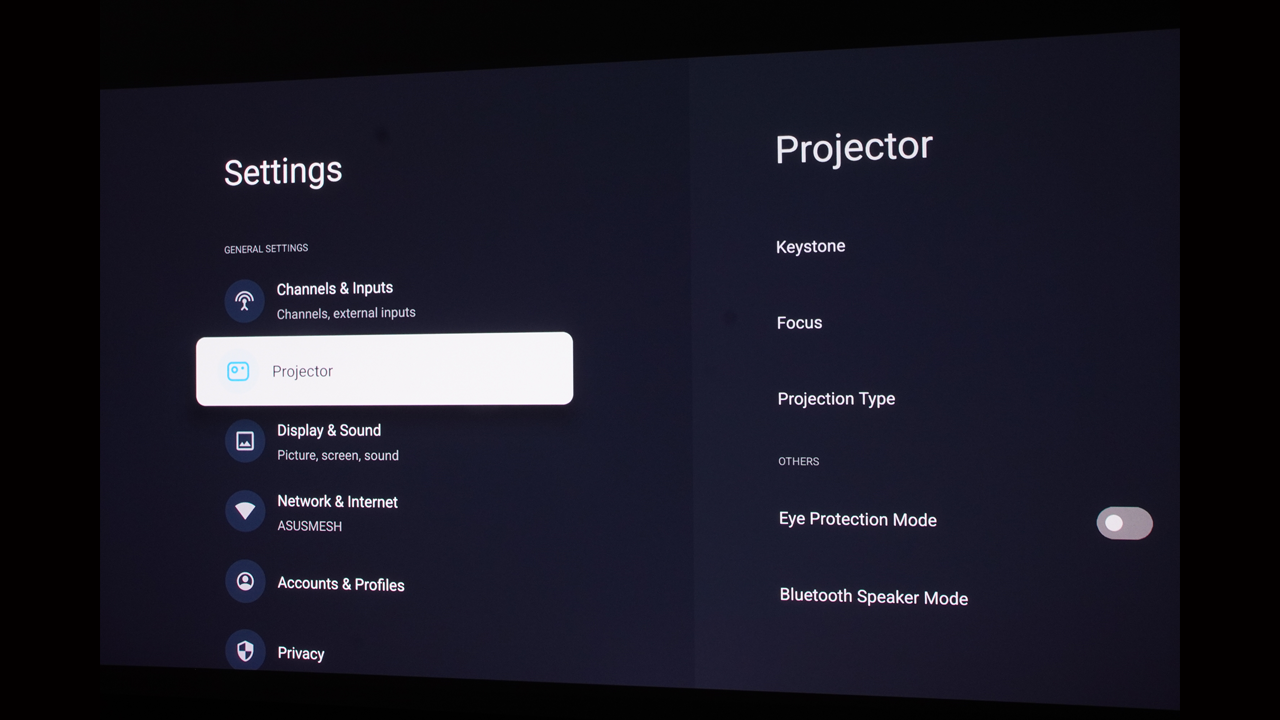
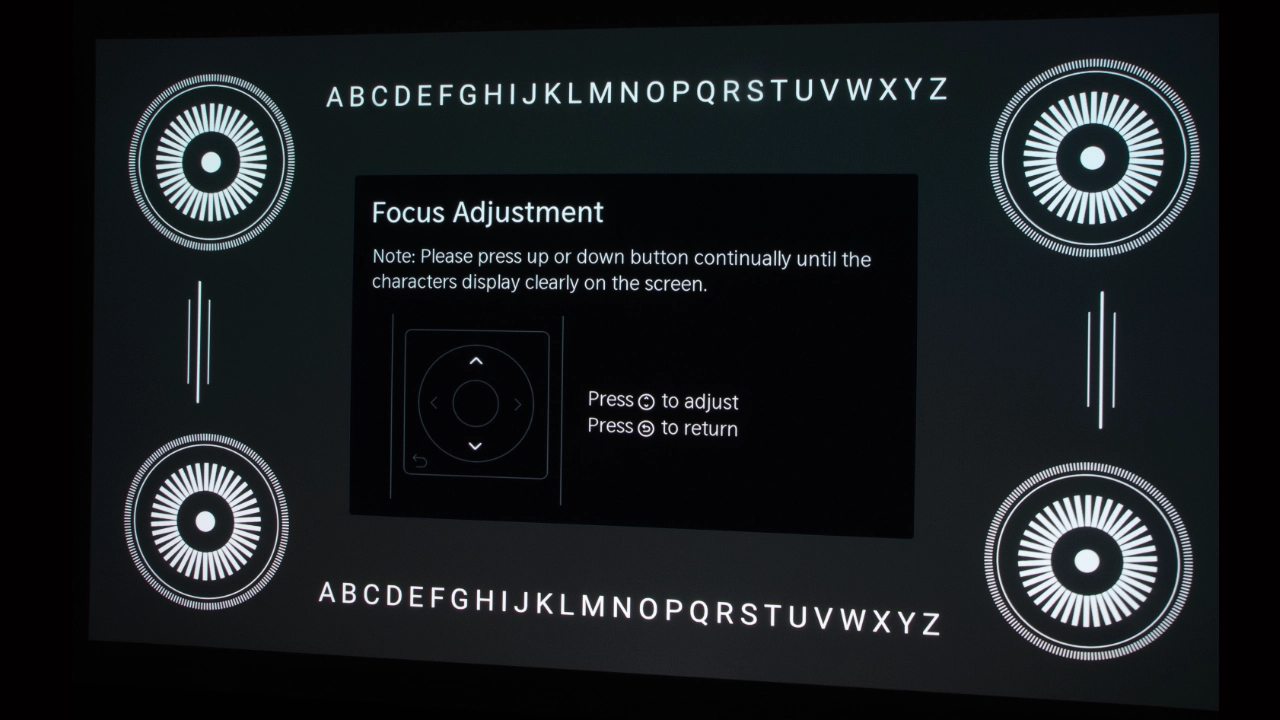
The Aura 3 Max also includes the tools needed to align the picture to the screen. It includes motorized focus, automatic or manual keystone correction, and digital screen-fit adjustments rather than physical lens shifting since this is an ultra-short-throw projector with a fixed lens.
While the menu packs in a deep set of picture and sound controls, it is logically organized and easy to navigate. When GAME mode is enabled on an HDMI input, you can also access dedicated low-latency gaming settings. Google TV OS includes full access to the Google Play Store, image and sound adjustments, and more. It includes a comprehensive content discovery platform that unifies movies and shows from various streaming services, eliminating the need to navigate individual apps.
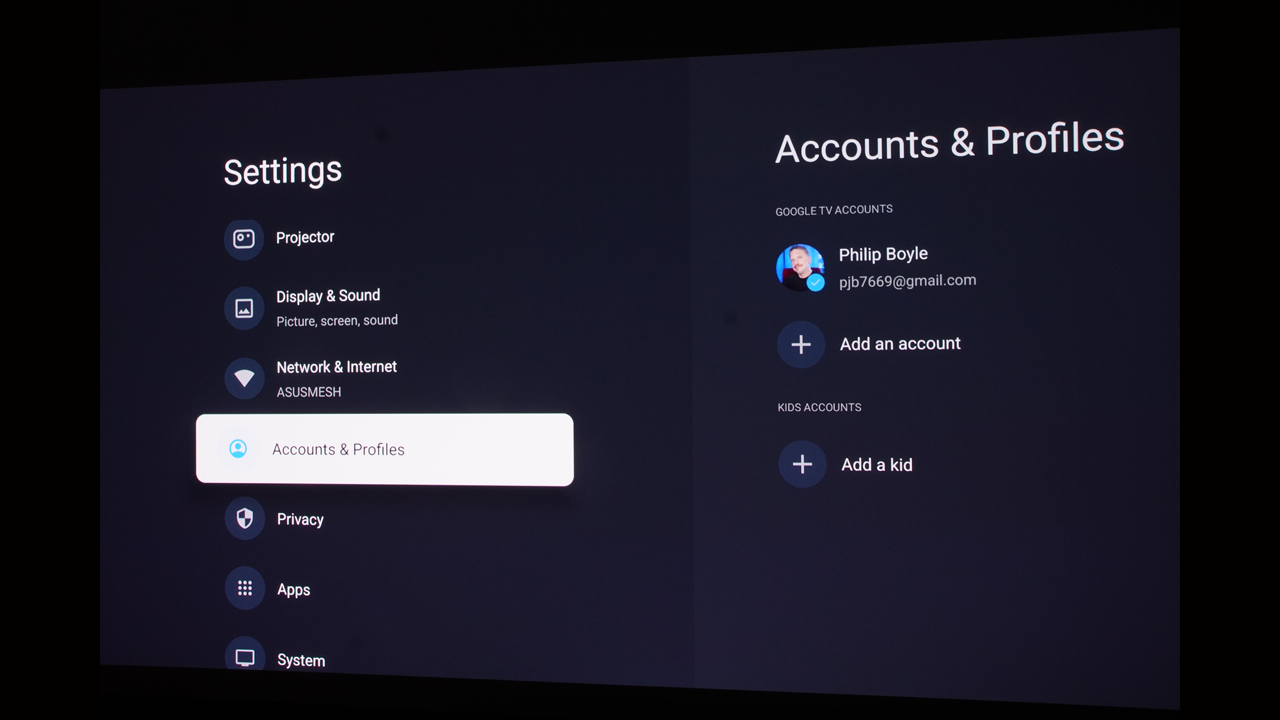
Google TV OS boasts a user-friendly interface that simplifies the streaming experience. Gemini-powered voice search enables effortless content discovery and control, while Google Assistant enables smart home integration. The platform also supports personalized profiles.
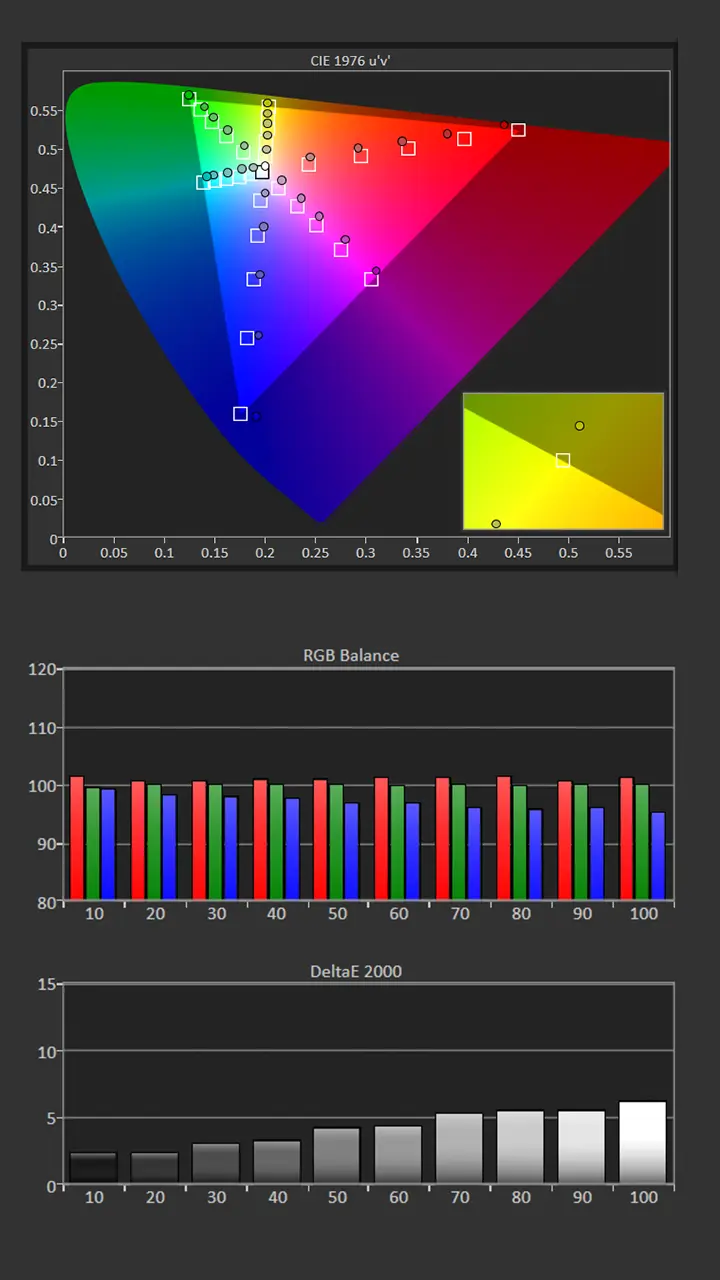
Overall, the Aura 3 Max demonstrated out-of-the-box color accuracy consistent with other XGIMI RGB laser projectors we have recently reviewed. XGIMI engineers do a great job factory-calibrating the Aura 3 Max. XGIMI offers the same preset picture modes for SDR and HDR, including HDR10+.
Dolby Vision offers BRIGHT, DARK, and GAME presets. With only a few exceptions, the overall color temperature in all preset modes ran a little warm, with modes like VIVID and STANDARD being cooler. AURA 3 also offers a HIGH BRIGHTNESS setting in the projector's advanced brightness settings, designed to do one thing and only one thing: squeeze every nit possible out of the projector's light source at the expense of image quality. Since this feature makes the image greenish and pretty much unwatchable, I don’t understand why any projector manufacturer would include this in 2026, especially one of XGIMI’s caliber.
This projector's usable brightness is excellent and more than competitive. In 2026, having to waste time differentiating between MAX and USABLE brightness on a projector of this caliber and one with ISF CERTIFICATION is absurd. I’ll swing back around to this in the BRIGHTNESS section below.
In my testing, MOVIE, FILMMAKER, and ISF DAY offered the most cinematic color across my test content. I have historically found XGIMI projectors to display slightly elevated red hues, and that held true for the Aura 3 Max. The good news is my eyes adjusted quickly, and if yours don’t, this projector is easy to calibrate to compensate.
Out-of-the-box color reproduction aside, XGIMI gives calibrators and enthusiasts a surprisingly deep set of onboard picture controls, along with dedicated ISF Day and ISF Night presets. These include 2-Point and 11-Point white balance in SDR. In HDR, the 11-Point was grayed out. In addition, XGIMI provides CMS (Hue, Saturation, and Brightness/Luminance) adjustments for all six primary and secondary colors.
To measure and adjust the AURA 3 Max, we used a Klein K10-A colorimeter, a Murideo Six-G test pattern generator, and Portrait Displays Calman color calibration software.
Since your room and screen material significantly impact the overall picture, I don't recommend using someone else's (like mine) calibration adjustments. If your room is brighter/darker, or if your walls are a different color, copying someone else's results can degrade picture quality rather than improve it.
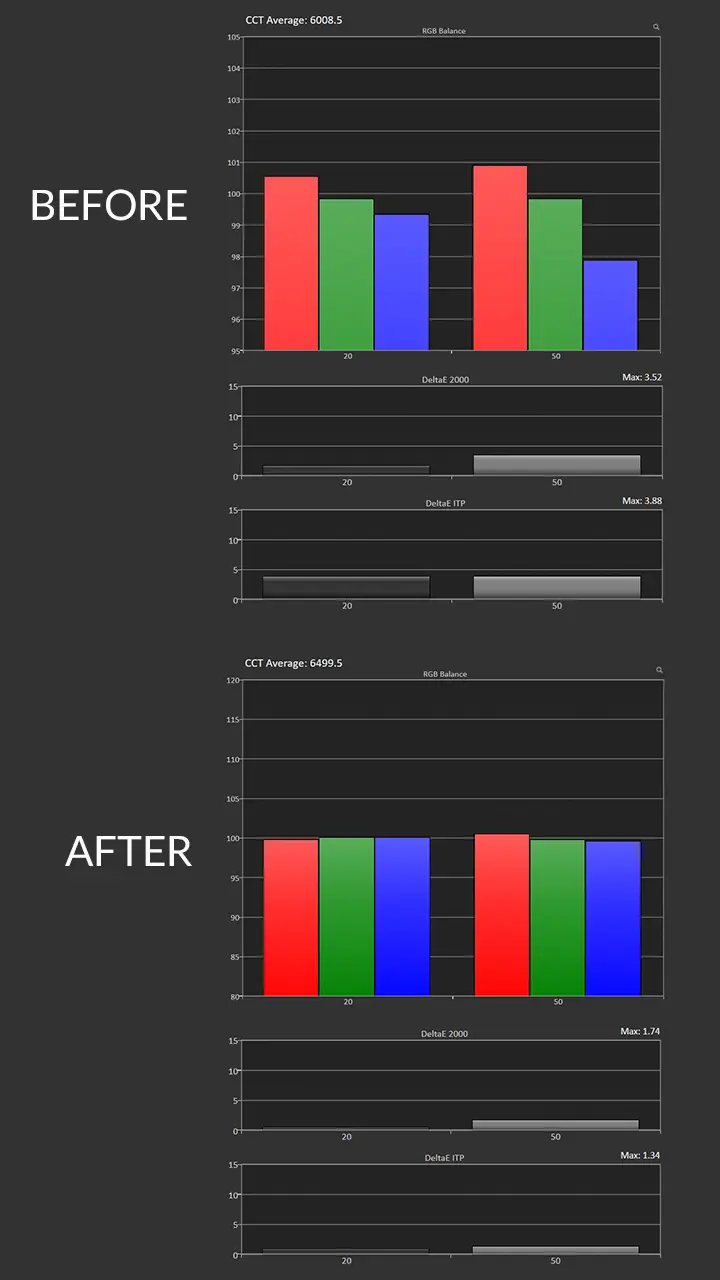
If you would like to make quick adjustments to improve your projector's picture quality, check out our video, Optimize The Image of a Projector or TV Using Free Murideo Test Patterns. However, below are the before-and-after calibration results in my room.

The AURA 3 Max's most accurate SDR picture modes are MOVIE, FILMMAKER, ISF DAY and ISF NIGHT. The MOVIE mode turns on several processing features, including Decontour, Local Contrast and noise reduction. FILMMAKER MODE switches them off, so I started with FILMMAKER.
Out of the box, it measured an average color temperature of about 6,038K. That's slightly warmer than our 6,500K target because there's too much red and too little blue, which is common with RGB laser projectors.
Gamma measured 2.2, and color tracking was good, with an average Delta E of 3.1. On my 100-inch, 1.1 gain screen, Filmmaker mode produced 221 nits.

Gamma is locked to Dark in Filmmaker mode, so I switched to ISF Night, set gamma to Middle and changed the iris from Dynamic to f/2.0. That gave me a nearly flat 2.2 gamma curve. I also lowered contrast from 50 to 49 to keep detail in bright highlights.
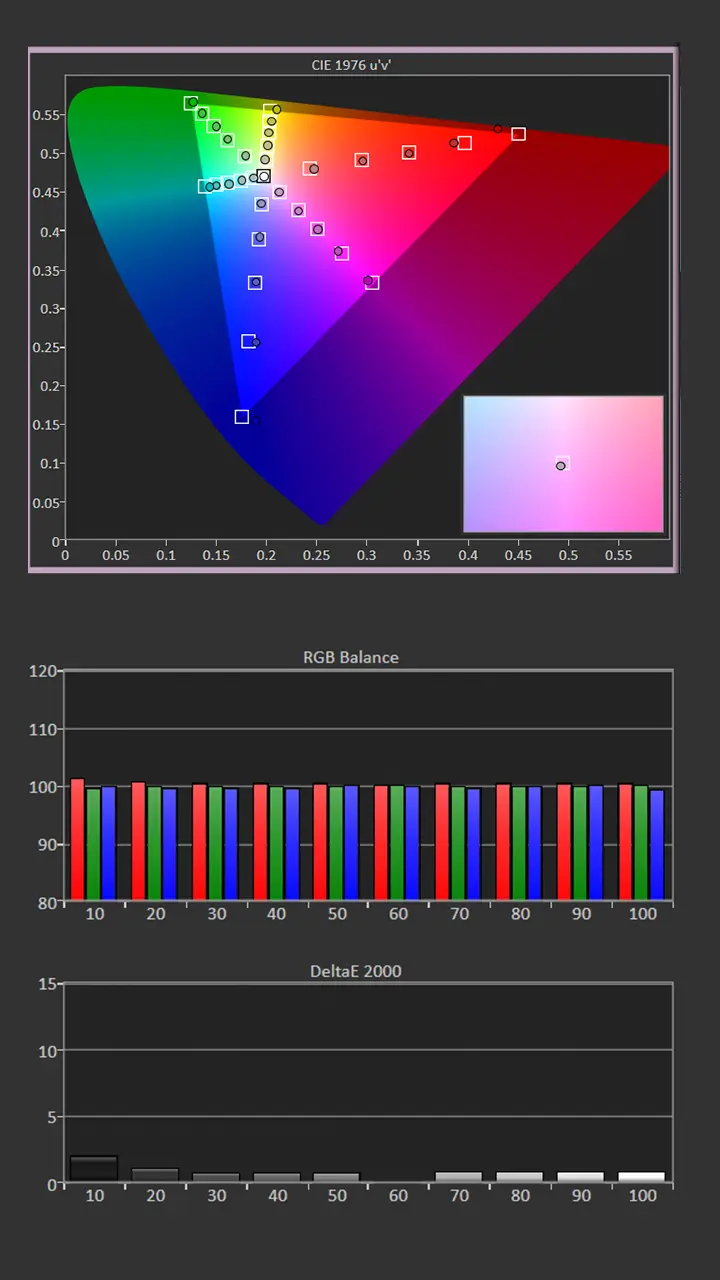
The 2-point white balance wasn't enough to dial in the grayscale. I needed the 11-point controls, which take patience but are precise. Correcting RGB lowered the color tracking error from about 3 to 2. A few minutes in the Color Tuner CMS brought it down to about 1.3, though I couldn't fully correct 100% red and blue. After calibration, brightness measured 320 nits.
Like most ultra-short-throw RGB laser-equipped projectors, the projector's most accurate color modes were slightly too warm, but the unit's built-in calibration adjustments made it easy to correct. My measurements confirmed that, compared to other ultra-short-throw projectors, out-of-the-box SDR color reproduction is above average.
We did notice that in FILMMAKER mode, when viewing SDR material, the Contrast setting is lower than it is in some of the other modes, including Movie mode. Using the ISF Contrast Test Pattern, I increased the Contrast several steps, which improved on-screen brightness without clipping highlight detail.

When viewing HDR10, the most accurate modes are FILMMAKER, IMAX ENHANCED, ISF DAY, ISF NIGHT and MOVIE. I calibrated Filmmaker mode again. It had the same tendency as in SDR: too much red and not enough blue, which made the image warm. In Filmmaker mode, the projector covered 95.4% of the Rec. 2020 color space.
HDR only offers 2-point white balance, and RGB adjustments made in SDR don't carry over, so HDR needs its own calibration. After I corrected RGB, color tracking averaged a Delta E of around 3.5. Colors were slightly oversaturated, with a slight hue shift that the CMS hue controls can clean up.
The Dolby Vision picture modes have their own independent color adjustments. Once those picture modes were adjusted, the color tracking and white balance were outstanding. Once those picture modes were adjusted, the color tracking and white balance were also outstanding.
According to our Calman measurements, the AURA 3 Max can reproduce about 93% of the BT.2020 color gamut and 130% of the DCI-P3 color gamut, which is more than enough to reproduce the colors found in 99.9% of HDR content.
The XGIMI Aura 3 Max delivers very good image quality right out of the box in both SDR and HDR. Its most accurate picture modes run slightly warm, like many RGB laser projectors, but its white balance is better than most.
I’m happy to report that, out of the box, the AURA 3 Max doesn't look like a flat panel in demo mode in a showroom with nuclear greens and reds. The out-of-the-box color tracking, at an average Delta E of 3.1, is close to the point where most viewers wouldn't notice any errors. Most people will be happy just choosing FILMMAKER or an ISF mode and setting brightness and contrast with free test patterns from YouTube or AVPro.
Enthusiasts and professional calibrators get a solid set of tools, including 11-point white balance and a CMS under Color Tuner. The 11-point controls take patience, but they're precise, and the CMS quickly brings color tracking down to an average Delta E of about 1.5.
Brightness is a real strength. Even in the accurate Filmmaker mode, the Aura 3 Max produced 220 nits on my 100-inch screen. After calibration in ISF Night with the iris fixed, it put out about 320 nits, far more than you need for SDR in a dark room.
Turning on the dynamic iris drops output to around 200 nits, which suits dark-room SDR viewing better, and it also improves black levels and shadow detail. The tradeoff is a small amount of color shift. For HDR, where more brightness is better, I'd turn the dynamic iris off to get roughly 300 nits.
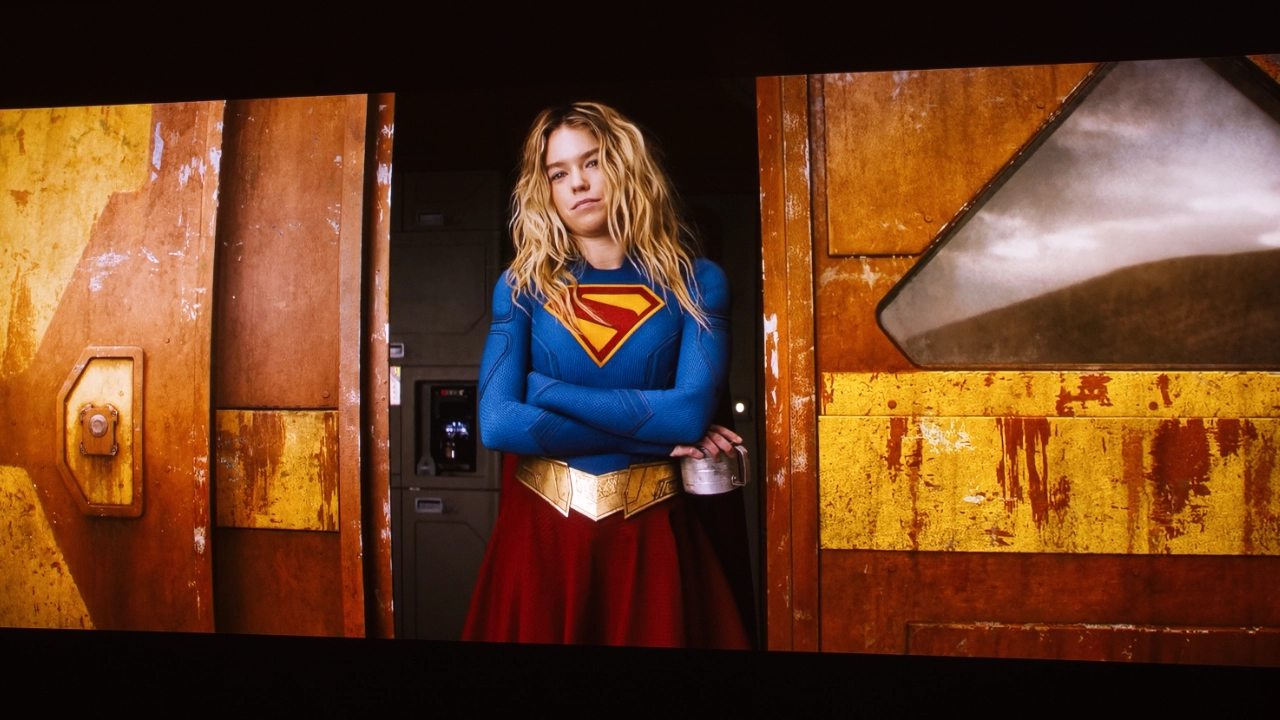
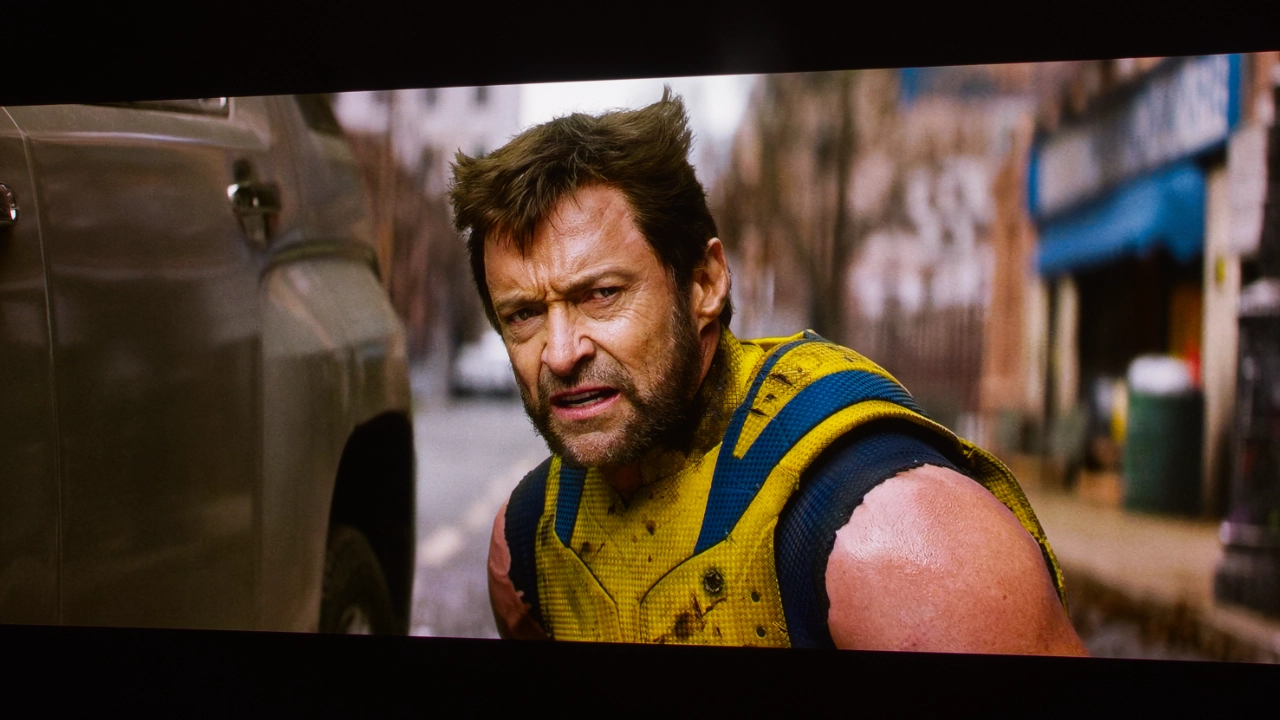
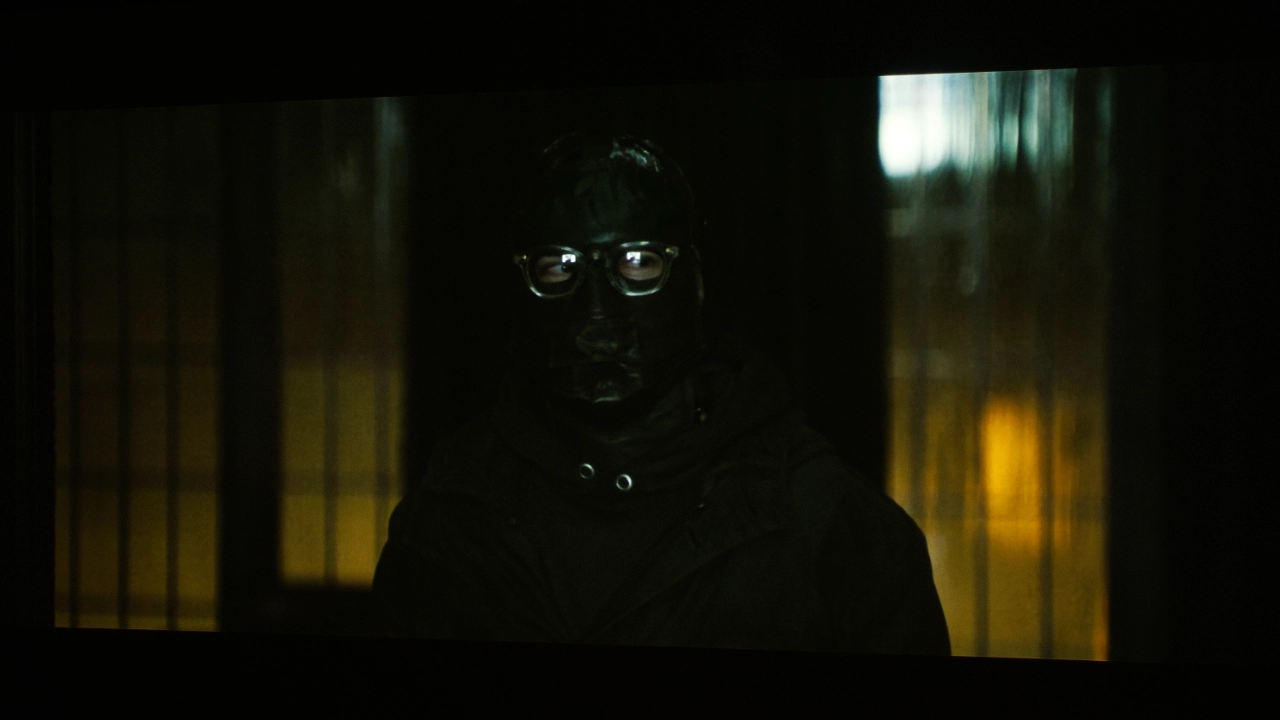
I should note that engaging features like the dynamic iris or dynamic laser dimming do result in occasional color shift, which is noticeable in darker scenes in movies like The Batman and 1917. I think this color shift is worth it because of the improved black level and shadow detail.
My main criticisms are that HDR offers only 2-point white balance, SDR adjustments don't carry over to HDR, and I'd like a faster way to switch between picture modes. As always, these measurements reflect the projector in my room. Individual units, screens and wall colors all vary, so copying someone else's settings could make your image worse. Use these numbers only as a guide.
XGIMI rates the AURA 3 Max at 5,700 ISO lumens, which puts it near the top of the consumer ultra-short-throw market… on paper. To evaluate real-world light output on the test bench, I measured five zones on my DaLite 1.1 matte white screen.
I found the VIVID to be the brightest mode, measuring 3,577 usable lumens. Combined with the projector's ridiculous BRIGHTNESS ENHANCEMENT mode set to ULTIMATE, I measured 6,251 lumens, exceeding its factory specification by nearly 10 percent. Congratulations, XGIMI, on accomplishing nothing beneficial, as this mode is unusable unless you need to generate a lime green image, fan noise that is akin to a jet engine, massive amounts of heat, and, if you are using any digital geometry like KEYSTONE to square your image, losing any settings when this abominable mode is engaged. Dropping back to standard VIVID mode without the extreme brightness boost brings output down to a much more controlled 3,577 lumens, which still holds plenty of punch for fighting daytime ambient light in a family room.
Light output stays fairly consistent across the projector's accurate cinema and everyday presets, with little brightness penalty for choosing a color-accurate mode. ISF NIGHT measured 2,931 lumens, ISF DAY came in at 2,923 lumens, and MOVIE mode hit 2,915 lumens. For HDR playback, DOLBY VISION BRIGHT jumped up to 3,565 lumens to give specular highlights extra headroom. The Aura 3 Max has more than enough output to drive a 120-inch or even 150-inch ambient-light-rejecting screen in a moderately lit living room without needing the BRIGHTNESS ENHANCEMENT mode.
There is no distracting bottom/center hotspot and minimal corner falloff, confirming that XGIMI's 19-element lens block distributes light evenly from edge to edge.
| Picture Mode | Brightness Measured (Lumens) |
|---|---|
| STANDARD | 2851 |
| MOVIE | 2915 |
| VIVID | 3577 |
| GAME | 2749 |
| SPORTS | 2884 |
| ISF DAY | 2835 |
| ISF NIGHT | 2931 |
| DOLBY VISION BRIGHT | 3565 |
XGIMI rates the AURA 3 Max at up to 8,000:1 native contrast. In practice, that headline 8,000:1 requires a significant sacrifice in brightness. I had to set the projector's iris all the way down to f/7.0, which cuts light output by more than 80 percent. This setting also introduces noticeable corner color shading, especially in bright content, and is very noticeable on a white screen.
For dark-room movie watching on my 110-inch screen, I found setting the manual iris at f/3.0 or f/4.0 provided a better balance, leaving black levels noticeably deeper than typical DLP UST projectors and preserving punchy highlights. XGIMI’s dual mechanical iris is impressive when combined with the projector's DBLE. The iris offers five selectable aperture steps from f/2.0 down to f/7.0. Be mindful that the Aura 3 Max iris settings are universal regardless of your preset picture mode and most other menu settings. If the iris is set to f/2.0, it stays on F/2.0 until you change it.
In my testing, MOVIE and STANDARD modes displayed respectable shadow detail for a bright living-room projector. Stepping the dual iris down just one stop to f/3.0 yields the best balance between black floor and brightness.
One of the biggest additions to the Aura 3 Max is a DYNAMIC IRIS to complement the projector's software-controlled DBLE. The Aura 3 Max’s DYNAMIC IRIS operates conservatively, hovering between f/3.5 on bright frames and closing down to f/4.0 during dark transitions, and in my testing it did so without the distracting brightness-pumping effect found in many competitive projectors.
DBLE works dynamically, allowing XGIMI to lower the Aura 3 Max black floor, especially in rooms with mixed light sources. I will note that DBLE on the Aura 3 Max can introduce a slight reddish cast in dark-gray shadow transitions and can introduce some brightness-pumping artifacts. In the end, I found that leaving DBLE off and letting the mechanical iris handle the heavy lifting gives the cleanest, most neutral near-black performance the AURA 3 Max can produce.
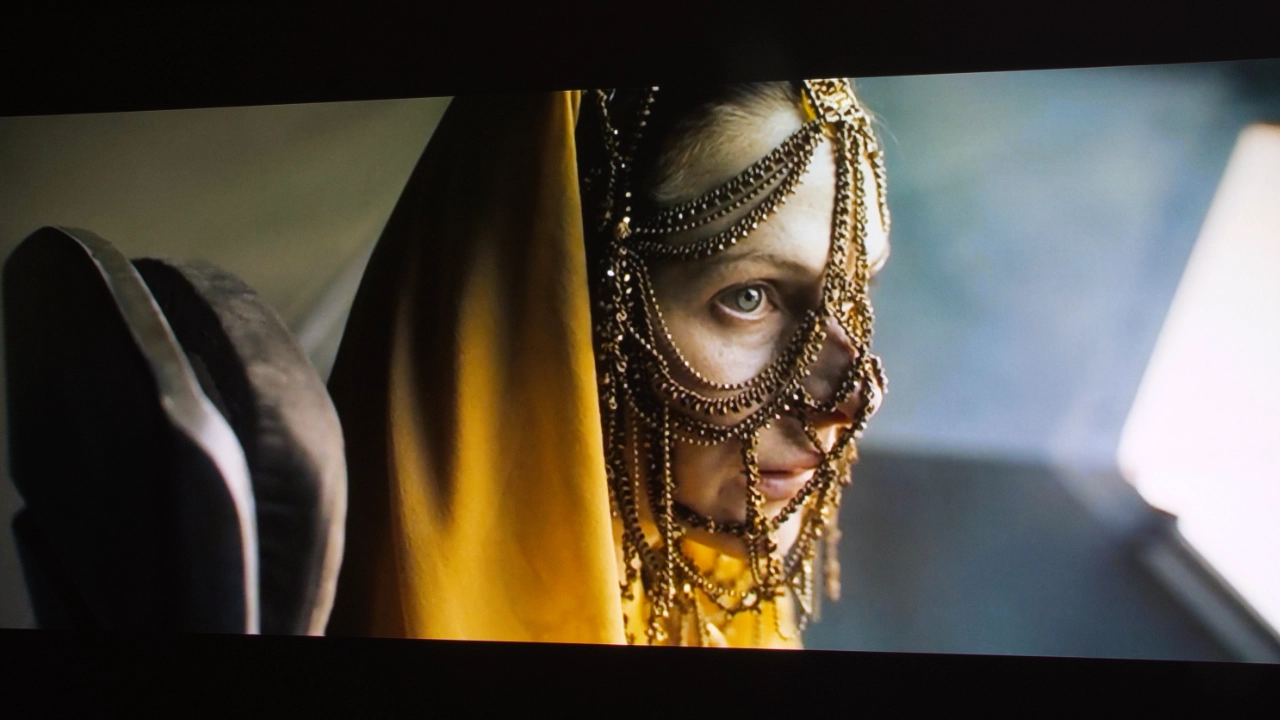
Each time I review a new ultra-short-throw flagship projector in 2026, I’ve written a similar opening statement, and it's still true. So… Overall, the XGIMI AURA 3 Max delivers the strongest all-around video performance I have evaluated (to date) in a 2026 ultra-short-throw projector. What makes the picture so compelling is its sheer brightness, driven by a 0.47-inch SST DMD chip and triple-laser engine. Instead of forcing you to choose between a bright image for daytime TV and a deep, contrast-rich picture for dark-room movies, the AURA 3 Max reserves every lumen to deliver the best combination of brightness, contrast, and color.
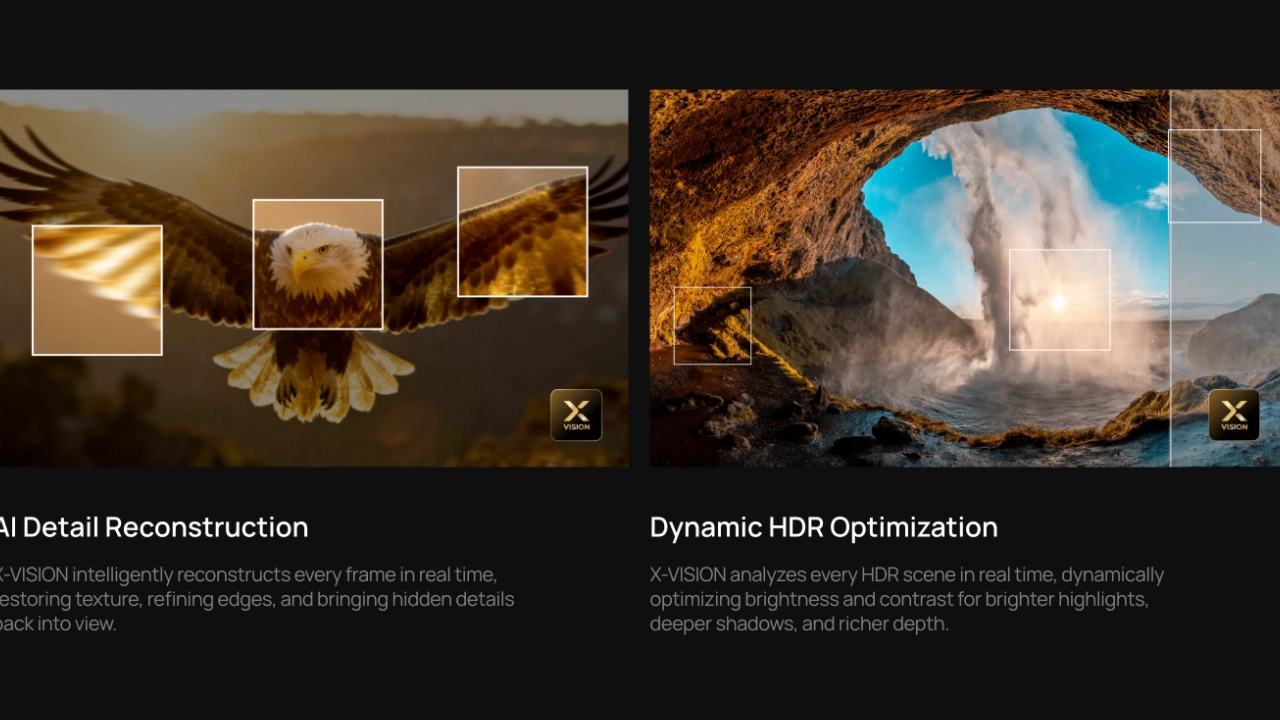
The Aura 3 Max pairs a MediaTek MT9679 controller with XGIMI's proprietary X-VISION AI image processor to handle detail reconstruction, edge refinement, and scene-by-scene HDR optimization. This chipset combination does an excellent job upscaling 1080p content, reconstructing fine detail, and cleaning up edge transitions without introducing ringing or artificial sharpening artifacts.
In my testing, the Aura 3 Max offers one of the best systems for combating RBE. XGIMI leverages the new DLP’s 120 Hz refresh rate and dual DLPC8545 controllers to significantly reduce RBE. Let me be blunt: if you are not typically sensitive to RBE, this new system pretty much eliminates it. If, like me, you notice RBE, you will be thrilled by how much XGIMI has been able to reduce it. It is amazing.
There are two trade-offs that I think are well worth the reduced RBE, but you will have to be the judge. One: Because the laser drivers and micromirrors are switching at a significantly higher frequency, turning Anti-RBE on can introduce a faint, high-pitched electronic whine that becomes audible during quiet scenes. In my testing space, I had to really listen to hear it, and it is significantly less noticeable than on projectors like the XGIMI Horizon 20 Max. Second, it introduces some grain and dithering in dark shadow gradients and 3D scenes.
The AURA 3 Max supports 3D playback, and its high-performance laser light source maintains strong overall picture quality. The XGIMI Aura 3 Max supports full 3D across all major home formats. The Aura 3 Max decodes FRAME PACKING for 3D Blu-ray discs, plus SIDE-BY-SIDE (Left/Right) and TOP-AND-BOTTOM (Up/Down) layouts for streamed or downloaded 3D files. The projector uses standard DLP-Link synchronization, comes with two pairs of rechargeable active-shutter 3D glasses, and applies its RBE processing in 3D mode as well.
Compared to XGIMI projectors like the Titan Noir Max, the Aura 3 Max supports 21:9 and 32:9. The AURA 3 Max uses a native 16:9 (3840 x 2160p) 0.47-inch DMD chip. It displays 21:9 and 32:9 images inside the 16:9 projection area with digital letterbox bars at the top and bottom, rather than optically stretching the image across the full chip. The projector accepts native 21:9 and 32:9 signals from a PC GPU without squishing the geometry, letting you run ultrawide field-of-view layouts.
The AURA 3 Max hits another home run with its HDR performance. This projector joins the ranks of other full-format “kitchen sink” projectors, supporting every major HDR format, including HDR10+, Dolby Vision, even though it's not specifically HDR IMAX Enhanced. The AURA 3 Max shines with Dolby Vision and HDR10+ content, with dynamic metadata that delivers the strongest results by keeping bright specular details from clipping, especially on 100-inch to 120-inch screens where the projector's light output makes content pop.
Standard static HDR10 content relies on XGIMI's internal DYNAMIC TONE MAPPING, which overall maintains decent highlight detail with a couple of tonal trade-offs. For instance, daytime scenes can look slightly underexposed, and night scenes with small, intense light sources can look slightly muted. Best results were with dynamic metadata formats like Dolby Vision and HDR10+, which consistently produced the most balanced on-screen image.
DCI is a consortium of major Hollywood studios that establishes technical standards for digital cinema projection systems used in commercial movie theaters. According to the DCI, delivering a reference-level HDR image requires 300 nits of brightness.
At Projector Reviews, we believe at least 200 nits of on-screen brightness is required to deliver a truly compelling HDR image. The AURA 3 Max delivers 200 nits effortlessly, even on screens up to 150 inches, without using the projector's super green brightness enhancer switch.

Because an ultra-short-throw projector sits right beneath the screen, its built-in speakers must work as a true dynamic sound system emulating the experience found on at least a soundbar. The sound system in the AURA 3 Max takes dynamic audio to a new level, with XGIMI delivering an integrated 80-watt Harman Kardon audio experience where, depending on the content, sound can appear to come from around the room, not just the projector. The AURA 3 Max supports both Dolby Atmos and DTS Virtual:X; the front-firing array produces a wide, room-filling soundstage with clear dialogue separation and enough mid-bass punch to handle action sequences and music without sounding thin or boxy.
For casual viewing, the AURA 3 Max onboard speakers easily outperform typical television audio and are good enough to replace a separate soundbar. If you want to take your audio experience to the next level, and I always recommend doing so, you can route audio over HDMI eARC to an external surround receiver and subwoofer. The internal system does perform remarkably well on its own.
The XGIMI AURA 3 Max is an evolutionary jump forward for ultra-short-throw projection, packing serious hardware upgrades into an all-in-one living room chassis. Listed at a $4,999 MSRP, it is an absolute steal at its limited-time Kickstarter price of $2,399. XGIMI overhauled nearly every stage of the imaging pipeline, pairing a high-output RGB triple-laser light source and dual-controller DLP architecture with dual mechanical irises, upgraded audio, and a native Google TV interface.
At the heart of the AURA 3 Max is a new Texas Instruments 0.47-inch DMD the company calls an SST. This new DMD chip works in conjunction with two Texas Instruments DLPC8545 controllers and XGIMI's X-VISION AI image processor. That dual-controller layout enables a true 4K 120 Hz refresh ceiling, letting 24 fps films map cleanly while keeping RBE under control.
My light meter hit 6,251 lumens in VIVID mode with BRIGHTNESS ENHANCEMENT set to ULTIMATE. This is just over 500 lumens brighter than the manufacturer's max brightness. Even more accurate cinema presets, such as MOVIE, FILMMAKER, and ISF DAY, displayed between 2,835 and 2,931 lumens.

XGIMI integrates a dual mechanical iris assembly with five manual stops from f/2.0 to f/7.0, plus a dynamic setting, pushing native contrast up to 8,000:1 while leaving f/3.0 or f/4.0 as an ideal dark-room sweet spot.
The AURA 3 Max can be placed very close to your screen because it features an ultra-tight 0.163:1 fixed-throw ratio that projects a 120-inch image from roughly eight inches off the wall. XGIMI provides a robust Intelligent Screen Adaptation sensor with continuous autofocus, screen alignment assist, wall flatness and color adaptation, and automatic keystone correction. XGIMI has even integrated a motorized lens cover that protects the glass when powered down, and the included motion-activated, backlit Bluetooth remote makes adjustments effortless in a dark room.
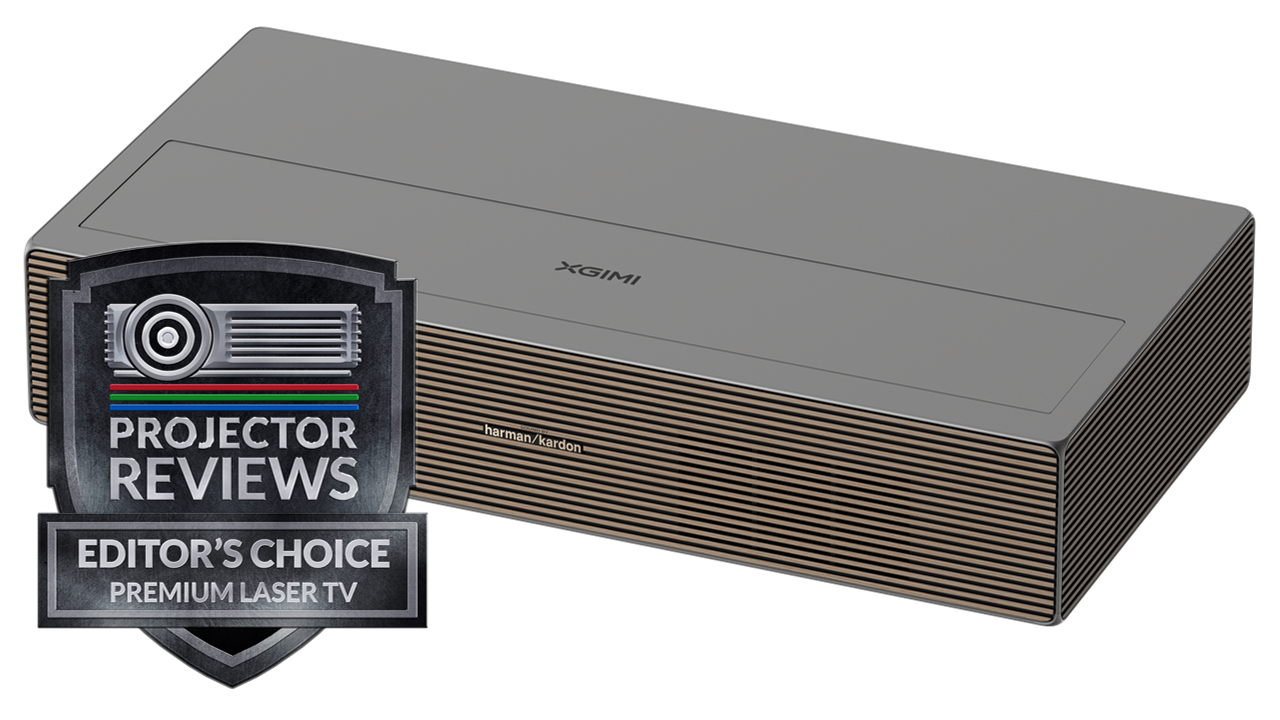
The external chassis is so cleverly designed and reflects so little ambient light that it's barely visible even when the projector is running and the relatively large motorized panel is up. It’s amazing, especially when compared to some competitors’ projectors. The AURA 3 Max comes with a fully integrated Harman Kardon 80-watt sound system that supports Dolby Atmos.
and DTS Virtual:X (a core component of the projector's IMAX Enhanced feature). This means spoken words come across clearly rather than getting lost in the mix. Traditionally, I have viewed the best UST projectors’ built-in sound systems as competing with entry-level soundbars, but the sound on the Aura 3 Max performs less like an entry-level system and more like a step-up mid-tier soundbar, offering superior volume without distortion and a really dynamic soundstage.
Finally, the AURA 3 Max breaks new ground for big-screen gamers as the first DLP ultra-short-throw projector to display native 4K at 120 Hz, rather than downconverting high-frame-rate signals to 60 Hz. Over full-bandwidth HDMI 2.1 inputs, it also reaches 1080p at 240 Hz with input lag rated down to 1 millisecond, backed by VRR and ALLM, AMD FreeSync Premium, and Dolby Vision Gaming. The AURA 3 Max stands out as one of the most capable and versatile living-room projectors available.
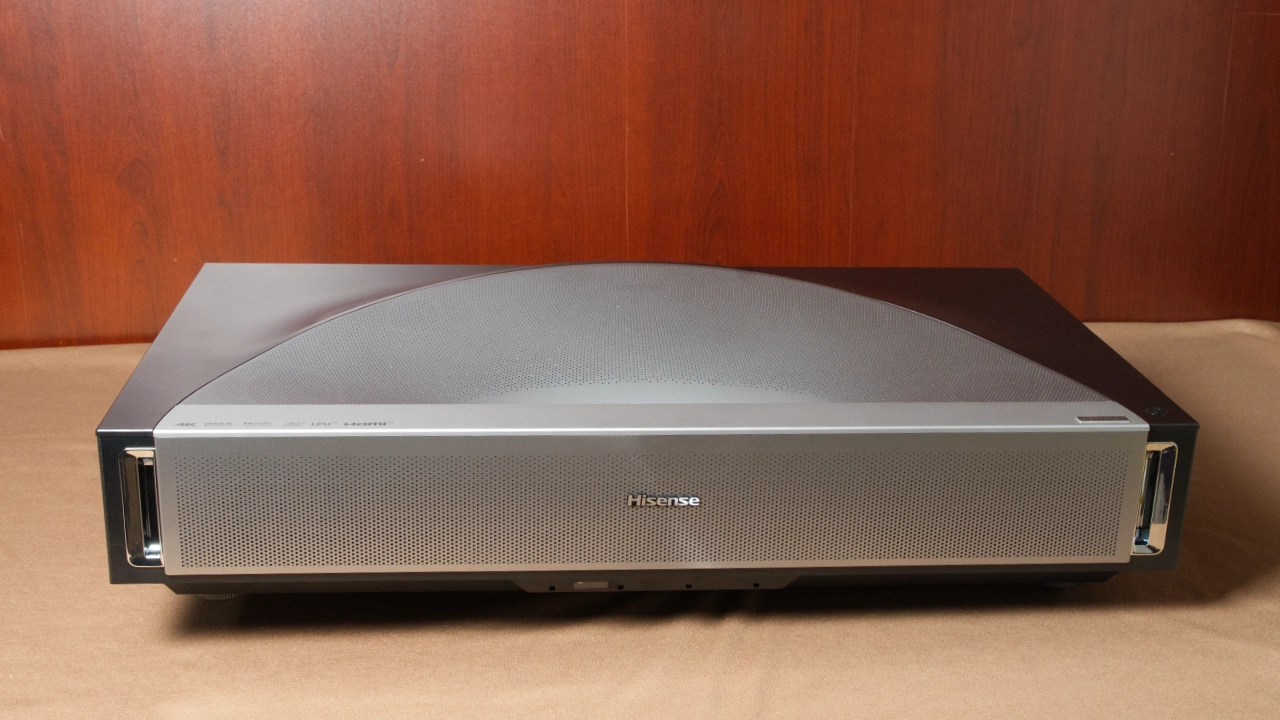
Hisense PX4-PRO MSRP: $3,999 MSRP
One of the most obvious competitors for the XGIMI AURA 3 Max is the Hisense PX4-PRO. Both are 4K HDR ultra-short-throw projectors built on 0.47-inch DLP chips with RGB triple-laser light engines and mechanical irises, though they sit roughly $1,000 apart in MSRP. The Aura 3 Max is being offered at a Kickstarter price of $2,399 until the campaign closes on December 4, 2026. On paper, the AURA 3 Max has a clear lumen advantage at 5,700 ISO lumens compared to the PX4-PRO's 3,500 ANSI lumens; however, when you compare the Aura 3 Max's usable brightness of 3,577 lumens, they're much closer. The AURA 3 Max also has a higher native contrast of 8,000:1 compared to the PX4-PRO’s rated 6,500:1.
On the operating system front, XGIMI runs the app-rich Google TV platform, while Hisense relies on its proprietary VIDAA OS, which feels brisk but lacks Google's broader app ecosystem.
For gaming, both deliver ultra-low latency and VRR, though XGIMI takes the lead by displaying true 4K at 120 Hz rather than capping 4K output at 60 Hz like the Hisense, which reserves 240 Hz for lower resolutions. Sound performance is close, but I give XGIMI’s 80 Harmon Karden sound system the edge; it's louder and more dynamic than the Hisense system.
Hisense edges out XGIMI slightly in factory cinema accuracy. The AURA 3 Max delivers noticeably higher calibrated brightness for large screens and superior 4K 120 Hz motion handling.
AWOL Vision Aetherion Max: $4,499 MSRP
Another direct rival for the XGIMI AURA 3 Max is the AWOL Vision Aetherion Max, which sits within $500 of the XGIMI's MSRP and shares very similar core hardware. Both are 4K triple-laser UST projectors equipped with mechanical irises, full HDR10+ and Dolby Vision support, active 3D playback, and built-in Google TV. The biggest difference is light output and contrast headroom. The AURA 3 Max is rated at 5,700 ISO lumens and up to 8,000:1 native contrast, compared with 3,300 ISO lumens and 6,000:1 contrast on the Aetherion Max. Because both run Google TV, smart navigation and app availability are virtually identical on both platforms.
For gaming, the XGIMI supports native 4K 120 Hz thanks to its new dual DLPC8545 controllers, while the Aetherion Max tops out at 4K 60 Hz. Audio is well matched for living room viewing, with XGIMI's 80-watt Harman Kardon setup and AWOL's 90-watt array both delivering clean dialogue and solid mid-bass. However, neither replaces a dedicated surround system.
Ultimately, the biggest difference is how each projector handles dark scenes and brightness trade-offs. The Aetherion Max offers crisp sapphire-glass optics and strong black levels, but AWOL's laser dimming occasionally crushed darker black shadows. The AURA 3 Max delivers better shadow detail without cranking the black floor, plus higher brightness that lets you project onto larger screens.

The XGIMI AURA 3 Max is a powerhouse of an ultra-short-throw projector that sets a high bar for 2026 UST projection. By pairing over 6,200 peak lumens (and nearly 3,000 calibrated lumens) with a dual mechanical iris, it is almost compromise-free, working in bright living rooms or dark theater rooms. The Aura 3 Max is very bright, with an excellent black floor and shadow detail, without aggressive dynamic dimming.
True 4K 120 Hz gaming, well-controlled rainbow artifacts, and built-in Google TV with punchy Harman Kardon audio round out an unusually complete package. Even at its $4,999 retail price, and especially while early Kickstarter discounts ($2,399) remain active through December 4, 2026, the AURA 3 Max stands out as one of the strongest all-around UST projectors available today.

| Specification | Details |
|---|---|
| Projector Model | AURA 3 Max |
| Price (MSRP) | $4999 |
| Imager Type | DLP |
| Displayed Resolution | 3840 × 2160 (dual-axis pixel shifting) |
| Native Resolution | 1920 × 1080 |
| Brightness (Manufacturer Claim) | 5.700 ISO lumens |
| Light Source Type | RGB Triple Laser |
| Contrast Ratio | 8,000:1 (Native) |
| Lens Throw Ratio | 0.163:1 |
| Power Zoom/Focus | Yes (Focus) |
| Lens Shift | No |
| Interchangeable Lens | No |
| Ultra Short Throw | Yes |
| Native Aspect Ratio | 16:9 (Widescreen) |
| 4K/120 fps | Yes |
| 3D | Yes |
| Speakers | 4 speakers, max 80 W |
| Noise Level | 28 dB |
| Low-Lag Gaming | Yes |
| Smart Functionality | Yes |
| Business | No |
| Classroom | No |
| Portable | No |
| Special Features | Dolby Vision, HDR10+, IMAX Enhanced, Dual Iris, Dynamic Tone Mapping, New TI Dual DLPC8555 DLP Controller, FreeSync Premium, VRR and ALLM |
| Networking | RJ45 LAN, WiFi 7 |
| Dimensions | (WxHxD) 23.1” x 5.4” x 11.6” (588 mm x 138 mm x 295 mm) |
| Weight | 20.7 lbs (9.4 kg) |
| Warranty | 2-year limited warranty |