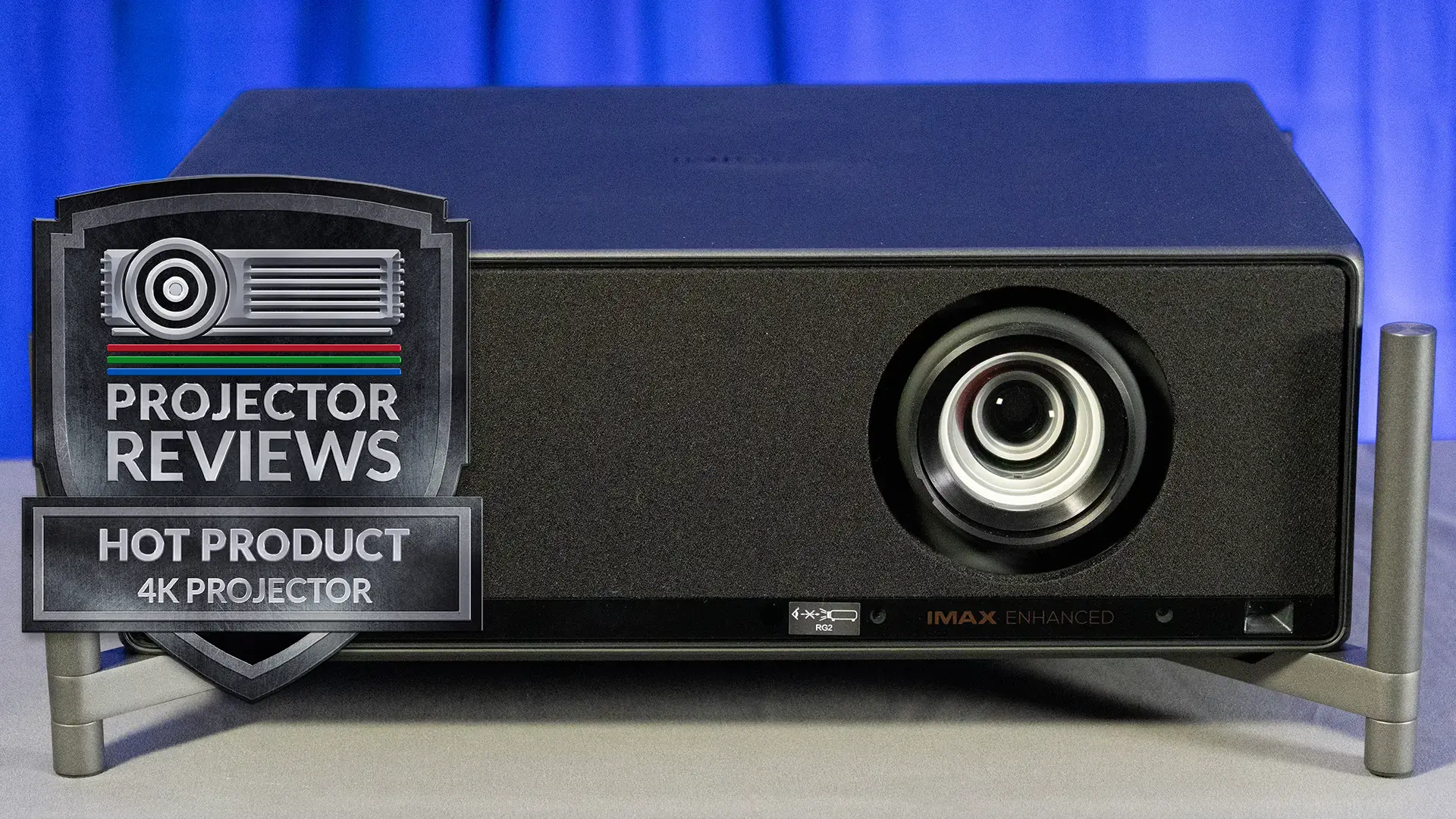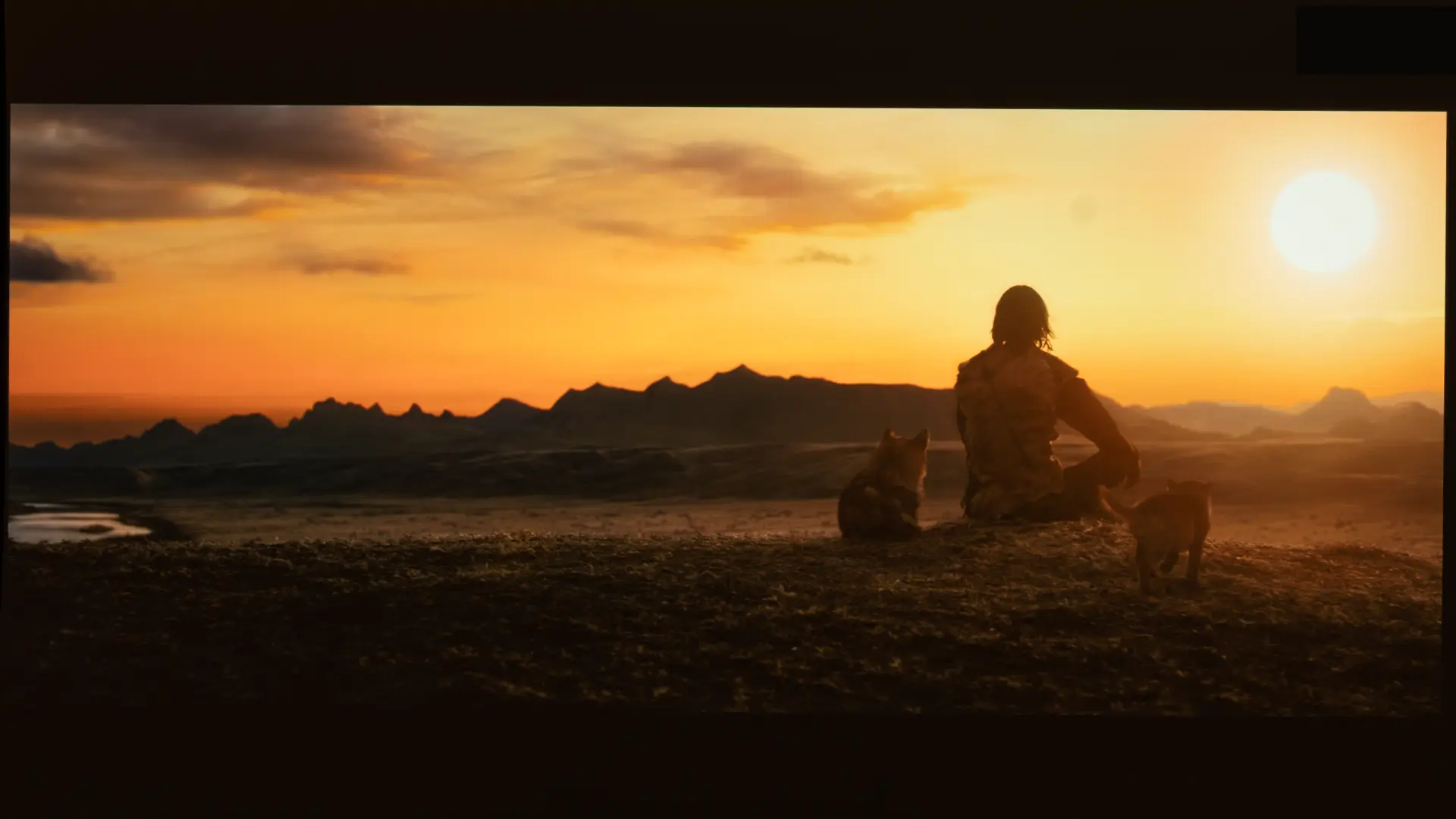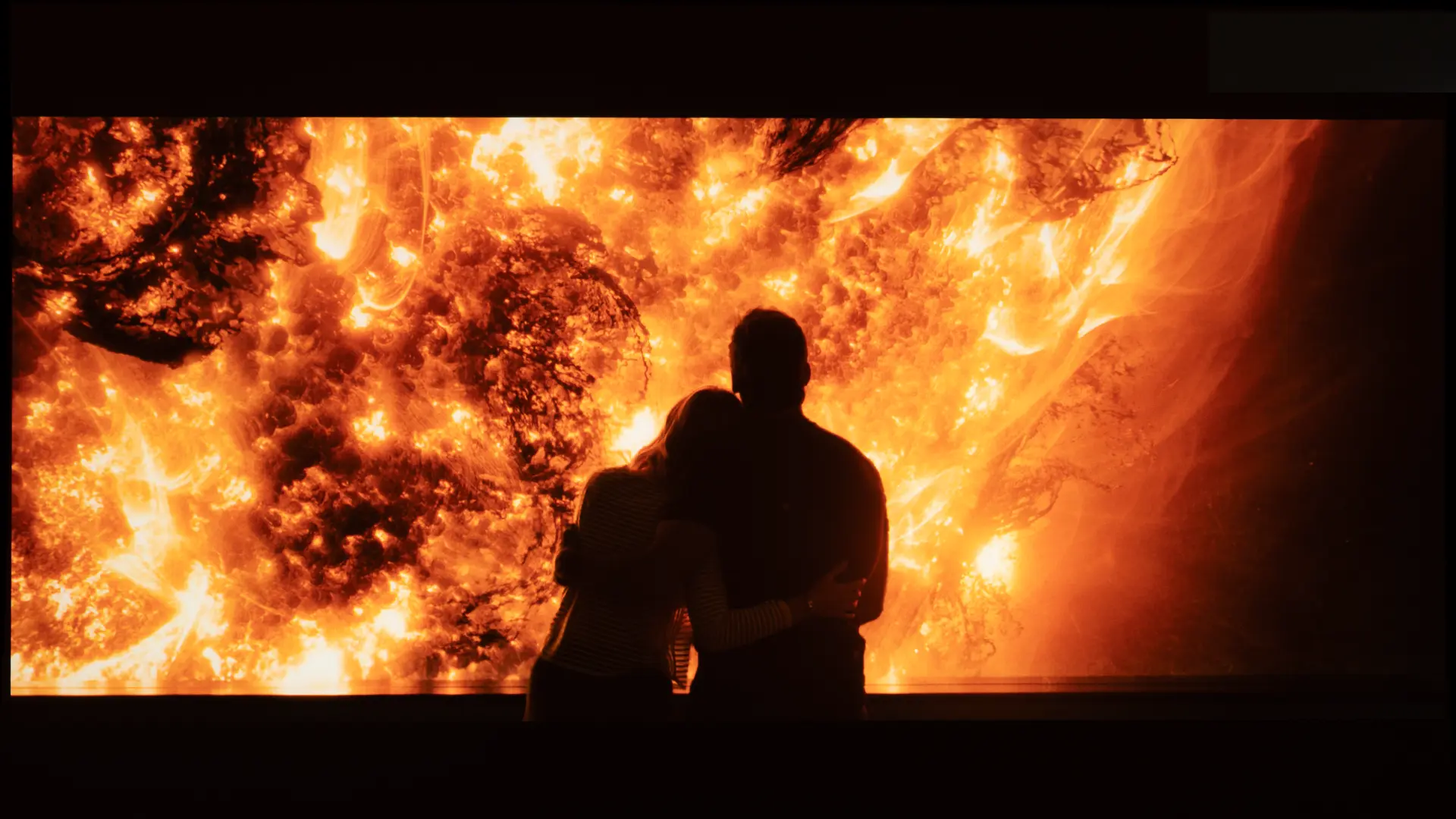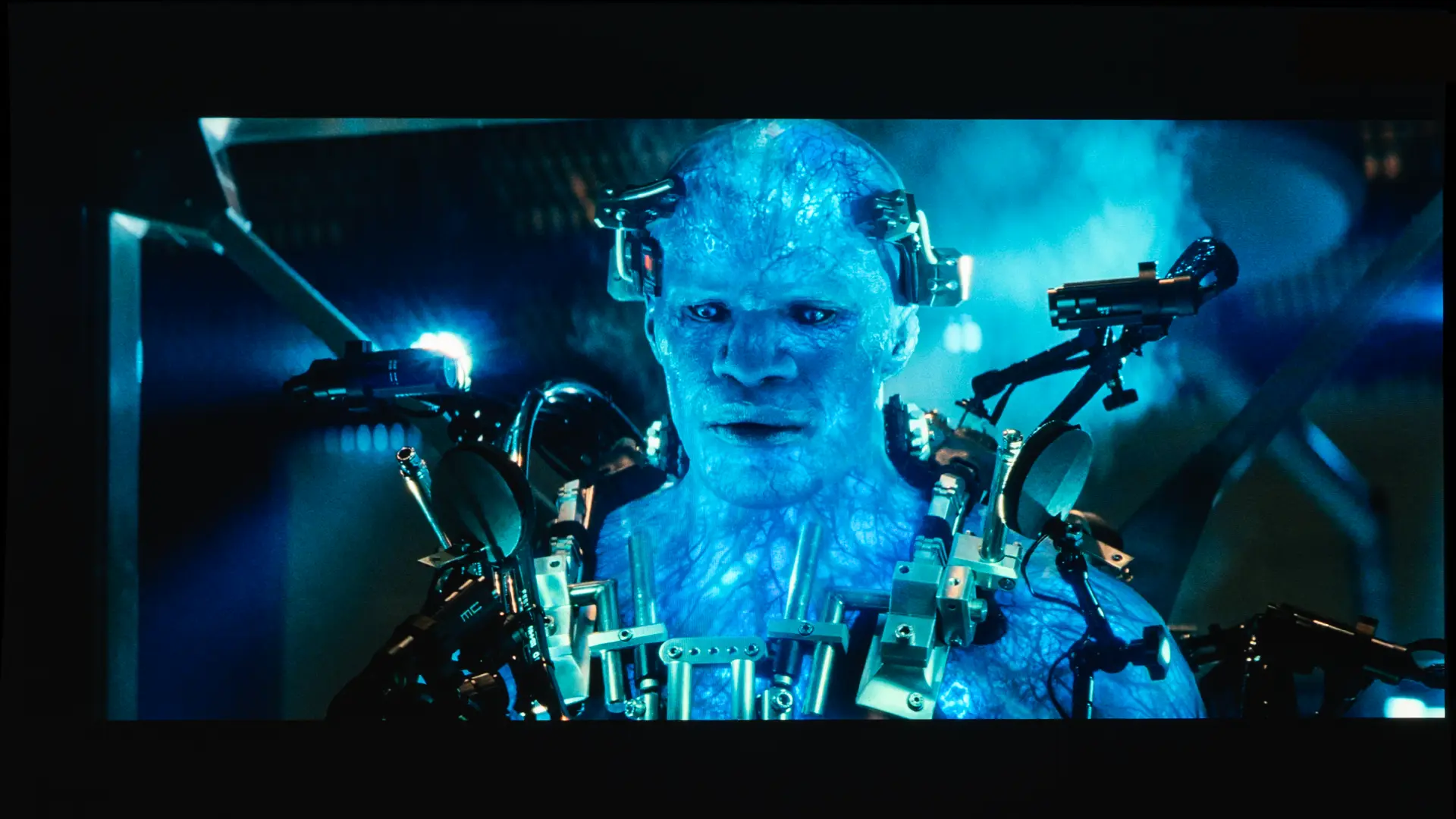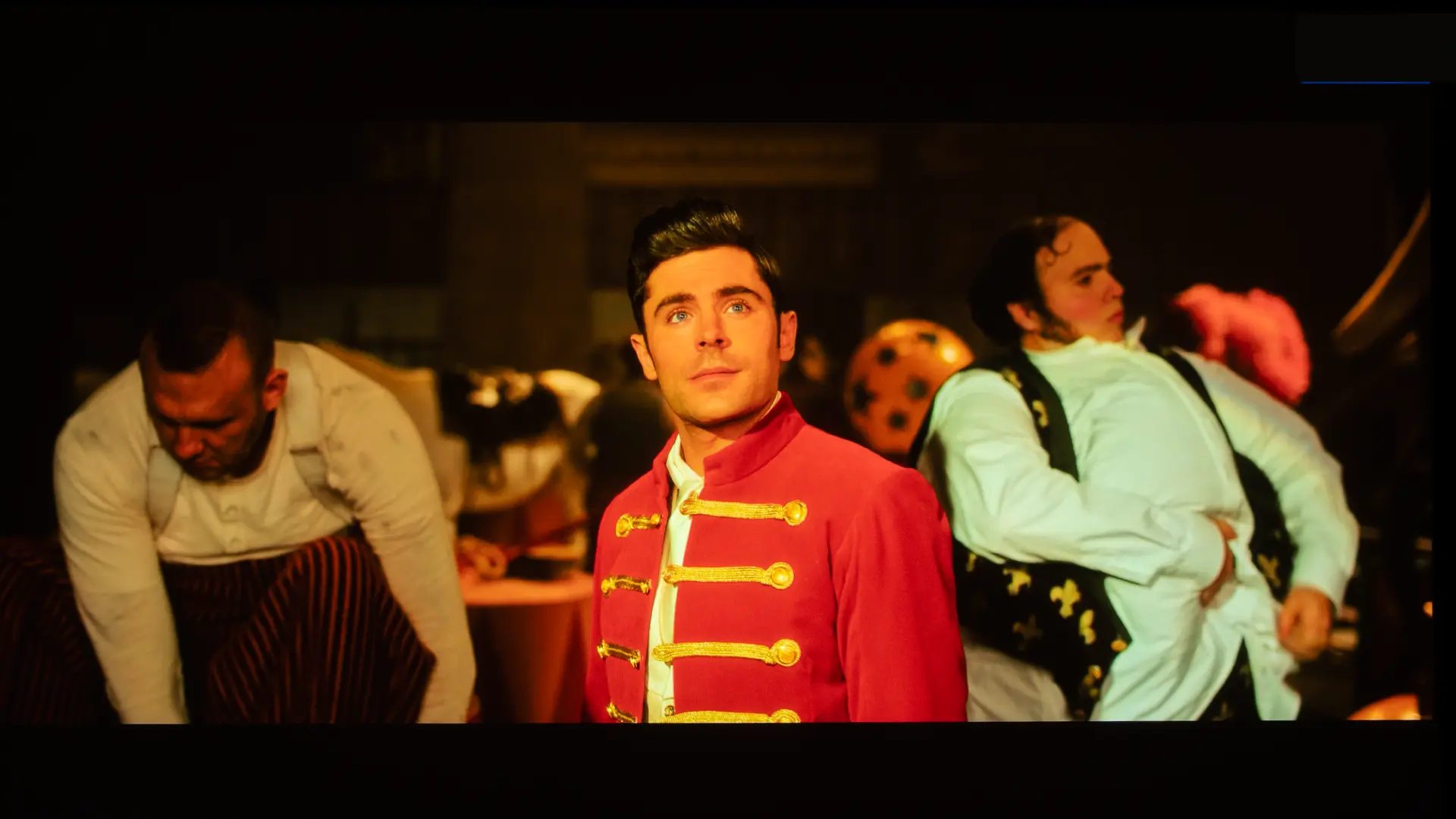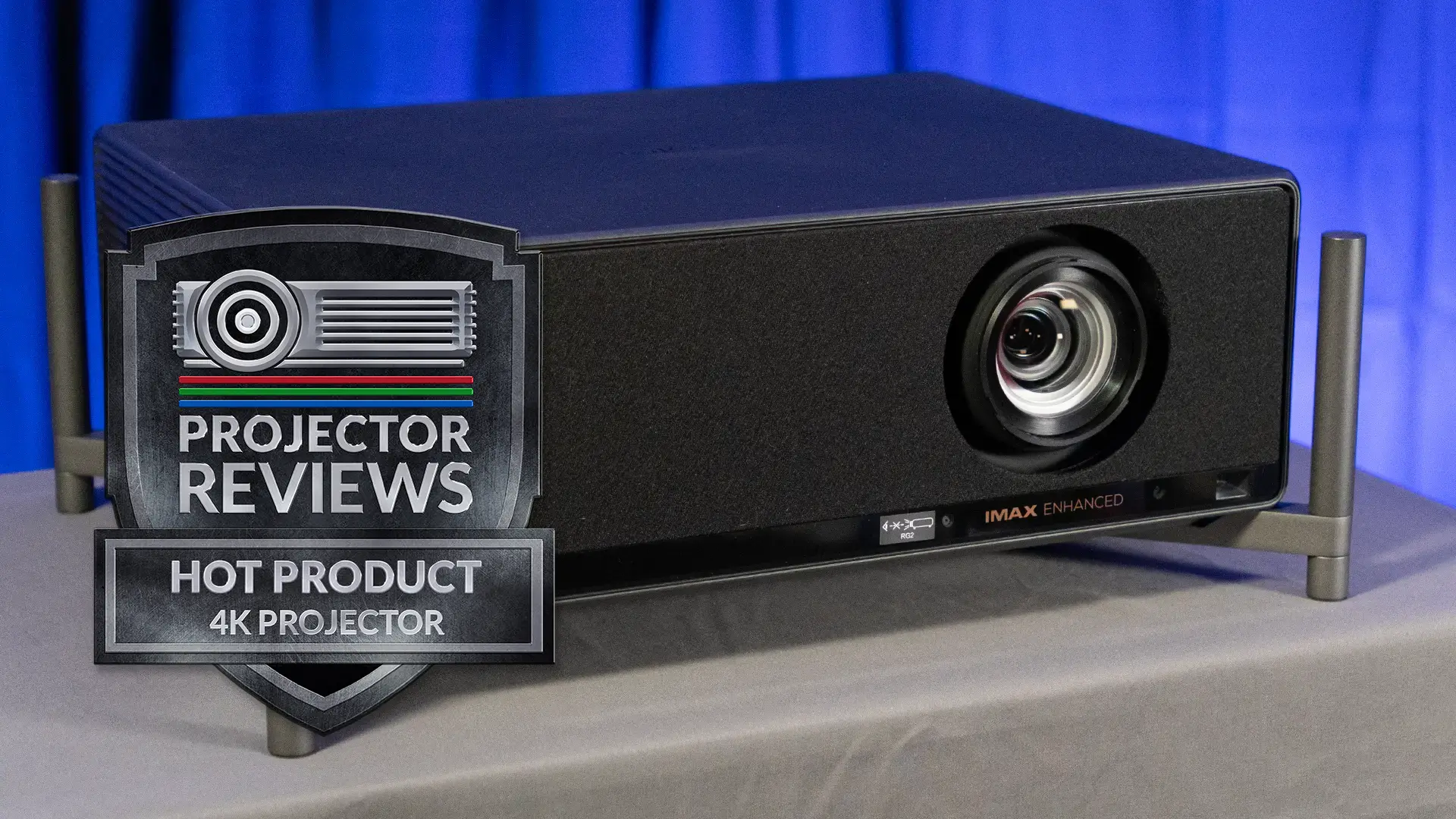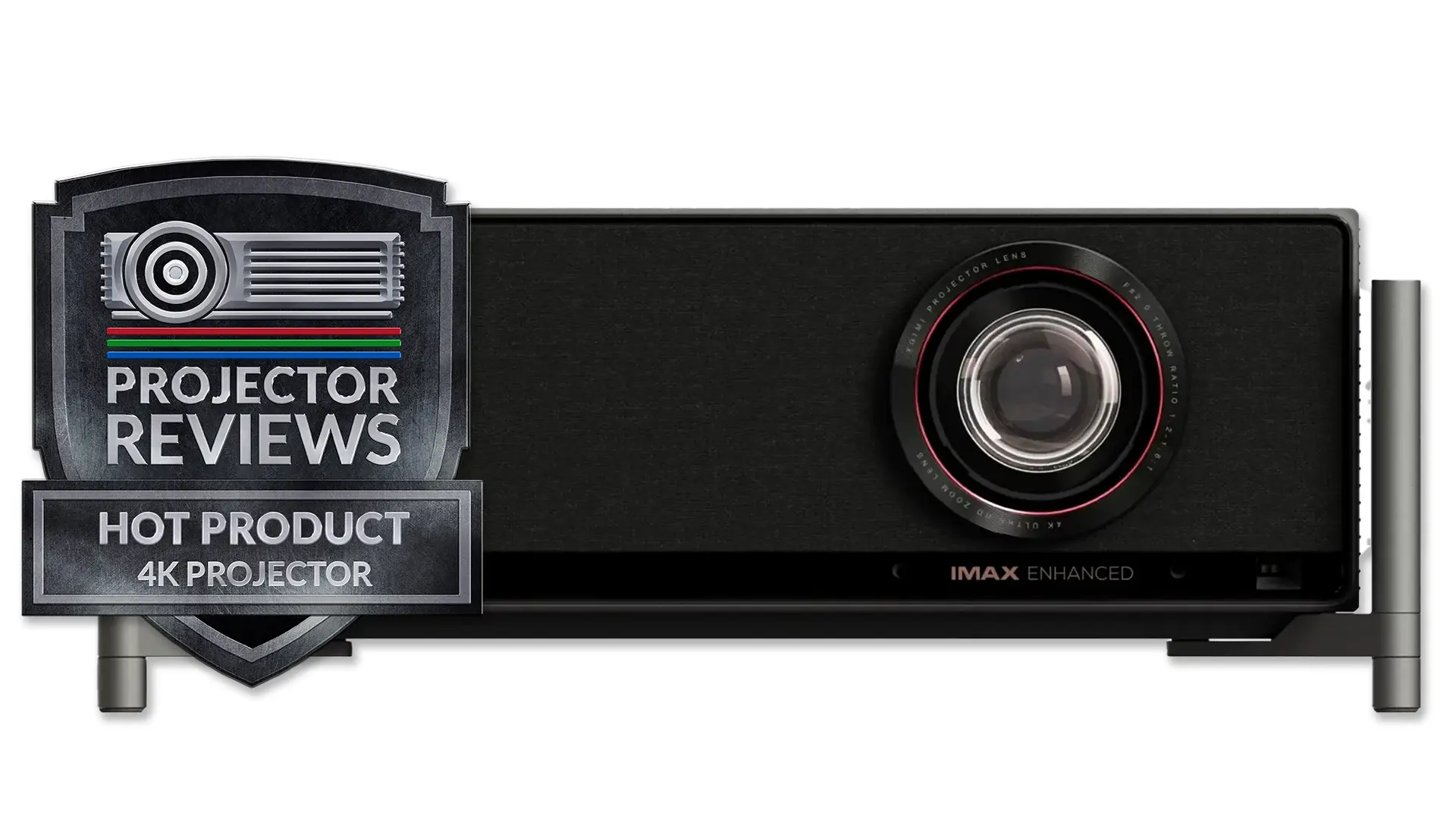
The XGIMI TITAN is a 5000-lumen 4K Laser Projector, which retails for $3,999. XGIMI is known for its high-quality portable and lifestyle projectors that deliver excellent image quality at affordable prices.
We have reviewed several XGIMI models and have always been impressed by their image quality, but we had hoped they would build something to address the needs of serious home entertainment enthusiasts. The TITAN represents just that and is a major step forward for XGIMI as the company moves beyond lifestyle projectors into the premium home theater and professional projection category.
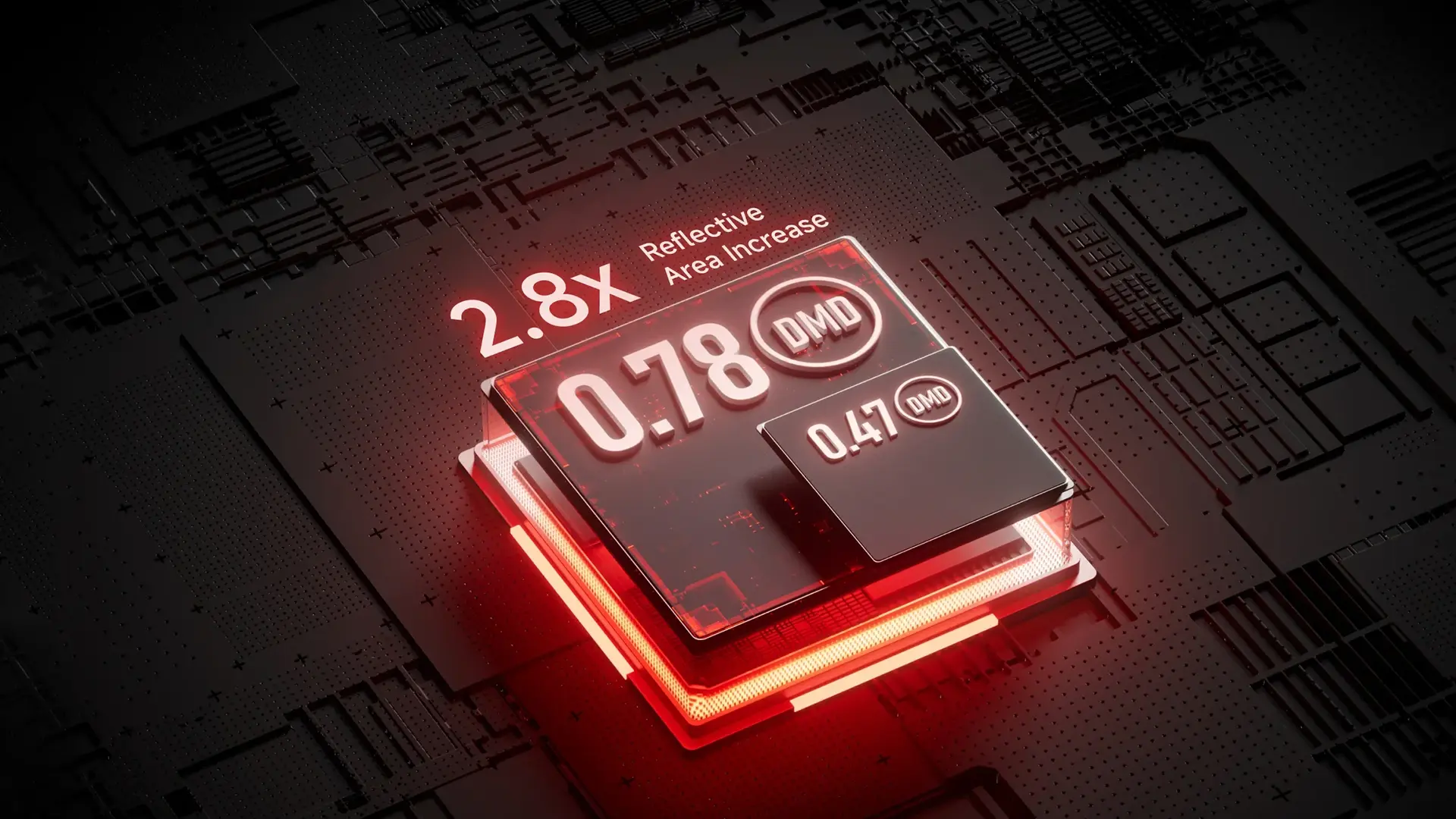
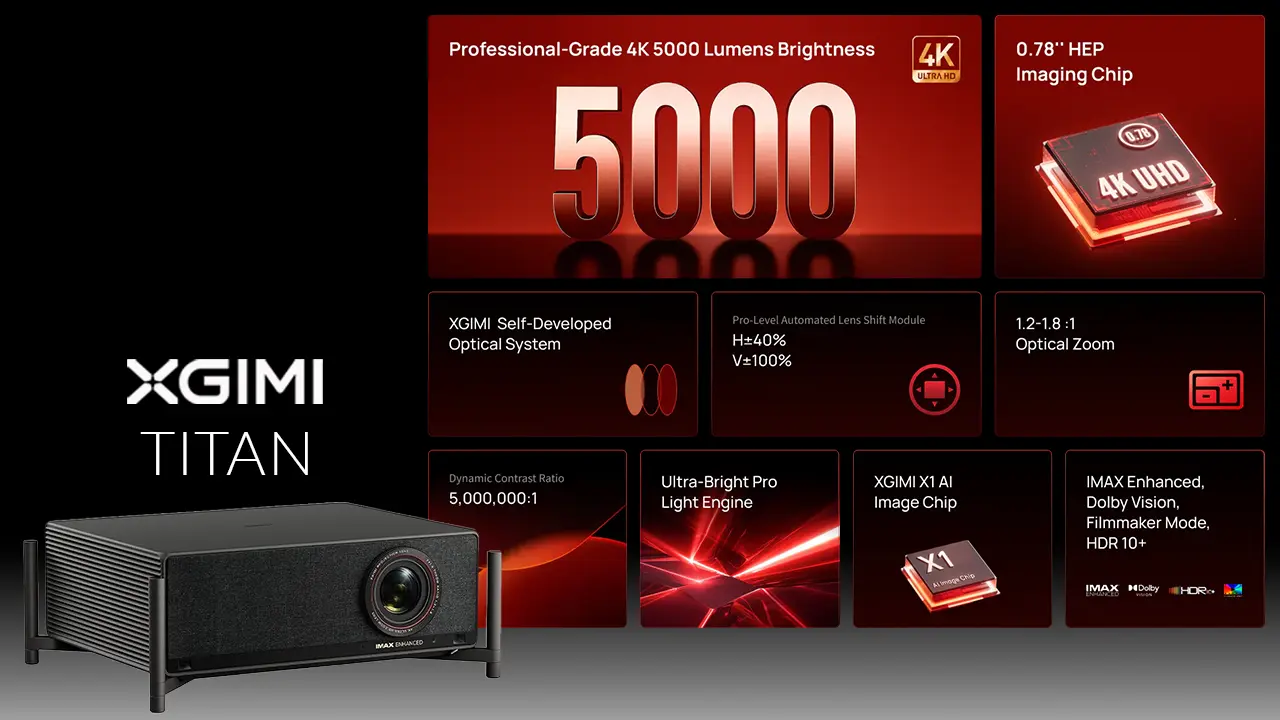
The TITAN is built around a dual-laser light engine that delivers up to 5000 lumens. The 0.78-inch DLP DMD chip used in the TITAN is significantly larger than the 0.47-inch chips found in most consumer projectors. XGIMI chose the larger DMD chip due to the unit’s higher light output.
This combination delivers higher brightness, improved color performance, and better contrast than most consumer-focused DLP projectors. While the DMD's native resolution is 1080p, the TITAN uses XPR pixel-shifting technology to deliver 4K (3840 x 2160) on-screen resolution.
The projector supports a wide range of HDR formats, including Dolby Vision and HDR10+. Customers with a library of 3D movies and games will be pleased to know that the projector also supports that format.
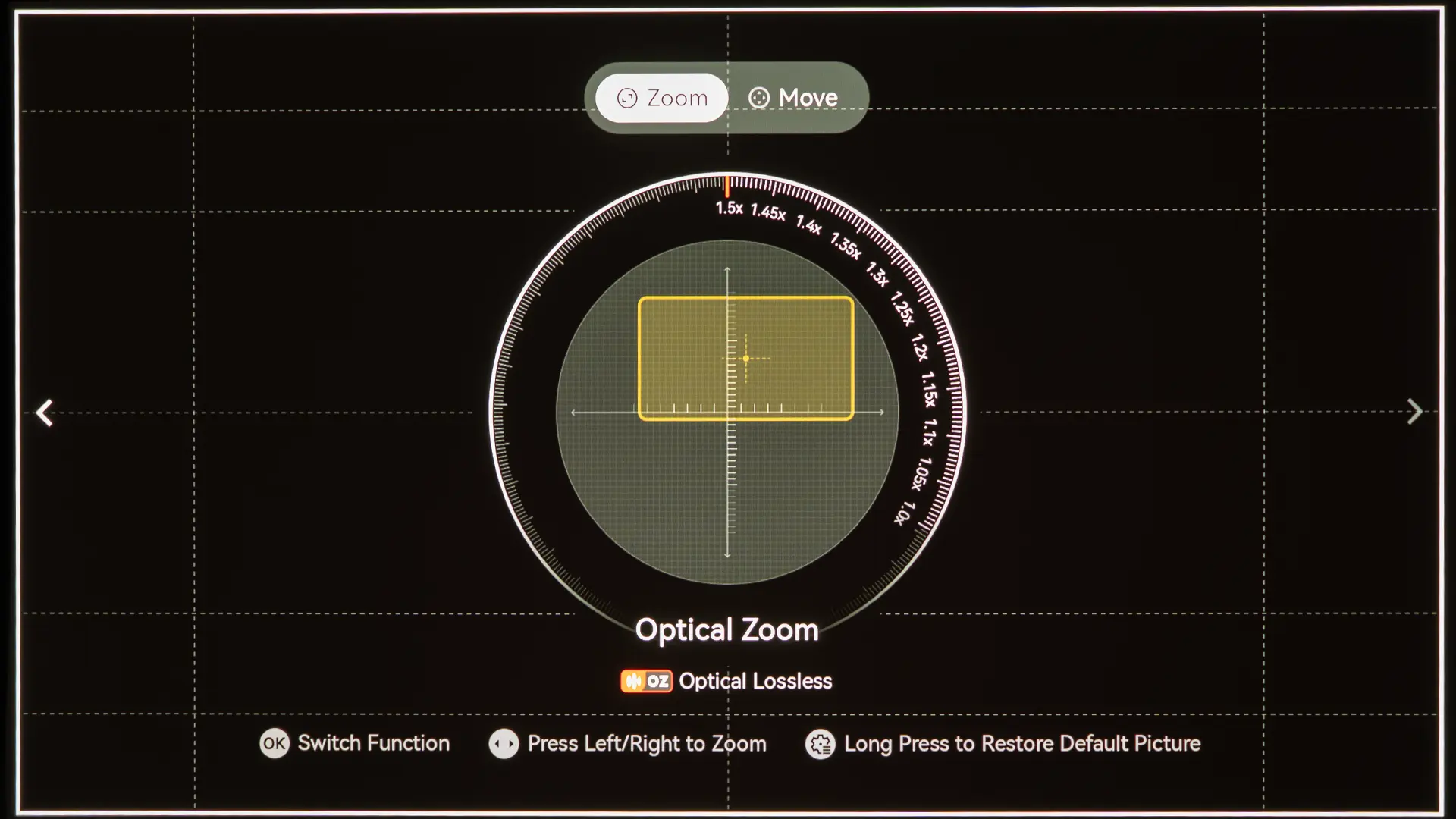
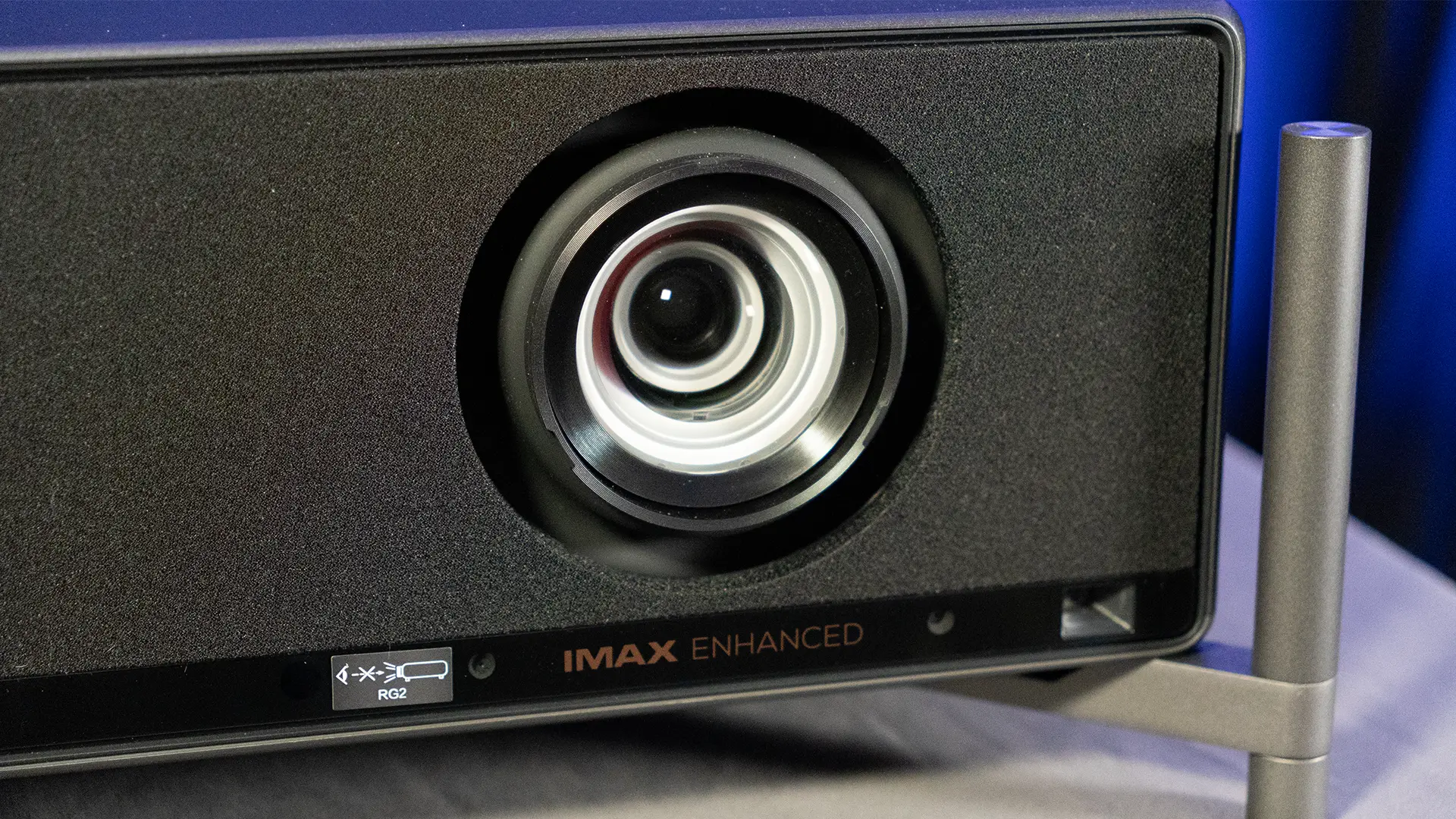
The TITAN also incorporates a powered lens system with motorized zoom, focus, and lens shift. With a throw ratio of approximately 1.20-1.80:1 and extensive horizontal and vertical lens shift, it offers far more installation flexibility than typical DLP projectors.
While it’s best to rely on optical image adjustments rather than digital correction for optimal image quality, the TITAN includes automatic setup features such as autofocus, auto-keystone correction, and intelligent screen alignment to simplify installation.
The TITAN exceeds it 5000 lumens brightness rating while deliver good color reproduction. Its quiet operation, installation flexibility and Custom Install focused feature set makes it an outstanding value.
The result is a projector equally suited for a dedicated home theater, a large media room, or even commercial environments such as classrooms or houses of worship.

+ Brightness exceeds its 5000 lumen rating
+ 0.78-inch HEP DMD chip maximizes reliability
+ Good Color Reproduction
+ Motorized zoom and lens shift
+ Support HDR10+ and Dolby Vision
+ Quiet Operation
+ No Laser speckle
+ 3D Support
- No Adjustable Iris
- Sound Visible Rainbow Effect
- No Integrated Smart Platform
- Noisy in PERFOMANCE Mode

The TITAN is XGIMI's first professional-grade projector and a deliberate departure from the compact, smart-featured HORIZON and MoGo lifestyle models on which the brand has built its reputation. Where those projectors prioritize portability and automatic setup, the TITAN is designed for home theater rooms and commercial environments such as boardrooms, churches, and large meeting spaces.
At $3,999, the TITAN competes against the Epson LS12000 and Sony VPL-XW5000ES in the home theater market and with 5000-lumen projectors like BenQ's LU950 in the professional-commercial segment.
Most consumer 4K DLP projectors on the market use either a 0.47-inch or 0.66-inch DMD chip. The TITAN uses a 0.78-inch High Efficiency Pixel (HEP) DMD chip, which offers a reflective surface that is 2.8 times larger than the 0.47-inch surface found in the majority of consumer 4K projectors.

This larger DMD was specifically designed to handle brightnesses up to 7000 lumens, making it ideal for personal applications where the projector must display content at high brightness for extended periods. Another benefit is that a larger chip ensures more of the light engine's output reaches the screen. In addition to brightness, the 0.78-inch HEP DMD’s wide-swing mirror design further improves contrast and color palette by maximizing the separation between light-state and dark-state mirror positions.
The 0.78" DMD is a native 1,920 x 1,080p DLP chip that uses TI’s XPR technology to shift each mirror 4 times, resulting in a 4K UHD (3,840 x 2,160p) displayed image. While 4K is still capped at 60 Hz, the ability to jump to 240 Hz at 1080p makes it a great gaming solution rather than just a way to watch movies.

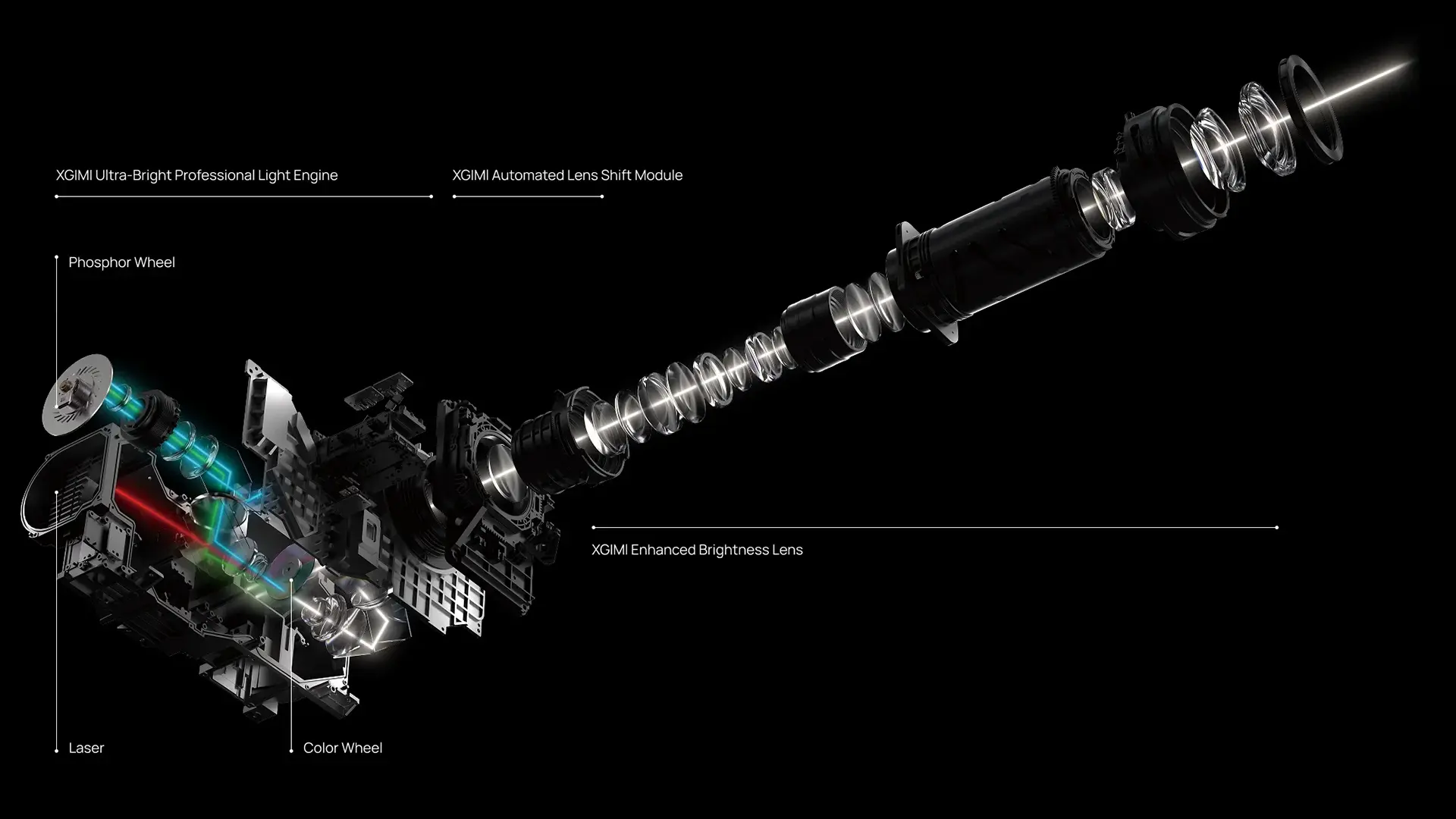
The TITAN uses a dual-laser architecture that differs in character from both single-laser phosphor and the triple RGB laser systems found in newer projectors. A red laser feeds the color wheel directly, while a blue laser is split between the color wheel and a phosphor wheel that generates green.
The output passes through a six-segment color wheel before hitting the DMD. The result is a wide color gamut of 150% DCI-P3 coverage, with better primary color saturation than single-laser phosphor designs, while avoiding the high cost and speckle characteristics of pure RGB triple-laser systems.

The TITAN supports every major HDR format in the current ecosystem: HDR10, HDR10+, Dolby Vision, HLG, IMAX Enhanced, and Filmmaker Mode. Full coverage of this breadth in a single projector is uncommon at any price. The combination of the TITAN’s 5,000 lumen output and 150% DCI-P3 color gamut means it has the physical capability to maximize the brightness and color information found in HDR content.
The TITAN is equipped with XGIMI's Proprietary AI image processor called the X1. It powers AI Super Resolution (AISR) upscaling for sub-4K content, AI-powered Dynamic Black enhancement, and AI Contrast boosting features. The TITAN supports Full HD 3D, making it compatible with active-shutter 3D glasses and the existing library of 3D Blu-ray and broadcast content. This capability has become rare in projectors targeting the home theater segment and adds value for buyers who have an existing 3D library.
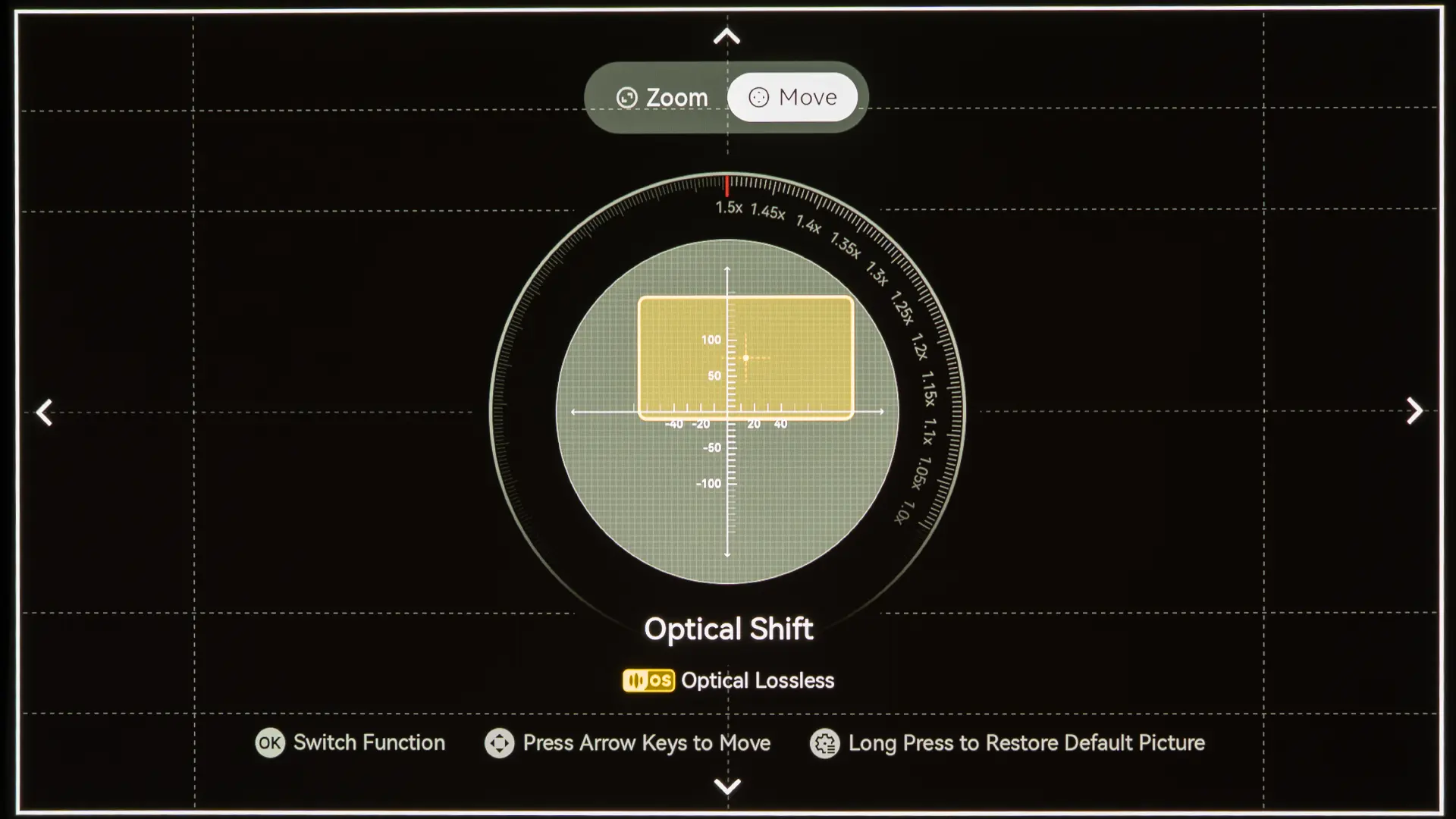
Lens shift allows the projector's image to be repositioned vertically and horizontally without physically moving the unit, and without the image distortion that comes from digital keystone correction. The TITAN offers vertical shift up to ±100% and horizontal shift up to ±40%. These are unusually generous ranges that give installers significant flexibility in ceiling or shelf placement.
| XGIMI Model Comparison | |||||
|---|---|---|---|---|---|
| Model | TITAN | TITAN Noir Max | Horizon 20 Max | ||
| Price | $3999 | $2999 (crowdfunding pricing) | $2999 | ||
| DLP Chip | 0.78" HEP DMD | 0.47" SST DMD | 0.47" DLP DMD | ||
| Brightness | 5000 Lumens | 7000 Lumens | 5700 Lumens | ||
| Light Source | Dual Laser | RGB Laser | RGB Laser | ||
| Color Gamut | 150% DCI-P3 | 110% BT.2020 | 110% BT.2020 | ||
| Contrast | 2,500,00;1 Dynamic) | 10,000 Native | 20,000:1 (Dynamic) | ||
| Lens | 1.20-1.80:1 Optical Zoom | 0.98-2.0:1 Optical Zoom | 1.2-1.5:1 Optical Zoom | ||
| Vertical Lens Shift | ±100% Vertical / ±40% Horizontal | ±130% Vertical / ±50% Horizontal | ±120% Vertical / ±45% Horizontal | ||
| Dynamic Iris | No | Yes (Dual) | No | ||
| Smart Platform | None | Google TV | Google TV | ||
The TITAN sits above the HORIZON 20 series and below the new TITAN Noir lineup. We just reviewed the HORIZON 20 Max ($2,699 MSRP), XGIMI's premium lifestyle-focused model that delivers up to 5700 ISO lumens. The unit’s high brightness, smart OS, and room-to-room portability make it a good option for many living spaces.
Since the TITAN is targeted at home theater enthusiasts and professional users, it has a larger DMD chip, a dual-laser light engine, and professional connectivity. It trades away the HORIZON's Android TV integration and design-first sensibility. Buyers considering both should know they are not choosing between better and worse; they are choosing between different philosophies.
The TITAN is designed to appeal to buyers seeking a dedicated viewing space and a way to permanently mount a high-brightness, color-accurate projector. The TITAN’s larger chassis allows for quieter fans and a built-in power supply. The newly announced TITAN Noir series uses triple RGB lasers paired with a 0.47-inch SST DMD and a dual iris system to deliver deeper black levels and higher native contrast. However, the unit’s smaller size means higher fan noise and the need for an external power supply.
For users seeking a bright, flexible, and feature-rich 4K projector for a dedicated home theater or large media room, the TITAN is a compelling option. It is not a lifestyle projector designed for quick setup and portability, but rather a serious display solution aimed at enthusiasts who want near-professional performance without stepping into significantly higher price tiers.
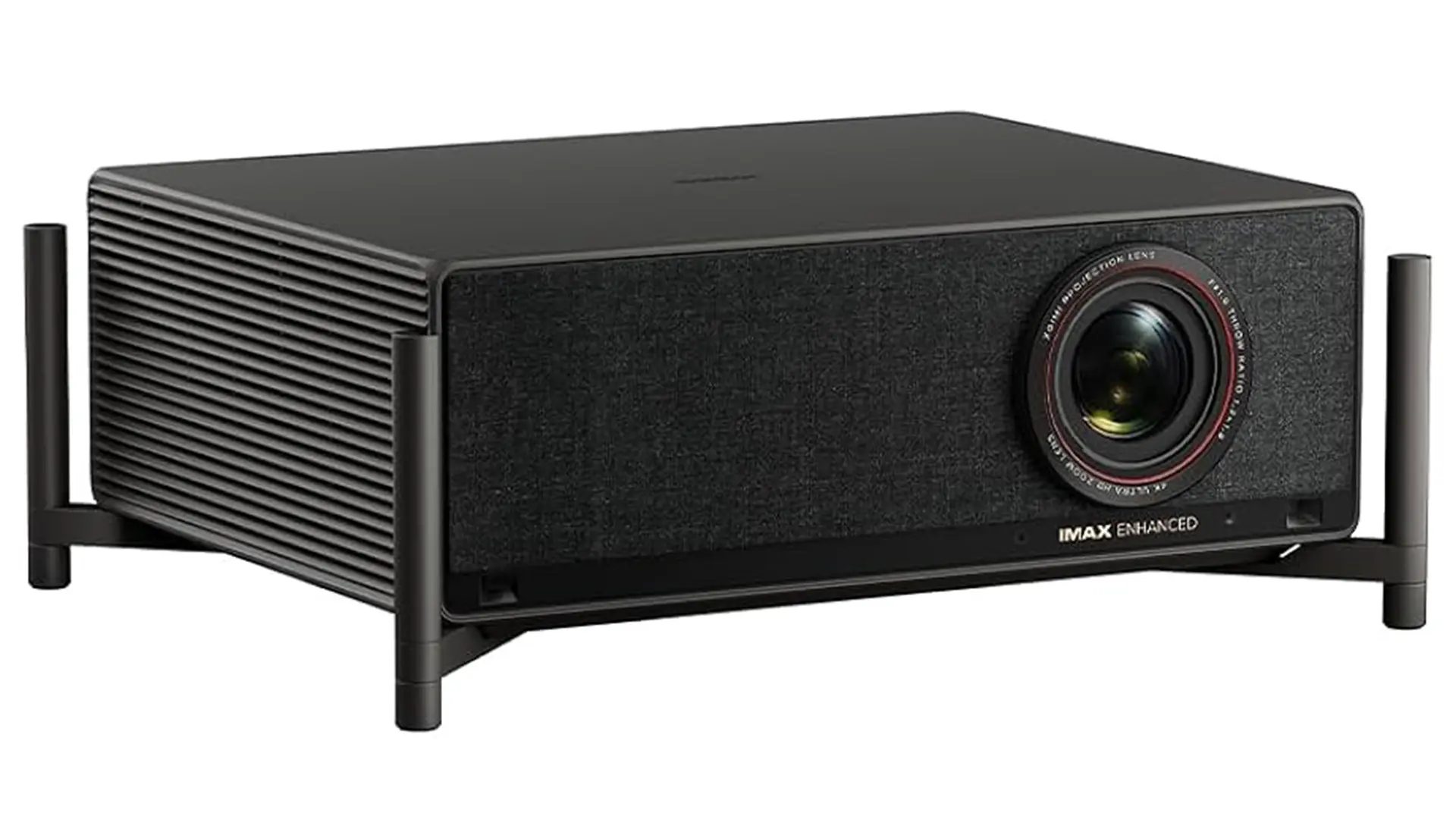
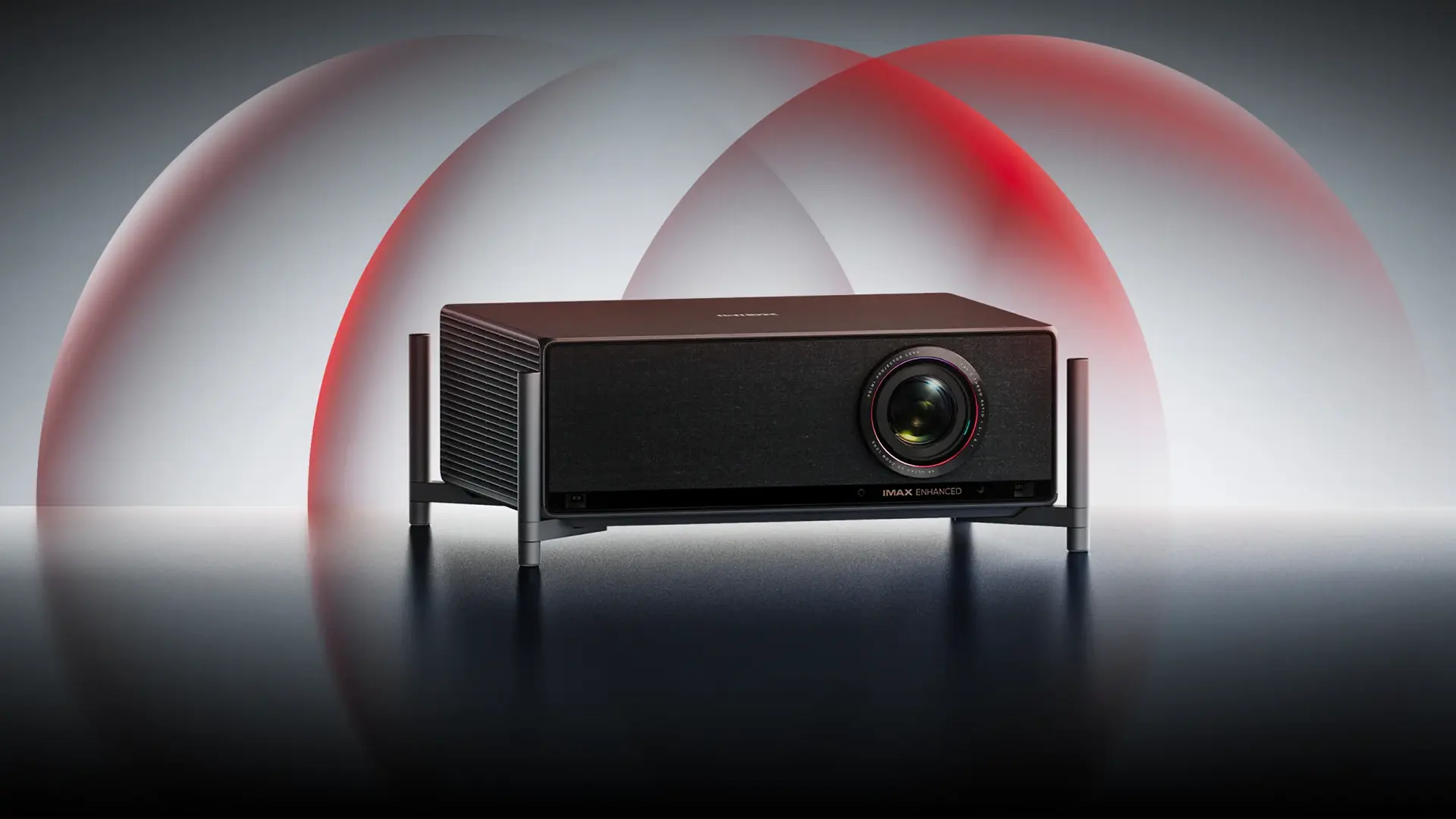
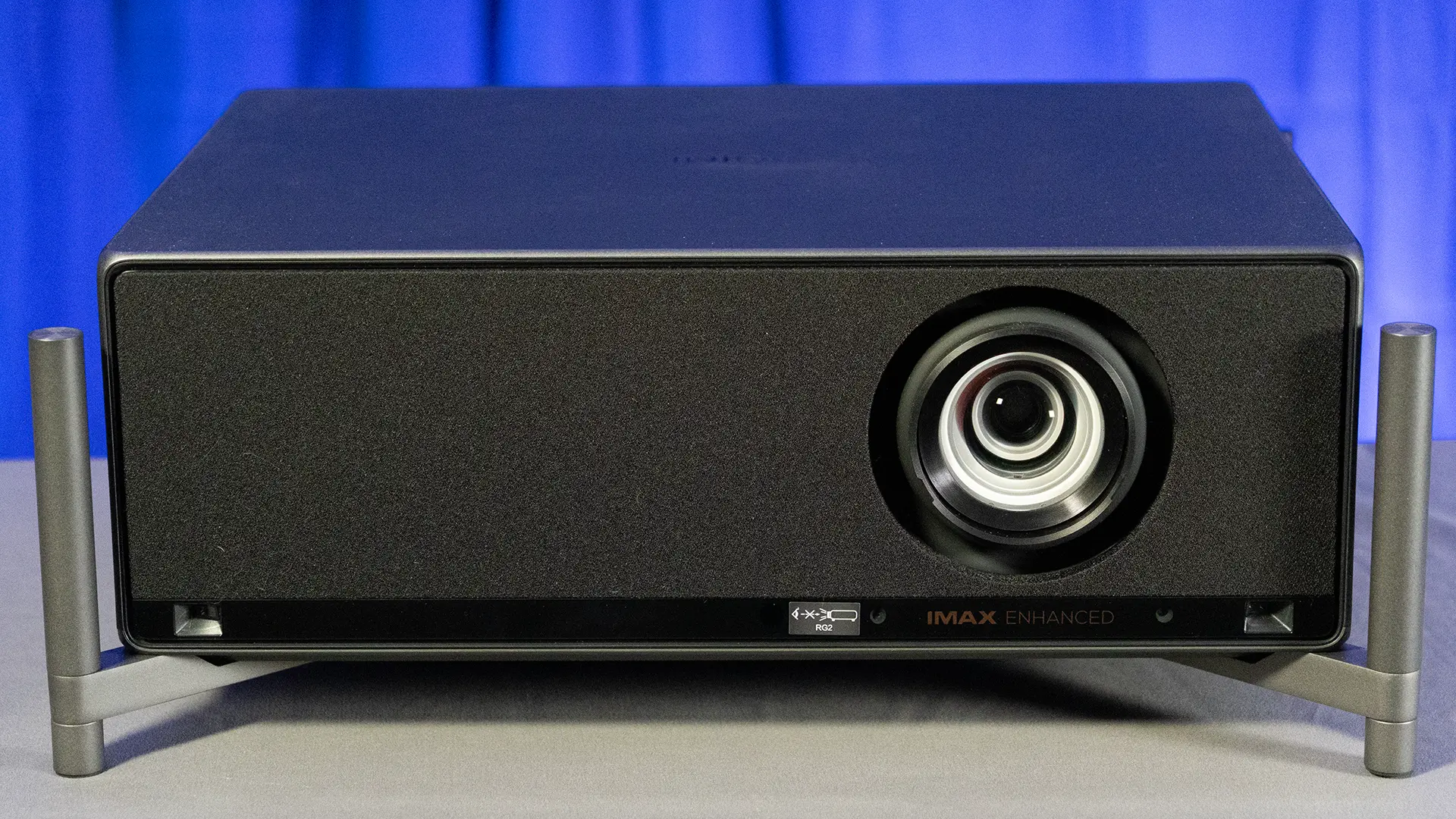
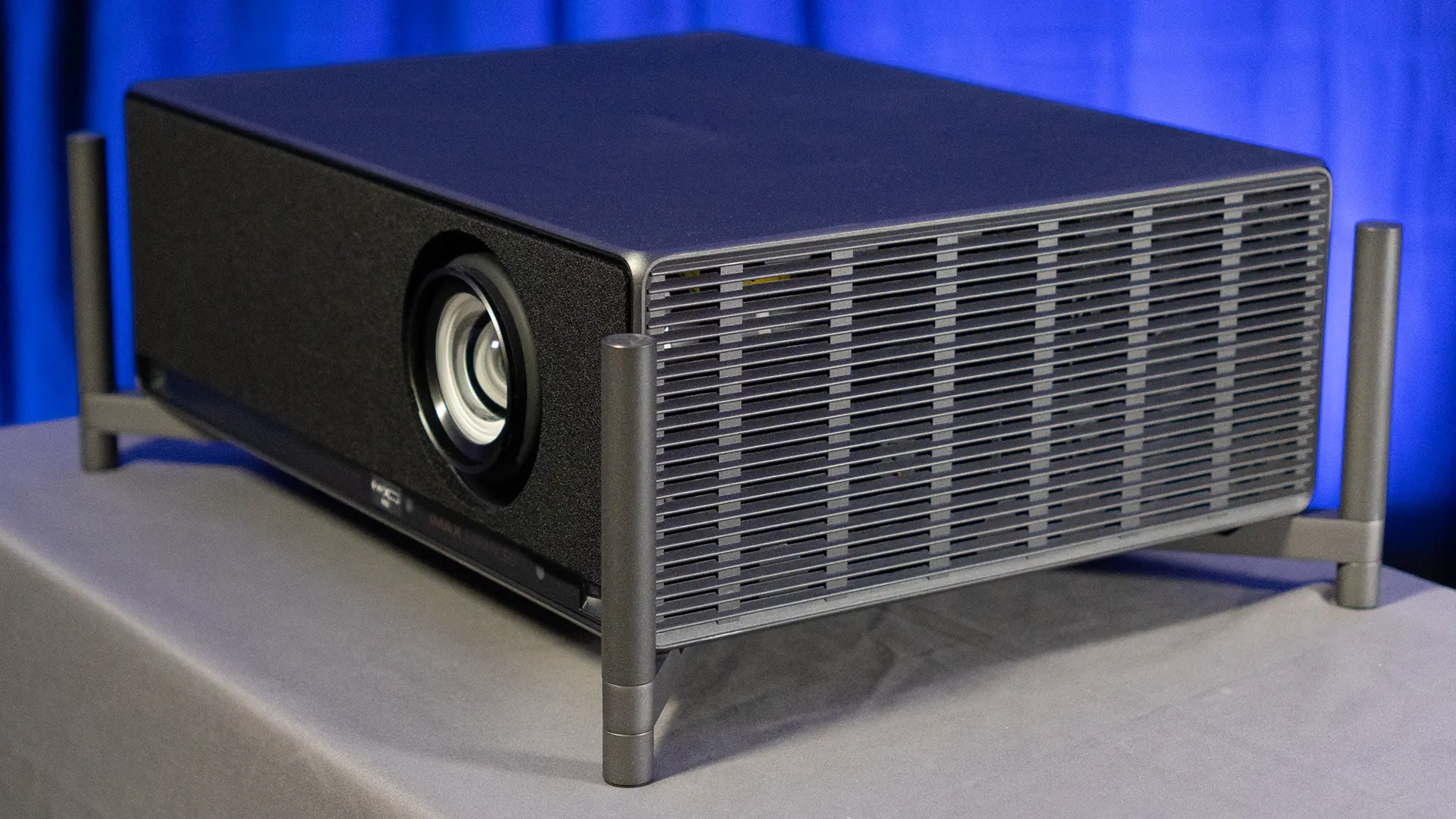
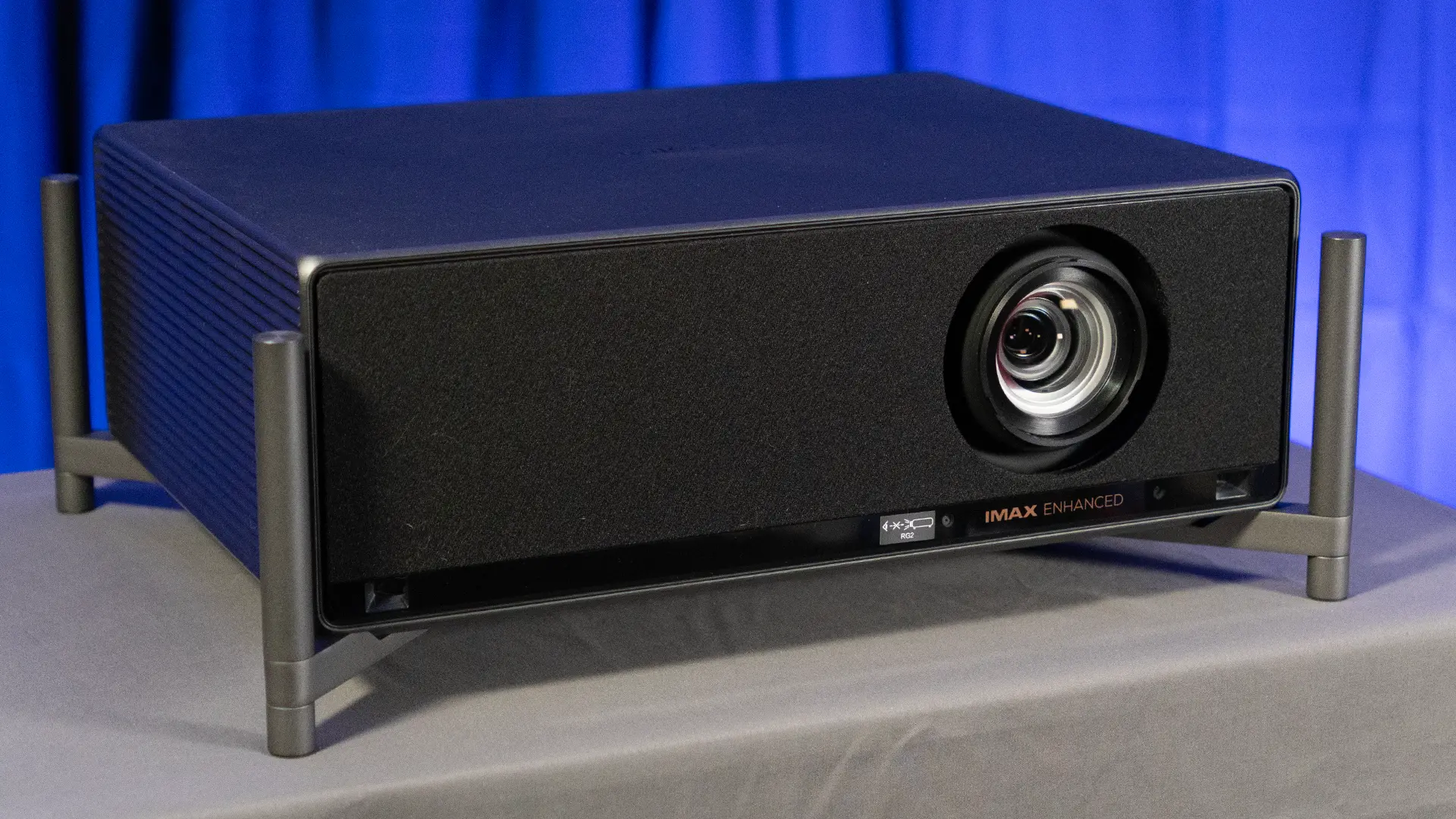
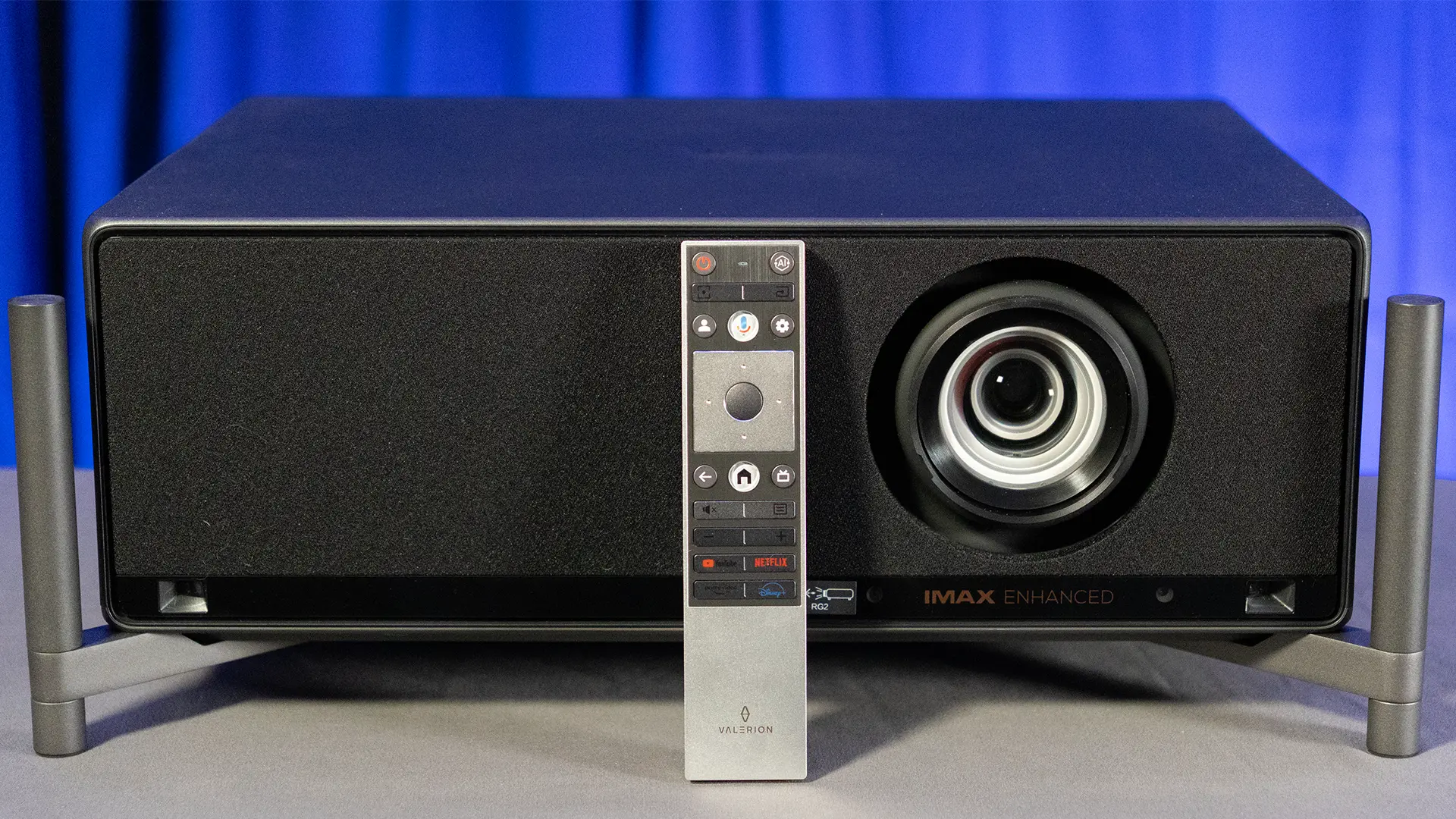
The design of the TITAN clearly separates it from the compact lifestyle projectors that originally established XGIMI’s reputation. Instead of prioritizing portability, the TITAN is built like a premium home theater or professional installation projector, with a large, industrial-looking chassis designed to support its high-output dual-laser light engine, advanced cooling system, and motorized optics.
The projector has a clean, understated appearance with a matte dark finish and minimal visual clutter, giving it a more serious, cinema-oriented aesthetic than many consumer DLP projectors. Its substantial cabinet also allows XGIMI to incorporate a larger lens assembly with powered zoom, focus, and lens shift functionality, which contributes to the TITAN’s installation flexibility and premium feel.
The projector measures approximately 17.4 inches wide, 13.6 inches deep, and 6.2 inches high, while weighing roughly 24 pounds (11.5 kg), making it considerably larger and heavier than typical lifestyle projectors such as the HORIZON series.
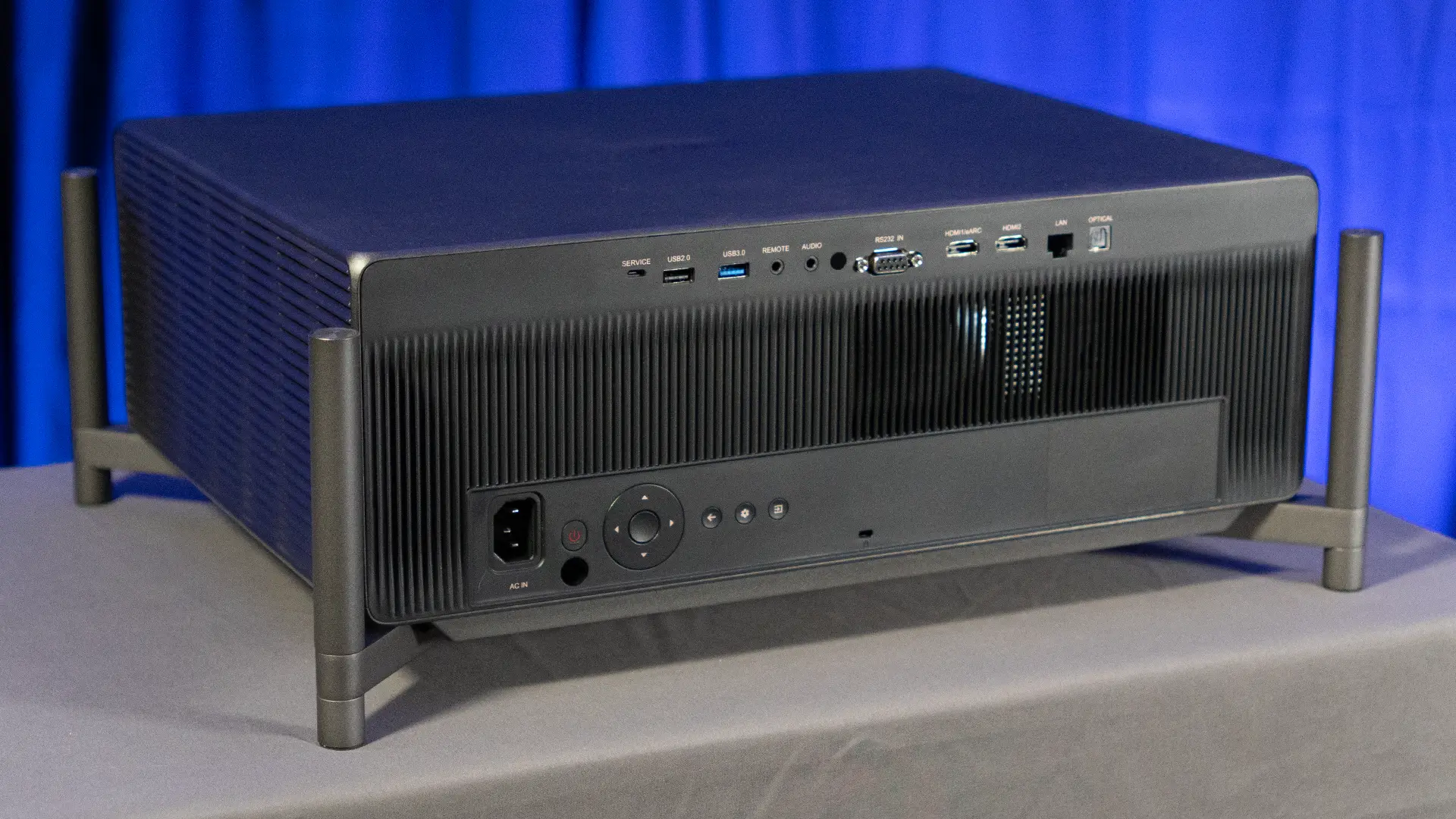
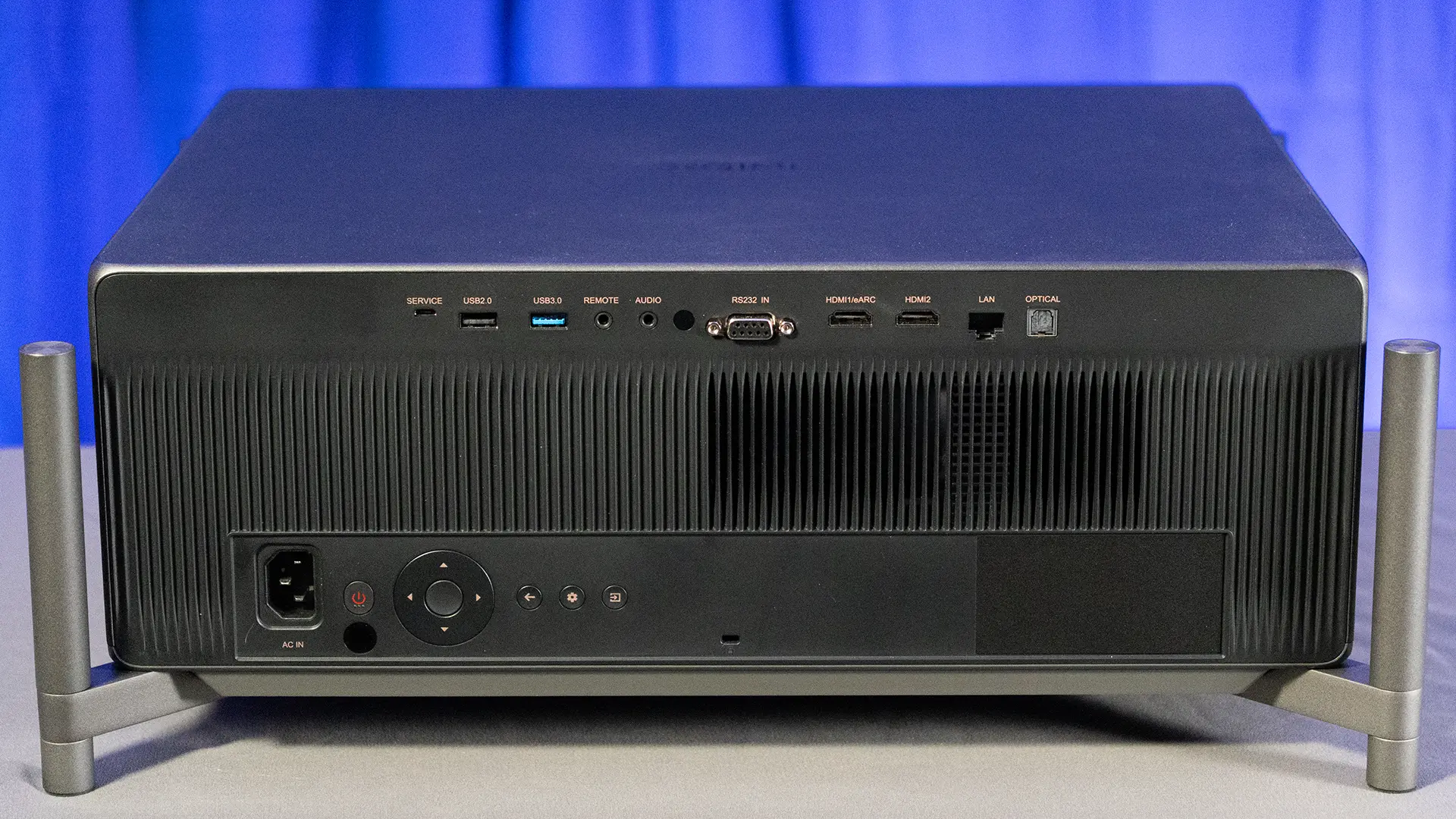
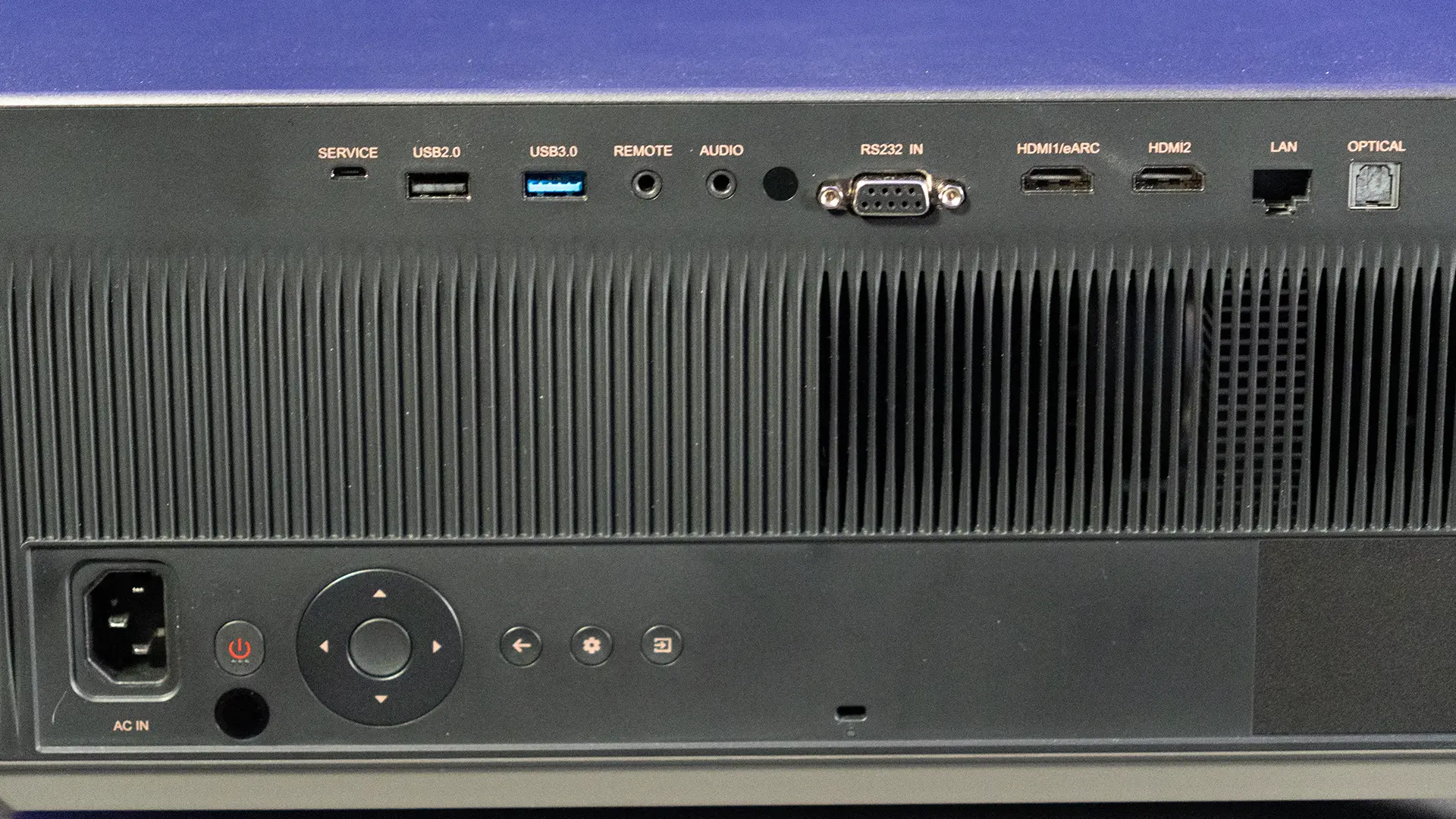
The connections and control panel are located on the rear of the chassis. The physical control buttons allow basic operation and setting adjustment without the remote.

The TITAN's connection panel reflects its fixed-install focused design. Both HDMI ports support 4K HDR input, and HDMI 1 supports eARC, enabling lossless audio passthrough to an AV receiver or soundbar over a single cable without requiring a separate optical connection. The HDMI ports are capped at 4K/60Hz and do not support 4K at 120Hz, which limits options for high-frame-rate gaming or future high-refresh-rate content delivery.
The USB 3.0 and USB 2.0 ports handle media playback from external drives and can power small streaming devices; a third USB port labeled Service is reserved for manufacturer use.
The RS232 DB-9pin port provides the standard control interface expected in professional AV installations, allowing integration with automation systems and third-party control processors. A 100Mbps LAN port supports network control and firmware updates over a wired connection. There is a mini-jack analog output and an optical digital output to feed an audio signal to powered speakers or connect to a receiver.
Wireless connectivity includes Wi-Fi 6 (802.11ax) for network access and Bluetooth. In addition to audio transmission, the remote control also uses it to communicate with the projector. The remote follows XGIMI's existing design language, and it is backlit, which is useful in a dark environment.
The XGIMI TITAN has a motorized lens with a 1.2–1.8:1 optical throw ratio. Below is the throw distance chart for common 16:9 screen sizes. The motorized lens shift covers a vertical range of ±100% and a horizontal range of ±40 %, with the caveat that horizontal shift beyond 40% is available only when vertical shift is set to zero.
XGIMI TITAN Throw Distance (16:9 Aspect Ratio) | ||
Screen Size | Minimum Throw | Maximum Throw |
100" | 8.7 ft | 13.1 ft |
120" | 10.5 ft | 15.7 ft |
130" | 11.3 ft | 17.0 ft |
150" | 13.1 ft | 19.6 ft |
160" | 13.9 ft | 20.9 ft |
180" | 15.7 ft | 23.5 ft |
200" | 17.4 ft | 26.1 ft |
The projector includes sensor-based autofocus that operates automatically on startup or on demand. While the projector has a large amount of optical lens shift, the TITAN offers auto keystone correction and manual 4-corner adjustments. The physical setup process is straightforward: the motorized lens shift and one-click autofocus and keystone system reduce installation time considerably compared to projectors requiring manual optical adjustment.
The projector includes a one-click automatic setup sequence that coordinates autofocus, auto-keystone correction, and motorized lens shift into a single calibration step. The automatic calibration sequence is not always consistent, occasionally overshooting the screen boundaries, but a firmware update is planned to address this behavior. Manual adjustments using the remote are precise and responsive.
The TITAN does not include a smart operating system or built-in media player, but most users have multiple video sources and streaming devices, so that feature will likely not be missed. There is no USB-C video input.
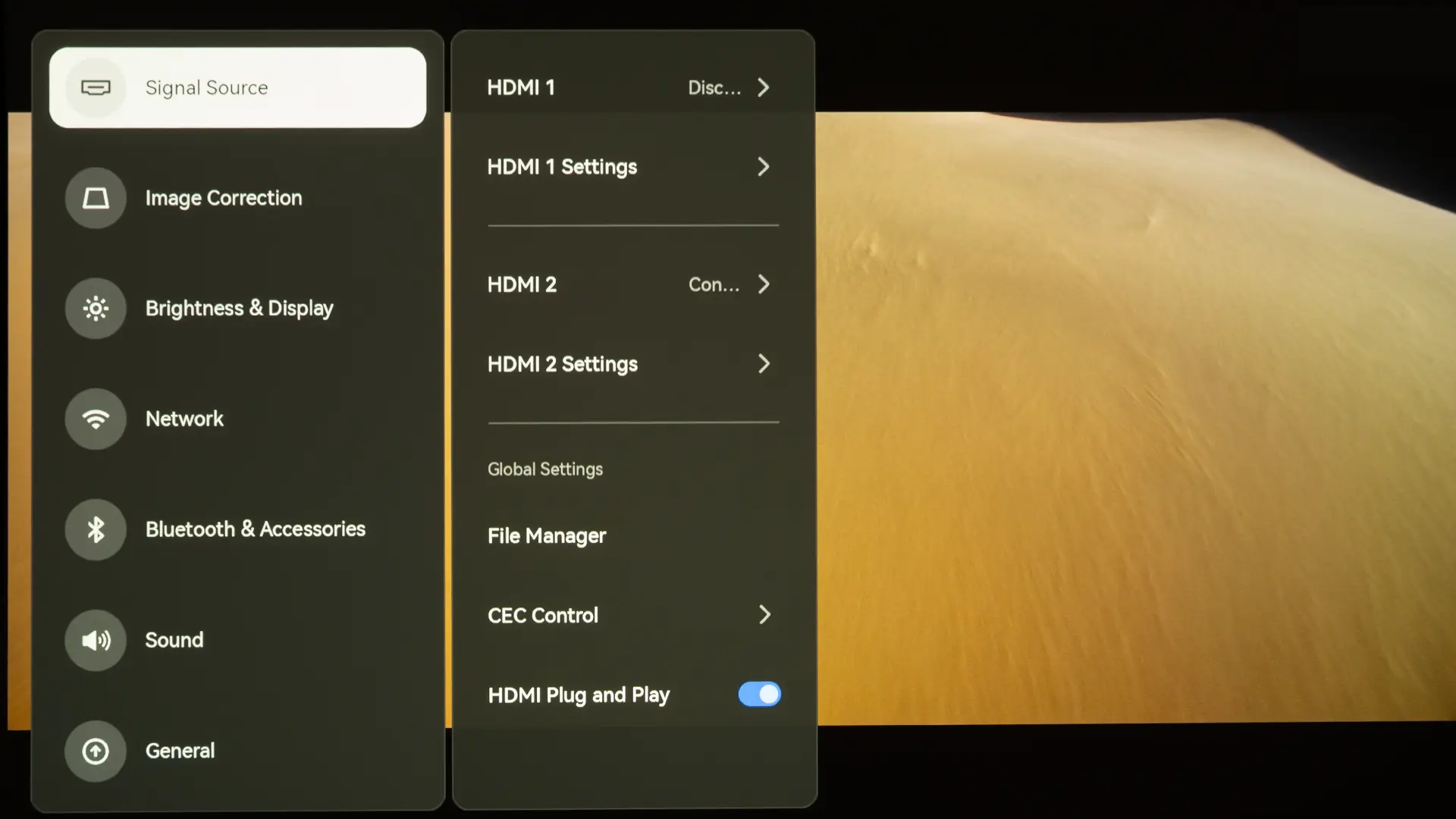
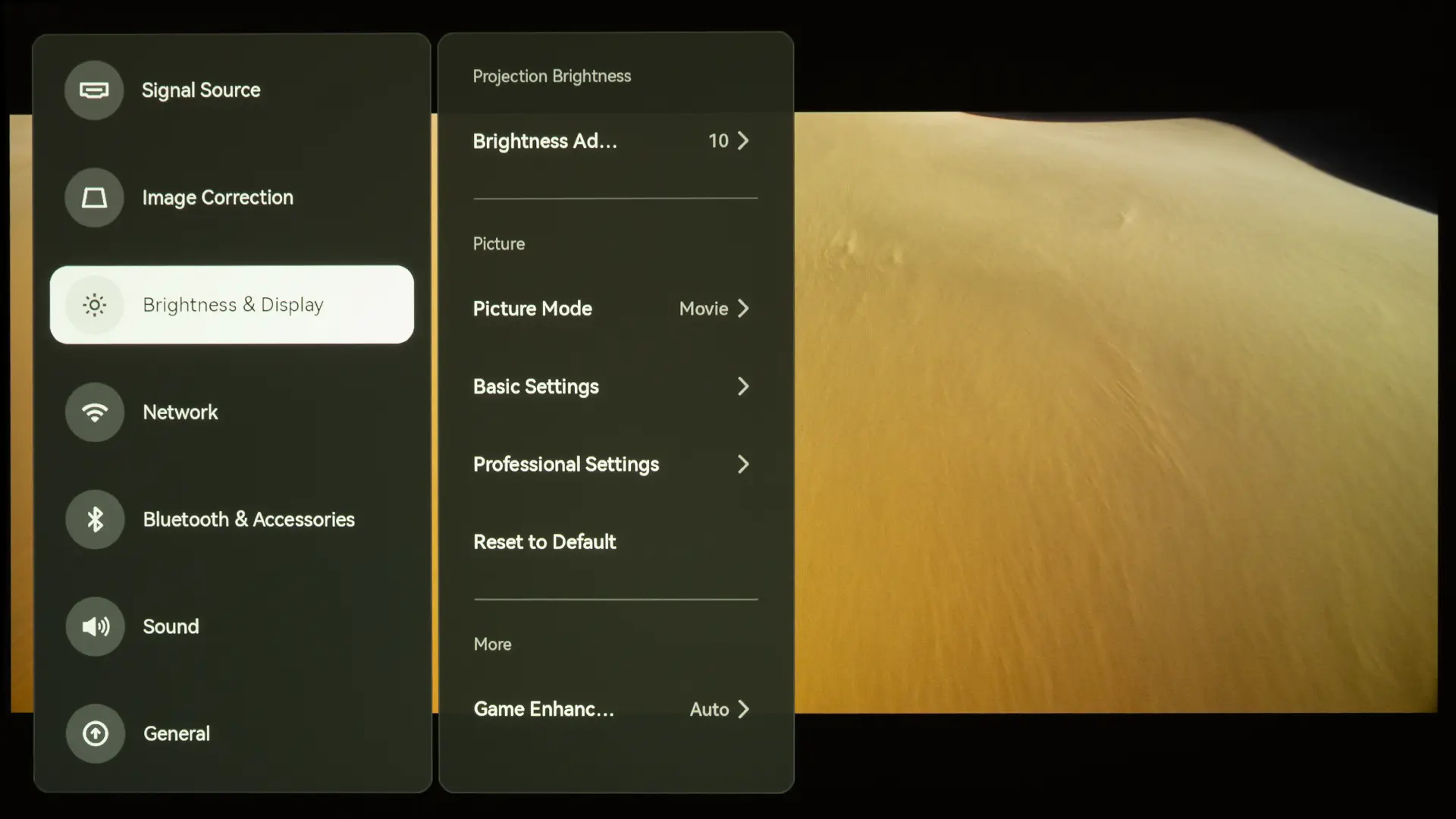
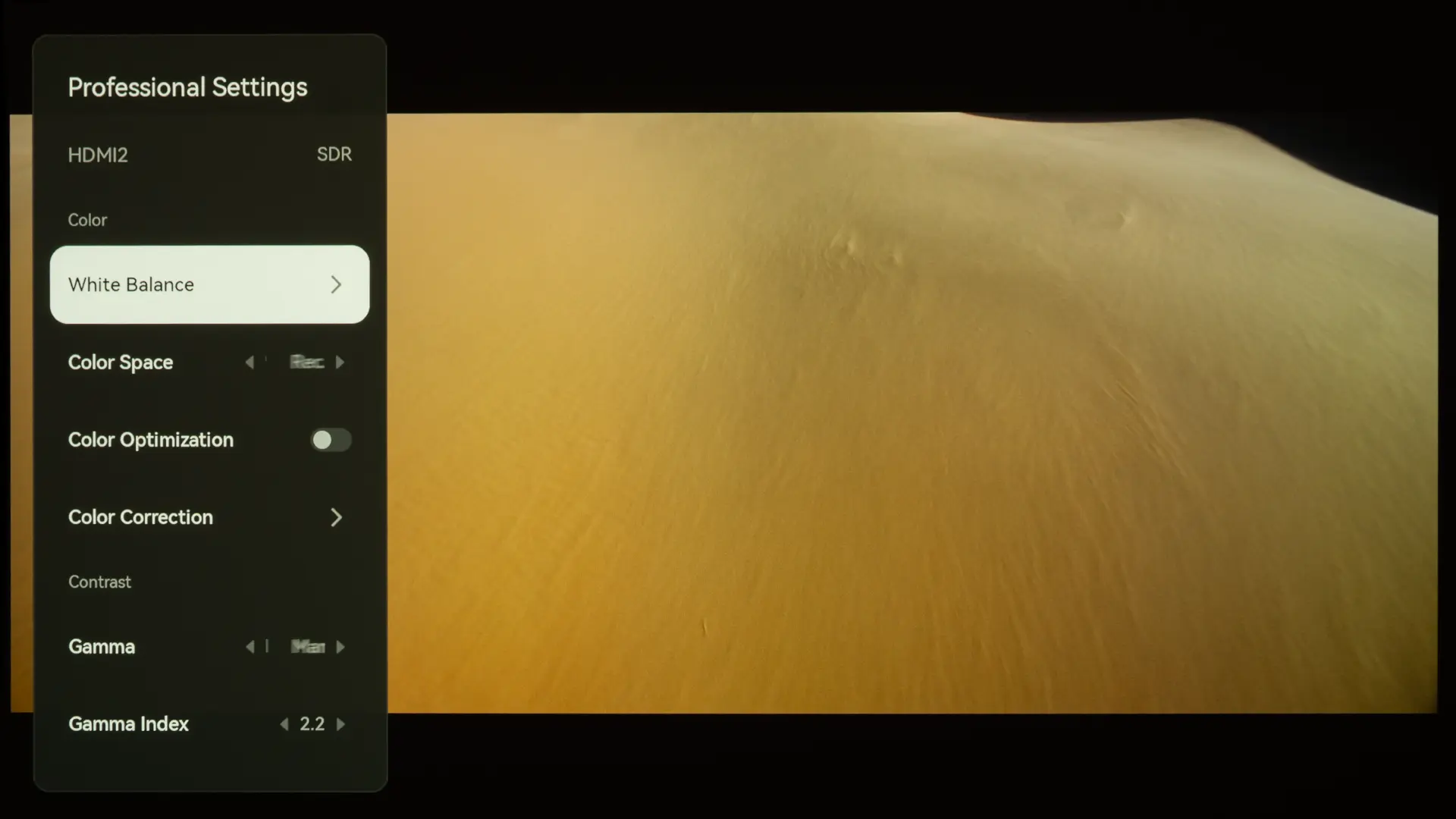
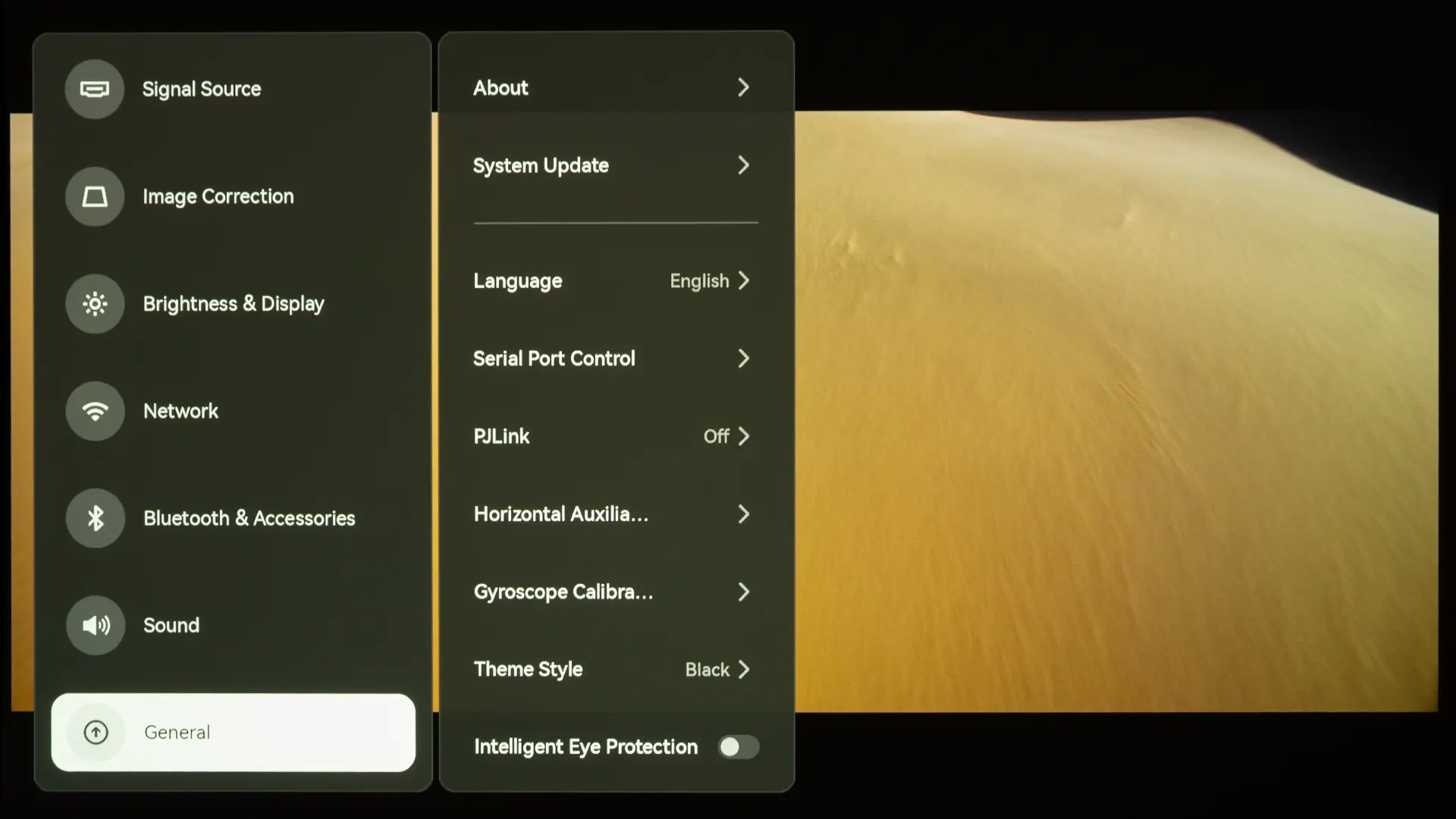
The projector menu includes extensive picture adjustments, including multi-point white balance, gamma, and CMS controls. There is also an image correction section that contains all the settings needed to align the image to the screen. Those include the Focus, Keystone Correction, Tilt and Shift, Optical Zoom, and Horizontal/Vertical Lens Shift. While the menu contains a huge amount of picture and sound settings, it is well organized and easy to navigate.
The combination of RS232 control, LAN connectivity, and a traditional fixed-install chassis make it directly compatible with professional AV integration workflows.
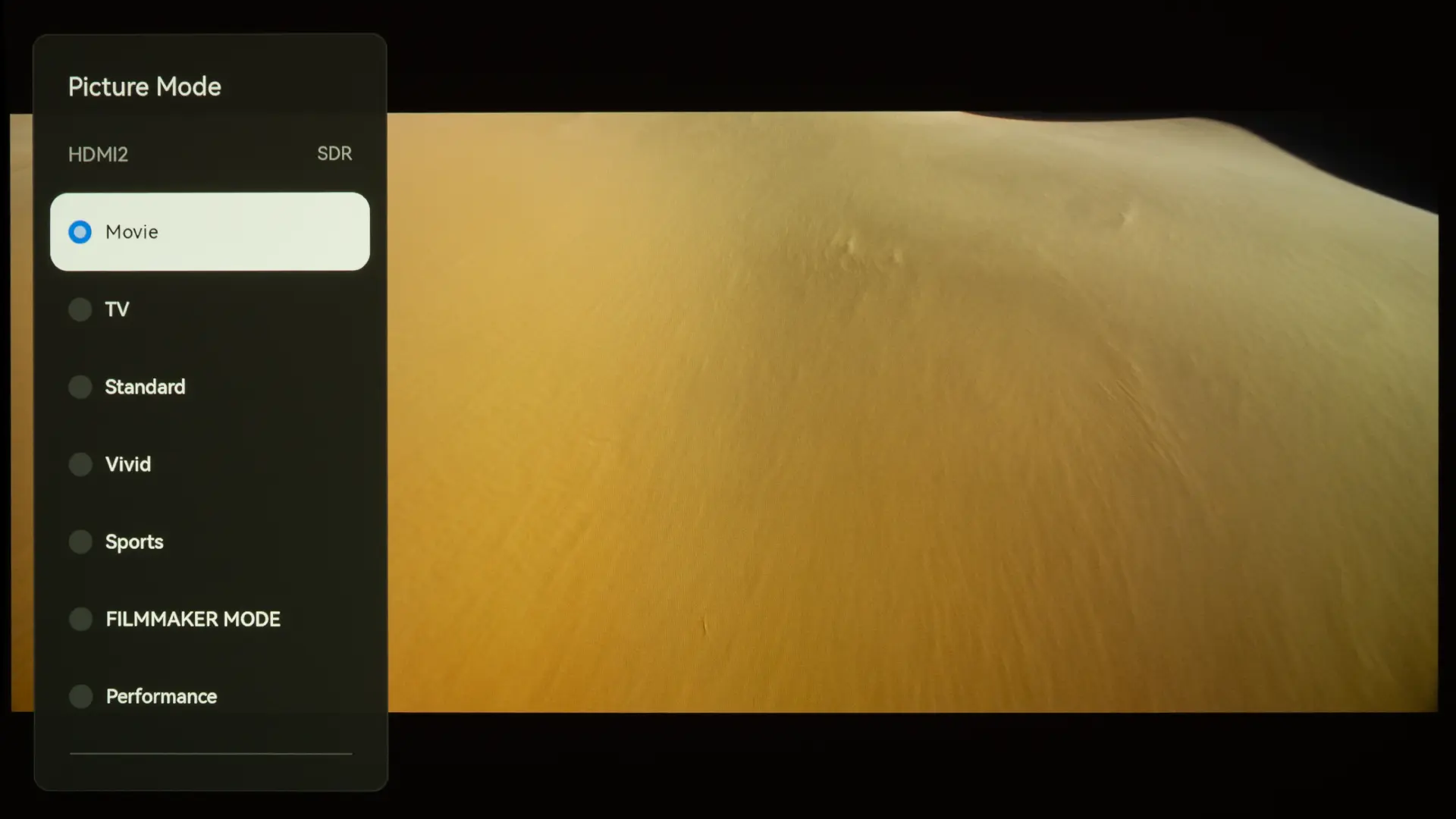
The TITAN includes several preset picture modes for both SDR and HDR. Most modes, except PERFORMANCE mode, delivered a good-looking image. Most of the modes offered similar brightness, with the main differences being their color temperatures and the default picture enhancement settings. For example, because of its cooler color temperature, the STANDARD mode is a good option for viewing content under warm ambient light.
In a light-controlled environment, the MOVIE and FILMMAKER modes were the most accurate when viewed on SDR. Both modes offer a similar color temperature, which was slightly warm. The main difference between the two modes is that the MOVIE mode has several picture enhancements enabled, designed to increase perceived onscreen contrast and color vibrancy.
I chose to view most of my content in the FILMMAKER mode and just engage the projector’s dynamic laser dimming and DBLE (Dynamic Black Level Enhancement) features.
The dual-laser phosphor architecture delivers higher brightness than most RGB laser-equipped projectors on the market, but because it uses a blue-laser phosphor light source, it cannot deliver as wide a color gamut.
The TITAN can reproduce over 150% of DCI-P3, so HDR appears vibrant, especially when projected at high brightness. I have found that colors projected at higher luminance levels tend to appear more saturated. Often, I am happy sacrificing some color gamut coverage for higher brightness when viewing HDR.
One of the benefits of the unit’s laser light source is that I did not notice the speckle artifacts that are often visible on an RGB laser projector when viewing bright colors. The TITAN can easily reproduce the DCI-P3 color gamut used to master most HDR content, so I am happy to sacrifice any extra color reproduction to reduce visible laser speckle.
While the TITAN offers very good color reproduction out of the box, XGIMI has included a wide range of tools and adjustments, including multi-point Grayscale adjustments and CMS for professional calibration.
I took the time to measure and adjust the TITAN. Below are the before-and-after calibration results for my specific room and setup. I used Portrait Displays Calman color calibration software, a Murideo Seven Generator 8K, and a Klein K10-A colorimeter to measure the projector's color accuracy and adjust it.
Since your room and screen material significantly impact the overall picture, I don't recommend using someone else's calibration adjustments. If your room is brighter/darker, or if your walls are a different color, copying someone else's results can degrade picture quality rather than improve it
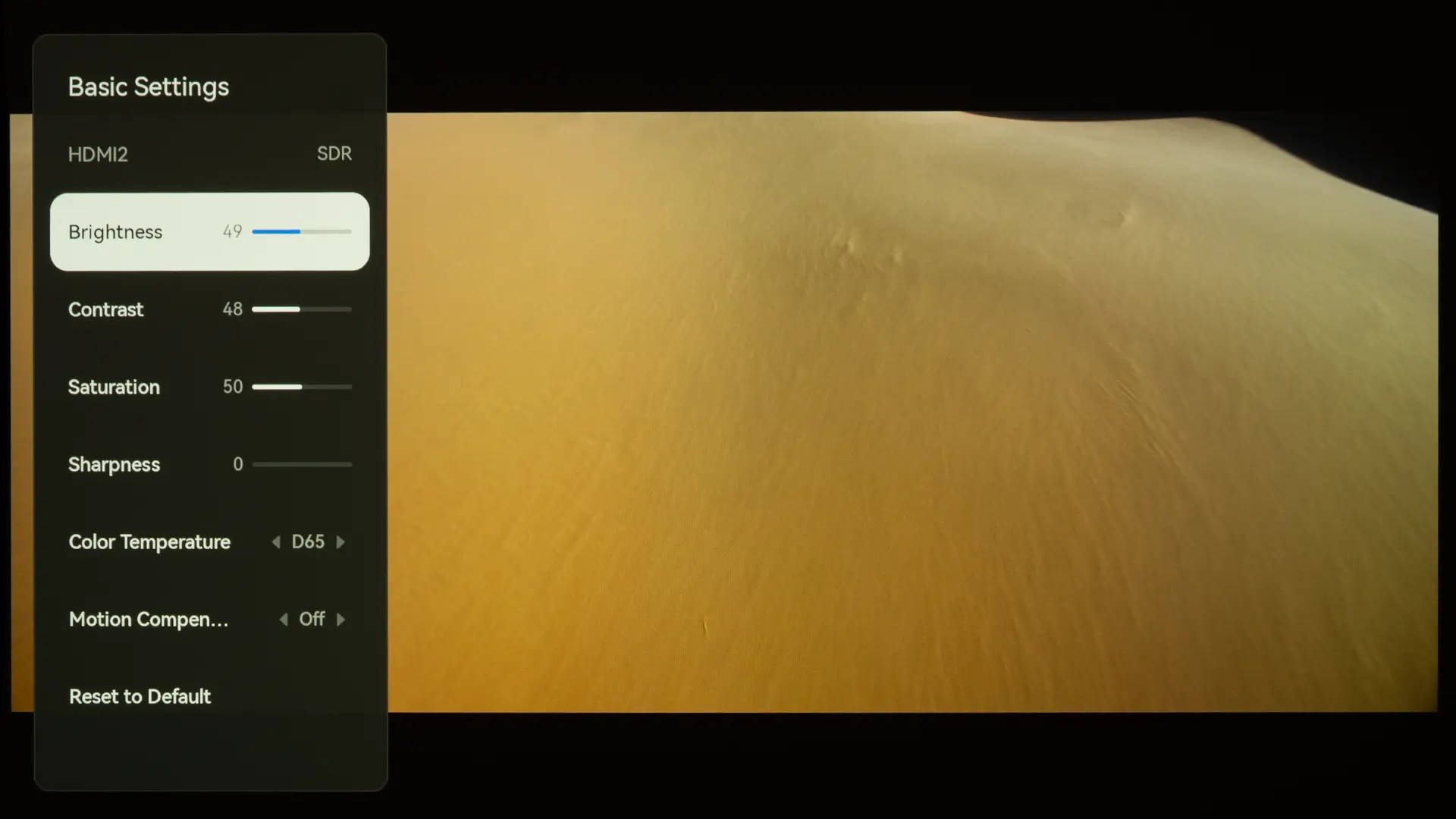
If you are not going to have the TITAN calibrated, there are some simple BRIGHTNESS, CONTRAST, and SHARPNESS adjustments you can make to improve the picture quality of your projector in your room, There are several free test patterns available on the Murideo website and their YouTube channel. Murideo also has written instructions in the resource section of its website.

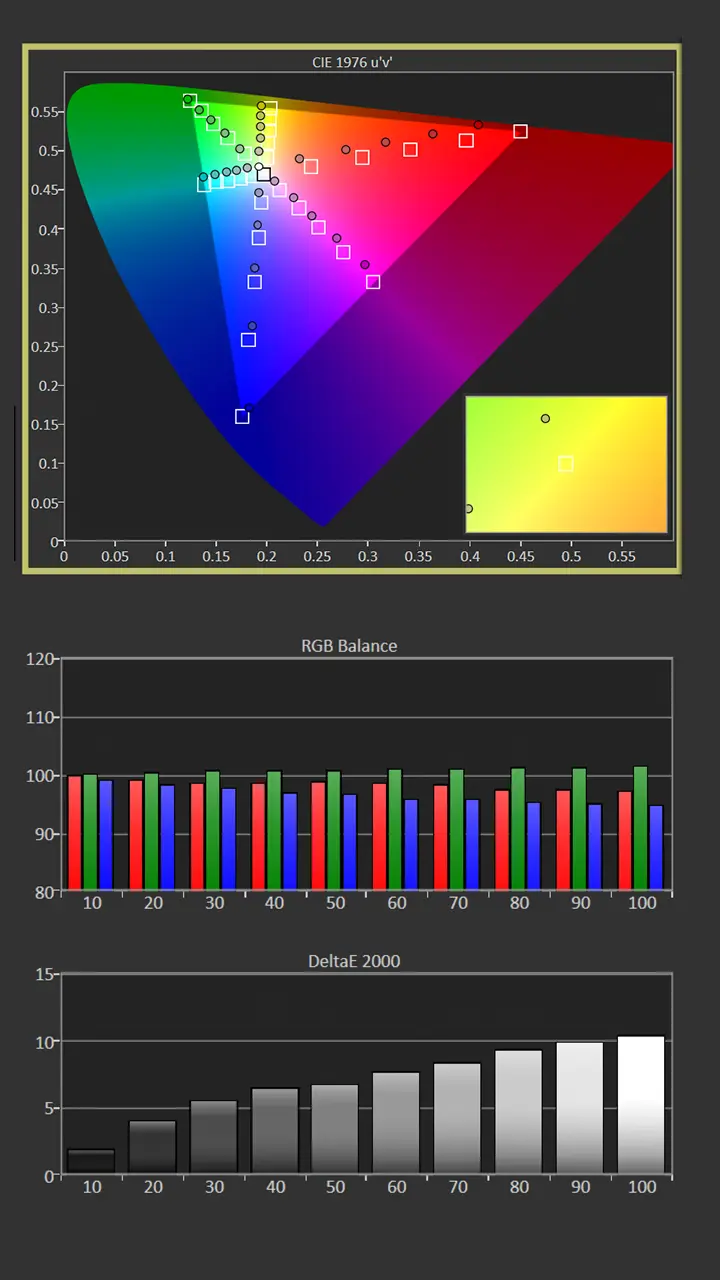
I chose to measure and adjust the FILMMAKER mode since it was one of the most accurate out-of-the-box. Pre-calibration, the color temperature was 6043K so the image was slightly warmer than my target of 6500K. While the image was pleasing to the eye ny Grayscale measurements showed an excessive amount of green.
The Color Sweep measurements showed that some bright colors were undersaturated. There was some color shift, likely due to an uneven RGB balance. The gamma was around 2.15, which is very close to my normal target of 2.2.

Before calibration, on my hundred-inch screen, the peak brightness produced 615 nits, which is more than bright enough to deliver a vibrant image on a 150” screen, even under moderate ambient light.

Since the measured Gamma was close to my target of 2.2, I made minor adjustments to the Contrast settings. I left the Color Temperature setting at its default of D65, which is fine since it was closest to my target of 6500K.

Measurements showed an excessive green bias, resulting in an overly warm-looking image, but this was easily corrected with the Two Point White Balance adjustments. Once I reduced the Green Gain and increased the Blue Gain settings, the color temperature was closer to my target of 6500K.
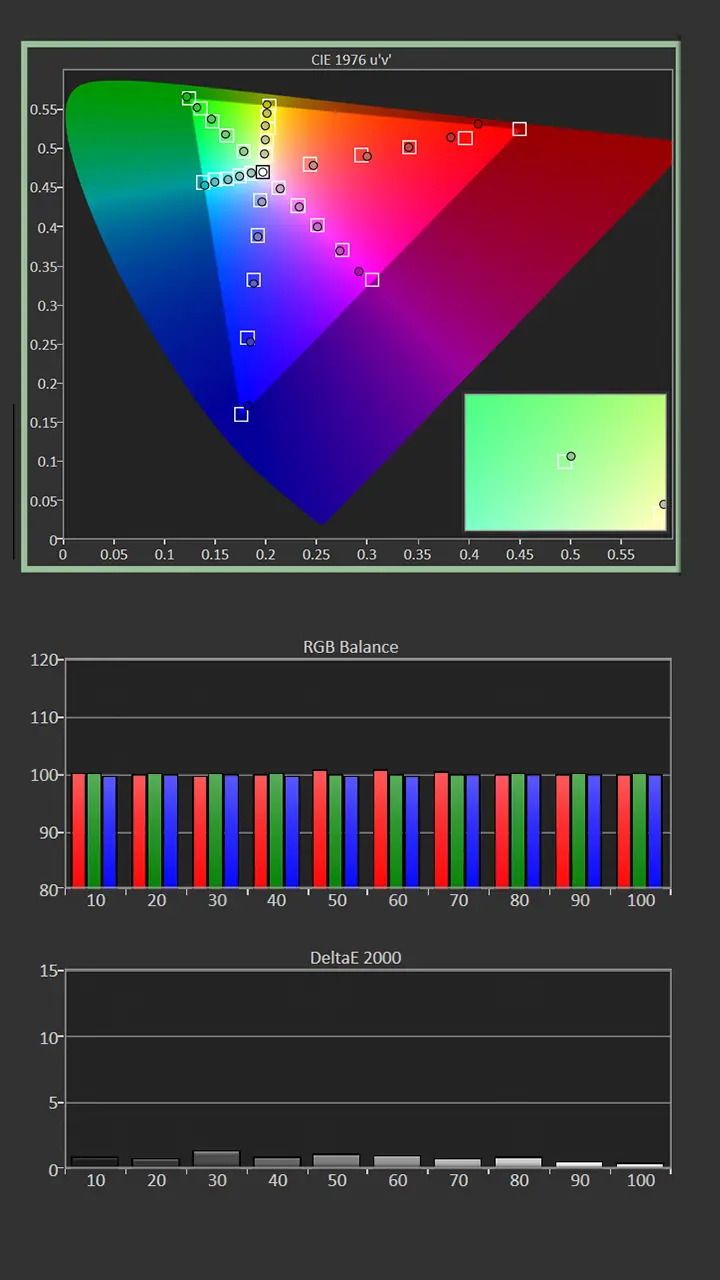
Correcting the projector's white balance also significantly improved the unit's color tracking. We use CMS adjustments to reduce/eliminate most color shift errors. Bright reds were still slightly undersaturated, but most color points were spot on.
The TITAN’s grayscale and color reproduction are good enough out of the box to satisfy the average professional and home entertainment users. However, many projector enthusiasts desire the best possible picture quality in their spaces, so it is great that the XGIM TITAN includes a full suite of picture adjustments.
Delta E measures the perceptual difference between a target color and the displayed color. A value below 1 is considered imperceptible to the human eye; values below 3 are considered acceptable for professional use. After spending a few minutes adjusting the 2-point grayscale and CMS, the grayscale and color tracking both had an average delta E of around 1.

The TITAN offers seven preset HDR picture modes for standard HDR10 content, allowing you to adjust the image to match your room environment. The HDR presets are named the same as the SDR presets, with IMAX ENHANCED added as the seventh preset. For Dolby Vision, you get two presets: DOLBY VISION BRIGHT and DOLBY VISION DARK.
The out-of-the-box HDR color reproduction is very good. The most accurate picture mode was HDR MOVIE. Each SDR and HDR picture mode has its own picture adjustments, including Contrast, Saturation, Brightness, Color Temp, and White Balance.
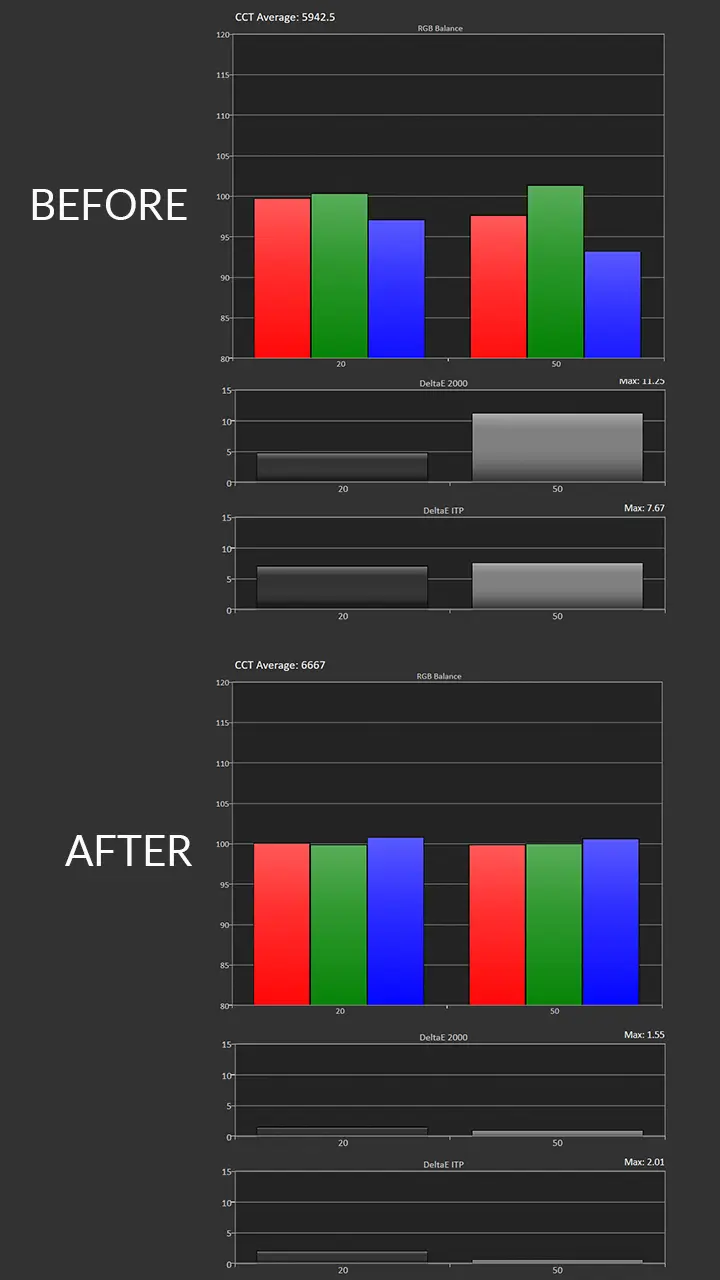
Pre-calibration HDR Grayscale measurements showing the HDR MOVIE mode, like SDR was warm due to an overemphasis in Green. I used the Two-Point White Balance adjustment to improve White Balance, resulting in an average DeltaE of 1.5.
My measurements confirmed that the TITAN reproduces over 100% of the DCI-P3 color gamut. The projector does an excellent job of mapping its massive color gamut to accurately reproduce the REC709 color space used in SDR content.
Over the past few years, projector brightness has increased dramatically. The TITAN has a rated brightness of 5000 ISO lumens, making it one of the brightest consumer projectors on the market. I took the time to measure the TITAN Max light output. I set the projector into PERFORMANCE mode and took several measurements to estimate its overall light output.
I measured 6,729 lumens, which is outstanding. XGIMI TITAN is one of the brightest consumer projectors I have ever tested.
The TITAN's measured brightness significantly exceeds its rated lumen specification, a meaningful differentiator in a market where many projectors fail to meet their advertised ratings. The TITAN was not only capable of exceeding its rated brightness but also of delivering accurate color reproduction. As you can see from the chart below, most of the picture modes, including the most accurate ones, can produce close to the unit's rated brightness.

Picture Modes: Brightness | ||
|---|---|---|
| Picture Mode | Brightness Measured (Lumens) | |
| PERFORMANCE | 6729 | |
| STANDARD | 5232 | |
| VIVID | 5245 | |
| TV | 5281 | |
| SPORTS | 5207 | |
| MOVIE | 4289 | |
| FILMMAKER | 4750 | |
| FILMMAKER (Calibrated) | 5225 | |
XGIMI could have easily rated this projector at 7,000 lumens, but they decided to be conservative. One downside is that in the projector’s Performance Mode, the image is greenish and the projector is noticeably noisy. While this picture mode's light output is impressive, in my opinion, it’s not practical for home theater use or any application where good color reproduction is important.
Most of the unit's picture modes exceed the manufacturer's brightness rating. After calibration, in FILMMAKER mode, on my matte white 100” screen, the TITAN delivered 600 nits of on-screen brightness, which places the TITAN in rare company in the home projection category. That is enough brightness to deliver a vibrant image on a 150"+ screen in a light-controlled environment.
Except for the Epson QL3000 this is the brightest consumer projector that I have reviewed. The Epson model is significantly larger and far more expensive. There are definitely reasons to buy that premium 3-chip model, but the fact that the TITAN can deliver this level of performance at this price point is incredible.
The TITAN's rated 5,000,000:1 dynamic contrast is a lab measurement taken using alternating all-white and all-black test frames with laser dimming engaged. Real-world on-screen contrast in typical content is considerably lower. In my space, using a sequential (Full On/Full Off) contrast test, I measured a contrast ratio of about 2,000:1. As a general reference, well-performing single-chip DLP projectors at this brightness level typically deliver a measured contrast ratio of 1,500:1 to 3,000:1 on/off.
When the Dynamic Contrast and Dynamic Black Level features are enabled, the projector’s dynamic laser dimming is engaged. During the sequential contrast test, the projector completely switches off the laser when a black frame is detected. The measured dynamic contrast ratio jumps to nearly 500,000:1, the highest I can measure in my space.
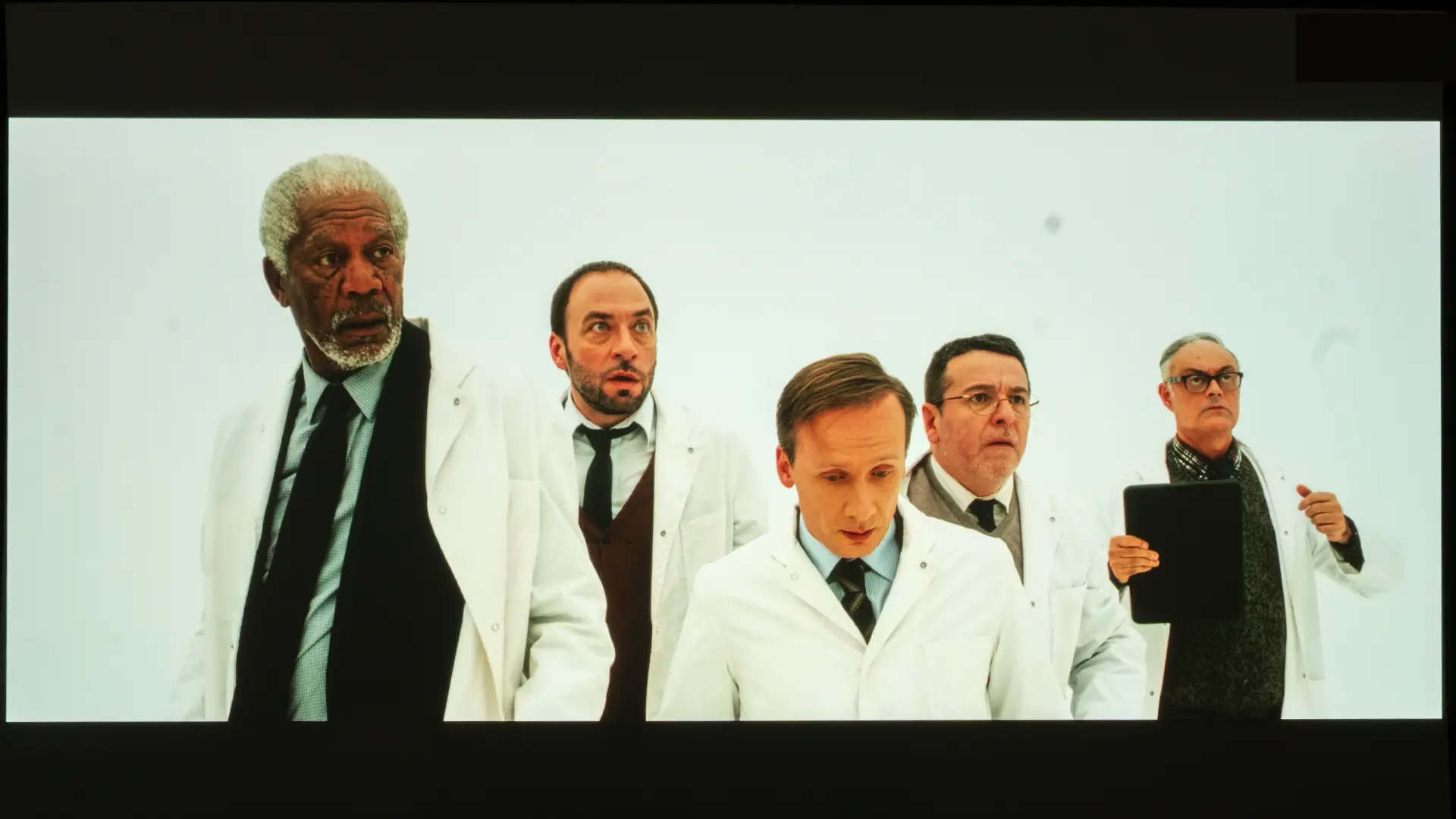
When watching real-world content, perceived contrast improves. Black bars seem darker, and it's easier to see details in the shadows and dark scenes. The DBLE feature has three settings: low, medium, and high. While the Highest offers the deepest blacks, it also causes some visible light pumping as the projector's laser aggressively modulates its output. Doing most of my viewing, I left the DLBE setting in Low.
The TITAN is optimized for brightness and color gamut, not for deep blacks in fully dark rooms. While the TITAN offers good perceived contrast for a DLP projector, it lacks the dual iris lens assembly found in the newer TITAN Noir series. For buyers who prioritize native black-level performance in dark scenes, we'll gravitate toward the TITAN Noir Max for its higher native contrast.
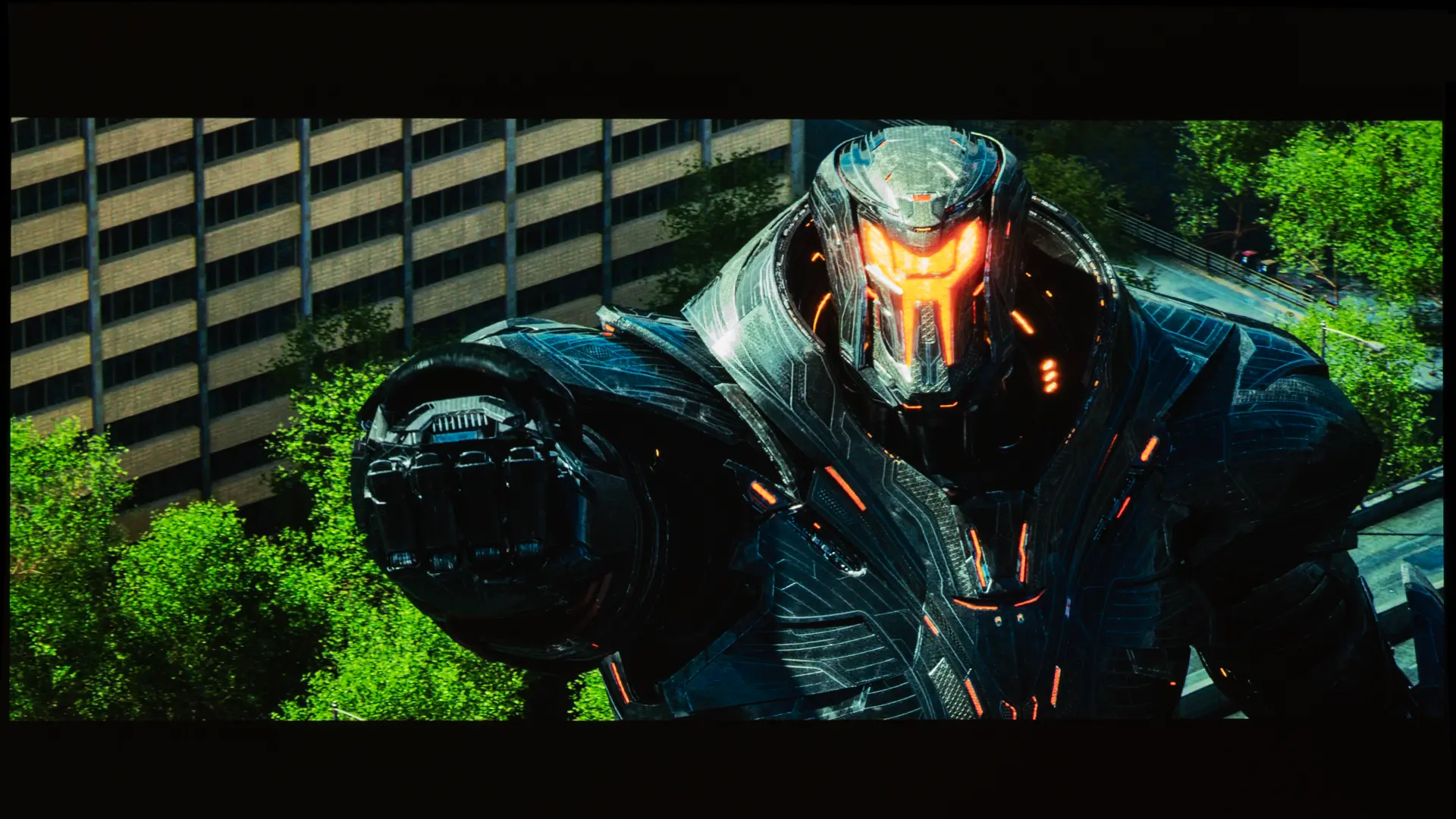
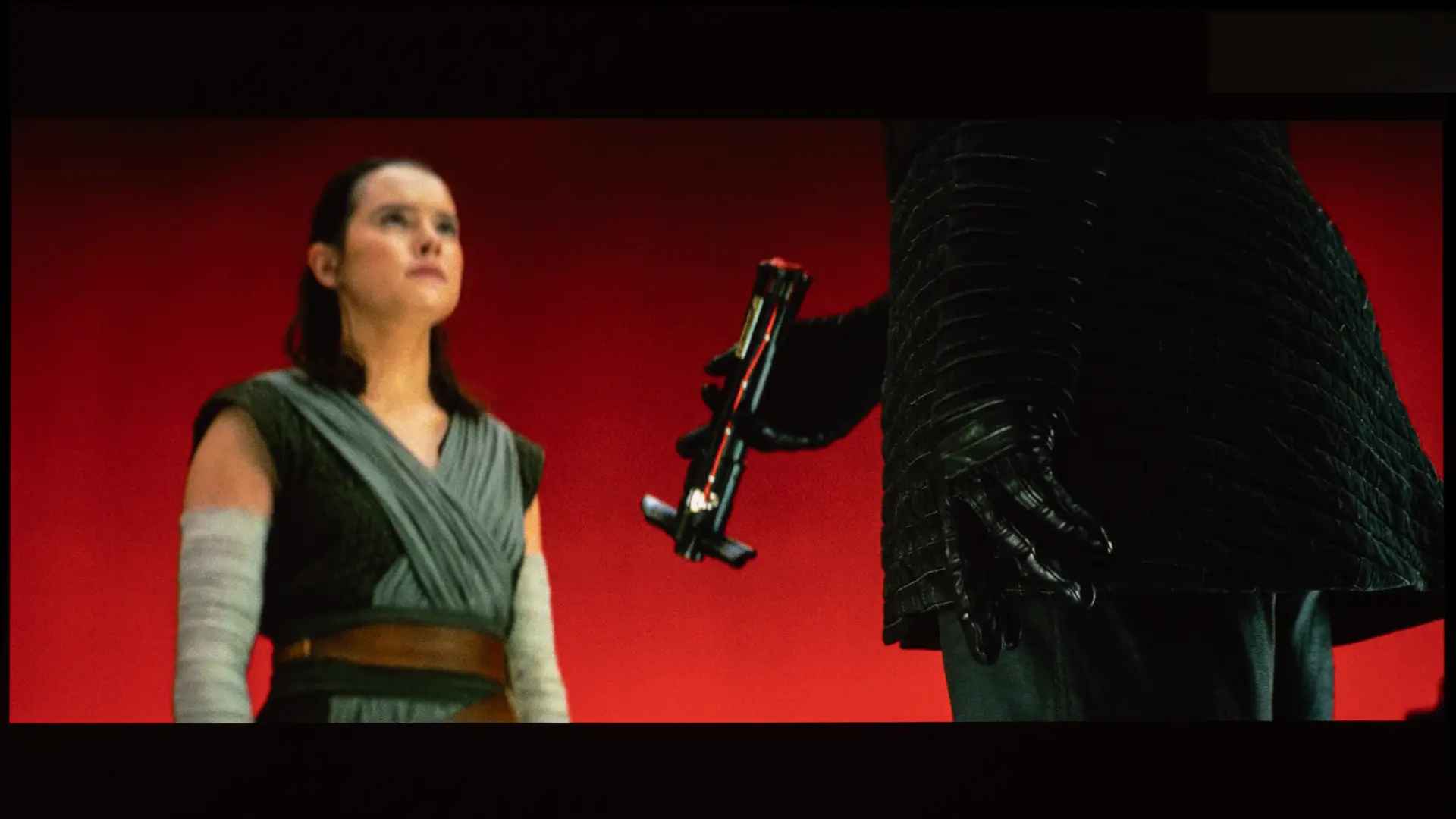
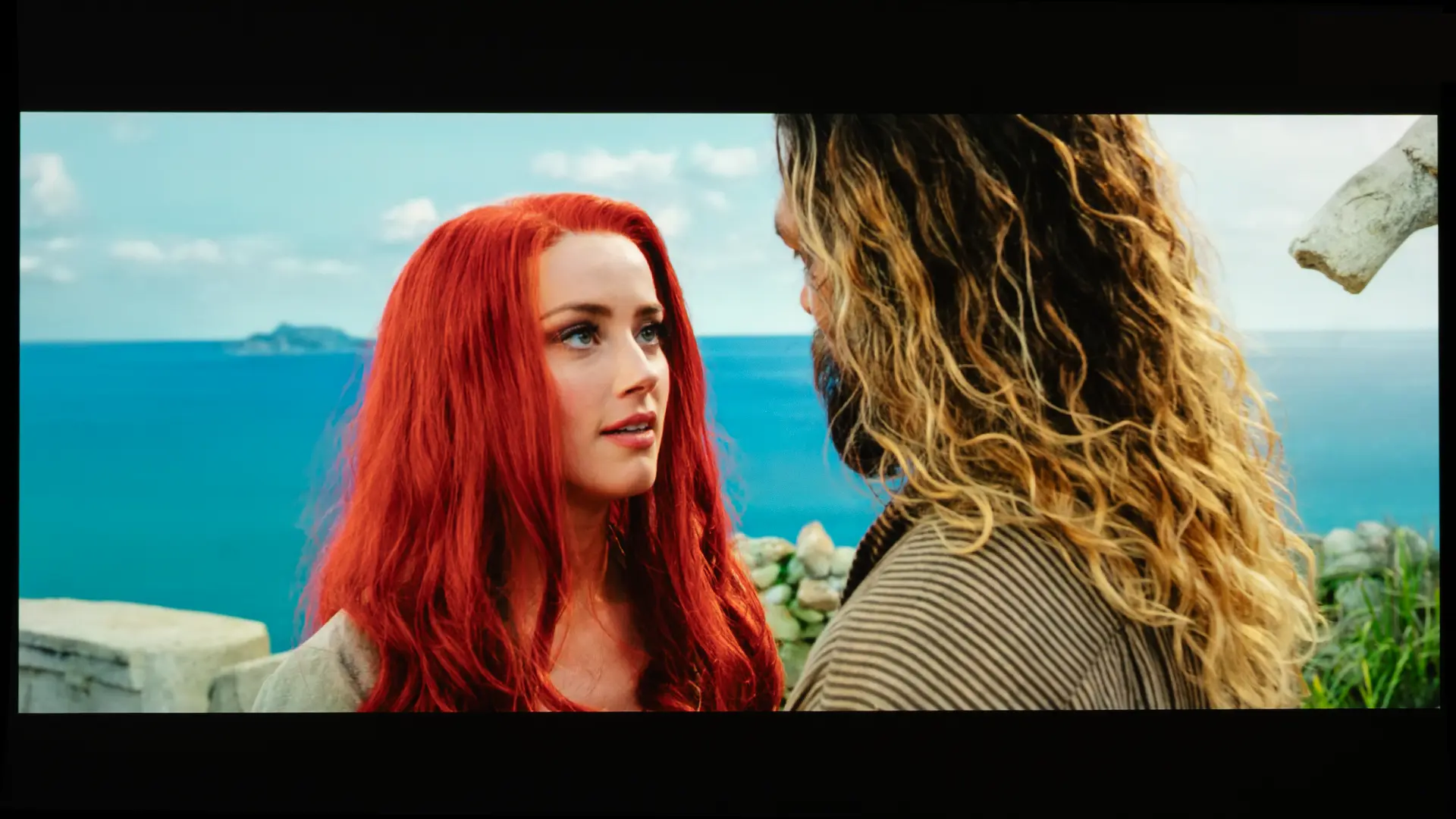
I have always been impressed with the color reproduction of XGIMI projectors, and this projector did not disappoint. When viewing SDR and HDR content, the TITAN’s image quality looked great. Due to the projector's excellent optics and effective XPR pixel shifting, fine details in 4K content were easily visible. The AISR AI Super Resolution processing in the X1 processor upscales 1080p and lower-resolution content with credible results, adding useful detail without introducing visible processing artifacts.
The 0.78-inch chip's larger reflective surface contributes to uniformity and fill factor advantages over smaller DMD chips, particularly relevant at the 150" to 250" screen sizes the TITAN is designed to serve. There is excellent focus uniformity from center to edge.
Single-chip DLP projectors can exhibit a rainbow effect due to their sequential color-wheel architecture. The TITAN uses a six-segment color wheel design, which reduces the rainbow effect. However, if you are sensitive to this visual artifact, it is still noticeable on some occasions.
The TITAN's high brightness makes it well-suited for large conference rooms, auditoriums, and worship spaces with low to moderate ambient light. Thanks to the TITAN's ability to deliver 4K on-screen resolution, the text in PowerPoint looks sharp, and details in graphics and imagery are easy to see. The projector's excellent color reproduction and good native contrast make it a great option for museums seeking to faithfully reproduce artwork.
The TITAN can also display 21:9 and 32:9 aspect ratios. In business conferencing applications, these format are great for hybrid meeting rooms. They allow for side-by-side application viewing and pair well with the “Front Row” layout in Teams Rooms, where meeting participants appear across the bottom of the screen while shared content remains large and readable. A user can have a spreadsheet open next to email and a web browser without constantly switching windows. In video conferencing, 21:9 displays are also useful because platforms like Microsoft Teams and Zoom can show more participant windows while leaving room for presentation content.
The TITAN supports a wide range of HDR formats and features several dedicated HDR picture modes. When viewing HDR10 content, I mostly used FILMMAKER mode because it offered the best balance of brightness and color accuracy. I did engage the dynamic contrast and DBLE features to improve perceived on-screen contrast, since those settings are off by default in this picture mode.

While the TITAN can effectively utilize the dynamic metadata found in Dolby Vision and HDR10+, it also did a good job of tone-mapping static HDR10 content. Even after calibration, on my hundred-inch matte white screen, the projector delivered over 600 nits. The unit's higher brightness reduces the need for aggressive HDR tone mapping. This results in higher on-screen brightness without the need to clip bright highlights.
DCI is a consortium of major Hollywood studios that establishes technical standards for digital cinema projection systems used in commercial movie theaters. According to the DCI, to deliver a reference-level HDR image, 300 nits of brightness are required. The TITAN can easily deliver that much brightness on a 150-inch screen. On my 100’ screen, I could reduce the TITAN's laser light output by 50% and still meet their recommendation while further improving the unit's black level.
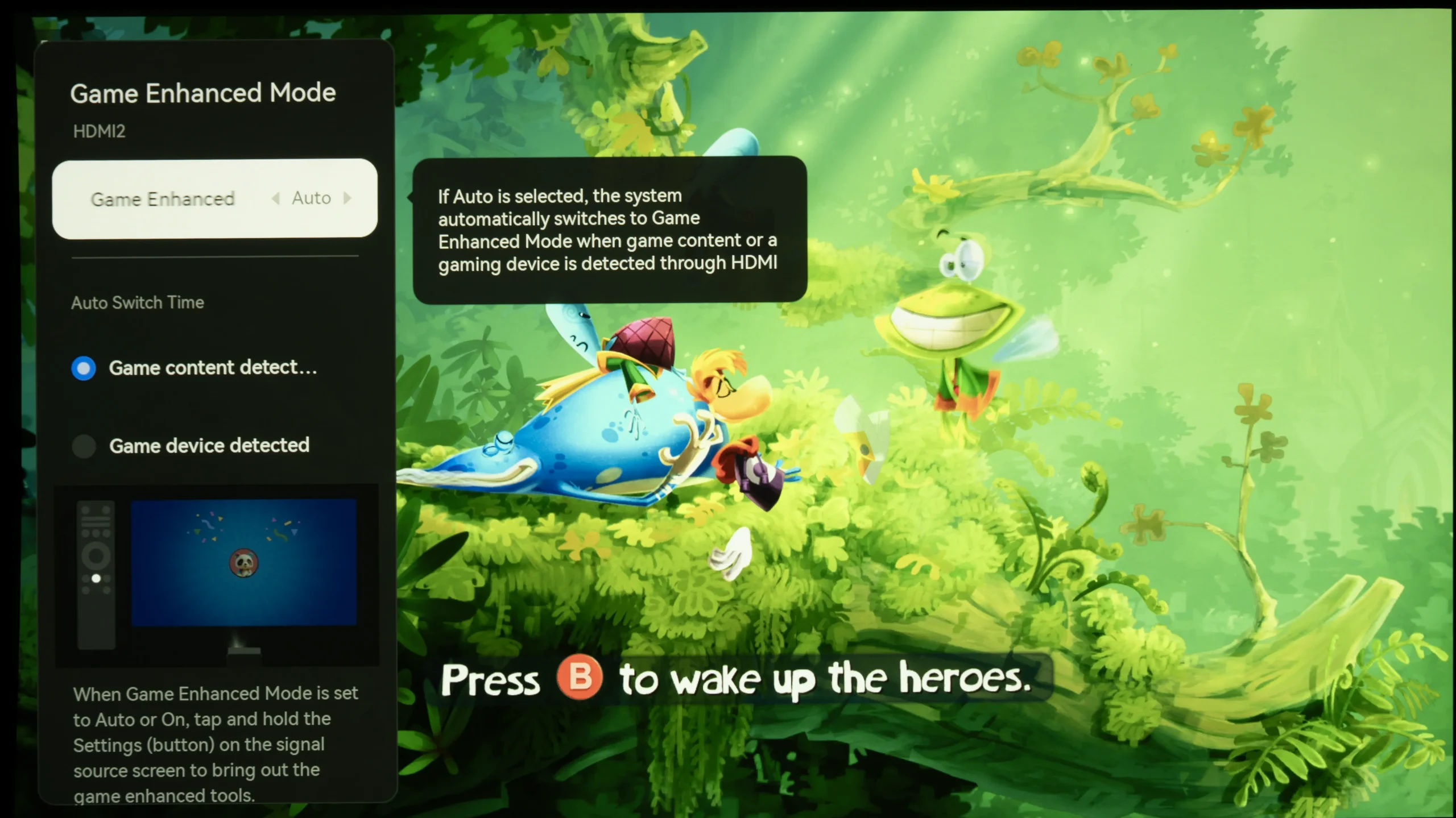
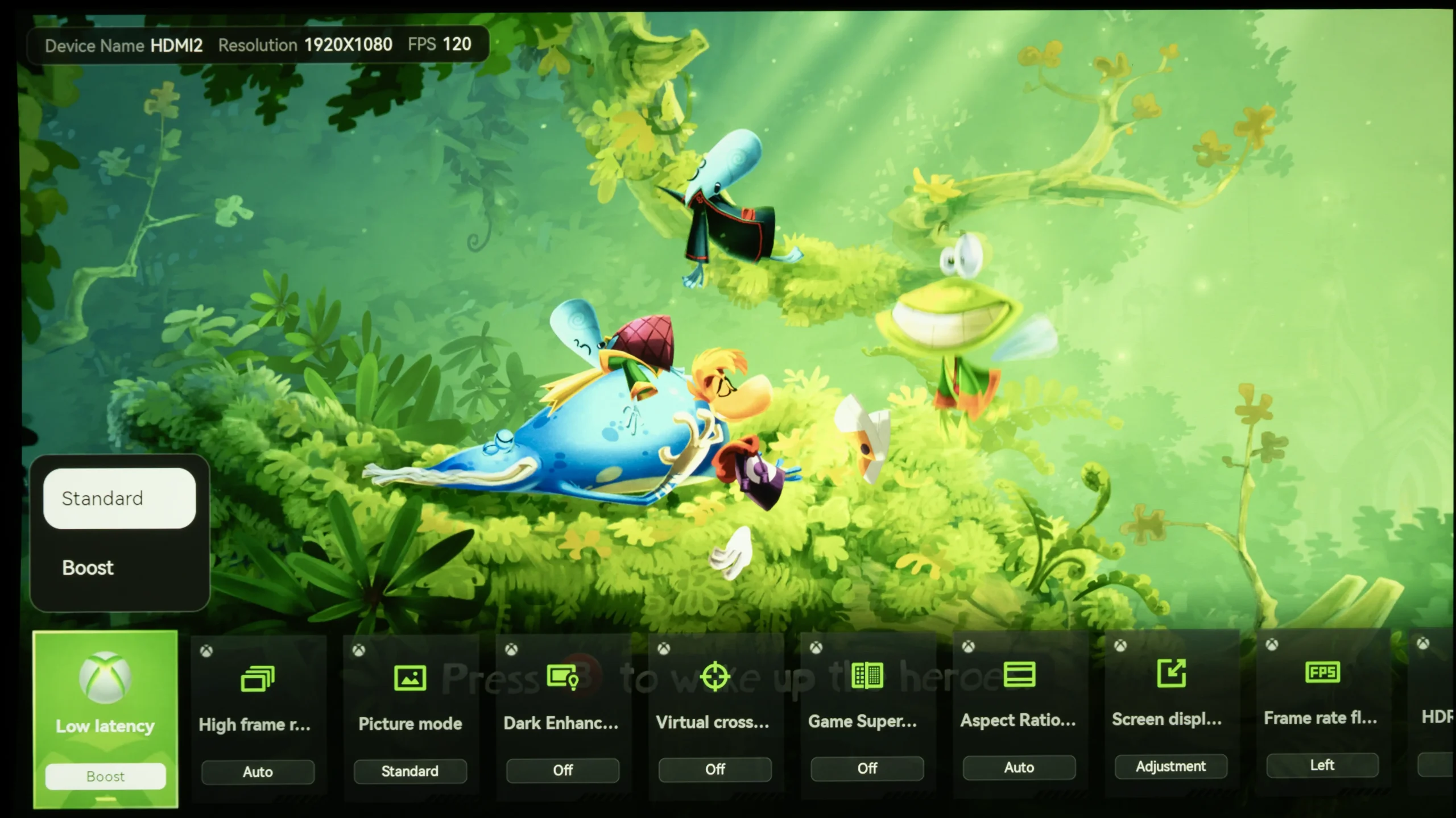
The maximum frame rate displayed at 4K is 60 frames per second, but 1080P content can be displayed at 120 frames per second. The TITAN's gaming performance is decent. In STANDARD mode, I measure an input lag of 64ms at 4K/60Hz and 61.5ms at 1080/120Hz. Enabling Game Enhancement Boost mode reduces latency to 32.4ms, which is appropriate for most casual gamers.
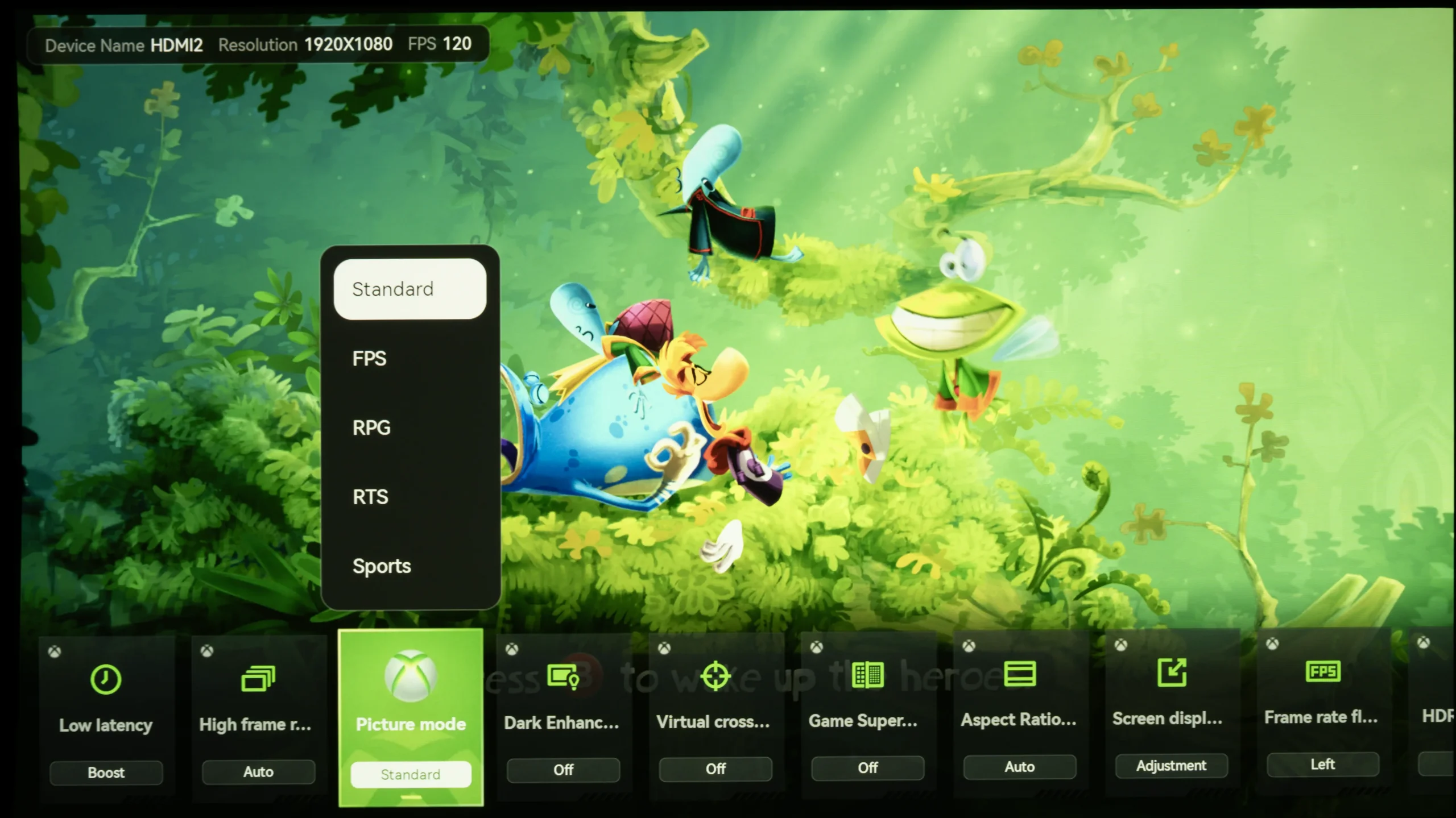
The Titan supports HDMI ALLM (Auto Low Latency Mode), so the projector automatically switches to its Game-Enhancement mode when gaming content is detected. When in Game Enhancement mode, holding down the settings button on the remote brings up a dedicated Gaming menu that includes several settings designed to maximize the gaming experience.
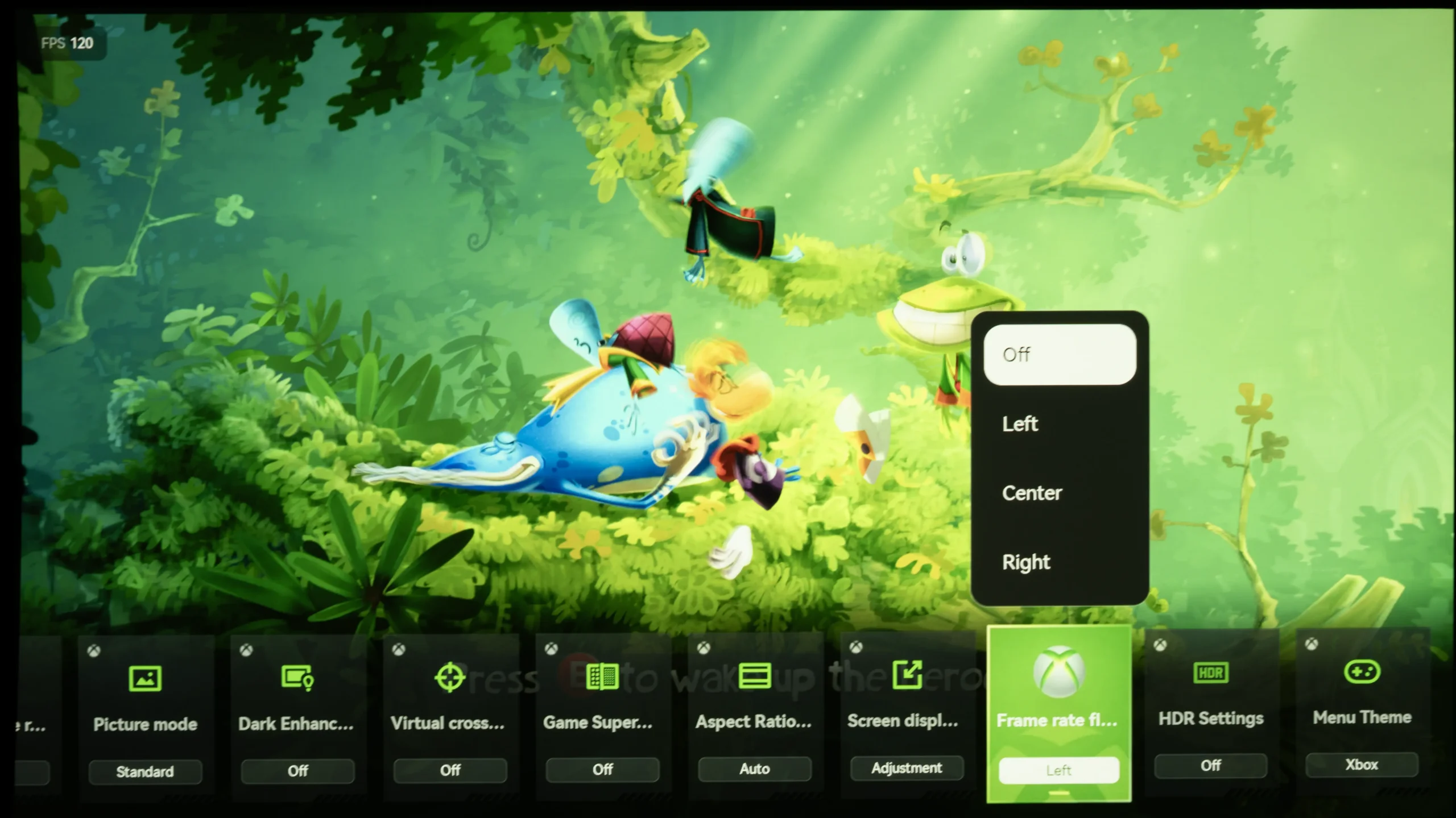
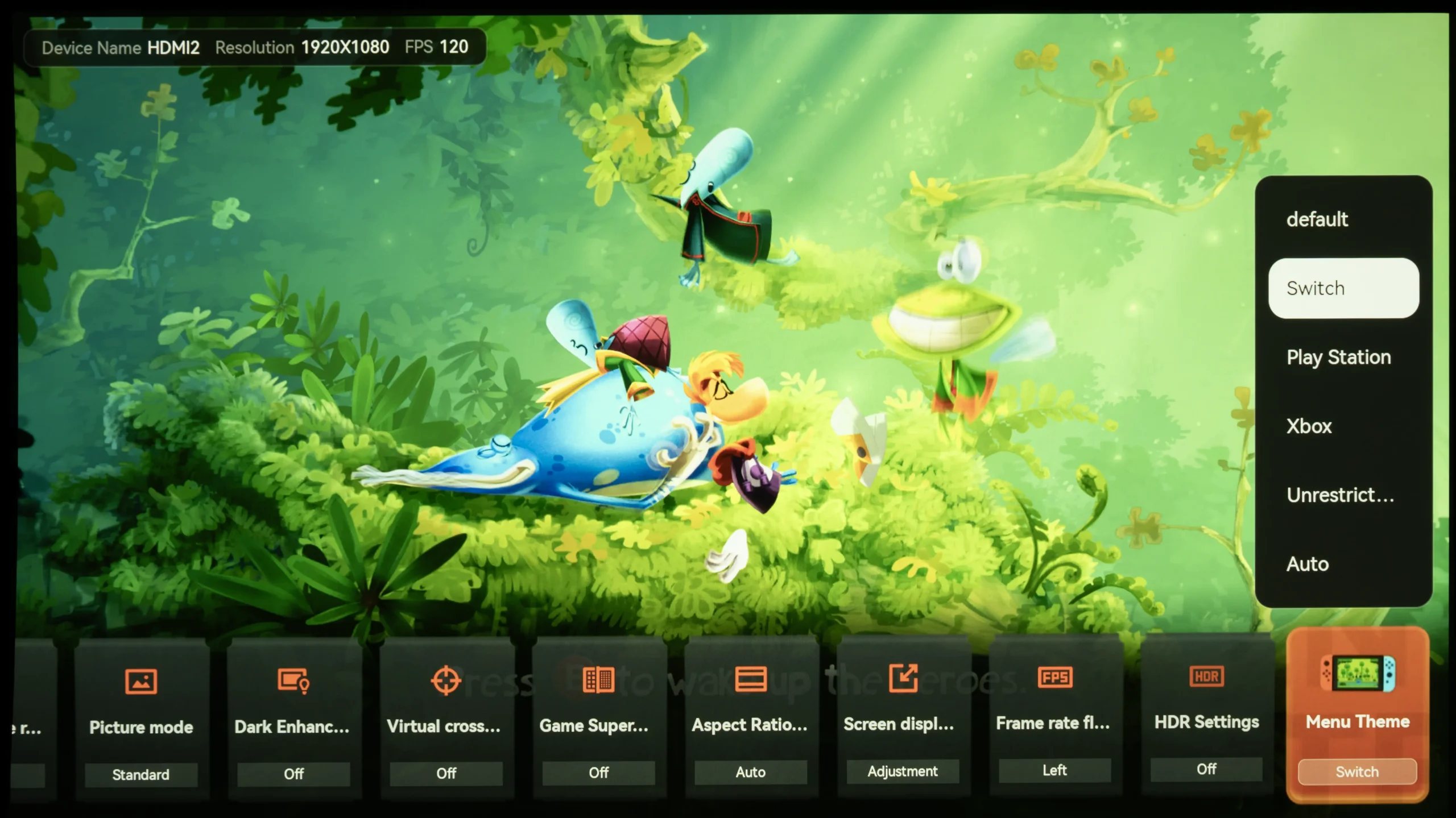
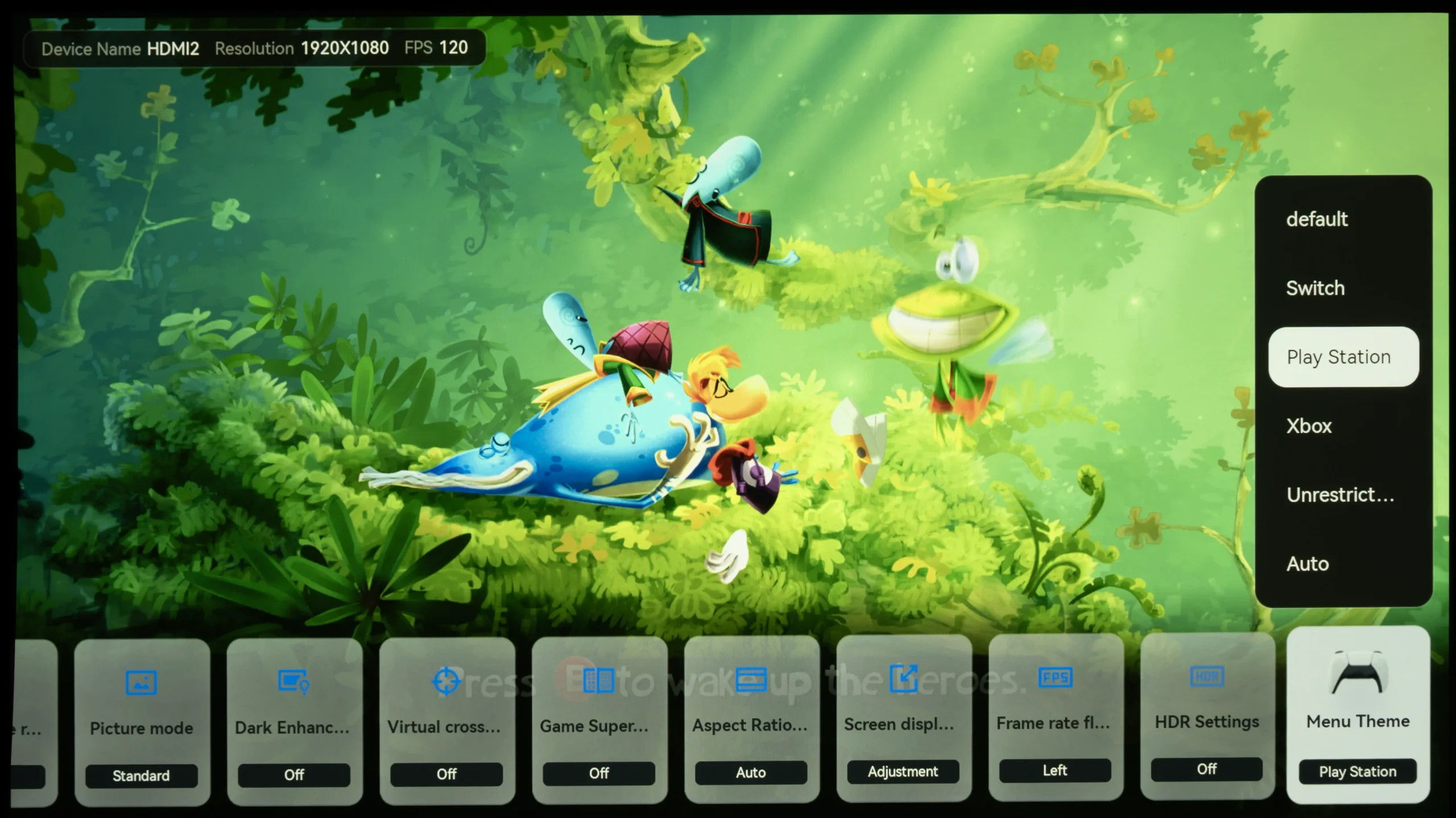
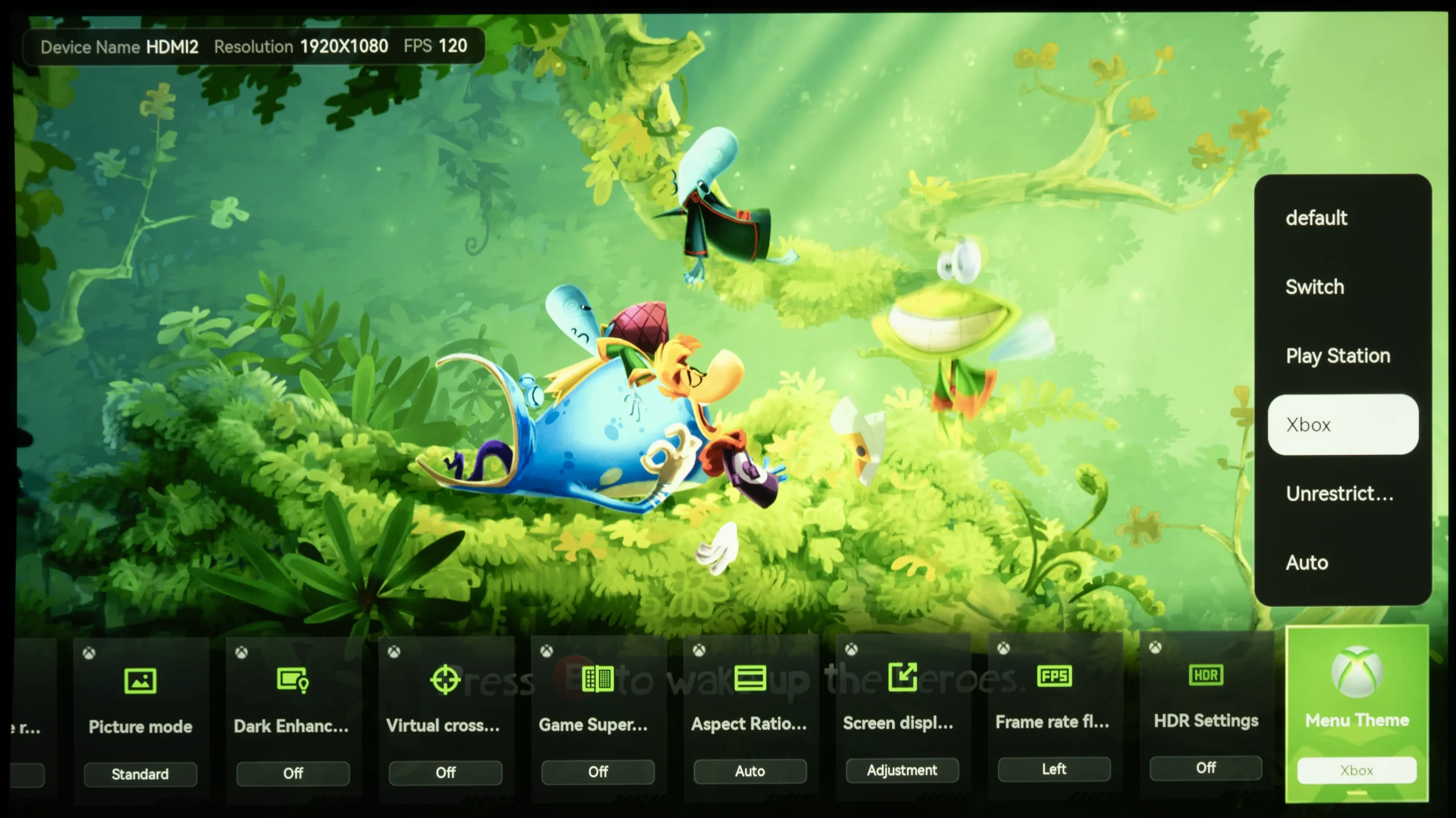
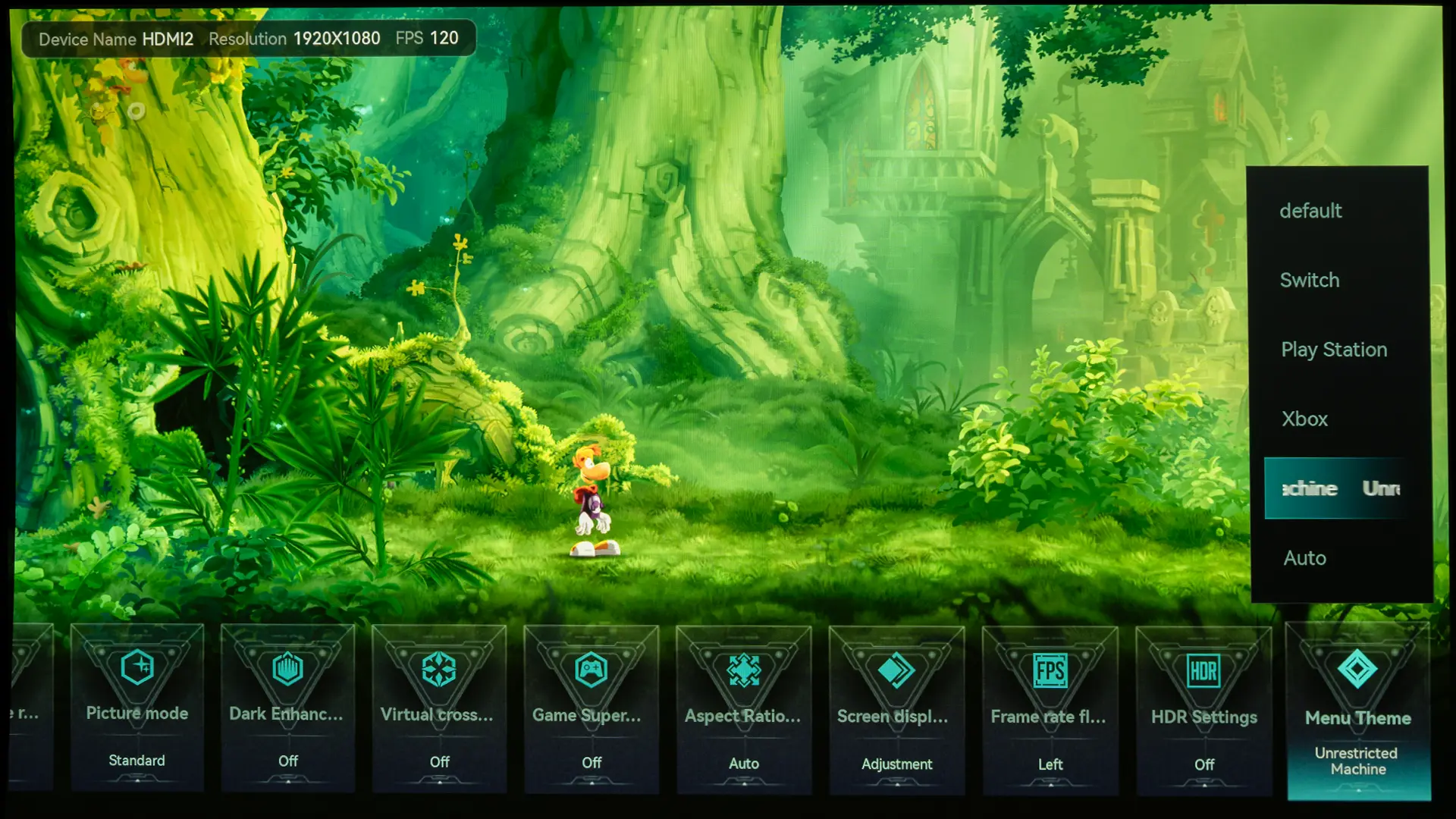
There are dedicated gaming picture mode designed for different types of gaming including First Person Shooter, Role Playing Game and Sports. Enabling the Frame Rate Indicator setting shows the frame rate in the corner of the screen. You can even change the look of the Gaming Menu to match the menu’s look to match your game system, whether it's a Nintendo Switch, a PlayStation, an Xbox, or an Unrestricted Machine.
The Titan high brightness and wide color gamut cover made images pop even under ambient light so you don't have to game with your friends sitting in the dark. While I wish the TITAN supported 4K/120Hz and offered lower input lag, it still delivers a rewarding gaming experience.
While most home entertainment enthusiasts will incorporate the TITAN into a home theater system with an external sound system, there are some professional applications where built-in sound could be useful.
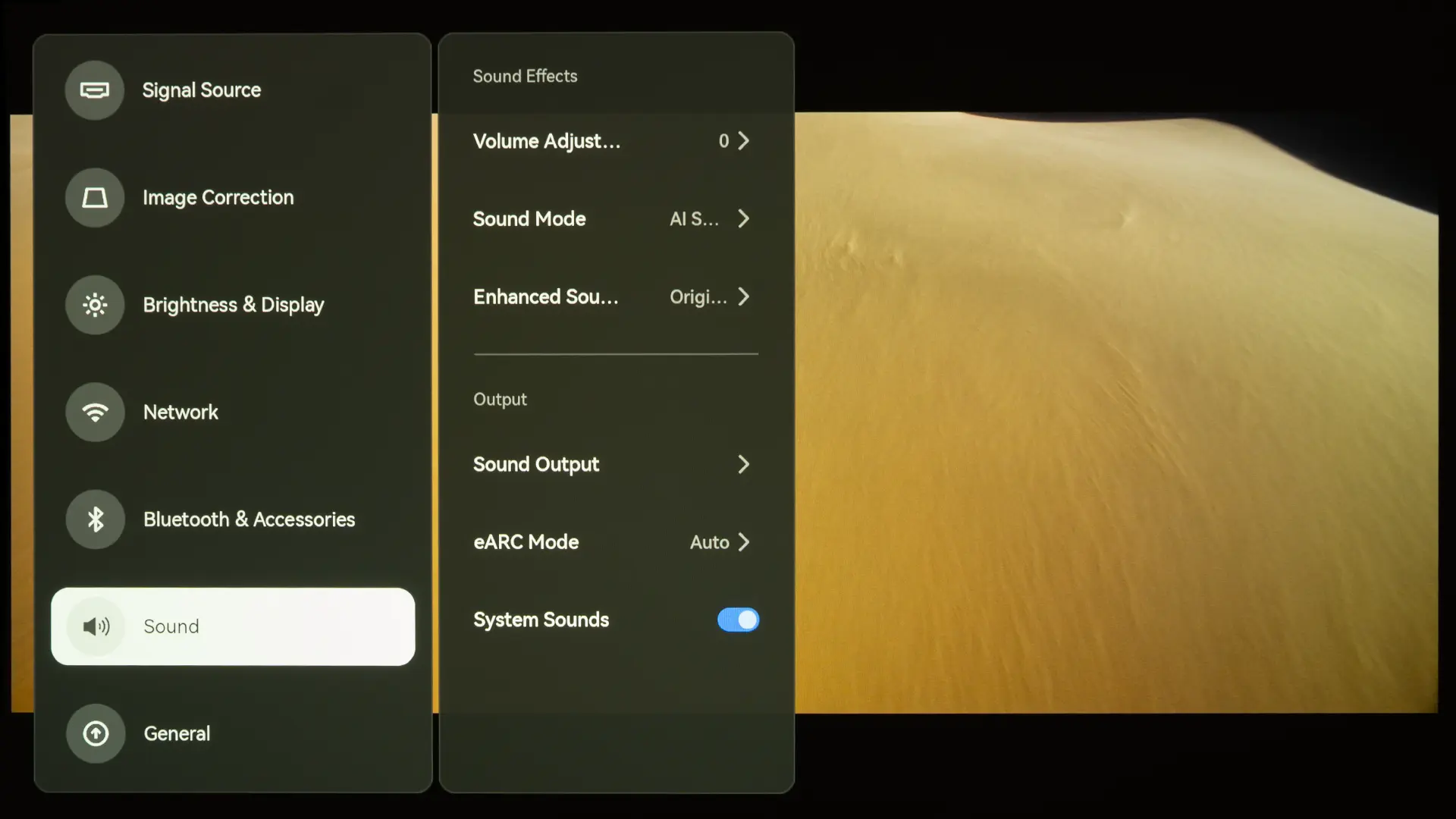
The unit's built-in stereo speaker system plays loud enough to fill a moderately sized room. It also includes multiple sound modes, which can be adjusted based on the content being played. The TITAN also supports DTS: Virtual X. When enabled, this feature effectively widens the soundstage for a more immersive listening experience. The onboard audio is adequate for casual use but has limited bass and will not satisfy a dedicated home theater installation.
Considering the unit's high brightness, it is fairly quiet. XGIMI rates the unit's audible noise at 32 dB at 1 meter in STANDARD mode. When listening to content in my lab, sitting 7 feet from the projector, the fans were not noticeable, even in quiet scenes. IN PERFORMANCE mode, noise increases to around 42 dB. While this is audible in a quiet room, it is not objectionable during active content playback.

XGIMI has built a strong reputation for producing high-quality lifestyle and portable projectors. Over the past several years, we have consistently been impressed with the XGIMI models we have reviewed. Last year, XGIMI introduced the TITAN, leveraging its engineering expertise to develop higher-end models for more discerning home theater enthusiasts and professional users
At $3,999, the TITAN occupies territory traditionally occupied by established home cinema brands. The projector's high measured brightness, good color reproduction, high-quality motorized lens assembly, and installation-focused features deliver strong performance for the price.
XGIMI's most direct home theater competitor uses 3LCD laser technology for a brightness-per-watt efficiency advantage and eliminates the rainbow effect inherent to single-chip DLP. The Epson Pro Cinema LS9000 ($3999 MSRP) has a brightness of 2200 lumens, which is less than half the TITAN’s, but it offers slightly higher native contrast. So, the LS12000 might be more appealing to buyers who prioritize absolute black levels in a dark room and who are sensitive to the DLP rainbow effect. The LS9000 also supports gaming at 4K/120Hz with a inout lag of just 20ms. The TITAN outperforms LS9000 significantly on measured brightness and color gamut coverage, making it the stronger choice for larger screens, mixed-light environments, and commercial installs.
The BenQ LK935 ($4,500 MSRP) is a commercial-focused laser projector with 5500 ANSI lumen-rated brightness, designed explicitly for education and business installations. It offers strong ambient-light performance and professional warranty coverage but lacks the home theater feature set of the TITAN: no Dolby Vision, no HDR10+, no IMAX Enhanced, less color gamut coverage, and no consumer-friendly smart platform integration path. For buyers whose primary use is a commercial install, the LK935 is a credible alternative. However, for home theater and dual-use applications, the TITAN's support for content formats gives it a clear advantage.
At CES 2026, XGIMI showcased a new flagship model called the TITAN Noir Max (from $2,999 early access / ~$5,999 MSRP). This triple-RGB laser model can easily match TITAN's peak brightness while providing deeper black levels and higher native contrast thanks to its 0.47” SST DMD and dual iris system. Over the past few weeks with the TITAN, I have been impressed by its black levels, which are superior to most DLP projectors I have evaluated. However, after seeing the TITAN side-by-side with the TITAN Noir Max, the improvements delivered by the newer model were immediately noticeable.
While the TITAN Noir Max has a higher rated brightness, the TITAN's brightness is so conservatively rated that it's possible that the TITAN may match or exceed the TITAN Noir Max when it comes to real-world brightness. To learn more about the differences between the TITAN and TITAN Noir Max, check out our side-by-side comparison video.
The TITAN Noir is the better choice for buyers with a dedicated, fully light-controlled room whose primary concern is film-like black level rendering. The original TITAN is the better choice for buyers who need maximum light output, mixed-use installations, or are working with larger screen sizes where brightness and maximum reliability matter more than absolute contrast.
Due to its larger 0.78” HEP DMD imager, which is designed for extremely high brightnesses, if I were concerned with longevity in harsh environments, I would gravitate to the TITAN over the TITAN Noir Max. The built-in power supply also simplifies installation when ceiling mounting the unit or retrofitting an older projector.

The XGIMI TITAN delivers outstanding performance and features at a price that undercuts traditional home theater brands. The TITAN is one of the few projectors we have tested that deliver brightness higher than their specifications claim. It means the TITAN is a great option for very large screens or a room with a lot of ambient light.
The TITAN offers a brightness, color reproduction, and HDR performance profile that no DLP projector in its class could match twelve months ago. Buyers whose primary requirement is deep blacks in a dark room might gravitate toward its sibling, the TITAN Noir Max, due to its state-of-the-art DMD and dual-iris architecture.
The TITAN does not ship with a smart platform, so you will need a video streaming device. This shouldn't be an issue since most home theater enthusiasts have a Blu-ray player, a Kaleidescape, and/or an Apple TV.
The limitations listed above will not matter to the TITAN's target buyer. Commercial installers using external audio and RS232 control are not affected by the missing smart platform. Home theater buyers who pair the TITAN with an external sound system and a video player won’t care as well. Buyers with screens above 150" in mixed-light environments will find the TITAN's brightness over many projectors in its class.
For the buyer building a large-screen home theater or a commercial installation who needs 4K, HDR, motorized lens shift, and over 5,000 real lumens at under $4,000, the TITAN is one of the most capable projectors currently available at this price. The recommendation is direct: if brightness and color are your priorities and you are comfortable adding a streaming device, the TITAN is a strong buy.

| Full Specifications | |
|---|---|
| Projector Model | XGIMI TITAN |
| Price (MSRP) | $3999.00 |
| Imager Type | DLP (0.78” HEP DMD) w XPR |
| Displayed Resolution | 3840 x 2160 pixels |
| Native Resolution | 1920 x 1080 x 4 pixels |
| Brightness (Manufacturer Claim) | 5000 ISO lumens |
| Light Source Type | Dual Laser (red laser + blue laser/phosphor hybrid) |
| Contrast Ratio | 2015:1 (Native Measured) 5,000,000:1 (Dynamic) |
| Lens Throw Ratio | 1.2 to 1.8:1 |
| Power Zoom/Focus | Yes |
| Lens Shift | Yes (Horizontal/Vertical) |
| Interchangeable Lens | No |
| Ultra Short Throw | No |
| Native Aspect Ratio | 16:9 (Widescreen) |
| HDTV/4K | Yes |
| 3D | Yes (Active) |
| Speakers | Dual Speakers DTS-X |
| Noise Level (-db) | 32 dB (42dB inPERFORMANCE mode) |
| Low Lag Gaming | Yes (32.4 ms at 4K@60Hz) |
| Smart Functionality | None |
| Business | Yes |
| Classroom | Yes |
| Portable | No |
| Special Features | HDR10+ and Dolby Vision, IMAX Enhanced, Dynamic HDR Tone mapping |
| Networking | RJ45 Gigabit Ethernet Lan, WiFi 6 |
| Dimensions (WxDxH) with Feet | 19.1" x 14.9" x 7.4" (486 mm x 378 mm x 187 mm) |
| Weight | 25.4 pounds (11.5 kg) |
| Warranty | 2 year limited |