|
Please Visit Our Sponsors |

2-11-2008 - Art Feierman
Overview
Image Quality
General Performance
Warranty
Summary, Pros, Cons
Check out how the Sony VPL-VW40 fared in our comparison report here.
View comparison with the BenQ W5000 projector here.
View comparison with the Epson Home Cinema 1080 UB projector here.
View annual winners here.

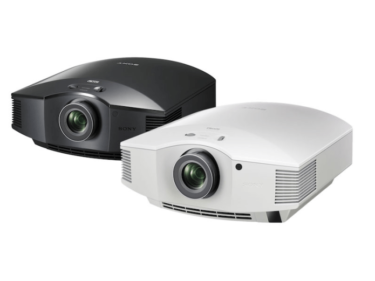
The Sony VPL-VW40, seems primarily, to be a reworked Sony Pearl - the discontinued VW50. Perhaps the most significant new aspect of the VW40 is its price. At $2999, this Sony is competing squarely in the low end of the 1080p marketplace, leaving the slightly better VPL-VW60 to compete against some serious "higher end" projectors. True, there are a couple or three 1080p projectors available for well under $2000 if you shop around, but the bulk of the action is really in the $2000 - $3000 range.
The VW40, I should mention right now uses LCoS technology - a reflective Liquid Crystal on Silicon. In that regard, it is reflective like DLP, rather than transmissive (light passing through), like tradtional liquid crystal projectors (LCD).
Now, just to keep technology things straight, Sony doesn't refer generally to LCoS, but prefers their proprietary name for it: SXRD. JVC, whose DLA-RS1, and DLA-RS2 are direct competitors of the Sonys, also uses their own LCoS technology, which they call D-iLA. So, call them what you will, both companies are using LCoS panels, of their own design.
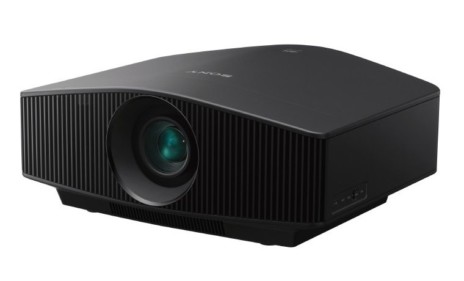
About the only difference I can determine between the Sony VW40 and VW50 (besides price), is the upgrade of the HDMI inputs to 1.3. This is good news, but not great news. Unfortunately, like the VW60, the Sony may support 1.3, but does not support the Deep Color capabilities that HDMI 1.3 allows. Bottom line, as Blu-ray discs start providing more color depth in the form of Deep Color, the Sony can't take advantage of that.
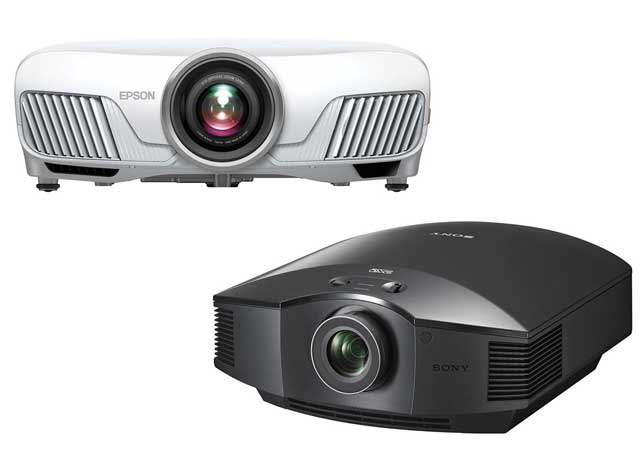
With a price $1500 below the old VW50 Pearl, the VPL-VW40 definitely is an improved value. It does face some really stiff competition, however, in the form of the Epson Home Cinema 1080 UB, and a couple of other projectors. We'll look at how this Sony VPL-VW40 stacks up, later in the review.
MSRP: $2999
Technology: 3 chip LCoS (SXRD)
Native Resolution: 1080p (1920x1080)
Brightness: 900 lumens
Contrast: 15,000:1
Zoom Lens ratio: 1.8:1
Lens shift: Vertical (motorized) and horizontal (manual, and very slight)
Lamp life: 3000 hours at low power, 2000 hours at full lamp power
Weight: 24.3 lbs. (11 Kg)
Warranty: 2 Years Parts and Labor
standard
Click here for more complete Sony VPL-VW40 specifications and brochure.
Review continues below this advertisement.
Please note, this section has been lifted from the recent VW60 review, with only minor changes:
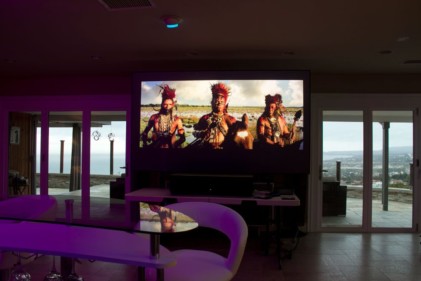
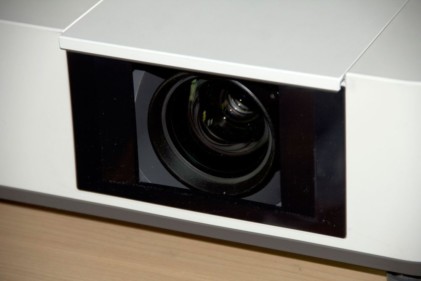
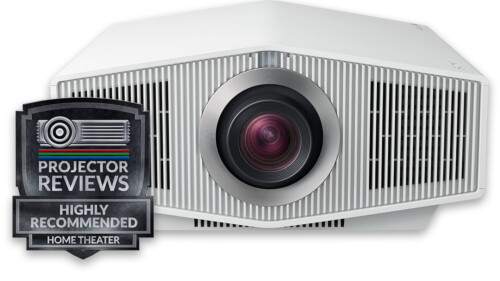
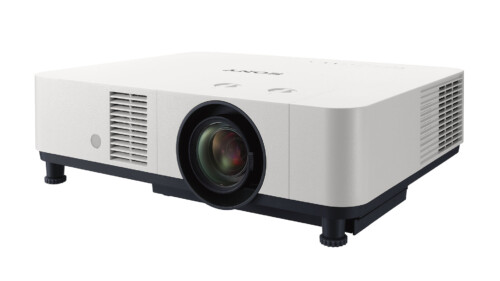
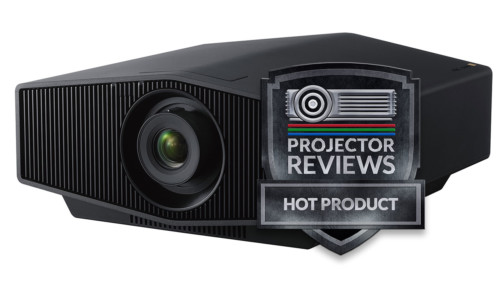
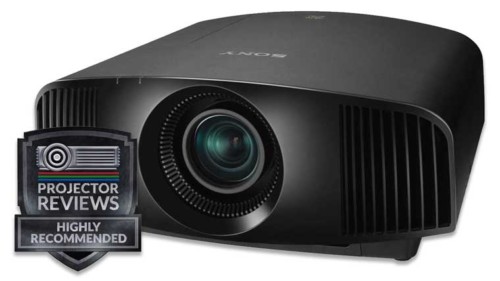
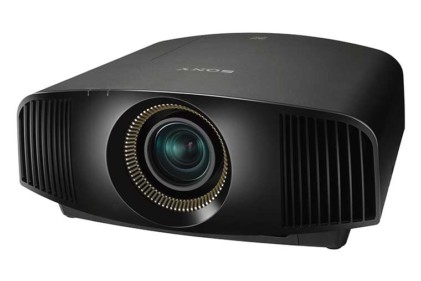
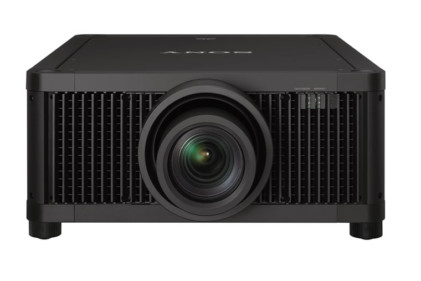
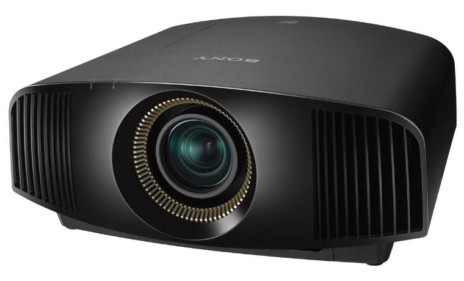
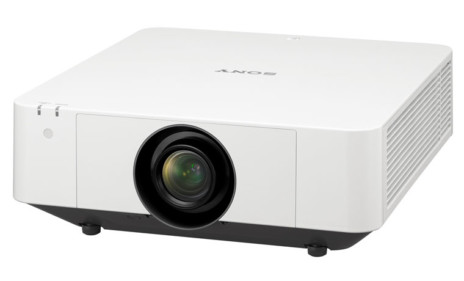
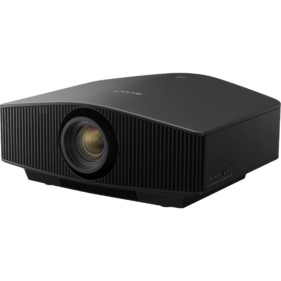
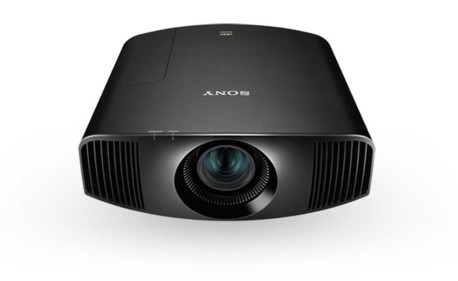
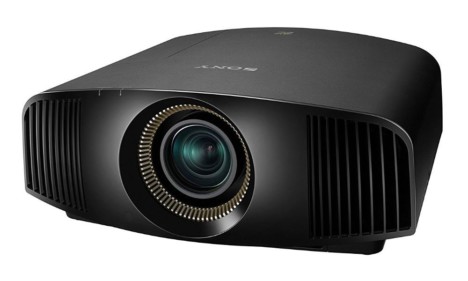
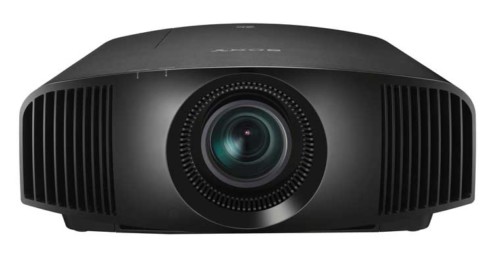
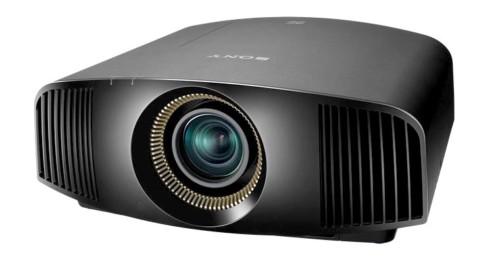
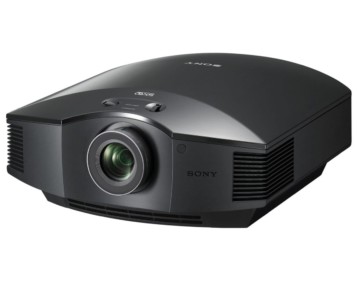
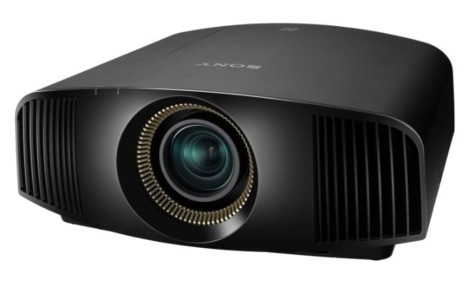
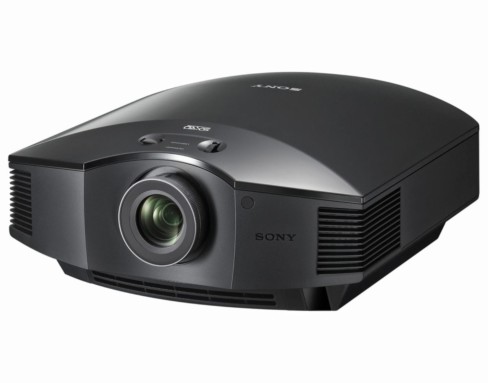
Facing the front of the Sony VPL-VW40 projector, centered, is the Sony's motorized zoom lens with a 1.8:1 zoom ratio. Slightly to the left, and above, is the small front, infra-red sensor for the Sony remote. Sony's remote control will be covered in the General Performance section. This Sony projector also has motorized focus, and motorized vertical lens shift.
Hot air vents out at an angle from the vents at the front left and right. Below the front of the VW40, are two, screw thread adjustable front feet. There is a non-adjustable rear bar serving as rear foot, for a stable three point stance.
Unlike almost all other projectors, the VW40, like the VW60, lacks a control panel on the top. Instead, a minimal set of controls is on the right side (looking from the rear). From back to front, there is the Lens button which toggles between Lens Focus, Lens Zoom and Lens Vertical Shift, and unless turned off, brings up a test pattern to make it easier to focus. Next comes a tiny "disk pad" which handles arrow key functions and if pressed in the center acts as an Enter button. Further front is the Menu button, next is Input for selecting your source, and finally Power off/on. Press once for on, twice for off.
The inputs for the Sony VW40 are also on the right side (looking from the rear), below the small control panel. This is different than most projectors which have their input panels on the back. Different, but not a big deal.
The selection of inputs is fairly typical for today's affordable 1080p projectors. There are, from the left (actually the rear), two HDMI inputs (a third would have been nice, but I'm a bit greedy), A single standard analog computer input (HD15 connector) is next. Then comes an S-video and a composite video input, followed by the typical 3 RCA jacks for a component video input. There is also a 12 volt trigger for screen control, and lastly an RS-232 jack labeled Remote, for command and control (such as controlling the projector, its menus, etc., from a computer). That's it, for the input panel.

Review continues below this advertisement.
Two "idiot" lights are located on the top of the projector near the front. One is the On/Standby, and the other a "Lamp/Cover" indicator which can tell you two things: If it's time to replace the lamp, or if the cover is not closed for the lamp filter area. Various flashing patterns identify the problem. With the On/Standby, it can warn of overheating, a fan problem, or a general electrical problem.
This Sony, like its sibling, and the older VW50, is one of the larger projectors in its class. It shares the light gray casing as the VW50, which is much lighter than the very dark case on the VW60.Thanks to the forward venting, and the wide range zoom, the Sony should also be equally at home on a rear shelf, although a long shelf, as the VW40 is almost 19" deep, and you won't want to put it flush against the back wall for ventilation reasons.
Time to get into the picture: It is Image Quality time!
Overview
Image Quality
General Performance
Warranty
Summary, Pros, Cons