CES 2026 Insights: Technical Advancements Lead to Higher Performance
Posted on January 20, 2026 by Phil Jones
Going into CES 2026, I wasn’t sure what to expect. Several consumer electronics giants that traditionally dominated the show floor announced they would not have booths. One of the most noticeable changes at CES 2026 was the show’s fragmentation. The days when you could walk the Central Hall and see every major consumer electronics brand in one place are gone.
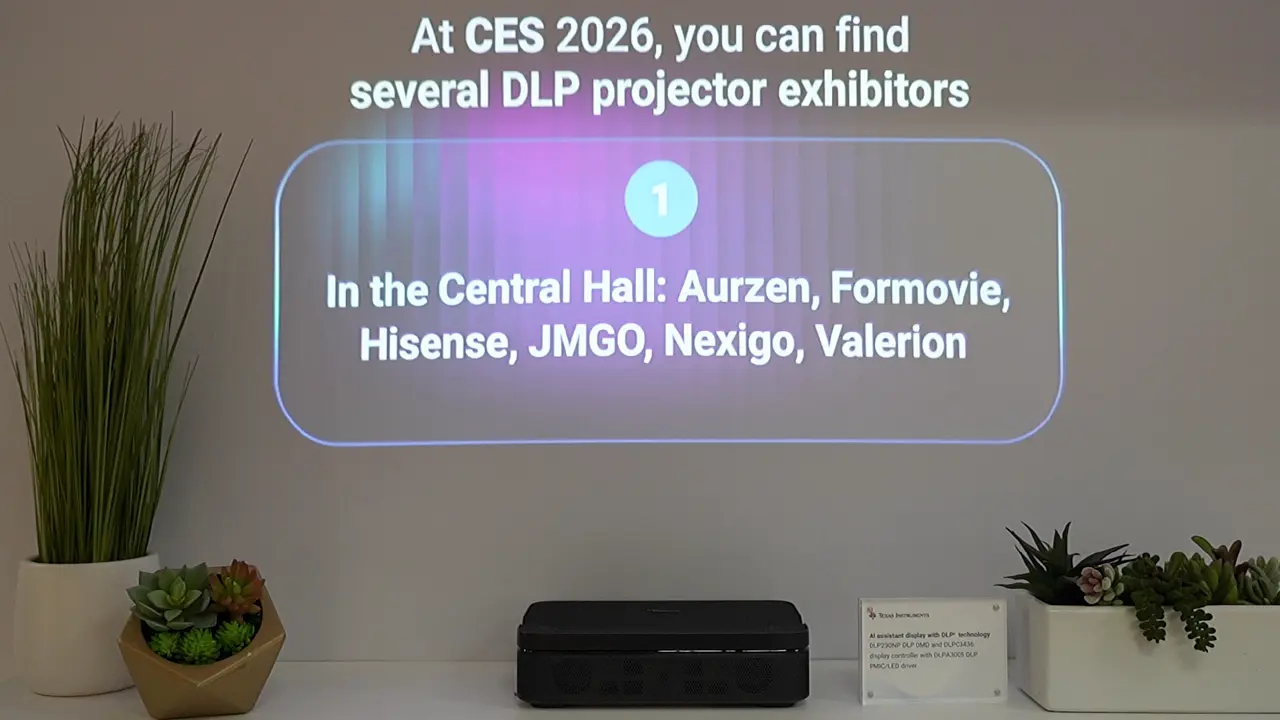
Many companies have shifted to off-site hotel spaces or private suites, opting for controlled environments rather than the overcrowded show floor. Samsung hosted large demonstrations away from the convention center. Sony dedicated its on-floor presence to automotive technology. While LG still had a booth, it was focused less on individual products and more on ecosystem concepts. At the same time, Chinese manufacturers such as Hisense and TCL had a very visible presence. Their booths were large, busy, and packed with tangible products.
CES 2026 Attendee Experiences and Insights
Phil Jones and Phil Boyle break down the most important projector-related technology trends seen at CES—focusing on what’s changing under the hood, not the individual projectors themselves.
No credit card required. Try before you buy.
This shift reflects a broader industry shift. CES is no longer just a consumer showcase. It is a strategic meeting place where technology direction is communicated as much through conversations and demonstrations as through finished retail products. However, several manufacturers showcased new projectors at the show. To learn about these models, check out our manufacturer’s booth tour videos.
There has been a lot of speculation that CES was losing relevance in categories like home theater and projection. What I found instead was a show that had evolved rather than diminished. While there were fewer flashy product launches from familiar brands, I did see some interesting technologies that will shape the projection landscape for years to come. The biggest news revolved around newly developed Texas Instruments DLP chipsets and controllers.
ADVANCEMENTS IN DLP TECHNOLOGY
Texas Instruments may not manufacture consumer projectors, but its Digital Micromirror Device (DMD) technology underpins a massive portion of the projector market. The DMD is the heart of a DLP projector. Millions of microscopic mirrors tilt to direct light either through the lens or away from it. How efficiently those mirrors move determines brightness, contrast, and response time.
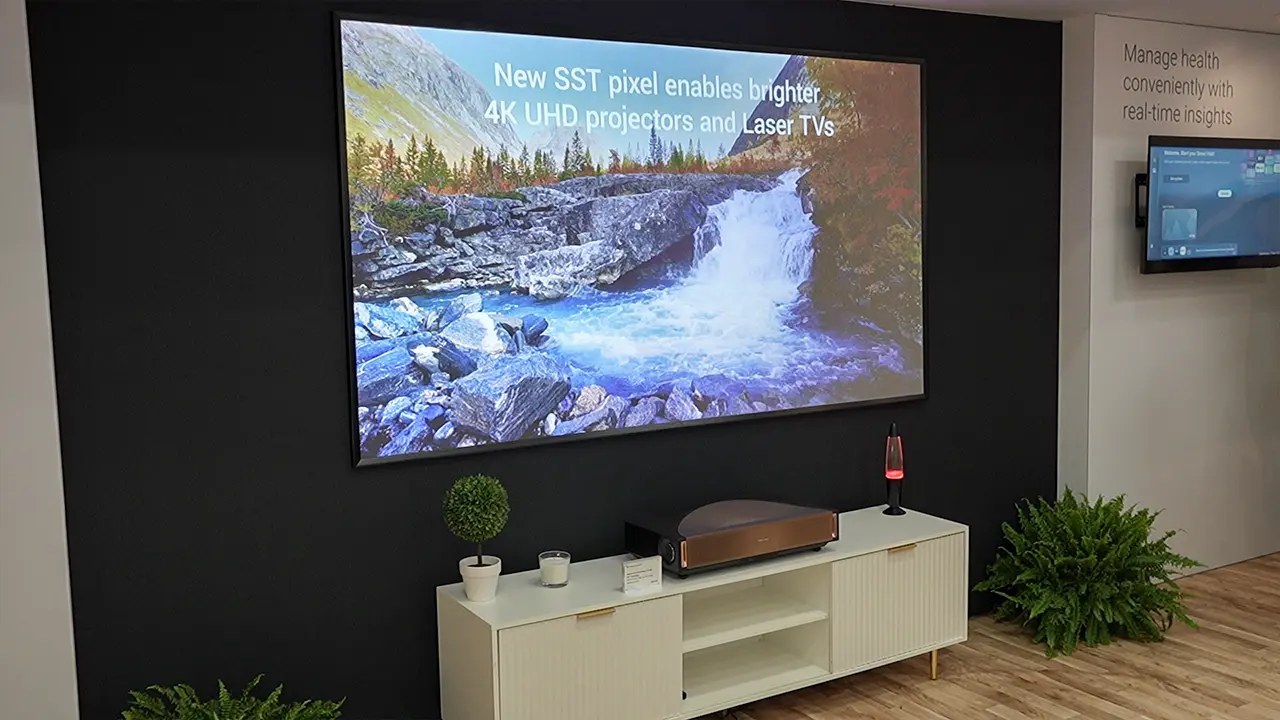
One of the most important technological developments discussed at CES was the new SST series DMD architecture, which stands for Single Spring Top Torsional. While the name itself is not particularly memorable, the implications are significant. This new mirror design allows for more precise control of mirror angles, faster switching speeds, and improved thermal handling.
New DLP Projectors Will Deliver Higher Brightness and Higher Native Contrast
Brightness and black level are directly tied to how efficiently light can be directed and absorbed. If a mirror can send more light through the lens when it is on, brightness increases. If it can divert more light away from the lens when it is off, black levels improve. The new SST series DMD does both more effectively. Combined with improved heat tolerance, it allows manufacturers to push higher lumen outputs without compromising reliability.
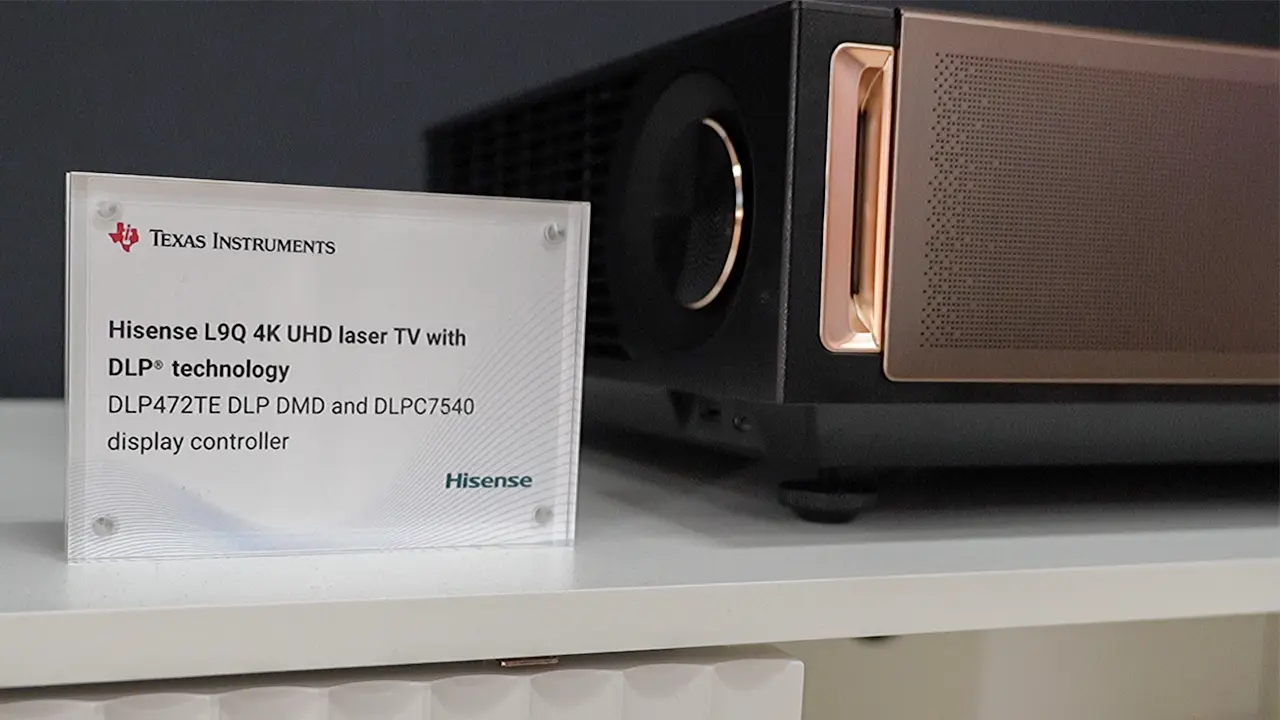
This is why we are suddenly seeing DLP projectors with dramatically higher brightness and improved native contrast compared to previous generations. One of the most exciting implications of these technologies is that future projectors will be both smaller and brighter. A projector delivering 6,000 lumens in a chassis comparable to today’s 2,500-lumen models is no longer theoretical. It is already happening. Many manufacturers, including Hisense, AWOL Vision, and JMGO, were showcasing new projectors that use the latest DMD design, delivering over 5000 lumens of brightness and 5000:1 native contrast.
I should stress that higher contrast ratios do not automatically mean deeper blacks. Native contrast is measured as the ratio between the brightest white and the darkest black a projector can produce, usually using a sequential FOFO (Full ON/Full OFF) test pattern. There are two ways to improve native contrast. You can lower the black level while maintaining the same brightness, or increase the peak brightness while maintaining the same black level.
Many of the contrast improvements we are seeing today come from increased brightness rather than dramatically darker blacks. In real-world viewing environments that are not completely dark, this approach often produces a more noticeable improvement in image quality. Higher brightness increases color volume and perceived contrast, making images look more vibrant and dynamic.
This is why brighter projectors with good, even if not perfect, black levels often outperform dimmer projectors with theoretically better contrast in typical living rooms. Manufacturers are also working on improving their projectors’ dynamic contrast capabilities.
Dynamic contrast systems often rely on a combination of mechanical iris adjustment and laser dimming. In the past, poor coordination between these systems could result in visible brightness pumping or color shifts. CES 2026 showed that manufacturers are getting much better at synchronizing these elements. Improved processing allows projectors to anticipate scene changes and adjust smoothly. The result is dynamic contrast enhancement that is less distracting and more effective.
Upcoming DLP projectors will be able to display 4K at 120 Frames Per Second
The mirrors utilized in a DMD have been capable of extremely fast movement for some time. The bottleneck was always the controller and processing hardware driving them. The latest DMDs are paired with more powerful controllers, enabling many new projectors to display much higher frame rates with less input lag.
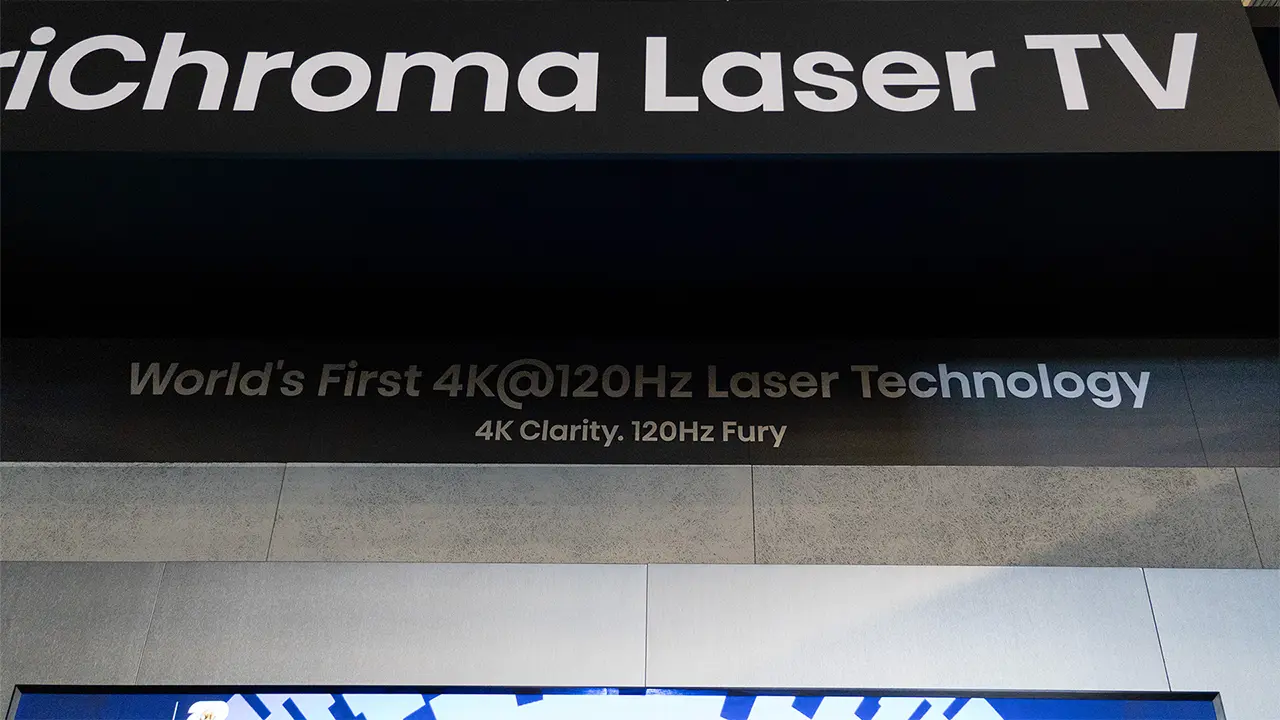
One of the most talked-about capabilities at CES 2026 was 4K projection at 120 frames per second. For example, Hisense was promoting an upcoming UST projector that can display 4K@120fps and offer an input lag of just 1 millisecond
For DLP projectors using pixel shifting, this is a remarkable achievement. These systems use a native HD resolution imager and shift the image multiple times per frame to produce a full 4K on-screen image. For a DMD to display 4K on-screen resolution at 120 frames per second requires extraordinary speed. The mirrors must move, settle, and repeat at a pace that was simply not feasible with older controllers.
Less Visible Rainbow Effect (RBE) From New DLP Projectors
The mirrors utilized in a DMD have been capable of extremely fast movement for some time. The bottleneck was always the controller and processing hardware driving them. The latest DMDs are paired with more powerful controllers, enabling many new projectors to display much higher frame rates with less input lag.
One of the most talked-about capabilities at CES 2026 was 4K projection at 120 frames per second. For example, Hisense was promoting an upcoming UST projector that can display 4K@120fps and offer an input lag of just 1 millisecond
For DLP projectors using pixel shifting, this is a remarkable achievement. These systems use a native HD resolution imager and shift the image multiple times per frame to produce a full 4K on-screen image. For a DMD to display 4K on-screen resolution at 120 frames per second requires extraordinary speed. The mirrors must move, settle, and repeat at a pace that was simply not feasible with older controllers.
Smaller 4K DMD Chipset is Opening New Possibilities
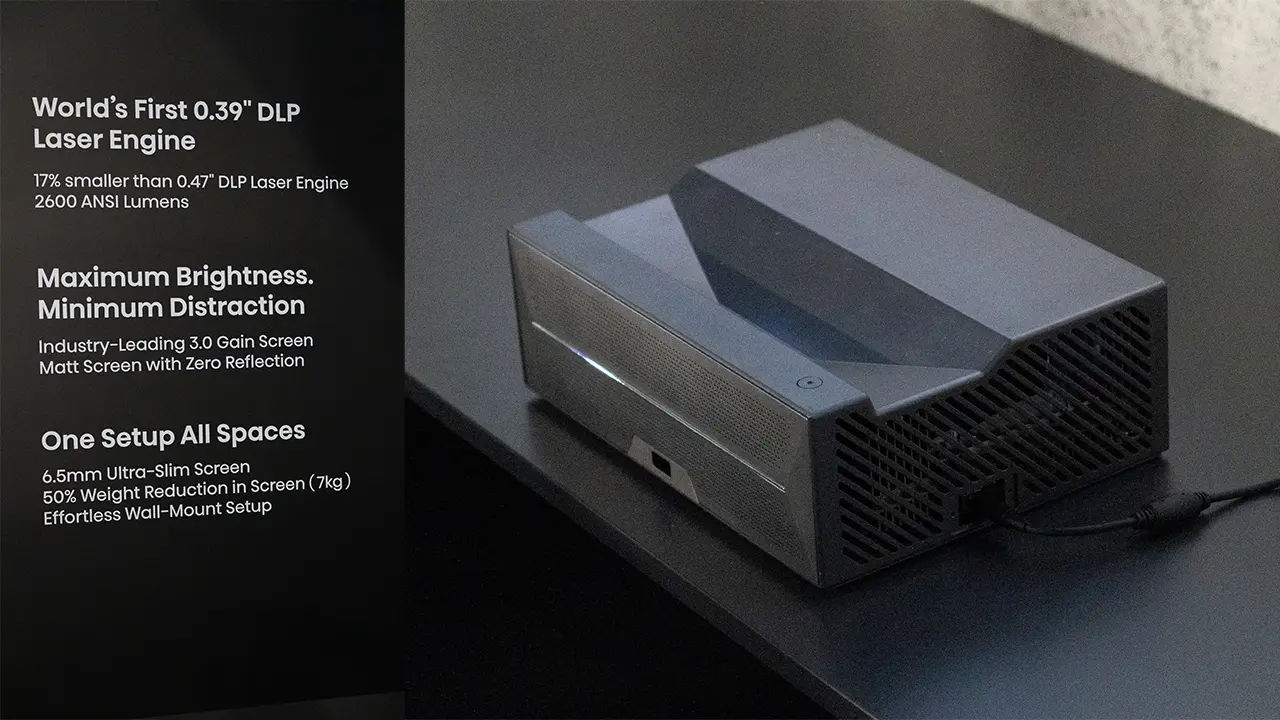
Another important development discussed at CES was the introduction of a smaller 0.39-inch DMD capable of delivering full 4K on-screen resolution. These imagers are physically smaller but can handle higher light output than previous compact designs.
Smaller imagers allow for smaller lenses, but smaller does not mean lower quality. Advances in optical design allow manufacturers to create compact lenses with excellent sharpness and minimal aberration.
This new DMD enables a new class of 4K projectors that are smaller, lighter, and more flexible while still delivering serious performance. Ultra-compact, ultra-short-throw projectors, bright portable models, and smaller home-entertainment projectors all benefit from this advancement.
While the mirror density is increasing, packing 8.3 million mirrors onto a single DMD imager still requires a bigger DLP chip, and a larger optical assembly will be necessary. For the near future, native 4K DLP projectors remain physically large and expensive units for commercial theater and professional applications. Pixel shifting remains the most practical solution for delivering 4K onscreen resolution at an affordable price in consumer-friendly form factors.
The most exciting implications of these new DLP chips and solid-state light sources are that future DLP projectors will be both smaller and brighter. A projector delivering 6,000 lumens in a chassis comparable to today’s 2,500-lumen models is no longer theoretical. It is already happening.
This improves installation flexibility and makes projectors more appealing as lifestyle-friendly devices rather than dedicated theater components.
Final Thoughts on CES 2026
CES 2026 highlighted a shift in global influence within the consumer electronics industry. Some traditional brands are stepping back from large-scale show-floor presence, while others, like Hisense and TCL, are expanding aggressively.
While there were some notable product introductions, CES 2026’s biggest news was about the technologies that will define the next generation of projectors. New DLP DMDs, more powerful controllers, better processing, higher brightness, improved contrast handling, and smarter platforms are converging to reshape the image quality that a projection system can deliver.
CES 2026 also reinforced the growing role of AI in consumer electronics. As projectors increasingly serve as TV replacements, it makes sense for them to adopt the same smart platforms and voice-driven interfaces found in modern televisions.
The easier it is to control your home entertainment system, the more likely that the entire family will use it. Integration of advanced voice assistants and AI-driven search and control opens new possibilities for projector interaction. Instead of navigating menus, users can request content, adjust settings, or control connected devices through natural language.
Despite all the changes, CES remains an essential event. It is where relationships are built, strategies are discussed, and future directions become visible. While the format has evolved, the value of being there in person has not diminished.