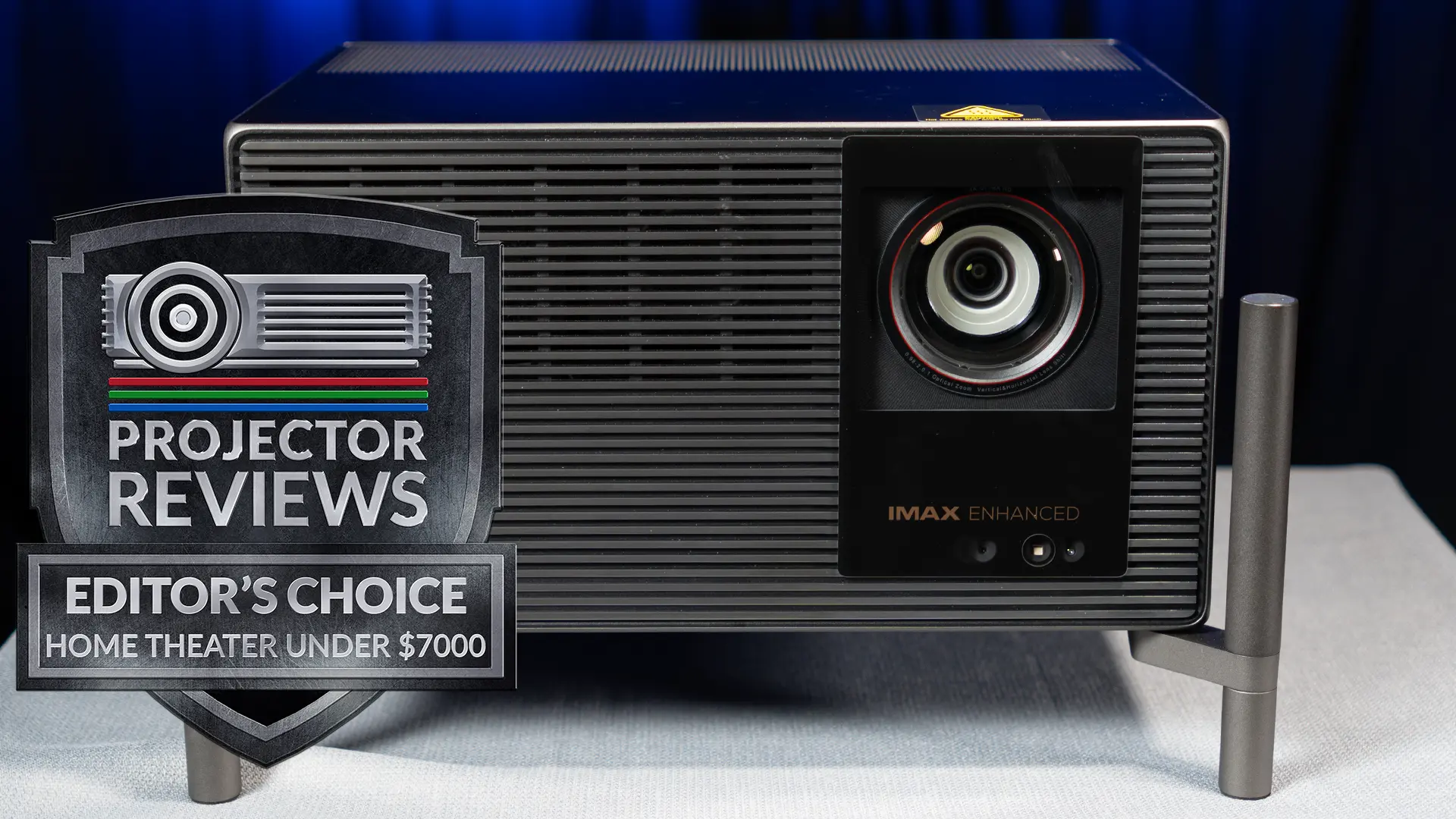
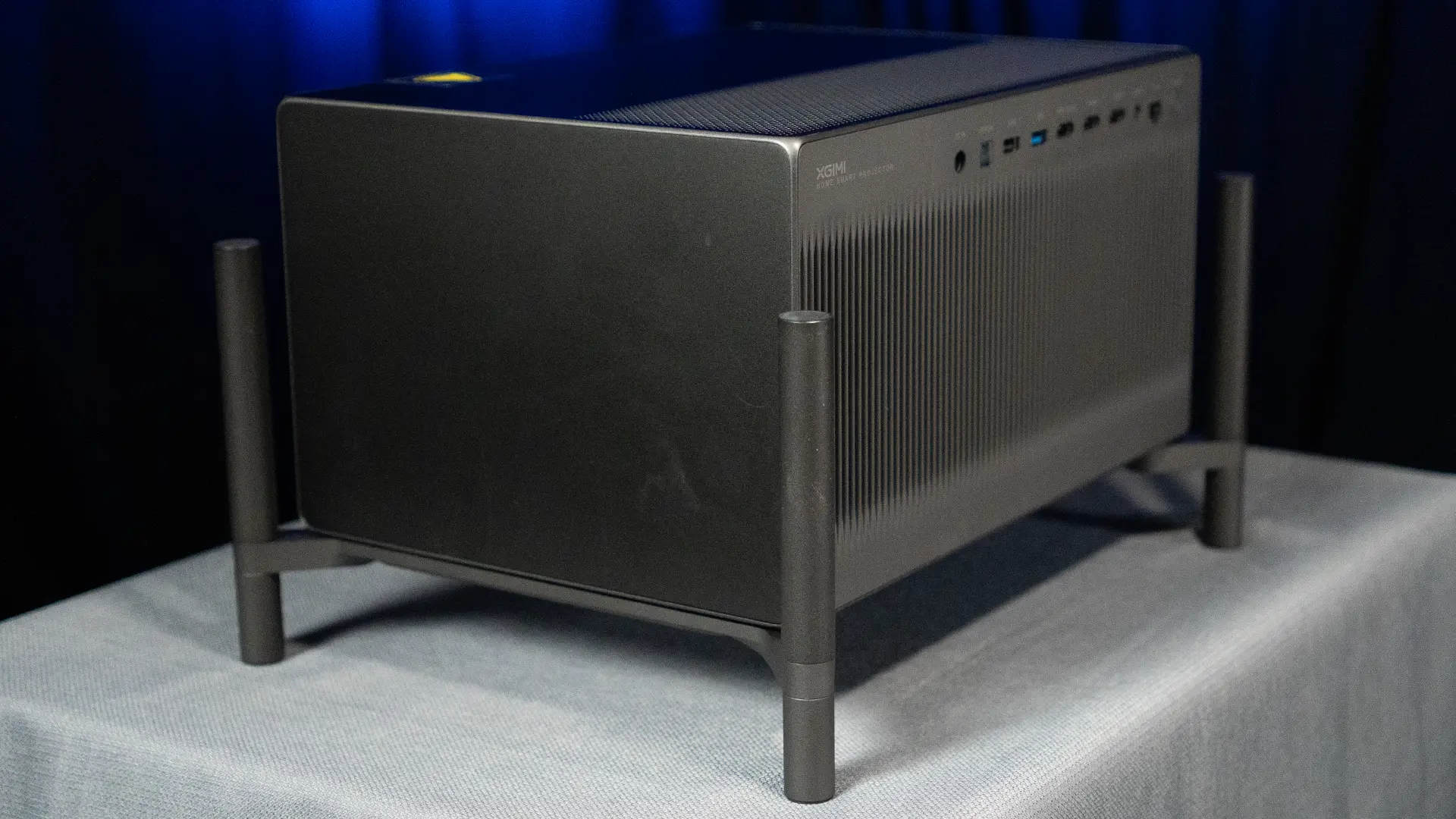
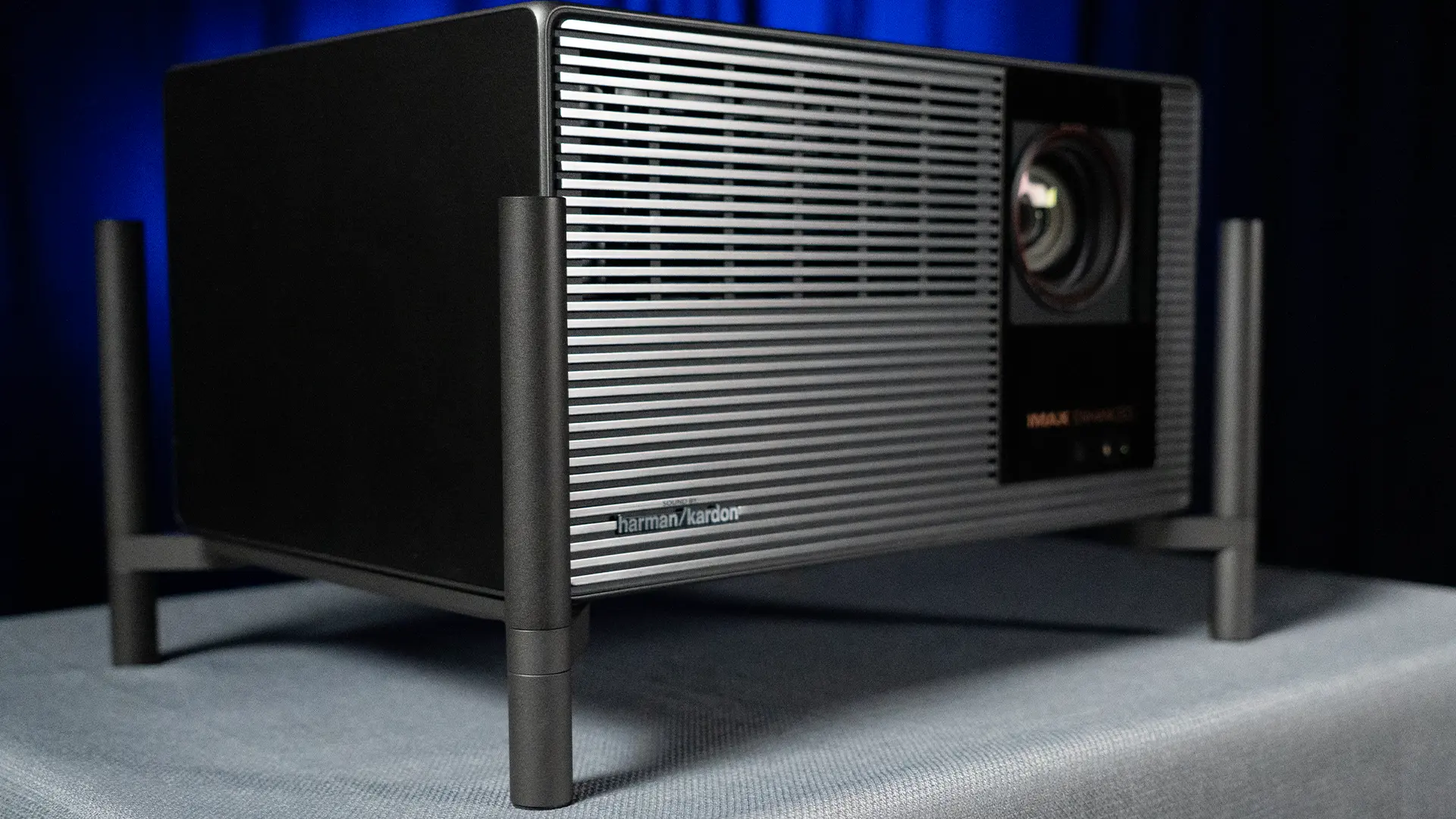
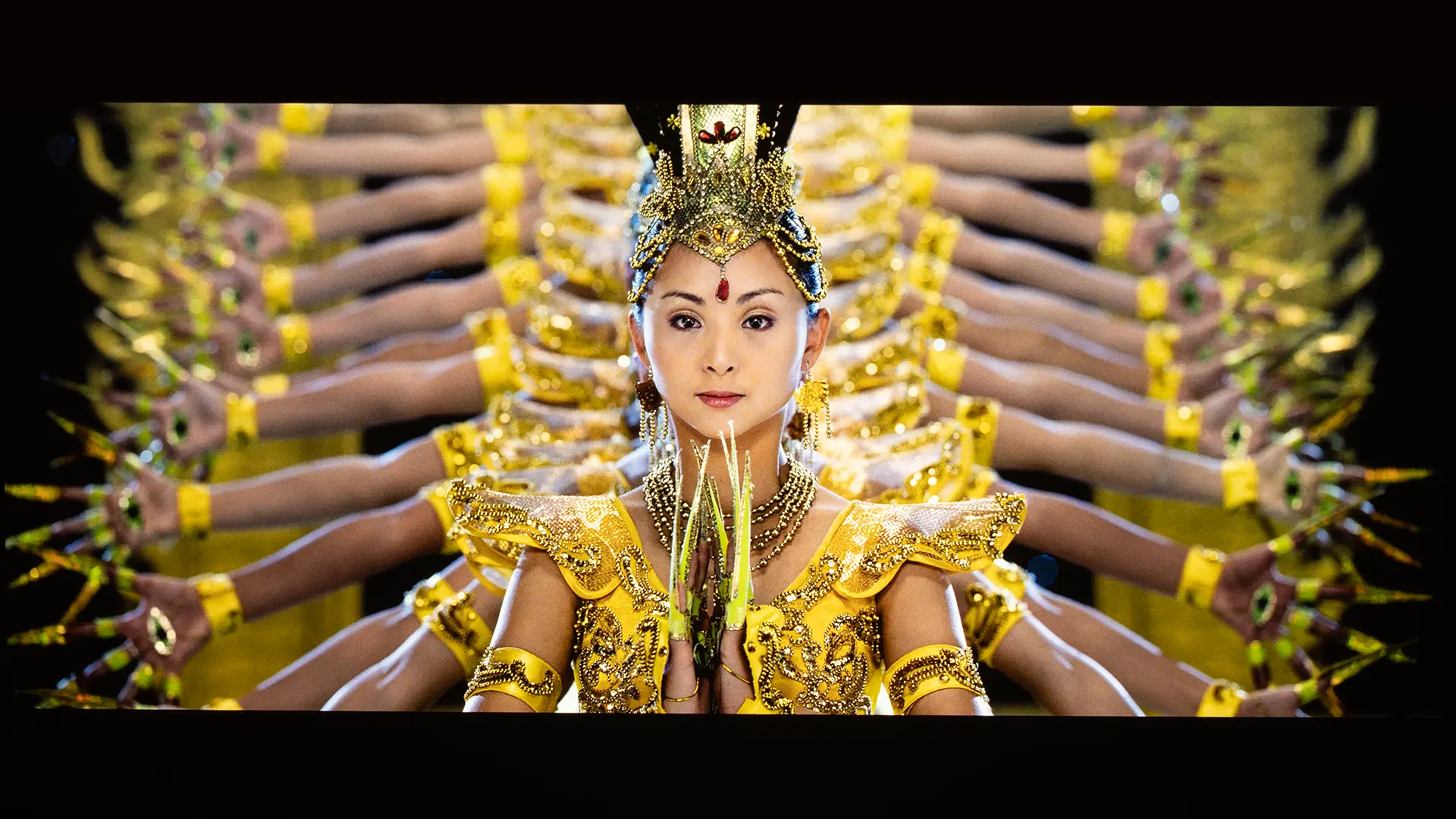
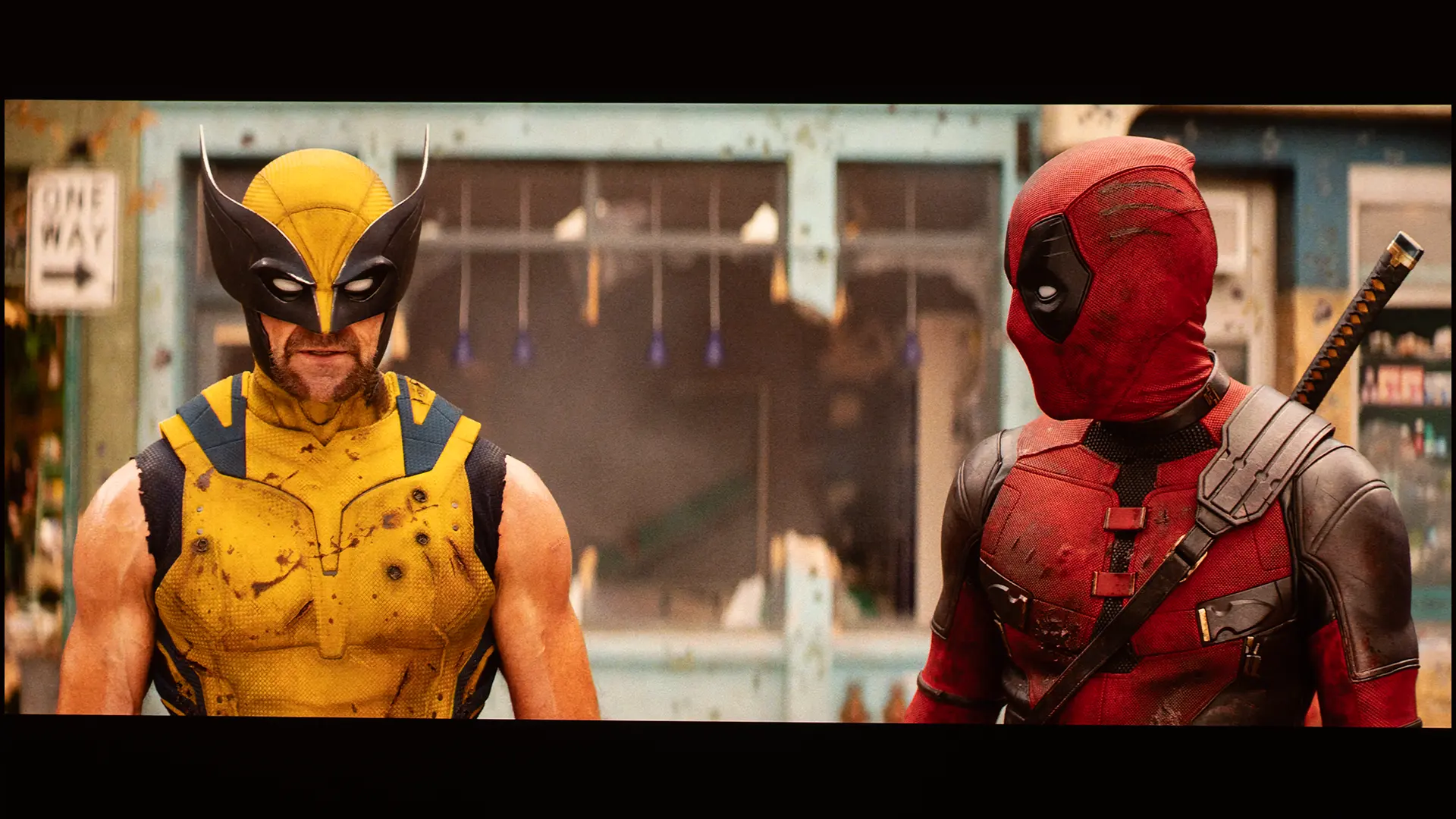
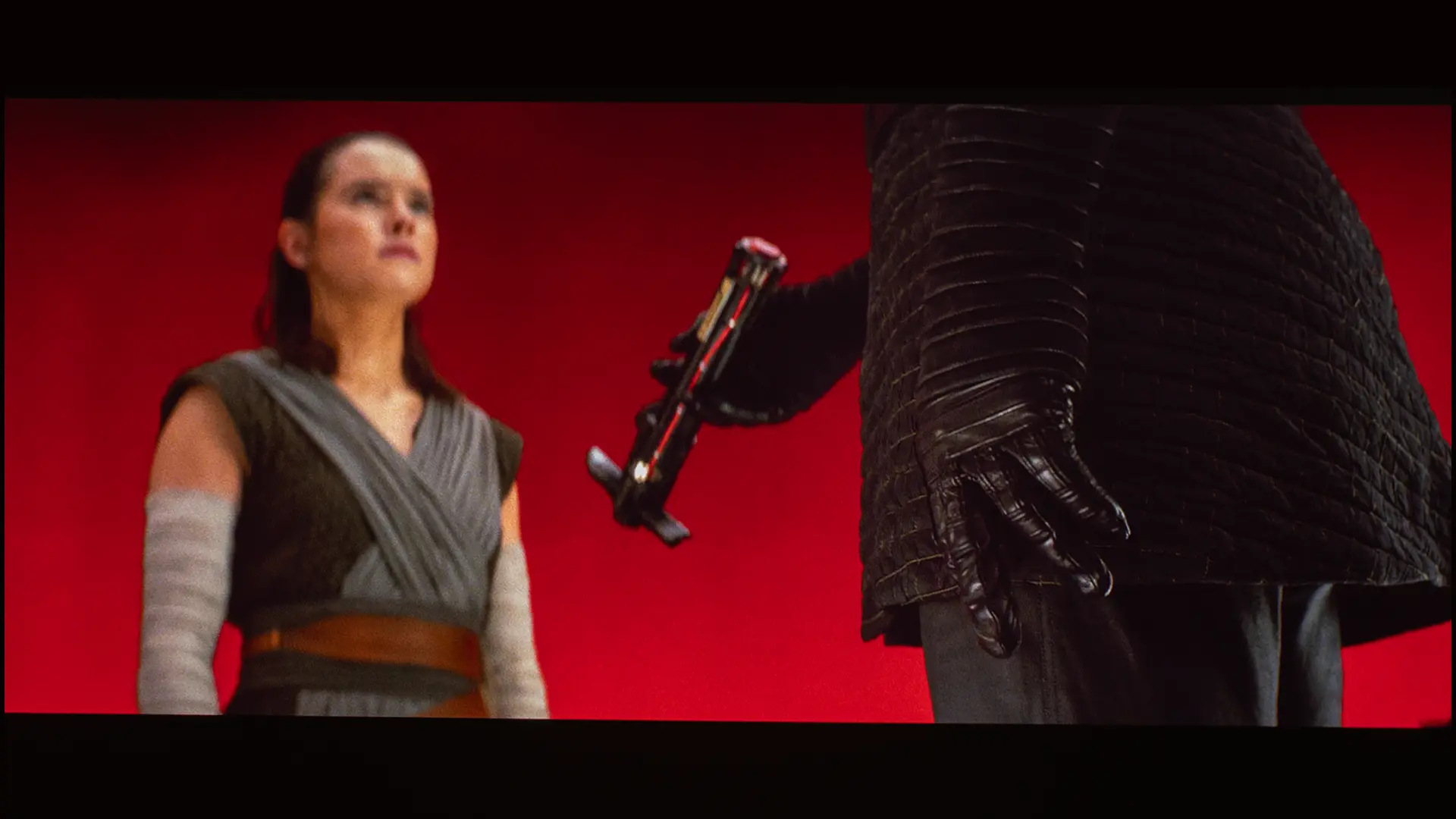
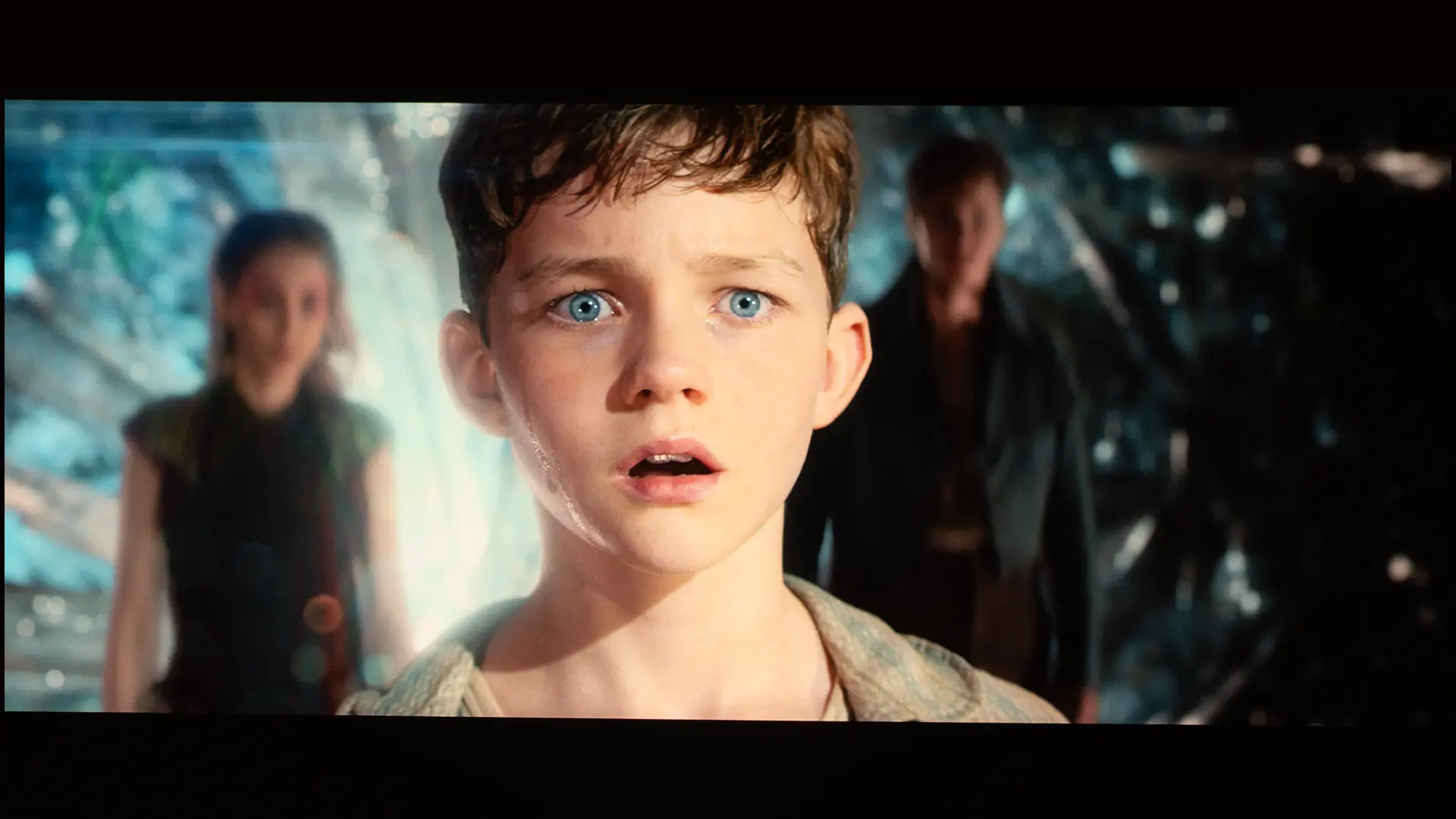
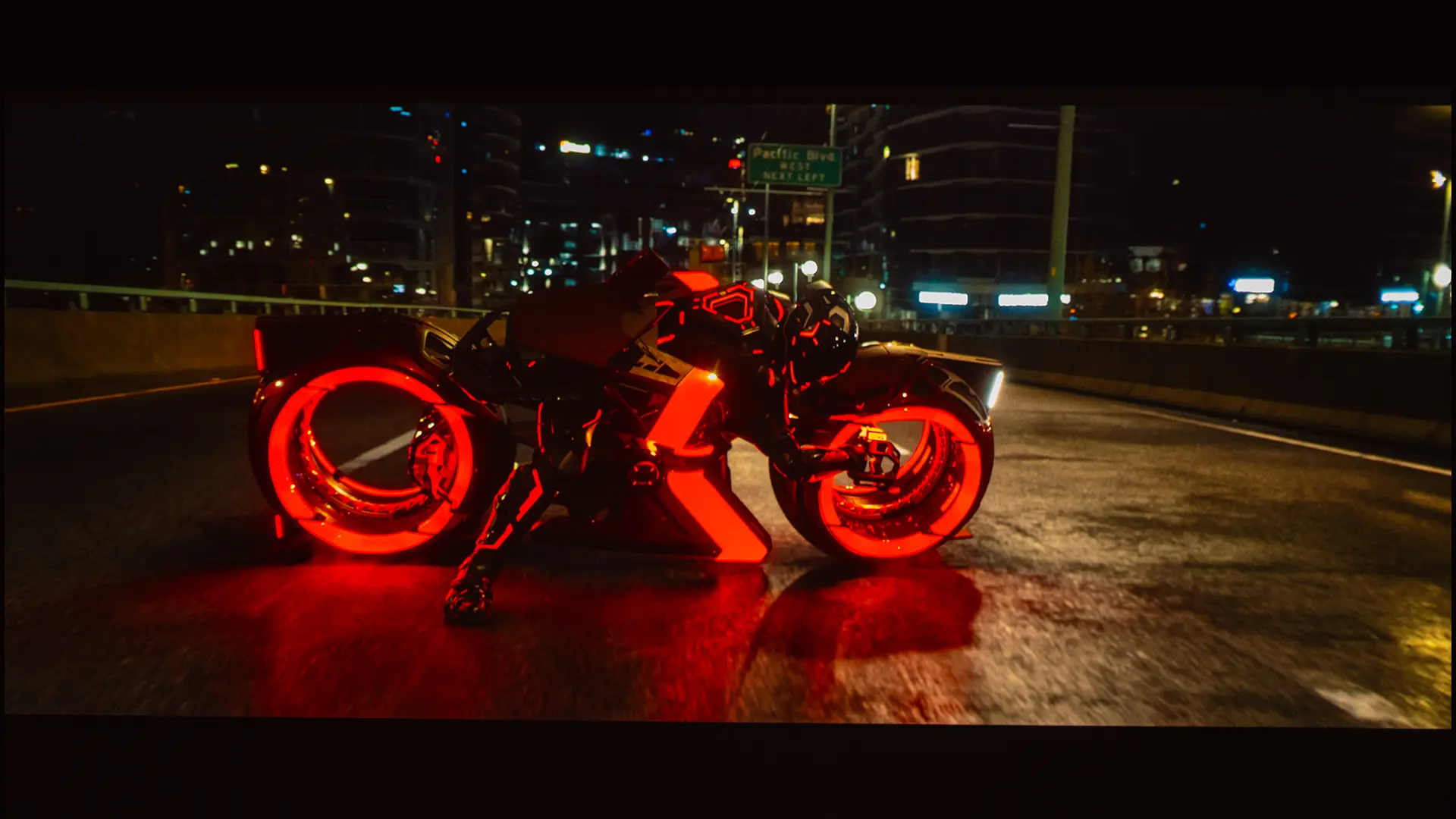
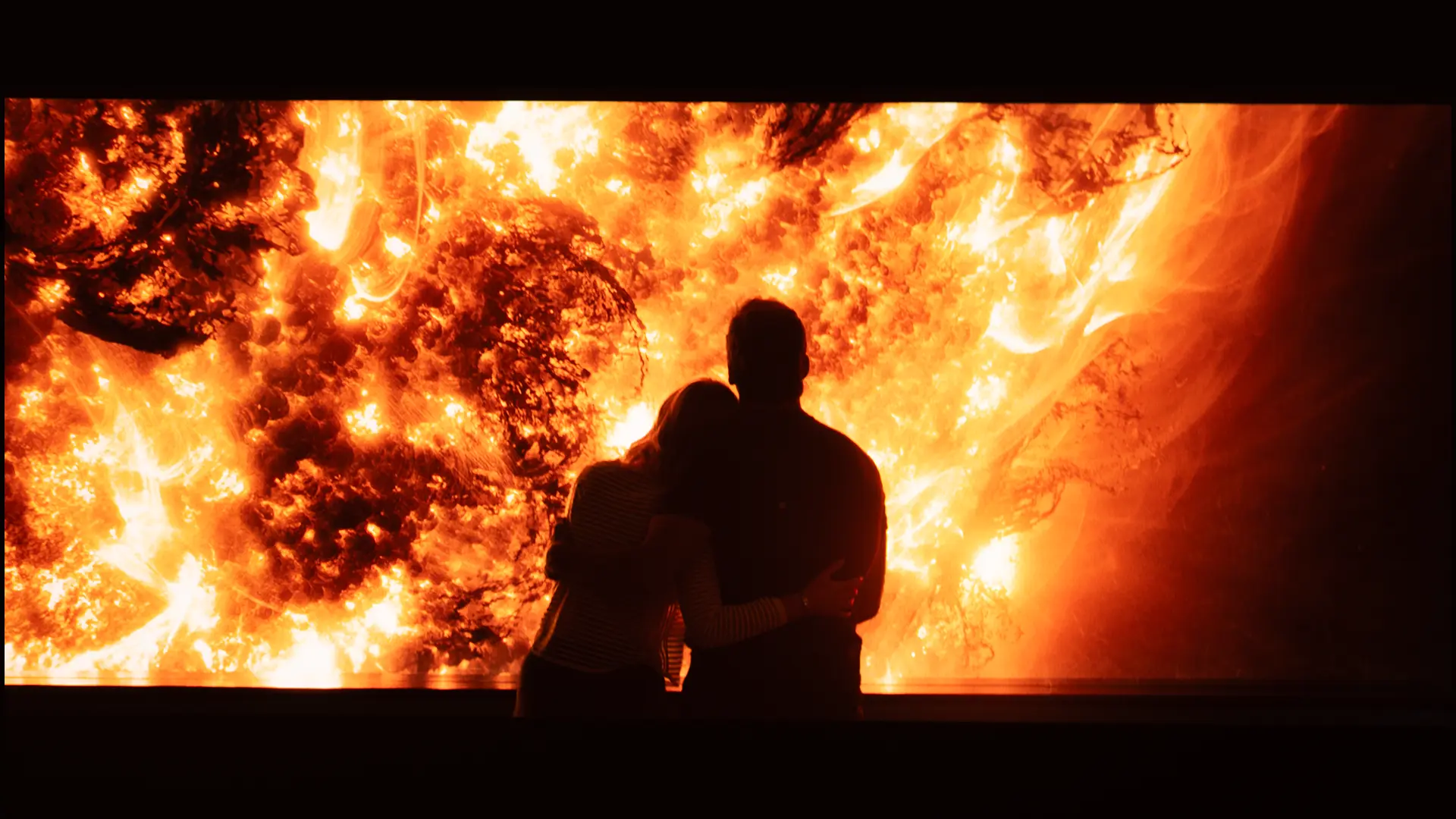
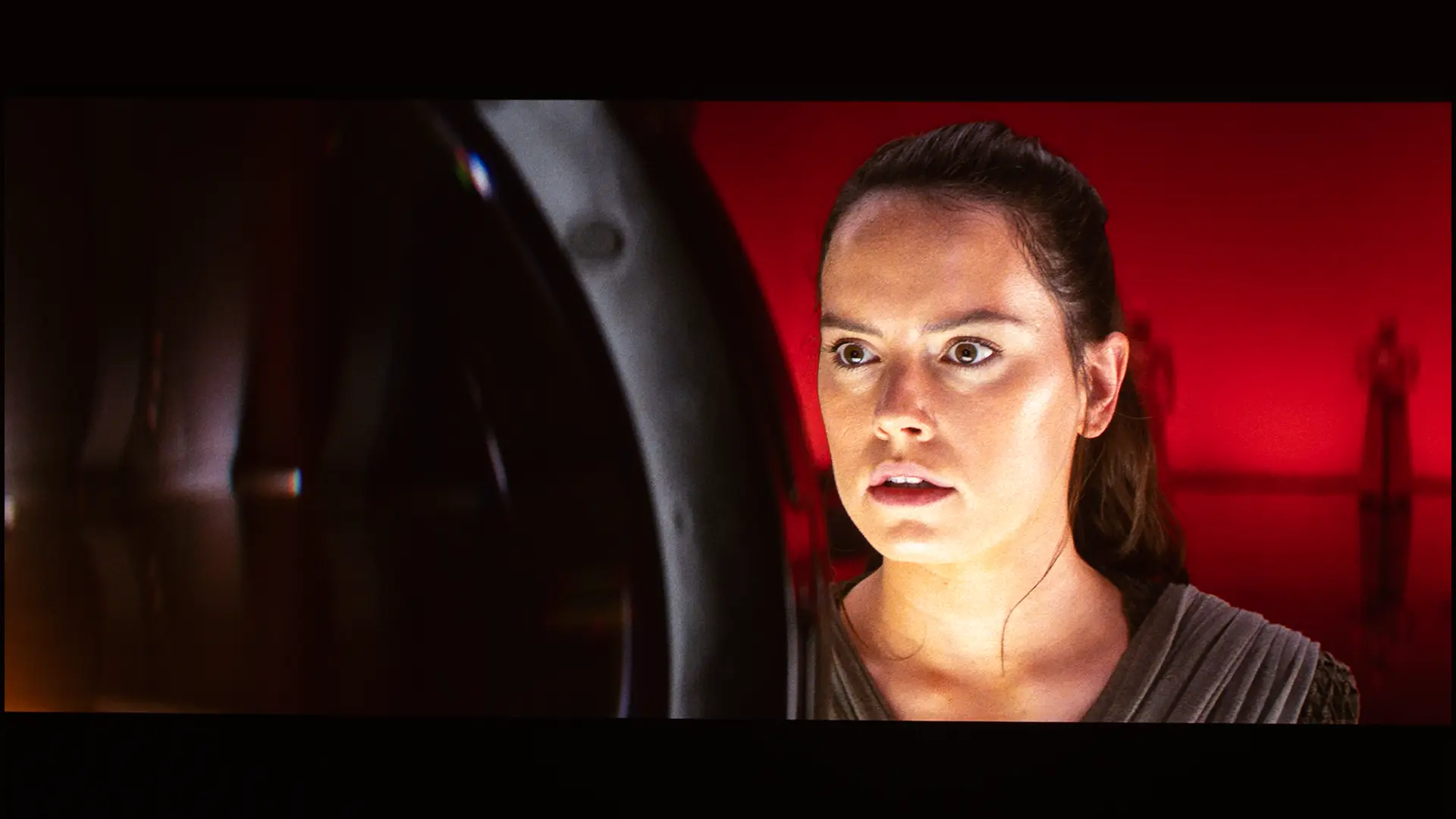
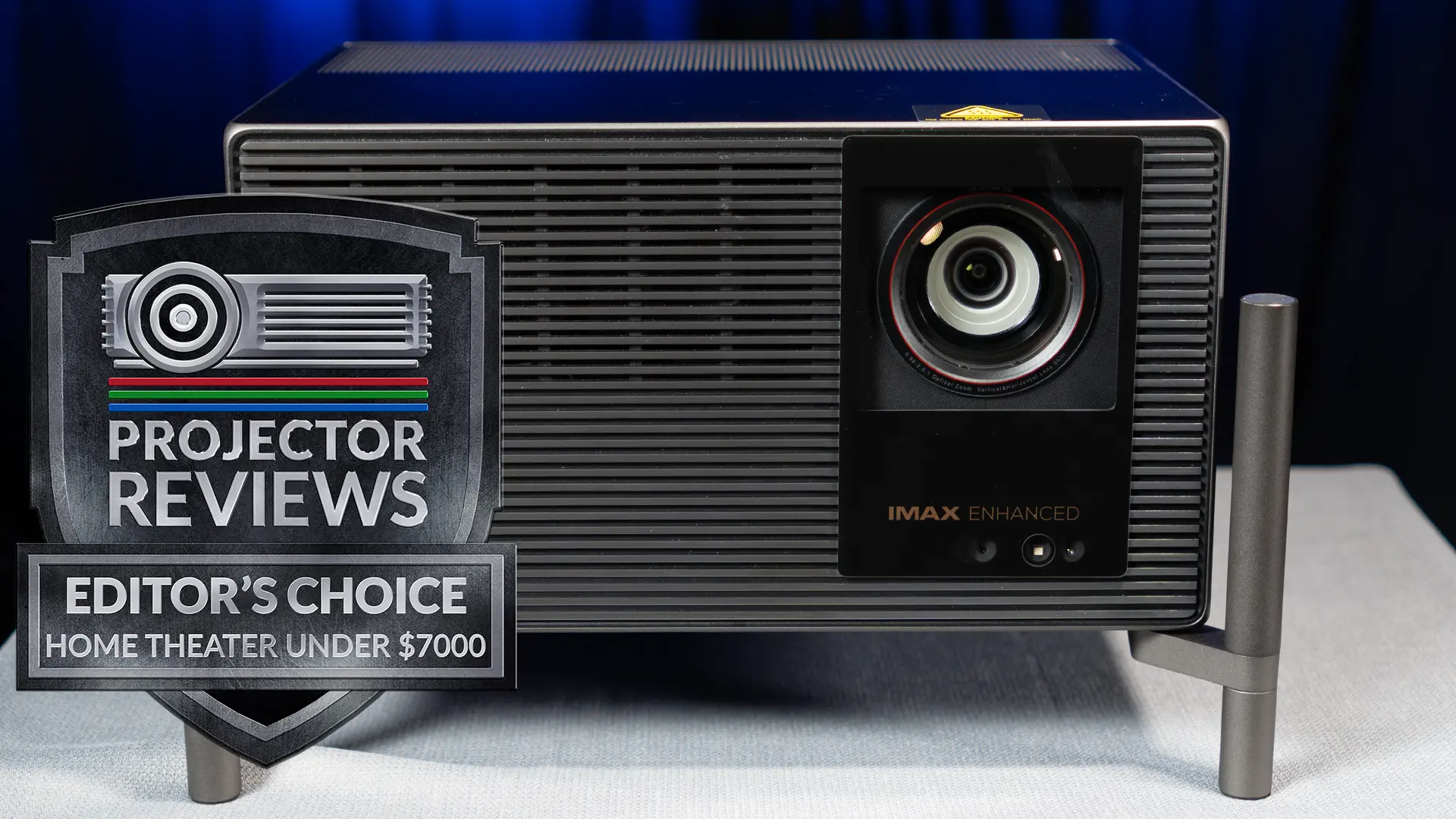
The XGIMI TITAN Noir Max is a 4K single-chip DLP projector which is priced at $$5,999, built around Texas Instruments’ 0.47-inch SST DMD and an RGB Triple Laser light source with a max rated brightness of 7,000 ISO Lumens.
At CES 2026, there were several notable projector announcements, but none of them were bigger than the XGIMI Titan Noir Max. This projector promised impressive brightness and contrast, combined with an install-focused feature set for the price point.
I review dozens of projectors every year and select only those that truly excite me and spark my interest. The XGIMI TITAN Noir Max is one of those projectors. I was incredibly excited when I saw the box arrive.
XGIMI is known for high-quality portable and lifestyle projectors that deliver excellent image quality at affordable prices. We have reviewed several XGIMI models and have always been impressed by their image quality, but we had hoped they would build something to address the needs of serious home entertainment enthusiasts.
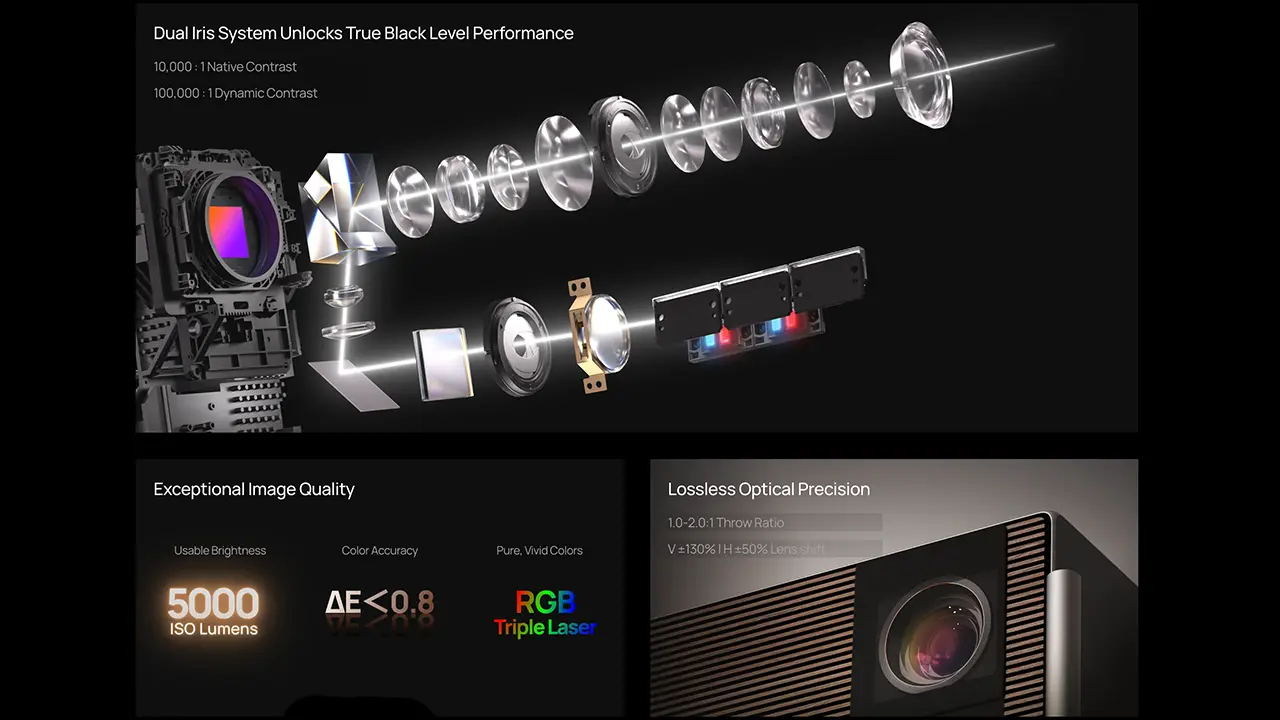
At the heart of the TITAN Noir Max is Texas Instruments' latest 0.47-inch SST DMD, which is designed to deliver higher output brightness and native contrast than previous DMDs of the same size. While the DMD's native resolution is 1080p, the TITAN uses XPR pixel-shifting technology to deliver 4K (3840 x 2160) on-screen resolution.
Due to its state-of-the-art DMD and Dual Intelligent Iris System, the TITAN Noir Max has a native contrast of 10,000:1. The projector’s Dynamic contrast can reach 100,000:1 when the Dynamic Black Level Enhancement processor is engaged alongside the iris.
The Dual Intelligent Iris offers five manual aperture levels plus a continuous dynamic mode. XGIMI’s X-Vision chip drives the Dynamic Black Level Enhancement system, which analyzes scene content in real time to adjust dark-area rendering without clipping shadow detail.
The TITAN Noir Max supports multiple High Dynamic Range formats, including Dolby Vision, HDR10+, HDR10, HLG, and IMAX Enhanced.
A 15-element motorized lens provides a 2x optical zoom range with motorized focus, combined with ±130% horizontal and ±50 % vertical lens shift, maximizing installation flexibility.
XGIMI TITAN Noir Max
Suggested Retail Price: $5999
Ratings Based On Comparable Models
Brightness
Color Reproduction
Contrast
Sound Quality
Pros
+ Rated Brightness of 7000 ISO Lumens
+ 10.000:1 Native Contrast
+ Good Color Reproduction
+ Motorized 2x Zoom Lens
+ H/V Optical Lens Shift
+ Dual Iris (Multi-Step)
+ Ultra Low Game Lag
+ Class-leading 3D Image Quality
Cons
- Large External power supply
- Laser Speckle on Some Screens
- No Integrated Smart Platform
- Doesn’t Display 4K/120Hz
If you are interested in purchasing the projector mentioned in this article, we always appreciate it if you use one of the links in the article because Projector Reviews earns a small commission on the sale at no cost to you.
Gaming specs include 1ms input lag at 1080p/240Hz, 3ms at 4K/60Hz, VRR, and ALLM. Audio is handled by a 2x 12W Harman Kardon system with DTS-X.
There's been a lot of buzz about The TITAN Noir Max, but it actually lives up to most of the hype. It delivered outstanding native contrast, incredibly high brightness, and accurate color reproduction from a compact chassis. Due to its class-leading image quality and extensive installation flexibility, it is arguably one of the best single-chip DLP projectors I have ever evaluated.
OVERVIEW
XGIMI TITAN Noir combines class-leading brightness and native contrast with excellent install flexibility
The TITAN Noir Max Kickstarter campaign, launched in April 2026, has raised over $15 million with nearly 5000 backers, and the units are scheduled to ship in June 2026. The $2,999 early-bird price is 50% below the $5,999 MSRP. At its retail price, the TITAN Noir Max enters the same competitive tier as the Sony VPL-XW5000ES and Epson LS12000, while offering brightness and color-gamut coverage that neither product matches.
The TITAN Noir Max, based on its specs, really stands out due to its native contrast, high brightness, and features, so having the opportunity to get my hands on it was very exciting. XGIMI has established itself as a leading manufacturer of lifestyle projectors. We have always been impressed by their models for their excellent image quality, integrated smart features, simple setup, and compact form factors.
Last year, XGIMI decided to branch out to meet the needs of serious home theater enthusiasts and professional projector users by launching the award-winning XGIMI TITAN. The original TITAN includes a 0.78-inch High Efficiency Pixel (HEP) DMD and a dual-blue laser-phosphor light source capable of delivering over 5,000 ISO Lumens. We were incredibly impressed with the TITAN’s performance, but the TITAN Noir Max is even more innovative.
To learn more about the differences between the Titan Noir Max and the Titan, check out our comparison video on our YouTube site.
The TITAN Noir Max trades the TITAN’s large-chip brightness headroom and built-in power supply for a newer, smaller, contrast-optimized 0.47-inch SST DMD chip architecture.
The original TITAN uses a 0.78-inch DMD, designed for high-output prosumer applications and capable of handling the thermal load of light sources exceeding 7,000 lumens for extended periods. The Titan Noir Max uses the 0.47-inch SST DMD, a newer Texas Instruments architecture that delivers DLP-class leading contrast performance while still producing high brightness.
The key mechanical difference between the new DMD chips and current DMDs found in most DLP projectors is that the SSD mirrors can be tilted by ±14.5 degrees. A larger tilt angle means the mirror deflects the rejected light farther from the lens axis when producing a dark pixel, improving the light-rejection ratio and increasing native contrast without relying on external processing. The SST chip also has higher power tolerance and better thermal management, which is why it can sustain brightness levels that previous 0.47-inch DMD chips could not.
To further maximize native contrast, XGIMI included a Dual Intelligent Iris System that uses two physical irises in the optical path. The first controls laser output at the light source, while the second sits near the lens element and controls transmitted light reaching the screen. These physical irises reduce the amount of light entering the optical path, resulting in a lower black floor.
Five manual levels are available, each representing a different aperture diameter and a different brightness-to-contrast tradeoff. There is also a Dynamic Iris setting that continuously adjusts both irises based on the displayed scene.
XGIMI’s new X-Vision processor adds Dynamic Black Level Enhancement, which analyzes scenes in real time and continuously adjusts the laser's light output and the projector's contrast curve to deepen blacks and extract shadow detail. Combining DBLE with the dynamic iris delivers extremely high dynamic contrast.
RGB Triple Laser light source can reproduce 110% of the BT.2020 color space. This ensures the projector can deliver the wide color range encoded into HDR content. Since the RGB triple laser eliminates the need for a color wheel, there is a visible reduction in the rainbow effect (RBE). For customers who are very sensitive to rainbows, the projector also includes a new Anti-RBE system that addresses residual artifacts inherent in the RGB laser DLP architecture.
XGIMI will be offering three models in its TITAN Noir Series. These models range in brightness from 4,000 to 7,000 lumens, and as you step up the lineup, you also get higher native contrast. The difference in brightness is due to the number of laser chips in the laser light system.
XGIMI Model Comparison
Model
TITAN
TITAN Noir Max
Horizon 20 Max
Price
$3999
$2999 (crowdfunding pricing)
$2999
DLP Chip
0.78" HEP DMD
0.47" SST DMD
0.47" DLP DMD
Brightness
5000 Lumens
7000 Lumens
5700 Lumens
Light Source
Dual Laser
RGB Laser
RGB Laser
Color Gamut
150% DCI-P3
110% BT.2020
110% BT.2020
Contrast
2,500,00;1 (Dynamic)
10,000 Native (100,000:1 Dynamic)
20,000:1 (Dynamic)
Lens
1.20-1.80:1 Optical Zoom
0.98-2.0:1 Optical Zoom
1.2-1.5:1 Optical Zoom
Vertical Lens Shift
±100% Vertical / ±40% Horizontal
±130% Vertical / ±50% Horizontal
±120% Vertical / ±45% Horizontal
Dynamic Iris
No
Yes (Dual)
No
Smart Platform
None
Google TV
Google TV
The TITAN Noir sits above the HORIZON 20 series and TITAN. We just reviewed the HORIZON 20 Max ($2,699 MSRP), XGIMI's premium lifestyle-focused model that delivers up to 5700 ISO lumens. The unit’s high brightness, smart OS, and room-to-room portability make it a good option for many living spaces.
The TITAN is targeted at home theater enthusiasts and professional users. It has a larger DMD chip, a dual-laser light engine, and professional connectivity. The TITAN is designed to appeal to buyers seeking a dedicated viewing space and a way to permanently mount a high-brightness, color-accurate projector. The TITAN’s larger chassis allows for quieter fans and a built-in power supply.
XGIMI will be offering three models in its TITAN Noir Series. These models use triple RGB lasers paired with a 0.47-inch SST DMD and a dual iris system to deliver deeper black levels and higher native contrast. These models range in brightness from 4,000 to 7,000 lumens, and as you step up the lineup, you also get higher native contrast. The difference in brightness is due to the number of laser chips in the laser light system. XGIMI provided us with the top model, which was the TITAN Noir Max.
HARDWARE
CHASSIS
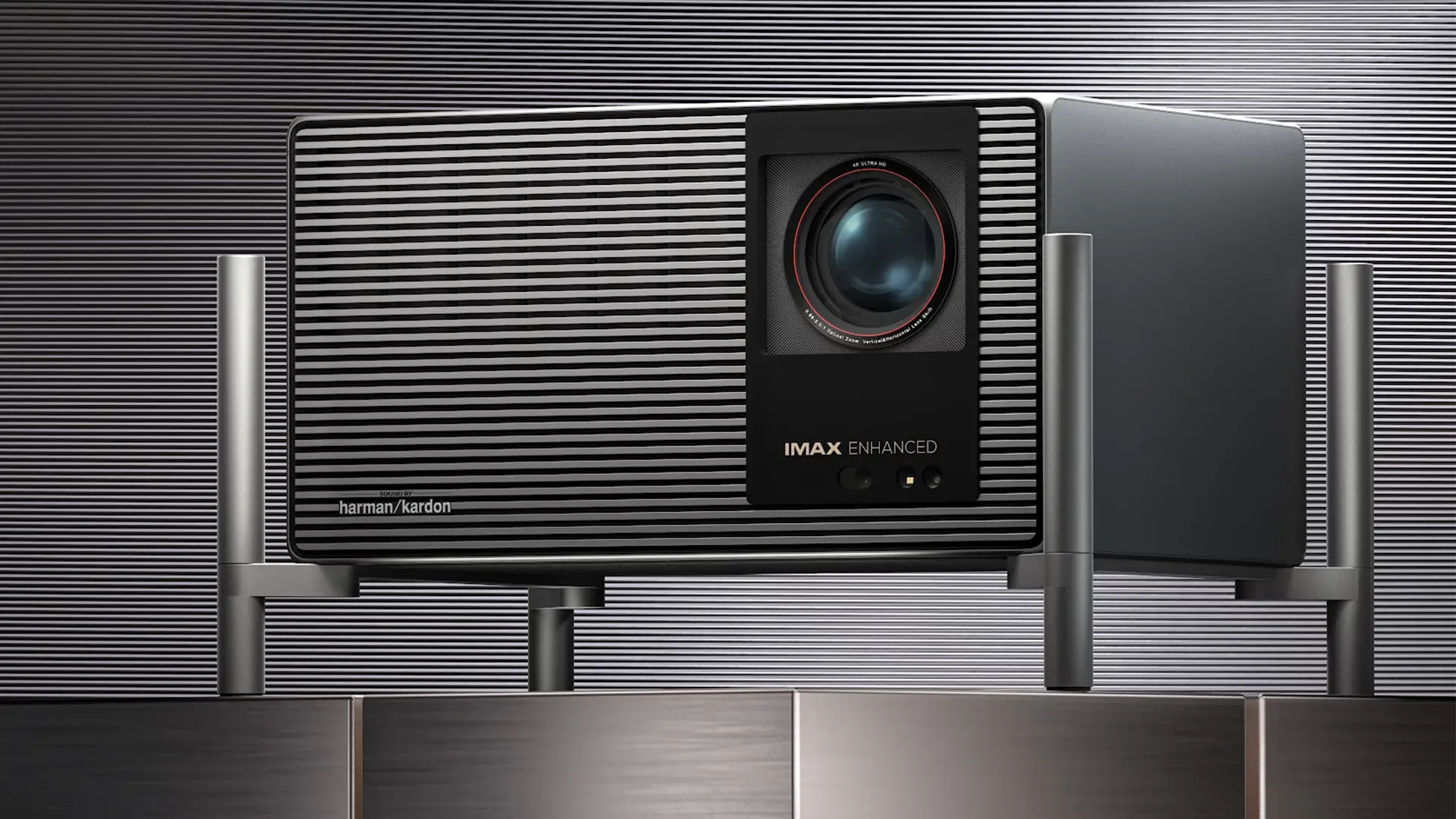
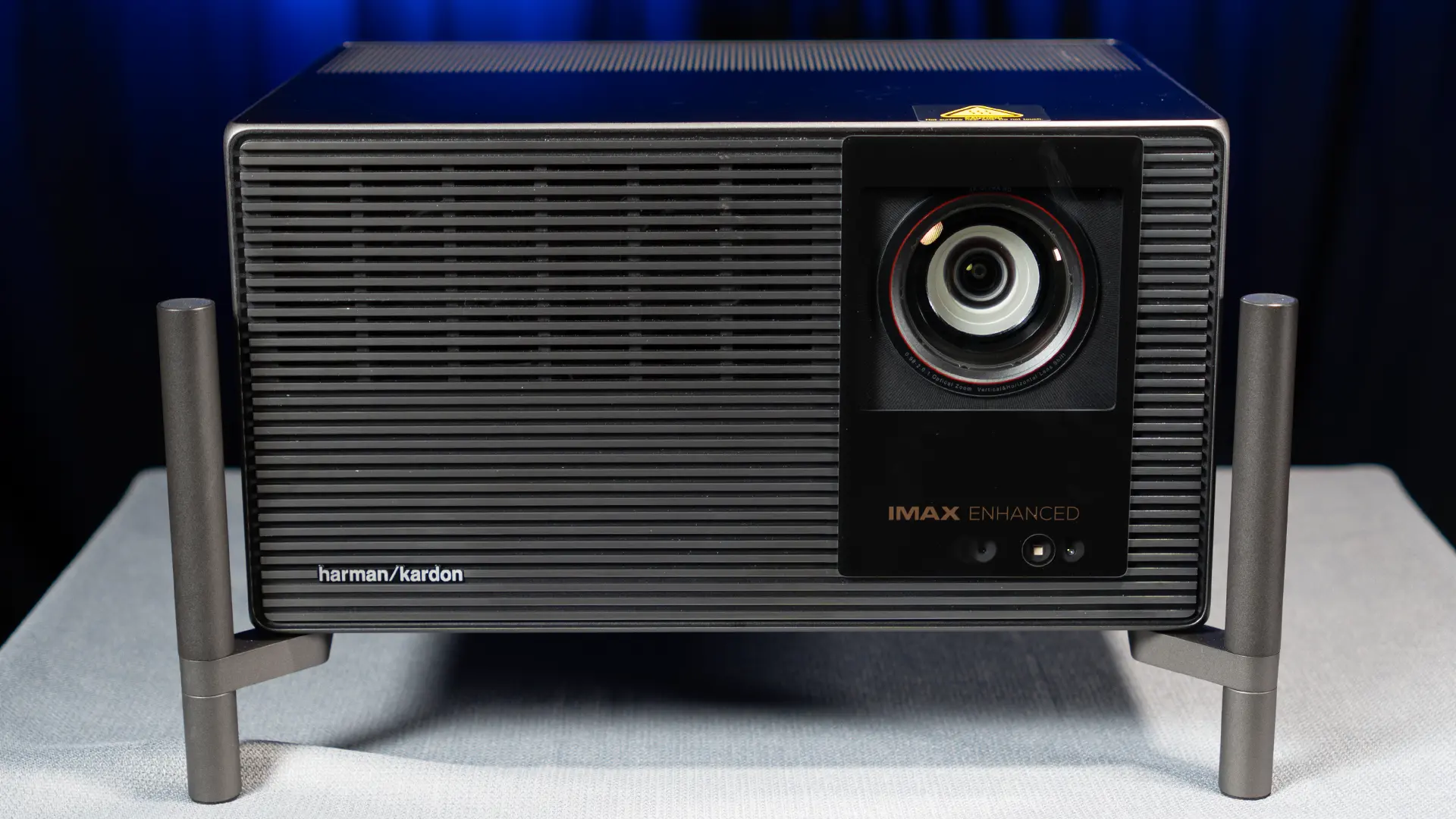
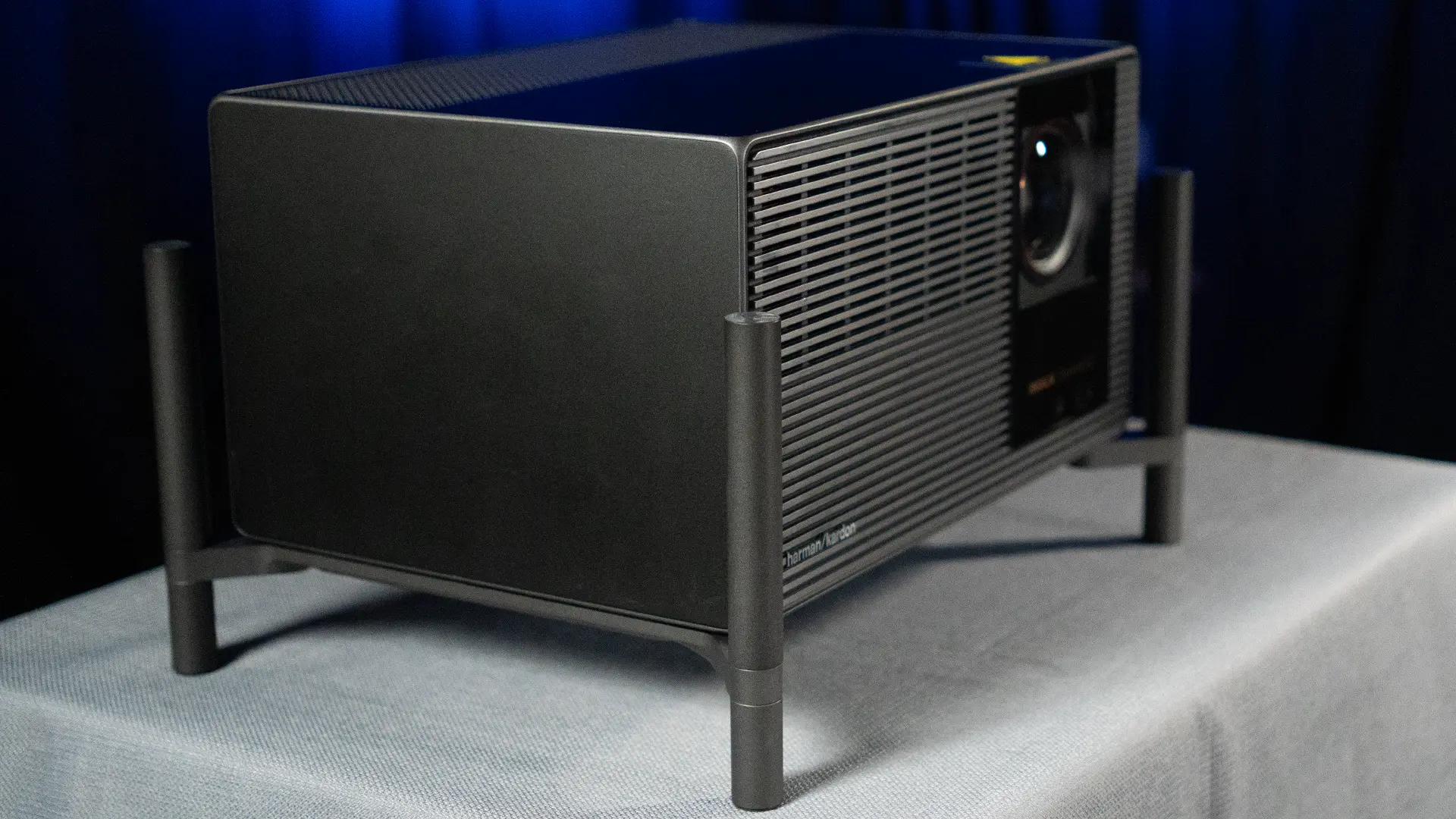
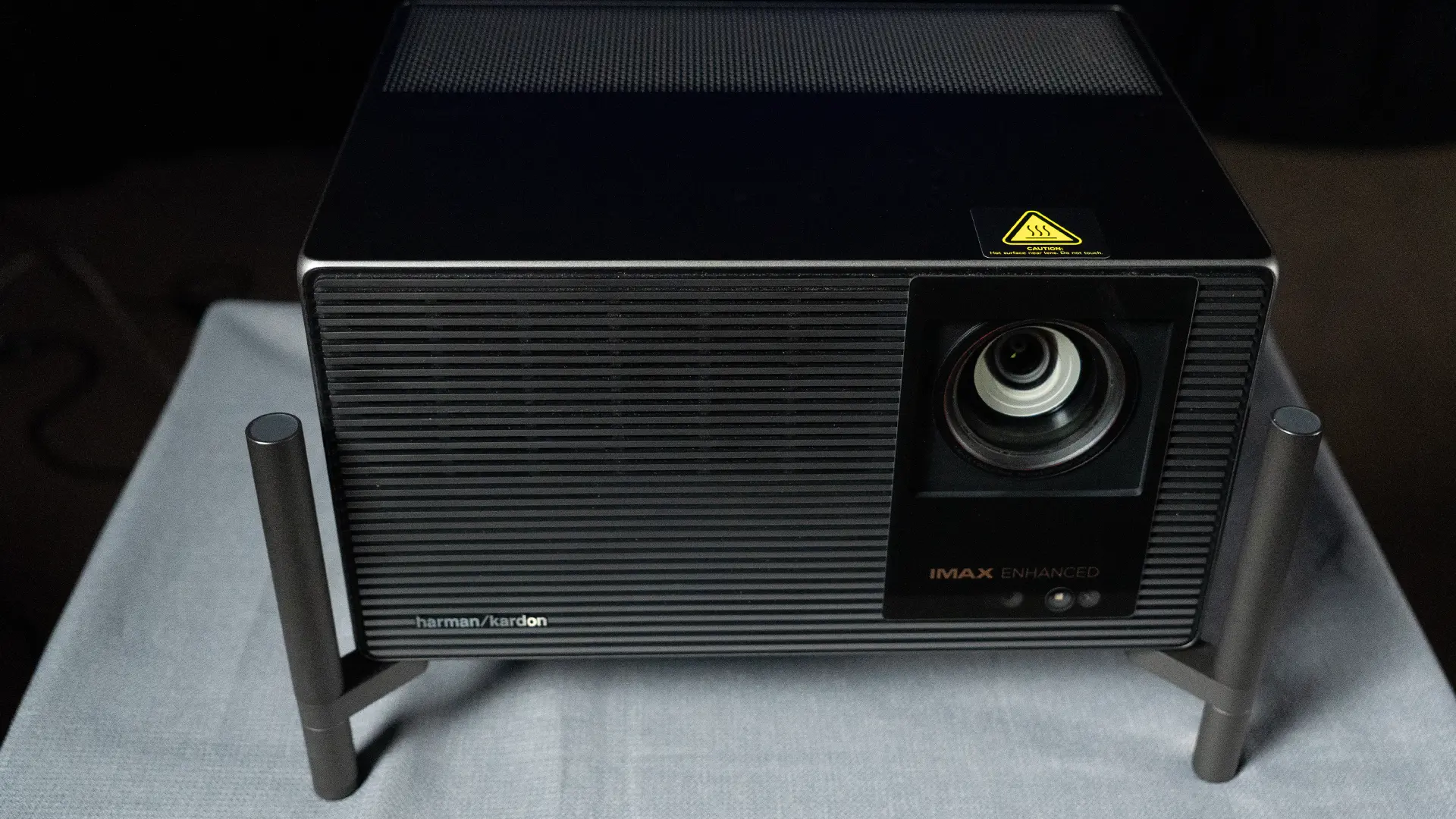
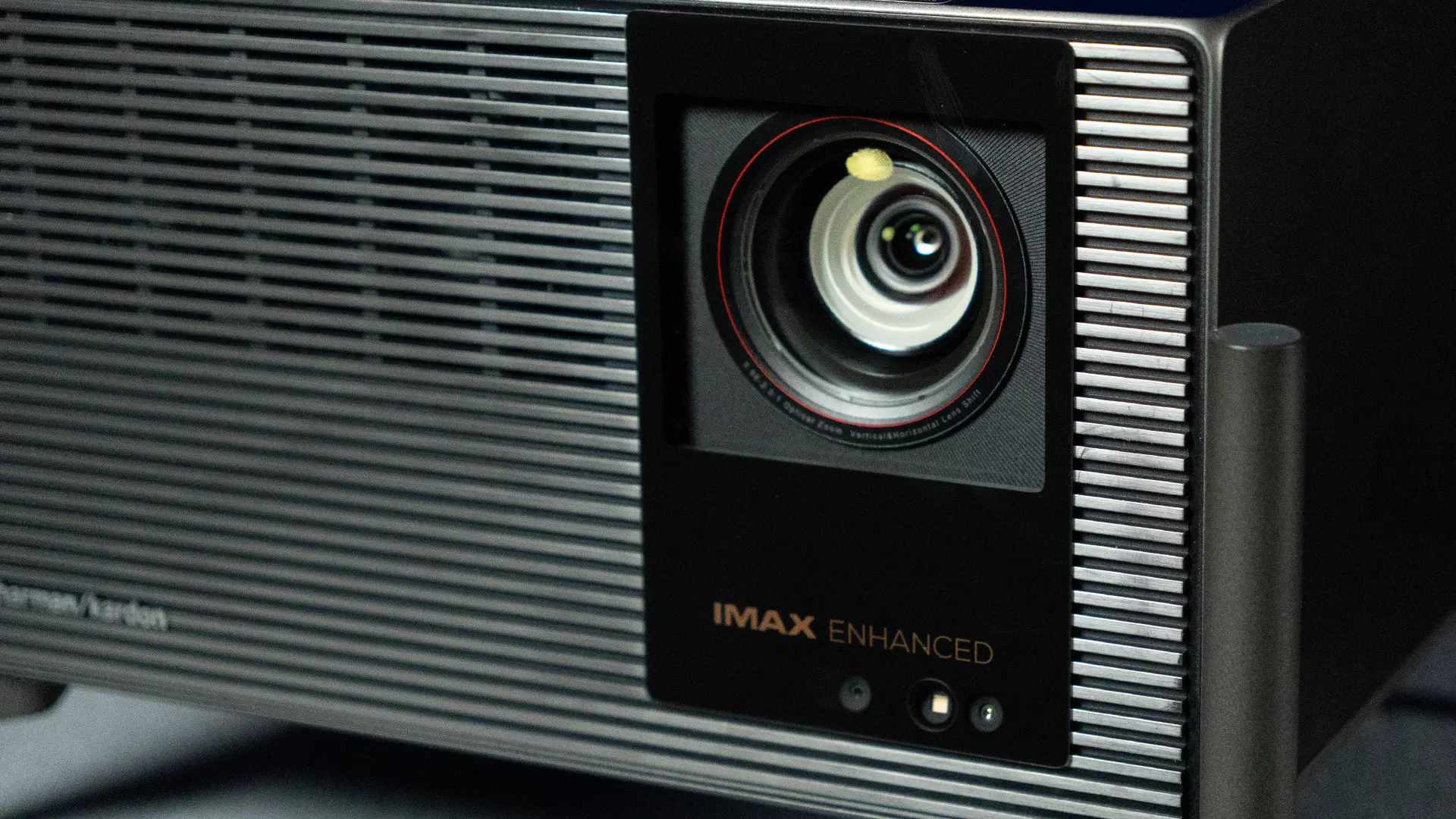
The build quality of the TITAN Noir Max is top-notch, and it even ships in a leather carrying case. The chassis uses a geometric form factor with four protruding legs that lift the body off its mounting surface. Since the projector exhausts heat through the bottom, the legs maintain the airflow clearance that the cooling system depends on. The unit measures 9” (230 mm) by 14.9” (379 mm) by 11.33” (288 mm) with the legs attached, and it weighs about 8.5 kg.
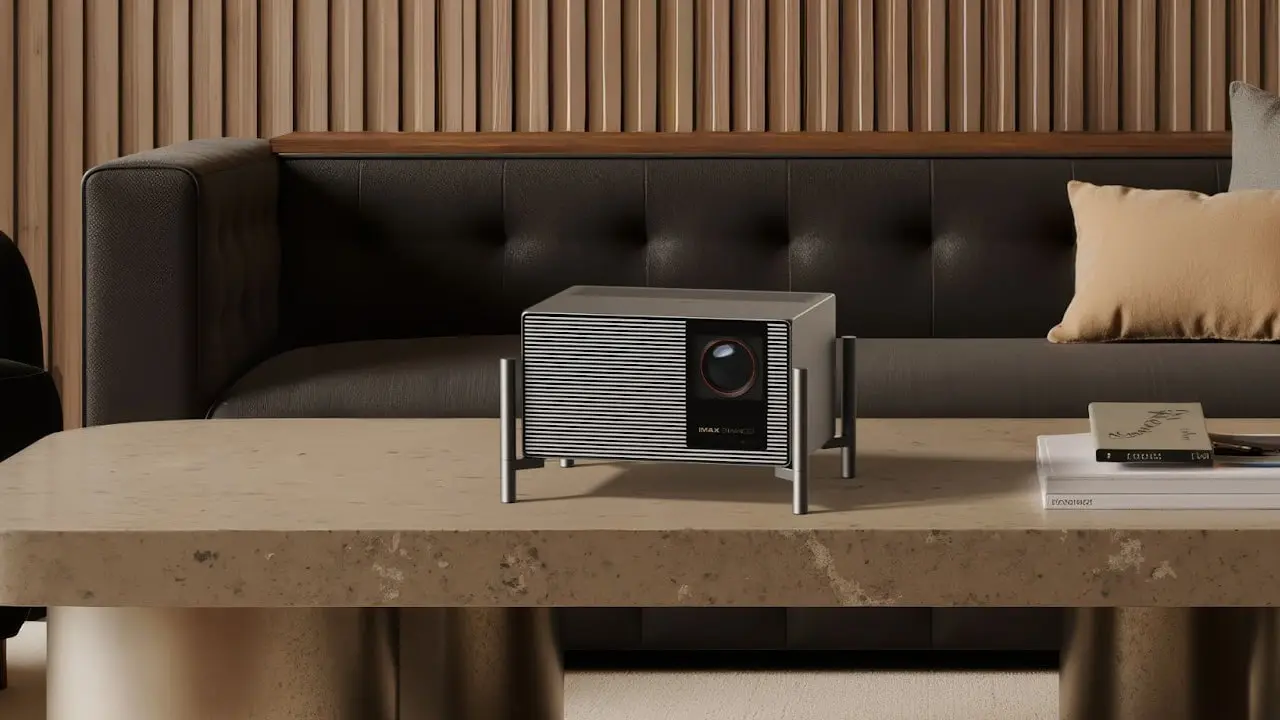
Compared to the original TITAN, the unit is smaller, which makes it easier to fit on a media room shelf. Unlike the TITAN, the TITAN Noir Max comes with a large external power supply. For shelf or tabletop installations, the issue is minor. For ceiling installations in finished rooms, plan the power supply location before the projector goes up. XGIMI offers an optional ceiling-mount bracket that integrates a housing for the brick alongside the projector. The power brick is genuinely difficult to conceal without the dedicated mount.
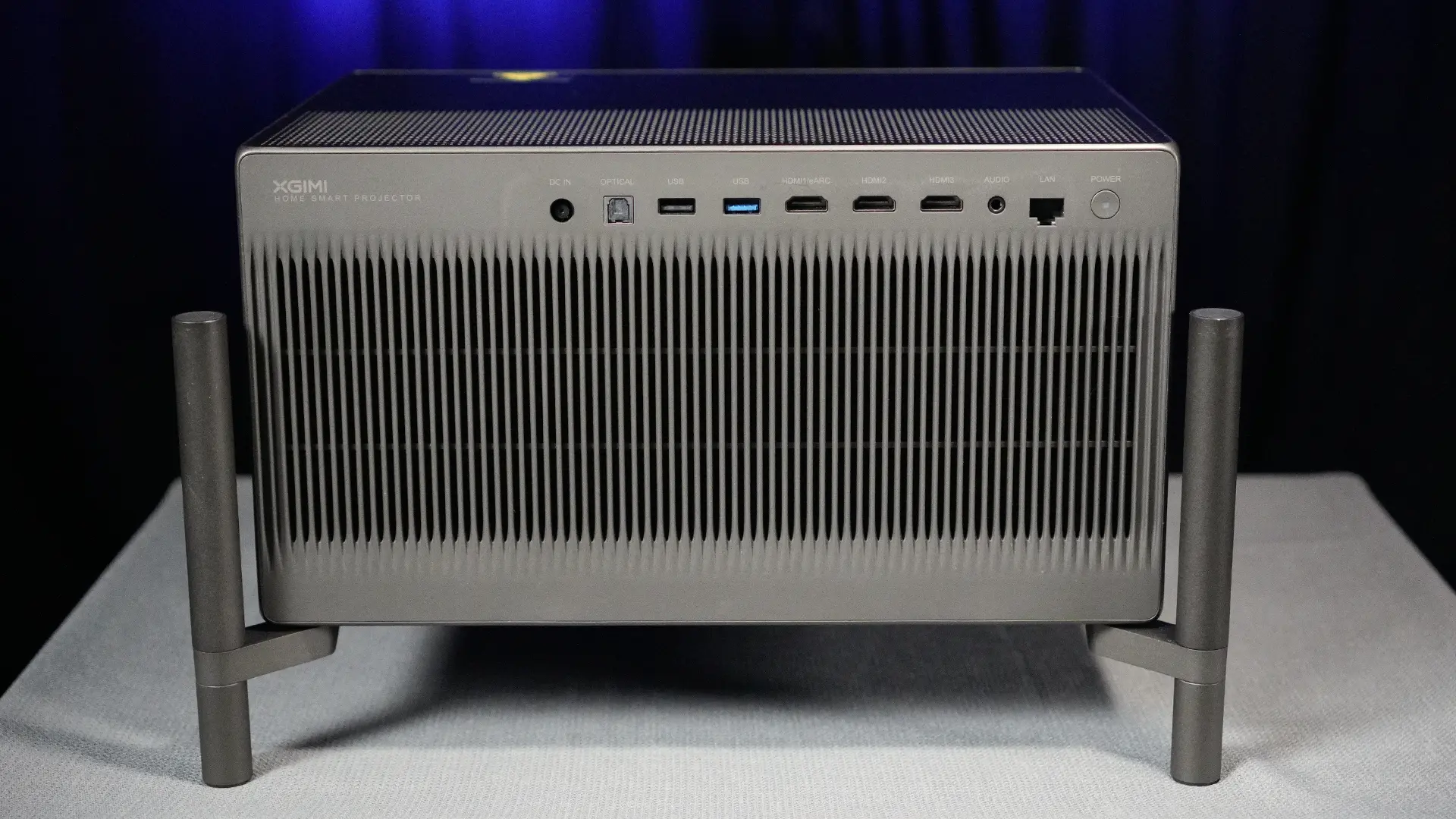
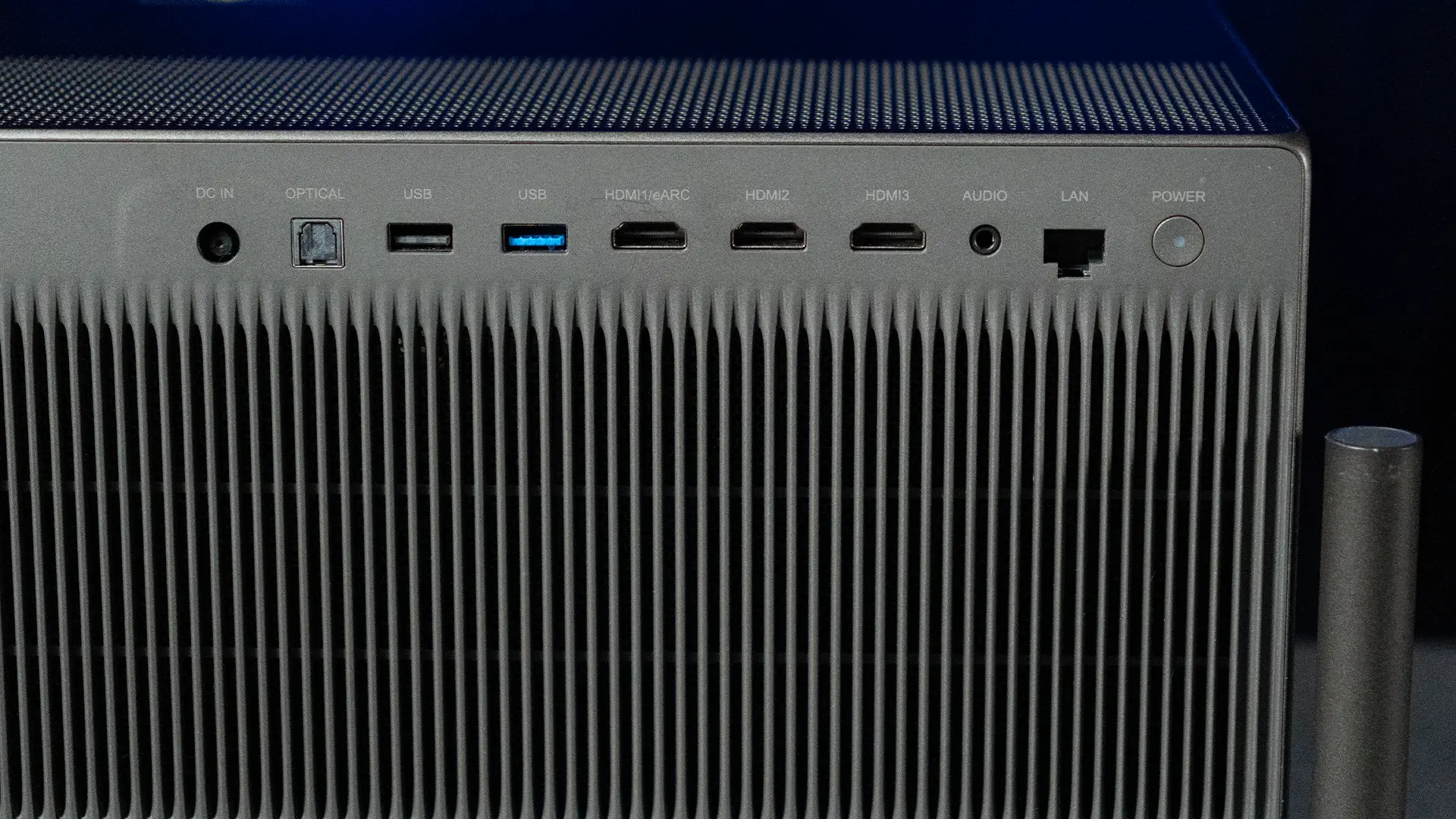
All the projector's connections are located on the rear of the chassis. There are three HDMI 2.0 ports, one of which supports Enhanced Audio Return Channel (eARC), enabling lossless audio passthrough to an AV receiver or soundbar over a single cable. The HDMI ports do not support 4K at 120Hz, but the projector does support gaming at 1080P Full HD at 240 frames per second.
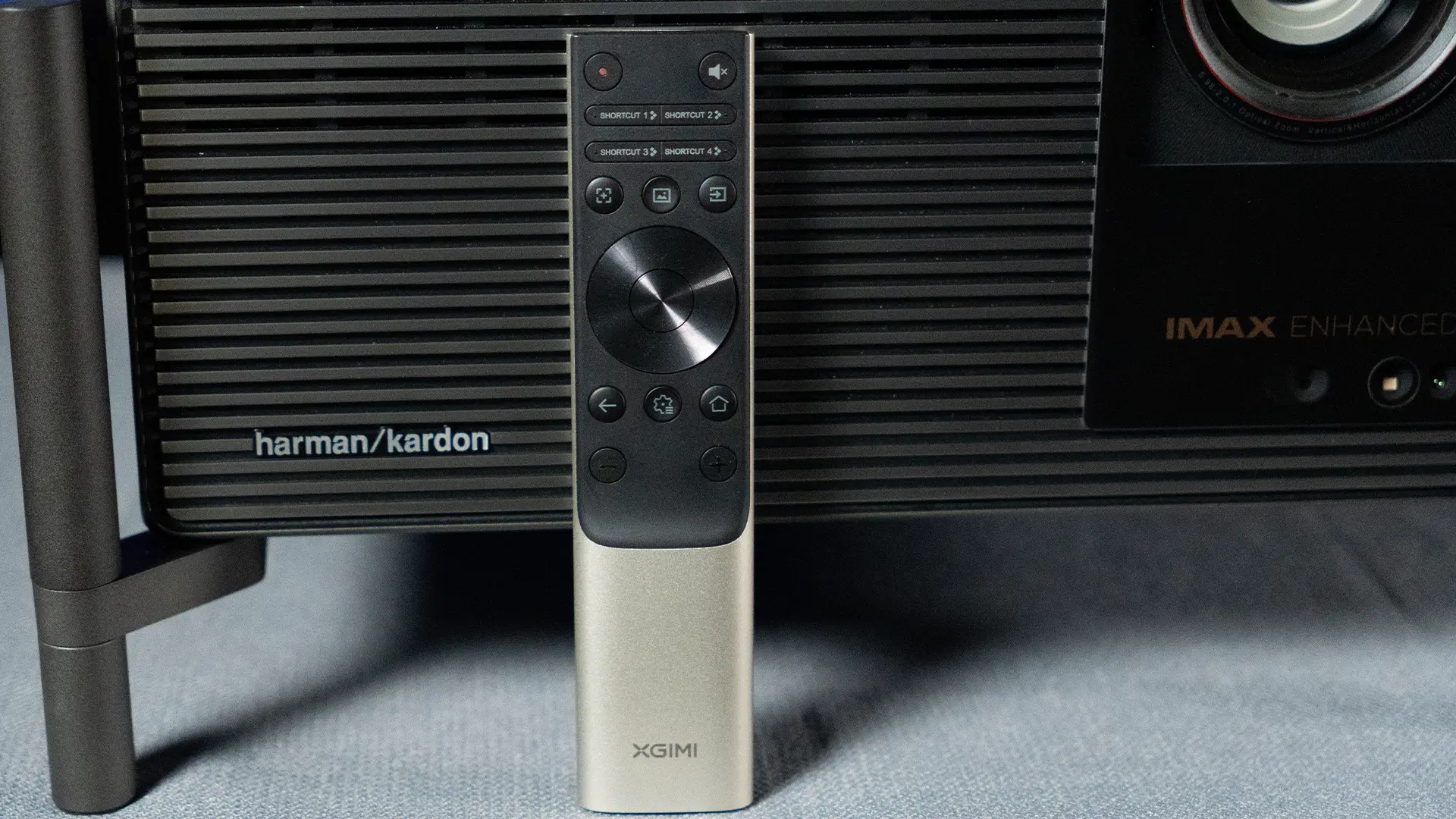
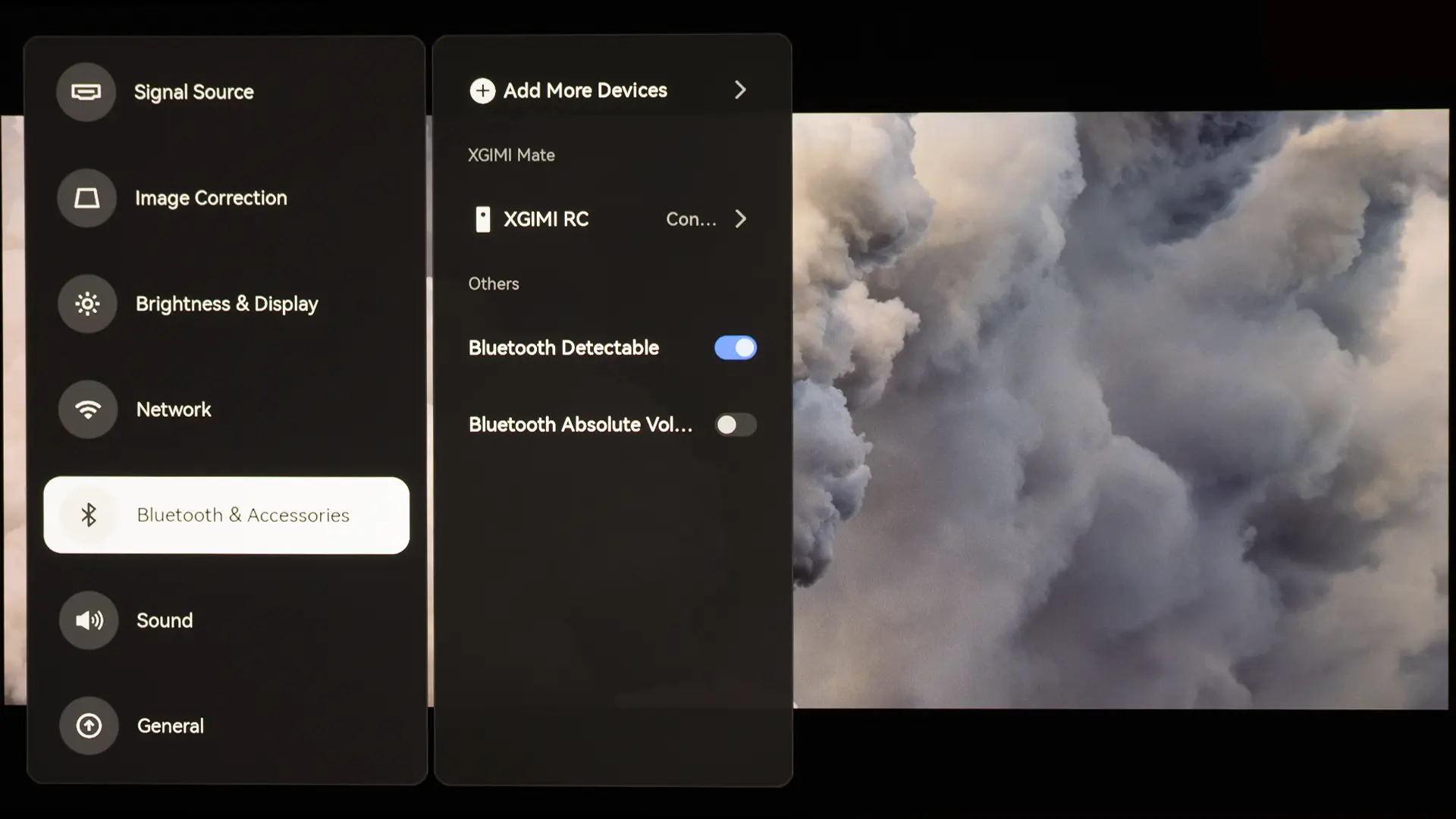
Other connections include USB 3.0, USB 2.0, Gigabit Ethernet, analog audio output, optical digital audio output, and a 3.5mm headphone jack. Wireless connectivity includes Wi-Fi 6 (802.11ax) for network access and Bluetooth. The Bluetooth remote is backlit and logically laid out for use in dark rooms. The remote includes four shortcut buttons, which can be programmed to access inputs and settings. These are great if you like to quickly adjust iris settings or quickly change picture modes.
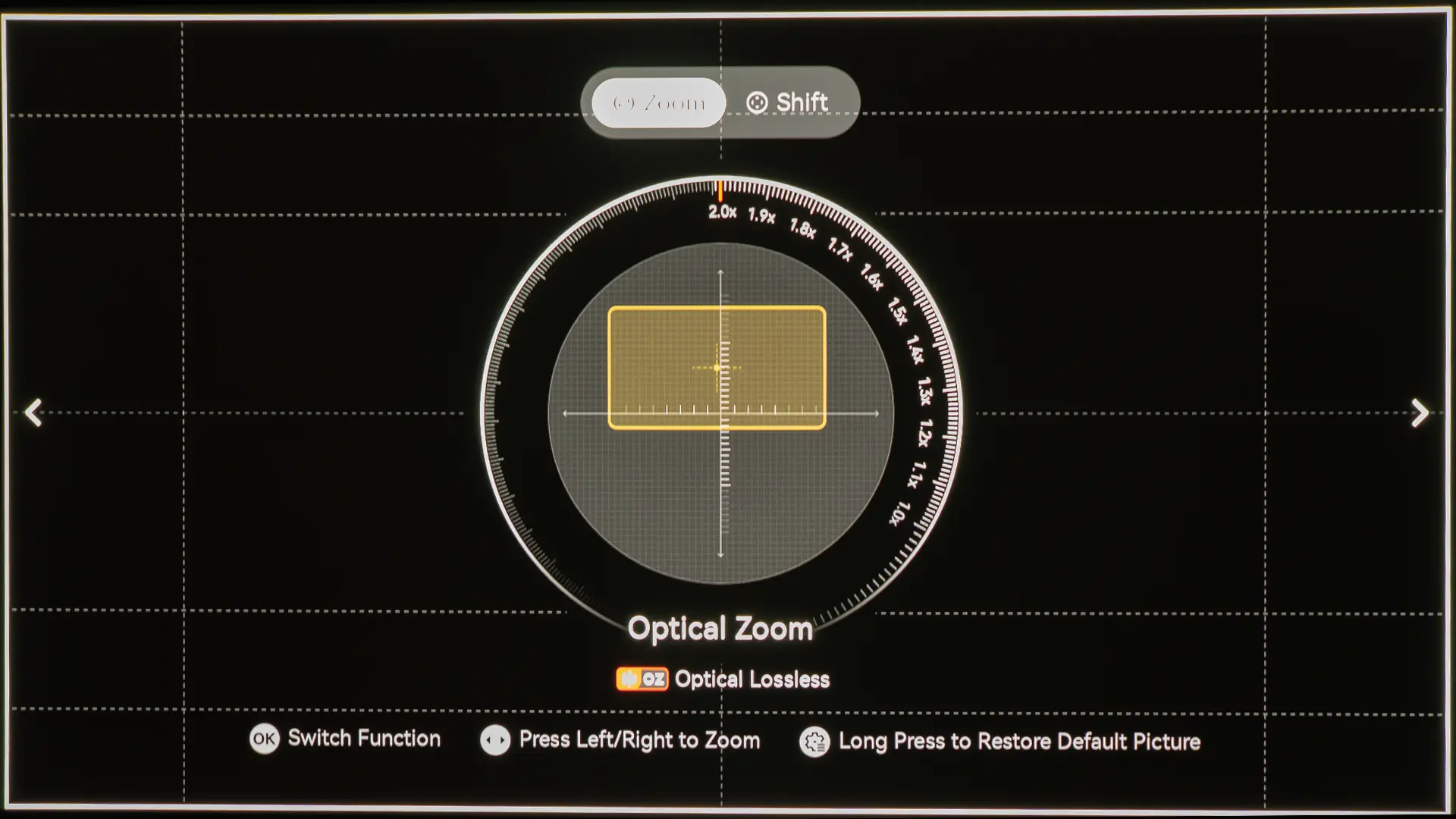
The 15-element motorized lens assembly offers 2x zoom with a 0.98 to 2.0:1 throw ratio. This means if you have a 120-inch screen, the projector can be placed between 8.73 ft (2.66 meters) and 17.42 ft (5.31 meters) away from the screen.
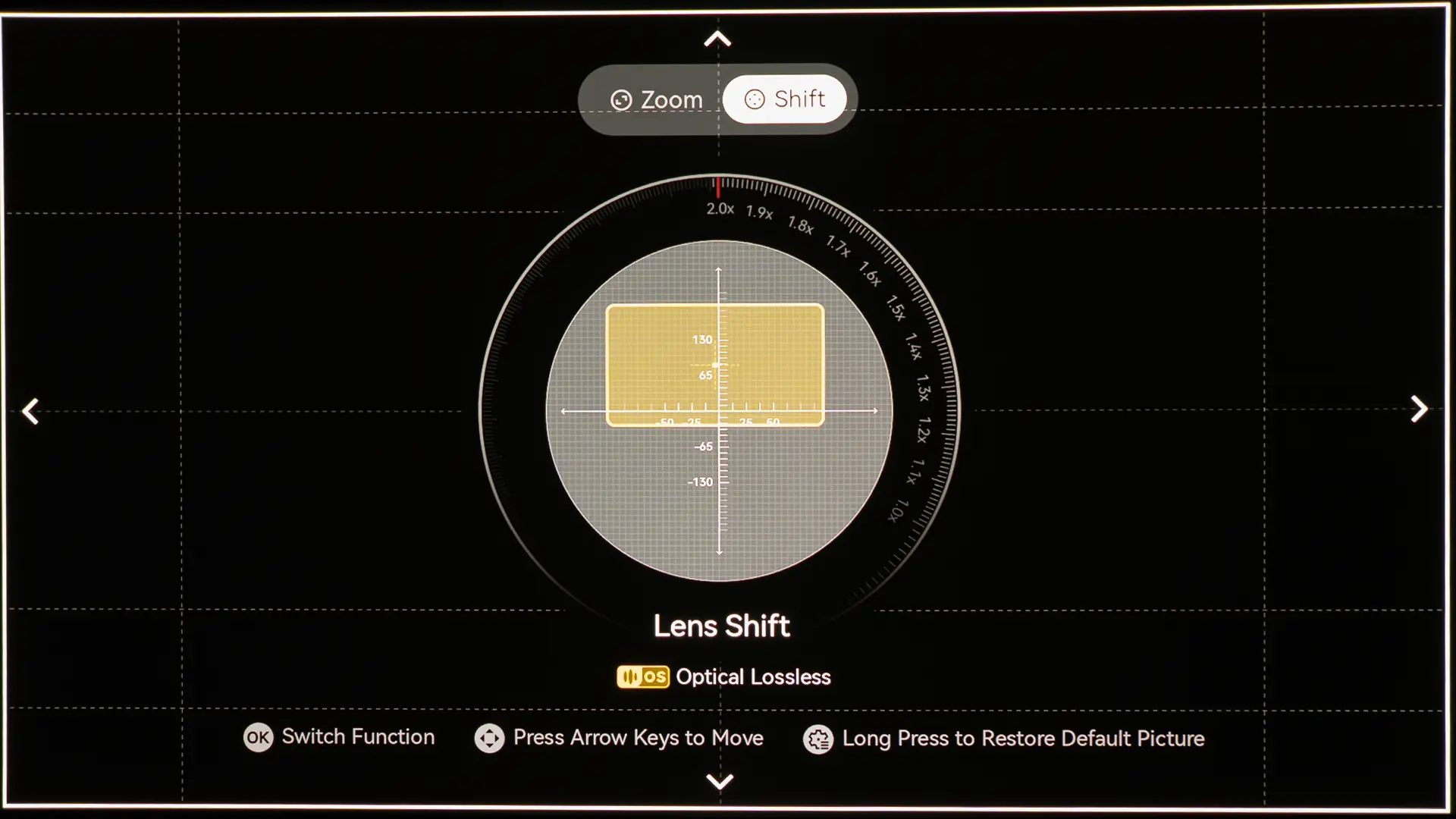
The projector offers ±130% vertical and ±50% horizontal lens shift, which really enhances its install flexibility. Due to its zoom range and lens-shift capabilities, it is one of the few DLP projectors I have been able to use in my personal media room.
XGIMI TITAN Throw Distance (16:9 Aspect Ratio)
Screen Size
Minimum Throw
Maximum Throw
100"
8.7 ft
13.1 ft
120"
10.5 ft
15.7 ft
130"
11.3 ft
17.0 ft
150"
13.1 ft
19.6 ft
160"
13.9 ft
20.9 ft
180"
15.7 ft
23.5 ft
200"
17.4 ft
26.1 ft
Lens memory for five positions, along with CinemaScope 2.35:1 switching, will be available via the upcoming OTA update. The TITAN Noir Max offers automatic keystone correction. It is always better to utilize optical shift to maximize on-screen resolution.
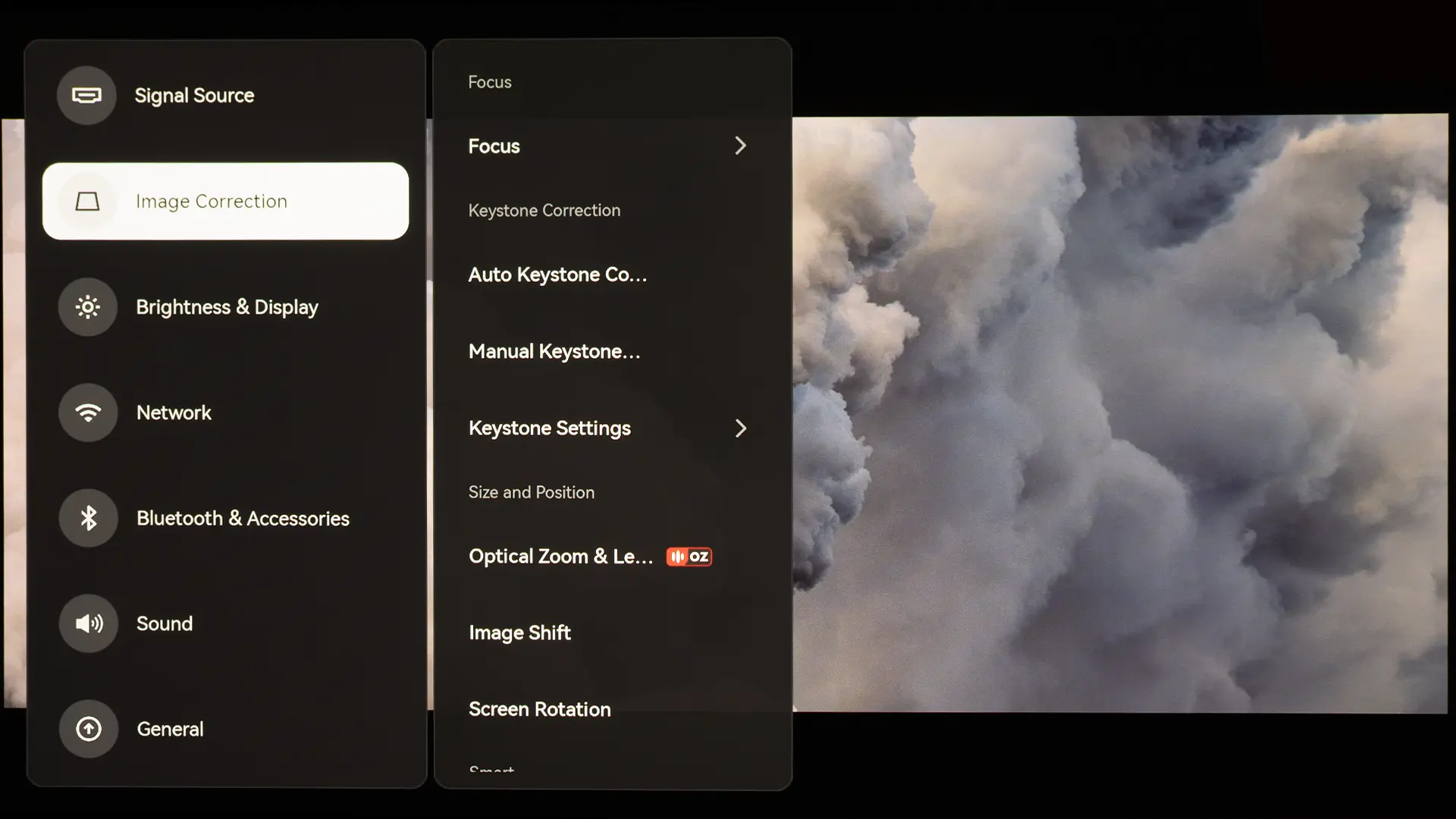
The projector includes sensor-based autofocus that operates automatically on startup or on demand. While the projector has a large amount of optical lens shift, the TITAN Noir Max offers auto keystone correction and manual 4-corner adjustments. The physical setup process is straightforward: the motorized lens shift and one-click autofocus and keystone system reduce installation time considerably.
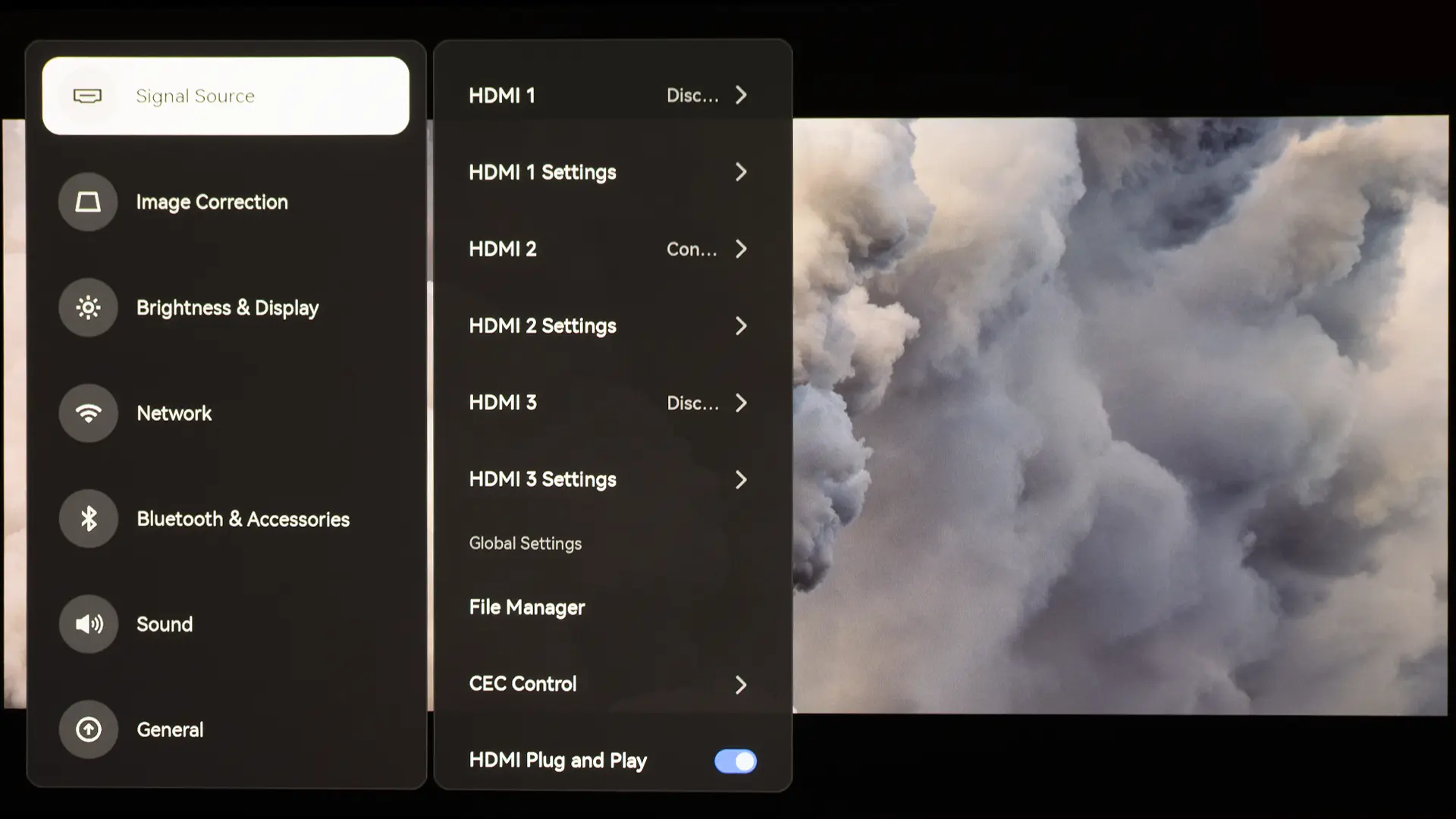
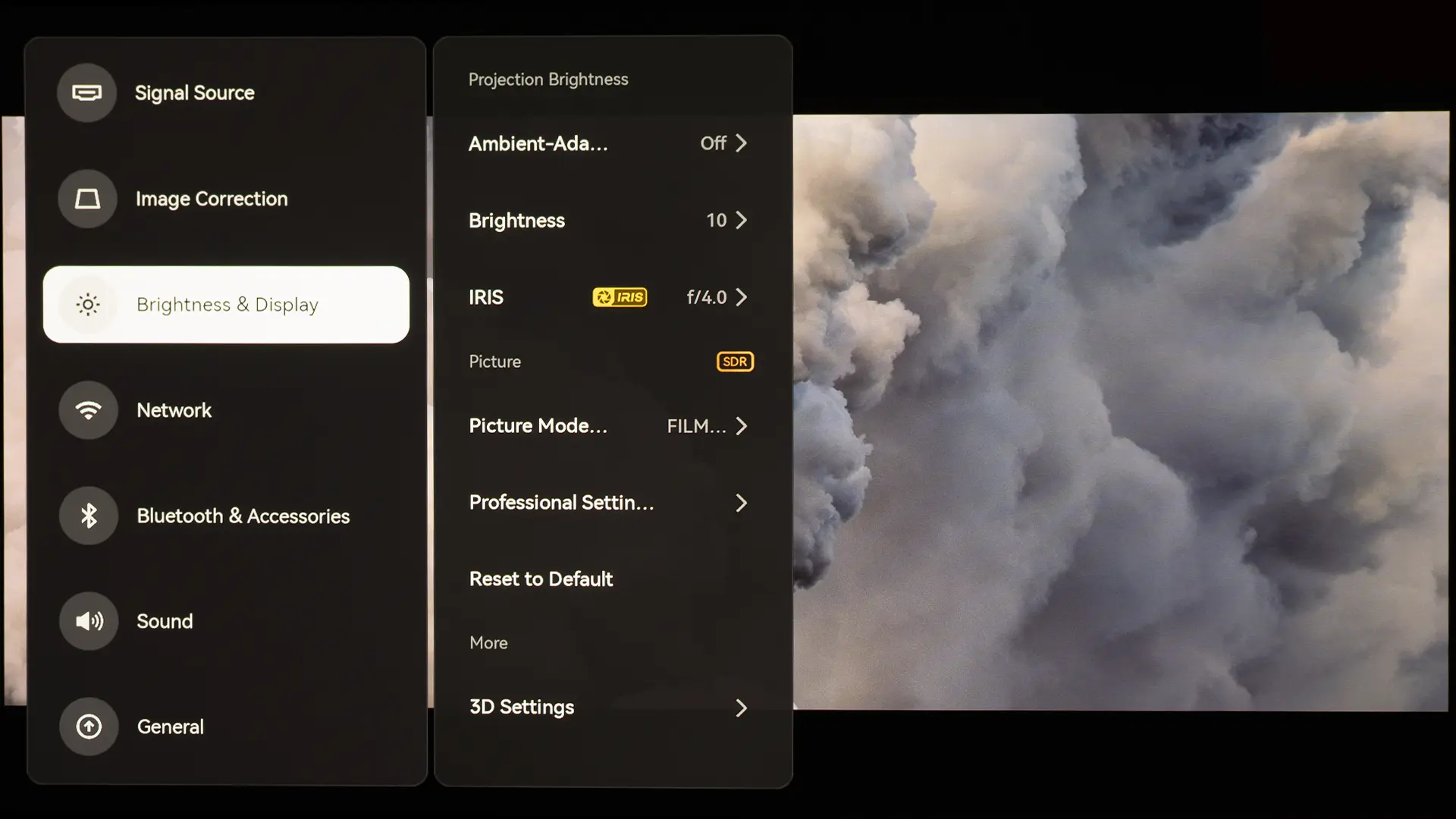
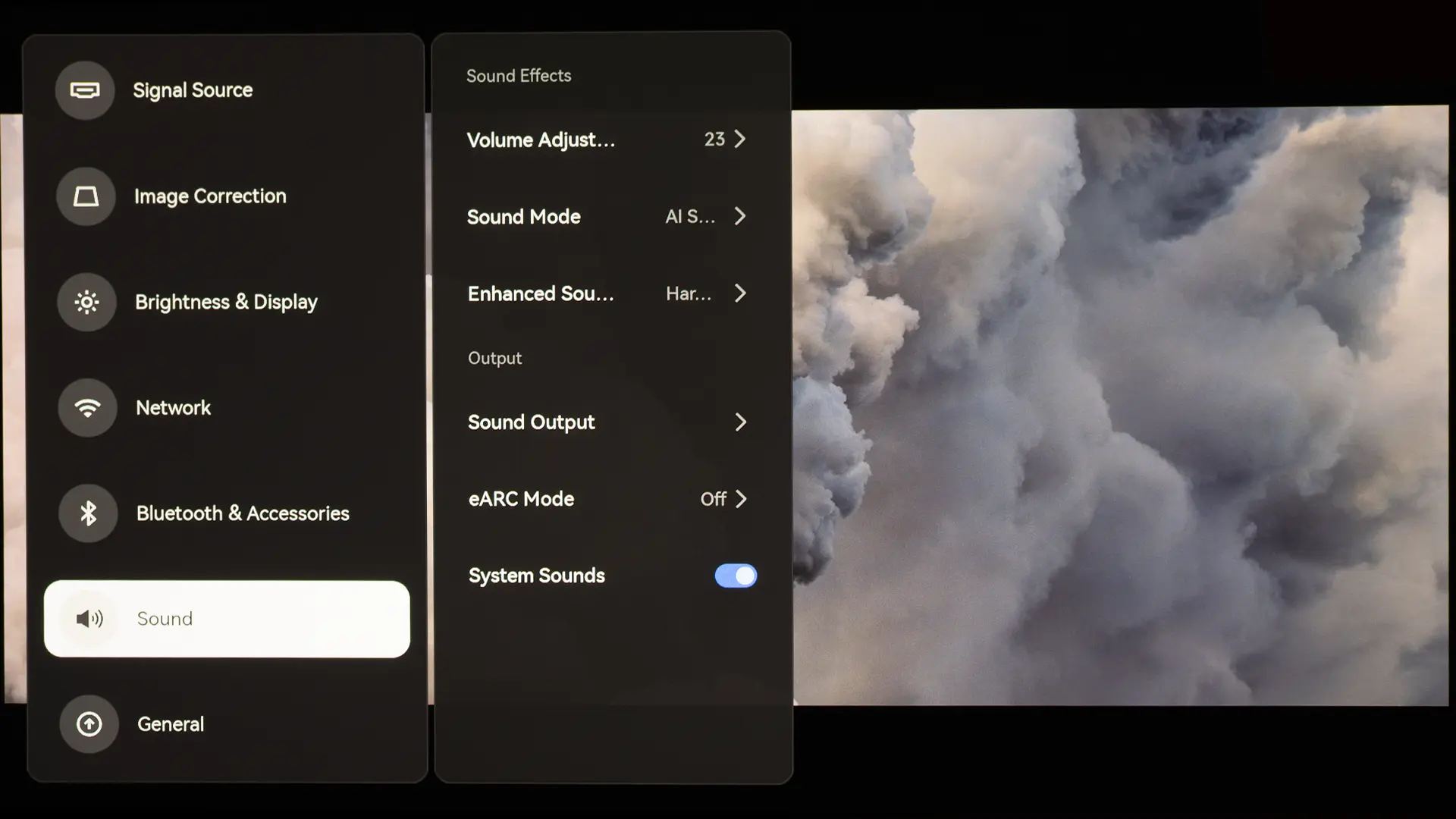
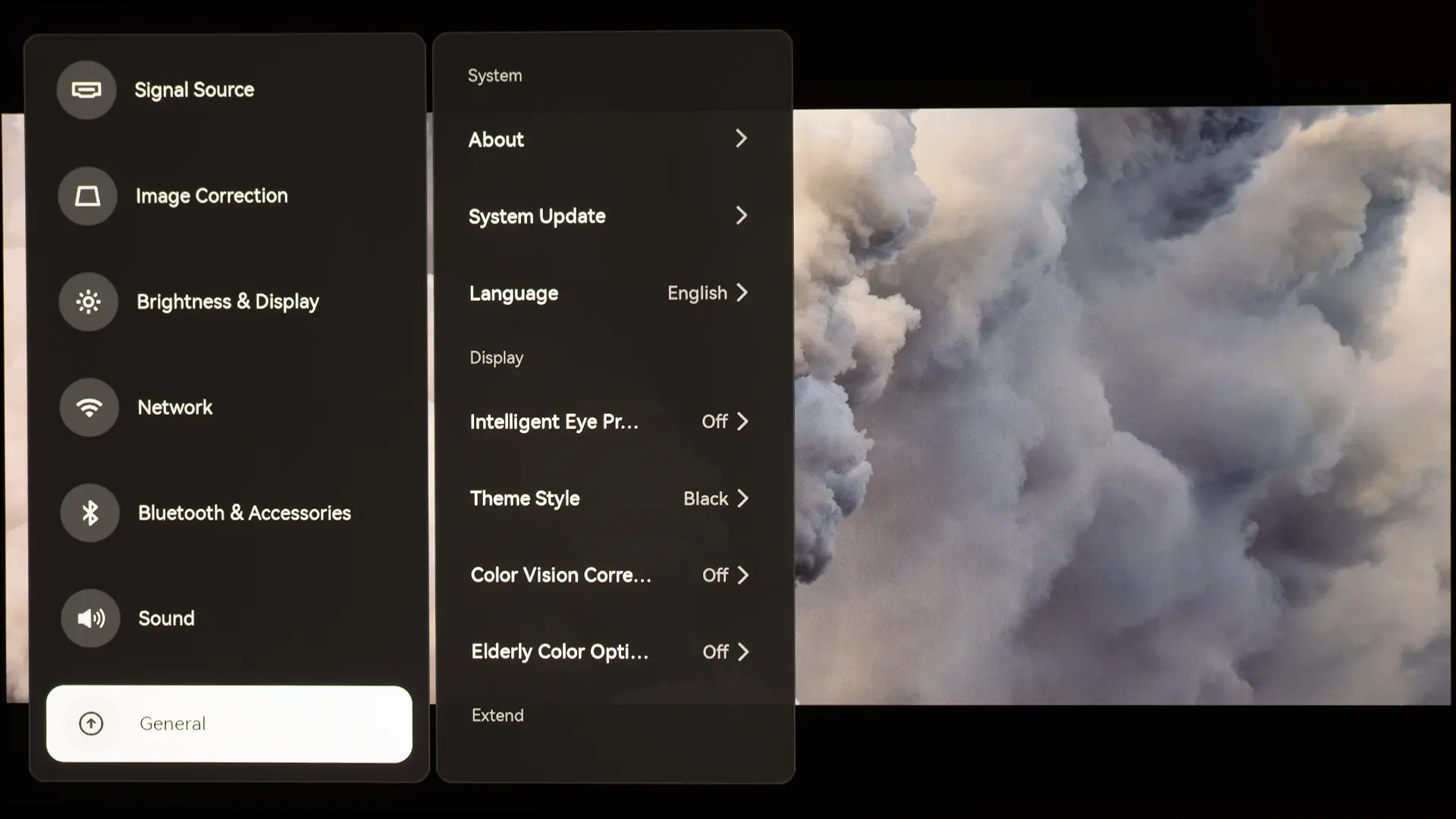
The TITAN Noir Max menu includes extensive picture adjustments, including multi-point white balance, gamma, and CMS controls. There is also an image correction section that contains all the settings needed to align the image to the screen. Those include the Focus, Keystone Correction, Tilt and Shift, Optical Zoom, and Horizontal/Vertical Lens Shift. While the menu contains a huge amount of picture and sound settings, it is well organized and easy to navigate.
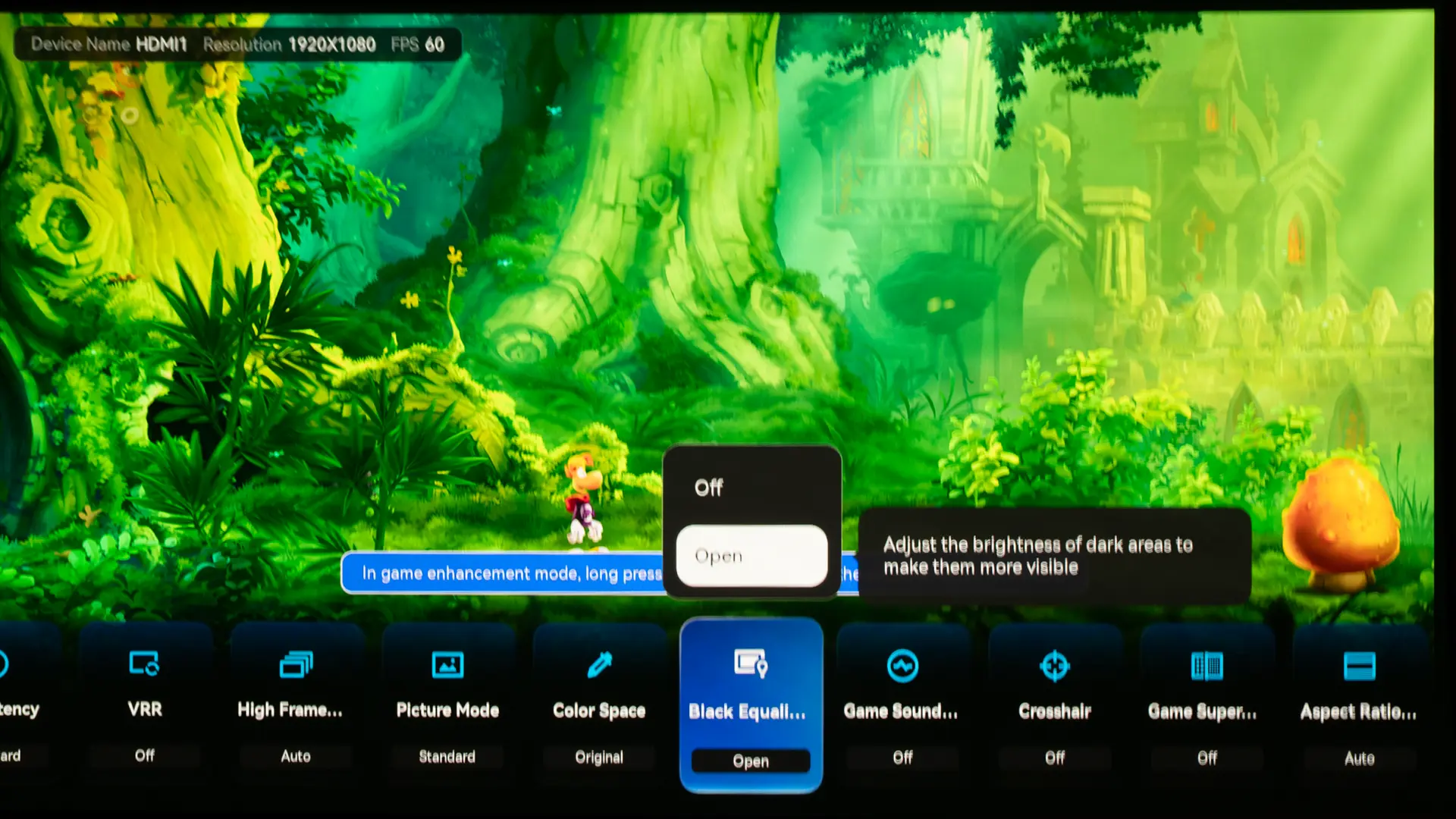
When the game mode is enabled, you can access a dedicated gaming settings menu, which we will cover in more detail when we discuss the unit's gaming performance.
PERFORMANCE
COLOR REPRODUCTION
XGIMI projectors that we have reviewed in the past have always delivered excellent color accuracy. As expected, the TITAN Noir Max color reproduction out-of-the-box is very good. Due to its RGB laser light source, the TITAN Noir Max can easily reproduce the DCI-P3 color gamut used to master most HDR content. Our measurements confirmed that the projector can reproduce 100% of the BT.2020 color gamut.
The projector includes several preset picture modes for both SDR and HDR. Most modes, except PERFORMANCE mode, delivered a good-looking image. Most of the modes offered similar brightness, with the main differences being their color temperatures and the default picture enhancement settings. For example, because of its cooler color temperature, the STANDARD mode is a good option for viewing content under warm ambient light.
In a light-controlled environment, the MOVIE and FILMMAKER modes were the most accurate when viewed on SDR. Both modes offer a similar color temperature, which was slightly warm. The main difference between the two modes is that the MOVIE mode has several picture enhancements enabled, designed to increase perceived onscreen contrast and color vibrancy.
I chose to view most of my content in the FILMMAKER mode and just engage the projector’s Dynamic Laser Dimming and DBLE (Dynamic Black Level Enhancement) features.
While the TITAN Noir Max offers very good color reproduction out of the box, XGIMI has included a wide range of tools and adjustments, including multi-point Grayscale adjustments and CMS for professional calibration.
I took the time to measure and adjust the TITAN. Below are the before-and-after calibration results for my specific room and setup. I used Portrait Displays Calman color calibration software, a Murideo Seven Generator 8K, and a Klein K10-A colorimeter to measure the projector's color accuracy and adjust it.
Since your room and screen material significantly impact the overall picture, I don't recommend using someone else's calibration adjustments. If your room is brighter/darker, or if your walls are a different color, copying someone else's results can degrade picture quality rather than improve it.
Even if you choose not to have the TITAN Noir Max calibrated, there are some simple BRIGHTNESS, CONTRAST, and SHARPNESS adjustments you can make to improve the picture quality of your projector. There are several free test patterns available on the Murideo website and their YouTube channel. Murideo also has written instructions in the resource section of its website.
Pre-Calibration Color Tracking and Grayscale
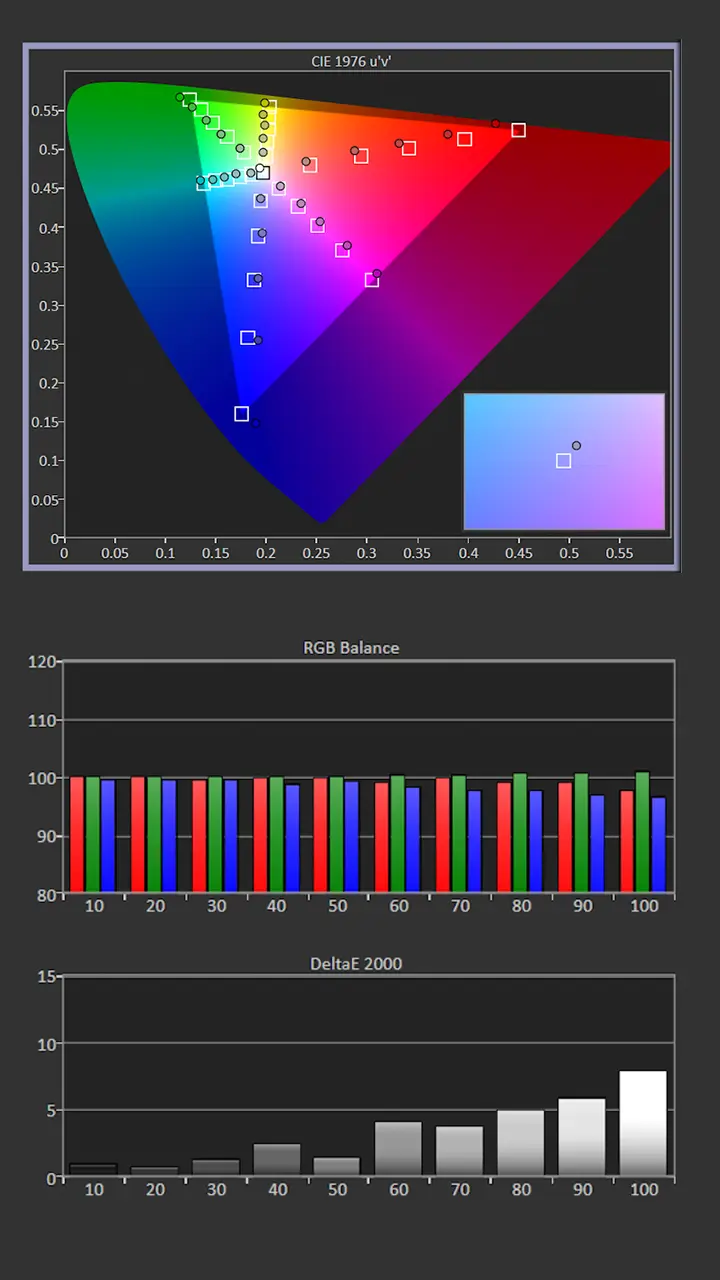
I chose to measure and adjust the ISF NIGHT mode since it was one of the most accurate out-of-the-box. Pre-calibration, the color temperature was 6491K, which was very close to my target of 6500 K.
While the image was pleasing to the eye, my multi-point grayscale measurements indicated excessive green, especially at higher brightnesses.
The Color Sweep measurements showed that bright red was undersaturated. There was also some color shift, likely due to an uneven RGB balance. The gamma was around 2.23, which is very close to my normal target of 2.2.
Before calibration, on my hundred-inch screen, the peak brightness produced 615 nits, which is more than bright enough to deliver a vibrant image on a 150” screen, even under moderate ambient light.
Picture Mode: ISF NIGHT
Gamma: 2.23
Color Temperature: 6391K
Average Grayscale dE: 3,5
Average Color Tracking dE: 2.5
Post-Calibration Color Tracking and Grayscale
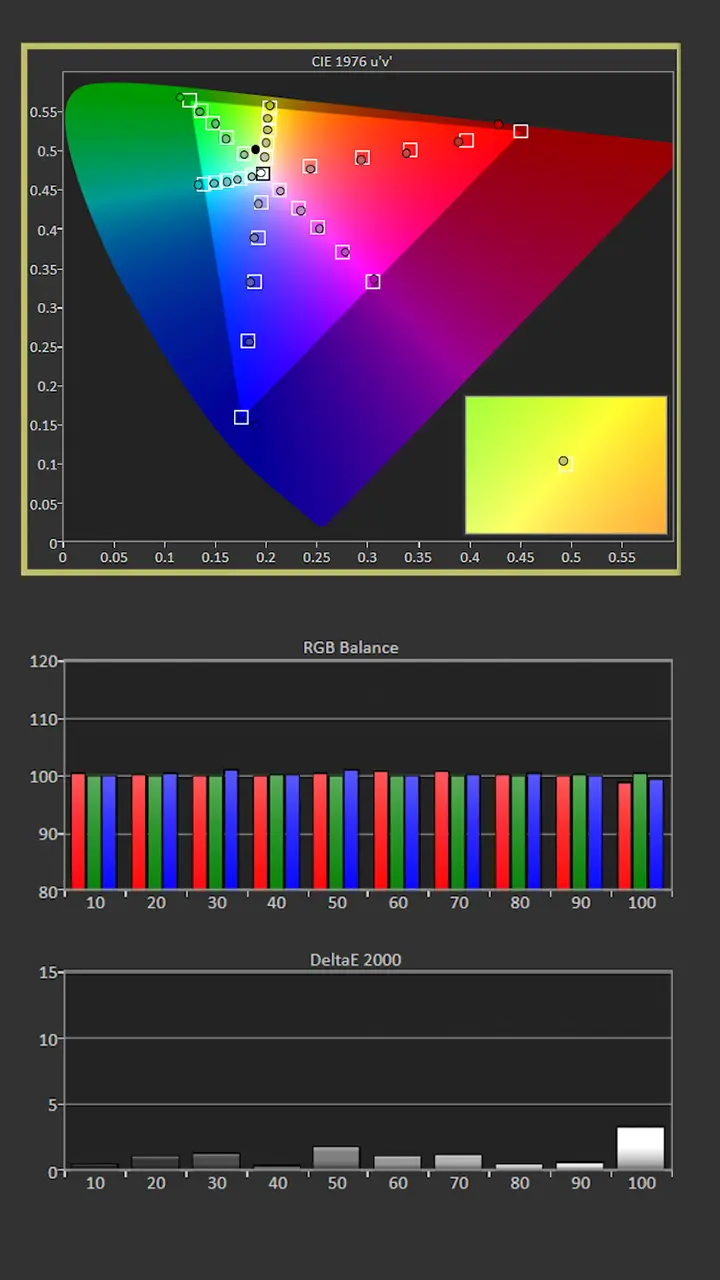
Since the measured Gamma I matched my target of 2.2. There was no need to make any adjustments. I left the Color Temperature setting at its default of D65, which is fine since it was closest to my target of 6500K.
Since my measurements showed an excessive green bias, I used the Two Point White Balance adjustments to quickly correct most of the issues. To achieve a more even white balance, I reduced the Green Gain and increased the Blue Gain settings. I could have used the projector's 10-point adjustment to fine-tune the grayscale further, but I don't think it would have made much of a visible difference.
Correcting the projector's white balance also significantly improved the unit's color tracking. We use CMS adjustments to reduce/eliminate most color shift errors. Bright reds were still slightly undersaturated, but most color points were spot on.
Picture Mode: FILMMAKER
Gamma: 2.2
Color Temperature: 6518K
Average Grayscale dE: 1.2
Average Color Tracking dE: 1.5
Delta E measures the perceptual difference between a target color and the displayed color. A value below 1 is considered imperceptible to the human eye; values below 3 are considered acceptable for professional use. After spending a few minutes adjusting the 2-point grayscale and CMS, the grayscale and color tracking both had an average delta E of around 1.
Using the 2-Point White Balance adjustments, I achieved a good, measured grayscale. However, the brightness could have been improved further by using the 11-point White Balance adjustments, but I didn't think it would be visible
Often, calibrating a projector results in a dramatic drop in light output, but that was not the case with the TITAN Noir Max. Even after calibration, when the Iris was set to 2.0, the projector delivered 500 nits on my 100-inch matte-white screen.
The TITAN Noir Max’s grayscale and color reproduction are good enough out of the box to satisfy the average professional and home entertainment users. However, many projector enthusiasts seek the best possible picture quality in their spaces, so if you wish to make changes, the projector offers a full suite of picture adjustments.
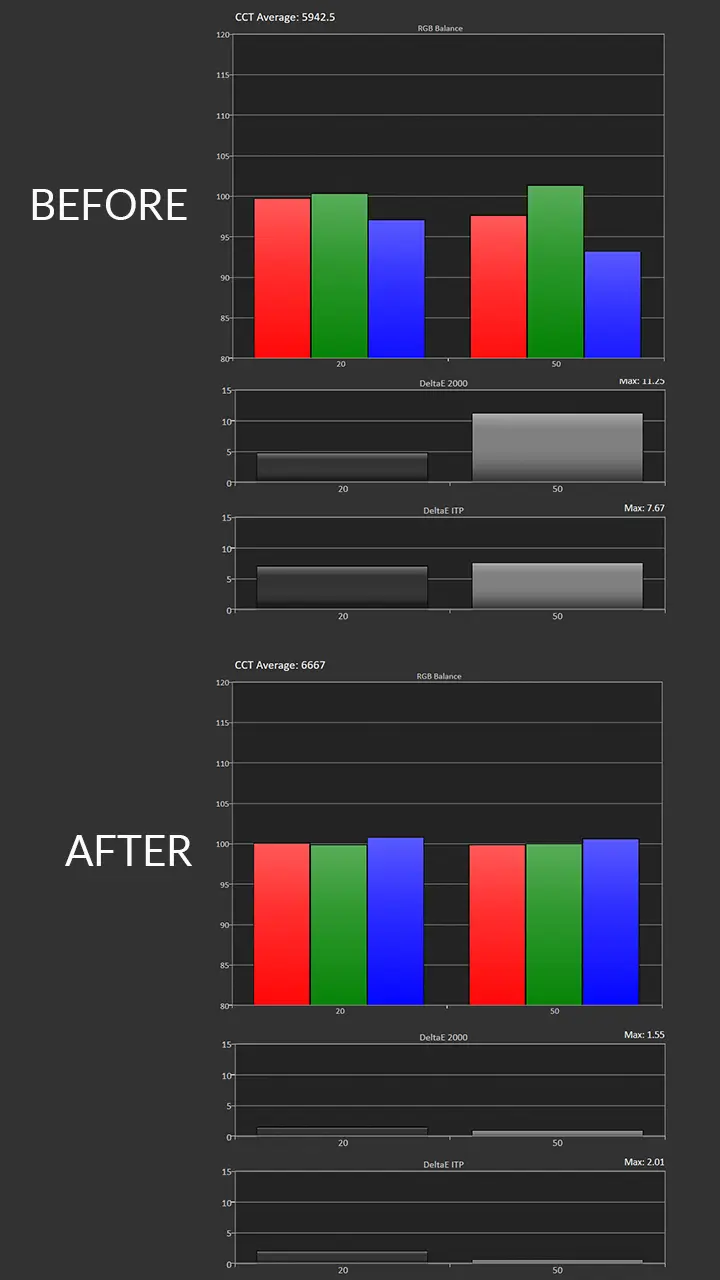
HDR White Balance Before and After Adjustments
The TITAN Noir Max offers seven preset HDR picture modes for standard HDR10 content, allowing you to adjust the image to match your room environment. The HDR presets are named the same as the SDR presets, with IMAX ENHANCED added as the seventh preset. For Dolby Vision, you get two presets: DOLBY VISION BRIGHT and DOLBY VISION DARK.
The out-of-the-box HDR color reproduction is very good. The most accurate picture mode was HDR MOVIE. Each SDR and HDR picture mode has its own picture adjustments, including Contrast, Saturation, Brightness, Color Temp, and White Balance.
Our Pre-calibration HDR Grayscale measurements of the HDR ISF Night Mode showed an overemphasis on red, resulting in a slightly warm image and a color temperature of 5990K. I used the Two-Point White Balance adjustment to improve White Balance, resulting in an average DeltaE of 1.2.
My Calman measurements confirmed that the TITAN reproduces over 100% of the BT.2020 color gamut. The projector does an excellent job of mapping its massive color gamut to accurately reproduce the REC709 color space used in SDR content.
While I love the color reproduction and brightness of the TITAN Noir Max, there is noticeable laser speckle on the projection screen in my media room. I have never noticed this effect in my media room because most RGB projectors lack the horizontal and vertical lens shift required for that space. Higher-end models from JVC, Sony, and Epson, which work well, are all blue-laser phosphor.
Laser speckle is a visual artifact that occurs when RGB laser projectors interact with certain projection screen materials. Laser speckle was minor on my matte white screen and acoustically transparent screen, but on my ambient light-rejecting screen, it was noticeable enough to be distracting.
For those interested in purchasing an ALR screen with an RGB laser projector, such as the Titan Noir Max, I suggest consulting the projector screen manufacturer or a knowledgeable retailer, such as www.projectionscreen.com, to ensure you choose the right combination.
BRIGHTNESS
XGIMI TITAN Noir has two different brightness ratings. When it comes to maximum light output, XGIMI says the projector can deliver 7,000 ISO lumens, but they also rate the unit's usable brightness at about 5,000 ISO lumens. Both numbers are quite impressive for a DLP projector of its size.
To measure maximum brightness, the projector was switched to PERFORMANCE mode with the iris set at F2.0. With these settings, the projector delivered nearly 11,000 lumens, which far exceeded its maximum brightness rating of 7,000 Lumens.
I used my Konica Minolta T10a to measure the brightness, but 11,000 lumens seemed incredibly high. To verify my reading, I use my Klein K10 to double-check my findings. The Klein meter measured the brightness of my 100-inch screen at 1,300 nits, which aligns with my initial luminance measurement
While the PERFORMANCE mode produces 1,303 nits, the image is completely green, and the fans are extremely loud. This mode is designed solely to extract maximum brightness; it is not a usable viewing mode. The brightness of the most accurate SDR modes measured between 4350 and 4538 lumens with color temperatures ranging from 6262K to 6466K. Therefore, XGIMI's listed usable brightness of 5,000 lumens is realistic.
Switching the projector Laser Light Source into its Boost mode. (10+) increased the projector brightness by about 20%. For example, the STANDARD mode went from 4538 lumens to 5547 lumens. While boost mode delivers higher brightness, it impacts picture quality and will cause excessive wear and tear on the projector's laser light source, so it should only be used for short periods.
Below are the brightness and color temperature measurements for each SDR picture mode on a 1.0-gain matte white 100-inch screen:
Picture Modes: Brightness
Picture Mode
Brightness Measured
On-Screen Brightness
FILMMAKER MODE
4538 lm
524nits
STANDARD
4356 lm
503 nits
MOVIE
4391 lm
507 nits
SPORTS
4365 lm
504 nits
(ISF) DAY
4555 lm
526 nits
(ISF) NIGHT
4350 lm
524 nits
PERFORMANCE
11015 lm
1303 nits
All the unit's picture modes could deliver 500 nits of brightness from my 100-inch matte white screen. When viewing SDR in the dark room, 500 nits (cd/m2) could be uncomfortably bright. While you could turn down the laser luminance, adjusting the iris is a better option because it will give you higher native contrast and reduce the brightness at the same time
I suggest switching the iris to F5.5 to significantly improve the unit’s native contrast while still delivering more brightness in a darkened space. I suggest calibrating at max brightness under ISF Day so you can adjust the white balance, then increasing the Iris to either 4 (my preference) or 5.5, and calibrating the ISF Night, which will result in an on-screen brightness around 200 nits.
However, the projector's ability to deliver 500 nits of brightness while maintaining accurate color is great for viewing content under moderate ambient light. To see how much on-screen brightness 500 nits would produce on your screen, check out our brightness calculator.
BLACK LEVEL AND SHADOW DETAIL
Most manufacturers promote their projectors' dynamic contrast ratio, which is measured using alternating all-white and all-black frames and does not represent simultaneous on-screen performance. Since most DLP projectors incorporate a laser or LED light source with dynamic dimming, it is easy to produce incredibly high dynamic contrast numbers. The TITAN Noir Max has a dynamic contrast ratio rating of 100,000:1.
However, what makes the TITAN Noir Max stand out in the industry is not its high dynamic contrast ratio, but the fact that it has a very high native contrast ratio for a DLP projector. Native contrast describes the luminance ratio between the brightest white and the darkest black that the projector can simultaneously produce on screen under normal viewing conditions. Most DLP projectors struggle to deliver a native contrast ratio over 2,000:1. Due to its state-of-the-art 0.47” SST DMD, combined with its dual-iris lens assembly, the TITAN Noir Max has a rated native contrast ratio of 10,000:1.
While increasing the iris reduces the projector's light output, it also reduces the amount of stray unwanted light reaching the screen, thereby increasing the unit's native contrast ratio. The chart below shows the measured native contrast by iris setting on a 100-inch matte white screen:
Measured In-Room Sequential Contrast
Iris Setting
Native Contrast
Dynamic Contrast (DBLE Engaged)
F/2.0
1871:1
2273:1
F/3.0
3631:1
4854:1
F/4.0
5060:1
6517:1
F/5.5
7622:1
17760:1
F/7.0
9012:1
18635:1
In my room, on my 100-inch matte white screen, setting the iris to f/4.0 delivered a native contrast of 5,000:1 while still delivering over 360 nits, which is the DCI-recommended on-screen brightness level for good HDR color reproduction.
Switching the Iris to f/5.5 raises native contrast to 7,622:1, a 51% gain over F4.0. At calibrated settings, f/5.5 delivers approximately 200 nits on a 100-inch screen, which is the appropriate target for dark-room critical viewing. An iris setting of f/7.0 delivered 9,012:1 native contrast, but the brightness is so severely reduced that I wouldn't recommend using that setting.
To further improve black level and shadow detail, the TITAN Noir Max features Dynamic Black Level Enhancement (DBLE). This feature combines dynamic laser dimming with contrast curve adjustments to optimize perceived onscreen contrast based on the displayed scene.
While XGIMI included a feature called Dual Iris Sync to help prevent a shift in color temperature when the dynamic iris and dynamic laser dimming are engaged, a visible change in color temperature is still noticeable when switching between F5.5 and F7.0.
While the DBLE does improve shadow detail and black level, you may sometimes notice a shift in grayscale as the projector makes its adjustments. The TITAN Noir Max has a Dynamic Black Level Tuning feature that lets you adjust or correct this color shift during calibration.
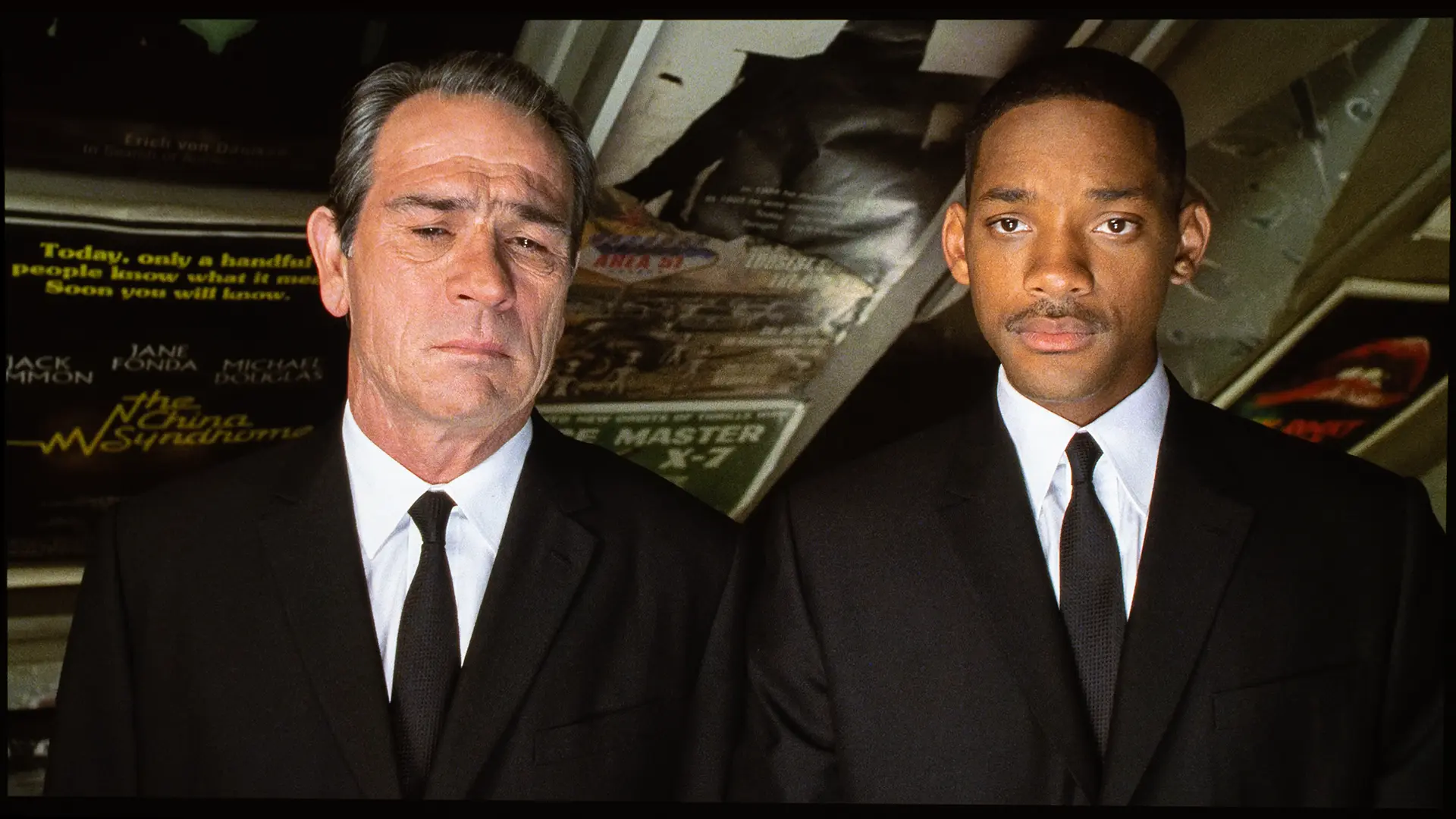
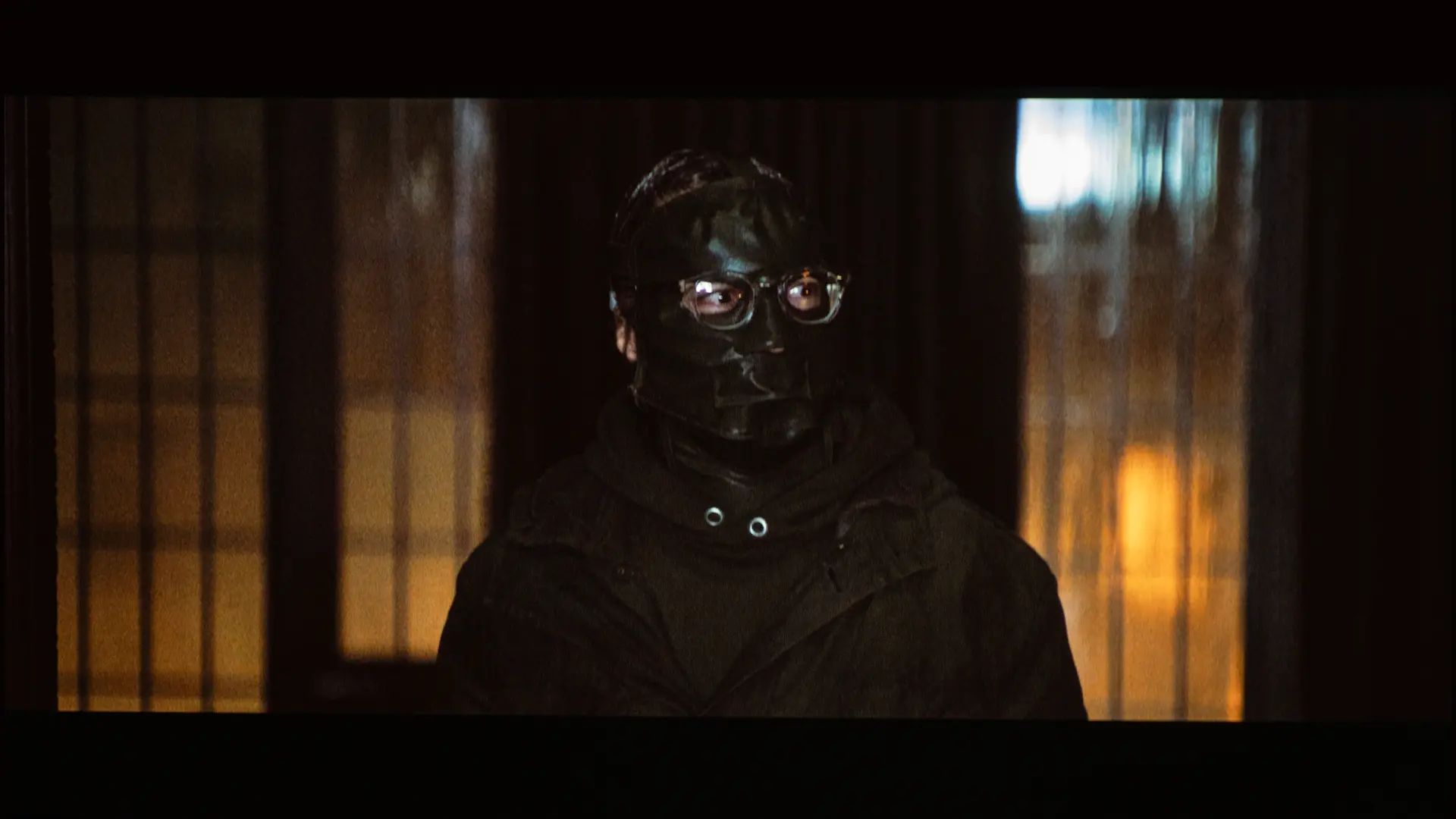
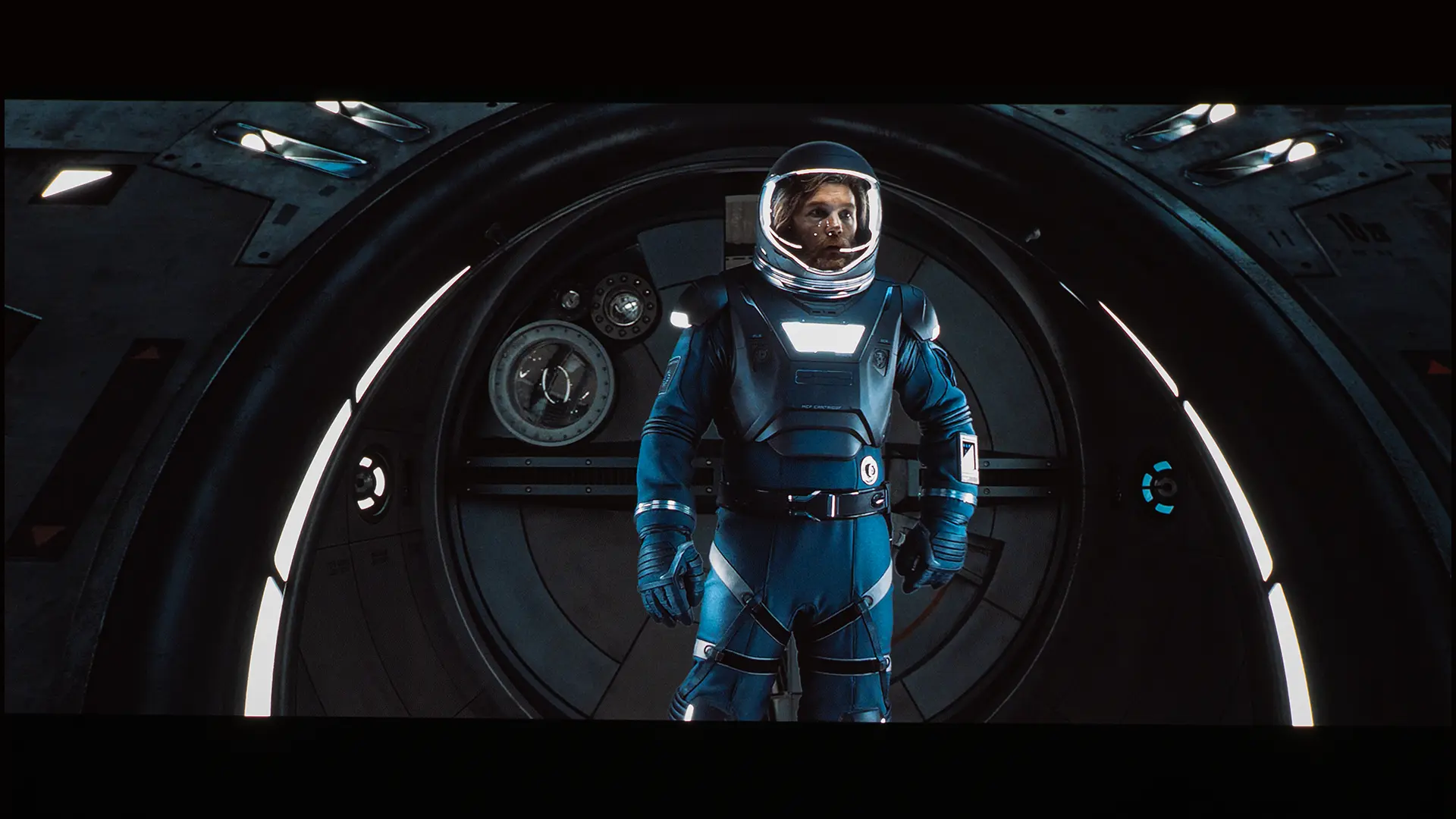
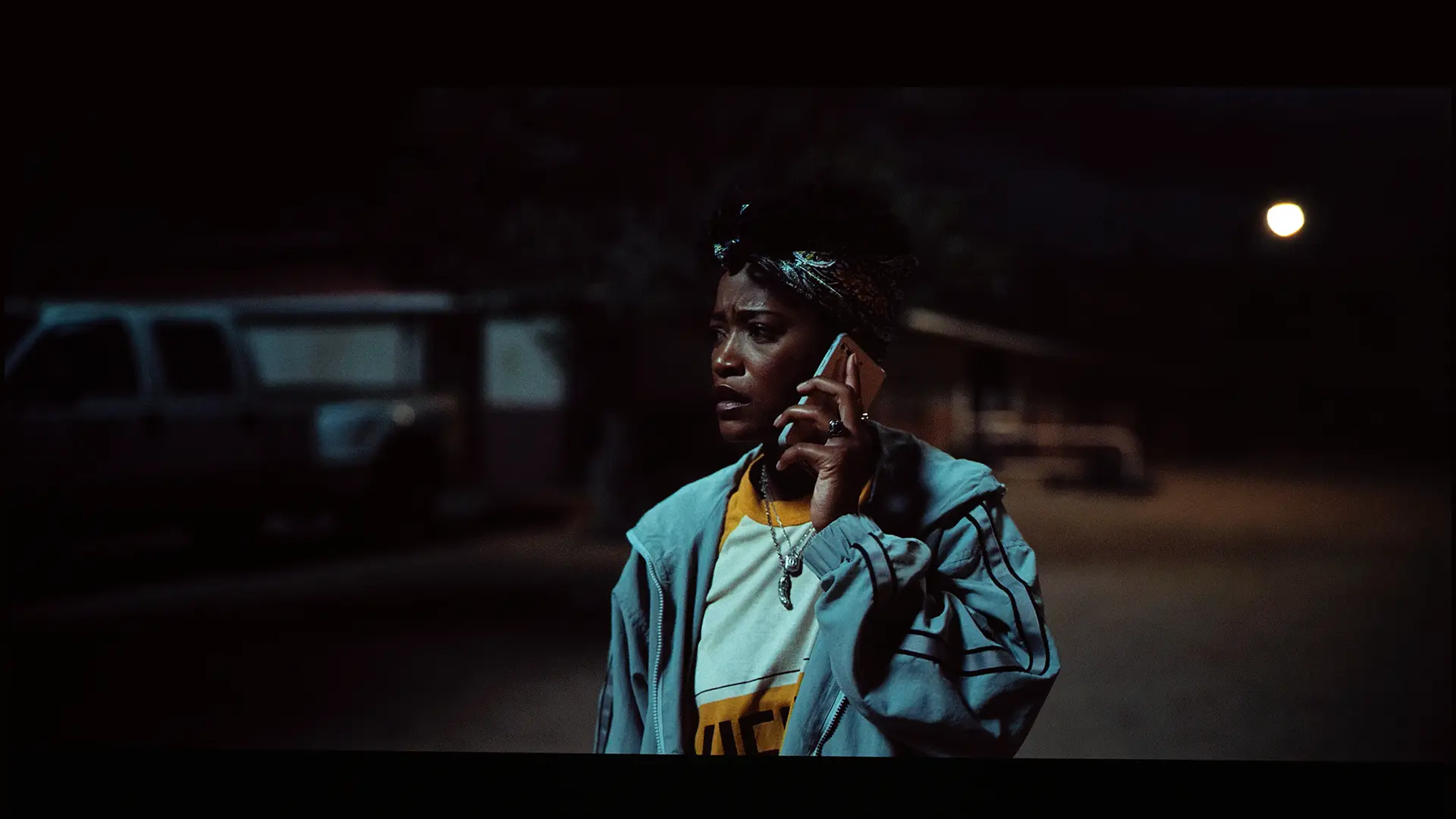
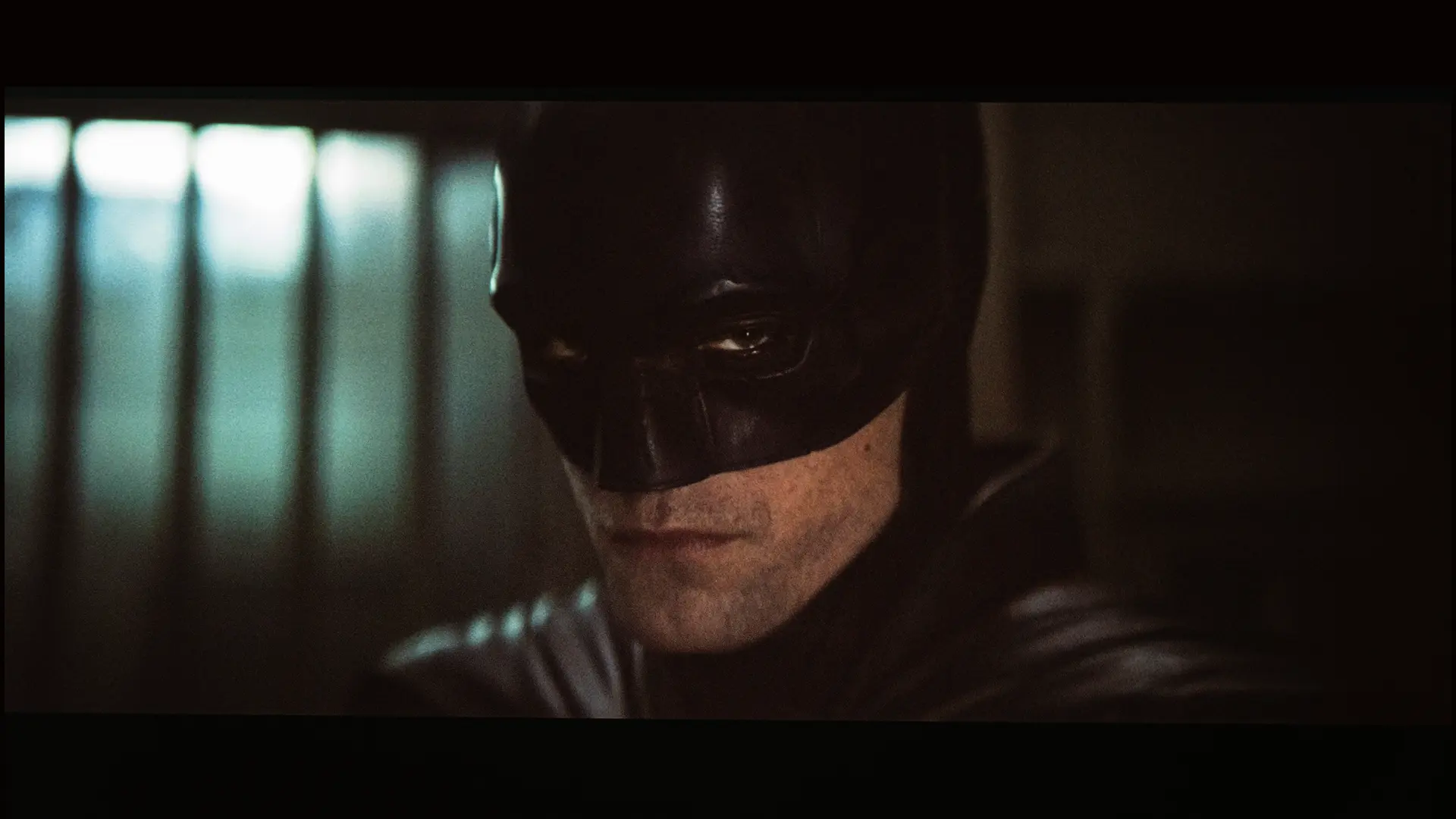
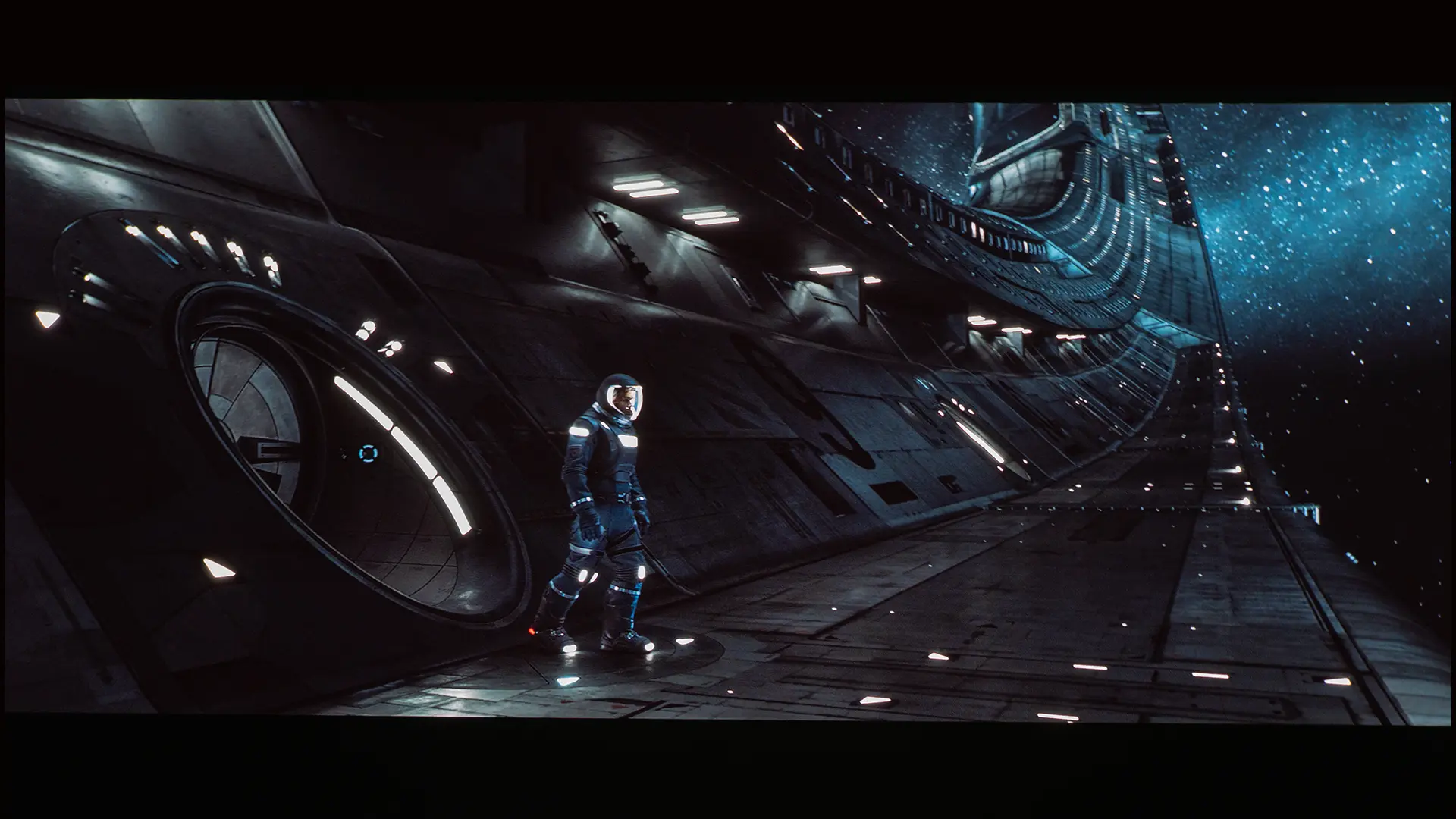
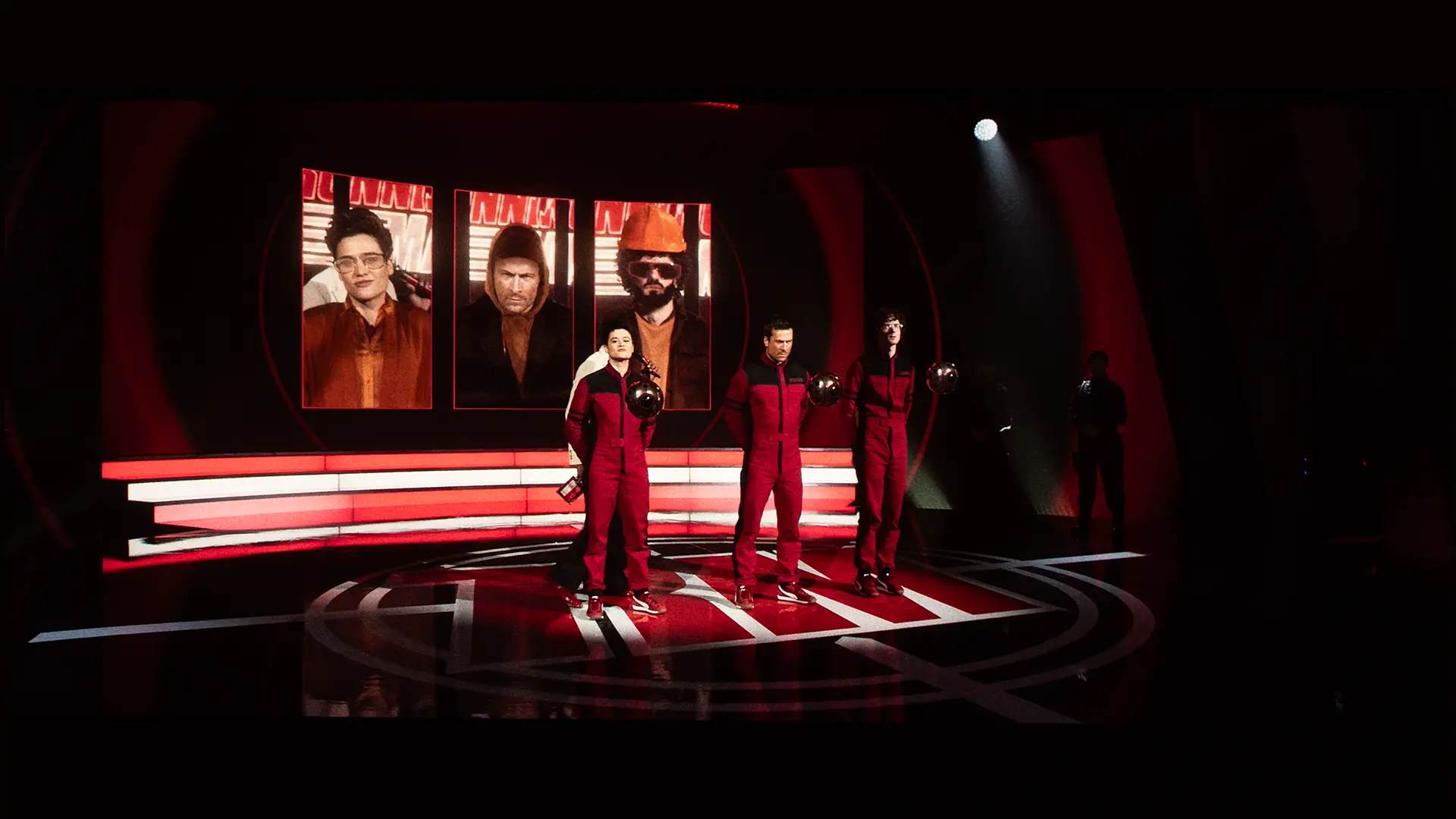
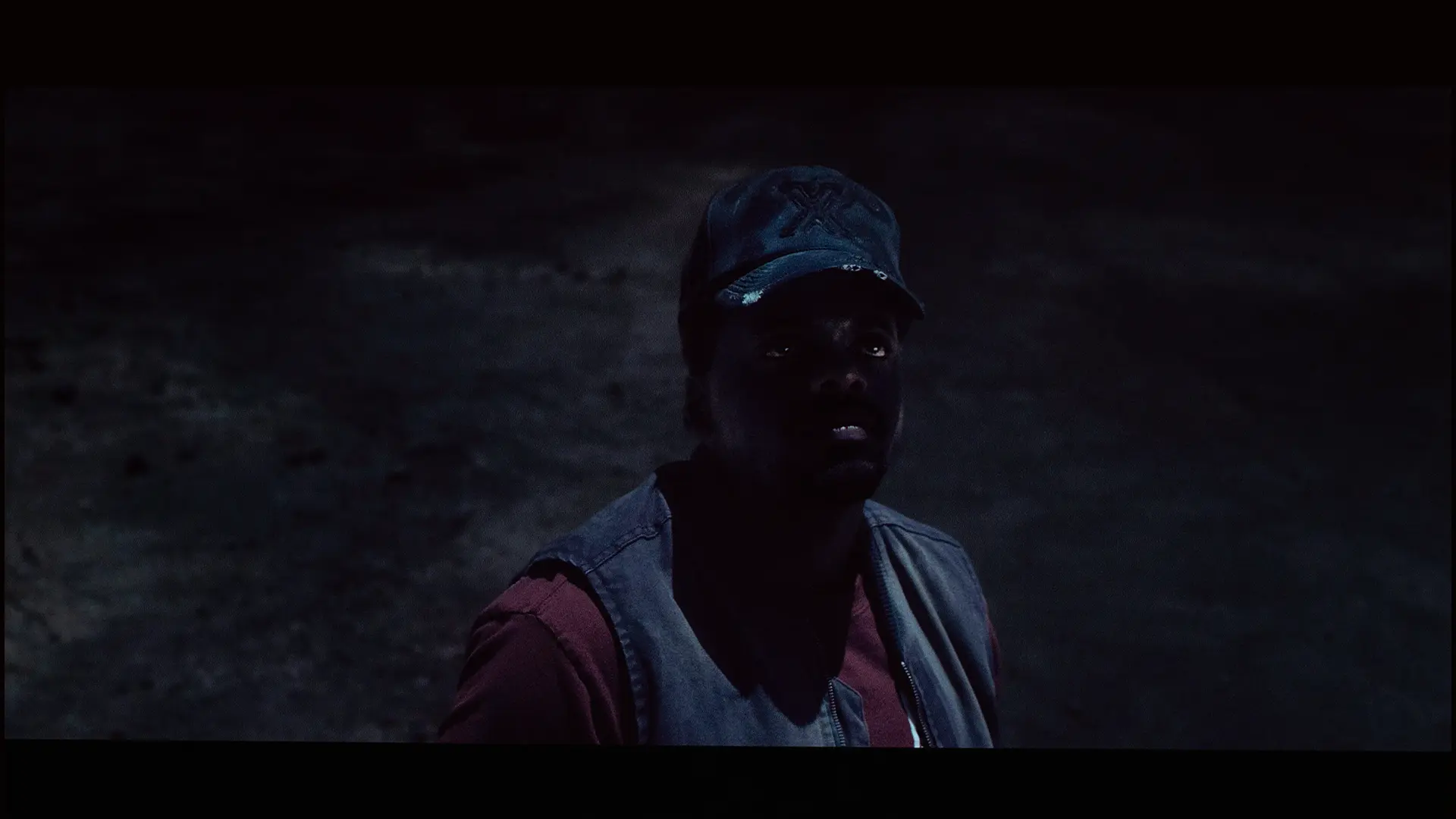
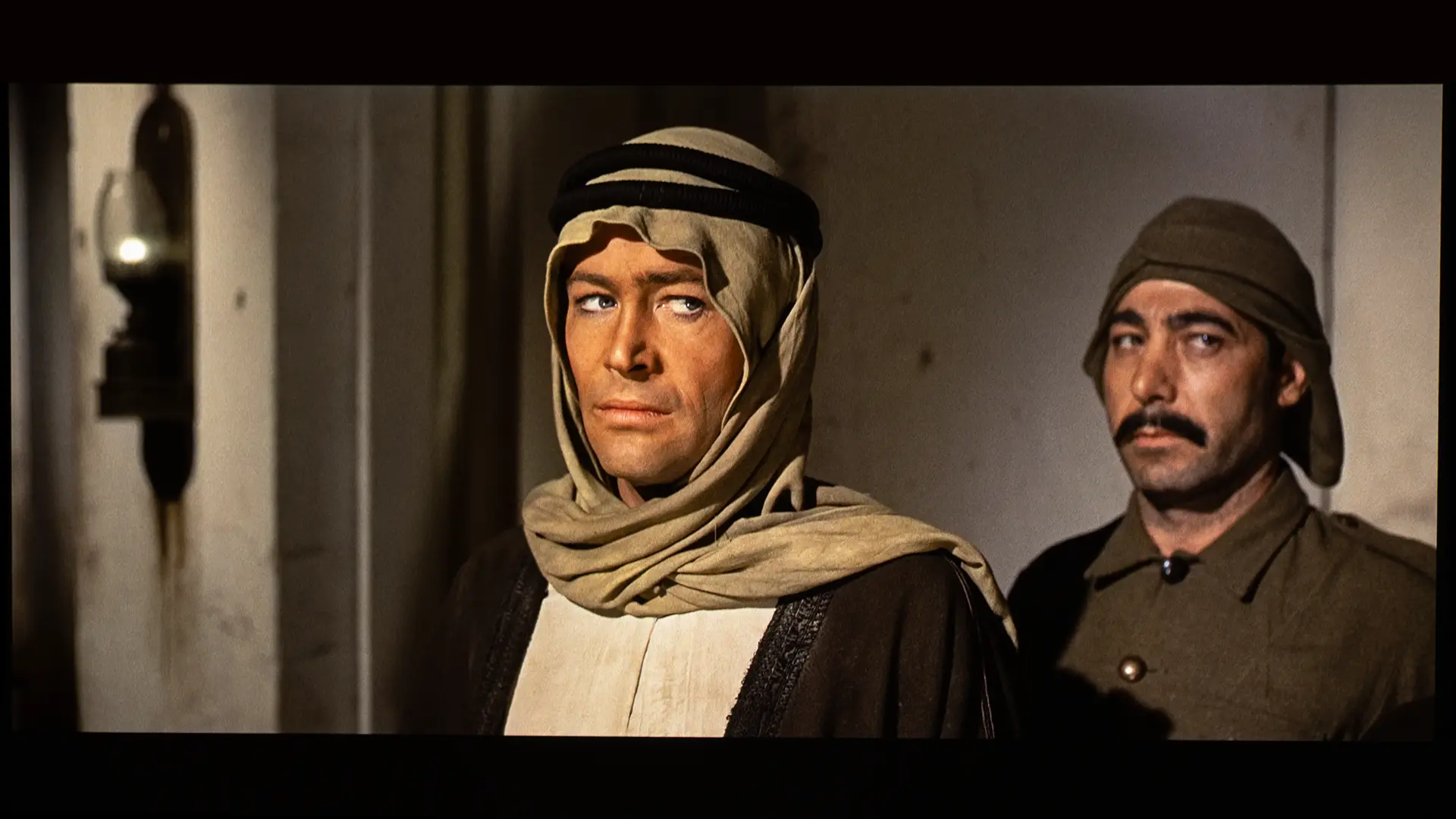
Due to its combination of advanced features and technologies, the TITAN Noir Max did an exceptional job displaying challenging dark scenes from movies like The Batman, Nope, and 1917. The Valerian VisionMaster Max is the only DLP projector that I have ever tested that can match the Titan Noir's black level, but it can't match the XGIMI when it comes to usable brightness.
For most enthusiasts utilizing the TITAN Noir Max in a darkened environment, setting the iris to f/4.0 or f/4.5 with the DBLE feature engaged delivered the best-looking image. It offered excellent black level and shadow detail while still delivering the brightness needed to deliver a vibrant HDR image on a 130-inch screen.
With the iris set to f/2.0, the Titan Noir Max still delivered a respectable native contrast ratio of 1,871:1. This iris setting produces maximum brightness, which is useful when viewing content under moderate ambient light. In brighter environments, deeper black levels wouldn't be visible anyway.
VIDEO QUALITY
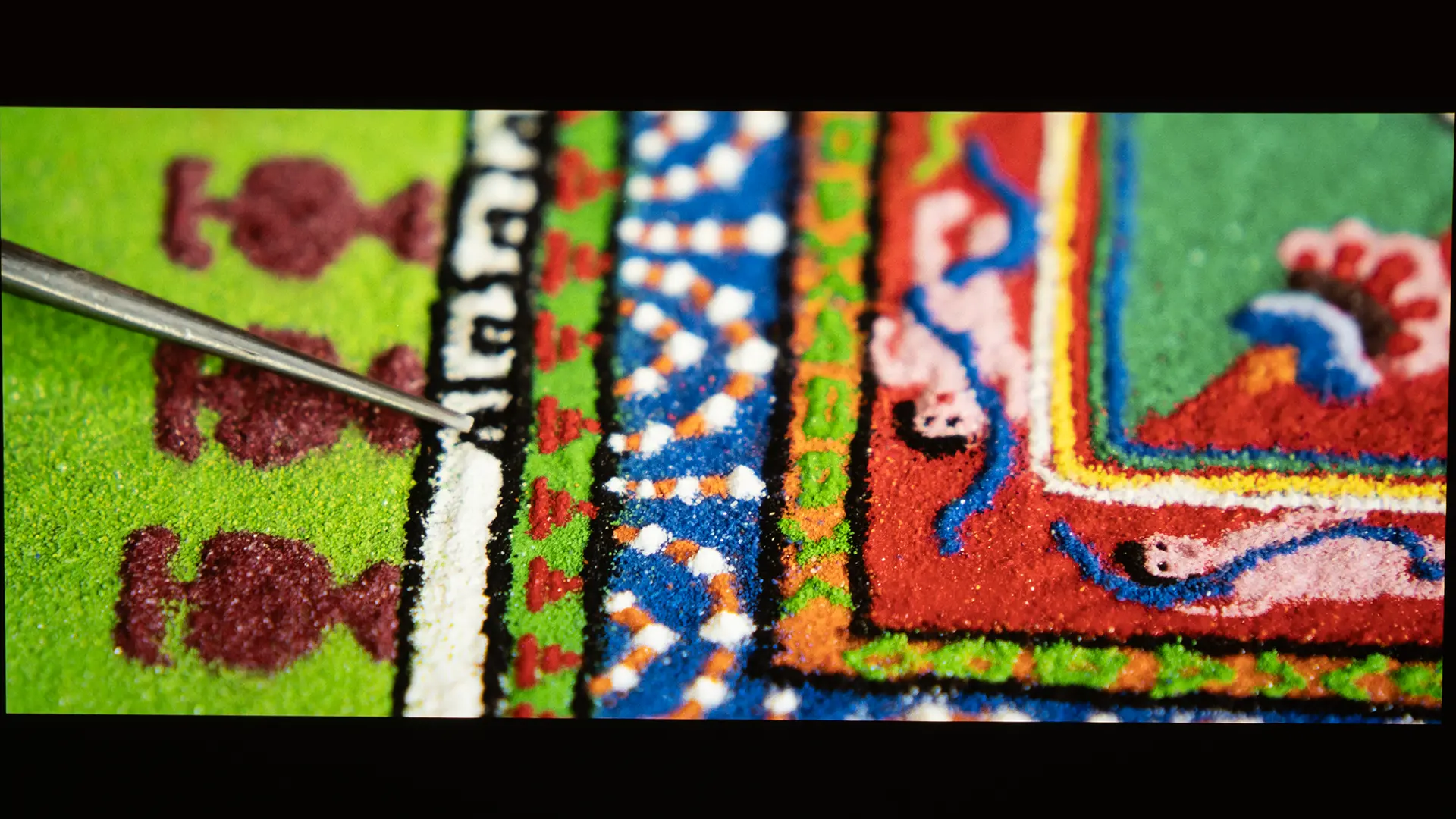
I have always been impressed with the color reproduction of XGIMI projectors. Whether I was viewing SDR or HDR content, the image quality of the TITAN Noir Max was excellent. Due to the projector's excellent optics and effective XPR pixel shifting, fine details in 4K content were easily visible. The projector offers motion compensation and supports native 24fps playback, which eliminates the motion artifacts introduced by frame interpolation in film-originated content.
While most content on streaming services and broadcasts is now captured in 4K, there's still a lot of older material, as well as YouTube videos shot in HD. The AISR (AI Super Resolution) processing in the X1 processor does a good job upscaling 1080p content, adding useful detail without introducing visible processing artifacts.
The projector does a good job mapping its wide color gamut capabilities down to accurately display Rec. 709 content. The skin tones and colors in older SDR Blu-rays looked natural and lifelike.
When viewing SDR material under high ambient light, the projector's high brightness is beneficial. However, when watching HDR content on my 120-inch screen in the darkened space, the TITAN Noir Max could be uncomfortably bright. To reduce the brightness, I used one of the projector's higher iris settings, which also improves the unit's black level and native contrast.
The projector's 3D image quality is so good, I encourage you to dig out your old 3D movies and games so you can give it a try. Since active 3-D requires shutter glasses, the higher brightness is beneficial when watching 3-D. Scenes in Avatar and cartoons like Madagascar looked incredible. I didn't notice any excessive flicker, and it was comfortable to watch a couple of hours of 3D content.
While I am not overly sensitive to the DLP rainbow effect, those who are will be happy to know that the Titan Noir Max also includes an anti-RBE feature. Phil Boyle, who is sensitive to RBE, said that the feature noticeably reduced the effect, but some rainbow was still visible in very bright scenes.
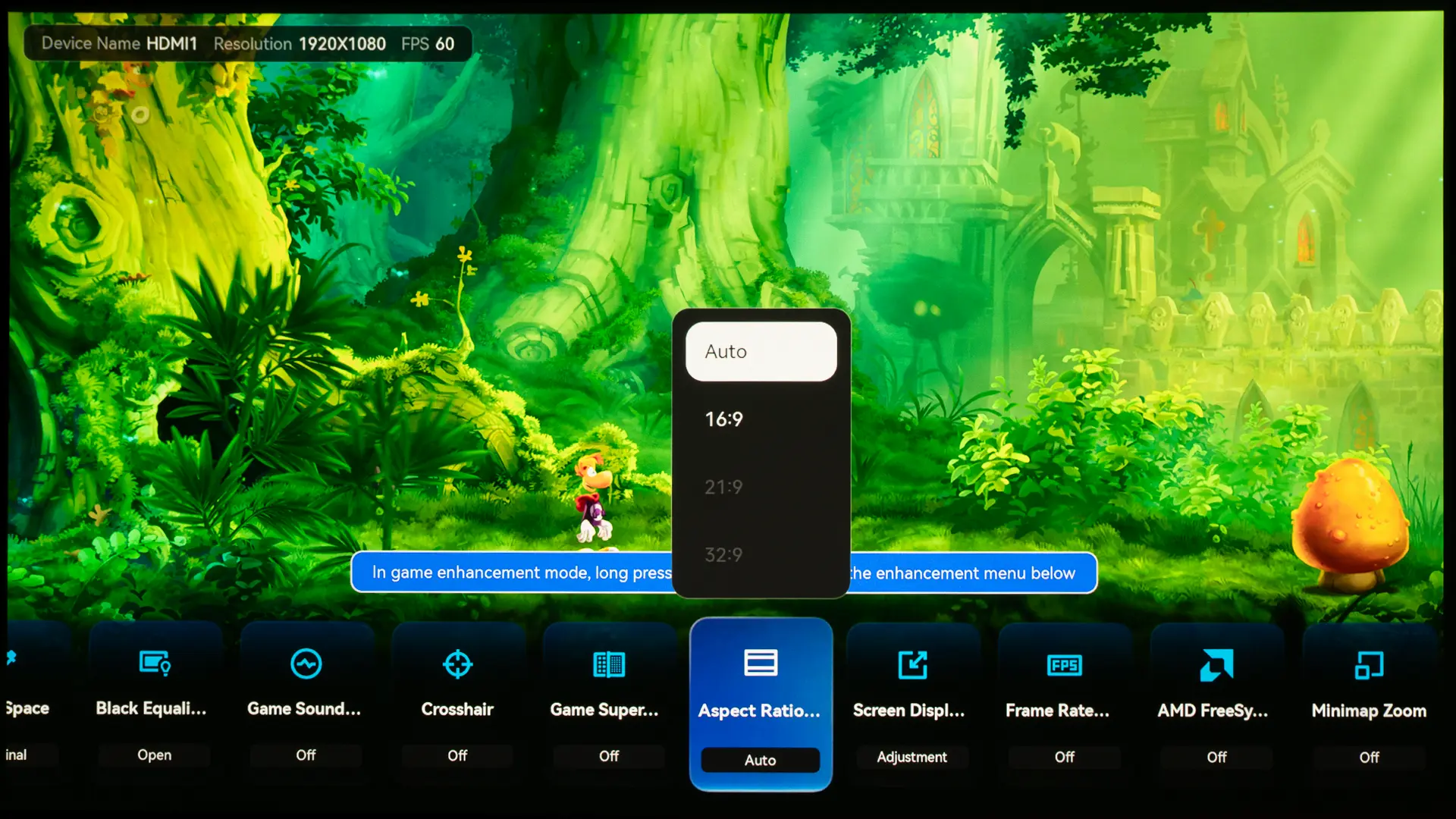
While the TITAN Noir Max is targeted at home entertainment enthusiasts, it can also display 21:9 and 32:9 aspect ratios. In business conferencing applications, these formats are great for hybrid meeting rooms. They allow for side-by-side application viewing and pair well with the “Front Row” layout in Teams Rooms, where meeting participants appear across the bottom of the screen while shared content remains large and readable.
A user can have a spreadsheet open next to an email and a web browser without constantly switching windows. In video conferencing, 21:9 displays are also useful because platforms like Microsoft Teams and Zoom can show more participant windows while leaving room for presentation content.
HIGH DYNAMIC RANGE
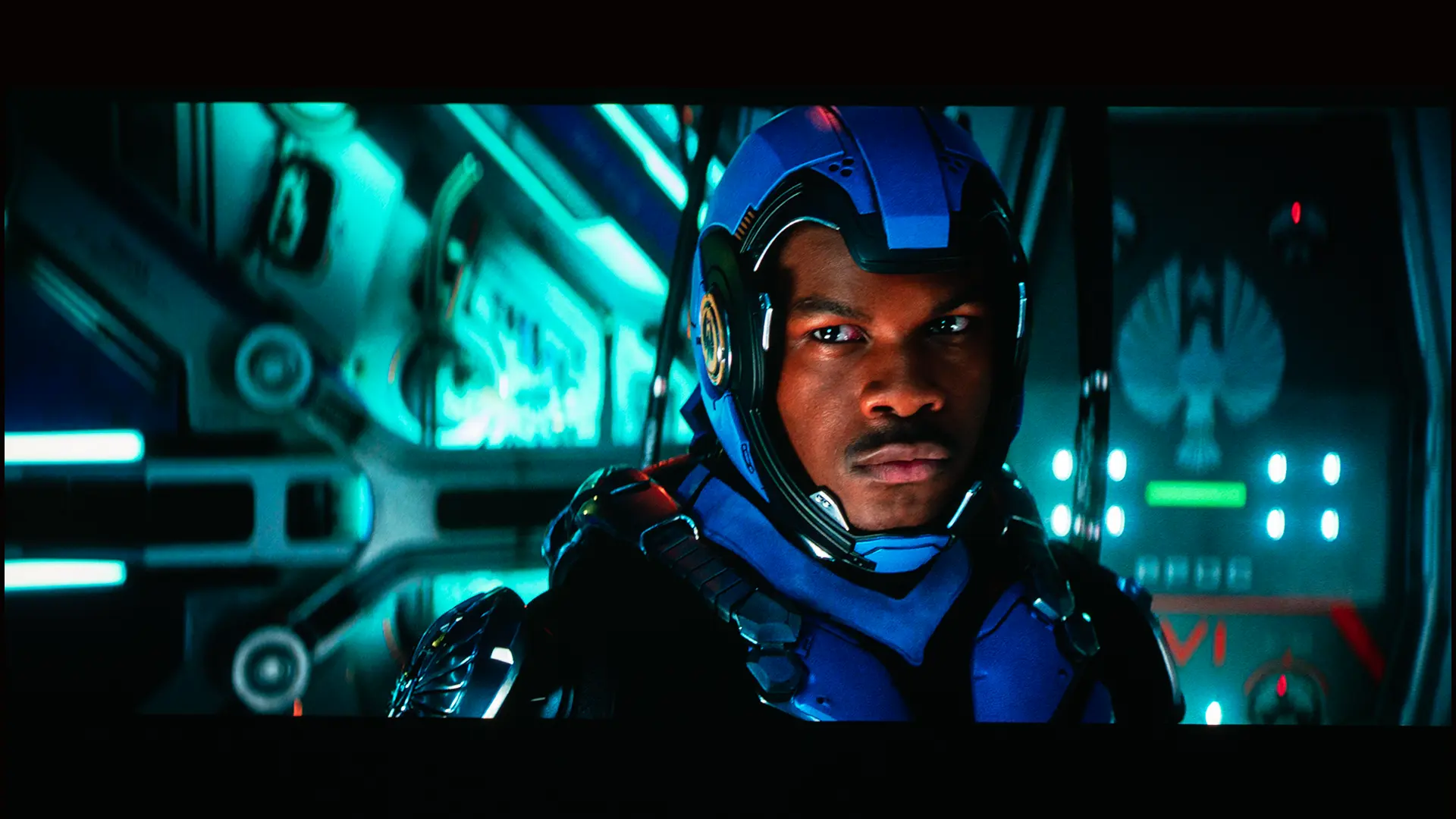
When it comes to HDR, the projector delivered the best-looking image I have seen on a DLP projector. The projector's high native contrast and excellent dynamic contrast control made it easy to see dark details in the shadows. The TITAN Noir Max supports nearly every consumer HDR format, including Dolby Vision, HDR10 Plus, HLG, and HDR10, along with Filmmaker mode, and it's IMAX Enhanced certified.
Offers two Dolby Vision presets, one for a dark room and one for a bright room. Dolby Vision tone mapping helps the projector preserve highlight detail and maintain shadow texture without lifting the black floor.
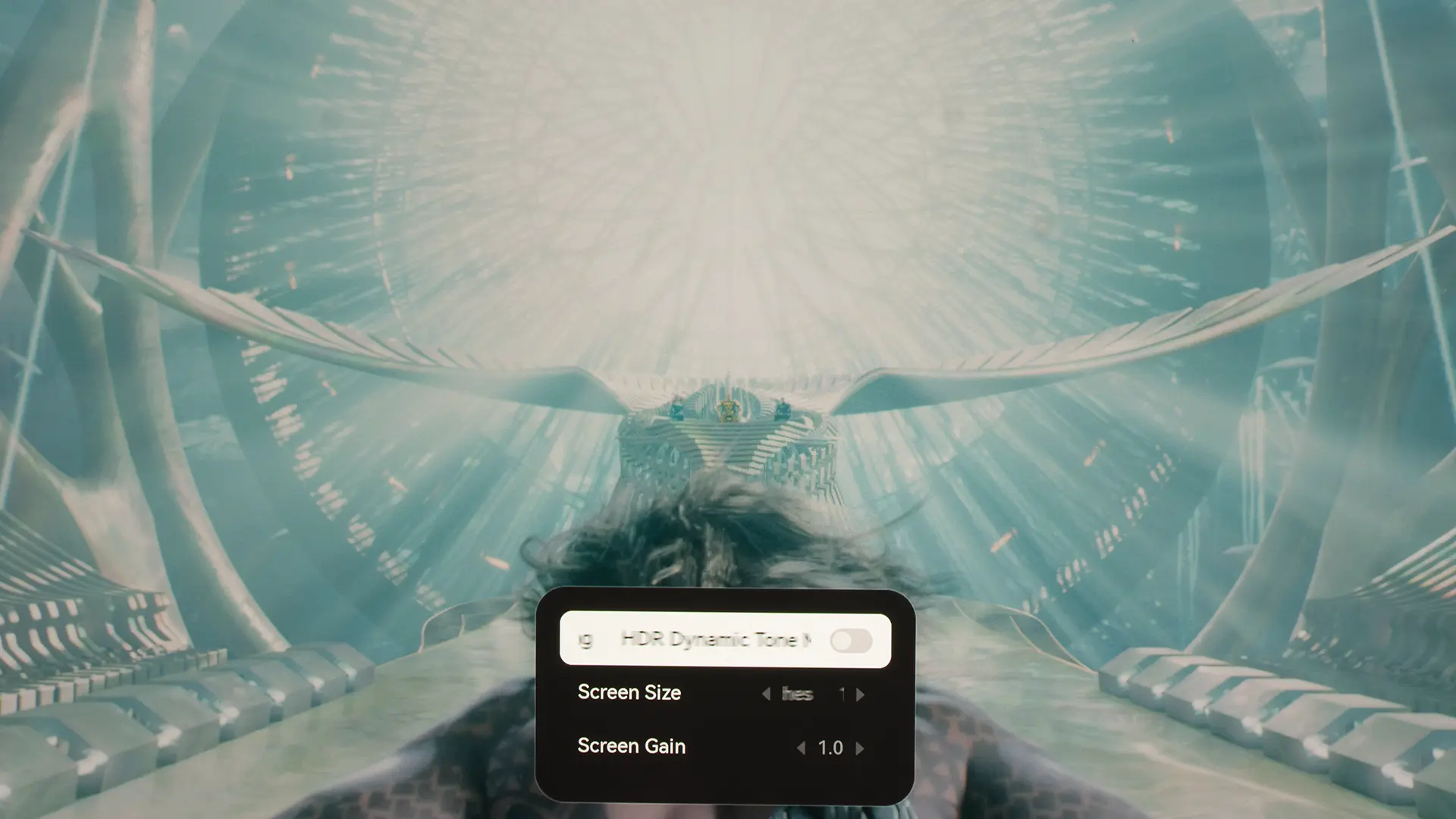
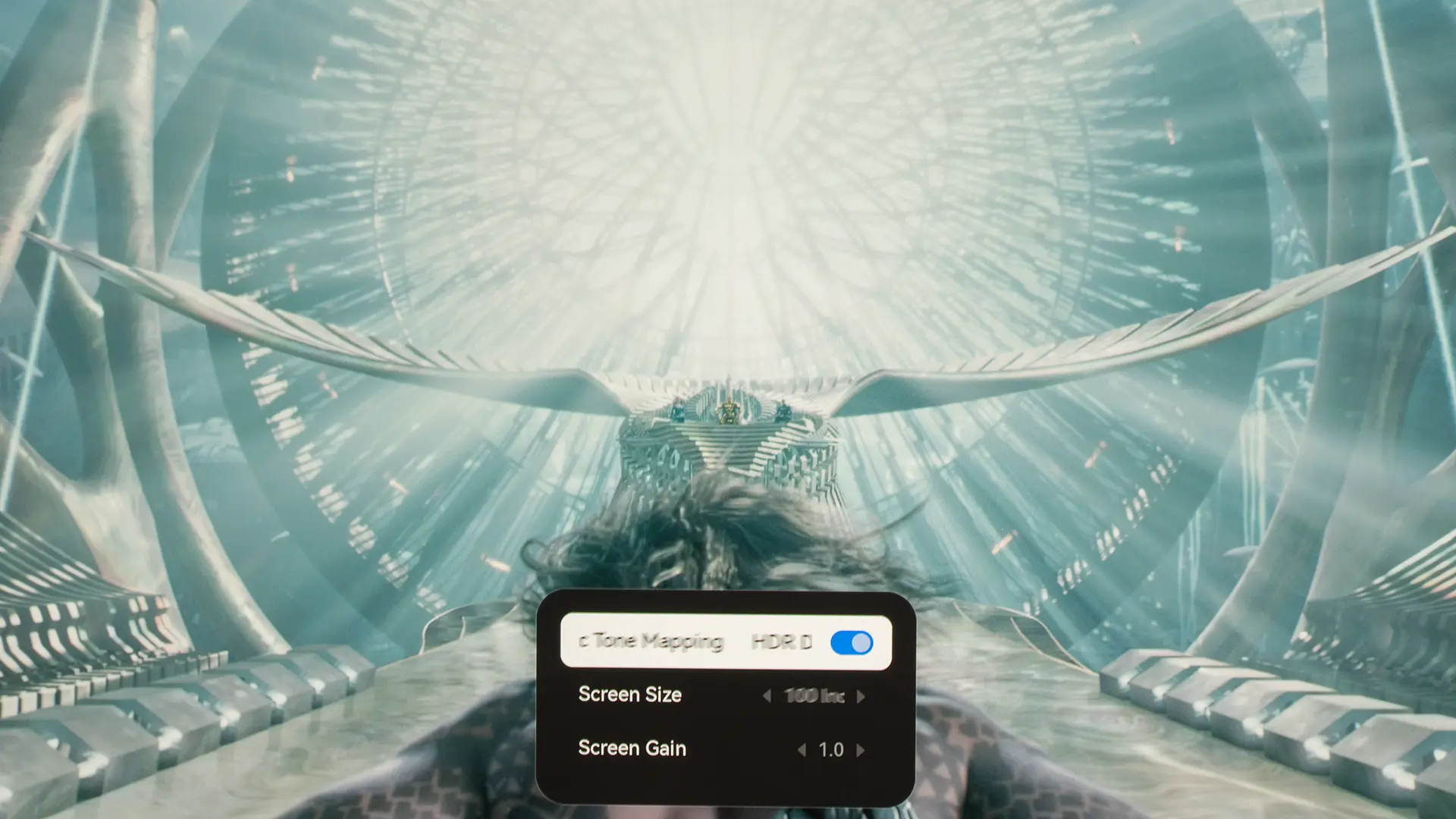
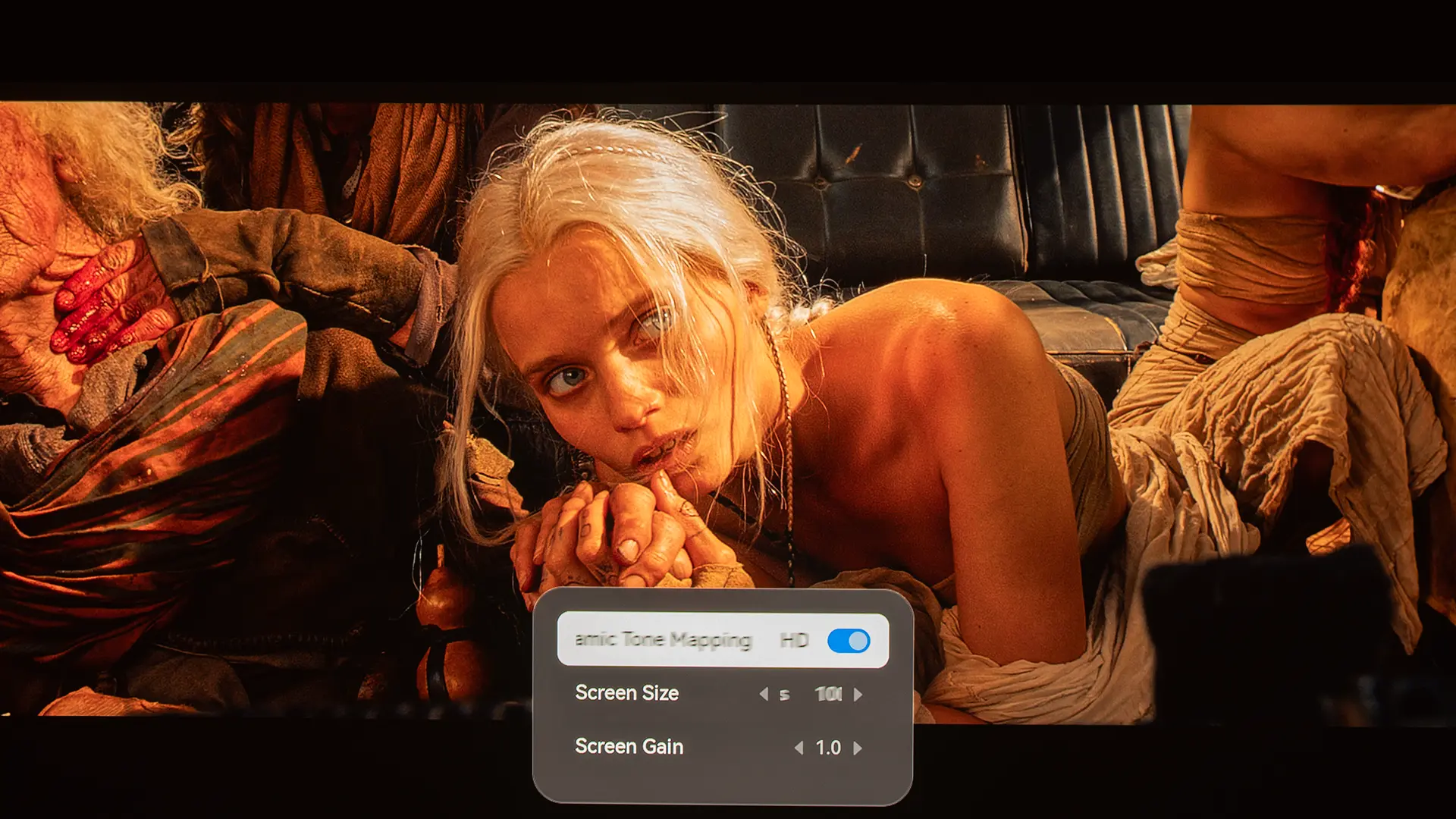
When viewing HDR10 content, the projector's HDR tone-mapping feature did a good job of increasing overall brightness while maintaining highlight detail. When watching Dobby Vision content or when HDR tone mapping is engaged, you can enter your screen's size and gain.
Screen size and screen gain affect the overall brightness potential of a projection system, so to effectively tone map dynamic HDR content, that information needs to be factored into the calculations.
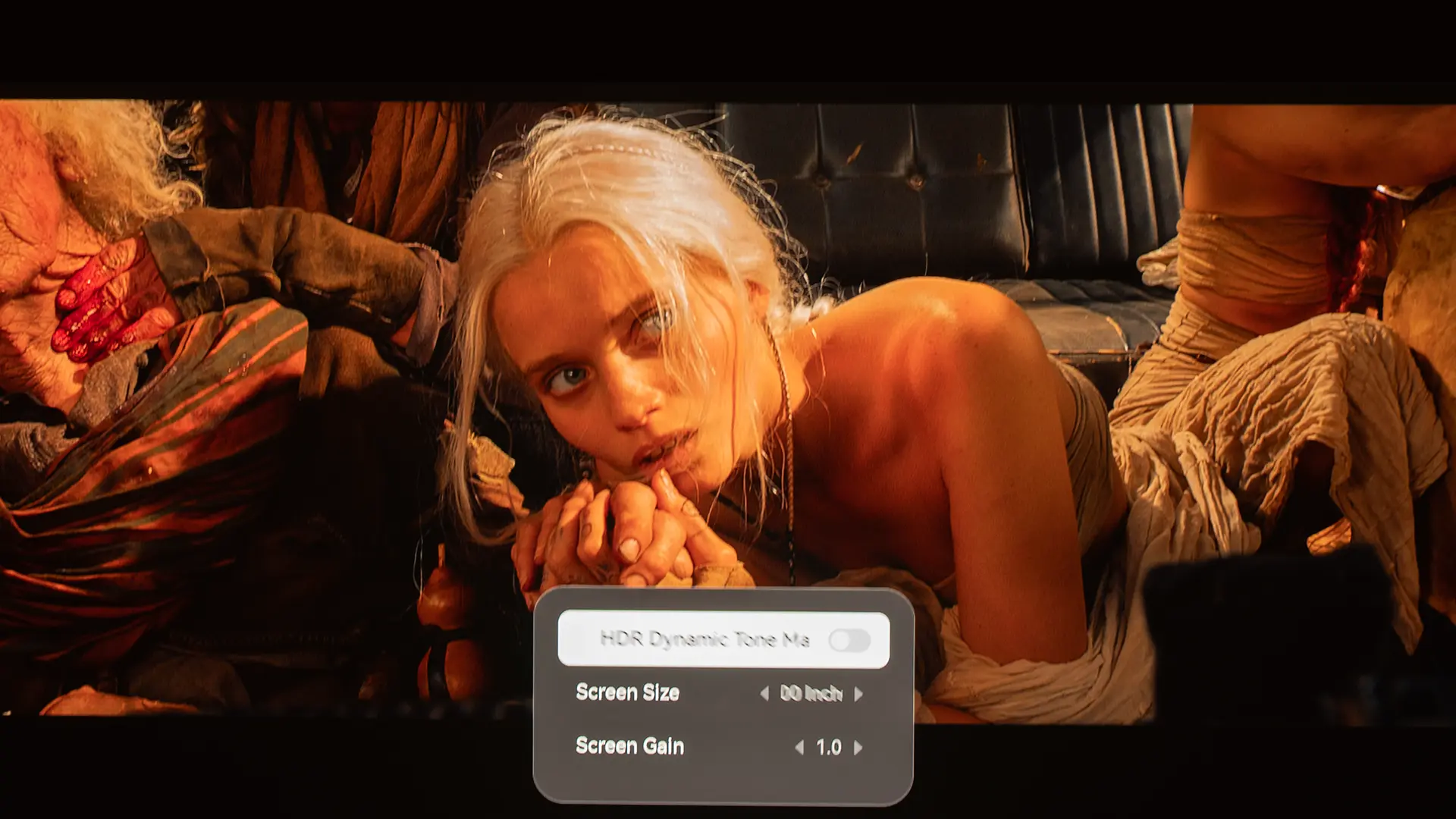
The HDR Dynamic Tone Mapping feature increases on-screen brightness while preserving highlight detail
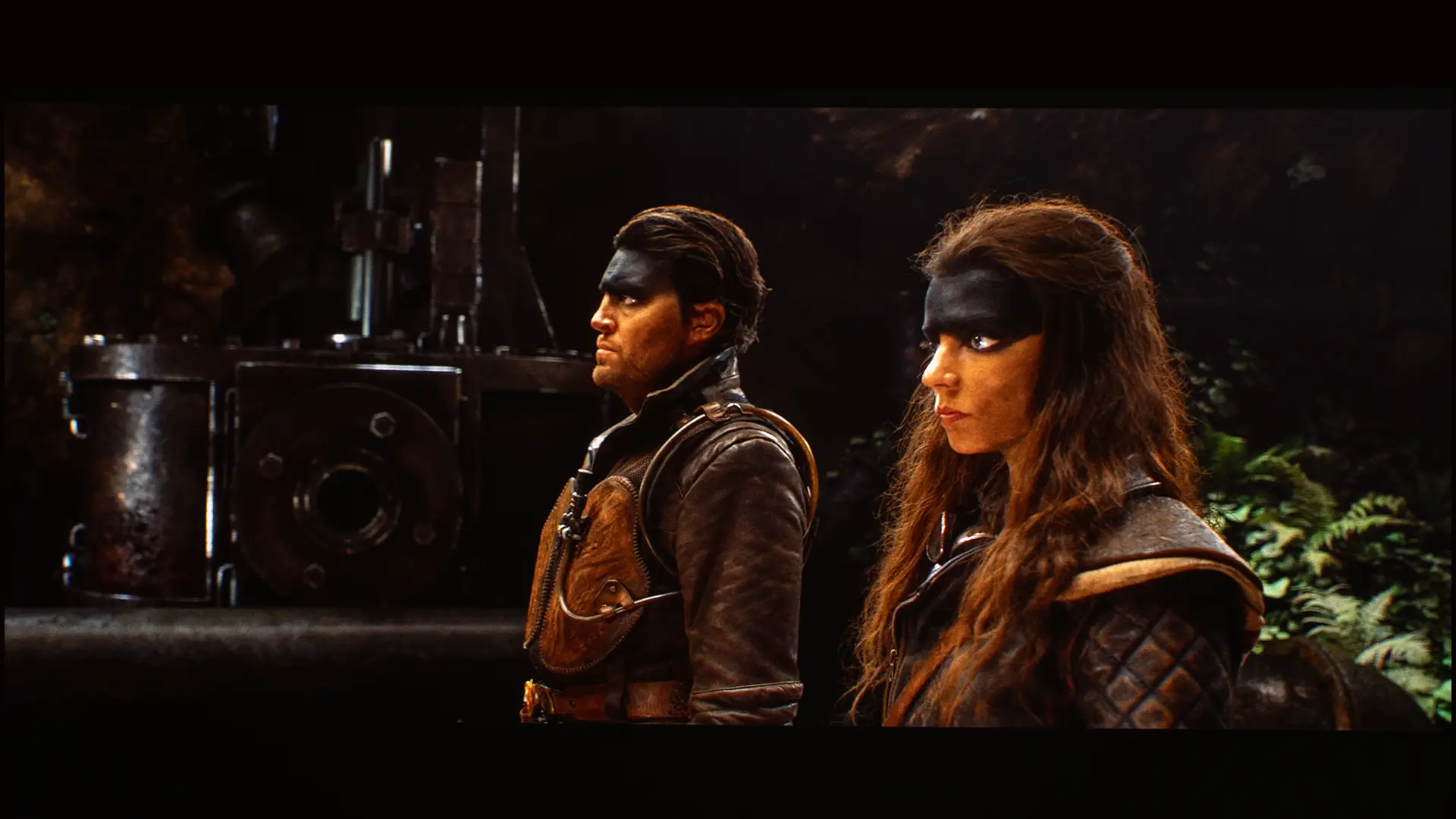
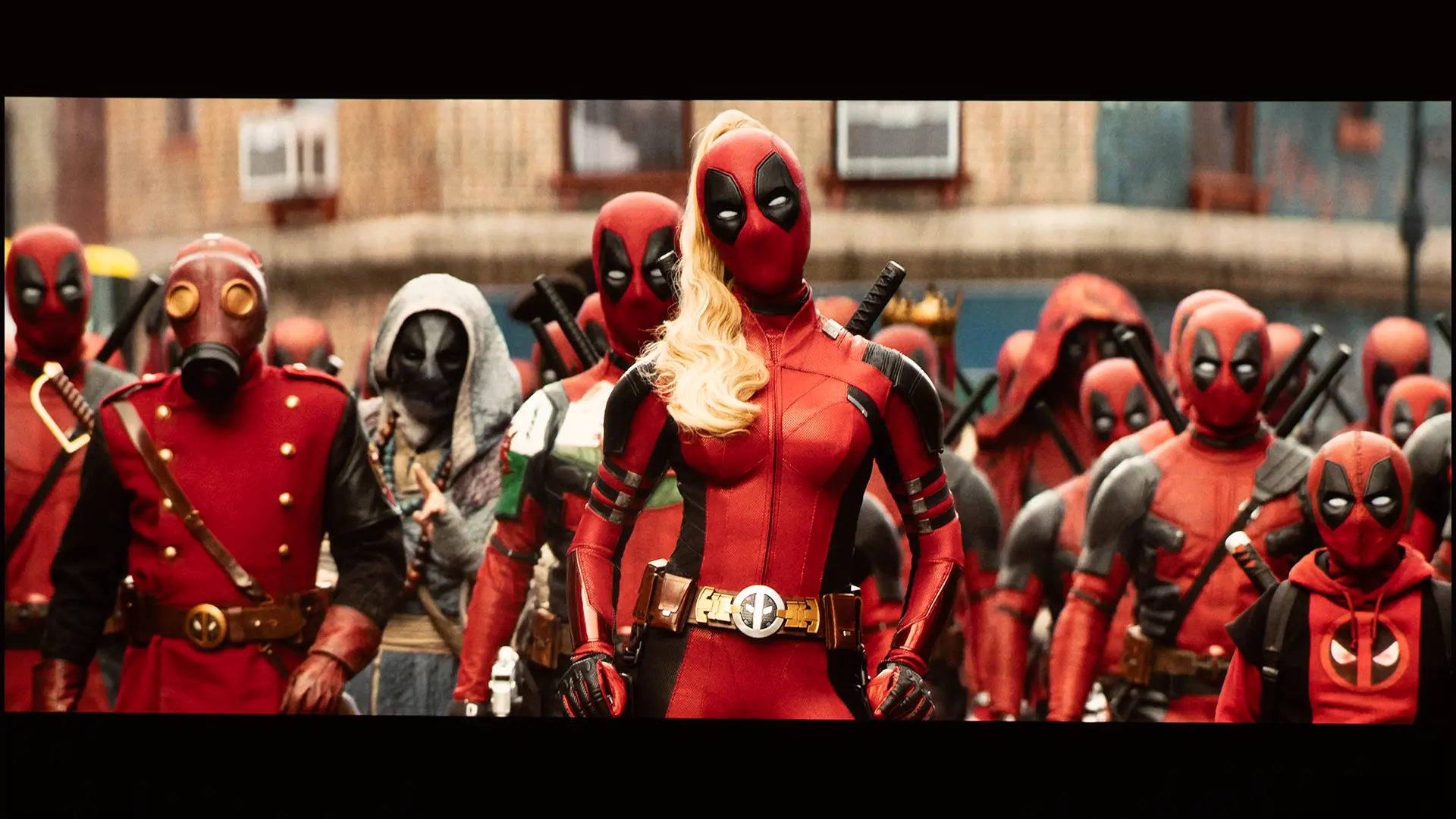
HDR Dynamic Tone Mapping improves the overall look of HDR10 content, but sometimes adds contrast processing that makes objects appear overly sharp, as was visible in a clip from Mad Max showing fine detail in the blonde girl's hair. When the dynamic tone mapping feature was switched off, the softer-looking image appeared more realistic.
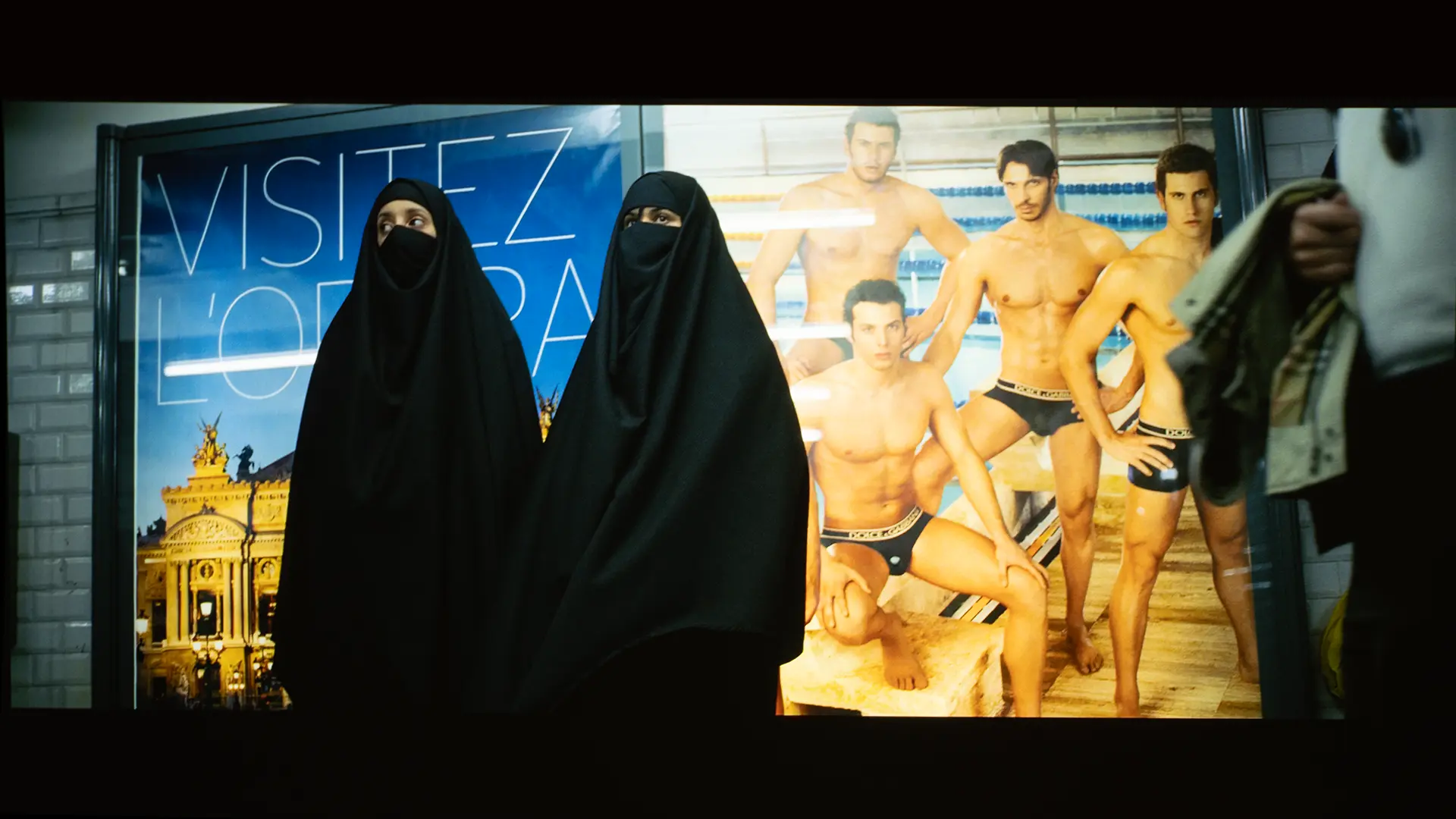
However, in most HDR movies, especially those mastered at higher brightness levels, such as The Meg, engaging Dynamic Tone Mapping made the overall scene brighter while still maintaining highlight detail, resulting in a more impactful look. Recommend leaving Dynamic Tone Mapping enabled for most HDR content and disabling it when artificial edge enhancement is observed on soft-textured subjects.
DCI (Digital Cinema Initiative), which sets the standards for professional projection, states that 300 nits is the optimal on-screen brightness for HDR. I have found that a projector needs to deliver over 200 nits of on-screen brightness to produce a really good-looking HDR image. As the screen gets larger, higher luminance is required to achieve those numbers.
TITAN Noir Max can deliver nearly 5,000 lumens of color-accurate brightness. It can easily be utilized on projectors exceeding 165 inches and still achieve the recommended brightness.
The projector’s high brightness reduced the need to aggressively tone map HDR content, making it look closer to the creator's intent. Also, the higher brightness made highlight details and bright colors appear more saturated. Due to the projector's high brightness, the image looked closer to that of a flat-panel display than most units I've seen.
GAMING
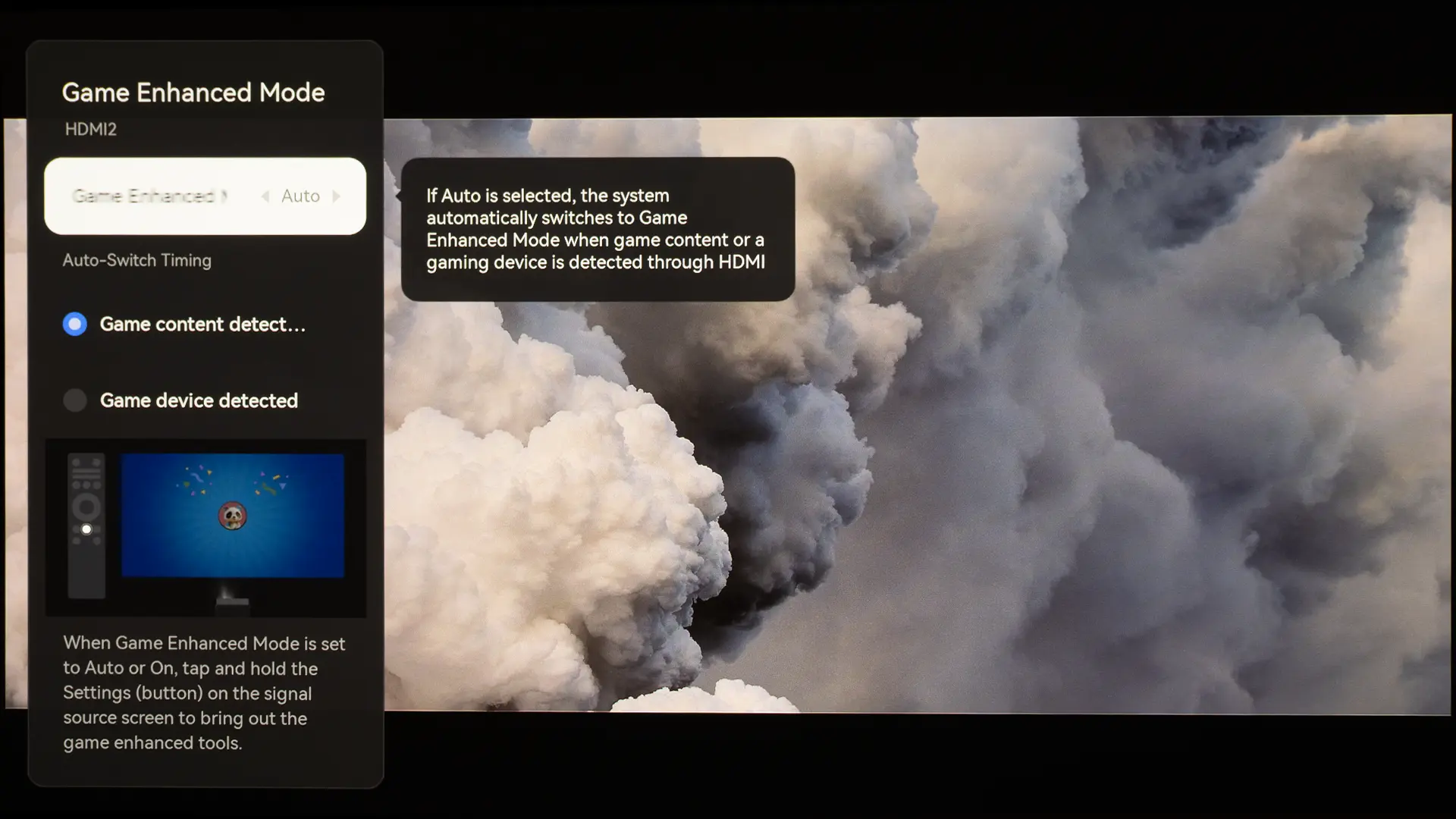
The TITAN Noir Max is not only great for home entertainment, but it also delivers outstanding gaming performance. The projector supports HDMI ALLM (Auto Low Latency Mode), so it automatically switches to its Game-Enhancement mode when gaming content is detected. Due to its extremely low lag, gaming felt responsive. XGIMI says the input lag is as low as 1 ms when playing HD games at 240 frames per second.
I've used my Leo Bonar lag tester to measure the unit's input lag at different frame rates. Below are the measurements.
4 ms @ 4K/60fps
7.3 ms @ 1080p/120fps
3.1ms @ 1080p/240fps
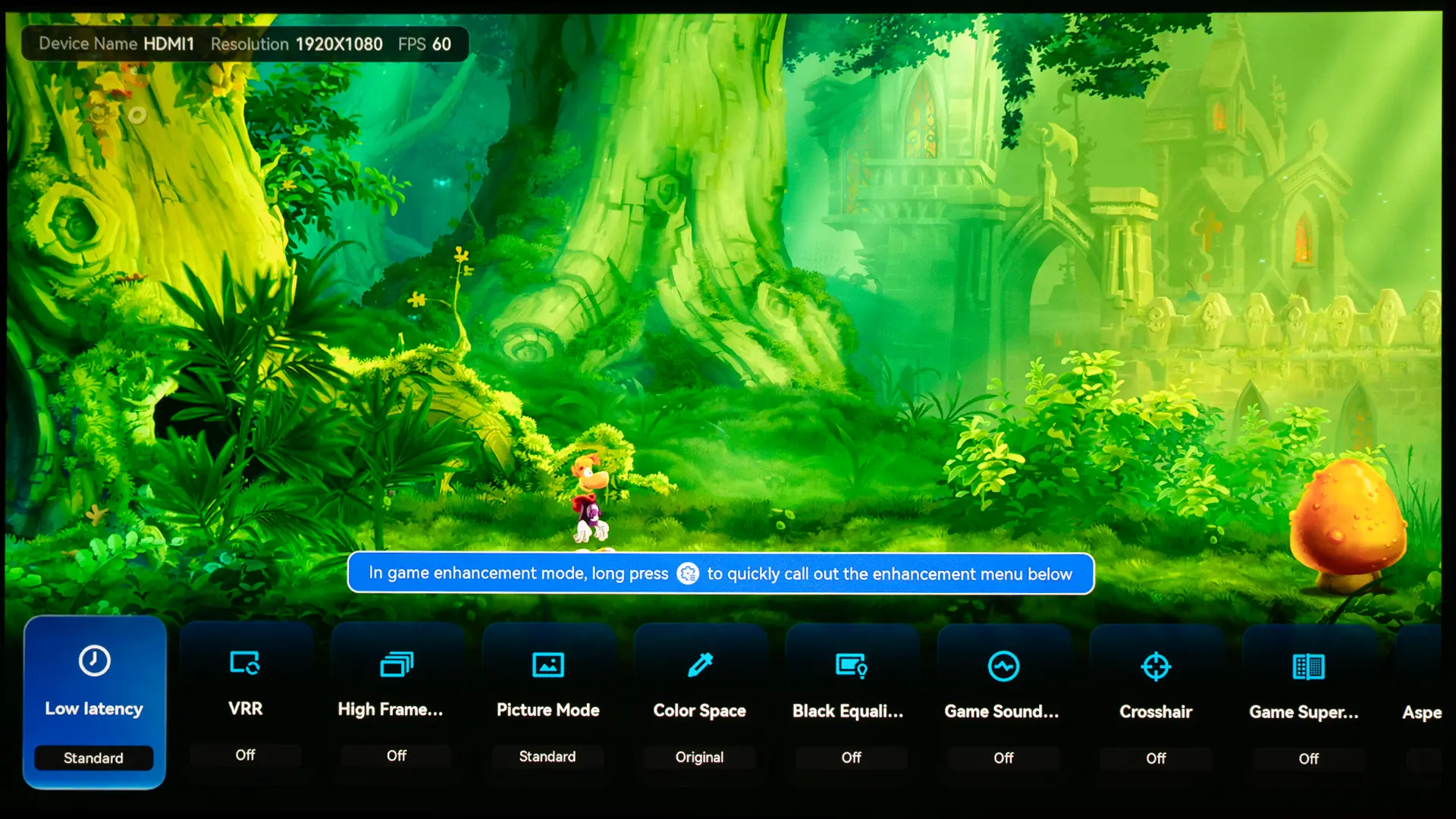
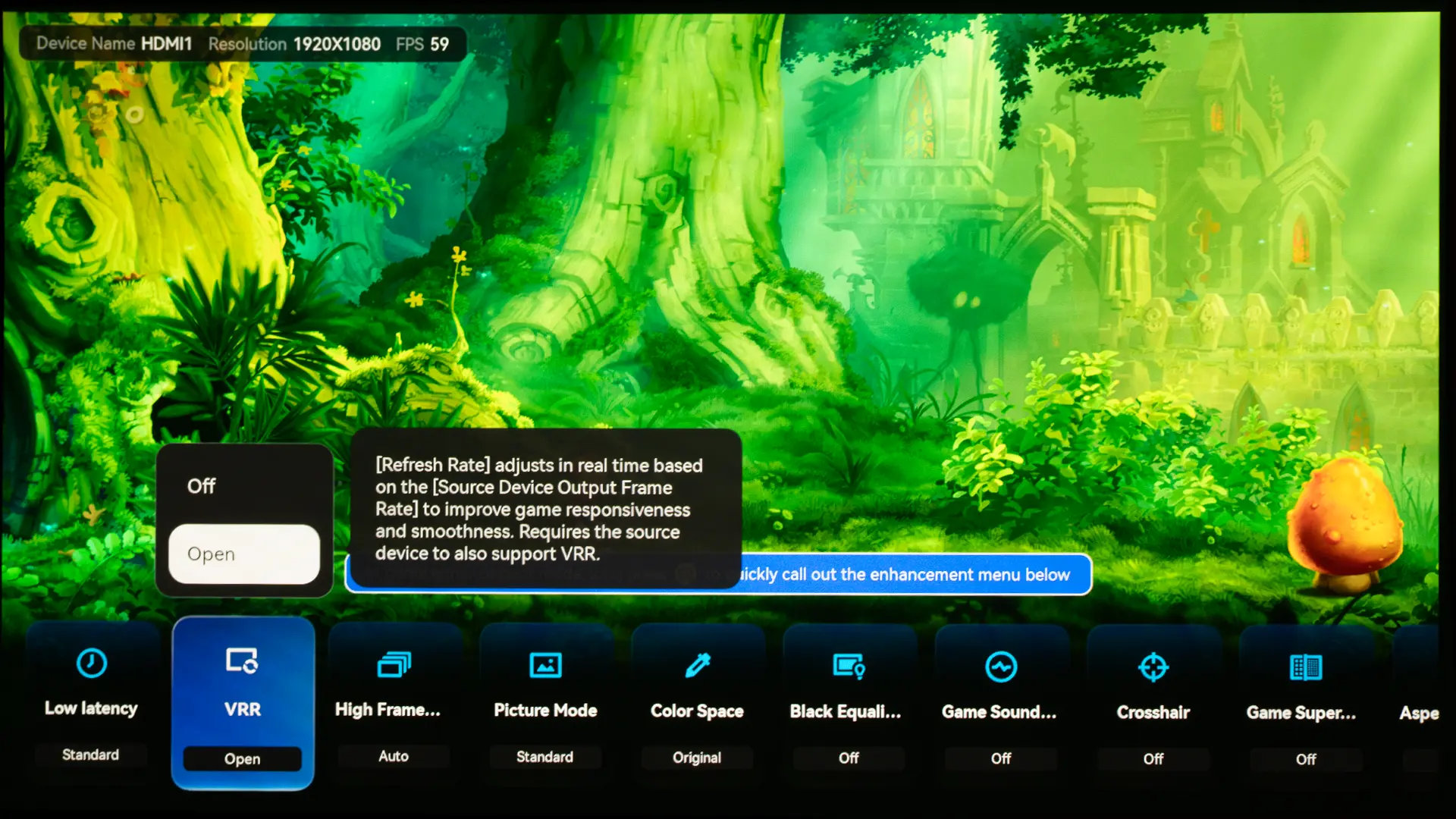
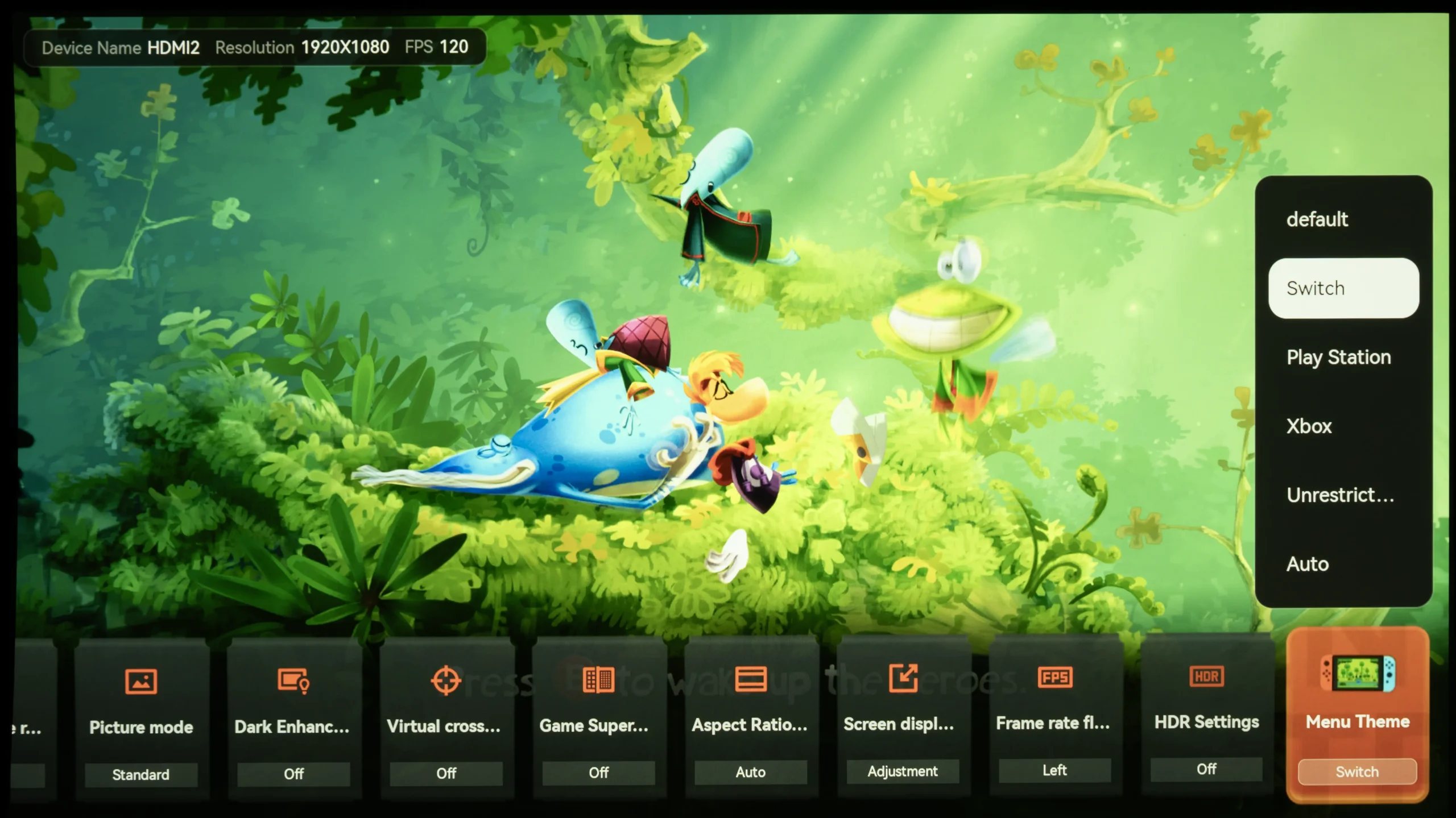
The TITAN Noir Max also supports Variable Refresh Rate. When in Game Enhancement mode, holding down the settings button on the remote brings up a dedicated Gaming menu that includes several settings designed to maximize the gaming experience. There are dedicated gaming picture modes designed to optimize the projector's picture adjustments for different types of gaming, including First-Person Shooter, Role-Playing Game, and Sports. Enabling the Frame Rate Indicator setting shows the frame rate in the corner of the screen.
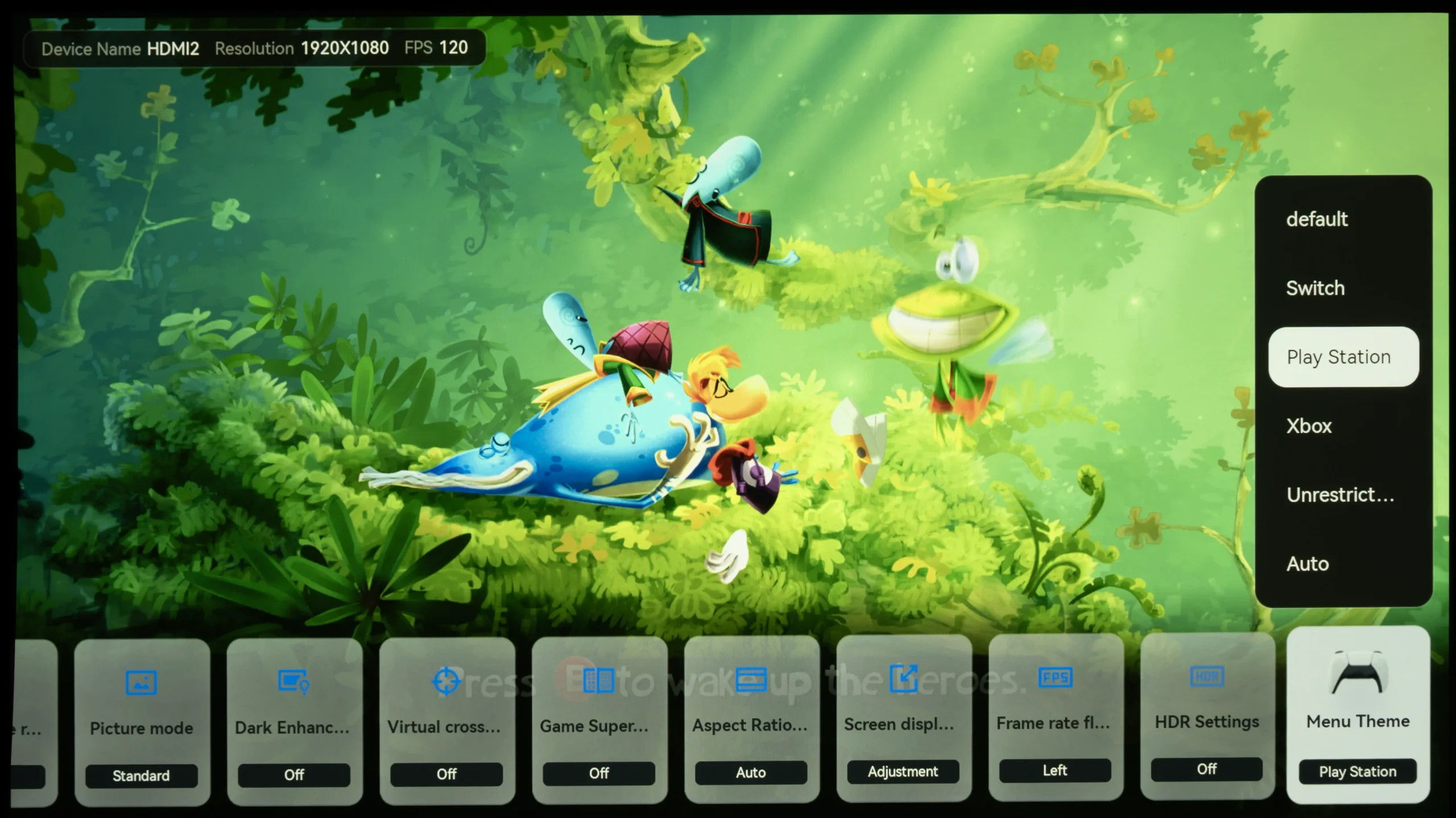
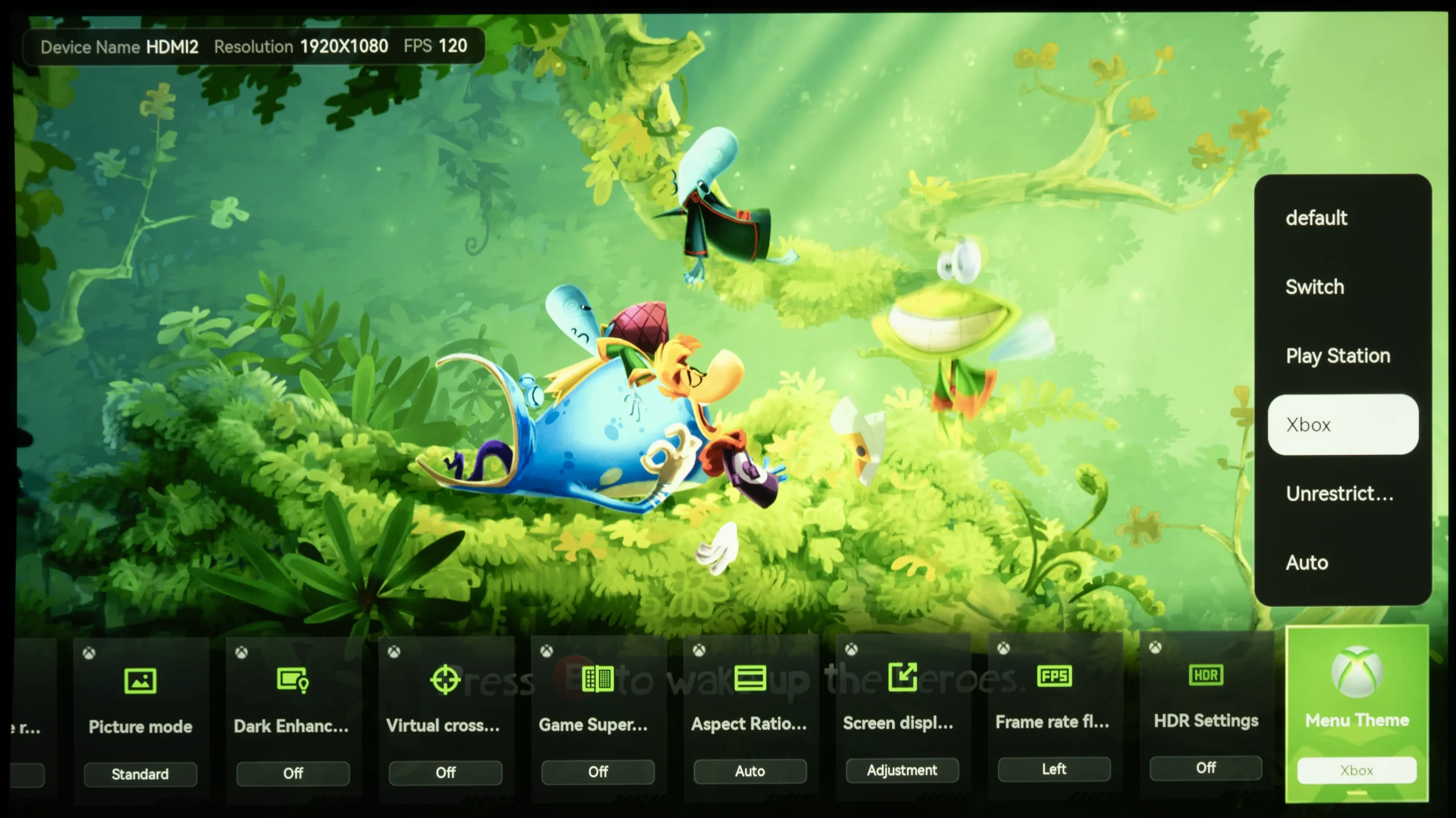
You can even change the look of the Gaming Menu to match the menu’s look to match your game system, whether it's a Nintendo Switch, a PlayStation, an Xbox, or an Unrestricted Machine.
The projector's high brightness and wide color gamut cover made images pop even under ambient light, so you don't have to game with your friends sitting in the dark. While I wish the TITAN Noir Max supported 4K/120Hz and offered lower input lag, it still delivers an outstanding gaming experience.
SOUND QUALITY
XGIMI does include a good sound system in the TITAN Noir Max, but most projectors that target end-users will probably have an external sound system. The audio quality of the 12W x 2 Harman Kardon speaker system is good enough for casual viewing.
Given the projector's brightness, the TITAN Noir Max is quiet. The unit is noisier than many of the Epson, JVC, and Sony projectors I've used in my media room, but it's also twice as bright.
Fan noise is rated below 28dB; our measurement at one meter with the laser at level 10 read approximately 34dB. When sitting more than six feet away from the projector, this noise level should be inaudible during active scenes and only noticeable during very quiet passages.
I should note that the exhaust fans are located under the projector. When the projector is mounted on a shelf, like in my room, it might appear a little louder than when it's flipped upside down and mounted on the ceiling.
SUMMARY
The Titan Noir Max, which retails for $5999, is one of the best DLP projectors I have ever reviewed. The projector offers excellent color reproduction, class-leading brightness, and outstanding native contrast. The TITAN Noir Max delivers the image quality and features that rival JVC, Sony, or Epson home theater models that cost far more.
Are there better projectors on the market? Yes, but you would have to spend literally five times as much to truly beat this performance. There are two outstanding 4K DLP projectors that retail for a price near that of the TITAN Noir Max, which are the XGIMI Titan and the Valerion VisionMaster Max.
COMPETITIVE COMPARISON
XGIMI TITAN
The TITAN, which retails for $3,499, is equipped with a 0.78-inch DMD, a 5000-lumen dual-blue laser-phosphor light source, and a 1.6x optical zoom Lens with optical and horizontal lens shift. The TITAN also has a built-in power supply, which is a real installation advantage for ceiling mounts in finished rooms. The larger DLP DMD is also designed to handle high brightness for extended periods, making it a better option for prosumer applications.
Our measurements showed that the TITAN was conservatively rated for brightness, so it can easily match the peak brightness of the TITAN Noir Max. However, it cannot match the TITAN Noir Max's black levels and native contrast. While evaluating the TITAN, I was impressed by its black levels, which are superior to those of most DLP projectors I have evaluated. However, after seeing the TITAN side by side with the TITAN Noir Max, the improvements in the newer model were immediately noticeable.
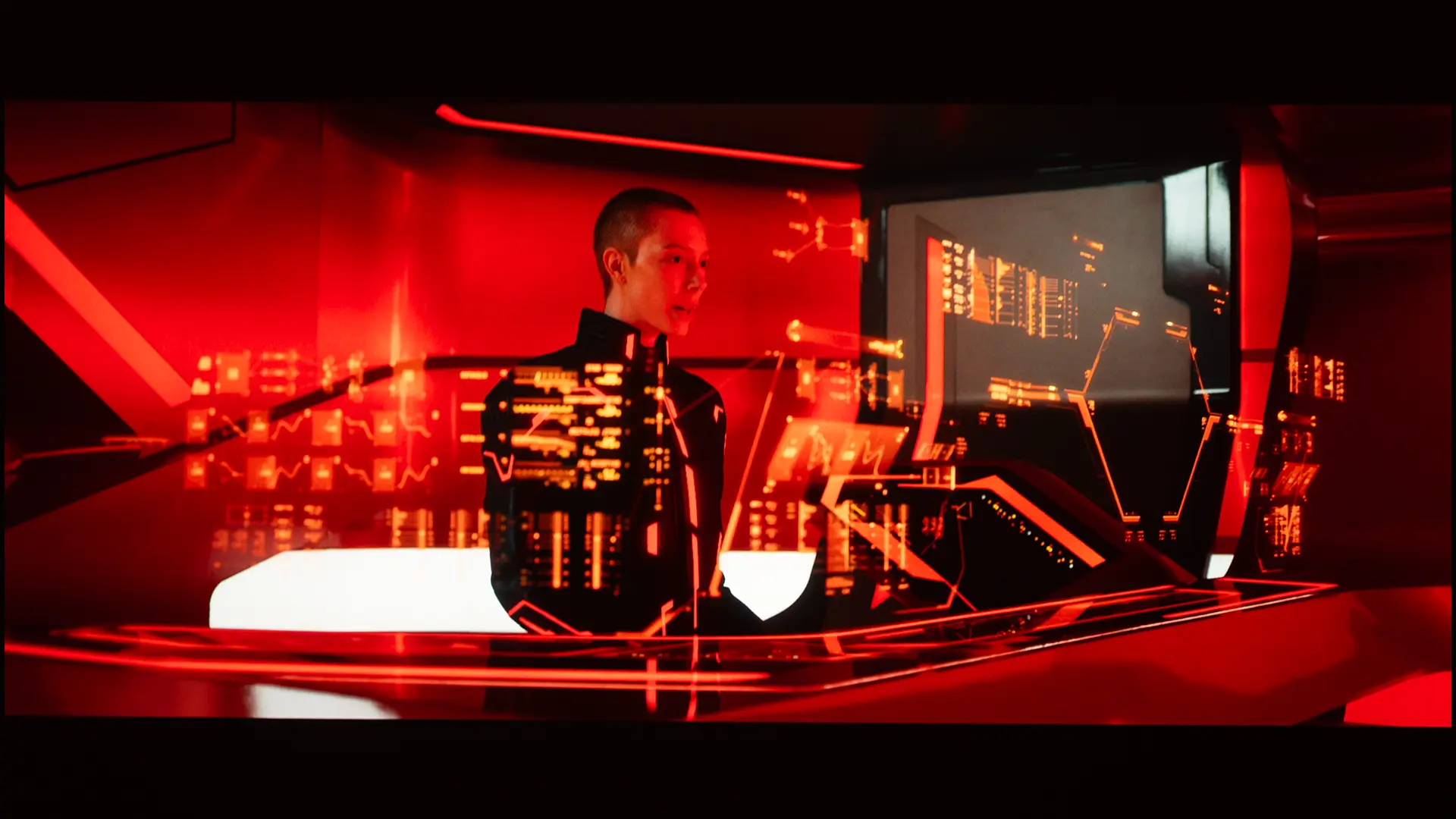
Based on our side-by-side evaluation, the XGIMI Titan Noir Max and the Valerion VisionMaster Max are two of the most impressive RGB laser projectors available in 2026. While both deliver excellent color reproduction, HDR performance, and black levels. Both projectors can reproduce an extremely wide color gamut, but the TITAN Noir Max’s additional light output made HDR highlights appear more impactful and colors more vibrant. On the TITAN Noir Max, bright neon effects, specular highlights, and high-luminance scenes carried greater visual intensity, creating a more impactful HDR experience.
To learn more about the differences, check out our Vision Master Max vs TITAN Noir Max comparison video.
The VisionMaster Max’s native contrast performance is exceptional for a DLP projector, and its Enhanced Black Level system delivers impressive dynamic contrast and excellent shadow detail. In dark scenes, it produces some of the best black levels currently available from a compact DLP design. The projector's video processing and dynamic laser dimming are also highly effective. When the iris is engaged in the TITAN Noir Max, it delivers far higher native contrast than the Vision Master Max while still delivering higher brightness.
Installation flexibility is another area where the Titan Noir Max holds an advantage. Its wider zoom range and both horizontal and vertical lens shift make it easier to integrate into challenging rooms. The VisionMaster Max offers vertical lens shift but lacks horizontal adjustment, which may force some users to rely on digital keystone correction.
The TITAN Noir Max does not include smart OS, so you will need a video streaming device. This shouldn't be an issue since most home theater enthusiasts have a Blu-ray player, a Kaleidescape, and/or an Apple TV.
FINAL THOUGHTS
If you are interested in purchasing the projector mentioned in this article, we always appreciate it if you use one of the links in the article because Projector Reviews earns a small commission on the sale at no cost to you.
To summarize, the TITAN Noir Max is probably one of the best projectors introduced in 2026, with image quality that rivals home theater projectors costing far more. It is arguably the best DLP projector that I have ever reviewed. Currently, the TITAN Noir Max is my pick for the most noteworthy projector in 2026.
While I do have some minor issues with the projector, like its external power supply, I think XGIMI hit a home run when they developed this model. Due to its high brightness and excellent contrast for its price point, XGIMI has put the competition on notice with the TITAN Noir Max, and I look forward to seeing how other projector manufacturers respond in 2027.
XGIMI TITAN Noir MAX- SPECIFICATIONS
Full Specifications
Projector Model
XGIMI TITAN Noir Max
Price
$5999
Imager Type
DLP (0.47” SST DMD) w XPR
Displayed Resolution
3840 x 2160 pixels
Native Resolution
1920 x 1080 x 4 pixels
Brightness (Manufacturer Claim)
7000 ISO lumens
Light Source Type
RGB Laser
Contrast Ratio
10000:1 (Native) 100,000:1 (Dynamic)
Lens Throw Ratio
2.1X (0.98 - 2.0:1)
Power Zoom/Focus
Yes
Lens Shift
Yes (Horizontal/Vertical)
Interchangeable Lens
No
Ultra Short Throw
No
Native Aspect Ratio
16:9 (Widescreen)
HDTV/4K
Yes
3D
Yes (Active)
Speakers
12w x 2
Noise Level (-db)
28 dB (34dB with Laser Level at 10)
Low Lag Gaming
Yes (4 ms at 4K@60Hz)
Smart Functionality
None
Business
No
Classroom
No
Portable
No
Special Features
HDR10+ and Dolby Vision, IMAX Enhanced, Dynamic HDR Tone mapping