When looking for a high-end projector, there are some things every buyer should consider. For example, brightness and resolution are important, but they only tell part of the picture-quality story. A projector that looks impressive during a football game can struggle when a movie transitions to a dimly lit interior. Just as important as brightness and resolution is black level and color reproduction.
At Projector Reviews, we have found that Aetherion and Valerion series projectors offered by AWOL deliver on all these fronts. They offer excellent image quality in both a darkened theater and a living room in low to moderate ambient light. In this article, sponsored by AWOL, we're going to discuss features and our impressions of two series in their latest projector line-up.
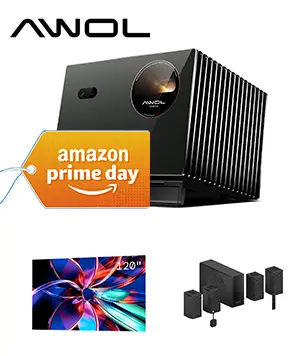
While this article is sponsored by AWOL, Projector Reviews does not charge manufacturers for product reviews, and the opinions expressed here are our own. That said, we have been incredibly impressed with the performance of AWOL’s projectors. After evaluating the Aetherion and Valerion models featured here, we wanted to make sure projector enthusiasts knew about the great deals available during Amazon Fall Prime Day on October 6–7, 2026.

There's a good reason these projectors have earned our attention. The Aetherion models have delivered the best black levels we have experienced from ultra-short-throw projectors, while the Valerion models have delivered exceptional, category-leading blacks among the lifestyle DLP projectors we have reviewed. Their ability to combine deep blacks with useful brightness and visible shadow detail is a major reason each of the four models covered in this article received a Projector Reviews award.
In this article, we only have space to briefly summarize the specifications, notable features, and intended users for each model. For detailed measurements, hands-on observations, and picture-quality evaluations, please follow the links to our full reviews.
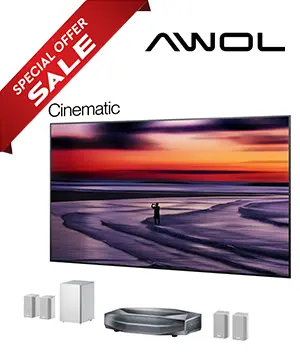
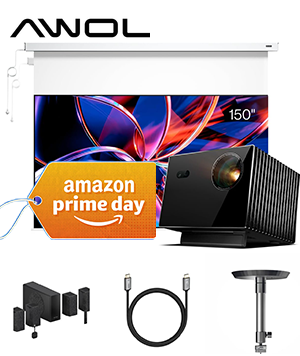
The October promotions include individual projectors and packages with screens and sound systems. Whether you want a television replacement for your living room or a standard-throw projector for a theater, the AWOL lineup offers several compelling options.

If you have followed our previous reviews, you will recognize the AWOL Vision and Valerion names. In June 2026, AWOL Vision introduced a refreshed brand identity centered on the shorter AWOL name. The updated branding brings its projector families together under a cohesive framework, including the Aetherion ultra-short-throw series and the Valerion standard-throw series.
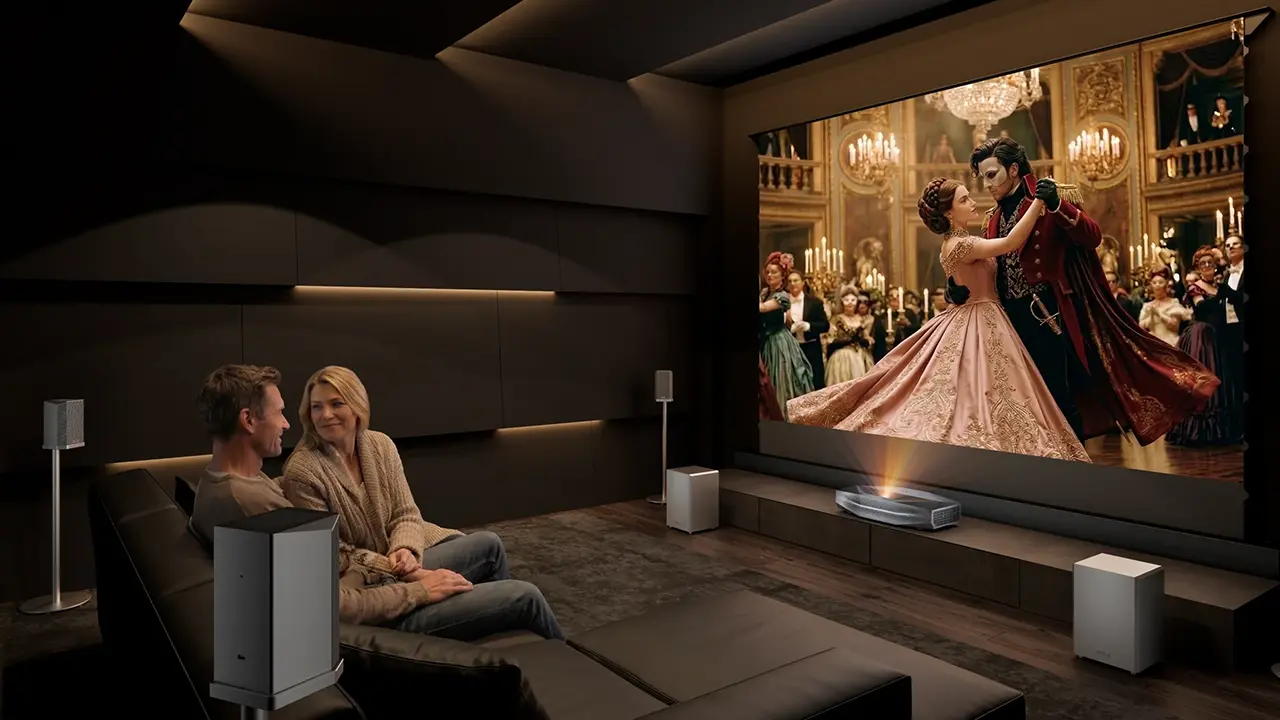
For buyers, the distinction between these two series begins with installation. An Aetherion projector sits close to the screen, typically on furniture at the front of the room. This arrangement appeals to households that want a much larger picture without placing a projector behind the seating area or installing one on the ceiling.
Valerion projectors operate farther from the screen. Their optical zoom provides flexibility when choosing a suitable position, making them attractive for media rooms, gaming spaces, and dedicated theaters.
Neither approach is limited to one type of content. Both series are designed for movies, streaming, sports, and gaming. The best choice depends on your room, your screen, and where you want to position the projector.
A family replacing a living-room television may prefer Aetherion’s placement near the screen. An enthusiast building a theater with a ceiling-mounted projector may find Valerion more appropriate. AWOL now covers both approaches while giving buyers a choice between a well-equipped lower-priced model and a flagship offering additional performance.
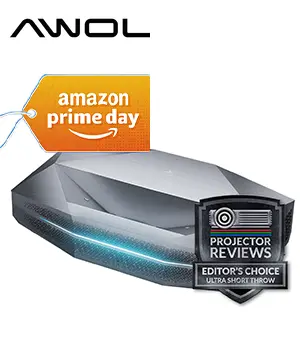
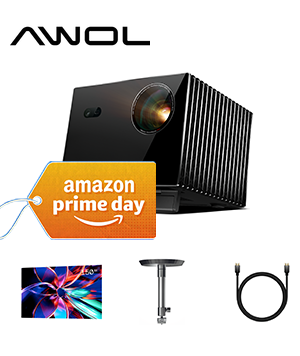
The Aetherion series consists of the Aetherion Pro and Aetherion Max. Both use RGB triple-laser illumination and DLP imaging to produce a displayed 4K UHD picture. The Aetherion Pro is rated at 2,600 ISO lumens, while the Aetherion Max increases rated output to 3,300 ISO lumens.

A UST projector sits at the front of the room with the rest of your gear, so there's no ceiling mount and no HDMI cable snaking across the room to a projector behind the couch.
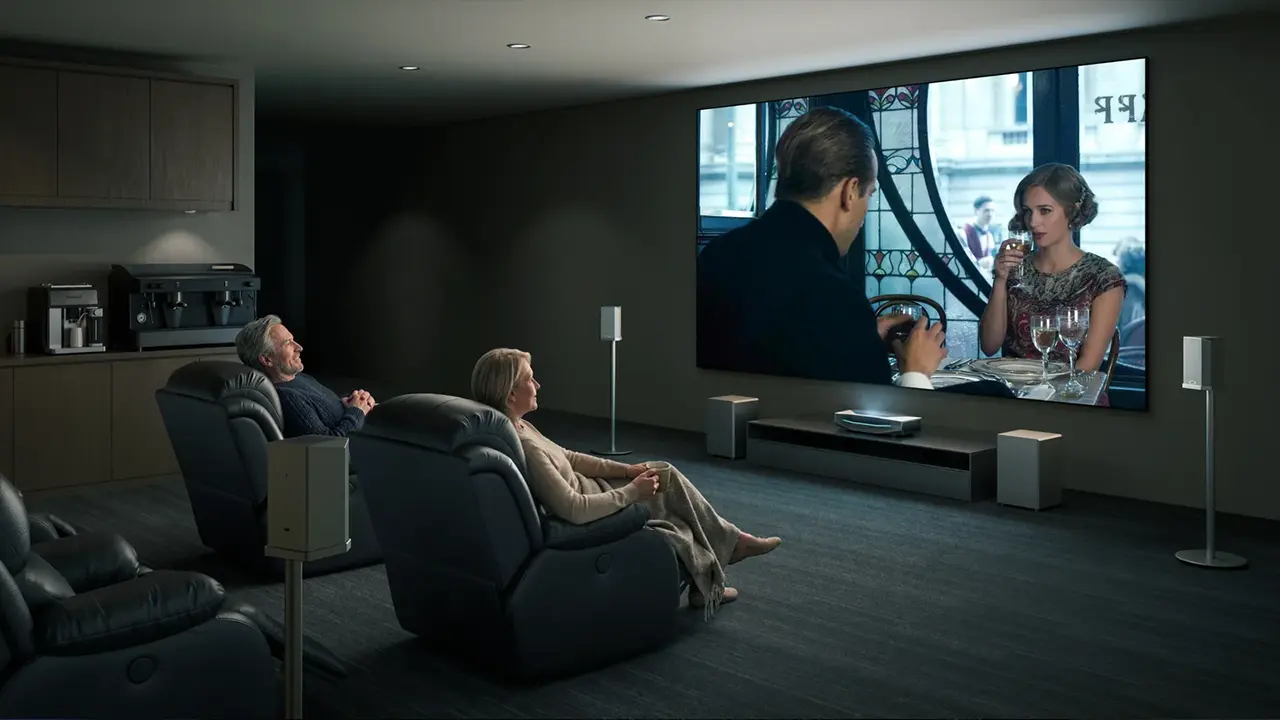
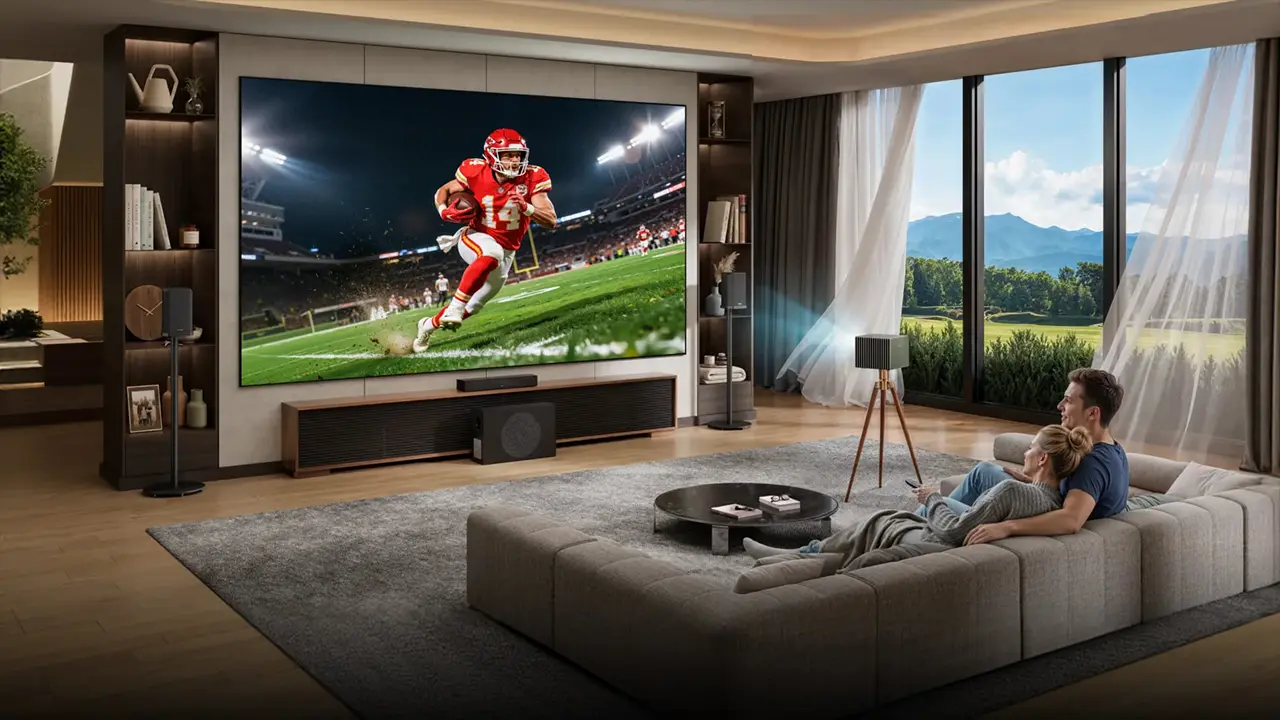
That arrangement is particularly useful in shared living spaces. The projector can sit on an appropriately sized cabinet, with streaming devices, game consoles, and audio equipment nearby. A retractable screen can also allow the display surface to disappear when it is not being used.
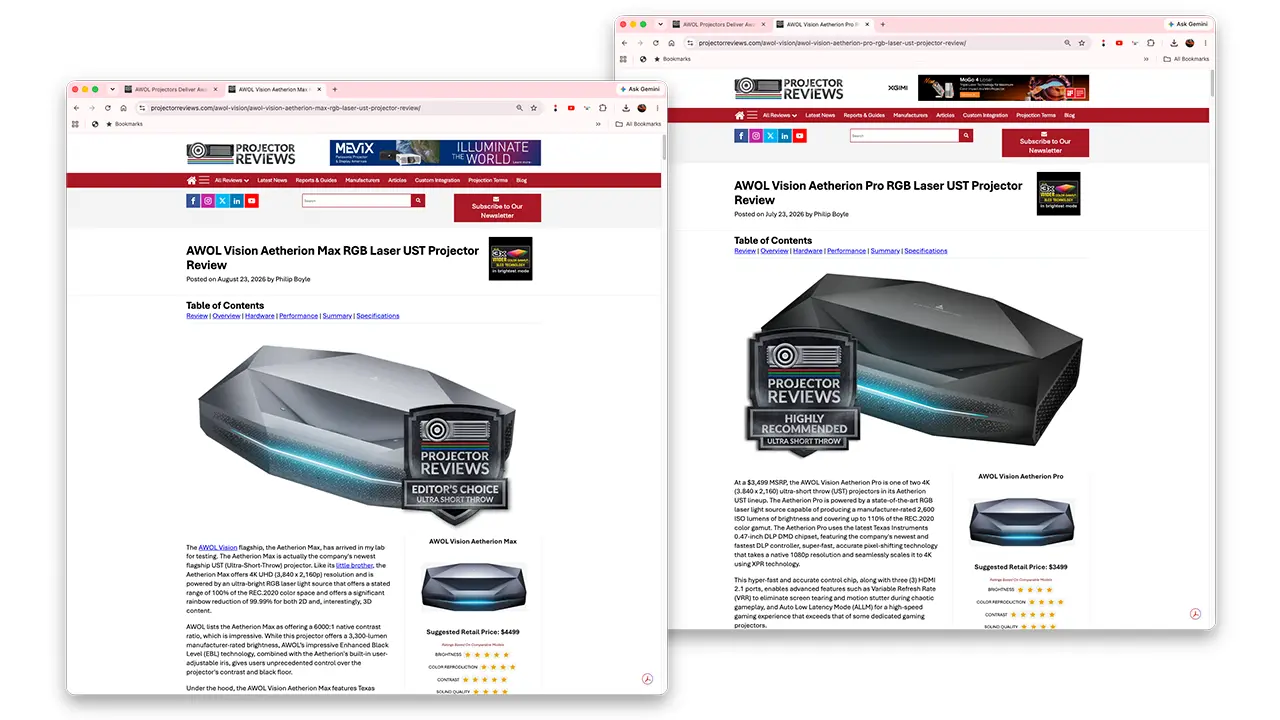
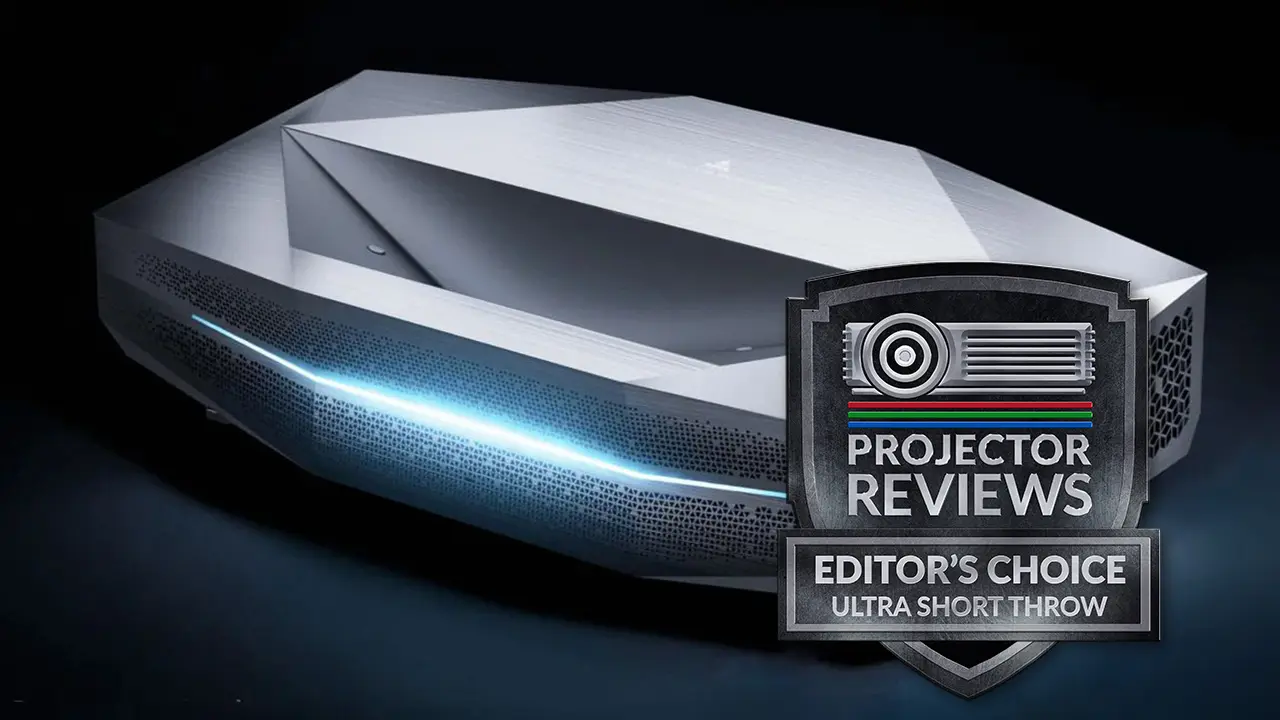
However, convenient placement is only valuable if the picture delivers. Aetherion’s combination of brightness, optical precision, and black-level performance makes it a serious option for viewers who want everyday convenience and satisfying movie-night performance. The Aetherion Pro earned a Projector Reviews Highly Recommended Award. The brighter Aetherion Max earned our Editor’s Choice Award.
Many UST projectors produce bright, colorful images, but darker scenes reveal their limitations. When the black floor is elevated, an image can take on a gray appearance, reducing depth and weakening the separation between objects in shadow.
Both projectors use sapphire glass with what the brand calls Zero-Light Leakage, which absorbs stray light before it leaves the lens housing and improves native contrast. The Aetherion Pro also features a multistep iris, which can further improve native contrast in a dark space.
Along with the physical iris is AWOL’s Enhanced Black Level (EBL) algorithm, which dynamically analyzes incoming video and dims the laser power when a scene goes dark. AWOL says EBL pushes the Aetherion series' dynamic contrast ratio up to 60,000:1.

In our Aetherion Pro review and Aetherion Max review, we discuss how these models deliver impressive dark-scene performance. For movie enthusiasts, the benefit is a picture with greater depth. Dark clothing, dim interiors, and nighttime backgrounds look more convincing when the projector can reproduce low light levels while retaining meaningful detail.
The Aetherion series features a high-quality lens assembly. Ultra-short-throw projectors sit very close to the screen, so they need to project an image at an incredibly steep angle. Generic plastic lenses struggle to deliver a sharp image from edge to edge.
To avoid this, the Aetherion system uses sapphire glass elements with minimal distortion and sharp focus. AWOL’s PixelLock technology addresses optical and mechanical alignment, while the series uses precision optics to support uniform sharpness. This results in a razor-sharp image on screens up to 200 inches. Maintaining focus and alignment across the picture is particularly important when small text or detailed 4K content reaches the screen’s edges.

The RGB triple-laser light source also provides a broad color capability. AWOL advertises a gamut reaching 110% of Rec.2020. The Aetherion series supports Dolby Vision and HDR10+, alongside conventional HDR formats. Dynamic metadata gives a compatible display information that can help it adapt the presentation to different scenes. Dynamic tone mapping does an excellent job delivering good on-screen brightness without clipping highlight detail.
During our testing, when viewing challenging HDR content like dark scenes in The Batman or super bright scenes in The Aquaman, the projector delivered an excellent-looking HDR image.
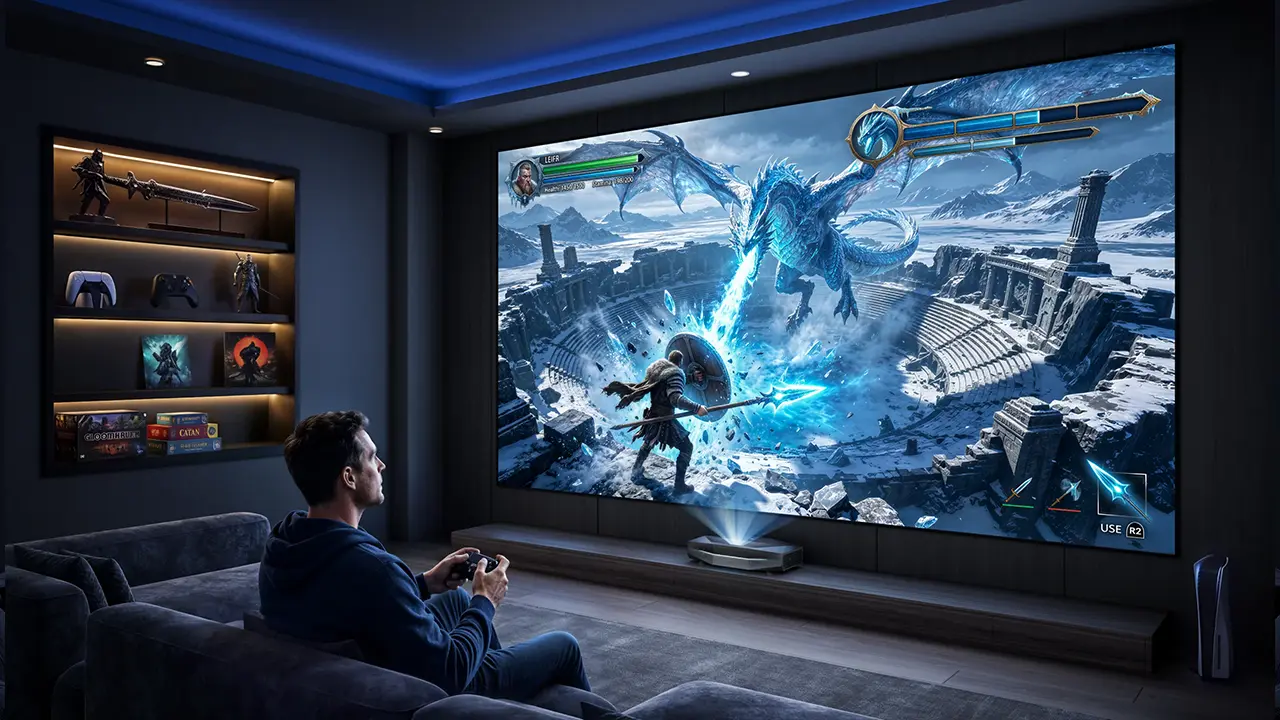
The Aetherion series is also designed for households that divide their screen time between movies and games. Its gaming features include Variable Refresh Rate and Auto Low Latency Mode. VRR helps reduce tearing and uneven motion with compatible sources, while ALLM simplifies switching into a responsive gaming configuration.

AWOL advertises input latency as low as 1 ms at 1080p/240 Hz. The resolution and refresh rate are important parts of that claim. High-refresh HD gaming and 4K movie playback are different operating conditions, so buyers should match the projector’s supported modes to their console or PC.
Anti-RBE technology addresses another concern associated with single-chip DLP projection. Some viewers notice brief red, green, and blue flashes around high-contrast objects. Reducing this rainbow effect can make viewing more comfortable for sensitive users, although individual sensitivity varies.
Google TV provides integrated access to streaming services, and the built-in sound system makes Aetherion suitable for a straightforward entertainment setup. For those who want more sound, HDMI eARC makes connecting an external system easier. AWOL also offers its optional ThunderBeat sound package.

The rated brightness of the Aetherion Max is 700 ISO lumens higher than the Aetherion Pro. On a large screen in a real room, that extra output helps the image keep its punch as screen size grows, gives HDR highlights more impact, and makes sports or television easier to enjoy under ambient light. The chart below lists AWOL's published specifications for both models.
Feature | Aetherion Pro | Aetherion Max |
Rated brightness | 2,600 ISO lumens | 3,300 ISO lumens |
Light source | RGB triple laser | RGB triple laser |
Displayed resolution | 4K UHD | 4K UHD |
Rated native contrast | 6,000:1 | 6,000:1 |
Black-level controls | Adjustable Iris and EBL | Adjustable Iris and EBL |
Optical and viewing features | PixelLock and Anti-RBE | PixelLock and Anti-RBE |
Premium format support | Dolby Vision, HDR10+, and IMAX Enhanced | Dolby Vision, HDR10+, and IMAX Enhanced |
Gaming features | VRR and ALLM | VRR and ALLM |
Our Aetherion Max review explains how the flagship combines its higher brightness with the series’ high native contrast to deliver class-leading image quality when viewing both SDR and HDR material.
If you have a smaller screen or good light control, the Pro delivers most of what makes the Aetherion series special. But the Max’s extra brightness makes a noticeable difference in image quality, which is why it earned our Editor’s Choice Award.


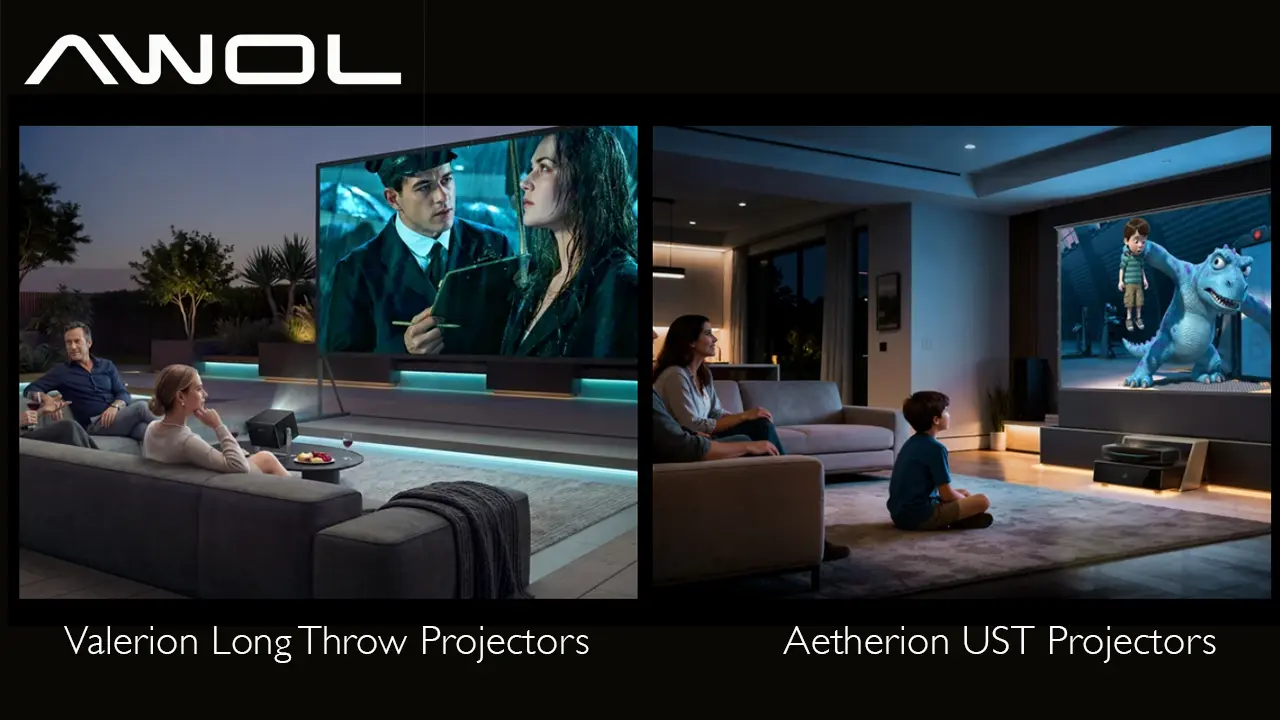
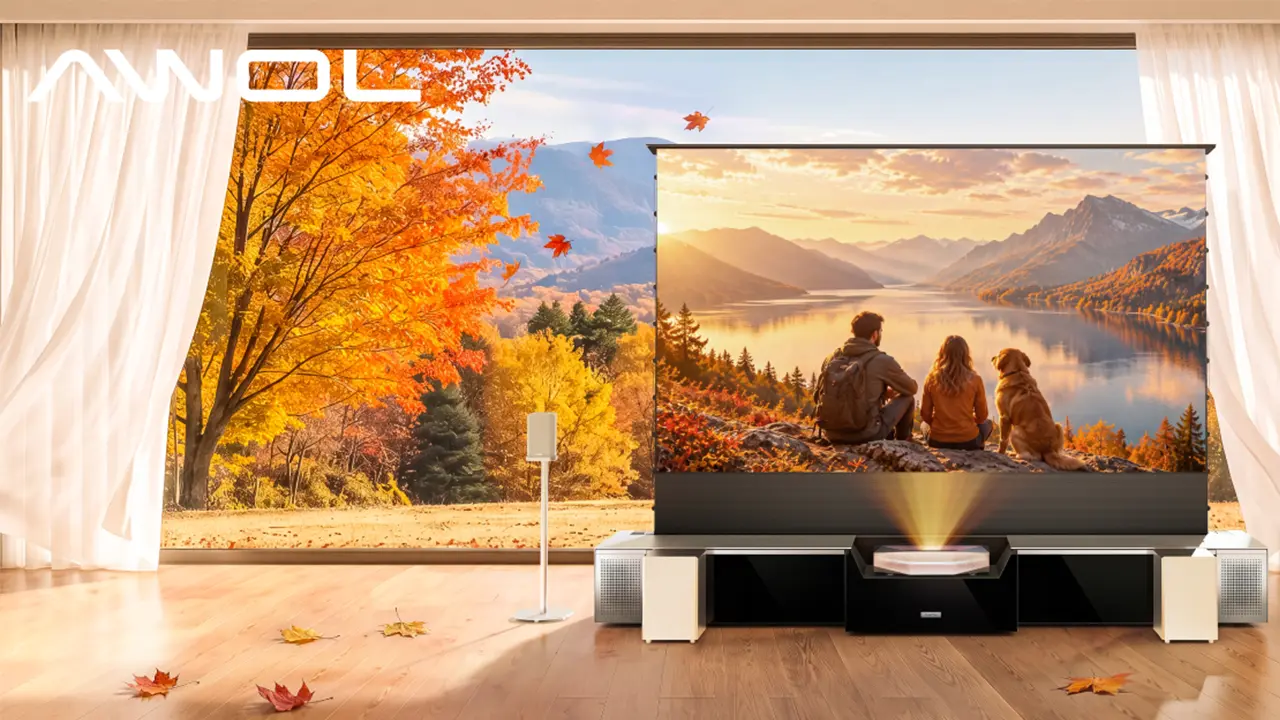
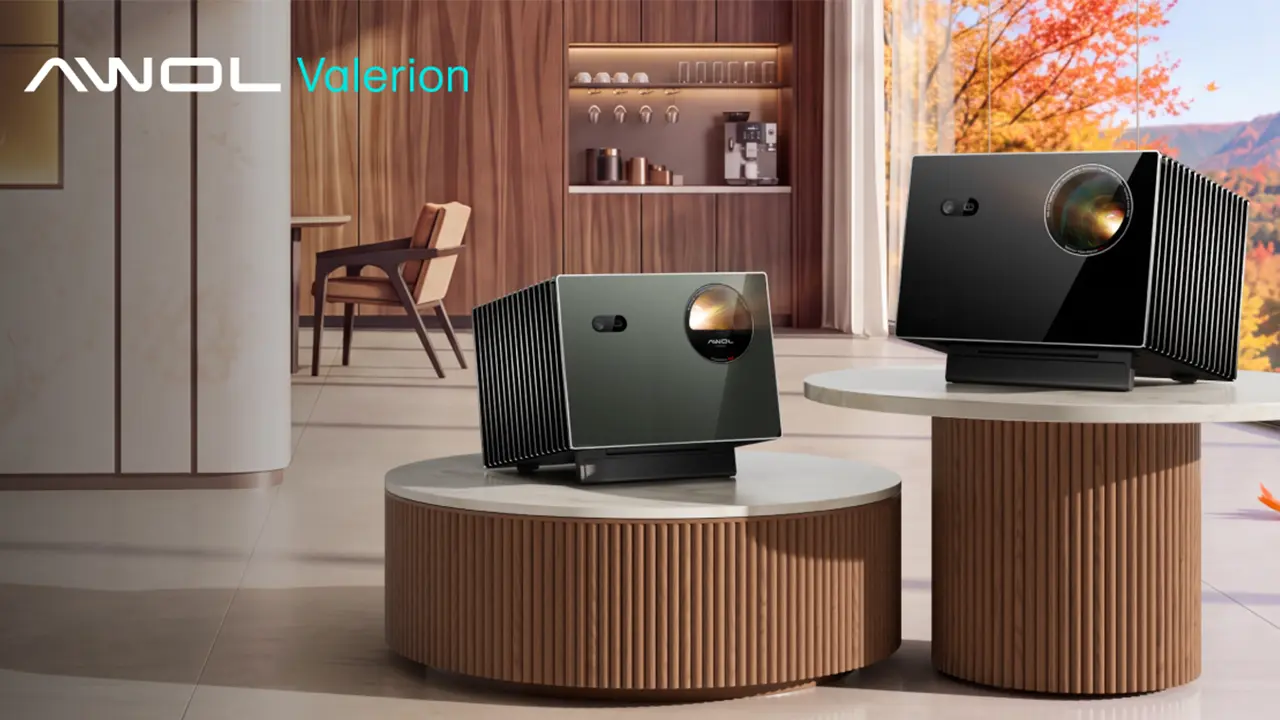
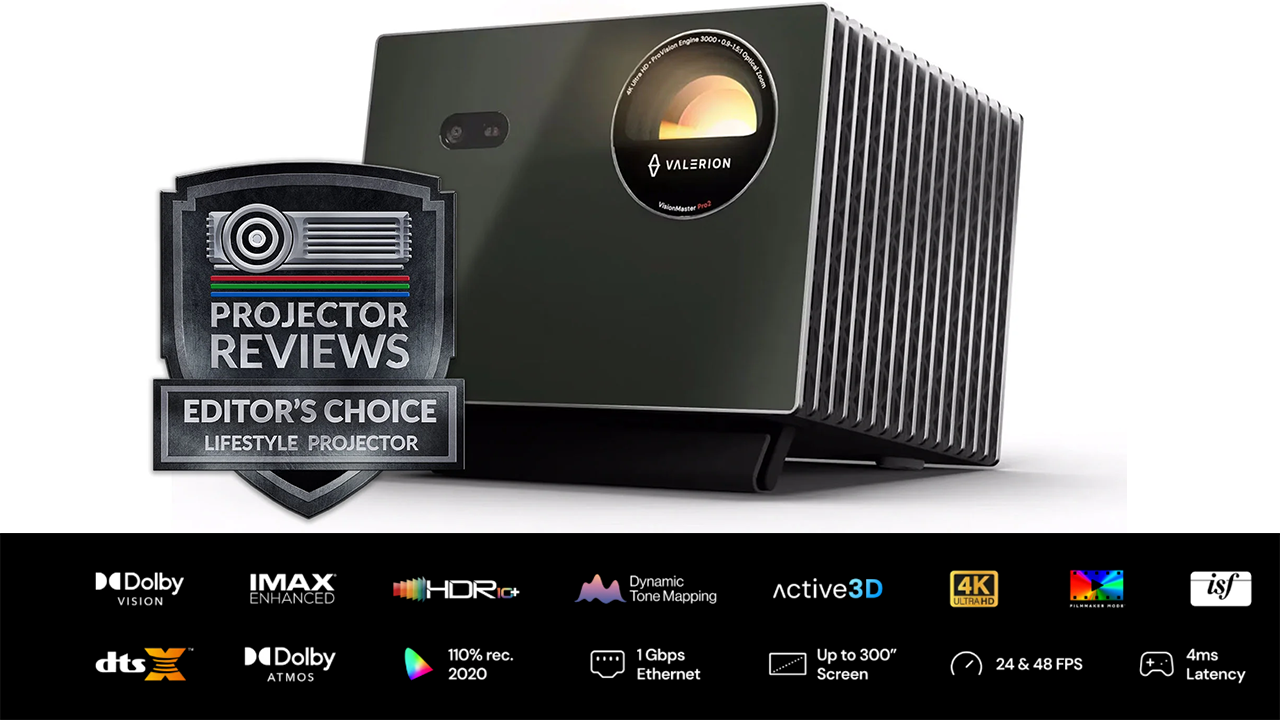
The Valerion series takes a different approach to installation while retaining AWOL’s focus on high-performance home entertainment. The Valerion Max and Valerion Pro2 are standard-throw RGB laser projectors with optical zoom, integrated streaming, and built-in sound. (Our reviews cover them as the Valerion VisionMaster Max and the Valerion VisionMaster Pro2.)
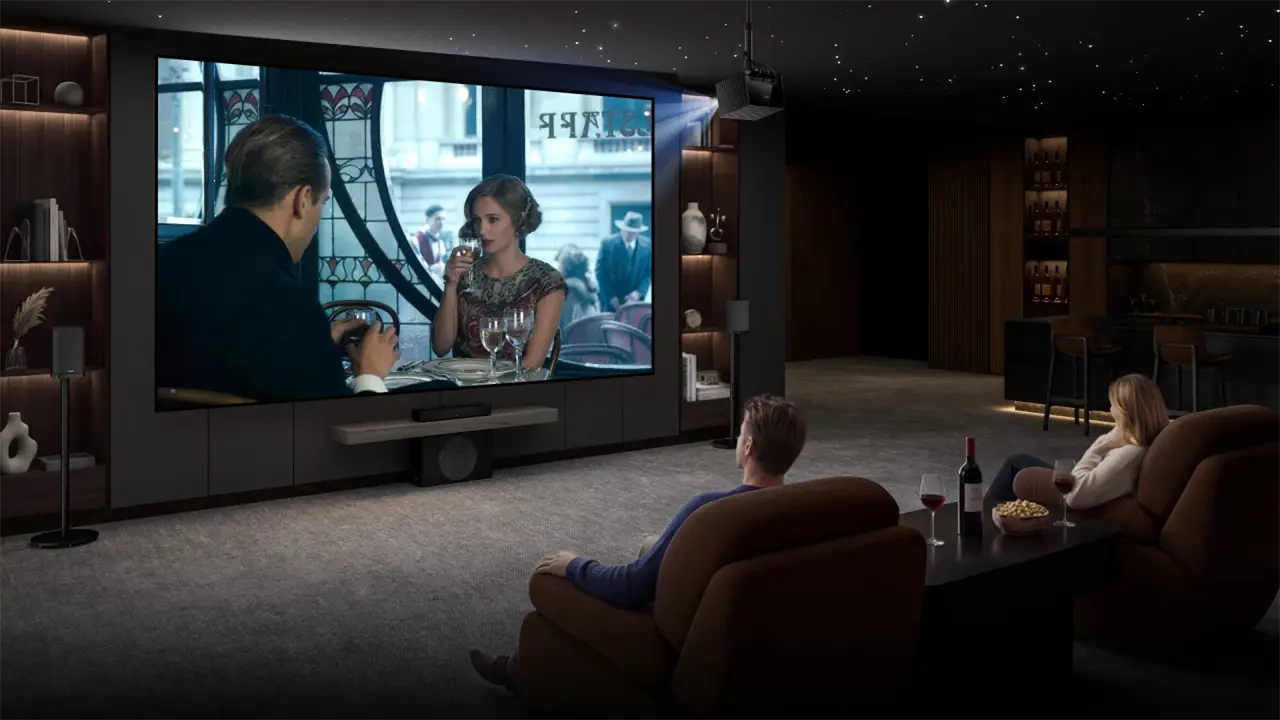
These models suit buyers who want to position a projector farther from the screen. That could mean a ceiling installation in a dedicated theater, a suitable shelf in a media room, or a movable setup used for movie nights and gaming.

The Valerion models are easy to live with and still deliver the picture enthusiasts care about. Built-in apps and auto setup keep things simple, while optical zoom and black-level processing give you real control.
The Valerion Pro2 is rated at 3,000 ISO lumens and includes a motorized lens with a 0.9–1.5:1 optical throw range. That range allows the installer to adjust picture size optically within the available placement limits. The unit also includes optical zoom, which is useful because it changes the image through the lens. Digital resizing uses only part of the available imaging area. When the room permits it, achieving the desired size through optical adjustment helps retain the projector’s available detail.

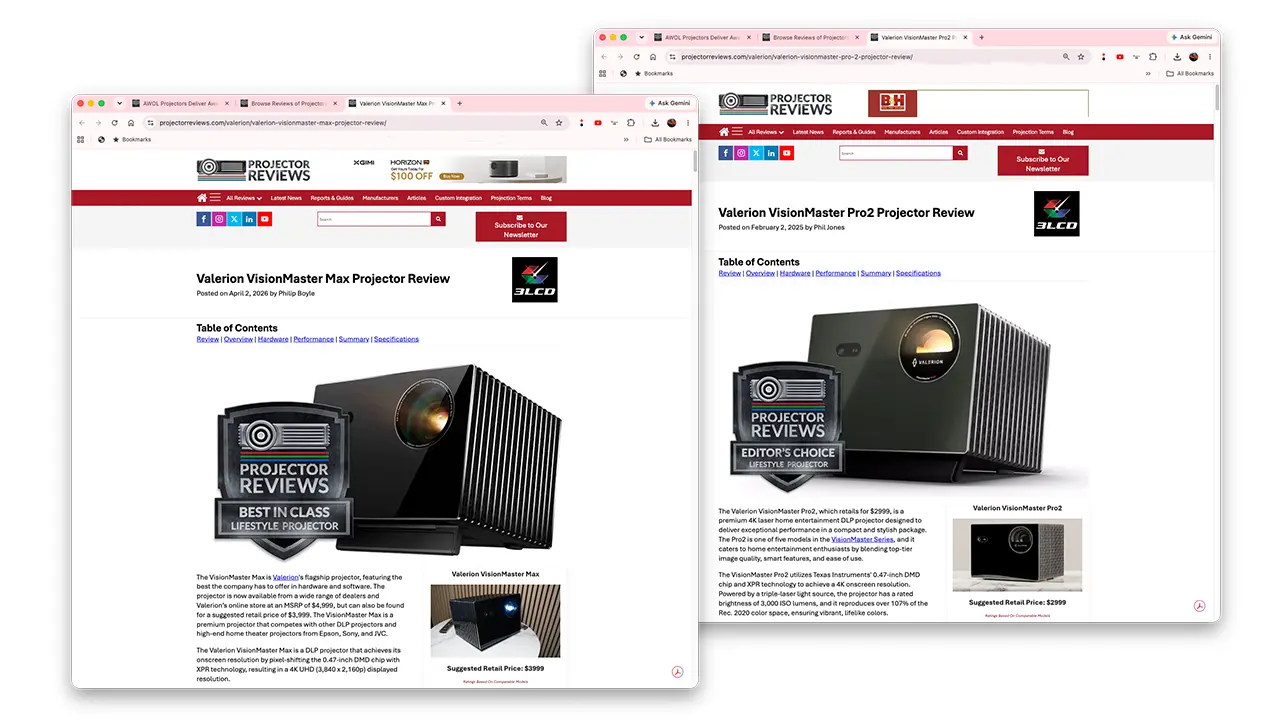
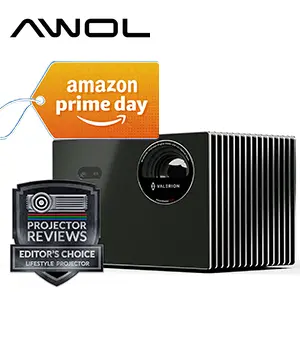
The Pro2 also provides Enhanced Black Level processing. In our Valerion Pro2 review, its strong contrast and dark-scene performance helped distinguish it from many lifestyle projectors. It demonstrated that a convenient entertainment projector could deliver satisfying results with demanding movies.
Plenty of lifestyle projectors are easy to use. Far fewer still look great when the movie goes dark. The Pro2 does both.
The Pro2’s combination makes it attractive for viewers who want one projector for films, games, and everyday streaming. Its Fall Prime Day price strengthens that proposition considerably.
Both featured Valerion models support Dolby Vision, HDR10+, IMAX Enhanced, and dynamic tone mapping. This gives them broad compatibility with premium movie and streaming content.
HDR playback requires more than recognizing an incoming signal. The projector must fit the source’s brightness range into its available output while preserving the image’s important relationships. Effective processing helps prevent an intense highlight from forcing the rest of the picture to look unnecessarily dim.

The triple-laser light source gives these projectors substantial color capability. Saturated animation, colorful games, and bright outdoor scenes can benefit, while accurate picture settings remain important for natural skin tones and familiar objects. Both models also feature Anti-RBE technology. For viewers sensitive to rainbow artifacts, this is a great feature. They also support active 3D, which most flat panels these days do not.
Google TV makes the projectors convenient for streaming without requiring a separate player for every application. Automatic focus and alignment tools also simplify casual setup.
Gaming and Audio
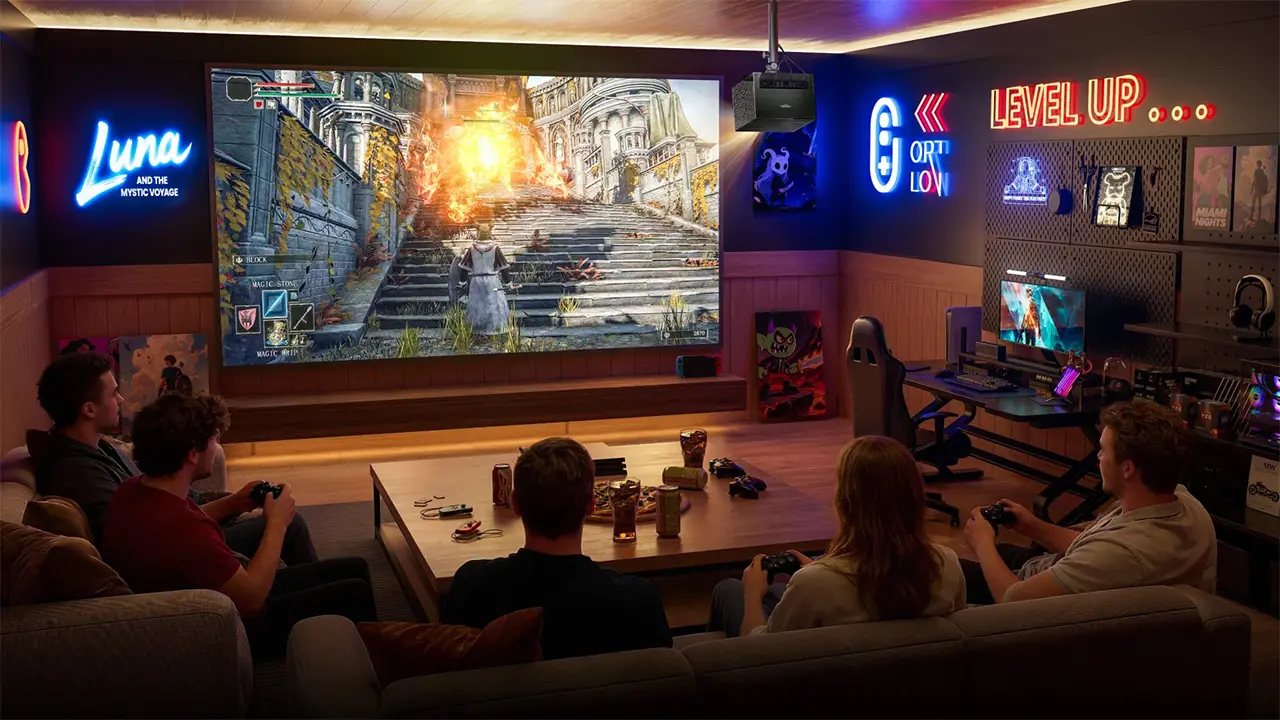
The Valerion models also appeal to gamers who want a large picture without surrendering responsiveness. In low-latency mode, Valerion delivers input lag as low as 4 ms at 1080p/240 Hz, making gameplay feel incredibly responsive and snappy.
All of these models include a good built-in sound system, and HDMI eARC makes it easy to connect external audio. The promotional bundles are particularly interesting for buyers starting from scratch because they combine the projector with a screen and, in some

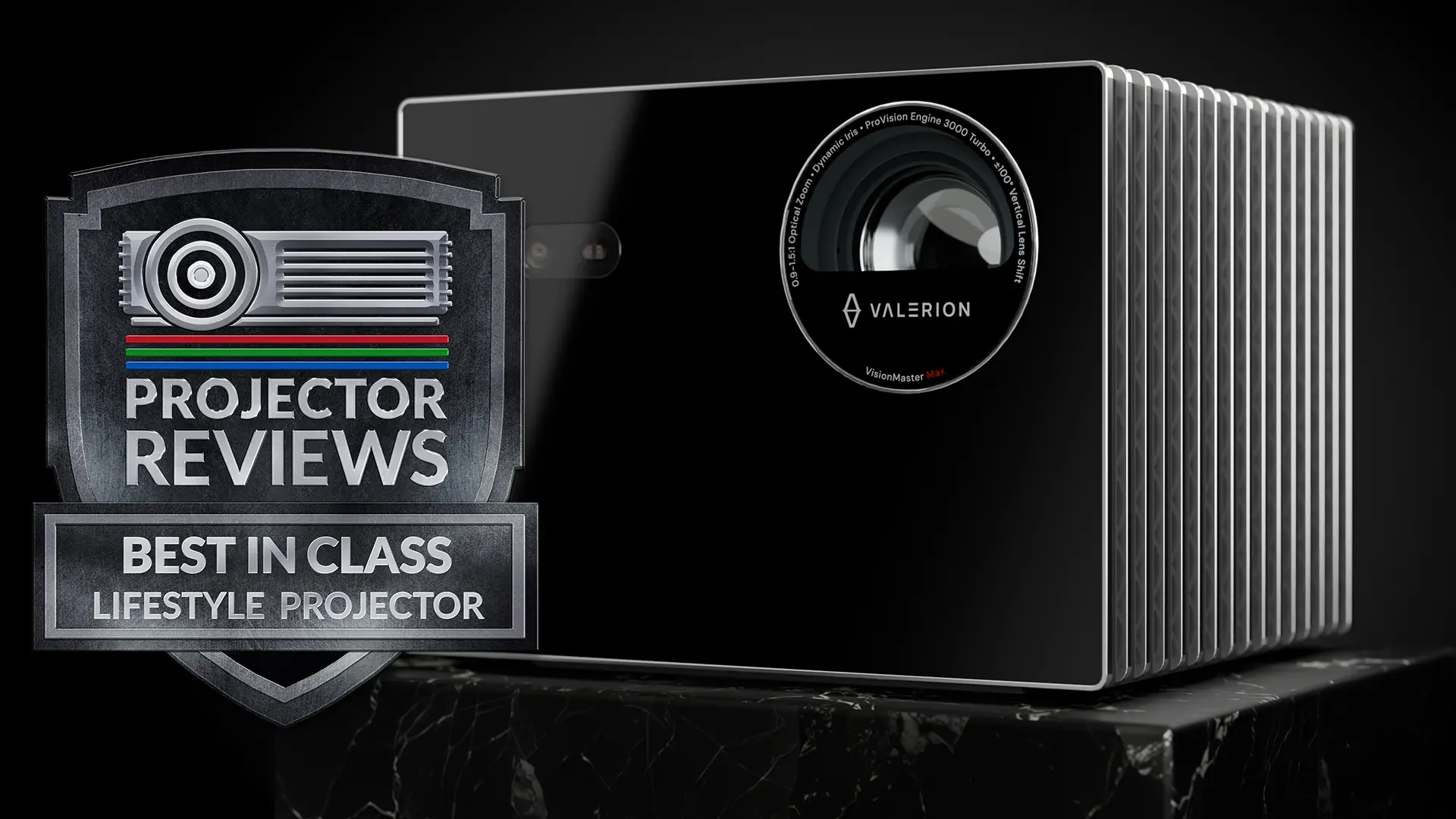
The Valerion Max adds several meaningful upgrades. Its rated brightness increases to 3,500 ISO lumens, approximately 17% above the Pro2. It also adds an adjustable physical iris and vertical lens shift.
The Max’s NoirScene Ultimate Black System combines its iris and EBL technology to provide greater control over the black floor. The iris can reduce unwanted light passing through the optics, while EBL responds to the material being displayed.
The iris is adjustable rather than an automatically operating dynamic iris. Closing it involves a brightness tradeoff, so its benefit depends on screen size, room conditions, and the viewer’s priorities.

In our Valerion Max review, black levels and shadow detail were central to its appeal. The Max builds on the Pro2’s strengths with more physical control over the image and greater installation flexibility.
Vertical lens shift is especially useful for permanent installations. It lets the owner move the image vertically through the optical system to align the picture without relying on digital keystone correction. Minimizing digital correction gives the optics and imaging system the best opportunity to deliver their available sharpness.
Feature | Valerion Pro2 | Valerion Max |
Rated brightness | 3,000 ISO lumens | 3,500 ISO lumens |
Light source | RGB triple laser | RGB triple laser |
Native contrast ratio | 4,000:1 | 5,000:1 |
Dynamic contrast ratio | Up to 15,000:1 | Up to 50,000:1 |
Black-level hardware | N/A | Six-level adjustable iris |
Optical throw range | 0.9–1.5:1 | 0.9–1.5:1 |
Vertical lens shift | N/A | ±105% vertical lens shift |
While the Valerion Pro2 is a strong choice for those seeking excellent performance and great value, the Valerion Max is worth the price premium. Stepping up to the Valerion Max adds additional brightness, an adjustable iris, and vertical lens shift.
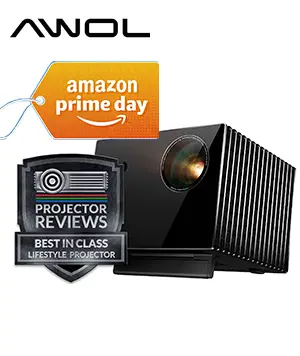
The Valerion Max is one of the best all-around projectors so far in 2026. It combines outstanding black-level performance and shadow detail with 3,500 ISO lumens of brightness. That’s why we’ve awarded the VisionMaster Max our Best-in-Class award for a lifestyle projector.


The best AWOL model for your home begins with placement. Aetherion suits buyers who want the projector near the screen, while Valerion suits installations with more distance available.
Within Aetherion, the Pro offers the series’ core picture-quality strengths, and the Max provides additional brightness for larger images and shared rooms. Within Valerion, the Pro2 offers outstanding promotional value, while the Max adds greater black-level control and more flexible vertical alignment.

What impressed us most across these models was their ability to make demanding movie content look convincing. Deep blacks and visible shadow detail give the picture depth that brightness alone cannot provide. Combined with their broader capabilities, that performance explains why all four featured projectors earned our awards.
If you've been waiting for the right time to upgrade, October 6–7 is it. Check out our full reviews for the details, then use the promotional links to grab the setup that fits your room and budget.