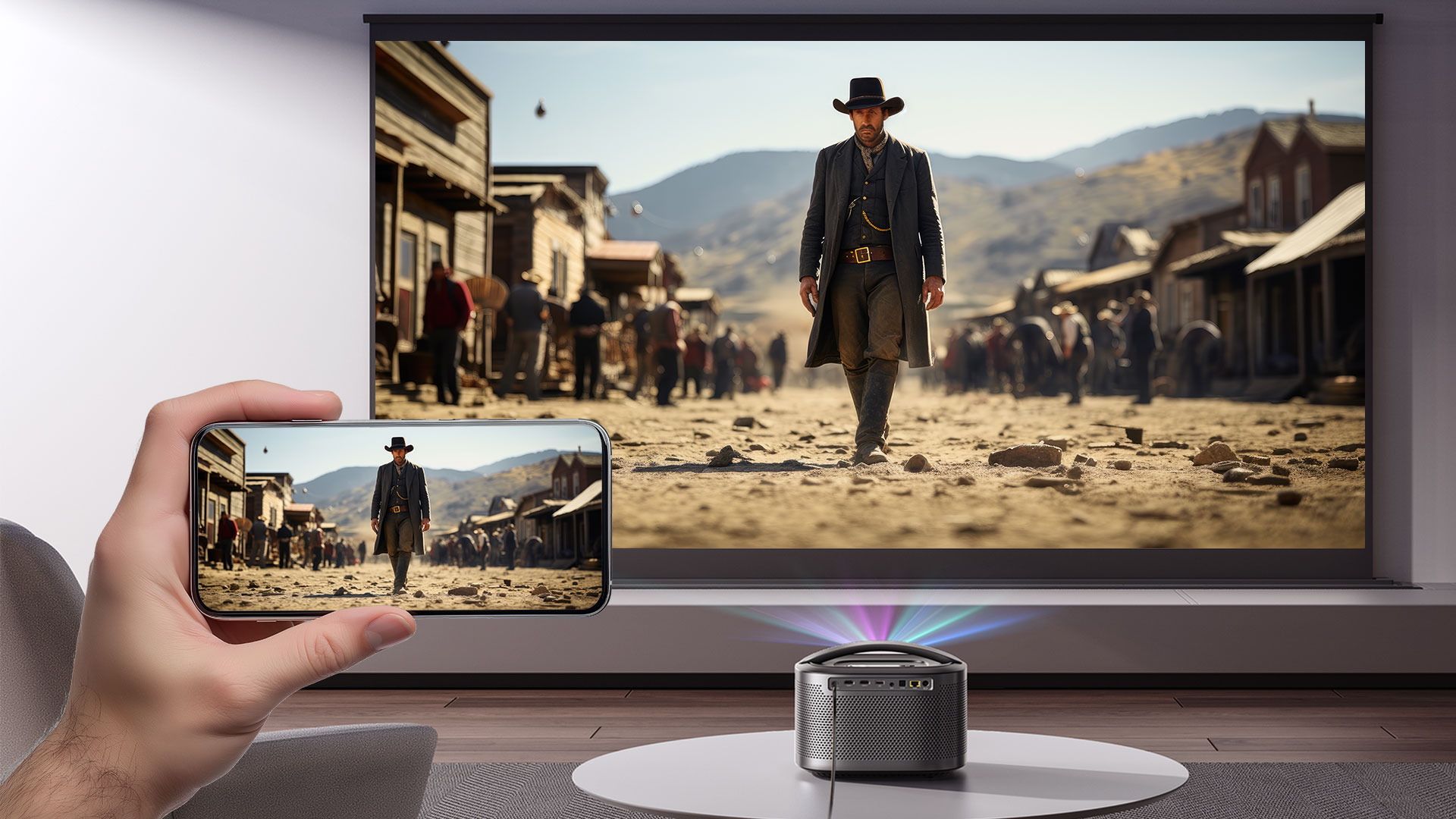
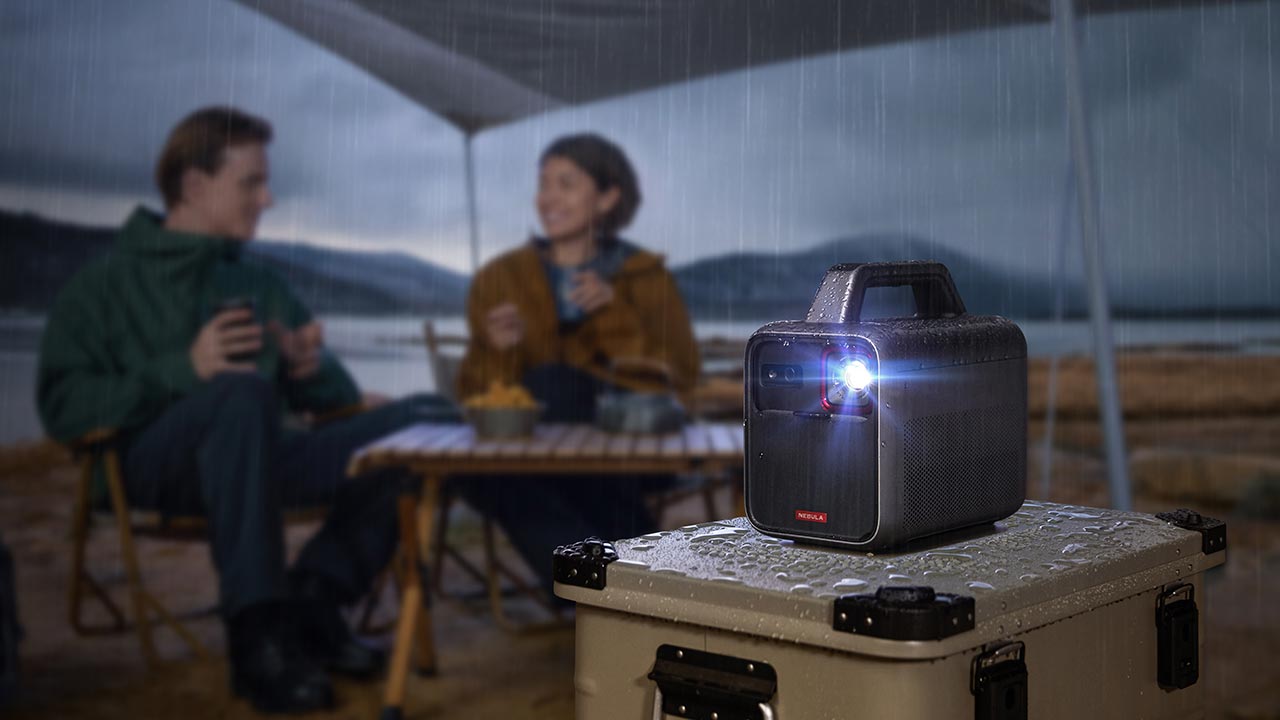
As mentioned, we organized this guide by price point, to make it easer for you to find a projector that fits your budget.. In this section, we look at the higher price-point projectors, which will give you more premium features including multichannel laser light sources and better optics - for an outstanding viewing experience.
LEICA CINE 1 LASER TV
Price
$8295 (100-inch screen) $8995 (120-inch screen)
Brightness
3000 lumens (manufacturer’s claim)
Resolution
3840 x 2160
Imager Type
DLP
Light Source
RGB Laser
Light Source Lifespan
20,000 hours
Inputs
3 HDMI
Smart
Google TV Operating System, Google Assistant for voice control
Sound
2 x 25-watt speakers
Bundled Screen
Yes (100-inch or 120-inch)
TV Tuner
Yes
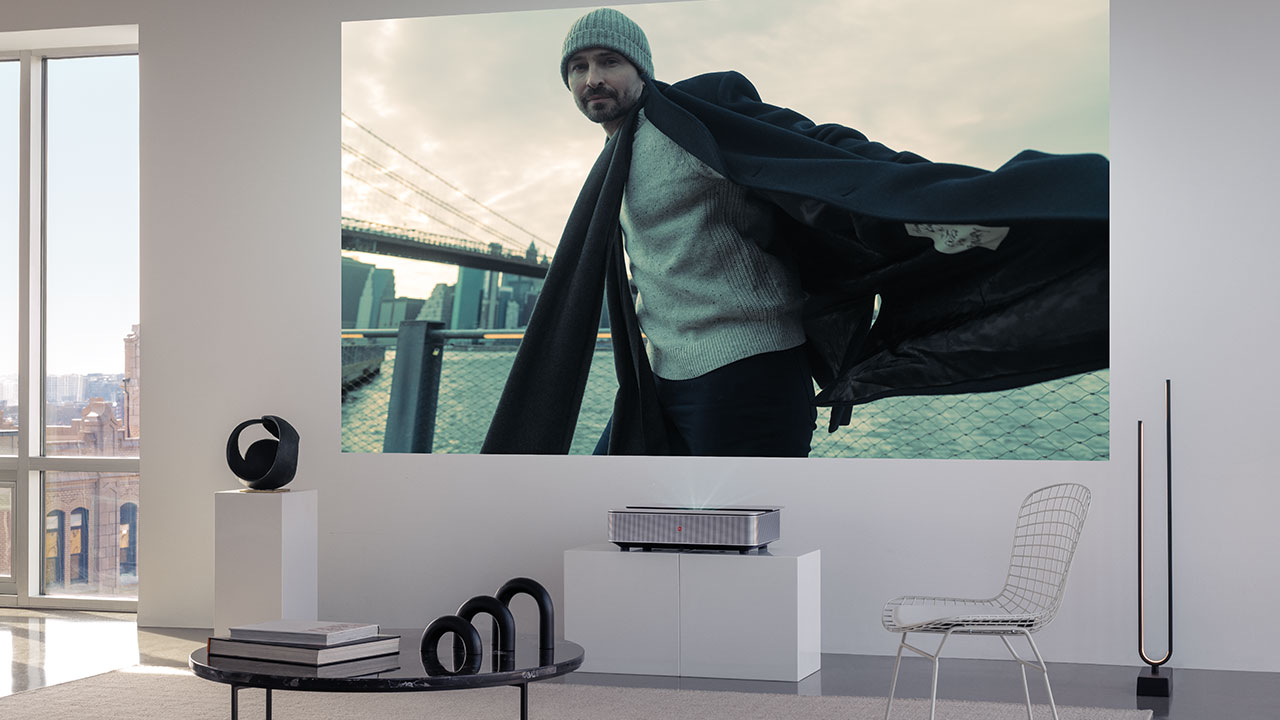
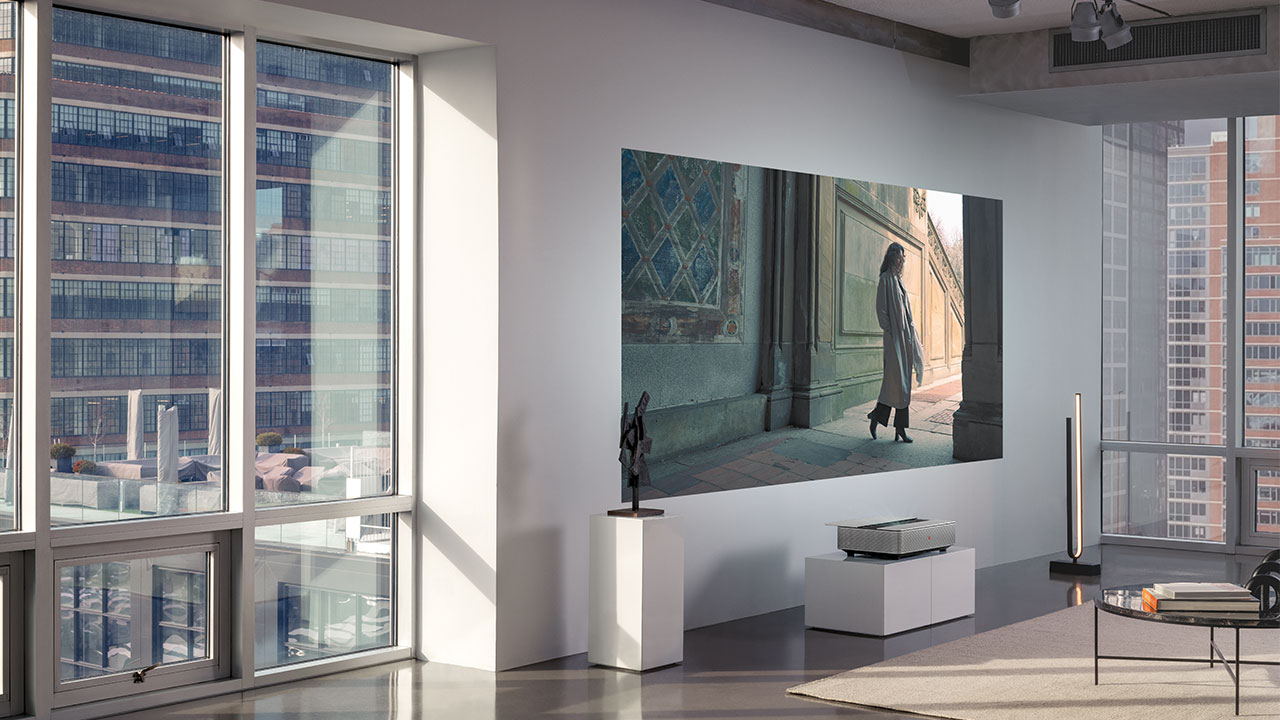
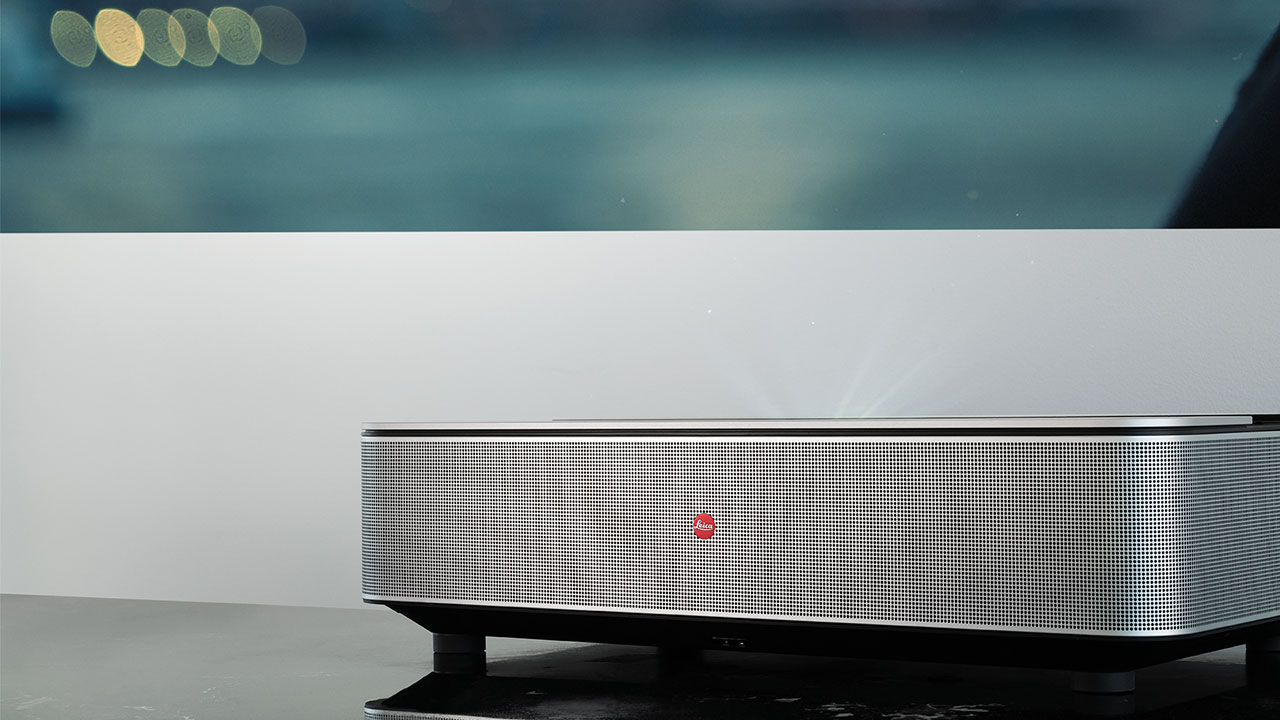
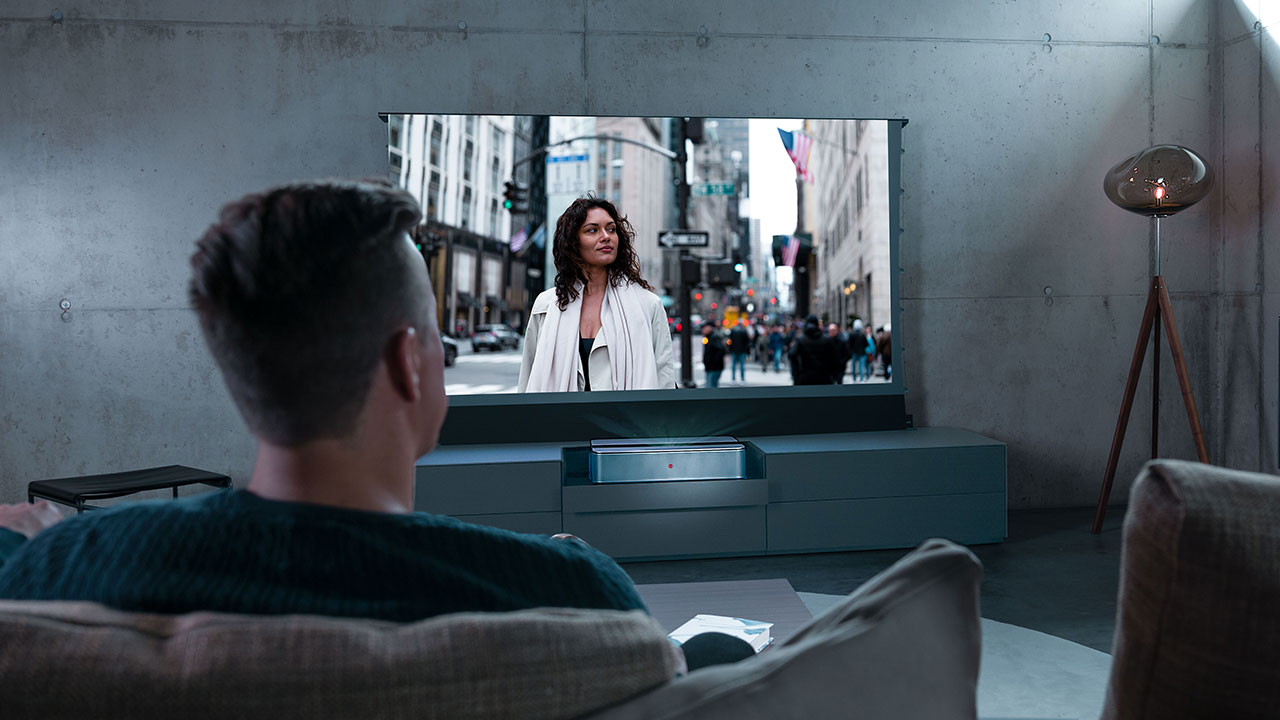
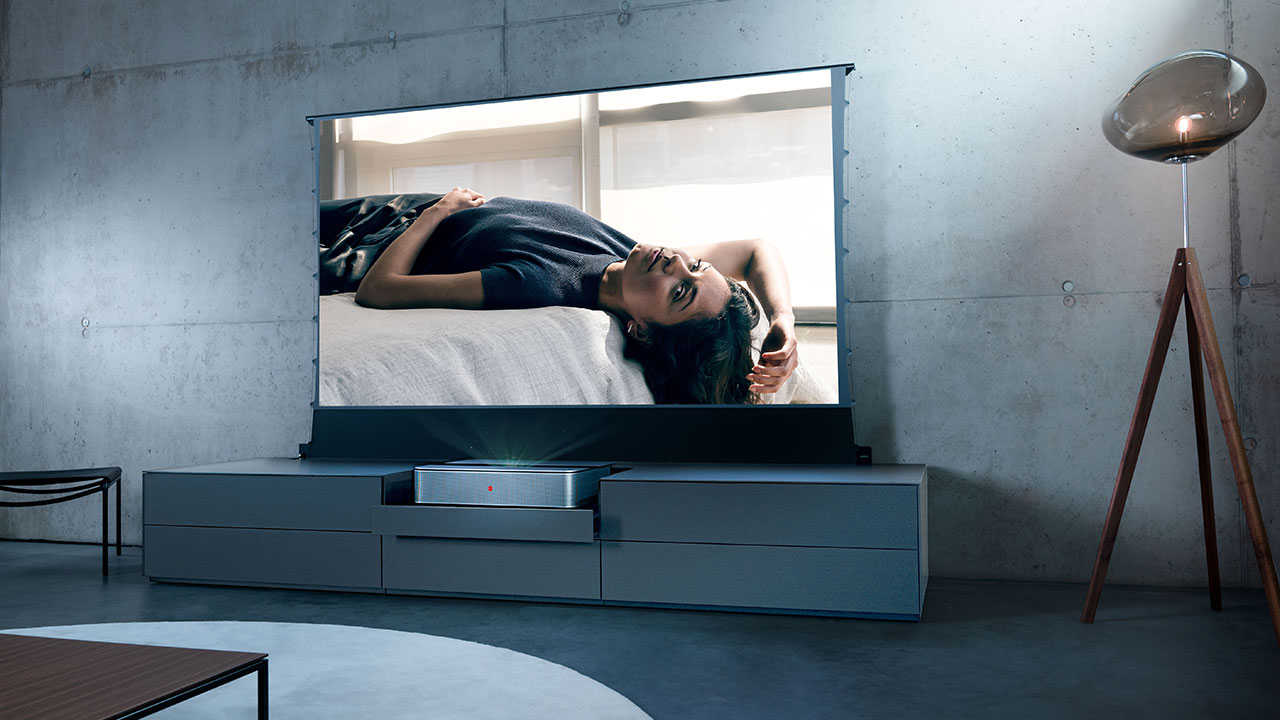
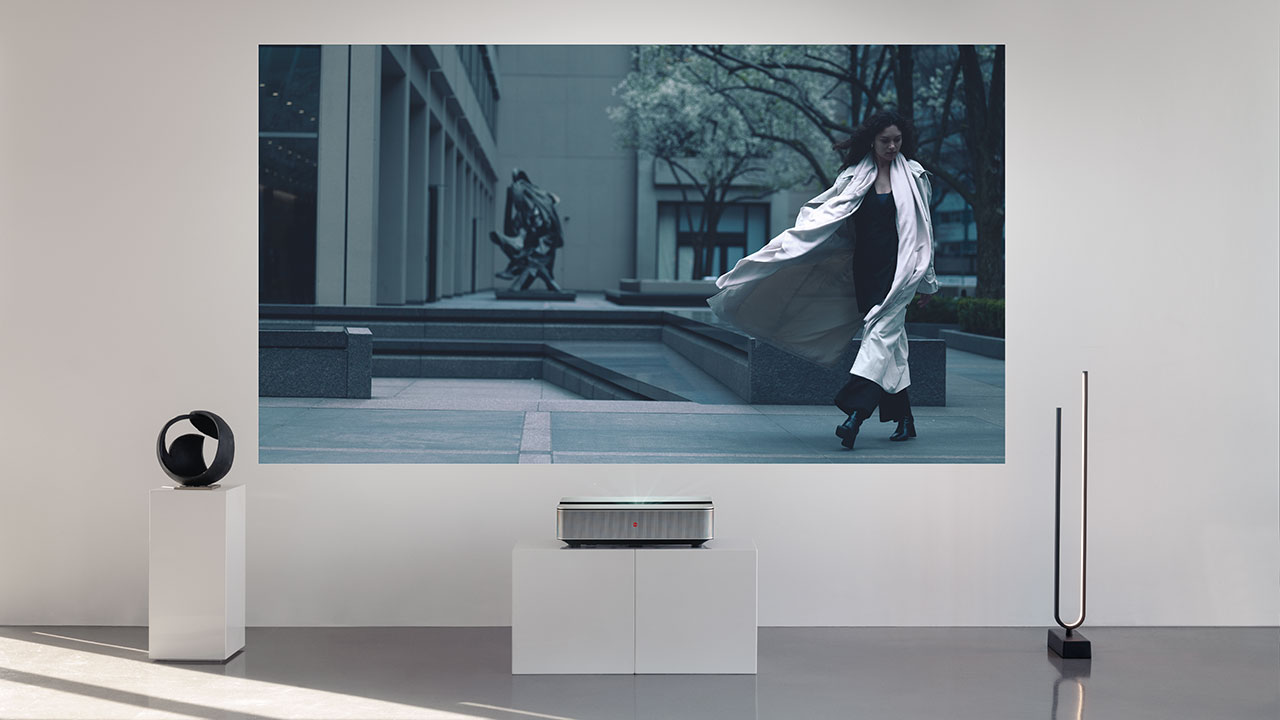
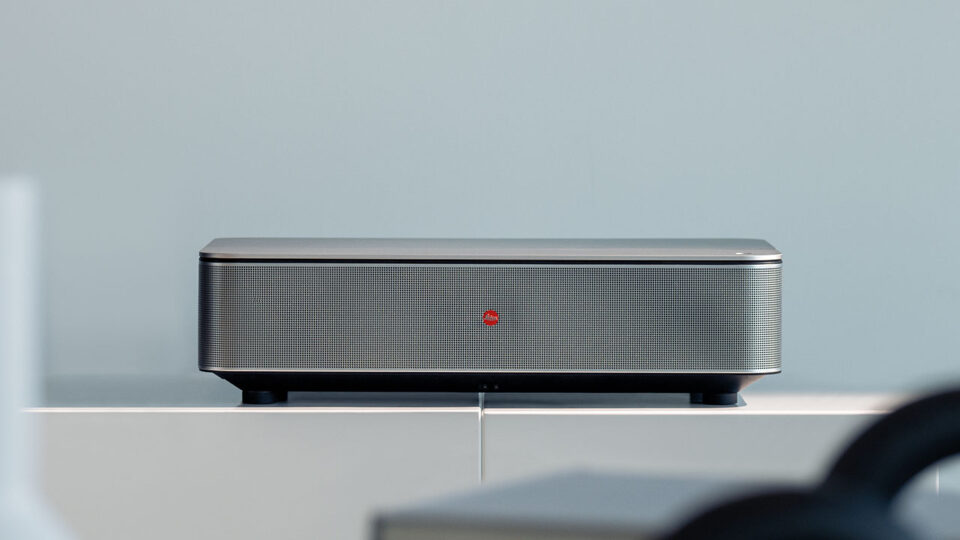
For those looking for an ultra-premium Laser TV, Leica has introduced the Cine 1 Laser TV. Leica is a 100-year-old German manufacturer known for its high-quality cameras and lenses. The projector's aluminum body is stylish and includes a motorized dust cover for improved lens protection. In addition to its beautiful design and fine craftsmanship, the Leica Cine 1 delivers class-leading picture and sound quality.
The Leica Cine 1 can deliver 3000 ANSI of brightness and reproduce over 100% of BT2020 color space. Triple RGB laser technology is paired with the Leica-engineered Summicron lens with four aspherical elements has been manufactured according to Leica’s exacting standards. While these tighter tolerances increase cost, it ensures Cine 1 delivers the crisp, sharp image that Leica customers demand. Also, during our initial testing, we noticed a significant reduction in visible chromatic aberration and color fringing compared to every other RGB UST we evaluated.
Leica will be offering two Cine 1 models optimized for either a 100" ($8295 SRP) or a 120" ($8995 SRP) screen. With a retail price of $8,995, the 120-inch Leica Cine model will be the most expensive 4K UST projector on the market, but the performance and build quality justify its premium price.
The Leica Cine 1 includes Leica proprietary image processing (Leica Image Optimization - LIO™) which optimizes the image quality using special algorithms with the goal of achieving natural color reproduction, detailed color gradations, and enhanced contrast.
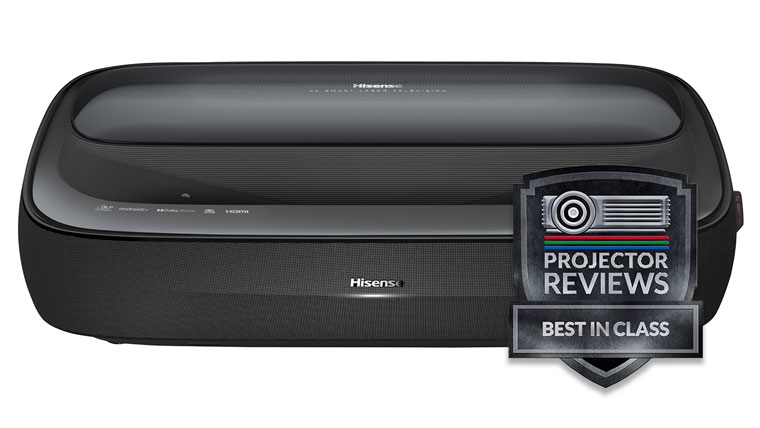
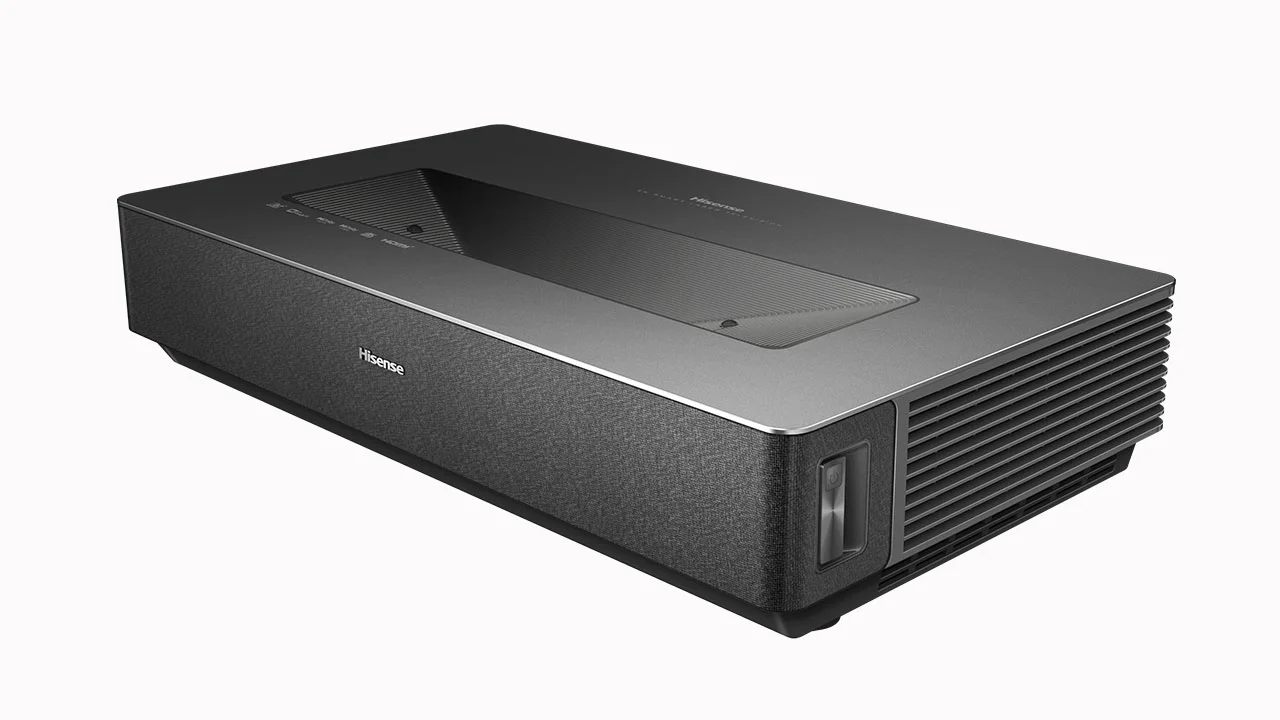
The Hisense L9G is a Tricolor laser-equipped smart ultra-short-throw projector with a brightness rated at 3,000 ANSI lumens. Color performance is one of the best examples of how the Hisense L9G ultra-short-throw projector sets itself apart from other displays. Specifically, the TriChroma RGB 3 Laser light engine enables the L9G to achieve an astounding 107% of the BT.2020 color space resulting in images that are more realistic with improved color accuracy, depth, and brilliance. To be clear no existing flat panel television, either OLED or LCD is capable of displaying this much of the BT.2020 color gamut.
When designing the L9G Hisense placed a heavy emphasis on accurate color reproduction. The unit includes several picture presets that deliver a good-looking image right out of the box including Filmmaker Mode. Filmmaker Mode was created by the collaboration of filmmakers, Hollywood studios, consumer electronics companies, and the UHD Alliance. Hisense can offer Filmmaker mode on the L9G because they have agreed that the mode will abide by specific industry standards. The goal of Filmmaker Mode is to display SDR and HDR content exactly as the creator intended by switching off all post-processing for a more cinematic experience on a projector or flat-panel TV.
To further optimize the picture quality in any room environment, the L9G is available in three different options each paired with a Hisense Ambient Light Rejecting (ALR) screen. The projector is packaged with a fully assembled 100″ ALR Daylight screen with a gain of 1.2 designed to maximize brightness and ambient light rejection capabilities in a room with higher ambient light. The L9G is also available; with 100″ or 120″ ALR Cinema Screen designed for use in a dedicated media rooms, man caves, and light-controlled spaces. The ALR Cinema Screen provides exceptional color accuracy with a wide viewing angle.
For a truly immersive theater experience, you need big sound to go with the big picture. The built-in 40W Dolby Atmos sound system gives the L9G is a significant soundstage upgrade over the typical speakers found in most televisions.
For the true audiophile, high-speed HDMI with Enhanced Audio Return Channel (eARC) allows for pass-thru of high-bitrate audio to your surround sound system. HDMI eARC supports multichannel audio, including Dolby Atmos. If you do not use eARC, the only other option would be to connect the optical audio output. Like most smart flat-panel televisions, the optical output cannot pass the latest immersive surround formats to an external sound system. Apps like Netflix, Disney+, HBO Max, and Amazon Prime are loaded with multichannel content. eARC is very important because the alternative, using the optical output, will only provide your external sound system stereo or Dolby Pro Logic information.
The Hisense L9G includes a nice sound system but for those interested in even higher performance the projector is WiSA ready. Products bearing the WiSA Ready logo are “ready” to transmit hi-resolution audio to WiSA Certified speakers when an optional third-party WiSA transmitter into one of the projector’s USB ports. Because every WiSA Certified component is engineered to work together seamlessly, the setup couldn’t be more straightforward. Unpack, plug-in power, and enjoy. Forget the speaker wires and confusing setup.
WiSA transmits 24 bits at 48 kHz/96 kHz. That’s twice the quality of CD audio. It does all this at less than 1/10th the latency of a Bluetooth audio device which means no visible audio sync issues will occur. All speakers used in the WiSA system are certified to be synchronized within 1/1,000,000 of a second even when using all eight channels. The system also automatically recognizes audio configurations from 2.0 to 7.1 and even 5.1.2.
Removing the need for speaker wires eliminates one of the biggest hassles in installation hassles and can significantly reduce labor costs if you are having your system installed professionally. In this application as long as the speaker can be plugged into a wall outlet, you can place them anywhere in the room you like. This makes it much easier for anyone to set up a complete home entertainment solution without a tremendous amount of effort, whether it is a simple stereo system or a robust 5.1, 7.1 surround. It also supports Dolby Atmos and DTS:X systems.
The Hisense L9G is designed to be a viable alternative to a flat-panel TV, so Hisense Laser TV units have an onboard TV tuner which is a must-have if you want to replace your flat-panel TV with a projector. On the back, with the other connectors, you’ll find the standard 75-ohm coaxial connector used by TV antennas. You can also plug in the coaxial cable signal from a set-top box, although most of today’s boxes will offer the best performance from HDMI.
LG Smart TV, ThinQ, Google Assistant, Alexa Built-in
Sound
5W + 5W Stereo built-in speakers
Bundled Screen
No
TV Tuner
Yes
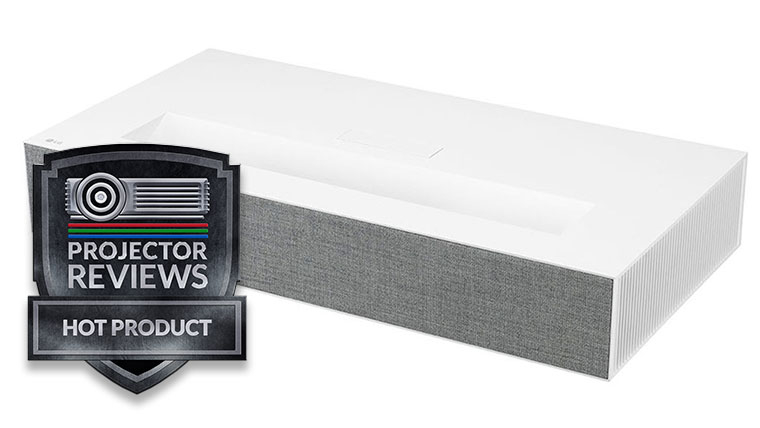
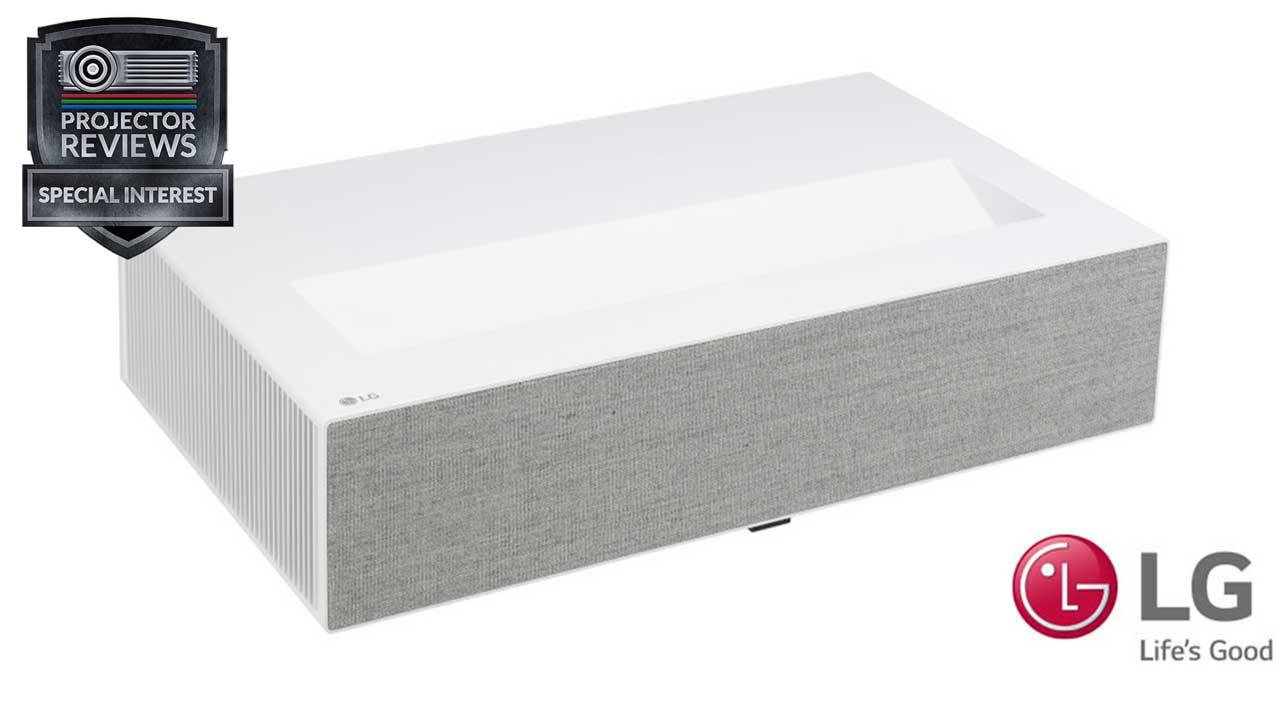
The LG HU85LA is a 4K DLP projector that retails for $5,999. It utilizes a single DLP (0.66″ DMD) chip to reproduce a perceived 4K UHD resolution. Its dual-channel Laser engine is rated to deliver at 2,700 lumens for up to 20,000 hours.
The HU85LA sports a dual Laser light engine using both a red and blue Laser. This increases the projector’s color gamut coverage and eliminates the need for a spinning phosphor wheel, which reduces the rainbow effect common on many DLP projectors.
Since the HU85LA is designed to serve as a TV replacement, it includes most of the features you would find in a Smart flat panel TV including a TV tuner, internal speakers, and of course Smart features. To make the HU85LS as Smart as possible, LG utilizes the same ThinQ AI webOS that is offered in their lineup of Smart flat panel TVs. Like their Smart TVs, the HU85LS can be voice controlled and offers a wide variety of apps.
The HU85LA is loaded with all the popular streaming apps like Netflix, HULU, Disney+, YouTube, and Fandango Now. Looking for access to local broadcast channels without a 3rd party set top box, the HU85LS also has a built-in digital tuner.
The HU85LA is compatible with both HDR10 and HLG content and it is even equipped with Dynamic HDR Tone Mapping. The LG HU85LA Laser TV combines all the Smart capabilities of flat panel TVs with the long life of a high-quality Laser light engine and 4K resolution to create a true flat panel TV replacement.
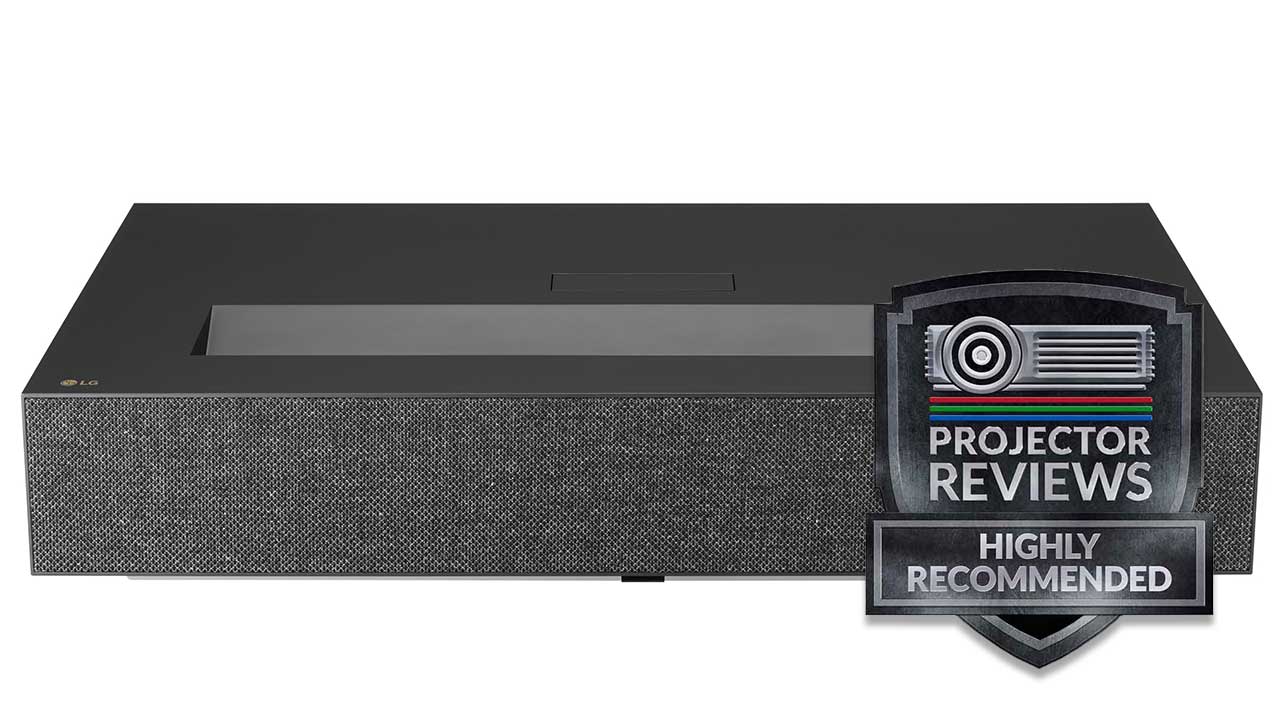
The LG HU915QB is an ultra-short-throw laser 4K smart DLP projector with retails for $6499. It utilizes a multi-channel laser light source that can reproduce nearly 100% of the DCI-P3 color space and deliver up to 3000 ANSI lumens of brightness.
While LG is a leading manufacturer of flat-panel TVs, they understand that some customers are looking for a bigger and more immersive image than even the largest OLED or LCD TV can provide. The HU915QB is the part of LG CineBeam projector lineup and is the flagship UST model in their assortment. The CineBeam series of projectors are designed to make front projection more accessible and appealing to a wider range of consumers.
Since this model is targeted at people looking for a TV replacement so it includes a very good sound system and all the smart features you would find in one of LG’s smart flat-panel TVs. The HU915QB uses the latest version of LG’s WebOS, which is what is found in their latest flat-panel TVs. This feature makes the projector very smart, so you have all the apps and capabilities also found in a Smart TV. It is nice that WebOS supports Netflix, the app is not available on many smart projectors.
It also includes Google Assistant, which allows you to control not only the projector, but a wide variety of compatible smart home devices, like your lights, or blinds, using only your voice.
The price point of the HU915QB is higher than most Laser TVs but its picture quality, user interface, and build quality make it worth its premium price.
In this report, we organized the products by price point to help you in your buying decision. This section represents the entry-level and mid-level projectors. We've tested all of the products listed below, many of which have won awards for their performance, so even at this price point, you can find an outstanding Laser TV option.
XGIMI Aura 4K Ultra Short Throw Smart Laser
Rated “value leader” by Projector Reviews
Price
$2499
Brightness
2400 lumens (manufacturer’s claim)
Resolution
1920x1080x4
Light Source
Laser
Imager Type
DLP with XPR (0.47” DMD)
Light Source Lifespan
25,000 hours
Inputs
HDMI 2.0x3
Smart
Android TV, Google Assistant
Sound
60-watt Harman/Kardon Audio System 15W tweeter x2, 15W woofers x 2
Bundled Screen
No
TV Tuner
No
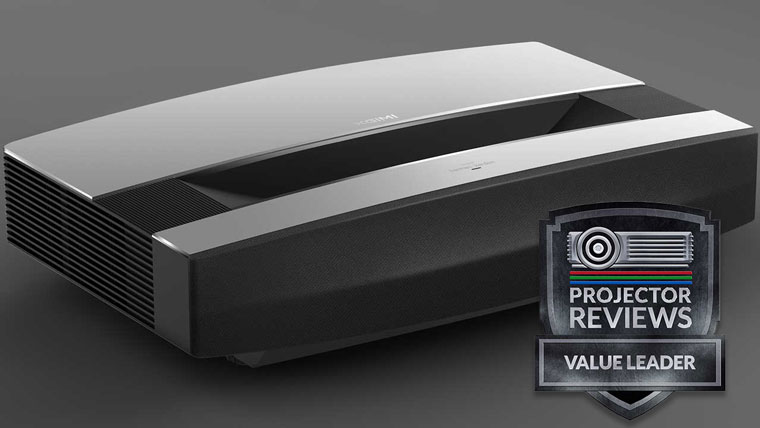
The Aura is XGMI’s first UST projector, it retails for just $2499. This projector boots up super-fast, our reviewer clocked the start up speed at 12 seconds or less.
At 17.3-inches from a wall or UST projector screen, the Aura can project a 150-inch image. However, if you are short on space, the Aura can be placed a mere 4.3-inches away from a wall or UST projector screen to project an 80-inch image. The big images match up with the big and handsome-looking Aura.
The Aura uses a 0.47-inch DMD Texas Instruments (TI) DLP chipset and a 2,400 ANSI lumen laser diode light source to deliver its 4K (3840 x 2160) displayed resolution. In addition, Aura features HDR10 (High Dynamic Range); HDR10 sends static metadata to the video stream, which is encoded information on color calibration settings required to make images look more like the content creator’s intentions. The Aura covers up to 90% Rec. 709 and 80% of the DCI-P3 color gamut.
Like a TV, the Aura has a built-in audio system. XGIMI equipped the Aura with a built-in Harman/Kardon audio system. The 60-watt audio system includes two 15-watt tweeters and two 15-watt woofers.
The Aura has smart features, just like a modern smart TV would have. The Aura is powered by the Android TV™10.0 Operating System (OS). With Android TV™, the projector has the apps and capabilities that are included in smart TVs. The projector also includes Google Assistant, which allows you to control the Aura with your voice.
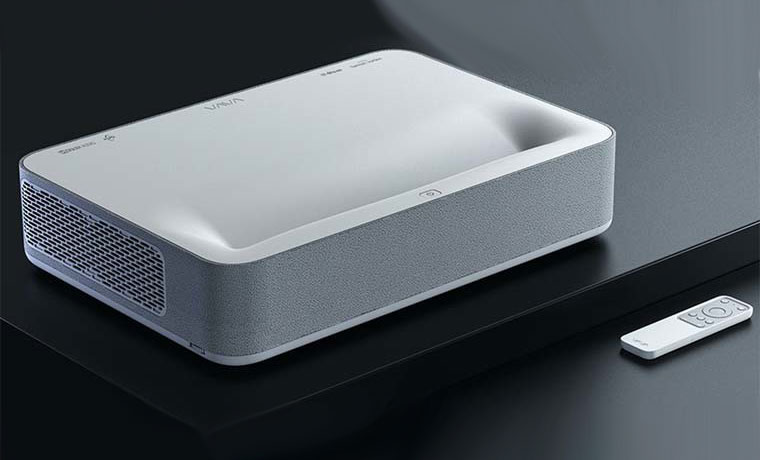
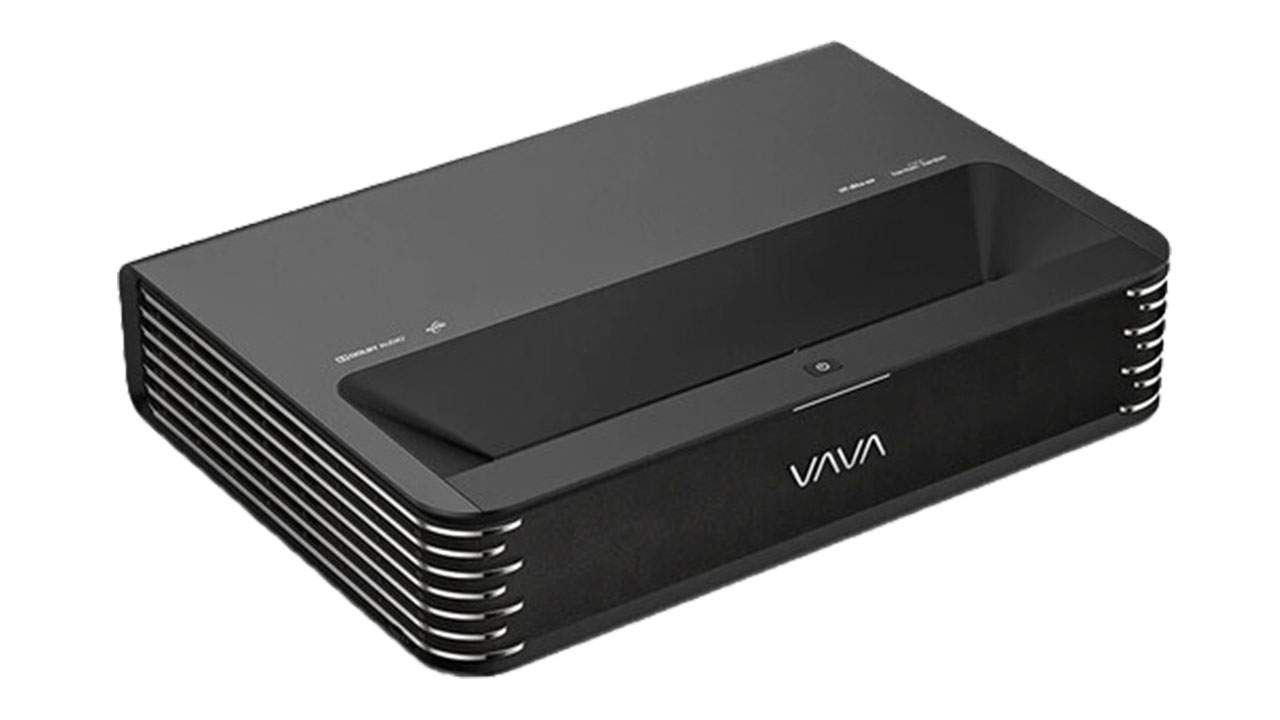
The VAVA is an affordable Ultra Short Throw projector that is 4K UHD resolution, and comes with a built-in media player. It has a hefty, built-in Harmon Kardon sound system (60 watts), and a good picture. Projector Reviews awarded this model our Special Interest Award back in 2019. The projector is impressive, overall. It’s priced aggressively, but does have a rough edge or two (including a shorter warranty than most – 1 year, parts & labor).
The VAVA Laser TV is 4K UHD (it uses the lower resolution 1920x1080x4 pixel shifting DLP chips, which the less expensive Laser TVs like this one, and the Optoma Cinemax P1 use). HDR10 is supported with 4K, and the VAVA has both Bluetooth input and also output (to feed a more powerful sound system or even some good headphones).
At 2500 lumens, the VAVA could be brighter. It’s brightness for the price is rather good, but there are significantly more expensive competitors, at least a couple of which are noticeably brighter. Unlike some of the other models in this buyer’s guide, the VAVA does not come with a bundled screen. With the right screen, the VAVA can handle a room with a good bit of ambient light.
If you are new to projectors – If you decide to go for it, to put a VAVA Laser TV and a proper screen in your living or family room, and you will almost certainly love it. It’s a very impressive first projector for VAVA.
Dolby Surround audio – 15W x 2 speakers, 10W x 2 tweeter
Bundled Screen
No
TV Tuner
No
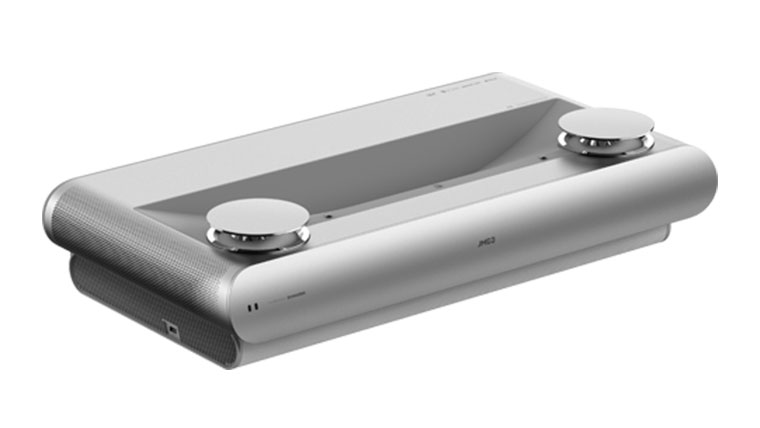
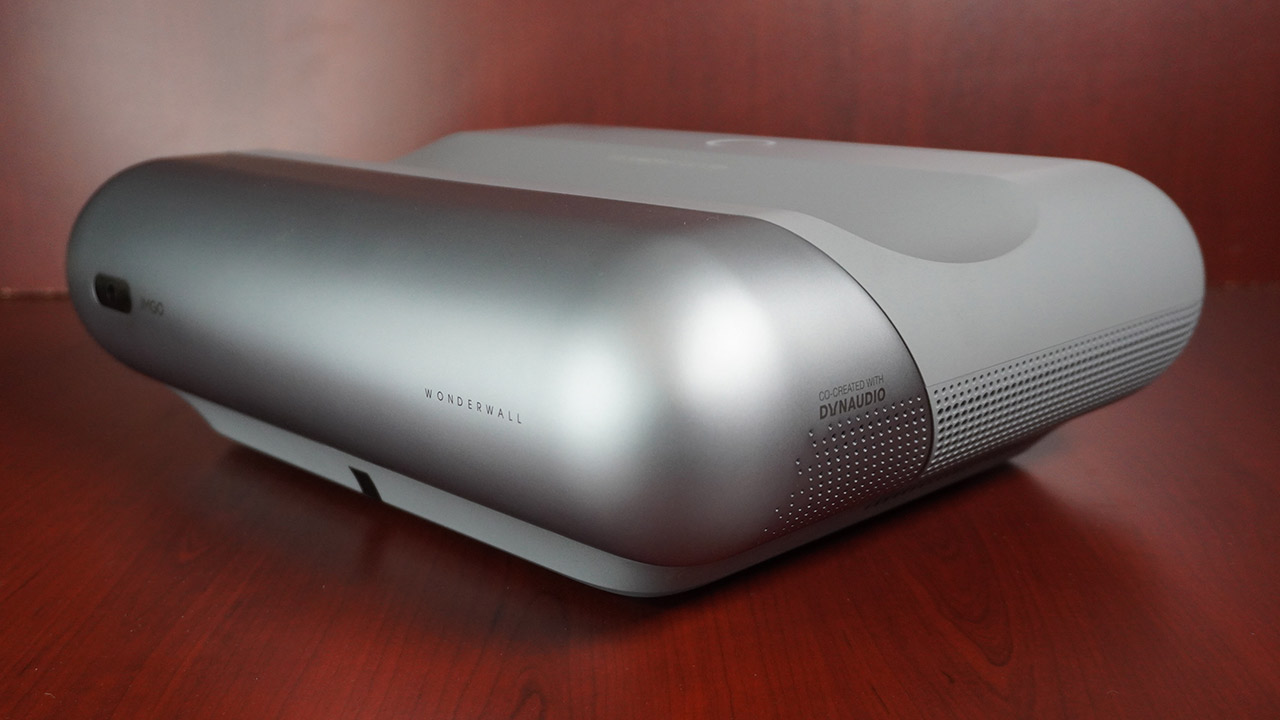
The JMGO U2 is a 4Kultra-short-throwDLP projector that supports 4K@60Hz video playback and retails for $2,599 on special and $2,999 at a regular price. The U2’s Tri-Color triple Laser light is rated to deliver 2,400 lumens which our reviewer confirmed as accurate. JMGO claims that the laser light engine will last for 50,000 hours. The U2 projector offers a one-year warranty along with a 30-day money-back guarantee.
The JMGO U2 comes with a built-in Luna OS. Luna OS is built on top of Android OS with a borderless design that blends in well in any environment. Simply pair the U2 with a preferred streaming TV box or TV stick to enjoy your favorite show. Luna OS features gadgets for your 24/7 companion, including a music visualizer, bulletin board, weather dashboard, and more. Luna OS Android backend allows you to live a smart life with JMGO U2. With the Alexa built-in, simply tell JMGO O1 to turn on the lights, search for movies or answer questions for you. A voice control remote with a built-in microphone allows you to control a wide range of compatible smart devices via Google Assistant. You can press the Google Assistant button in the center of the remote control to activate the voice assistant on the U2. In addition to the projector, Google Assistant also allows voice control for several third-party items such as a set-top box, lights, door locks, curtains, etc.
The size of the U2’s chassis is one of the reasons this projector has among the biggest, boomiest sound systems of any Laser TV we’re reviewed here at Projector Reviews. The larger chassis leaves more room for the speakers and resonance. It’s dynamic and gets loud, so if you don’t have an external sound system to connect the JMGO to, the built-in sound quality will be more than acceptable. The speakers, which were co-created by Dynaudio, deliver excellent sound with decent bass, clean dialogue, and very transparent highs. The JMGO U2 is both Dolby and DTS certified, so it supports surround sound.
A built-in media player is becoming more common these days, but it’s worth noting that the JMGO U2 features one that will play content off a USB flash drive in up to 4K resolution. The U2’s media player supports MVC/ISO/H.265(level 5.1)/VC-1/JPEG/MP3 content.
If you want to put a very large TV in your living or theater room, this JMGO would be an excellent choice. The JMGO U2 offers a good picture, smart features, and low maintenance, making it a compelling option to replace your television as your home’s primary display in your family room.
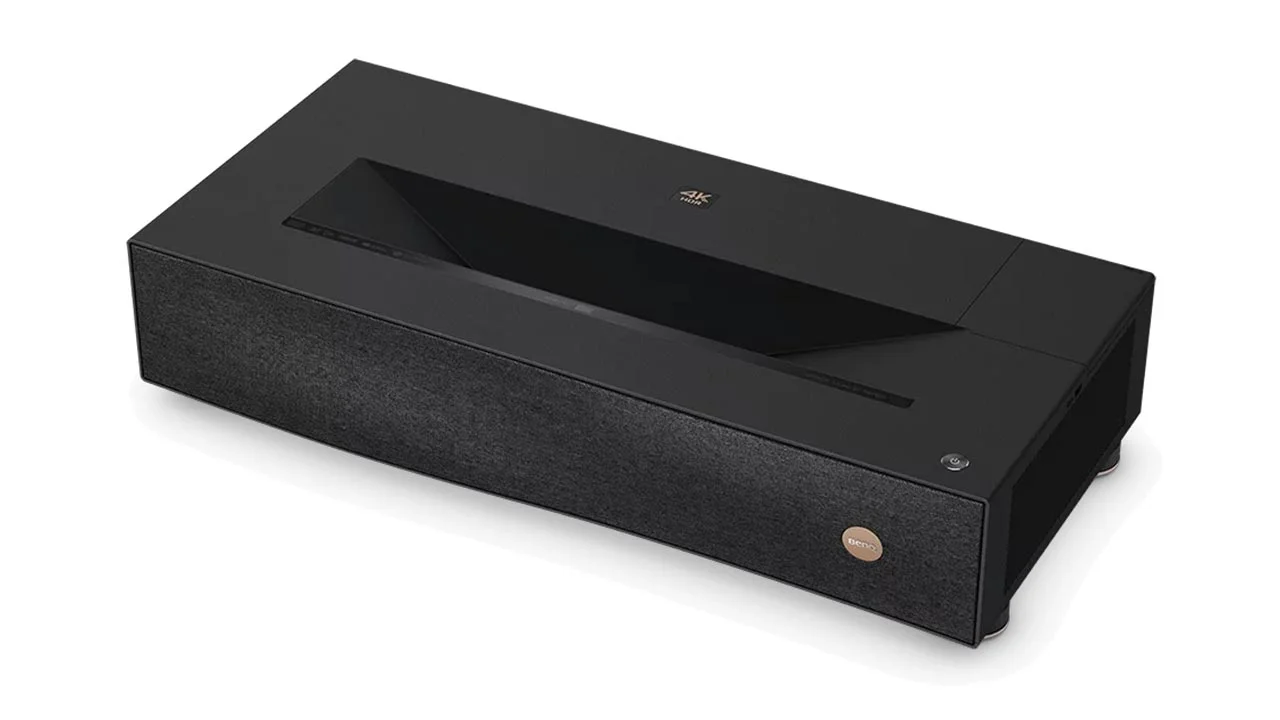
BenQ’s freshman entry into the Laser TV market is sleek and boasts a superb image – crisp & colorful
Price
$3499
Brightness
2500 lumens (manufacturer’s claim)
Resolution
3840x2160 (1920x1080x4)
Imager Type
DLP
Light Source
Laser
Light Source Lifespan
20,000 hours (normal)/30,000 (ECO)
Inputs
HDM1 x 2, USB
Smart
Google certified Android TV stick included, Google Assistant
Sound
treVolo-tuned 5W x 2 virtual surround stereo
Bundled Screen
No
TV Tuner
No
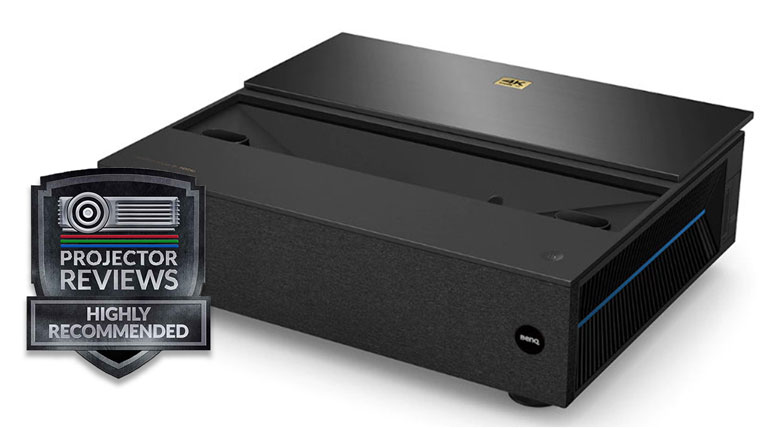
The BenQ V7050i is a 2500 lumen Laser TV that retails for $3499. BenQ knows something about making a projector that looks good, both inside and out. The V7050i is a beautifully designed projector with sleek-edged aluminum lines that houses a laundry list of high-performance video technology ready to bring a cinematic entertainment experience to your living room.
At the heart of the V7050i is a 2,500-lumen laser diode light source and a Texas Instruments DLP (.47″ DMD) imager to display a bright 4K picture. It features HDR-Pro™ (High Dynamic Range) for improved image quality and shadow detail from HDR content. The V7050i also utilizes BenQ’s proprietary CinematicColor™ technology to deliver a wider color gamut covering up to 98% of the DCI-P3 color space. The projector’s FILMMAKER mode did a great job utilizing the unit’s color capability accurately.
Like most Laser TV projectors, the V7050i offers an onboard sound system that BenQ has designed to outperform many competitors. BenQ includes a treVolo-tuned, 5W x 2 built-in virtual surround audio system that provides a complete home theater experience with only one projector that sits just inches from the screen.
The BenQ V7050i laser TV is a smart projector. It is a Google-certified Android TV™ device providing access to most of the popular Android TV video applications. You can also control the unit with your voice via Google Assistant or Amazon Alexa.
Our reviewer was wowed with this unit, stating “After using the V7050i for a couple of weeks now, I have to say that I am incredibly impressed. This projector delivers a noticeably crisper, more detailed, and colorful image than I have seen to date on any other ultra-short-throw projector in its class. It’s superb.”
The Philips Screeneo U4 is compact with a contemporary look.
Price
$669
Brightness
400 ANSI Lumens (manufacturer’s claim)
Resolution
1080p (1920x1080)
Imager Type
DLP
Light Source
4LED (RGGB)
Light Source Lifespan
30,000 hours
Inputs
Dual HDMI 2.1 (One HDMI ARC) HDCP 2.2 ports
Smart
Built-in media player
Sound
Dual integrated 15-watt speakers
Bundled Screen
No
TV Tuner
No
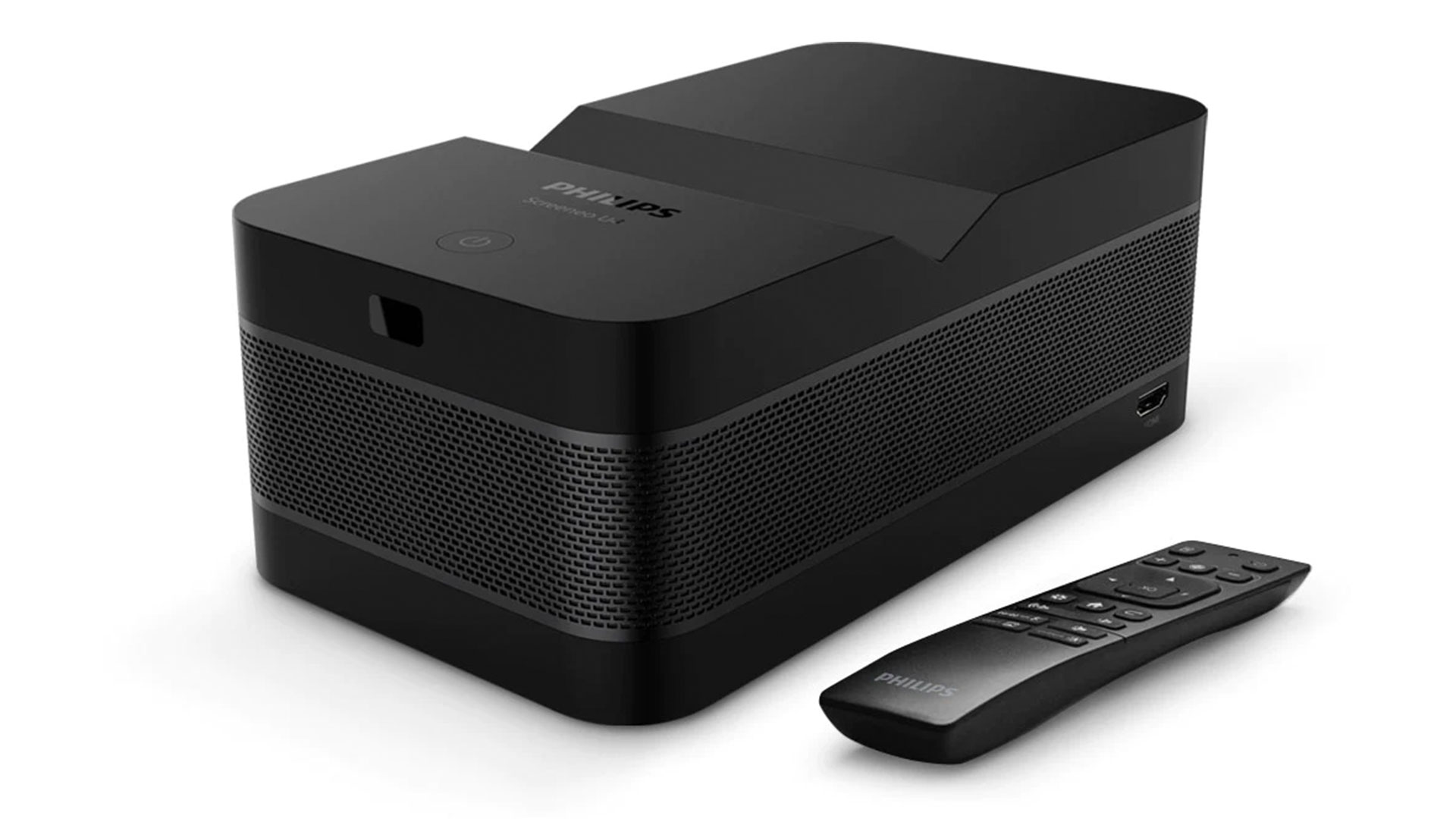
With a retail price of $669 for the Screeneo U4, Philips targets those looking for a cost-effective, compact, and transportable UST projector. Philips states the recommended usage for the Screeneo U4 is in a dark room and an 80-inch image. Philips also says the Screeneo U4 can project 35-inch to 120-inch images and then adds, “We recommend to keep the image size at 80” for the best contrast and brightness.”I recommend following Philips’ recommendation and keeping your projected image at 80-inches or smaller. When I went above 80-inches, the image struggled with brightness and contrast, just as Philips forewarned.
The Screeneo U4 setup for this review was a breeze. The Screeneo U4 can be placed on a table, mounted to a tripod, or mounted to the ceiling, which makes for flexible setups in most rooms and environments. As usual, I started by placing the projector on a level surface. I tripod mounted the Screeneo U4 thanks to the built-in tripod socket located on the bottom of the projector. I then physically moved the Screeneo U4 until the image was perfectly aligned on my projector screen.
I took my time and did not have to use any of the keystone correction adjustments. I recommend spending a few extra minutes getting the alignment perfect by physically adjusting the projector’s position whenever possible. Using digital keystone correction slightly degrades any projector’s image quality and may negatively affect your input lag while gaming. I suggest setting the geometry correction values to zero to enjoy all of the resolution you paid for.
Although I did not need to utilize the Screeneo U4’s 4-corner geometry correction adjustments, it is nice knowing it is there if it were ever needed. For example, if I were traveling and forced to set the Screeneo U4 and a projector screen up on an uneven surface, I would appreciate having 4-corner geometry correction capabilities.
10 x 2 sound system tuned by Dynaudio's chief acoustic engineer
Bundled Screen
No
TV Tuner
No
The JMGO 01 PRO is an LED powered ultra-short-throw, Full HD (1,920 x 1,080p) projector selling for $1,699.99.
JMGO, pronounced JM Go, is a Chinese company that current CEO Eric Hu founded. CEO Hu describes himself as an avid fan of cinema movies who just wants to enjoy a big-screen experience at home. JMGO has brought quite a few projectors to market, and now they are offering the JMGO 01 PRO, a Full HD ultra-short-throw (USD) projector. The 01 PRO is a Digital Light Processing (DLP) projector powered by an LED light engine. The 01 PRO is co-engineered with Leica and stereo-sound-tuned by Dynaudio's chief acoustic engineer. In addition to its high-end hardware pedigree, at least on paper, the 01 PRO is also a smart projector powered by Android-based Luna OS and several smart hardware features.
This review will give you a brief overview of the JMGO 01 PRO. After covering the basics and the projector's highlights, I'll move on to the most notable features of the 01 PRO. We will take a look at the choice of hardware and software JMGO chose to power this home entertainment projector. Most importantly, I'll tell you how the 01 PRO stacked up on the test bench, as well as my observations of the projector's overall quality, performance, and value. These assessments will include visual performance in brightness, color, contrast, picture quality, and the projector's sound quality. Finally, I'll summarize my test results and personal experience along with an idea of what projectors the 01 PRO is competing against. I'll end with my choice of the pros and cons of the JMGO 01 PRO.
Harman Kardon speakers and 30 watts x 2 Dolby-powered audio
Bundled Screen
No
TV Tuner
No
It's been almost a year since VAVA began selling their latest 4K ultra-short-throw projector, the VAVA Chroma VA-SP003. This projector is VAVA's sophomore follow-up to its first ultra-short-throw projector, the VA-LT002, which we reviewed in 2019. The VAVA Chroma is an ultra-short-throw projector featuring an ALPD 4.0-powered triple laser light source, Alexa voice control, and an Android-powered operating system. VAVA says it can project an image between 80" and 150".
While the suggested retail price of the VAVA Chroma is $3,499, VAVA often puts the unit on promotion. At the time of this review, VAVA Chroma was available for just $2,999 MSRP on VAVA's website. The selling price at several well-known big-box and online retailers can be found for a little less than MSRP.
The VAVA Chroma VA-SP003 is the company's most recent introduction into the ultra-short-throw projector space. VAVA introduced the Chroma on the crowdfunding site Indiegogo. The campaign raised an impressive $7.8 million, making it Indiegogo's most-funded campaign of 2021. When this projector was first announced, it offered a compelling list of features, including big sound from Harman Kardon speakers, a 60-watt Dolby-powered audio system, 2,200 ANSI lumens of brightness, and Android-powered intelligent capabilities.
At the time, the VAVA Chroma was the only consumer projector using an ALPD 4.0 RGB laser light source, but it's almost a year since this projector became available, and a lot can change in a year. In this review, I will closely examine this projector's features and evaluate its performance. Afterward, I'll discuss how the VAVA Chroma compares to its competition and if this projector is a strong candidate for your home theater dollars in 2023.
The WEMAX Nova, retailing for $2,699.00, is a smart 4K Ultra Short Throw (UST) laser projector featuring Advanced Laser Phosphor Display (ALPD) technology and 2,100 ANSI lumens. With a Full On/Full Off (FOFO) contrast ratio of 3,000:1, WEMAX claims the Nova projector is capable of displaying a maximum 4K image of up to 150 inches, while also covering 100% of the Rec. 709 color gamut.
At first glance, it's easy to mistake the WEMAX Nova for the Formovie THEATER, a product we evaluated last December. The WEMAX Nova and Formovie THEATER share an almost identical exterior appearance. Notably, they even exhibit similar initial startup screens. At least, that was the case with the demo unit I had the opportunity to explore. Upon powering up the WEMAX Nova for the first time, I was welcomed with a message saying, "Hello, welcome to the Formovie Laser TV 4K Cinema” and “A simple start to your Formovie Laser TV 4K Cinema 150” journey."
The WEMAX website states, “WEMAX is the sub-company of Appotronics” and goes on to state, “PS. Formovie is the brand belonging to Fengmi, who is the sub-company of Appotronics and Xiaomi as well, who is focusing on Chinese domestic company and B2B business. However, WEMAX is focusing on international online markets.” The situation is analogous to General Motors offering both the Chevy Silverado and the GMC Sierra. In broad terms, the Chevy tends to be priced more affordably, while the GMC has a more premium feel and a correspondingly higher cost.
Later in the review, we will compare the WEMAX Nova and Formovie THEATER in greater detail. Ultimately, selecting one over the other depends on individual preferences and particular requirements.
Optoma's newest addition to the CinemaX line of ulta-short-throw projectors
Price
$2,699 MSRP
Brightness
3,000 Lumens (manufacturer’s claim)
Resolution
1920x1080x4
Imager Type
DLP w/Laser light source
Light Source
Laser light source
Light Source Lifespan
20,000 hours
Inputs
Dual HDMI 2.1 (One HDMI ARC). USB 2.0 Type-A port
Smart
Android TV 11 (External)
Sound
10 watts x2 Dolby Digital
Bundled Screen
No
TV Tuner
No
The Optoma CinemaX D2 Smart is a laser DLP powered, ultra-short throw (UST) 4K projector that retails for $2,699.
Optoma has been in the projection industry since 2004 and today is a leading large-display brand and, specifically, the world's number one 4K UHD projector brand worldwide.
In late September of this year, I wrote a news article about Optoma's two new CinemaX D2 ultra-short throw projectors, the CinemaX D2 and CinemaX D2 Smart. These two new models are a direct follow-up to last year's award-winning ultra-short-throw projector, the CinemaX P2.
I liked the previous version, the CinemaX P2, and looked forward to getting my hands on one of the new D2 series models. As I noted in my news article, these two projectors are nearly identical. The primary difference between the two models is the inclusion of an external smart media device on the D2 Smart. From a picture and sound point of view, these two projectors are identical.
The model I'm evaluating for this review is the CinemaX D2 Smart. The D2 sells for $2,499 MSRP, and the D2 Smart sells for $2,699 MSRP, which is a significant price reduction compared to the CinemaX P2's $3,299 MSRP. This lower price makes this projector very competitive if the performance compares to other UST projectors in its class.
The LG HU715Q 4K UHD Laser UST CineBeam Projector is LG’s newest Ultra-Short-Throw
Price
$2,999 MSRP
Brightness
2,500 ANSI lumens (manufacturer’s claim)
Resolution
4K (3840 x 2160)
Imager Type
0.47-inch DMD Texas Instruments (TI) DLP chipset
Light Source
Laser Light Source
Light Source Lifespan
20,000 hours
Inputs
Dual HDMI 2.1 (One HDMI ARC). USB 2.0 Type-A port
Smart
LG’s webOS 6.0
Sound
Built-in 40-watt Audio 2.2 Channel Sound System
Bundled Screen
No
TV Tuner
Yes
The LG HU715Q 4K Laser UST CineBeam Projector has many features that are also found on modern flat-panel TVs. Therefore, some in the industry have given smart 4K UST projectors like the HU715Q alternative names like Laser TV, Ultra-Short-Throw (UST) TV, UST Projector, Laser Projector, and Laser Projector TV. However, I will primarily be referring to the LG HU715Q 4K Laser UST CineBeam Projector as a UST and UST Projector from this point forward.
At 12.48-inches from a wall or projector screen, the HU715Q can project a 120-inch image. If you are short on space, the HU715Q can be placed a mere 4.64-inches away from a projection wall or screen to project an 80-inch image. The LG HU715Q has a Manufactures Suggested Retail Price (MSRP) of $2,999 and hit the market in early Spring 2022.
Most projectors are not very smart. They do not have capabilities such as streaming apps that are common on many modern TVs. The HU715Q utilizes LG’s webOS 6.0, just like what is found on their newest flat-panel TVs. With the HU715Q, you have all the apps and capabilities typically found in a modern smart TV. You can enjoy content with built-in apps like Netflix, Amazon Prime Video, Disney+, YouTube, and Apple TV.
Voice control is also available thanks to LG’s ThinQ AI, which allows you to control not only the projector but a widespread amount of compatible smart home devices using your voice via Google Assistant. The HU715Q even has its own web browser built-in.
Also, like a TV, the HU715Q has a built-in audio system. LG equipped the HU715Q with a built-in 40-watt audio system. LG states the HU715Q has a “2.2 channel Quad Woofer” design. LG placed two tweeters and two woofers on the front of the cabinet that can reproduce the full range and two woofers on the rear of the cabinet to enhance the bass range.
The ViewSonic X2000B-4K has a nice shape and modern design.
Price
$3,098.99 MSRP
Brightness
2,000 ANSI lumens (manufacturer’s claim)
Resolution
1920x1080x4 (3840x2160)
Imager Type
DLP (0.47" DMD)
Light Source
Laser Phosphor Light Source
Light Source Lifespan
20,000 hours
Inputs
Dual HDMI 2.0b ports. 2 USB 2.0 Type-A ports, LAN port, 3.5mm audio
Smart
Yes
Sound
Integrated Harman/Kardon 50W audio with Dolby Audio/DTS-HD support
Bundled Screen
No
TV Tuner
No
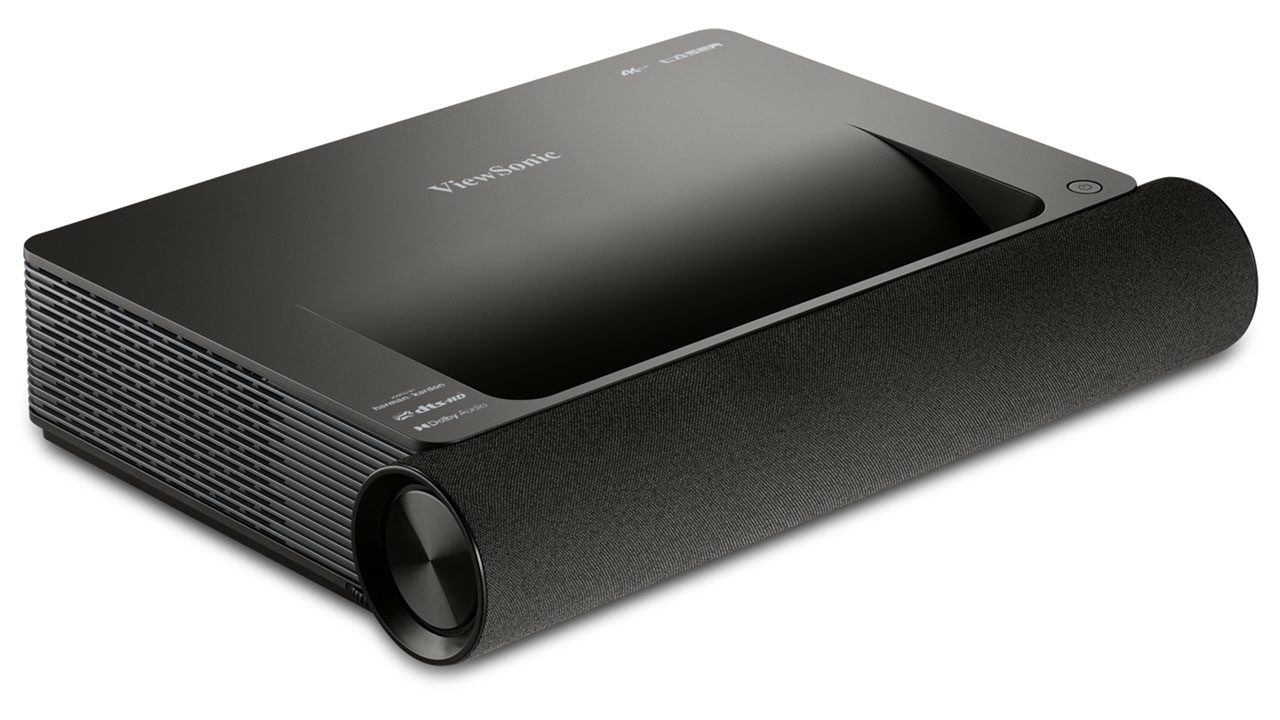
The ViewSonic X2000B-4K is a smart UST projector with a Manufacturer’s Suggested Retail Price (MSRP) of $3,098.99. The projector utilizes second-generation laser phosphor technology rated at 2000 ANSI lumens. The second-generation Laser Phosphor technology improves brightness, and heat-resistance and reduces the product size. The laser light source can last up to 20,000 hours for years of home entertainment with ViewSonic’s Cinema SuperColor™.
The X2000B-4K’s embedded Wi-Fi connectivity enables screen mirroring directly from iOS and Android smart devices making content easy to stream. In addition, the dual built-in Harman/Kardon tweeters and woofers deliver room-filling audio that surpasses many modern TVs. The integrated Harman/Kardon audio system also has Dolby Audio and DTS-HD support.
With a 0.22 ultra-short throw lens, the ViewSonic X2000B-4K smart laser projector provides a cinematic experience with the convenience of ultra-short throw projection. The X2000B-4K can be placed 10.33-inches away from a projection screen or wall and project an immersive 100-inch image. The X2000B-4K delivers 4K (3840x2160) resolution images with Rec. 709 color gamut compatibility, HDR, and HLG support.
The projector can be placed on a table, mounted to a media stand, or mounted to the ceiling, which makes for flexible setups in most rooms and environments. In addition, the X2000B-4K can deliver immersive images on projector screens, flat surfaces, and curved walls, thanks to its flexible 4-corner keystone adjustment and Warping capabilities.
One of the best looking out-of-the-box ultra-short-throw projectors
Price
$3,499 MSRP
Brightness
4,000-lumens (manufacturer’s claim)
Resolution
4K (3,840 x 2,160) 60 Hz, 1,080 120 Hz
Imager Type
3-chip 3LCD
Light Source
Blue lasers + phosphor laser light source
Light Source Lifespan
20,000 hours
Inputs
#1 (Std.), #2 (ARC), #3 (Gaming - Lag 16.7 ms )
Smart
Fully integrated Android TV 11 Operating System
Sound
2.1 audio system with built-in sub-woofer by Yamaha
Bundled Screen
No
TV Tuner
No
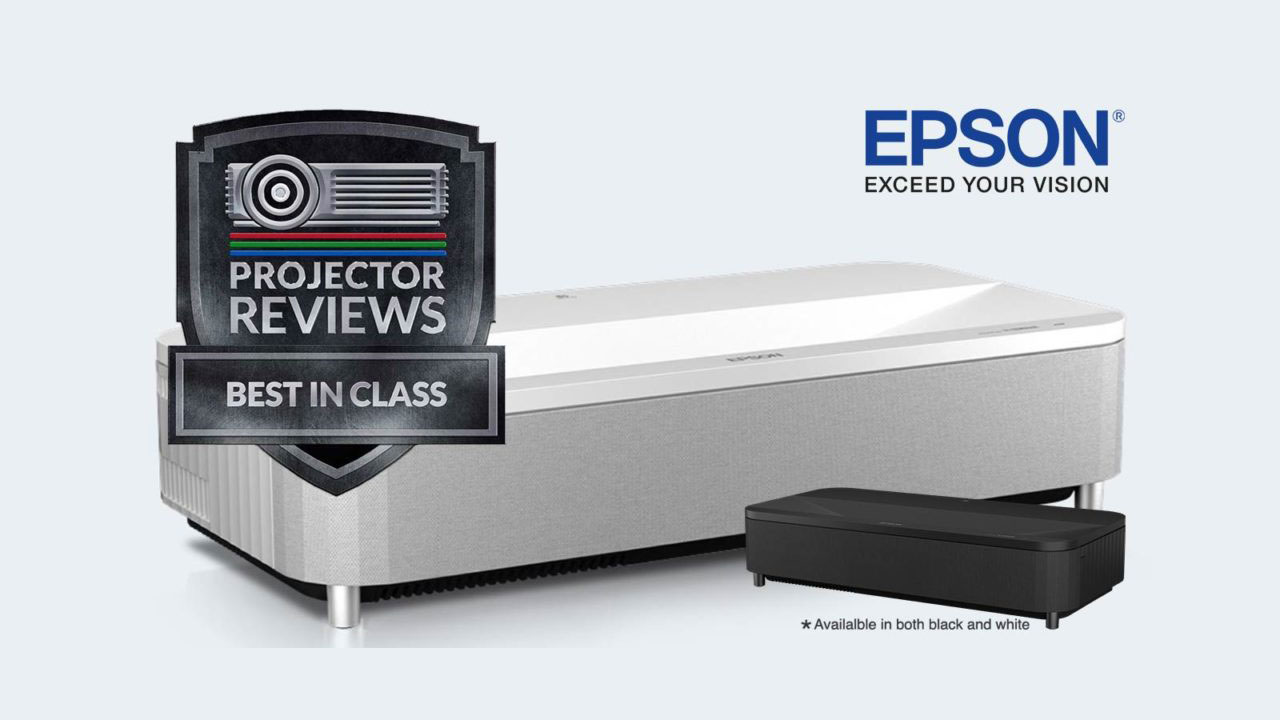
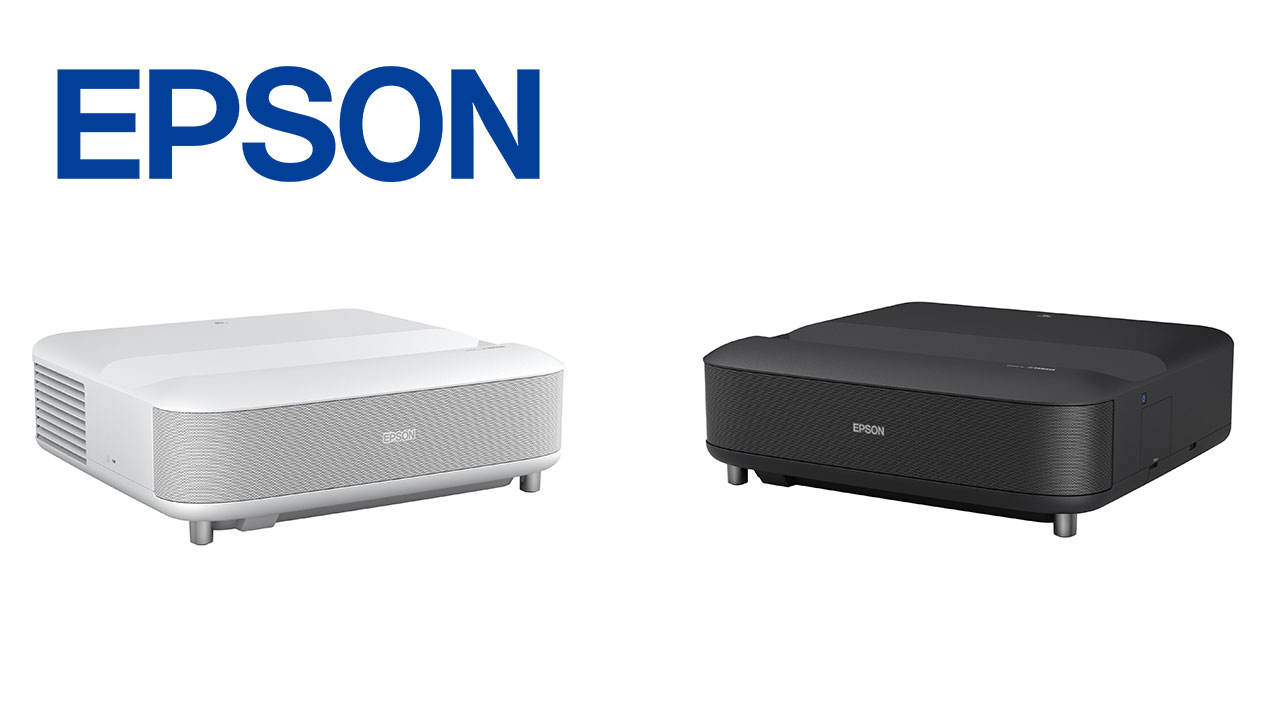
The Epson EpiqVision Ultra LS800 is a 4,000-lumen 4K PRO-UHD ultra-short-throw home theater projector that retails for $3,499 MSRP.
The LS800 uses Epson's award-winning 3-chip 3LCD technology and high-performance laser light source to deliver a dynamic contrast ratio of over 2,500,000:1, allowing this projector to reproduce extraordinary black-level details and out-of-the-box color performance. The LS800 is one of the best out-of-the-box 4K ultra-short-throw projectors I've ever seen.
Epson has been driving the innovation of ultra-short-throw projectors since the introduction of their milestone Epson EB-450 education projector in 2010. Epson has continued building on that legacy of innovation and engineering experience with some of the best home theater projectors in the industry. The EpiqVision LS800 is the latest example of an Epson milestone product.
Epson has taken a new approach with its two most recent EpiqVision projectors. The newest LS800 and its barely older Full HD (1,920 x 1,080) little brother, the LS300, features an all-new sleek modern design that allows these two projectors to fit into a wide range of visually diverse-looking living spaces. The new EpiqVision Ultra chassis looks more appealing compared to previous ultra-short-throw models that use the same chassis that Epson uses on their professional ultra-short-throw projectors.
The new design allows these cutting-edge EpiqVision Ultra LS800 projectors to sit significantly closer to the screen than previous Epson ultra-short-throw projectors. In my testing, I placed the LS800 less than seven inches from my 120-inch screen.
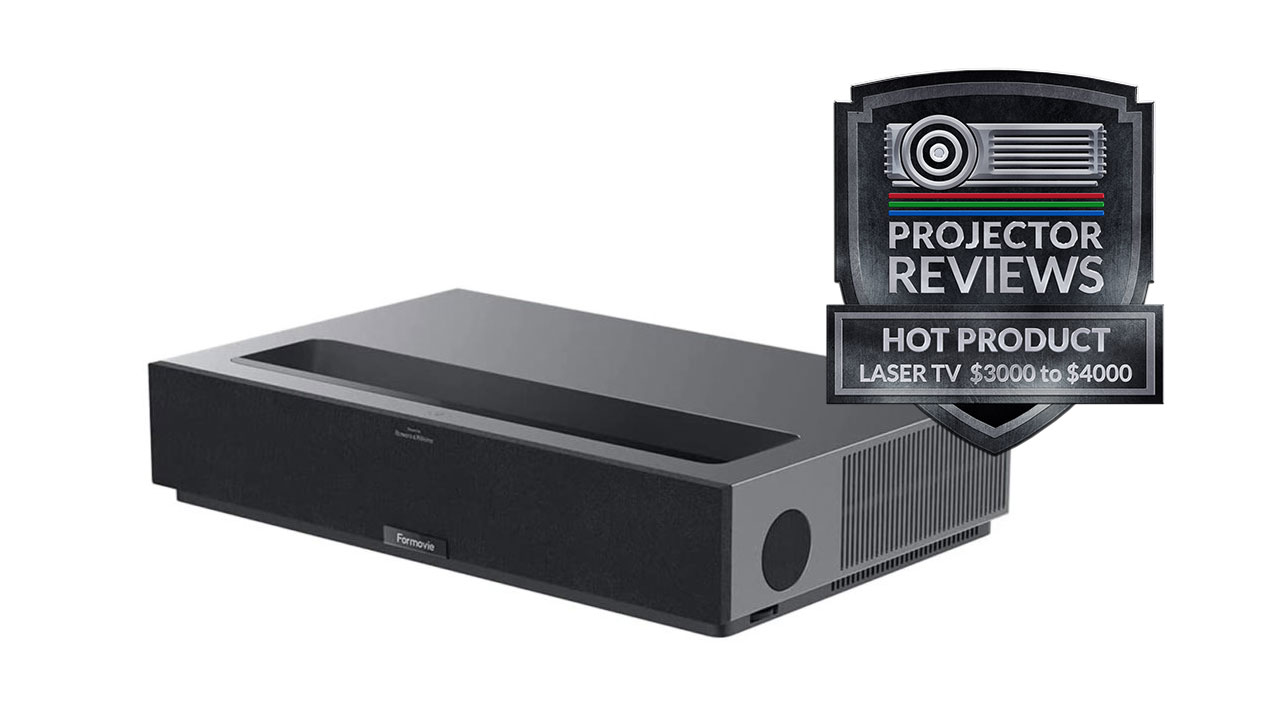
Formovie Technology is a joint venture between Apotronics, the maker of the projection industry's most popular laser light source technologies, and Xiaomi (SHA-O-mee) Technology. Based in China, Xiaomi is one of the world's largest technology manufacturers.
Formovie projection products include ALPD laser imaging technology. ALPD lasers are used in more movie theater projectors worldwide than any other brand. Chances are, the last movie you saw at a theater was shown on a projector using an ALPD laser light source.
The Formovie Theater is an Ultra-Short-Throw (UST) projector, also called a Laser TV, and is capable of being placed just inches away from the screen. Having the projector close to the screen eliminates the risk of someone blocking the image by walking between the projector and the screen. UST projectors also remove the need for ceiling mounting and long wire runs between sources and the video projector. With massive improvements in picture quality and price decreases, Laser TV projectors are now starting to replace the living room TV.
I've reviewed Formovie portable projectors in the past; read my full review of the Wemax Dice which was designed and produced by Formovie.
Honestly, I was surprised that the company had introduced a Laser TV projector and that it won first place at the 2022 Ultra Short Throw Laser TV Showdown organized by projectorscreens.com.
RGB triple laser light source w/o phosphor color wheel
Light Source Lifespan
25,000+ hours
Inputs
3X HDMI 2.0b with one eARC
Smart
Android 9.0 OS
Sound
Premium sound 36 watt onboard sound system
Bundled Screen
No
TV Tuner
No
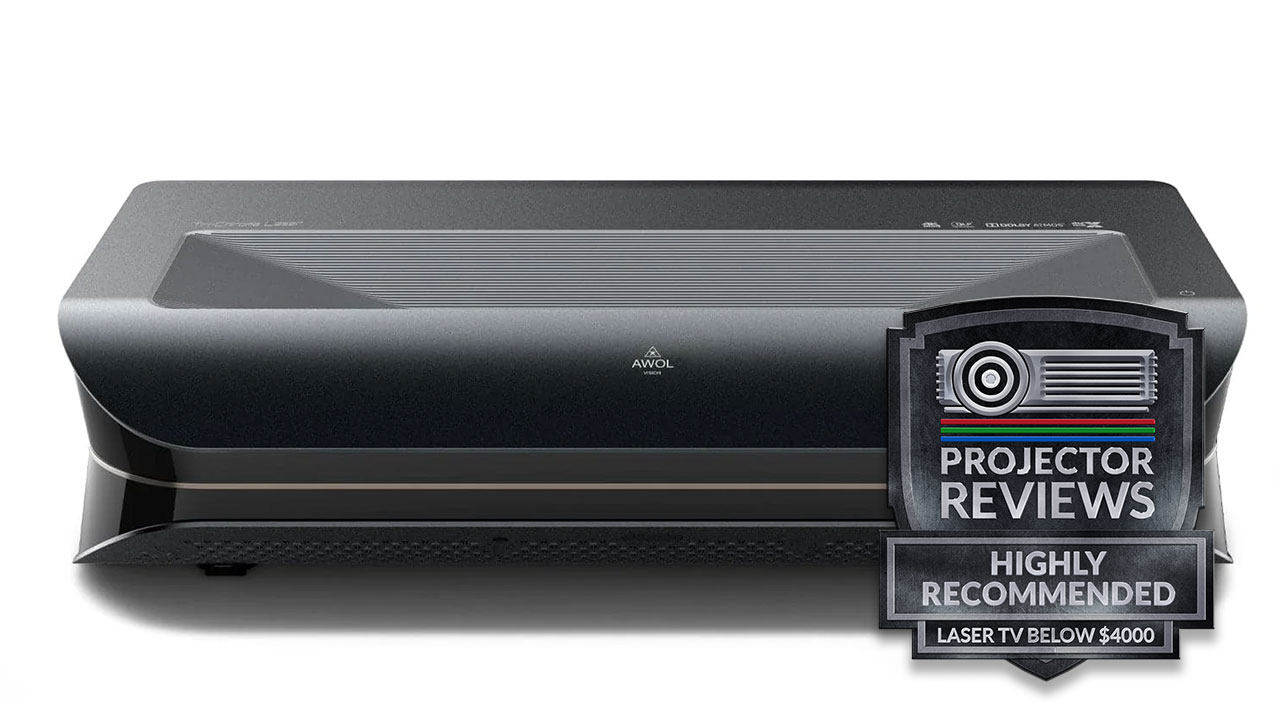
AWOL Vision entered the home theater projector market in 2022 with their flagship LTV-3500; it was one of, if not the most, compelling ultra-short throw projector available to buy in 2022. Will AWOL Vision's sophomore offerings live up to or even surpass the company's first-generation products?
When I first started seeing AWOL Vision generate serious buzz in 2022, it became clear that the company was employing a “check all of the boxes” strategy in its projectors' design and feature set. AWOL Vision is not a projector manufacturer, and in many ways, this gives the company a significant advantage over other projector companies that can be saddled with the cost of factories and parts inventory. Like flat panel television brand VIZIO, AWOL Vision buys the best technology available at the time and offers it some of the most advanced features for its projector products.
First, AWOL Vision used some of the industry's best suppliers for the projector's laser light engine components. The LTV-3000 Pro uses a Texas Instruments 0.47 Digital Micromirror Device (DMD), an NICHA RGB laser diode light source, and a state-of-the-art Ricoh all-glass lens. At peak output, AWOL Vision estimates the projector's triple laser light source can produce 3000 lumens of brightness with an estimated light source life of 25,000 hours.
The high-speed 0.47 Texas Instruments DMD (Digital Micromirror Device) with XPR technology displays a stunning 4K UHD image (3,840 x 2,160) pixels with a contrast ratio of 2500:1.
With a 25,000-hour lifespan, the light source offers lasting durability. To put this into perspective, even if the projector were used for 8 hours daily, it would endure for more than eight years. Such longevity would be unattainable with a lamp-based projector.
Immersive home cinema with 4K UHD/HDR10/HLG support
Price
$2,899 MSRP
Brightness
2500 ANSI Lumens (manufacturer’s claim)
Resolution
4K (3840 x 2160p)
Imager Type
DLP (0.47” DMD)
Light Source
ALPD 4.0 Triple Laser
Light Source Lifespan
25,000 hours
Inputs
3X HDMI Inputs (2x HDMI 2.1, 1x HDMI 2.0)
Smart
Includes an Amazon Firestick 4K Max
Sound
Harmon Kardon 25-watt x2 Dolby Digital and DTS sound
Bundled Screen
No
TV Tuner
No
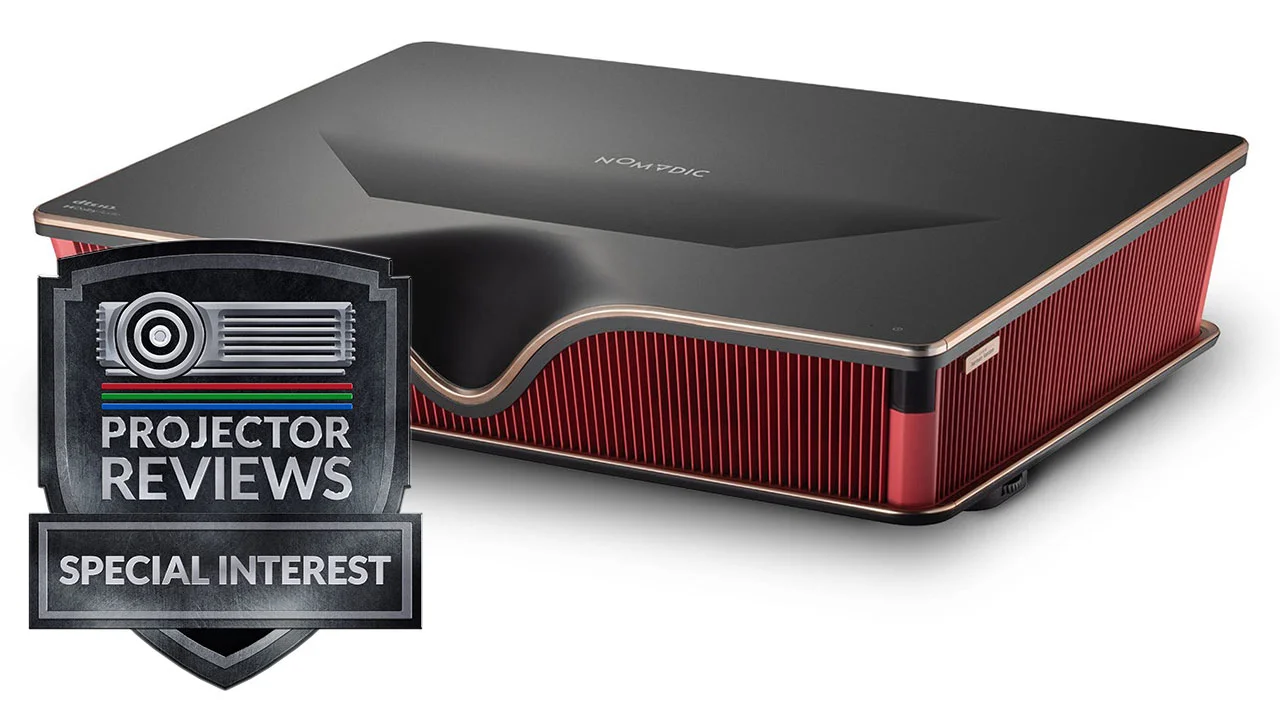
In 2023, Nomvdic (pronounced Nomadic) introduced their first Laser TV. The Nomvdic P2000 uses a Texas Instruments 0.47 Digital Micromirror Device (DMD) and an Appotronics ALPD 4.0 RGB+ triple laser light source. An ALPD 4.0 laser light source is more than just bright; it can display 100% of the BT2020 color gamut that exceeds the needs of today's most demanding video sources.
Laser light sources are incredibly reliable and maintenance-free. The estimated light source life at full output for the P2000 is 20,000 hours. This laser light source provides 2,500 ANSI lumens of brightness, meaning that this projector does not need a completely dark room to produce a good picture. Projectors with a 2,500 ANSI laser light source can display excellent color and retain a decent amount of shadow detail even when watching content with the lights on.
Nomvdic has improved the projector responsiveness for gamers, making it capable of 4K 60 Hz gaming with an input lag of 32 ms or 1080p gaming up to 120 Hz with an input lag of 16 ms. Nomvdic has also included MEMC technology to reduce blurring and judder, improving the P2000’s gaming performance. The projector's low input lag and smooth performance mean gamers should not see a difference between when they push a controller button and the action on the screen.
Laser TV projectors, like the Nomvdic P2000, can display movies, sports, and more on a huge screen with excellent image quality. Nomvdic lists the screen range anywhere from 65 to 150 inches diagonally.
Homeowners with limited space should find the Nomvdic P2000 a space-saving alternative to traditional large-screen TVs. Ultra-short throw projectors don’t suffer from people walking between the projector and the screen because they are so close to each other.
Sound quality is an important feature of any Laser TV projector. Nomvdic partnered with Harmon Kardon to develop the P2000UST-RGB 50W (25 watt x2) Dolby Digital audio system, providing a cinematic sound experience in your home. This projector's Harmon Kardon sound system should easily surpass the audio quality of most flat-panel televisions and even many entry-level soundbars.
The EpiqVision is the newest 4K PRO-UHD ultra-short throw projector from Epson.
Price
$2,799 MSRP
Brightness
3600 ANSI Lumens (manufacturer’s claim)
Resolution
4K PRO-UHD
Imager Type
3LCD
Light Source
Blue Laser
Light Source Lifespan
20,000 hours
Inputs
2x HDMI 2.0 (HDCP 2.3) ports
Smart
Fully integrated Android TV 11 Operating System
Sound
Built-in Yamaha 2.1 virtual surround sound
Bundled Screen
No
TV Tuner
No
The Epson EpiqVision Ultra LS650 is a 4K UST (ultra-short throw) laser projector rated to deliver 3,600 ANSI lumens of brightness and 2,500,000:1 dynamic contrast, selling for $2,799 MSRP. The LS650 is an Android TV-powered smart projector with a sound system designed in partnership with the audio experts at Yamaha.
Epson is a leader in the projection industry, making some of the most innovative ultra-short throw projection solutions going back to 2010. Last year, Epson upped the competitive ante by introducing the award-winning ultra-short throw EpiqVision Ultra LS800. The LS800 was the first of a new line of ultra-short throw projectors featuring an entirely new design language.
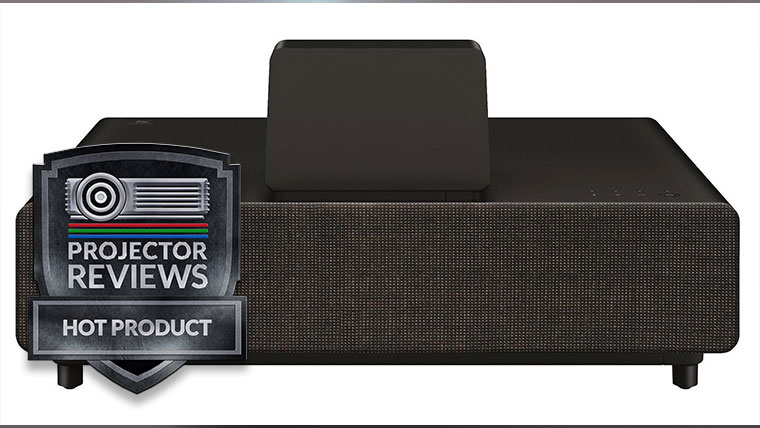
The LS650 builds on last year's design, where Epson ditched the raised snorkel-like lens and opted for a more traditional ultra-short throw lens configuration. This revision removes almost four inches of height from the projector and allows the LS650 to be placed significantly closer to the screen than previous models, such as the LS500.
The Epson EpiqVision Ultra LS650 is built to ensure the company maintains its position as a leader in home entertainment projectors.
Extremely compact for a bright Laser TV – 4K capable!
Price
NOW $2299 MSRP
Brightness
4000 lumens (manufacturer’s claim)
Resolution
1920 x 1080
Imager Type
3LCD
Light Source
Laser
Light Source Lifespan
20,000 hours
Inputs
3 HDMI
Smart
Android Operating System, Google Assistant for voice control
Sound
Dual 10-watt speakers
Bundled Screen
Yes (100-inch or 120-inch)
TV Tuner
No
The LS500 is a laser powered, 4000 lumen, 3LCD projector with an ultra-short throw design, and it is bundled with either a 100” or 120” screen. It’s built for your living, family, or other common rooms, and will make sure they remain common, no more. At 4000 lumens, this Laser TV is definitely bright enough to utilize day or night just like a flat panel TV.
The Epson LS500 is a great TV replacement option and offers, essentially, unlimited content from streaming services. Plus, you have inputs for your cable/satellite box, game console, or 4K Blu-ray player.
It has audio that’s better than most flat panel TVs and, most importantly, it produces a massive sharp image, one that makes a 65” LCD TV look like something that’s more suitable for a spare bedroom.
If you’re a gamer, you probably use your existing flat panel TV for gaming. The LS500 ultra-low game lag also makes it an excellent option for your epic gaming sessions. Its rated input lag of 16.7 ms input lag is a lot faster/better than most home projectors and many flat panel displays.
The LS500 is bundled with an Epson SilverFlex™ Ultra AR screen (100-inch or 120-inch). This high-resolution screen is designed for 4K content. It has a super wide 178-degree viewing angle – so everyone in the living room gets a great seat, even your cousin you make sit on the old beanbag chair. The bezel has a modern thin form factor that was designed to look beautiful in any room.
It comes with the familiar Smart TV functionality of Android, it is easy to install, the laser is rated for a whopping 20,000 hours (eco mode) and the unit comes with a 2-year warranty. At around $5,000 (including the 100-inch screen), the Epson LS500 Laser Projection TV is a real alternative for customers who crave the big screen experience in their living room.
The BenQ V5000i $3,499 MSRP 4K (3840 x 2160p) smart ultra-short throw projector is the follow-up to BenQ’s award-winning V7050i Laser TV, which we reviewed a little over two years ago. The V5000i is one of the first BenQ projectors to utilize an RGB triple laser light source. The V5000i has a rated brightness of 2,500 ANSI lumens of brightness, and it can display 98% of the DCI-P3 color gamut, which is fantastic for movies and gaming.
The V5000i is classified as a Laser TV, and as such, BenQ has built the projector with the idea that “light’s on” viewing will likely be the rule rather than the exception. With lights on viewing in mind, BenQ has built a new high-gain, fresnel ALR (ambient light rejecting) screen (model# SNS21). The SNS21 is a soft screen material designed to boost the displayed brightness and color even in rooms with large amounts of uncontrolled ambient light.
For a limited time, BenQ is including the 100-inch version of the SNS21 screen and home installation at no charge with every purchase of a V5000i MSRP of $3,499.
The Hisense L5H is the company's 6th generation ultra-short throw projector.
Price
$3999/$4999
Brightness
2700 ANSI Lumens
Resolution
3840 x 2160 pixels (4K e-shift)
Imager Type
DLP (0.47” DMD) with XPR
Light Source
X-Fusion Blue Laser + Phosphor
Light Source Lifespan
25,000 hours (ECO)
Inputs
2 HDMI 2.1 (eARC on #2 only), 1 HDMI 2.0, 2 USB (2.0/3.0), S/PDIF Digital Audio, 3.5mm Headphone, LAN Input, DC Input
Smart
Yes - Google TV OS
Sound
40 Watts 2.1 Dolby Atmos
Bundled Screen
New ALR 1.5x high gain screen included (100" and 120" options)
TV Tuner
Yes
The Hisense L5H is a 4K (3,840 x 2,160) Ultra-Short Throw laser projector that can deliver 2,700 ANSI lumens of brightness. Since the unit is part of Hisense's Laser TV lineup, it is bundled with either a high gain 100" screen for brighter rooms or a 120" ALR (Ambient Light Rejected) screen darker spaces.
The 100L5H sells for $3,999.99 MSRP, and the 120L5H is $4,999.99. They are available from a wide range of authorized Hisense online or brick-and-mortar dealers across the US.
The L5H is a Smart projector featuring the newest Google TV smart OS. The L5H also supports advanced HDR formats like Dolby Vision with a features a built-in 40-watt Dolby Atmos sound system.
First, you might wonder – what’s a Laser TV? A Laser TV is an alternative to a traditional LCD or OLED TV. A laser TV combines the immersive big screen “WOW” factor of a home theater projector with the everyday convenience features and installation simplicity of a flat panel TV.
In this guide, we will discuss a wide variety of Laser TVs. When we are reviewing units as well as when choosing award winners for this guide, we consider several different projectors from different manufacturers and how they are best used in different situations.
Before we dive into helping you choose the best laser TV, we wanted to quickly touch on how the COVID-19 pandemic has transformed entertainment. More than ever, people want great entertainment experiences at home. A big screen experience can offer a more immersive experience for movies, sports, TV shows, and so much more.
The most popular TV screen sizes have steadily grown over the last decade or so. Screens measuring 65 inches diagonally have become the most popular size in North America, and 75-inches models will soon replace them if recent pricing trends continue. Meanwhile, 50-inch sets—once considered huge—are now being stuck in guest rooms so your mom can watch NCIS repeats when she visits.
But flat panel TVs can only get so big. LCD TVs currently top out at around 100 inches, while the largest OLED measures 88 inches. However, these monster TVs carry matching monster price tags – well into five figures. While it is possible to make even larger glass panels, currently they are prohibitively expensive and difficult to transport and install. There’s also the new micro-LED technology that promises wall-sized displays of almost any size, but now we’re talking prices in the six figures!
No more complicated installation! Laser TVs offer a more convenient big projector experience.
We may dream of a 100-inch flat screen TV, but the heavy cost can be a record-scratch, show-stopper for models larger than 85 inches. So, for most of us when we think of the ultimate big screen experience at home, we don’t think of flat panel TVs, we think of a bulky black box parked in the back of a very dark theater room or mounted on a ceiling, projecting across the room to a great big old screen mounted on the wall. This type of traditional projector might need a specialist to install in the ceiling and probably lack speakers or built-in streaming apps and might even use spendy bulbs that have to be replaced every year or so.
But projector manufacturers continue to innovate – and ultra-short throw projectors are a big game changer for those who want a big screen experience without a hefty price tag or dedicated theater or cave. A short throw projector can produce large images even when they are placed only a few images from a screen or even a wall. As mentioned previously, these types of projectors are called Laser TVs because they are designed to be viable replacements for flat panel televisions.
Laser TVs are becoming increasingly popular because you get the benefits of a projector without some of the hassles of a traditional projector. Since laser TVs offer a big screen experience while overcoming so many projector headaches, they can appeal to the same audience that enjoys a flat panel TV – for a fraction of the big screen flat panel cost.
And of course, Laser TVs can be used outside of the home. A Laser TV could be a solution for a living room or a classroom or even a conference room.
Leica Laser TV
We’re big fans of Laser TVs here at Projector Reviews. In fact, one of our most popular articles is Things to Consider When Purchasing a Laser TV which you can read here. This comprehensive article goes into exceptional detail and describes the technologies that make a laser TV truly a flat panel replacement.
We also wrote an article describing how the big screen experience is more available to a wider audience, you can read it here. From smart features to maximize entertainment to built-in sound and increasingly reasonable cost, laser projectors are becoming more approachable to everyday consumers.
Features to Consider When Choosing a Laser TV
Brightness
A flat panel TV can be used day or night and so can a great Laser TV!
If a projector is going to be able to replace a flat panel TV, you have to be able to use it day or night like a regular TV. It also needs to be able to deliver vibrant color regardless of ambient room light. Most laser TVs are sufficiently bright enough to deliver a luxurious, TV-like experience. Many of today’s laser TVs are actually brighter than some conventional flat panel TVs currently in market.
In addition to a long, maintenance-free life, a laser has a lot of other advantages over a traditional projector – they turn on faster, last longer, run quieter and generate less heat.
Smart
Laser TVs like the Leica Cine 1 include tons of smart features
A lot of traditional projectors are real dum-dums and the rest of us are used to the convenience of a smart TV. Laser TVs are the projector industry’s easy solution to enjoying the really big-screen viewing experience at home, without out needing a dedicated room – the classic “home theater” or man cave, and instead enjoy it in common rooms like your living room or family room. That tends to make them family purchases, something enjoyed by the whole family, rather than just the hobbyist/enthusiast in the house. And the family wants the familiar convenience of a smart TV and ESPECIALLY streaming apps like Netflix. The kids need to be able to quickly browse to Octonauts or Ninjago.
To be a true flat panel TV replacement, a Laser TV has to be smart and include built-in streaming apps for services like Netflix, Amazon, YouTube, and others. In addition, the manufacturer should provide an extensive app store that lets you download other available apps. Many smart Laser TVs offer the same Android operating system found in the best-selling flat panel TVs – it’s familiar, seamless and easy to navigate. Voice control capabilities are another welcome smart addition. The unit should also provide the ability to display content that is “cast” from smartphones and other mobile devices via Wi-Fi.
One thing missing from most Laser TVs is a built-in over-the-air (OTA) broadcast tuner. A few, such as the LG 100L5F, have an ATSC 1.0 digital OTA tuner, but we are currently in a transition period to the next generation of OTA broadcasting known as ATSC 3.0, so many manufacturers are waiting until that format becomes more widespread before they include OTA tuners in their Laser TVs.
Apps and OTA tuners are both important for the growing number of consumers who wish to “cut the cord” from their cable or satellite provider. Those providers and most broadcast networks recognize the trend toward cord cutting, so they offer their own apps. This highlights the importance of a large app library for those who want to cut the cord.
Sound
A thin flat panel TV can mean thin sound – a Laser TV has a bigger box = bigger sound!
Then there’s onboard audio. Of course, all TVs provide built-in speakers—without them, the display is technically a monitor. But as you probably know, the speakers in the vast majority of TVs sound terrible, mostly because they must be very small to fit inside today’s modern super-skinny cabinets.
Most Laser TVs include built-in audio. The good news here is that an ultra-short throw projector cabinet can accommodate larger, deeper speakers, so they have the potential to sound much better than most TVs. In fact, the built-in sound system on a Laser TV typically resembles a soundbar—the speakers are mounted on the back panel of the projector, firing directly toward the viewers while the projector shoots its light up onto the screen. Some can even add a wireless subwoofer for deeper bass. For real audiophiles, a Laser TV like the 100L9G offers HDMI with eARC support for full pass-through of high-bitrate audio to a surround sound system.
Convenience
Immersive big screen entertainment in any space
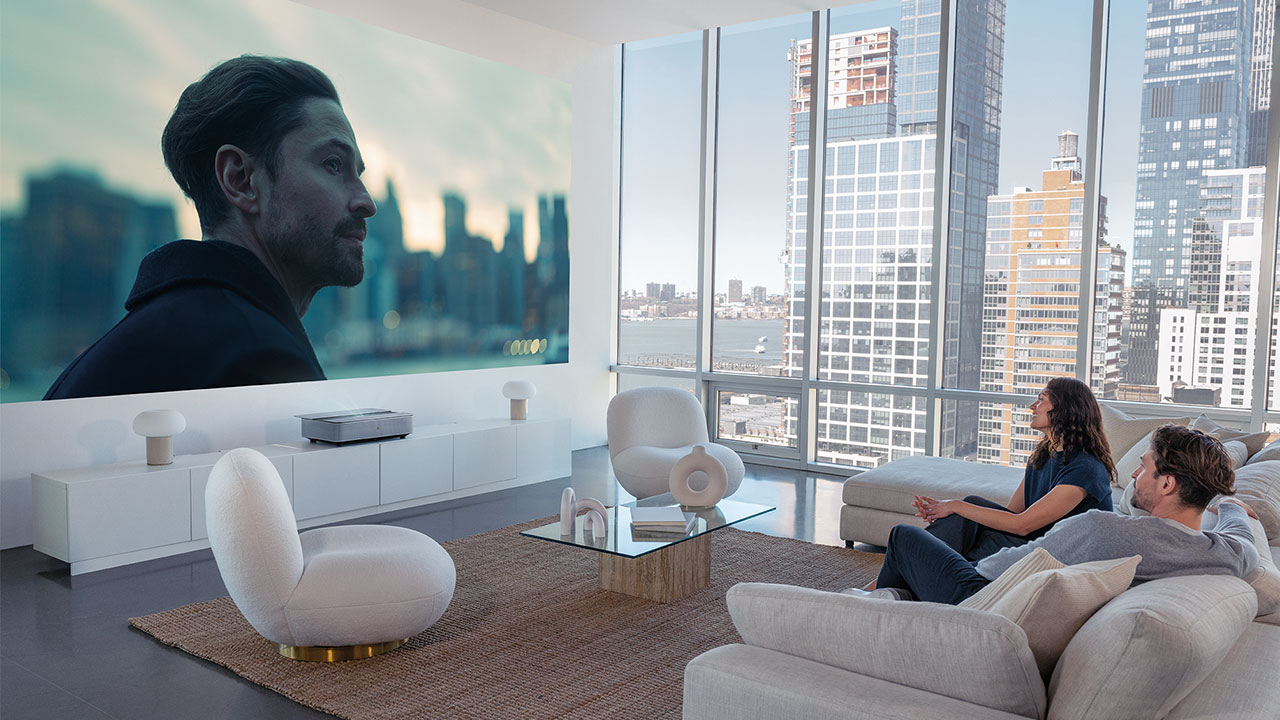
A traditional projector requires a big theater room since it must be placed a far distance from the screen. Ultra-short throw projectors bring the dream of a big screen experience to smaller homes and apartments. You don’t have to hang it in the back of the room and no one will walk in front of the picture. The convenience of Laser TVs makes projection practical in living rooms, dens, and other non-home theaters. There are far more people interested in 100-inch images than there are folks willing to dedicate an entire room as a home theater.
Then, there’s maintenance. To be considered a true Laser TV, the light source within the projector must last at least 20,000 hours and retain most of its brightness over that entire lifespan. After all, that’s how long flat-panel TVs are specified to last. In most cases, the light source in a Laser TV is an array of lasers, which is why they are often called Laser TVs. However, a few companies have also tried LEDs, but they have not been very successful, mainly because they are not as bright as lasers.
Lasers offer several advantages. Lasers retain most of their brightness over their entire lifespan, and you don’t have to replace them every year or two as you do with lamps in conventional projectors. Also, they reach full brightness almost immediately after being powered on, unlike lamps that require several minutes to “warm up.”
A Laser TV still isn’t as quite simple as plonking an LCD TV on a tabletop or credenza. But most people prefer to wall mount their exceptionally large flat panel TVs (75-inch and up). Wall mounting a TV means not only mounting it, but getting power and sources to it. You can let the wires hang, or do the install properly, making sure the wires are running through the wall to a nearby table with other equipment, such as a Blu-ray Disc player, AV receiver and bigger speakers, or a cable box.
Wall mounting a Laser TV is different. The projector sits on the same table as any other gear, making connecting everything far easier. Bottom line, a Laser TV is likely going to be easier for you to install.
Attractive Placement
Beautifully enhances any decor
Unless they are mounted on a wall, most TVs are placed on a cabinet or stand, and they are an obvious part of the room’s décor even when turned off. By contrast, a Laser TV can be mounted inside a cabinet, projecting its image through a clear panel when on and becoming completely invisible when off. Several companies offer specially designed cabinets that hide a Laser TV.
When the projector is on, you see a big, beautiful image on the screen; when it’s off, you see nothing but a piece of furniture that fits the room’s design aesthetic. Talk about a high spousal-acceptance factor!
But what about the screen itself? What if you don’t want to see the screen when the projector is off? Simple! Install a retractable screen that descends from the ceiling or raises up from the cabinet when it’s time to watch a movie or TV show. When the show’s over, the screen retracts and disappears; you can even have artwork on the wall that is covered by the screen only when it’s being used. This setup is more expensive than a fixed screen but well worth it for the sake of domestic tranquility if you have the budget.
Summary
As you can see, Laser TVs offer some significant advantages over flat-panel TVs. Perhaps most importantly, they offer larger images for less money – in other words, you pay fewer dollars per inch of image size. Another big advantage is portability; a Laser TV is much easier to move from one home to another than a monster TV. And you get most of the other features of a flat-panel TV—long lifespan, zero maintenance, smart apps, built-in audio—as well as the ability to upgrade the screen size and performance without having to replace the entire TV.
A Laser TV makes it easy for the average consumer to replace a flat panel TV without having to step out of their comfort zone with the complexity of a traditional projector. Most come with the familiar, Smart TV functionality of Android, there’s no need to hire a professional to install it, and you’ll never have to yell “DOWN IN FRONT” during a climactic movie scene. Why settle for a measly 65 inches when you can get an image over twice as big, in a compact unit half the size, for a fraction of the price?
The Leica Cine 1
What’s Inside our Buyer’s Guide
In this buyer’s guide, we will be looking at Laser TVs that offer a range of features that will help you get significant advantages over a large flat panel TV – for less money. You’re going to easily pay fewer dollars per inch of image size. Another big advantage is portability. Sure, you can’t take your Laser TV on a camping trip but it’s MUCH easier to schlep up the stairs of an apartment building or even more from home to another than a fragile monster TV. And you’re going to get most of the features you love from your flat panel TV – long lifespan, zero maintenance, smart apps, built-in audio as well as the ability to upgrade your screen size and performance without having to replace your entire TV.
This year we considered dozens of projectors and chose around Laser TVs we felt were best suited flat panel TV replacement. In this buyer’s guide, you will find a detailed overview of each of these Laser TVs with links to their in-depth reviews if you want more details or want to pore over the specs in nitty gritty detail.
Many of the Laser TVs reviewed may have similar models available in the same lineup. Many times, the models in the lineup are very similar to other models we reviewed, but with varying resolution or with additional features, or possibly slightly brighter or bundled with a different size screen. The purpose of this buyer’s guide is to show you a sample of the Laser TV models currently on the market.
In this buyer’s guide, we focus on “usage.” It’s not a specs competition. Our awards go out to great Laser TVs and some that are great for certain applications, use cases, budget-saving, etc. This guide will be a living article, continuously upgraded and up to date with the latest Laser TV models.
Selecting Laser TVs to review: We are very selective in choosing the models to review and those we feature in this report. We work hard to ensure that most of the Laser TVs we review are considered to be among the best in their price ranges and capabilities.
We hope this buyer’s guide helps you in selecting the right product for your flat panel TV replacement needs. Since launching the first Laser TV in 2014, we’re excited companies like Leica are continually innovating in this space. As we review more Laser TVs, this guide will be updated throughout the year. Check back regularly for the latest in Laser TV innovations.
First, let’s talk about “moveable” projectors. If you feel comfortable taking your projector outside and it’s bright enough to overcome outdoor ambient light, well, you have a movable projector. In this section of our buyer’s guide, we are going to concentrate on bright, cost-effective models that can be conveniently carried…at least short distances.
For a projector to be considered movable at Projector Reviews, it must have the following features:
Substantial brightness
Affordability
Relatively compact size
If you are interested in purchasing the projector mentioned in this article, we always appreciate it if you use one of the links in the article because Projector Reviews earns a small commission on the sale at no cost to you.
Epson EpiqVision Flex CO-W01
Price
$429 MSRP
Brightness
3000 Lumens
Displayed Resolution
1280 x 800
Imager
3LCD
Light Source
Lamp
Portability – size
5.3 lbs
Built-in Battery
No
Smart Features
Yes
Sound
5 watt mono
EpiqVision Flex CO-W01 is a lamp-based portable projector that is designed to cater to the evolving hybrid work culture, where employees split their workweek between home and the office. The projector can deliver 3000 lumens of brightness from a compact package. Unlike its DLP counterparts, it can provide more vibrant colors under ambient light conditions due to its equal number of color and white lumens. EpiqVision Flex CO-W01 offers WXGA (1280 × 800) native resolution but supports video display formats up to Full HD (1920 x 1080).
EpiqVision Flex CO-W01 is not a smart projector, so if you want to stream from Amazon Prime Video, Apple TV, Disney+, HBO Max, Hulu, and more, users will need to plug in a streaming device into the EpiqVision Flex CO-W01’s HDMI port or upgrade to the $629 EpiqVision Flex CO-FH02 Full HD 1080p Smart Portable Projector, which comes with integrated Android TV for seamless streaming.
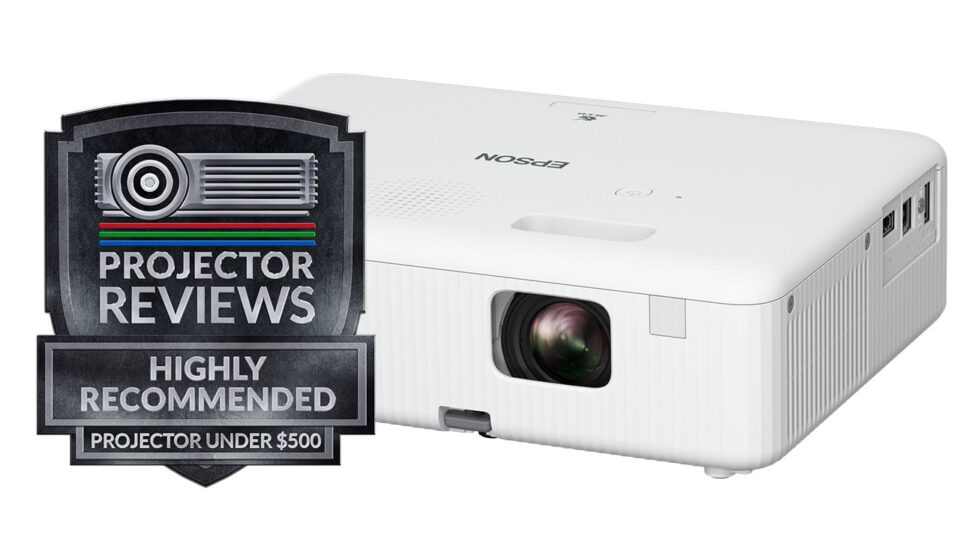
Epson proposes that the EpiqVision Flex CO-W01 projector model strikes a perfect balance between the needs of professional presentations and the pleasure of an immersive home movie experience. If you are looking for a bright image with great color reproduction for under $500, the EpiqVision Flex CO-W01 is a great option.
Optoma ML1080
Price
$800 Street Price
Brightness
550 Lumens
Displayed Resolution
Full HD (1920 x 1080)
Imager
DLP
Light Source
Tri-Laser
Portability – size
2.2 lbs
Built-in Battery
No
Smart Features
No
Sound
3 watt mono
The Optoma ML1080 is an ultra-compact RGB laser full HD 1080p projector that retails for $999.00. While it is one of Optoma’s most compact and portable projectors, the ML1080 includes several notable features that make it an excellent solution for consumer and professional applications.
While most projectors its size utilize LED light sources, the ML1080 is equipped with an RGB triple laser light source that can deliver 1200 lumens of brightness (550 ANSI Lumens), and it can reproduce a vast range of colors. It had been several months since I saw the ML1080 at InfoComm 2023, so I had forgotten how lightweight and compact it is. The projector weighs just 2.3 lbs and is the most compact RGB laser projector I have ever reviewed.
The projector’s compact form factor brightness, picture quality, and feature set make the ML1080 flexible enough to use at home, on the go, and in various professional applications. Optoma also offers a short-throw version of the projector called ML1080ST ($1149 SRP) to provide more placement flexibility.
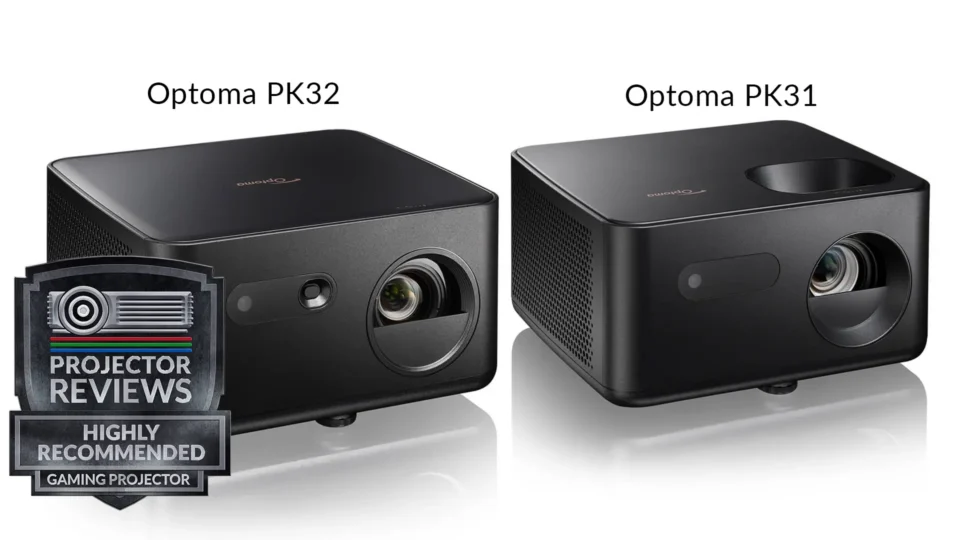
The Optoma PK32 retails for $1,299, while the PK31 has a list price of $1,099. Both projectors can display 4K UHD onscreen resolution and 95% of the DCI-P3 color gamut. The color reproduction on both projectors was very good, and both models were bright enough to deliver a good-looking SDR image on screens up to 100 inches in a darkened space.
Price
$1299 MSRP (PK32) $1099 MSRP (PK31)
Brightness
1100 Lumens (PK32) 900 Lumens (PK31)
Displayed Resolution
3840 x 2160
Imager
DLP
Light Source
4LED (PK32) RGB LED (PK31)
Portability – size
6.1 lbs (PK32) 5.2 lbs (PK31)
Built-in Battery
No
Smart Features
No
Sound
5 watt x 2 (PK 32) 5 watt mono (PK31)
When playing games, they are incredibly responsive, with input lag as low as 4.6ms when gaming at 1080p/240Hz. Very few competing projectors in their price range combine monitor-class input lag with 4K resolution.
While the PK31 at $1,099 is a good option for budget-constrained buyers, we recommend that most buyers in this segment step up from the PK31 to the PK32. The $200 premium buys an upgraded four-LED lighting system that is brighter and delivers better skin tones. You get a motorized zoom lens with autofocus and auto /keystone connection. The unit’s shorter throw allows PK32 to display a larger image while being closer to the screen.
The PK32 also includes a second HDMI input, a USB-C display input, eARC, and stereo speakers instead of mono. These upgrades genuinely improve the daily gaming and entertainment experience. The PK32 and PK31 are both great options for someone looking for a portable 4K projector for gaming and home entertainment. However, if you could swing the extra $200, upgrading to the PK32 is worth every penny.
In the next section, we discussed movable projectors which are easy to carry and bright enough to be used in outdoor applications. In this section, we explore projectors that add built-in sound and smart features to a small and compact chassis, greatly enhancing portability.
NexiGo Nova Mini
Price
$599 Street Price
Brightness
1200 Lumens
Displayed Resolution
1920 x1080
Imager
DLP
Light Source
Laser
Portability – size
3 lbs
Built-in Battery
No
Smart Features
Yes
Sound
8 watt mono
The NexiGo Nova Mini is a smart portable DLP projector that currently sells for $599. The Nova Mini can display full HD (1920x1080) resolution and it supports HDR10 and HLG. The projector's laser light source can deliver 1200 lumens of brightness.
The projector is also equipped with Scene Adapt Engine (SAE) that dynamically adjusts laser light source brightness and contrast frame-by-frame, claims to deliver deep blacks and sharp details even in darker scenes. Due to SAE, the projector's dynamic contrast ratio is 15,000:1.
The color reproduction in the MOVIE mode was quite good for a projector at this price point. Out of the box, colors appear balanced and natural, NexiGo also includes picture calibration adjustments found on higher-end models.
Due to its Google TV operating system, users have access to a wide range of streaming services and smart apps. On the audio side, the Nova Mini has a high-quality built-in speaker system. While the Nova Mini does not have a built-in battery, it is USB-C Power Delivery PD capable so it can be powered by a compatible USB power bank (100 W or higher), making it even more versatile for outdoor or mobile use
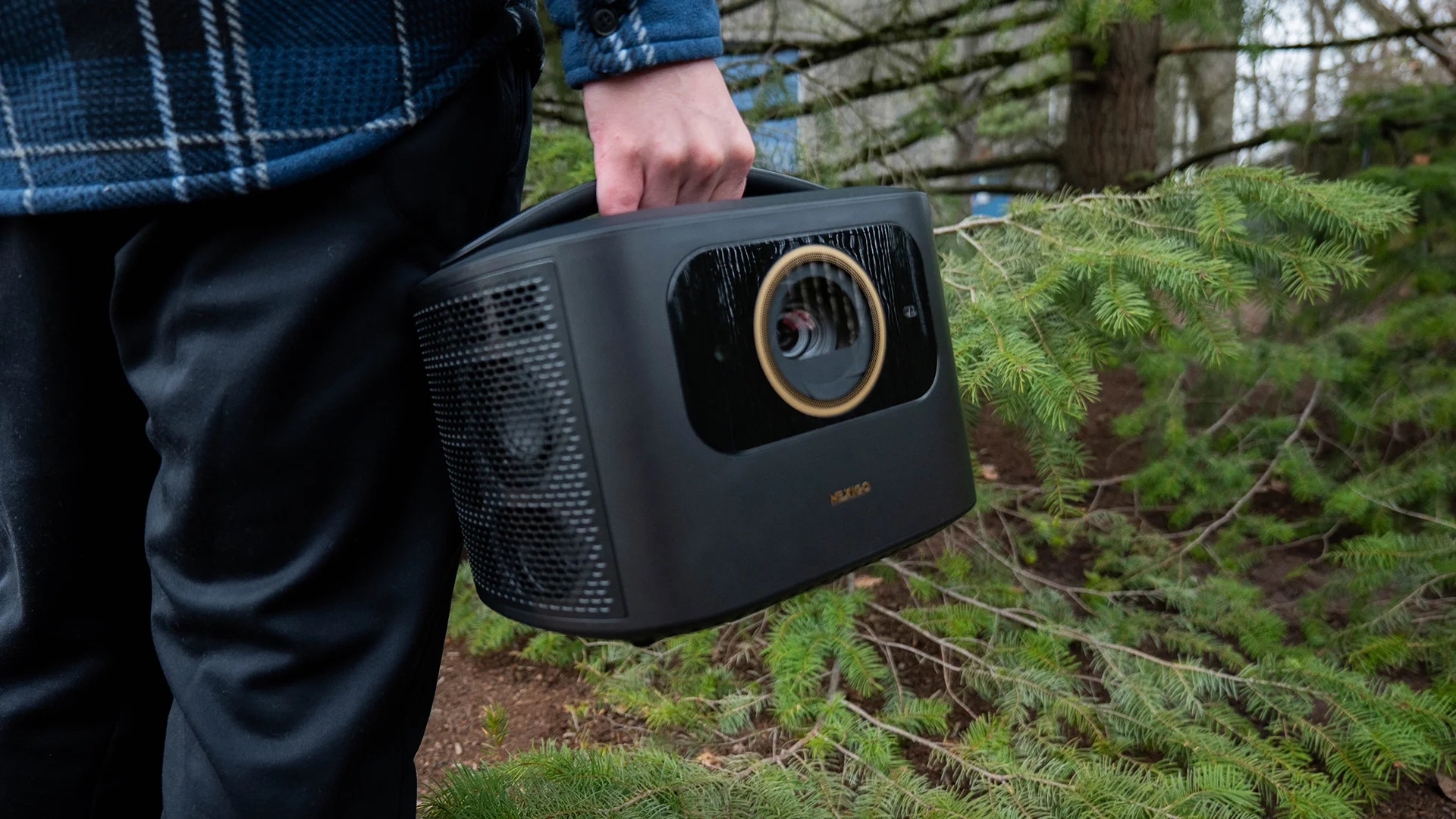
The NexiGo TriVision Ultra is a compact 4K DLP Projector whose performance and features rival many home entertainment projectors, but it is compact and light enough to be easily moved from location to location. It features a native 4K UHD resolution, and it supports a wide variety of HDR formats, including Dolby Vision and HDR10+.
The projector utilizes a Tri-LED laser light source that can reproduce 100% of the BT.2020 color space while producing 2600 lumens of brightness. The TriVision Ultra is factory calibrated to ensure accurate out-of-the-box color reproduction.
The NexiGo TriVision runs on the Android TV 11 platform, providing access to a variety of streaming apps, including Netflix, YouTube, and Prime Video. It has built-in 30W speakers with Dolby Audio and DTS-X support. Connectivity options include HDMI, USB, and wireless casting via Wi-Fi and Bluetooth, allowing users to stream content from multiple sources.
Designed for portability, the projector has a compact form factor with an integrated carrying handle, making it easy to transport. To simplify setup, the projector includes autofocus and automatic keystone correction, which help optimize image clarity and alignment without requiring manual adjustments. Overall, the NexiGo TriVision Ultra combines 4K resolution, smart TV functionality, and a portable design.
Optoma Photon Go (ML1080ST)
Price
$999
Brightness
650 ISO Lumens
Displayed Resolution
1920 x 1080
Imager
DLP
Light Source
RGB Laser
Portability – size
3.8 lbs
Built-in Battery
No
Smart Features
Google TV
Sound
10 watt x 2
The Optoma Photon Go combines an ultra-short-throw lens, a triple RGB laser light source, a built-in battery, and Google TV into a sub-4-pound portable projector. Each of those four elements has been available in larger, more expensive products for years, but all of them in one compact unit makes the Photon Go stand out in the portable projector category.
The unit's triple RGB laser light source delivers 110% BT.2020 color coverage, which is wider than that of most home theater projectors at any price point.
It pairs that engine with a built-in 15,000 mAh battery, Google TV with certified Netflix and Disney+ apps, dual 10W stereo speakers with Dolby Audio, and an ultra-short-throw lens that requires less than 1 foot of throw distance at 100 inches. No other battery-powered portable projector on the market combines all of those elements. It is designed for people who desire a large-screen entertainment experience but don't have the space for a traditional projector setup.
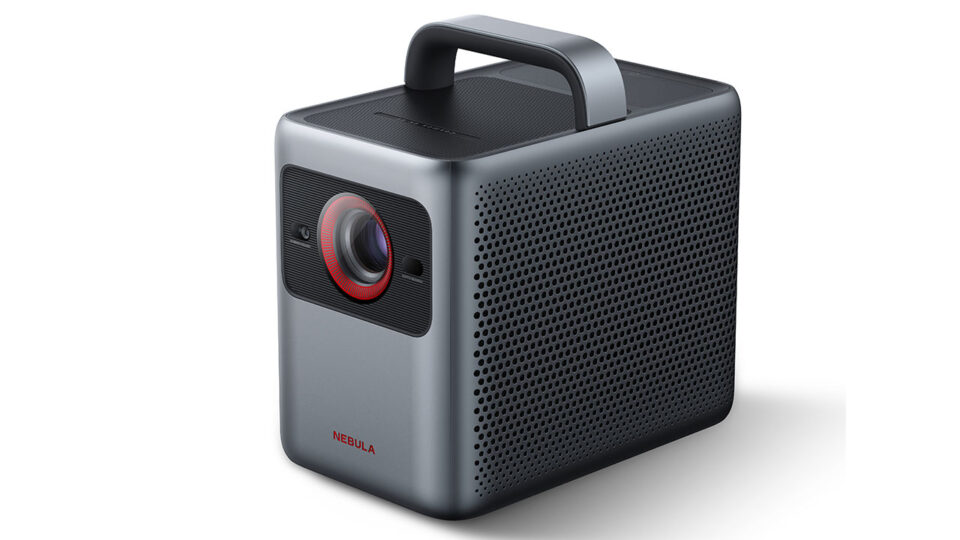
The Nebula Cosmos 4K SE is a transportable 4K UHD projector (3,840 x 2,160p) that uses a new hybrid blue laser phosphor/LED light source to produce up to 1,800 ANSI lumens of brightness. For a portable projector, the Cosmos 4K SE’s color reproduction is quite good. Nebula Cosmos 4K SE is equipped with Dynamic HDR Tone mapping, and it is one of the few portable projectors that supports Dolby Vision.
The Cosmo 4K SE utilizes the latest Google TV OS, which provides access to over 10,000 apps and more than 400,000 movies and TV episodes from streaming services such as Netflix, Disney+, Amazon Prime Video, Max, Apple TV+, and others. The Capsule 4K SE also features a big-sounding 30-watt sound system that supports Dolby Audio.
The projector has a large handle permanently affixed to its top to easily transport the Capsule 4K SE from place to place. Nebula projectors are a popular choice for consumers looking for a portable and convenient way to enjoy various entertainment content, such as movies, TV shows, capsule games, and even productivity applications, from room to room.
BenQ GP100A
Price
$749 Street Price
Brightness
1000 Lumens
Displayed Resolution
Full HD (1920 x 1080)
Imager
DLP
Light Source
LED
Portability – size
6.4 lbs
Built-in Battery
No
Smart Features
Yes
Sound
5 watt x 2 + 10 watt
The BenQ GP100A is a Full HD (1920x1080) 4LED portable projector that retails for $899 MSRP. The GP100A is BenQ's best portable smart projector which is designed to transform any space into a personal cinema or gaming hub. The GP500 comes with a smart HDMI media stick, allowing users to enjoy Netflix, Disney+, HBO Max, Amazon Prime Video, and access all the latest compatible Android TV apps.
The projector’s high-quality sound system can be utilized as a Bluetooth music speaker. The GP100A’s blend of portability, impressive image quality, and user-friendly design, coupled with its connectivity options, makes it a standout choice for anyone looking to enjoy big-screen entertainment anywhere.
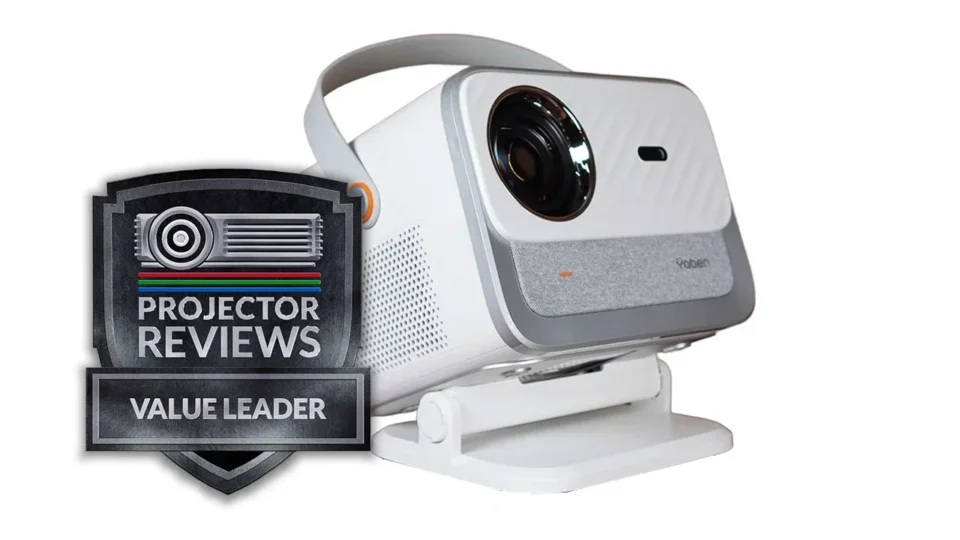
The Yaber V12 is a RGB LED light source-based LCD projector that uses a single TFT LCD as its imager to produce a Full HD (1,920 x 1,080p) resolution image. Yaber has loaded the V12 with a smart Linux-based operating system with premium native streaming applications like Netflix, Amazon Prime Video, and YouTube, along with a range of other entertainment and informational-based applications via a dedicated app store.
Yaber has included a big-sounding 20-watt Dolby Digital sound system with Bluetooth 5.2 bi-directional connectivity that allows the projector to be wirelessly connected to an external Bluetooth sound source or lets the projector function as a Bluetooth speaker for a smartphone or tablet.
The Yaber V12 is designed to be moved from the living room to the bedroom, to any other destination via a soft carrying strap attached to the projector. The detachable tilting stand provides a gimbal-like experience and allows the V12 to be easily positioned. The projector's autofocus and auto or manual digital horizontal and vertical keystone make setup a breeze.
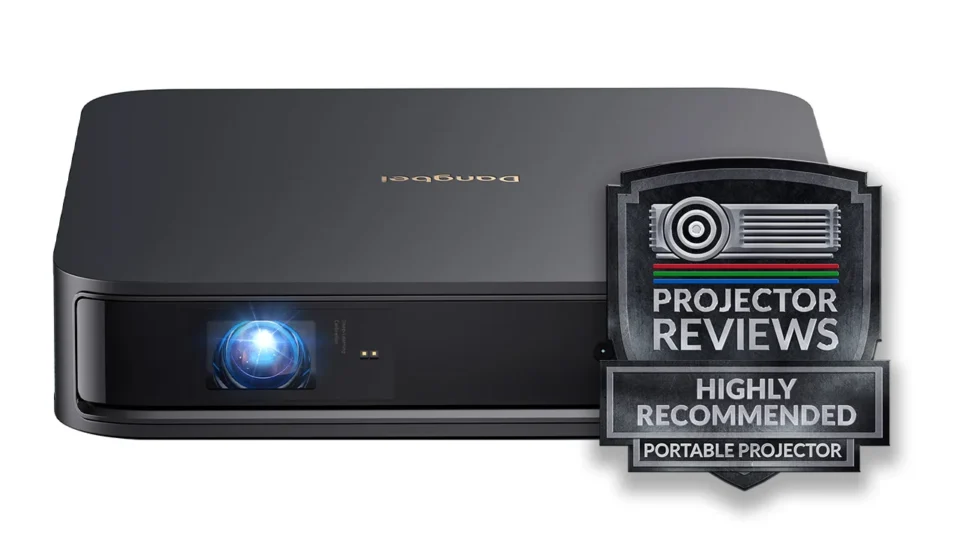
The Dangbei Atom is an ultra-compact, portable, smart Full HD laser projector. The projector's slim 1.87-inch profile and lightweight design (2.82 pounds) make it ultra-portable. While it lacks an internal battery, you can easily move it from room-to-room or toss it in a backpack to take with you.
The Atom is Dangbei's first Google TV™ equipped laser projector, so you can access a wide range of streaming platforms like Netflix, YouTube, Prime Video, Hulu, and Disney+. Dangbei Atom can transform any backyard or campsite into an outdoor cinema. Professionals can use the Atom to display presentations or promotional videos at trade shows and conferences. The projector’s brightness ensures the image remains clear and vibrant, even in a room with moderate ambient light.
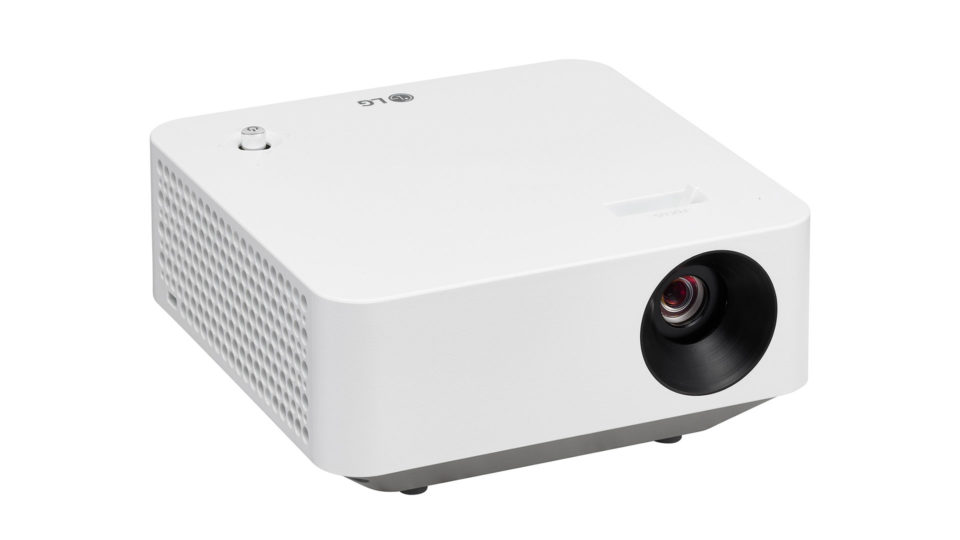
The LG CineBeam PF510Q is a Full HD, $599.99 portable, 4Ch (RGBB) LED smart projector with 450 ANSI lumens. LG projectors, such as the PF510Q, combine the smart capabilities of their current flat panel TVs with the long lifespan of an LED light engine, producing vivid images to create a great portable projector solution.
The PF510Q could be perfect for military members constantly on the move, road warriors, RVers (recreational vehicle users), or students living in a dormitory. If you're a homeowner, a parent, or anybody else who could use a portable smart projector for a quick movie night setup or an after-dark street party in the cul-de-sac, then the LG PF510Q projector could also be for you.
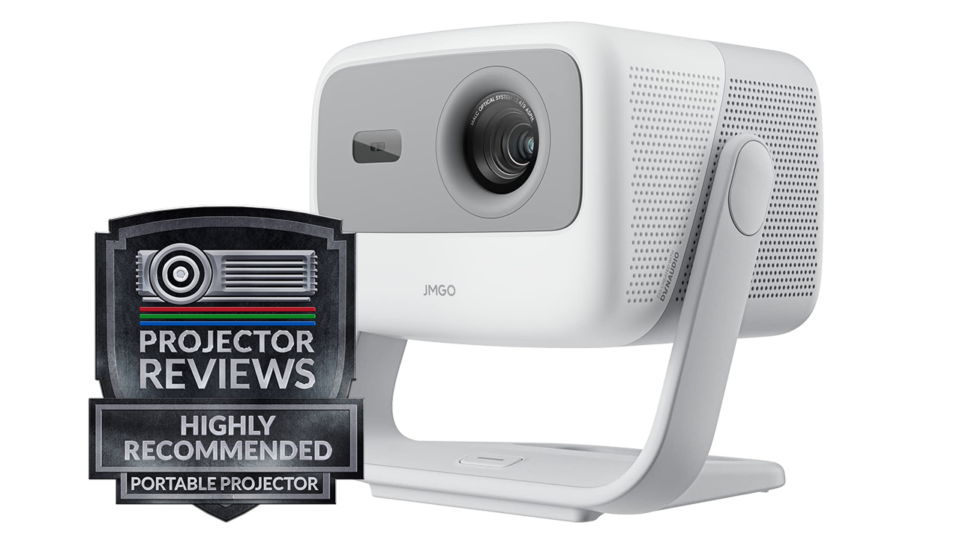
The JMGO N1 is one of two new Full HD additions to the company N1 projector lineup, offering 1100 lumens, a triple laser light source, and JMGO gimbal-like design. We were very impressed with the video quality of the JMGO N1. With the exception or brightness, the N1's image looks similar to its bigger HD and 4K brothers. If you are interested in reading my full review of the JMGO N1 Ultra, click on the model number link.
JMGO has created a projector that is a worthy addition to their ever-growing N1 projector lineup. The N1 provides enough brightness to get the job done with fantastic color and black levels and shadow detail that is more than competitive with other projectors in its class. And the N1 is one of the best-looking and sounding projectors I've reviewed in its price point.
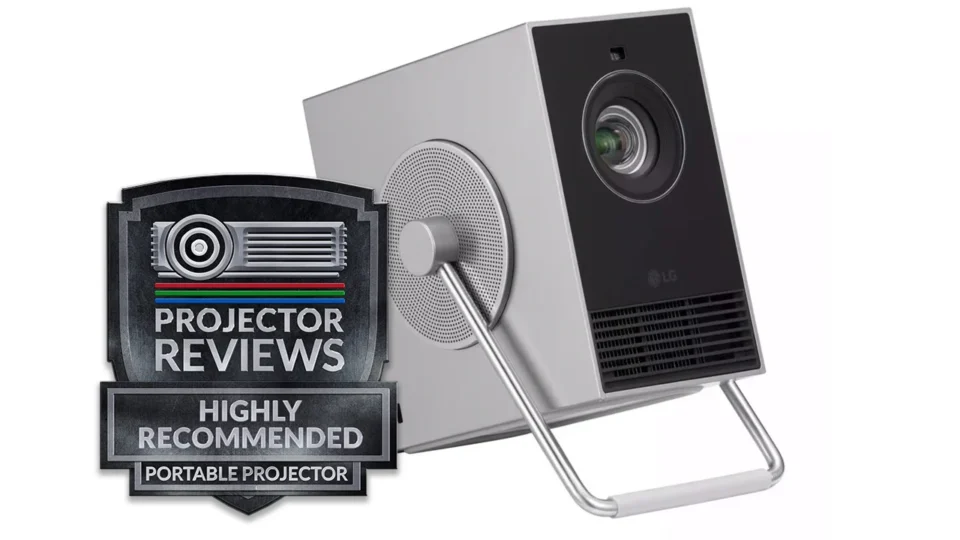
The LG HU710PB, also known as the CineBeam Q, is a 4K portable smart projector that retails for $999. It offers an impressive blend of advanced technology, user-friendly features, and class-leading picture quality. It employs a 3-channel RGB laser light source, offering a wide color gamut coverage of 154% DCI-P3, and it is rated to last up to 20,000 hours.
Combining wide color reproduction with a dynamic contrast ratio of 450,000:1 and effective Dynamic HDR Tonemapping results in class-leading HDR picture quality. Weighing just 3 pounds and featuring a 360-degree rotating handle, the CineBeam Q is designed for easy transport. The handle also doubles as a stand, which can be adjusted to project images at different angles, making it suitable for indoor and outdoor use.
The LG PF610P is an $849 MSRP, Full HD LED portable smart home theater projector. The LG PF610P utilizes a 4-channel LED light source rated to produce 1,000 ANSI lumens of brightness, and LG claims that this new LED CineBeam projector delivers more vibrant images than conventional projectors.
The LG610P is a smart projector running LG’s most recent webOS 5.0 platform. LG webOS 5.0 provides access to popular streaming platforms such as Amazon Prime Video, Disney+, Apple TV, YouTube, and many more. It is compatible with Apple AirPlay 2 and MiraCast for Android users, allowing viewers to share content from smartphones. LG designed the PF610P to be transportable while delivering a high-quality image, allowing users to easily show movies and other entertainment anywhere with access to power.
The Formovie Xming Page One is a portable LCD-powered, Full HD (1,920 x 1,080p) projector listed as producing 300 ANSI lumens of brightness with a 2,000:1 dynamic contrast ratio. Formovie lists the Xming Page One as the world's first Google TV LCD projector with a fully certified Netflix application.
The projector offers excellent sound quality, producing sound that rivals larger and more expensive projectors. The Formovie Xming Page One is a compact, portable projector offering a compelling blend of features and value. The projector displays a sharp 1080p image that is perfect for the kid's room, your bedroom, or for use on the go at a friend's house for movies and gaming.
In this section, we will take a deep dive into projectors suitable for use outside the home due to a built-in battery. While lacking smart features, these compact, easy-to-carry projectors usually includes a good built-in sound system.
If you are interested in purchasing the projector mentioned in this article, we always appreciate it if you use one of the links in the article because Projector Reviews earns a small commission on the sale at no cost to you.
Elite Projector MosicGO
Elite Screens MosicGo 360 Portable Projection System
Price
$1199 ($899 without Battery)
Brightness
1000 ANSI lumens
Resolution
1920 x 1080
Light Source
LED
Light Source Lifespan
25,000 fours
Inputs
HDMI x 2, USB-A x 2, USB-C
Portability – size
Weighs about 6 lbs (bundle with projector, tripod, screen weighs 25lbs)
Portability – power
30 hours of music, 3 hours of video playback, can charge other mobile devices via USB-C
Portability – durability
IPX2 spill-proof
Sound
Dual 8-watt built-in speakers
The Elite MosicGO is an ultra-short-throw projector with 1,000 lumens The projector has full HD resolution (1,920 x 1,080), and because it’s an ultra-short-throw projector, you can wow your guests by projecting a 100-inch image from just over a foot away. The MosicGo Sport ($1199) has a built-in battery while MosicGo Lite ($899). A built-in battery offers up to 3 hours of video and up to 30 hours of music. MosicGO 360 can also function as a wireless speaker via Bluetooth connection and a power charging for a variety of portable devices.
The Elite MosicGo is great for gaming, with a low input lag of just 17ms. The very low input lag, combined with the projector’s 1080 resolution and ultra-short throw design, makes the MosicGo ideal for gaming on the go. The MosicGo has dual 8-watt built-in speakers located on the left and right sides of the projector. They can play more than loud enough for everyone sitting around the projector to hear. The overall sound quality matched that of a decently sized portable Bluetooth speaker.
There are several MosicGO packages available that include an outdoor screen and/or an indoor screen. You will also get a carrying bag for storage and transportation and a tripod stand for easy setup. The projector, tripod, and screen can be neatly packed into the carrying cases, which were clearly designed with portability in mind. When packed up, the MosicGO 360 with included tripod and the 58” portable screen together weigh less than 20 pounds.
The Dangbei Freedo is a native 1080p Full HD smart projector, featuring an LED light source that produces 450 lumens. It is a feature-rich portable projector designed for users seeking a flexible entertainment solution for both indoor and outdoor environments. Weighing just over 3 pounds, it includes a built-in 60Wh battery that delivers up to 2.5 hours of video playback in Eco mode or up to 6 hours when used as a Bluetooth speaker.
The Freedo includes an integrated gimbal stand, which allows for a 165° vertical tilt making it easy to project content onto walls, ceilings, or angled surfaces. The Dangbei Freedo runs Google TV, offering access to all major streaming services including Netflix, Prime Video, Hulu, YouTube, and Disney+. Audio is handled by a 6-watt 360-degree speaker system that supports Dolby Digital and Dolby Digital Plus, and the unit can double as a standalone Bluetooth speaker.
The Dangbei Freedo is positioned as a premium portable projector ideal for buyers who value smart features, flexible installation, and all-in-one functionality in a compact form factor.
AAXA M7
AAXA M7 LED DLP Pico Projector
Price
$459
Brightness
626 Lumens
Resolution
1920 x1080
Imager
DLP
Light Source
LED light source
Portability – size
2.99 lbs
Battery Life
Up to 3 hours
Smart Features
None
Sound
Built-in 4-Watt Stereo Speakers
The AAXA M7 is a portable projector that delivers big-screen projection at Full HD 1080p and it is 4K 30 fps ready. Thanks to a 3-hour built-in battery capable of showing an entire movie, this is a great projector for outdoor adventures like camping trips or beach parties. The projector can also act as a power bank for charging your smart devices. Although it doesn’t have a handy case like the AAXA M6, it weighs just under 3lbs and fits easily into a backpack.
If you’re wondering how you are going to play content while out of the home, the AAXA M7 includes an onboard media player capable of playing videos, picture slide shows, and other media. The M7 can accept media from a micro-SD card, USB (up to 64GB), or through its HDMI video or 3.5mm AV input. It also outputs audio via a 3.5mm headphone jack. A USB-C compatible input port allows for screen mirroring from USB-C compatible devices.
Although the AAXA M7 comes equipped with two 4-watt speakers placed side by side on the right side of the projector, which may be loud enough for a small audience, we recommend connecting the M7 to external audio via the included 3.5-inch audio jack.
AAXA Technologies claims the AAXA P6A is the world’s brightest battery powered Pico Projector. The PX6 weighs just 1.8lbs and retails for $359. The large 15000mah (54 watt) lithium ion battery provides up to 4 hours of battery life and you can also use it to charge your phone or other mobile device.
The AAXA P6X is powered by premium 30,000 hour Osram LEDs – more than 6x the average life-span of lamp-based projectors. LEDs allow instant ON and OFF Projection and are mercury-free and more environmentally friendly. Suitable to the bumps and knocks of travel, a solid state light source resists shocks and falls much better than traditional lamp-based projectors.
This bright, tiny, long-lasting, rugged, and affordable projector would be a great solution for many outdoor entertainment applications whether is in the backyard at a campsite. I can also see how the ultra-portability would be appealing to college students, military members, and salespeople who are always on the go.
The speaker isn’t the best in terms of clarity and bass, but it is more than adequate for casual viewing, and the 3.5mm jack allows for external sound devices to be easily connected.
The new AAXA P7+ is one of the latest ultra-portable LED DLP, ultra-portable with built-in battery projectors the company introduced in 2023. The P7+ with solar charger sells for an MSRP of $389 and is available from the company's web store and from major online resellers such as Amazon, Best Buy, and B&H Photo, to name a few.
On the outside, the P7+ looks like a typical AAXA projector sharing a similar size, feature set, and design language with AXXA projectors such as the P400 that we recently reviewed. Click on the model number/link to see our full review of the P400.
I've reviewed multiple AAXA projectors over the past few years, and they deliver regarding hardware and software implementation. The preproduction unit had a few third-party app issues, but honestly, this is not a deal breaker for me, and it should not be for you. Here's why.
Most users are likely to be casting content from Android or iOS. Also, for around $20, you can buy any number of smart media sticks from Walmart, Amazon, and even Google, plug them into the projector's HDMI input and gain access to a world of apps and functionality.
Let's look at why the AAXA P7+ is worth your consideration.
In this buyer’s guide, we will be looking at projectors that offer a range of features that facilitate entertainment enjoyment out of the house, including chassis size, built-in sound, smart features, and built-in battery.
Movable
A moveable projector is a small, bright, and budget-friendly option that can be carried outdoors for awesome backyard movie nights or a fun and energetic fitness class. A great number of “movable” projectors are intended to function indoors but are bright enough to work well outdoors and have a small enough form factor to conveniently carry a short distance.
If you want to use your projector in the backyard with the neighbor’s porch light shining over the fence, you will need a projector with high brightness. You need enough brightness to overcome any ambient light and make colors look vibrant on a large screen. The standard for brightness is measured in ANSI lumens – the total amount of light visible to the human eye from a lamp or light source. The higher the lumens, the brighter the projector, and the easier it will be able to cut through ambient light.
Good moveable projectors like the NexiGo TriVision Ultra deliver good brightness and exceptional picture quality in a compact and affordable package
In order to get an accurate representation of brightness, you have to measure apples to apples. As mentioned, the standard for brightness is ANSI lumens. This measurement is independent of light source or projection technology, it is universal for all projectors. Some manufacturers use other measurements for their brightness claims, like LUX, Light Source Lumens, or LED Lumens. However, there are no industry standards for any of these terms and it can be misleading and confusing for shoppers. It’s just not possible to compare the brightness of projectors unless they are measured to the same standard. We talk about this in great detail in our recent article, LUX vs LUMENS.
ANSI Lumens Is the only way to accurately compare the brightness
You may have heard that size matters…well, screen size DEFINITELY matters. The larger the screen, the brighter the projector needs to be to properly fill it with a sufficiently bright image to enjoy movies, sports, games, or other content you want to enjoy outside. The rule of squares applies. A 100″ diagonal screen with a 1000 lumen projector will be as bright as a 150″ inch diagonal screen, with a 2250 lumen projector simplified: 1×1 = 1 1.5*1.5 = 2.25. Similarly, a projector projecting onto an 80″ diagonal projector with 640 lumens is as bright as a 100″ diagonal screen being hit by 1000 lumens.
If you want really good bright vivid colors on a large screen, the brighter the better. But higher brightness sucks power so most moveable projectors don’t usually include a built-in battery option. You will need a power outlet to enjoy this type of projector in the backyard. There are many people willing to drag a power cord across the yard to have a super bright gigantic image at a kid’s birthday or neighborhood block party.
Transportable
If you want to take the party out of the backyard and into the great outdoors, you are going to need maximum portability – not just the ability to lug the projector but the addition of built-in sound, smart features, durability, and a built-in battery.
Gone are the days when a great projector had to be the size and weight of a full-size Buick engine. You may be surprised at the picture quality and brightness of an ultra-compact or even pocket-sized projector. If you are already hauling a tent, sleeping bag, cookstove, and lantern, you may appreciate a projector with a handle or that would easily fit into a backpack.
A handle makes it easy to carry a projector from location to location
Unless you like silent films or you’re doing a PowerPoint presentation in the backyard, sound is half of the experience. The bigger the space and the bigger your audience, the more volume you’re going to need. Many projectors lack built-in speakers. Other projectors have built-in speakers but the speakers may be too small and lack adequate power to fill an outdoor space with compelling and enjoyable audio. When you are shopping for outdoor projectors, consider both the quality of the built-in sound or if you need to purchase any additional components to playback the audio.
Projectors have different connection options to show the content you want to watch. The more “port” options, the better. Can you connect your phone to the projector via Bluetooth? Can you load files via USB? Can you connect an Apple TV or use an HDMI cable to connect a laptop?
If you plan to take a projector to little league practice, not to mention sandy beaches or by a bunch of kids splashing in the pool, you may want to consider a rugged projector that can handle the bumps and dings of travel. There are some units that are impervious to brief encounters with water and can be used in the most demanding of outdoor environments.
Some outdoor projectors function like smart TVs, including built-in apps to easily stream Netflix right to your big screen. The ability to view built-in content really makes it easy to enjoy your projector outside of the house.
Ultra-portable
In addition to the size of the projector and how easy it is to carry on a camping trip, or up a mountain, you have to consider the options for power. Running a power cord out to your backyard is probably not an issue but you’re going to need a fairly beefy battery to enjoy an outdoor projector in the middle of the woods on a family camping trip or while tailgating at a college ball game. Not being tethered to a power supply is a big deal. Projectors that include the convenience of a built-in battery are worth the investment.
Combining a built-in battery with smart features makes a projector ultra-portable.
A built-in battery lets you watch an entire movie away from any power outlet
What's Inside Our Buyer's Guide
This year we considered dozens of projectors and chose around 20 projectors we felt were best suited for outdoors (like backyard movie nights) and portable applications (tail-gating parties, camping trips, sports banquets). In this buyer’s guide you will find a detailed overview of each of these projectors with links to their in-depth reviews if you want more details.
Many of the projectors reviewed may have similar models available in the same lineup. Many times, the models in the lineup are very similar to the project we reviewed, but with varying resolution or with additional features, or possibly slightly brighter. The purpose of this buyer’s guide is to show you a sample of the hundreds of different models currently available.
In this buyer’s guide we focus on “usage.” It’s not a specs competition. Our awards go out to great projectors and some that are great for certain applications, environments, etc. This guide will be a living article, continuously upgraded and up to date with the latest of outdoor and portable projector models.
Selecting projectors to review: We are very selective in choosing the projectors we choose to review and those we feature in this report. We work hard to ensure that most of the projectors we review are considered to be among the best in their price ranges and capabilities.
We hope this buyer’s guide helps you in selecting the right products for your outdoor and portable projector needs. Outdoor projection and the ability to take projectors with you to fit your lifestyle is a great way to maximize entertainment experiences outside of the home. We’re excited companies like BenQ are continually innovating in this space. As we review more outdoor and portable projectors, this guide will be updated throughout the year. Check back regularly for the latest in outdoor and portable entertainment.
Welcome to Our Outdoor & Portable Projector Buyer’s Guide
In this guide, we will discuss a wide variety of projectors suitable for outdoor and other portable applications. When we are reviewing projectors as well as when choosing award winners for this guide, we consider several different projectors from different manufacturers and how they are best used in different situations.
More and more people are loving the idea of enjoying a movie on a big screen in the comfort of their home or backyard. Portable projectors make that experience even more possible since they can be used in so many locations and for a variety of applications.
No more mancaves! There are many projector models today that perform beautifully out of the house
Typically, when you think about a projector, you may visualize a board room, museum exhibit, or man cave because a great many projectors are specifically designed for those types of spaces. It’s safe to say most projectors are designed to be the opposite of portable. Many projectors are big and bulky and extraordinarily sensitive pieces of equipment, with carefully considered technologies designed to deliver amazing picture quality with a larger format screen capability.
Portable projectors like the NexiGo TriVision Ultra allow you to enjoy big-screen entertainment practically anywhere
Of course, an increasingly popular way to use a projector is outside. In fact, one of our most popular articles is titled Best Outdoor Projectors which you can read here. This comprehensive article not only covers our favorites but also goes into more detail and describes the technologies that make a projector truly “portable” and not simply “movable.”
We also wrote an article covering five unique ways to use a portable projector that you can read here. From #VanLife to office retreat, a projector is a fantastic tool to enhance any adventure with a large screen experience.
We wish to thank NexiGo for sponsoring the 2026 Outdoor & Portable Projector Report and Buyer’s Guide.
Things to Consider When Choosing an Outdoor/Portable Projector
Brightness
This should go without saying, but having enough Brightness is extraordinarily important when considering a projector you’ll likely use outside or in another unpredictable lighting environment. We recommend something that can comfortably deliver at least 300 ANSI lumens, which will ensure the proper delivery of the image on the go.
When considering an outdoor projector, you can truly never have enough brightness!
Power
Further, we need to address the situation of power. While there are more opportunities to remotely power products than ever before with the latest camping equipment and vehicles, it’s still a good idea to consider a projector with a built-in battery. This reduces headaches when it comes to projecting truly anywhere and is an important consideration when you want an option that is truly portable.
Some projectors have built-in rechargeable batteries so you can literally watch a full-length movie anywhere
Sound Quality
Next, we need to address Sound Quality. Yes! When you take a projector with you somewhere, you expect it to sound great. It’s not always assumed that projectors come with built-in speakers, and in the case of higher-end models, they don’t. For a truly portable projector, it needs to have great-sounding speakers built into it so your friends and family can hear just as well as they can see, no matter where the projecting is taking place. We recommend identifying something that has at least a 2.1 channel capability, giving you great-sounding treble and bass and at least 15W of power to ensure everyone around the campfire can hear what’s being said on screen.
The NexiGo TriVision Ultra is a portable projector that includes a powerful built-in sound system
Content
Access to the latest content is another critical factor when discussing portable projectors. If you’re out in the woods, chances are you’re not going to have your cable box or DVD player handy. You definitely won’t want to lug a PC, set of cables, or any other additional device. At a minimum, you will need to play something off a memory stick or USB or cast to the unit from your smartphone.
Easily cast content from a smartphone, tablet, or laptop onto the big screen without cables
Including access to favorite streaming services. You will appreciate a smart projector that can easily access content like Android TV or the ability to cast directly from your phone. If you have an Android TV at home, you’ll find it very comfortable to navigate a portable projector with the familiar Android TV user interface. Many of us rely on streaming services like Netflix, Hulu, and YouTube to access the hottest movies, TV shows and entertaining clips. Truly portable projectors are smart and include the same features found in your smart TV at home. Including access to favorite streaming services. You will appreciate a smart projector that can easily access content like.
Android TV or the ability to cast directly from your phone. If you have an Android TV at home, you’ll find it very comfortable to navigate a portable projector with the familiar Android TV user interface. You’ll still need an internet connection to bring it to life, but that’s what the glory of mobile hotspots are for anyway.
Some smart projectors are also compatible with Amazon Alexa and Google Assistant so you can use simple voice commands to turn it on or off, change the input, or adjust the volume. No more scrambling for a remote or fiddly little buttons in the dim light from the stars!
Placement Flexibility
Also, knowing that you’ll be taking a projector with you to strange new environments does present some unique challenges when it comes to projection. Namely, the ability to properly autofocus, keystone, and project at an angle. We recommend identifying a projector that offers maximum flexibility for these factors, including at least 135-degrees of projection angle and +/- 40 degrees of vertical keystone for placement.
Durability
A weather-resistant chassis provides peace of mind no matter what surprises Mother Nature throws at you
Finally, for portable projectors to be considered truly portable, you need to consider something that is life-proof. Between destructive kids, pools, lakes, rivers, rain, and everything in between, taking projectors outdoors does require a bit of a tougher build than a traditional projector. We recommend identifying something with an IPX rating, which determines the amount of water and drop-proof a product is. It should effectively protect the projector against accidental spills, drops, and dust from being outdoors. Bonus points if you can get one with a carrying bag and handle, which makes it even easier to tote around with the remainder of your gear.